
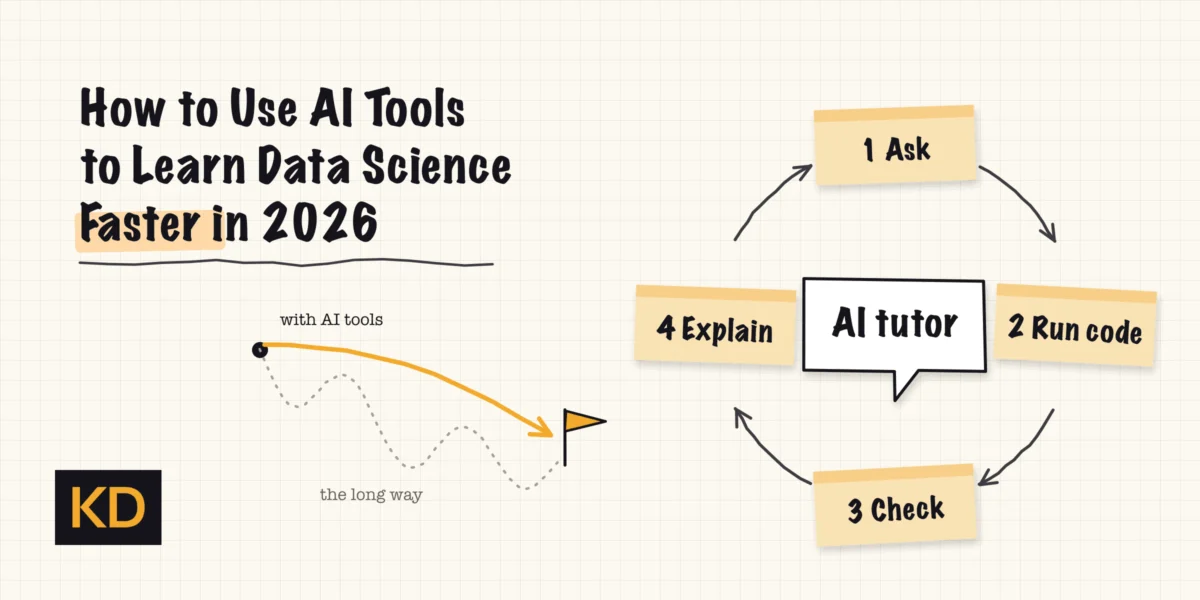
The landscape of data science education has undergone a paradigm shift as we enter 2026, transitioning from traditional, static curriculum models to dynamic, AI-augmented learning environments. Where aspiring data scientists once faced significant barriers—such as hours spent debugging idiosyncratic syntax errors or navigating fragmented documentation—the current ecosystem offers real-time, context-aware pedagogical support. However, this accessibility has introduced a paradox: while AI reduces the friction associated with technical mastery, it also risks creating a generation of practitioners who rely on generative output without internalizing foundational logic.
The Evolution of Data Science Education
Historically, the trajectory for a data scientist involved a multi-year commitment to formal university training or intensive, self-paced bootcamps. Before 2022, learners relied primarily on static resources: textbooks, video lectures, and community forums like Stack Overflow. The arrival of Large Language Models (LLMs) fundamentally altered this timeline. Industry data from 2025 suggests that students leveraging AI-integrated learning paths can achieve competency in core Python libraries—such as pandas and NumPy—approximately 30% faster than those relying solely on traditional materials.
This acceleration is not merely a matter of speed but of cognitive efficiency. By offloading low-level syntax troubleshooting to AI agents, students can dedicate more time to high-level architectural design and statistical inference. Yet, the consensus among educators is that this efficiency is only beneficial if the user maintains a rigorous understanding of the underlying mathematics.
Foundations Before Frameworks
The primary risk identified by technical mentors is the "abstraction trap." When a learner uses an AI to generate a confusion matrix or a gradient descent implementation without first understanding the statistical principles involved, they gain an output but lose the ability to debug or optimize that output in a professional production environment.
Industry experts emphasize that AI should function as a force multiplier, not a replacement for cognitive labor. The recommended pedagogical sequence remains constant:
- Theoretical Grounding: Mastery of linear algebra, probability, and statistics.
- Programming Literacy: Fluency in Python or R, focusing on data structures and algorithms.
- AI-Augmented Practice: Utilizing LLMs to refine, optimize, and test code once the student has developed a manual working prototype.
The Role of Conversational AI as a Pedagogical Tool
Conversational assistants have evolved beyond simple Q&A interfaces. By 2026, tools like ChatGPT and Claude have integrated specialized training for technical reasoning, allowing them to act as Socratic tutors. Instead of providing the final answer, these systems can now guide a user through the logical steps of a data cleaning process or explain why a specific hyperparameter optimization strategy failed in a given model.
Techniques for effective engagement include:
- Active Recall Interrogation: Rather than asking for a solution, students are encouraged to ask the model to quiz them on specific topics like regularization techniques, requiring them to provide answers before receiving feedback.
- Code Review Simulation: Students can input their own code and request a critique based on industry-standard clean code principles, effectively simulating the pull-request review process they will encounter in a professional setting.
- Systematic Problem Solving: For complex errors, the shift has moved from "fix this code" to "here is my objective and my current attempt; identify the logical disconnect."
Accelerating Professional Proficiency with Coding Assistants
The integration of AI coding assistants—such as GitHub Copilot and Cursor—directly into Integrated Development Environments (IDEs) has fundamentally changed how code is written. Development teams report that these tools increase productivity by an average of 40%. For the learner, this is a double-edged sword.
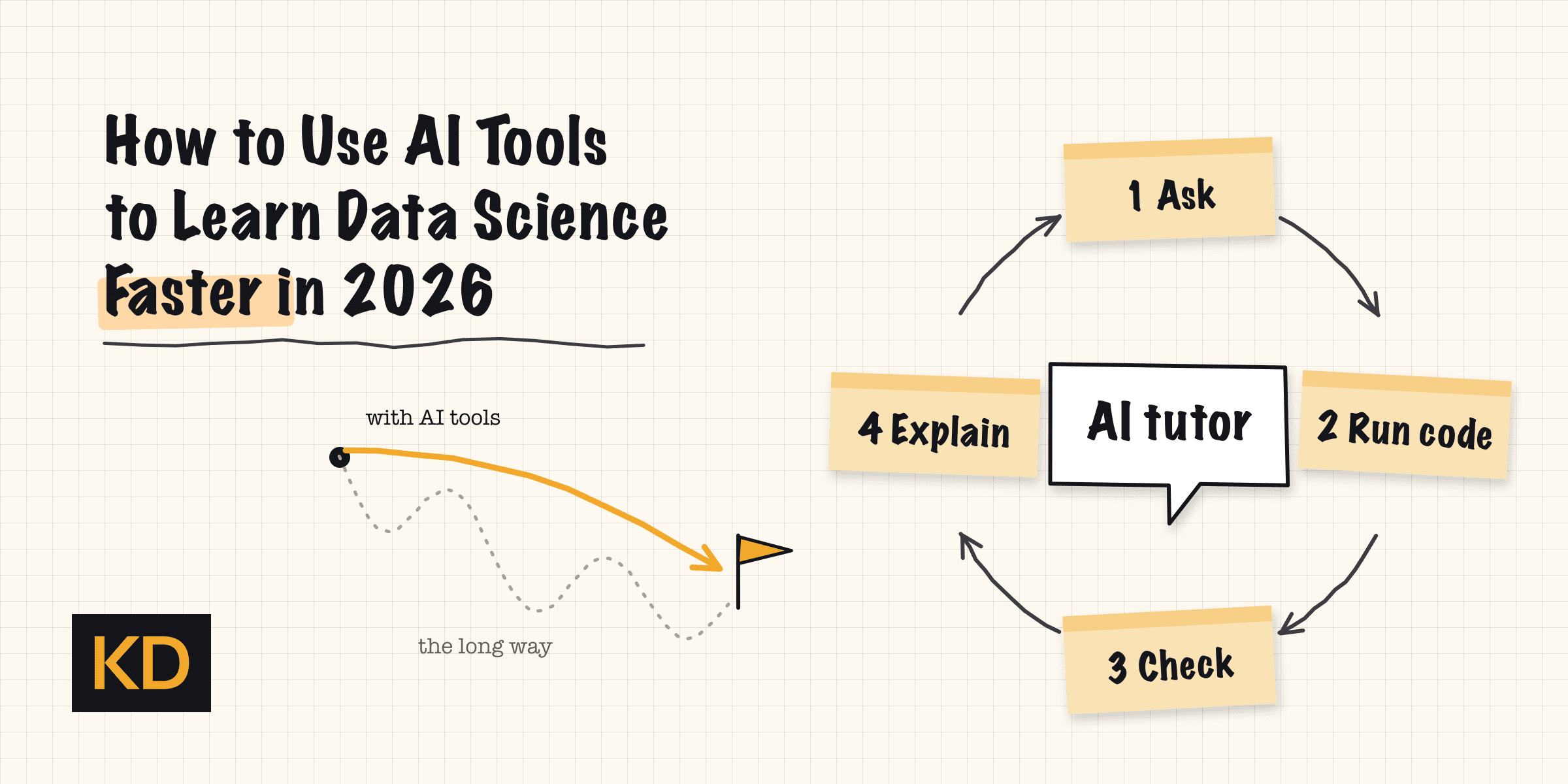
To prevent passive consumption, learners are advised to implement a "manual-first" workflow. In this model, the student writes the initial script or logic themselves. Once a functional, albeit potentially suboptimal, version is created, they use the AI assistant to suggest idiomatic improvements. This comparison—the student’s logic vs. the AI’s optimized suggestion—is where the most significant learning occurs. It builds an intuition for performance, readability, and modularity that simple tutorials cannot provide.
Data Science as an Orchestration Role
The professional requirements for a data scientist in 2026 have shifted. The role is less focused on building models from scratch and more on "AI orchestration." This involves the ability to integrate existing LLMs into larger applications, the construction of Retrieval-Augmented Generation (RAG) pipelines, and the management of data workflows using frameworks like LangChain or LlamaIndex.
This shift necessitates a change in how students approach their portfolio projects. Employers now prioritize candidates who can demonstrate an understanding of the full lifecycle of an AI application—from data ingestion and vector database management to output evaluation and guardrail implementation. By utilizing AI to outline project structures, learners can execute more ambitious, multi-faceted projects that reflect modern industry demands.
Data-Driven Insights on Learning Efficiency
Recent surveys from major online learning platforms indicate that the most successful learners are those who treat AI tools as "thinking partners." Platforms such as DataCamp have responded to this trend by incorporating adaptive AI tutors that adjust in real-time to the learner’s pacing. This responsive feedback loop is critical for correcting misconceptions before they compound into larger learning gaps.
A longitudinal study of self-directed learners suggests a correlation between the use of citation-backed AI tools (such as Perplexity) and the depth of domain knowledge. When learners use tools that prioritize verifiable sources, they tend to develop a stronger grasp of complex machine learning concepts compared to those who rely on unverified, generative responses.
The Future of Technical Mentorship
As the industry matures, the value of the human mentor is evolving. Mentors are increasingly shifting their focus from teaching basic syntax to guiding strategy, architecture, and the ethical implications of AI deployment. The human element ensures that learners understand the "why" behind the "how," providing the critical oversight necessary to ensure that AI-generated code is not only functional but also secure, scalable, and bias-aware.
Conclusion and Strategic Outlook
The consensus for 2026 is clear: AI tools are not a replacement for study, but they are a mandatory component of modern technical literacy. The most successful data scientists will be those who balance the speed of AI-driven development with a deep, manually acquired understanding of computational principles.
To remain competitive, learners should adopt a disciplined approach: build a rigorous foundation, treat coding assistants as reviewers rather than authors, and focus on mastering the orchestration of modern AI frameworks. By maintaining a high level of agency in the learning process, the next generation of data scientists can leverage these tools to build sophisticated, high-impact projects that define the next era of technological innovation. The transition from passive student to active architect is facilitated, not automated, by the AI tools currently at our disposal.

