
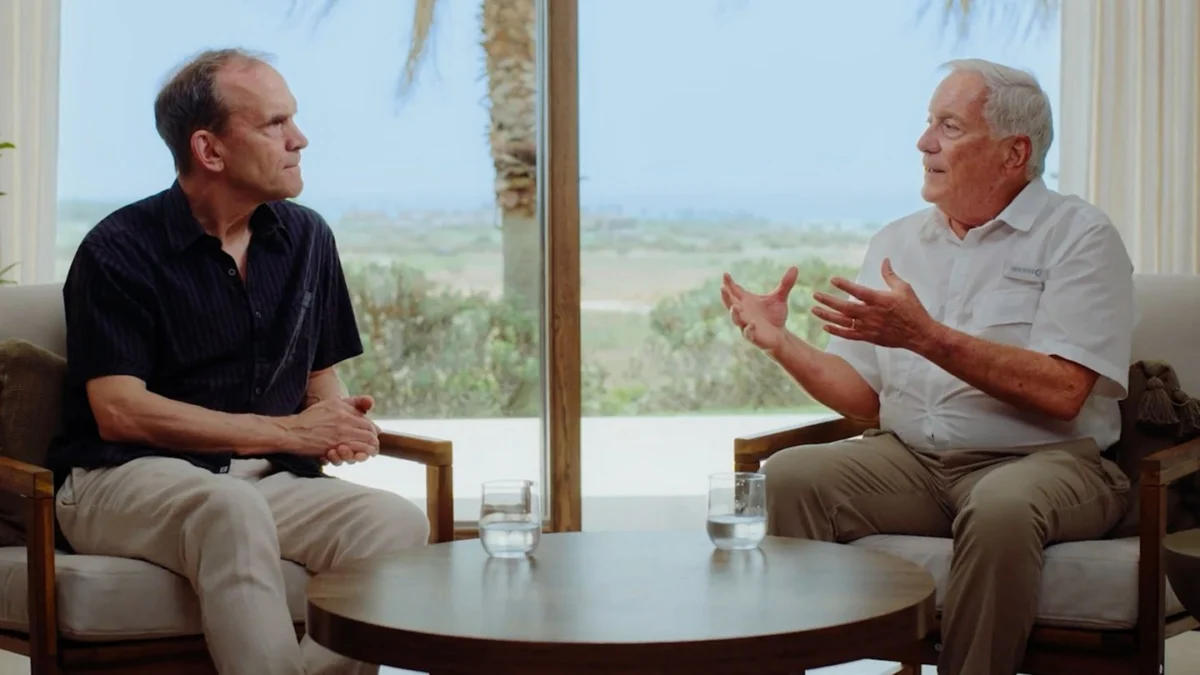
The intersection of human ingenuity and machine intelligence has become the defining technological discourse of the early 21st century. As artificial intelligence systems rapidly evolve from novelty tools to essential infrastructure, questions regarding the preservation of human creativity and the nature of innovation have moved to the forefront of global policy and academic debate. In the latest installment of the Dialogues on Technology and Society series, Google’s President of Global Affairs, Kent Walker, engaged in a wide-ranging discussion with renowned historian and biographer Walter Isaacson to explore how the lessons of the past can inform the trajectory of the future.
Historical Precedents for Innovation
To understand the current paradigm shift, Isaacson suggests looking toward the polymaths who defined previous eras. Throughout his career, Isaacson has documented the lives of figures such as Leonardo da Vinci, Benjamin Franklin, and Ada Lovelace, identifying a common thread that connects these disparate minds: the integration of the humanities with the sciences.
Leonardo da Vinci’s mastery of both art and anatomy, Isaacson notes, was not merely a hobbyist’s curiosity but a fundamental approach to observation that allowed for breakthroughs in engineering and design. Similarly, Ada Lovelace, often credited as the world’s first computer programmer, possessed a visionary understanding of the "poetical science." Her ability to conceive that machines could manipulate symbols—not just numbers—laid the conceptual groundwork for the digital revolution.
Isaacson argues that in an era where generative AI can synthesize information in seconds, the human capacity for cross-disciplinary synthesis—the ability to connect music to mathematics or history to high-level computing—remains a unique competitive advantage. The historical record indicates that breakthroughs rarely occur in silos; they are the result of collaborative efforts and the application of diverse viewpoints.
The Collaborative Nature of Breakthroughs
The narrative of the "lone genius" is, according to Isaacson, a historical fallacy. From the creation of the printing press to the development of the internet, the most significant technological leaps have consistently been a "team sport." Innovation thrives on a friction-filled environment where diverse perspectives, ranging from philosophical inquiry to technical execution, collide.
This historical context provides a critical framework for assessing AI development. As developers and policy makers look toward the future, the emphasis shifts from the capacity of a single algorithm to the ecosystem of human-machine interaction. Isaacson emphasizes that human judgment remains the vital filter through which AI-generated output must pass. While AI can process vast datasets at speeds unattainable by the human brain, it currently lacks the intuitive leaps and ethical grounding that characterize human decision-making.
Timeline: From Historical Inquiry to AI Integration
The evolution of these themes has been marked by several key moments in recent intellectual history:
- 2011: Walter Isaacson publishes Steve Jobs, highlighting the importance of the intersection between technology and the liberal arts, a theme that has dominated his subsequent work.
- 2017: Isaacson releases Leonardo da Vinci, emphasizing the role of insatiable curiosity and observation in the creative process.
- 2022: The widespread public release of large language models (LLMs) triggers a global debate on the role of AI in creative sectors, raising concerns about intellectual property and the future of human authorship.
- 2023-2024: Institutional focus shifts toward "Responsible AI," with organizations like Google, OpenAI, and Microsoft increasing public dialogues regarding the safety, ethics, and societal integration of generative models.
- 2024: The Dialogues on Technology and Society series features the discourse between Walker and Isaacson, formalizing the effort to bridge historical lessons with contemporary technical challenges.
Supporting Data and the Digital Landscape
Current trends in the technology sector underscore the urgency of the questions raised by Isaacson. According to industry reports, investment in generative AI infrastructure reached record highs in 2023, with global corporate spending on AI software and systems projected to exceed $300 billion by 2026.
However, alongside this investment is a growing recognition of the "information paradox." While access to data has never been more democratized—with nearly every human having a repository of world knowledge in their pocket—the ability to discern quality, verify accuracy, and synthesize meaning remains a skill that requires human intervention. Studies in cognitive science suggest that as reliance on algorithmic recommendations increases, there is a risk of "cognitive atrophy," where the human capacity for critical inquiry may diminish if not actively practiced.
Official Perspectives and Institutional Strategy
Kent Walker, in his capacity at Google, has frequently advocated for a balanced approach to AI regulation—one that promotes innovation while safeguarding human rights and societal values. In the conversation with Isaacson, Walker echoed the sentiment that AI should be viewed as a tool to amplify, rather than replace, human potential.
Industry analysts suggest that the strategy adopted by major technology firms involves moving beyond the "race to the top" regarding parameter counts and focusing on the "utility of the interface." By integrating AI into professional and creative workflows, firms aim to foster a "co-pilot" model where the machine handles the data processing, allowing the human user to focus on high-level strategy, moral judgment, and creative direction.
Broader Implications for Society
The integration of AI into the fabric of daily life carries profound implications for education, the workforce, and creative industries. If history is any guide, Isaacson posits that the technology itself is neutral; its impact is determined by the values of its creators and the agility of the society that adopts it.
The Future of Education
The pedagogical focus must shift from rote memorization—which AI has rendered largely obsolete—to the cultivation of curiosity and critical thinking. If an AI can answer any factual query, the value of the student lies in their ability to ask the right questions and evaluate the validity of the responses provided.
The Creative Economy
In art, literature, and software engineering, AI serves as an accelerant. However, the "human touch"—the lived experience, the emotional resonance, and the capacity for moral nuance—remains outside the grasp of current machine learning models. Isaacson notes that those who learn to work in tandem with these systems will likely redefine the boundaries of their respective fields, just as the introduction of the camera changed the trajectory of painting in the 19th century.
Governance and Ethics
The challenge for policy makers is to create a regulatory environment that does not stifle the curiosity that drives innovation while simultaneously mitigating the risks of misinformation, bias, and displacement. This requires a multi-stakeholder approach, involving technologists, historians, ethicists, and the general public.
Conclusion: The Persistent Need for Human Curiosity
As the conversation between Isaacson and Walker concludes, the overarching message is one of cautious optimism. History suggests that every major technological shift creates a period of societal friction, followed by a period of adaptation. The "age of AI" is no different in its necessity for human agency.
The lesson from the lives of da Vinci, Franklin, and Lovelace is that the greatest advancements occur when the mind is allowed to wander across boundaries. By maintaining a sense of wonder and refusing to outsource the core responsibilities of judgment and creativity to machines, society can ensure that the AI era becomes a chapter of human progress rather than a replacement of the human experience. As Isaacson suggests, the machine may be the tool of the future, but the human spirit remains the architect.

