

The digital wallet has undergone a profound structural metamorphosis. In the formative years of Web3, the cryptographic wallet functioned primarily as a static, standalone vault—a secure repository for private keys designed solely to authorize token transfers and sign basic blockchain transactions. Grounded strictly in the self-custodial mantra of owning one’s keys to own one’s crypto, early iterations such as MetaMask and Ledger served their purpose within a rudimentary decentralized landscape. However, as the digital ecosystem transitions into what industry researchers term the Post Web, this legacy model has proven fundamentally inadequate. Today, the wallet has migrated from the periphery to the absolute core of the user experience, evolving into a living, adaptive interface that manages decentralized identity, granular permissions, network resources, and increasingly autonomous artificial intelligence agents.
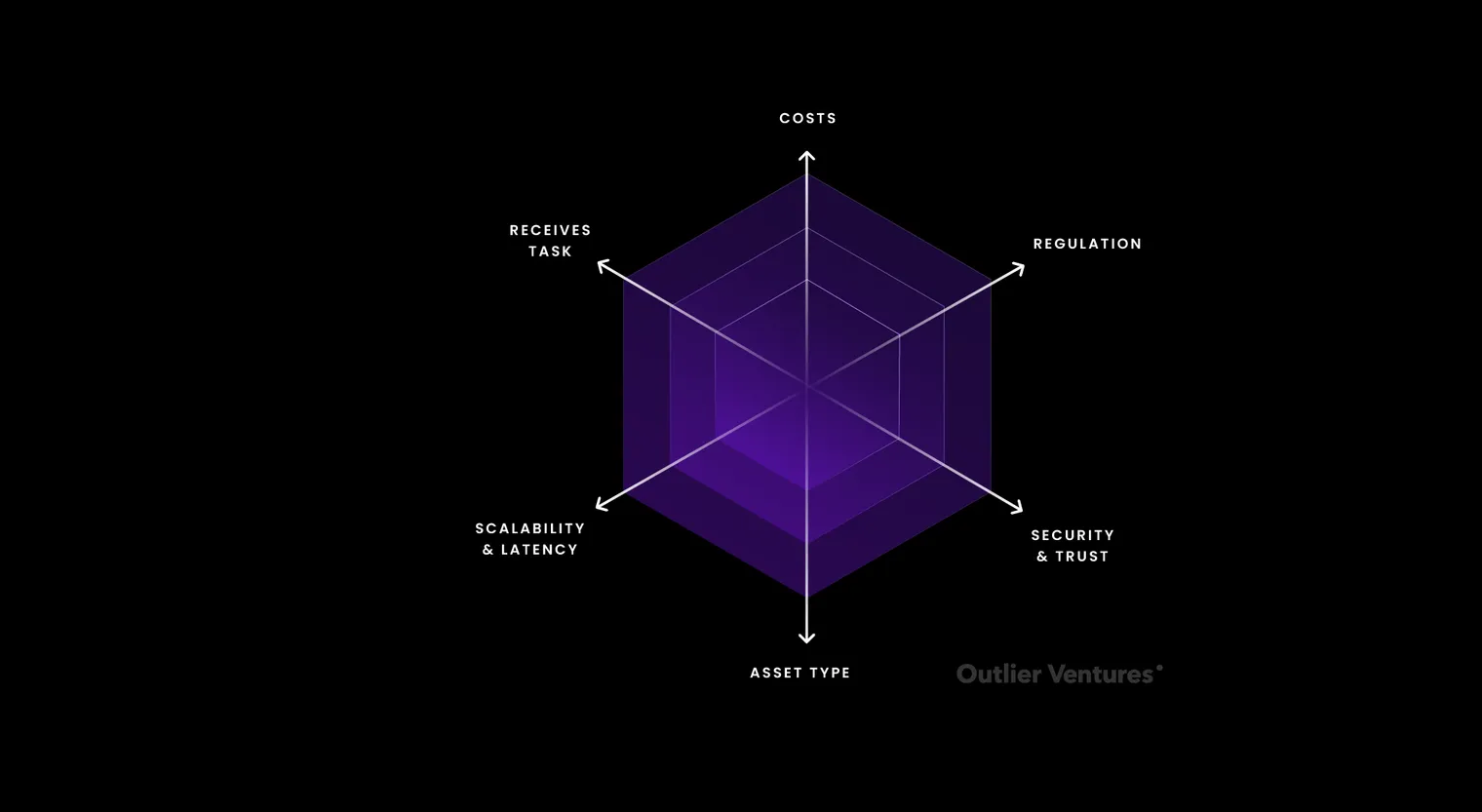
This architectural shift is a cornerstone of Chapter 2 of The Post Web Thesis, a comprehensive publication by Outlier Ventures that charts the transformation of the legacy Web3 tech stack into a unified Post Web infrastructure. Published alongside extensive commentary and visual frameworks—including detailed schematics on vector considerations for distributed ledger technology (DLT) and the symbiotic relationship between users, wallets, and smart agents—the thesis posits that the modern wallet is no longer merely a tool for holding assets. Instead, it has been repositioned as the primary coordination hub and command center of the Agentic Web, where human intent converges directly with intelligent machine execution.
From Cryptographic Custody to Digital Personhood
To understand the trajectory of modern wallet architecture, one must examine the historical limitations that defined early decentralized applications. For nearly a decade, interacting with blockchains required meticulous manual execution. Users bore the cognitive and operational burden of managing complex seed phrases, navigating cross-chain fragmentation, and paying individual gas fees for every incremental action. The loss of a physical seed phrase routinely meant the permanent forfeiture of all accumulated digital wealth, creating a massive barrier to mainstream enterprise and consumer adoption.
Furthermore, these early systems lacked any native mechanism for representing human identity or reputation beyond a string of hexadecimal characters. As the internet shifts toward an environment populated by autonomous software agents, identity and composability have taken center stage. Modern wallets are rapidly maturing into self-sovereign identity (SSI) frameworks. Rather than merely holding tokens, these advanced systems anchor a user’s verifiable credentials, digital reputation, and operational agency into a single, cohesive interface.
As articulated in The Post Web Thesis, wallets are effectively becoming the interface for digital personhood. This evolution allows individuals and enterprises to navigate multi-chain ecosystems not as anonymous wallet addresses, but as recognized, verifiable entities possessing persistent reputation scores and granular control over their digital footprint.
The Rise of Smart Wallets and Intent-Based Architecture
The catalyst for this transformation is the rapid commercialization and deployment of smart wallets. Platforms such as Safe have pioneered this transition, demonstrating how programmable accounts can drastically improve user experience by replacing rigid transaction signing with automated, intent-based interactions. Smart wallets introduce crucial flexibility through account abstraction, enabling native automations for recurring payments, enhanced cryptographic security parameters such as spending limits and address whitelisting, and seamless native integration with decentralized finance (DeFi) protocols.
This technological leap underpins the broader shift from task execution to intent negotiation. In an advanced Post Web environment, users and their software agents will no longer need to manually execute multi-step transactions across disparate layer-1 and layer-2 networks. Instead, they will communicate high-level objectives—such as sourcing the most optimal yield strategy below a specific risk threshold or casting governance votes aligned with predefined organizational values. The smart wallet acts as the intelligent mediator, interpreting these intents, routing instructions across optimal protocols, and verifying outcomes without requiring constant manual oversight.
The Wallet as an Operating System for Autonomous Resources
As the scope of blockchain utility expands into physical infrastructure networks, decentralized physical infrastructure networks (DePIN), and cross-chain execution environments, the wallet’s operational mandate has similarly widened. In the Post Web, the wallet orchestrates resources rather than merely tracking liquid assets.
Industry analysts point out that modern wallet architectures now manage access rights to decentralized compute power, secure data storage nodes, bandwidth allocations, and specialized API endpoints across various protocols. By functioning as a decentralized operating system for autonomy, the wallet mediates complex interactions between users, smart contracts, and external machine networks. This capability is particularly critical for managing the delicate balance between automation and security, ensuring that decentralized systems can scale efficiently without exposing users to systemic vulnerabilities.
Command Consoles for the Agentic Web
Perhaps the most significant driver of wallet evolution is the integration of autonomous AI agents. As smart agents become deeply embedded into the fabric of daily digital operations, the user’s wallet naturally transforms into their central command console.
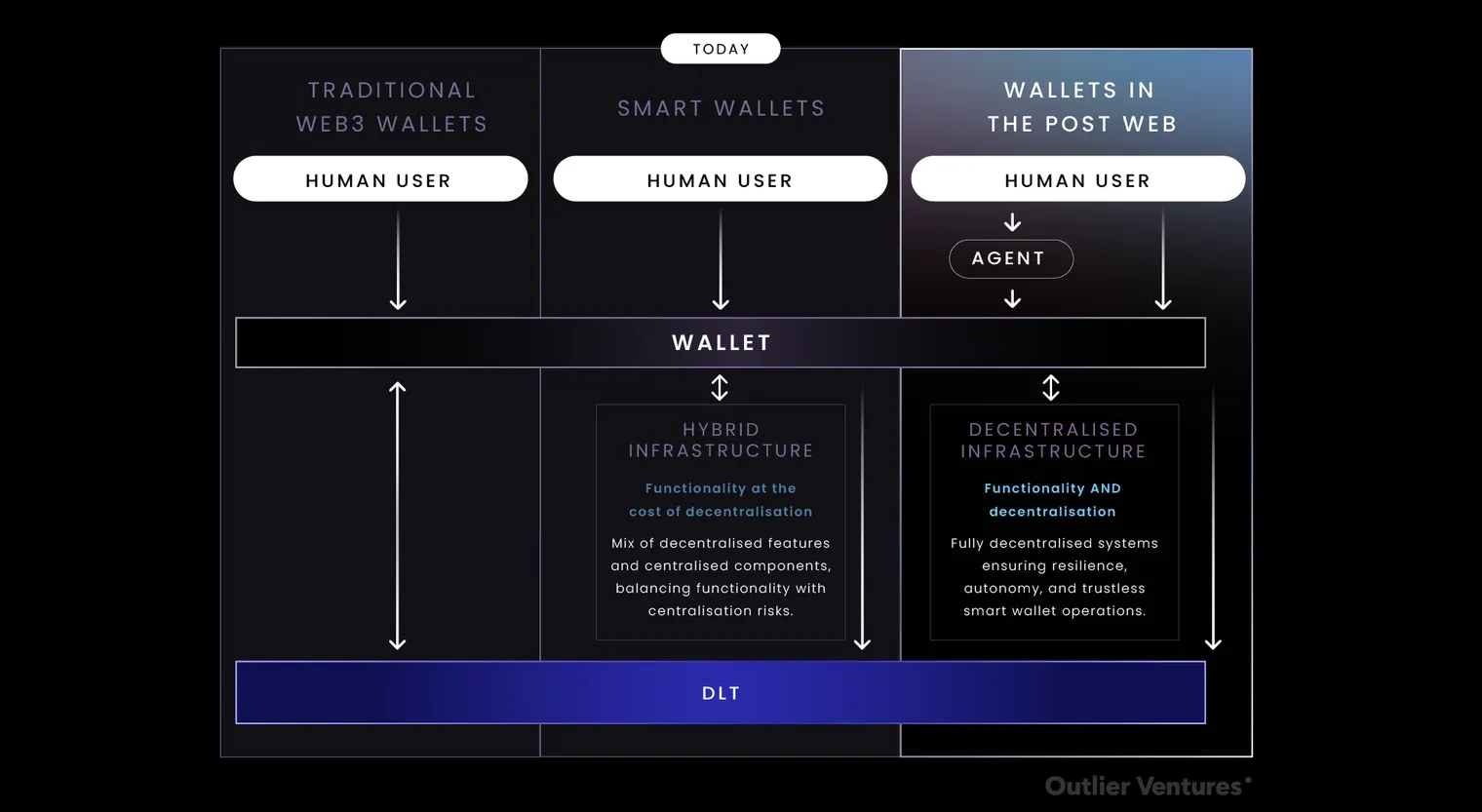
Within this architecture, every autonomous agent connects to the blockchain and external services through the user’s primary wallet. The wallet establishes mandatory permission loops and verification protocols, ensuring that agents act strictly on behalf of the user within predefined operational parameters rather than operating in an unregulated vacuum. This transforms the wallet into a robust governance layer for digital autonomy, safeguarding user assets while unleashing the productivity gains associated with autonomous machine intelligence.
To maintain trust in this hyper-connected, agent-driven environment, privacy preservation has emerged as a paramount engineering requirement. Because modern wallets accumulate extensive behavioral data, cryptographic credentials, and active agent connections alongside financial assets, they represent high-value targets for malicious actors. Consequently, Post Web wallet architectures increasingly incorporate advanced cryptographic primitives—such as zero-knowledge proofs and decentralized identity verification layers—to ensure that users can prove authorization and operational intent without leaking sensitive personal information or exposing proprietary behavioral data to external observers.
Implications for the Broader Digital Economy
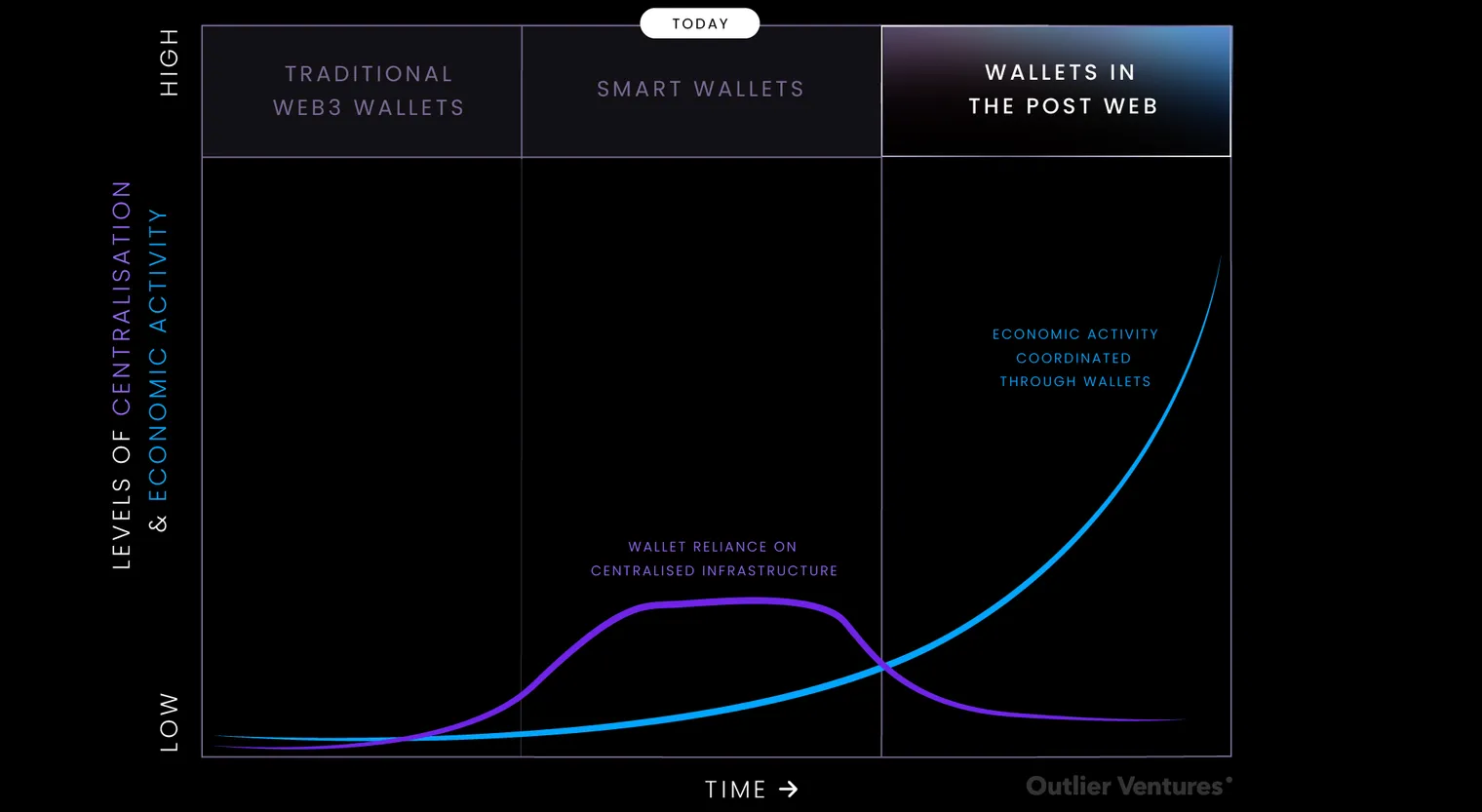
The reimagining of the digital wallet carries profound implications for the trajectory of the internet, financial markets, and software development. By solving the persistent friction points of seed-phrase management, cross-chain fragmentation, and manual transaction signing, smart wallets eliminate the primary bottlenecks that have historically restricted Web3 technologies to niche technical audiences.
Furthermore, the convergence of wallets, self-sovereign identity, and AI agents lays the groundwork for a truly agentic economy. In this emerging paradigm, economic activity will increasingly be conducted by autonomous software systems negotiating on behalf of human principals. The wallet serves as the ultimate anchor of accountability in this environment—the definitive boundary where machine efficiency meets human governance and legal personhood.
Industry stakeholders, developers, and institutional investors are closely monitoring these architectural developments. As projects race to deploy modular, identity-centric, and agent-compatible wallet frameworks, the competitive advantage is shifting away from simple key management toward comprehensive digital life-cycle orchestration.
The publication of Chapter 2 of The Post Web Thesis by Outlier Ventures marks a critical milestone in articulating this roadmap. By reframing the wallet not as a cold storage vault, but as a living, adaptive interface for identity, assets, and autonomous agency, the tech sector is signaling a definitive departure from the early, speculative phases of blockchain history toward a mature, utility-driven digital infrastructure. As the industry looks toward upcoming milestones—such as the release of Chapter 3, which will explore scalable network dynamics under the banner of Zero to Many—the wallet remains firmly established as the central nexus of ownership, identity, and trust in the modern digital age.

