

The evolution of decentralized technology has reached a critical inflection point, moving far beyond the rudimentary private-key vaults that defined the early days of Web3. As the digital ecosystem transitions into what industry researchers describe as the Post Web, the cryptographic wallet is undergoing a profound metamorphosis. No longer serving merely as passive storage for digital assets or a transactional signature tool, the modern wallet has emerged as a living interface—a sophisticated control center that manages human identity, permissions, computational resources, and autonomous artificial intelligence agents.
This paradigm shift is meticulously detailed in Chapter 2 of The Post Web Thesis, published by Outlier Ventures in 2025. Titled “Turning the Web3 Tech Stack into the Post Web Stack,” the research outlines how the traditional wallet architecture is collapsing under the weight of manual user friction, paving the way for an integrated ecosystem where human intent and autonomous machine execution seamlessly converge.
From Cryptographic Custody to Self-Sovereign Personhood
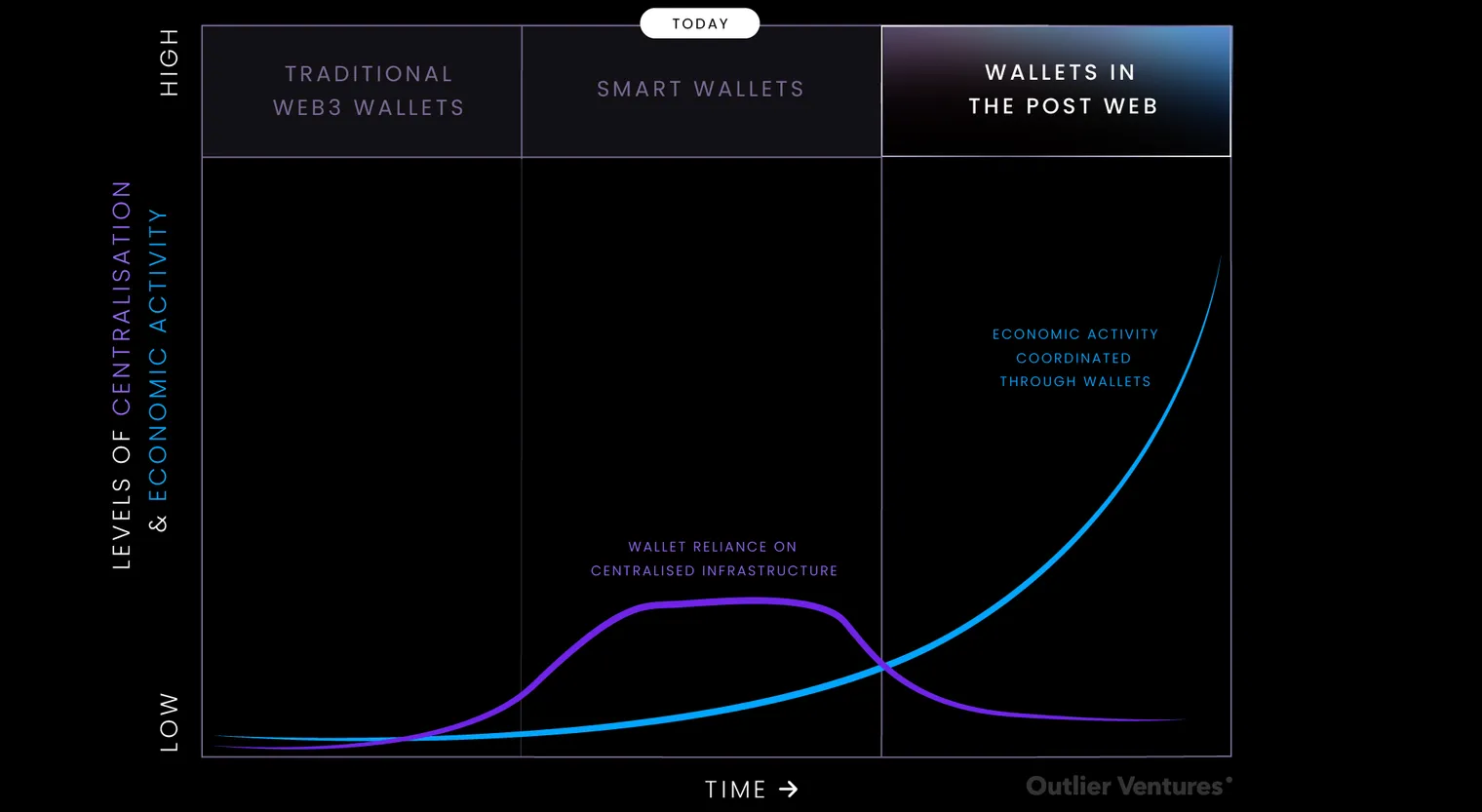
To understand the magnitude of the current transition, one must examine the limitations of early Web3 infrastructure. Generations of crypto users grew up under the austere mantra of cryptographic self-sovereignty: “own your keys, own your crypto.” Platforms like MetaMask and hardware devices like Ledger revolutionized security by removing trusted intermediaries, but they did so by imposing an immense cognitive load on the end user. Managing complex seed phrases, manual gas estimations, and fragmented asset states across dozens of isolated layer-1 and layer-2 networks created a formidable bottleneck for mainstream adoption. Furthermore, these early tools treated identity, reputation, and asset management as entirely disconnected functions.
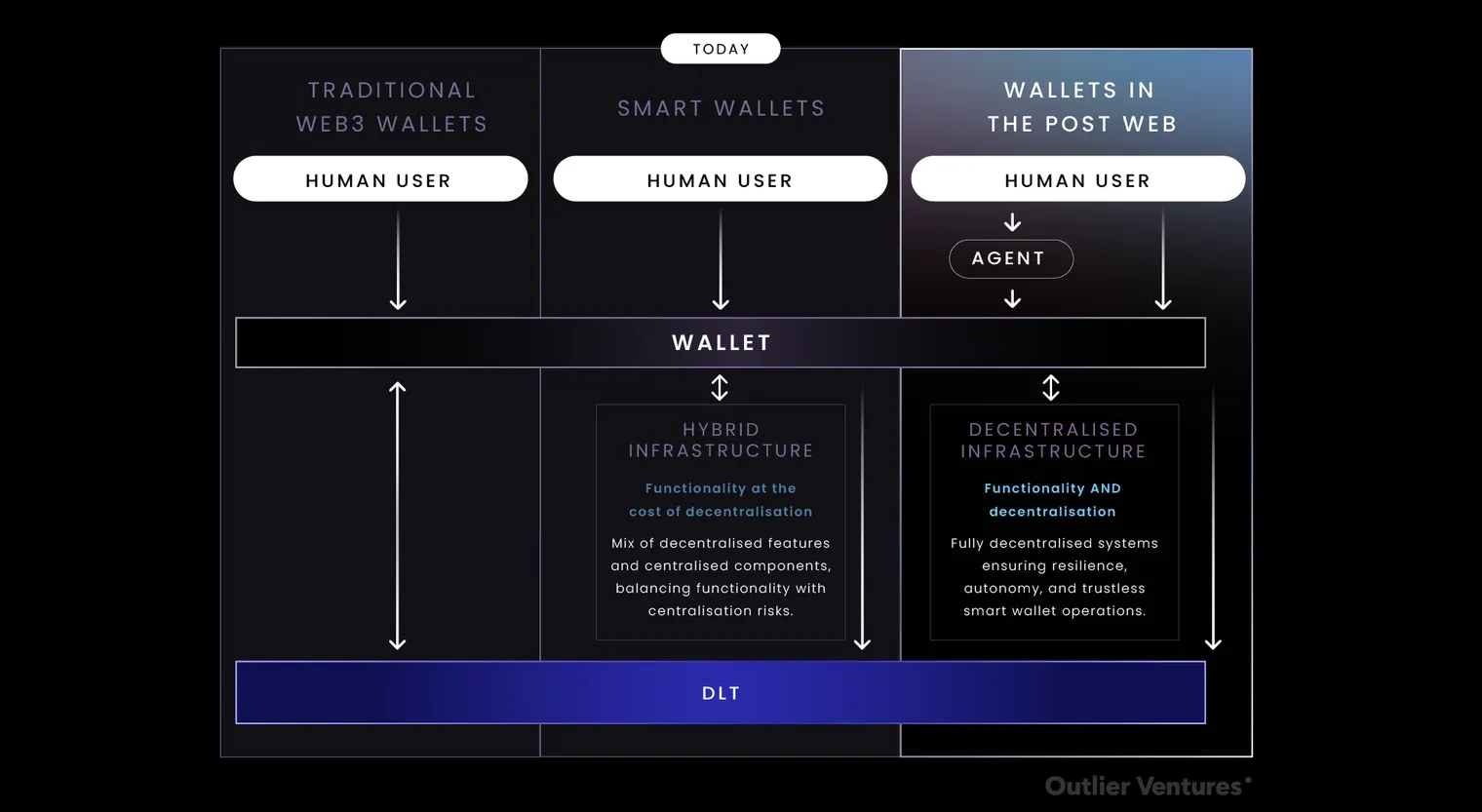
The Post Web redefines this architecture entirely. Wallets are no longer isolated vaults; they are evolving into self-sovereign identity frameworks capable of anchoring reputation, verifiable credentials, and digital agency into a single cohesive system. Drawing on insights from industry specialists such as Andres Acevedo, Investment Manager at Outlier Ventures, contemporary wallet design is pivoting toward user-centric automation. Instead of forcing individuals to manually execute every discrete on-chain action, modern systems utilize smart contract accounts—exemplified by infrastructure like Safe—to introduce programmable logic, customizable security parameters, spending limits, and automated intent resolution.
The Wallet as an Operating System for Resource Management
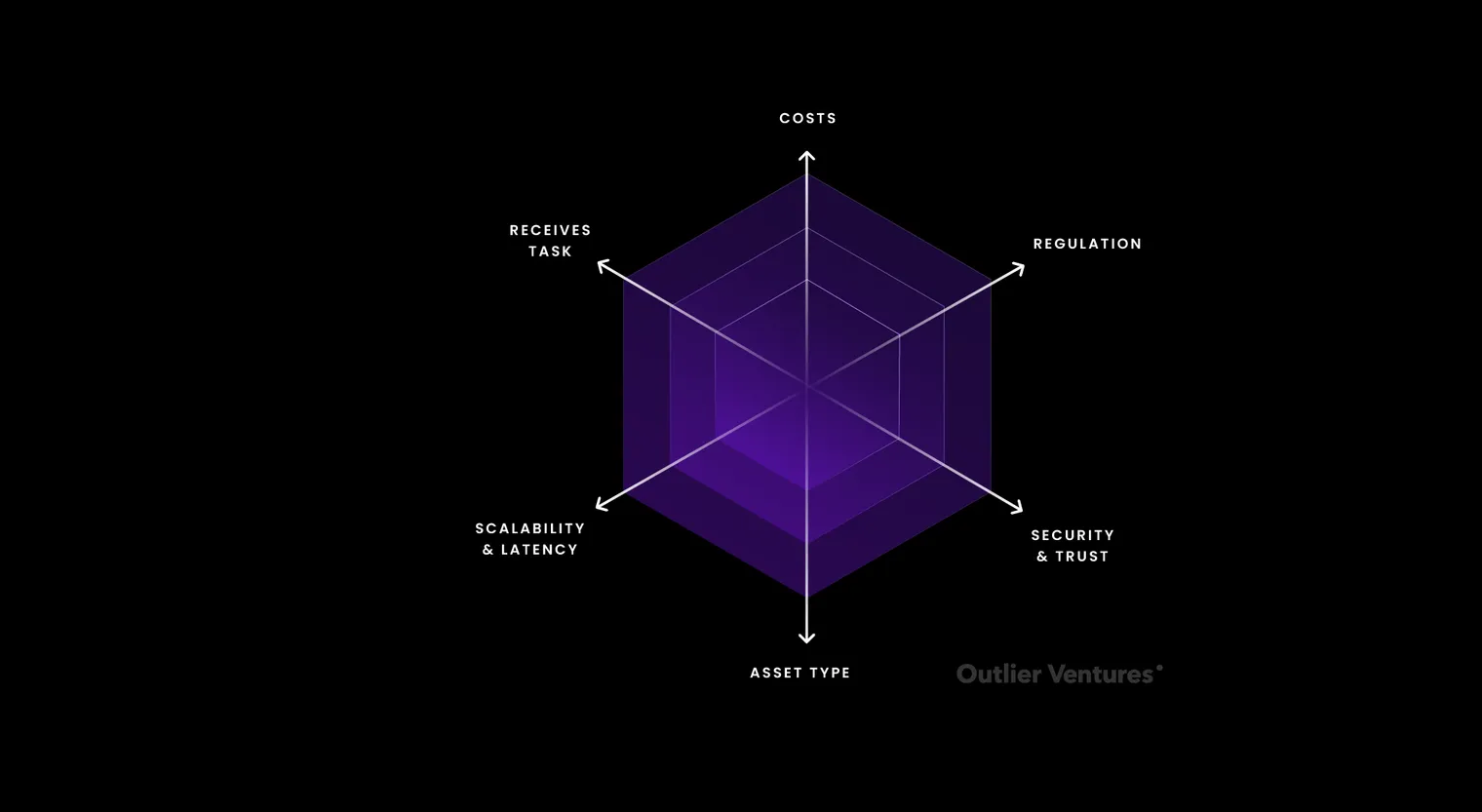
In this emerging framework, the scope of what a wallet manages has expanded dramatically. While legacy wallets were designed exclusively to hold native tokens and collectible assets, Post Web wallets act as centralized orchestration engines for a wide array of digital resources.
This operational expansion includes managing access to decentralized physical infrastructure networks (DePIN), computing power, storage allocations, data streams, and dynamic network permissions. By functioning as a comprehensive operating system for digital autonomy, the wallet mediates interactions across heterogeneous protocols without requiring the user to navigate the underlying technical complexities.
This transformation is particularly vital as the digital economy absorbs Decentralized Physical Infrastructure Networks, where users regularly lease out excess bandwidth, computational storage, or renewable energy generation capacity. The wallet acts as the cryptographic ledger and negotiator for these ongoing micro-transactions, ensuring that resource allocation remains secure, transparent, and entirely under the user’s sovereign control.
Command Consoles for the Agentic Web
Perhaps the most disruptive catalyst for this architectural change is the rapid proliferation of autonomous AI agents. As intelligent systems become deeply integrated into the digital fabric—capable of executing complex, multi-step financial and operational workflows—they require a secure environment to operate on behalf of their human principals.
Within the Post Web thesis, the wallet functions as the primary command console for these smart agents. Each autonomous entity connects to the network through a user’s designated wallet, which establishes rigorous verification loops, permission boundaries, and operational guardrails. Rather than granting an AI agent unchecked access to funds or personal data, the wallet enforces strict operational parameters.
This architecture ensures that while agents are empowered to act autonomously, they remain strictly tethered to the governance rules established by their human operators. The wallet thus transforms into a governance layer for machine-driven autonomy, mitigating systemic risks such as runaway automated trading scripts or unauthorized data harvesting.
Privacy-Preserving Architectures and Advanced Cryptography
As wallets evolve to store not only financial capital but also behavioral telemetry, credential histories, and agent connection logs, the imperative for robust privacy and security multiplies exponentially. In an agentic economy, a compromised wallet no longer means merely the loss of capital; it risks the total usurpation of a user’s digital personhood.
To address these vulnerabilities, Post Web wallets incorporate advanced cryptographic frameworks designed for privacy-preserving operations. Leveraging zero-knowledge proofs (ZKPs) and decentralized identifier (DID) standards, these next-generation architectures allow users to prove ownership, authorization, and reputation without exposing sensitive underlying data to third-party protocols or malicious actors. This establishes a foundational standard of "privacy by design," ensuring that verifiable autonomous interactions can occur without sacrificing user confidentiality.
From Task Execution to Intent Negotiation
The culmination of this technological evolution is the shift from manual task execution to intent-based interaction. For years, interacting with decentralized applications required users to click dozens of buttons, approve individual gas fees, and manually bridge assets across disparate chains.
In the Post Web model, users and their AI agents simply articulate high-level objectives. A user might specify parameters such as, “Find the safest yield optimization strategy under a five percent risk threshold,” or, “Participate in decentralized autonomous organization (DAO) governance votes aligned with environmental sustainability.” The wallet’s intelligent interface interprets these directives, evaluates them against predefined risk vectors, negotiates execution paths across multiple protocols, and automatically settles the outcome on-chain.
This transition from manual execution to intent negotiation marks the final metamorphosis of the digital wallet. It ceases to be a mere utility tool and becomes an intelligent mediator between human purpose and machine-driven execution.
Broader Industry Implications and Future Outlook
The implications of this infrastructural shift extend far beyond the cryptocurrency sector, signaling a profound change in how humanity interacts with the digital realm. As major financial institutions, telecommunications providers, and technology conglomerates explore tokenized assets and decentralized identity systems, the demand for user-friendly, intelligent, and secure interface layers has never been more urgent.
By solving the historical user-experience bottlenecks that plagued early Web3—such as catastrophic seed-phrase loss and fragmented multi-chain navigation—smart wallets are laying the groundwork for mass adoption. They bridge the gap between complex cryptographic machinery and intuitive human intent, effectively democratizing access to the emerging agentic economy.
As the industry looks toward the publication of subsequent chapters in The Post Web Thesis—including the upcoming release of Chapter 3, “Zero to Many”—stakeholders across the technology landscape are forced to reconsider the fundamental nature of digital ownership. The wallet is no longer just a digital wallet; in the truest sense of the word, it is becoming you.

