

The evolution of decentralized technology has reached a critical inflection point, fundamentally reshaping the primary tool through which users interact with blockchain ecosystems: the crypto wallet. In the early days of Web3, wallets functioned primarily as basic cryptographic vaults—simple interfaces designed to securely store private keys, sign manual transactions, and hold digital tokens under the foundational ethos of self-custody. However, as the digital landscape transitions into what industry researchers term the "Post Web," this legacy model is rapidly becoming obsolete. Today, the wallet has emerged as the core anchor of the modern user experience, transforming from a passive storage utility into a dynamic, living interface capable of managing complex digital identities, granular permissions, network resources, and autonomous artificial intelligence agents.
This structural paradigm shift is detailed extensively in Chapter 2 of The Post Web Thesis, a comprehensive framework published by Outlier Ventures in late 2025. According to the thesis, the modern wallet is transitioning into the central command hub of the "Agentic Web"—serving as the primary coordination layer where human intent and machine intelligence seamlessly converge. This transformation addresses long-standing usability bottlenecks that have historically plagued mainstream Web3 adoption, moving the industry away from cumbersome seed phrases and fragmented multi-chain navigation toward an era of intelligent, intent-based interaction.
The Historical Evolution: From Cryptographic Custody to Self-Sovereign Identity

To understand the magnitude of the current transition, one must examine the chronological progression of wallet architecture over the past decade. In the formative years of blockchain technology, security was synonymous with physical or digital isolation. Early iterations, popularized by browser extensions like MetaMask and hardware devices like Ledger, were built around a singular directive: own your keys, own your crypto. While revolutionary for establishing trustless ownership, these systems placed an immense cognitive and operational burden on the end user. Managing cryptographic keys required strict adherence to backup procedures, while executing multi-step transactions across disparate blockchains created a fragmented and intimidating user journey.
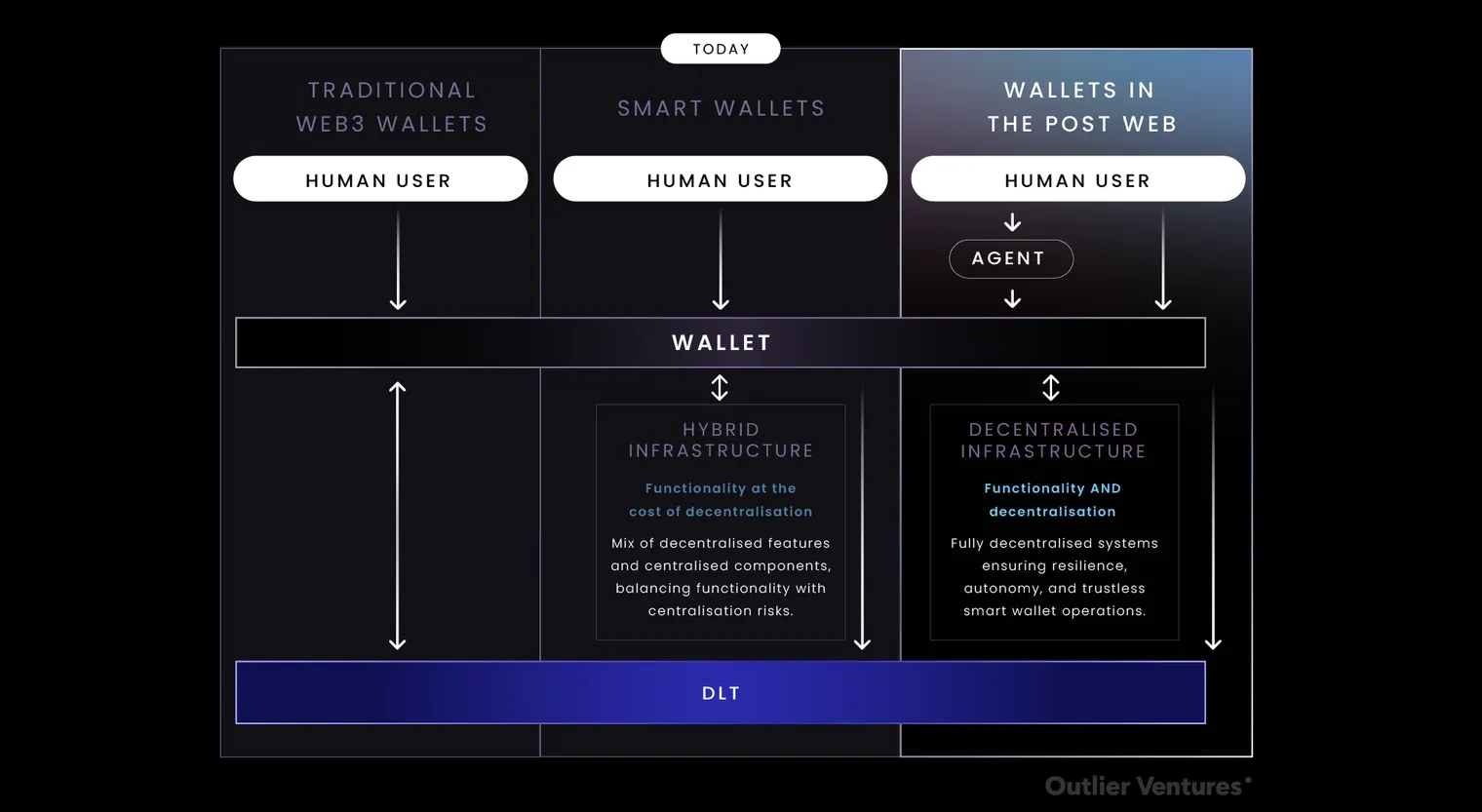
As the decentralized ecosystem matured, developers recognized that security could not come at the expense of usability. The introduction of account abstraction and smart wallets—exemplified by infrastructure providers like Safe—marked the first major breakthrough in user experience. Smart wallets introduced programmable logic to user accounts, enabling features such as social recovery, automated recurring transactions, configurable spending limits, and seamless integration with decentralized finance (DeFi) protocols.
Yet, the demands of the Post Web extend far beyond automated transactions. As outlined in Outlier Ventures’ recent research, wallets are now evolving into comprehensive self-sovereign identity frameworks. Rather than merely holding tokens, these advanced interfaces anchor digital personhood, reputation, and verifiable credentials into a unified system. Users can now prove attributes about themselves—such as credentials, memberships, or compliance statuses—without revealing underlying personal data, transforming the wallet from a digital safe deposit box into an authentic representation of digital selfhood.
The Rise of the Agentic Web and Command Consoles for AI
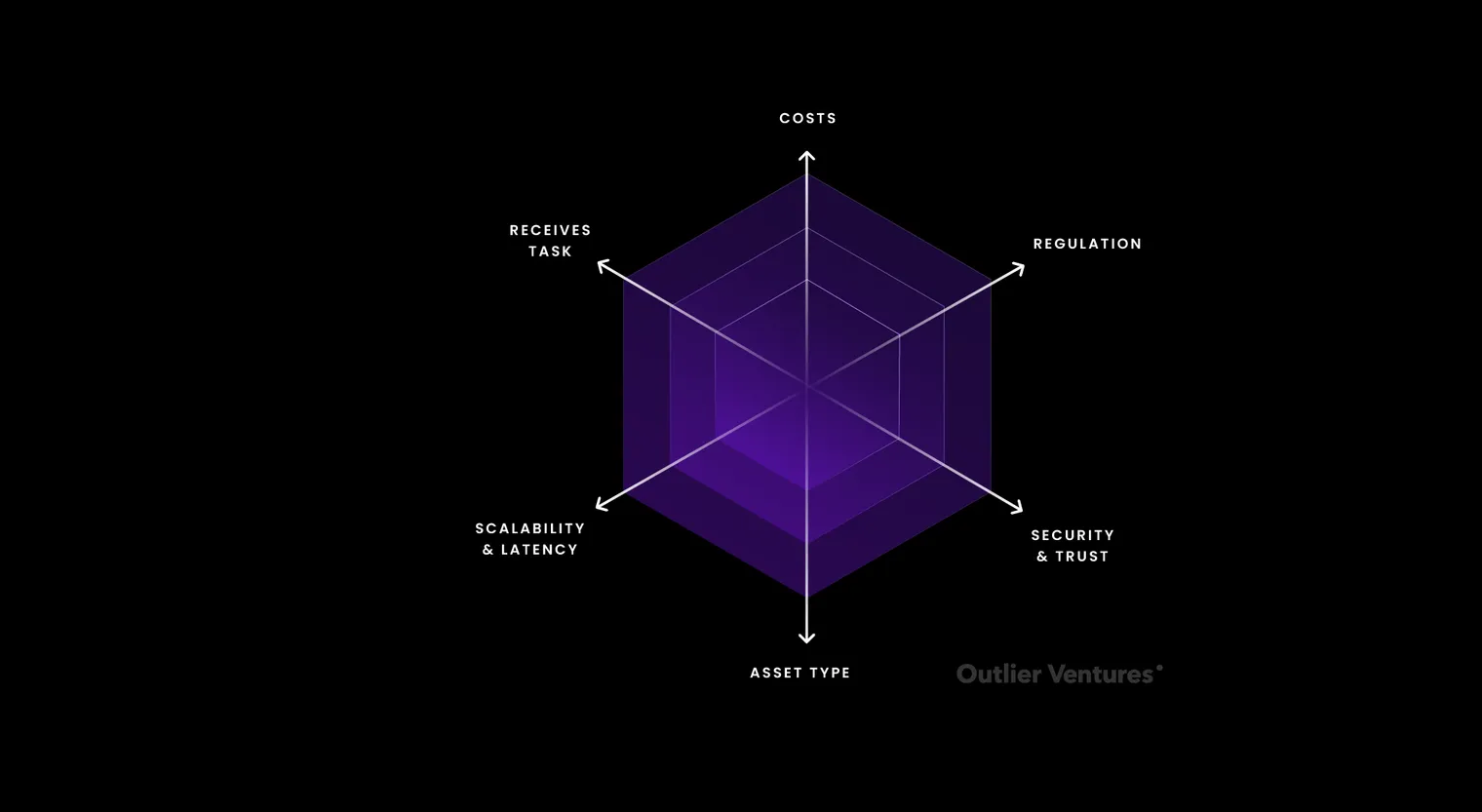
The most profound catalyst for this architectural redesign is the proliferation of autonomous AI agents. As smart agents become integral actors within the digital economy, capable of executing complex workflows, optimizing financial yields, and negotiating on behalf of users, they require a secure operational environment. In the Post Web framework, the user’s wallet acts as the primary command console and governance layer for these intelligent systems.
Each autonomous agent connects to the blockchain through the user’s overarching wallet architecture. This connection is governed by strict cryptographic boundaries, permission loops, and verification protocols. Rather than granting unchecked access to digital assets, the wallet dictates precisely what an AI agent is authorized to do, defining operational limits, duration of access, and approved interaction domains. This architecture ensures that autonomous systems act strictly on behalf of the user while remaining securely tethered to human oversight.
Industry analysts and investment managers point out that this relationship solves one of the most critical challenges in autonomous computing: trust and alignment. Andres Acevedo, Investment Manager at Outlier Ventures, notes that smart wallets are uniquely positioned to bridge the gap between human intent and automated on-chain execution. By functioning as an intelligent mediator, the wallet evaluates whether an agentic action genuinely aligns with the user’s stated goals before committing computational or financial resources to decentralized ledger technologies (DLT).
Resource Orchestration and Intent-Based Interaction
Beyond managing AI agents and traditional assets, Post Web wallets are increasingly functioning as comprehensive resource management hubs. In a decentralized landscape encompassing cross-chain networks, Layer 2 scaling solutions, and Decentralized Physical Infrastructure Networks (DePIN), users require sophisticated tools to allocate computational power, data storage, and bandwidth. The modern wallet orchestrates these diverse resources seamlessly, acting essentially as an operating system for digital autonomy.
This orchestration facilitates a broader shift toward intent-based interaction. Traditionally, users were required to manually execute every step of a transaction—navigating liquidity pools, calculating gas fees, and executing cross-chain bridges. In the intent-centric model, users simply express high-level objectives, such as securing a specific yield threshold under defined risk parameters or voting on governance proposals that align with sustainability metrics.
The wallet’s built-in intelligence interprets, routes, and verifies these intents, negotiating across multiple protocols and networks to find the optimal execution path. This transition from manual task execution to automated intent negotiation represents the final metamorphosis of the wallet, elevating it from a simple transactional tool to an indispensable digital partner.
Privacy, Security, and Future Implications
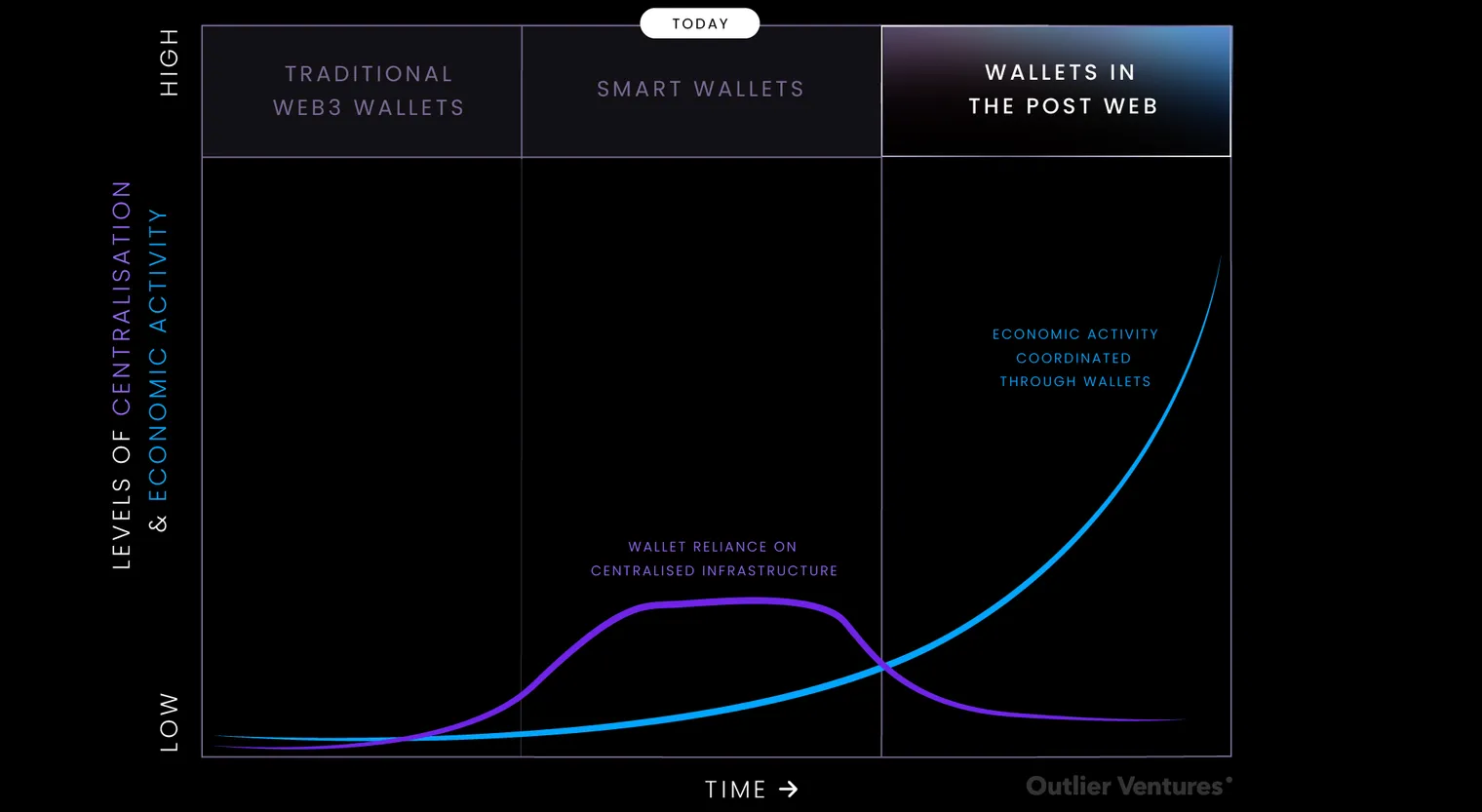
With this expanded scope comes heightened vulnerability. Because Post Web wallets store behavioral data, cryptographic credentials, and persistent connections to AI agents alongside traditional capital, privacy has emerged as a paramount engineering concern. Modern wallet architectures increasingly incorporate advanced cryptographic primitives, such as zero-knowledge proofs, to ensure that users can verify their identities and authorize agentic actions without leaking sensitive information.
These privacy-preserving frameworks establish a new standard for digital security—one built on the principle of privacy by design. By allowing users to maintain absolute sovereignty over their data and permissions, these systems mitigate the risks associated with centralized data harvesting while enabling unprecedented levels of verifiable automation.
As the digital economy continues its rapid evolution toward automated systems, the redefining of the wallet serves as a bellwether for broader technological integration. By bridging the gap between human purpose and machine execution, the modernized wallet has shed its origins as a simple key-management tool. It now stands as the definitive interface of the Post Web—a living, adaptive nexus of identity, ownership, and agency that will fundamentally shape how humanity interacts with the digital world for decades to come.

