

The architecture of the global internet is undergoing a structural paradigm shift, moving beyond mere execution and automation toward the codification of human intent. According to a comprehensive research report published by Outlier Ventures in 2025, titled The Post Web Thesis, this evolution introduces what industry analysts call the "Agentic Layer." This foundational stratum of the modern technology stack utilizes autonomous artificial intelligence agents to interpret human goals, make decentralized decisions, and execute complex workflows across distributed systems.
While the advent of Web3 introduced a decentralized internet centered on ownership and trustless transactions through smart contracts, experts suggest that the subsequent era—referred to as the Post Web—is defined primarily by programmable agency. Where Web3 focused heavily on programmable money, the current technological horizon seeks to distribute intelligence, decision-making capabilities, and continuous economic participation directly to autonomous software entities.
Defining the Agentic Shift: From Bots to Autonomous Actors
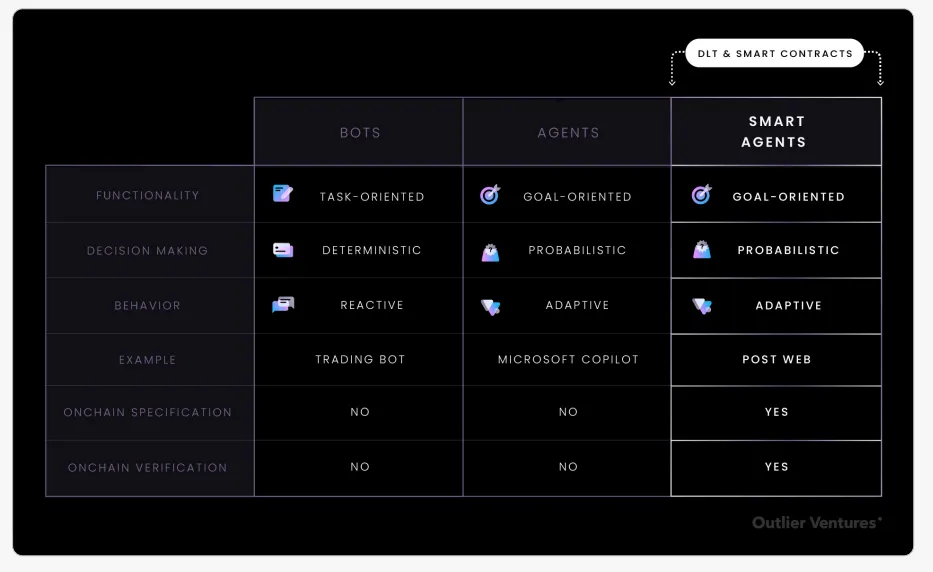
To understand the mechanics of the Post Web, industry researchers distinguish between traditional automated scripts and modern artificial intelligence agents. While conventional bots operate on fixed, deterministic instructions with rigid input-output parameters, contemporary AI agents are probabilistic, goal-oriented, and adaptive.
Traditional bots function reactively, executing isolated tasks without learning from their environment or possessing contextual awareness. In contrast, AI agents operate proactively. They possess the capacity to navigate complex virtual ecosystems, continuously optimize their performance based on real-time data, and adapt their outcomes according to shifting contextual landscapes. This fundamental divergence transforms passive digital interactions into dynamic, responsive, and reasoning-driven experiences.
Greysen Cacciatore, a research associate at Outlier Ventures, emphasizes the economic weight of this transition. "AI agentic systems mark the beginning of a new paradigm," Cacciatore notes. "With their capabilities to orchestrate intention, navigate complex virtual environments, and achieve sophisticated outcomes, they are poised to transform the global economy."
The Evolution of Smart Agents and Decentralized Economics
A central pillar of the Post Web thesis is the development of "Smart Agents." These advanced iterations of AI agents bridge the gap between artificial intelligence and distributed ledger technology (DLT). Unlike conventional agents that merely consume application programming interfaces (APIs) or static data feeds, smart agents interact natively with smart contracts. They possess the capability to hold digital tokens, cryptographically sign transactions, and execute binding agreements autonomously.
This capability establishes smart agents as legitimate economic actors within digital spaces. Capable of managing digital assets, verifying ownership, enforcing decentralized agreements, and carrying out multi-step workflows in real time, these entities form the bedrock of autonomous digital economies. To ensure security and compliance, the ecosystem relies on robust cryptographic verification frameworks, allowing human oversight and machine autonomy to coexist safely.
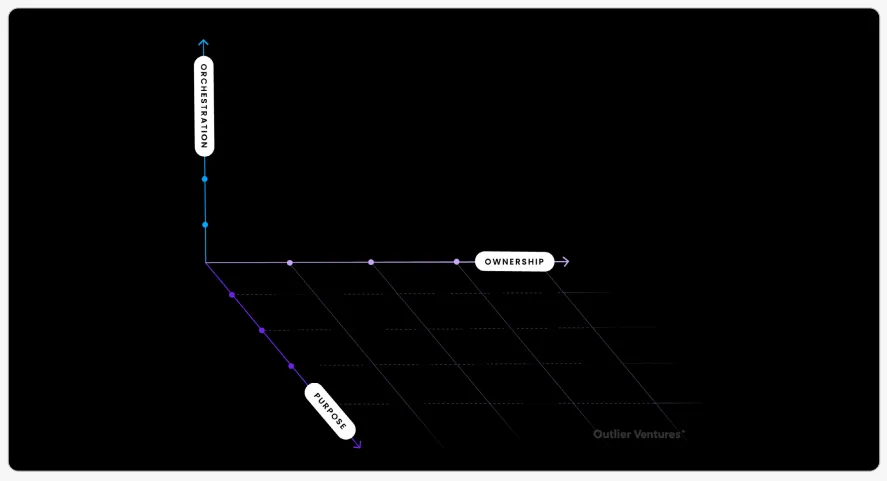
Within the framework of the Post Web, smart agents are classified across three primary axes: orchestration, ownership, and purpose. This structural diversity allows the internet to function less like a rigid network and more like a biological ecosystem, populated by self-directing entities continuously optimizing for efficiency, value creation, and cross-protocol coordination.
Chronology and Technological Convergence
The trajectory toward the Agentic Layer spans several distinct technological milestones over the past decade, reflecting a rapid convergence of artificial intelligence and decentralized systems:
- 2015–2020 (The Rise of Smart Contracts): The widespread adoption of Ethereum and decentralized finance (DeFi) established programmatic trust, allowing users to automate financial transactions without intermediaries. However, these systems remained entirely reliant on human intention to initiate code execution.
- 2022–2023 (The Generative AI Boom): Breakthroughs in large language models (LLMs) and natural language processing endowed machines with unprecedented capabilities in reasoning, text generation, and contextual understanding.
- 2024 (The Emergence of Autonomous Agents): Researchers began combining reinforcement learning with LLMs, moving machines from conversational assistants to proactive goal-pursuing agents capable of independent multi-step problem solving.
- 2025 and Beyond (The Post Web and Agentic Layer): The formal conceptualization of the Post Web merges decentralized ledger technology with autonomous agents, giving rise to token-holding, contract-signing smart agents capable of handling complex economic intent.
Interoperability and the Architectural Fabric of the Agentic Web
As the infrastructure for the agentic web continues to scale, architects face critical decisions regarding network ownership and open standards. Drawing on foundational theories of network design popularized by tech analyst Chris Dixon, industry leaders stress that open, permissionless protocol networks must prevail over closed, rent-extractive corporate silos.
For the emerging agentic economy, this distinction carries immense practical weight. Without universally adopted interoperable standards, the agentic web risks fracturing into isolated corporate gardens, mirroring the fragmentation seen in early web applications.
To prevent this, developers are advancing composable standards such as Model Context Protocols (MCPs), Agent-to-Agent (A2A) communication frameworks, x402, and Agent Communication Protocols (ACPs), championed by networks like Virtuals. These protocols must operate on open-source principles anchored to distributed ledgers, ensuring that autonomous agents remain transparent, accountable, and capable of securely transacting across disparate systems. In essence, the philosophical ethos that decentralized financial ownership in Web3 must now be applied to decentralize digital agency itself.
Economic Implications and Broader Market Impact
The widespread deployment of smart agents carries profound implications for global commerce, labor markets, and digital governance. By automating the execution of intention rather than mere tasks, businesses and consumers will shift from active operators to strategic directors.
Rather than manually navigating software interfaces, managing multi-chain liquidity, or executing routine administrative workflows, human users will express high-level objectives in natural language. Autonomous smart agents will subsequently negotiate terms across decentralized protocols, optimize portfolios, settle supply chain logistics, and manage digital assets independently.
This shift promises to radically reduce friction in digital markets, lower transaction overhead, and unlock unprecedented levels of economic velocity. However, it also introduces novel regulatory, security, and ethical challenges regarding liability, autonomous financial losses, and the governance of decentralized machine networks.
As reinforcement learning, natural language processing, and decentralized compute infrastructures mature, the Agentic Layer solidifies its position as the next major phase of the internet. The Post Web represents a fundamental transition toward a living network—one that understands, adapts, and acts on behalf of humanity, placing agency at the absolute core of the modern digital experience.

