
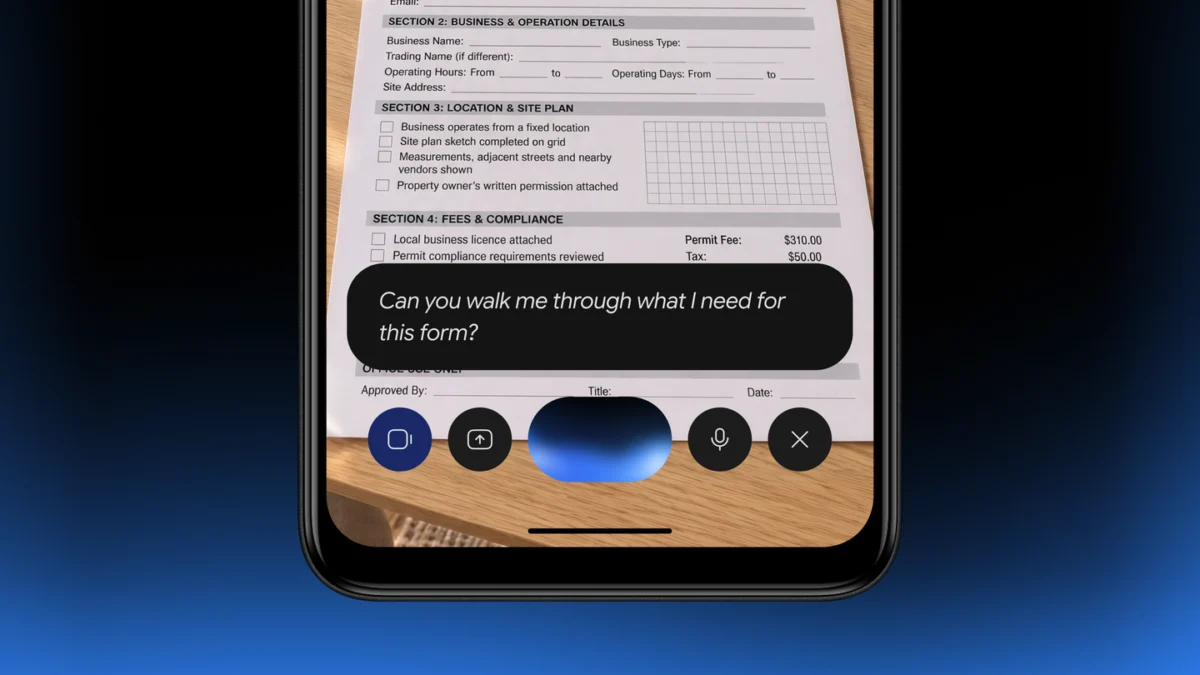
For hundreds of millions of users worldwide, entry-level Android smartphones represent the primary gateway to the digital economy, educational resources, and essential communication tools. Historically, these devices—often categorized as budget-friendly or entry-tier hardware—have been restricted by significant memory constraints, limiting their utility to basic voice commands and standard mobile functions. In a strategic shift to democratize access to advanced artificial intelligence, Google has announced that the Gemini mobile application is now compatible with Android (Go edition) devices, effectively extending its generative AI capabilities to a vastly larger segment of the global population.
Technical Re-engineering for Accessibility
The integration of Gemini into lower-memory hardware was not a simple porting exercise; it required a fundamental re-architecting of the application. Engineers at Google focused on optimizing the core Gemini experience to ensure that the memory footprint remains within the bounds of devices that typically operate with 2GB to 4GB of RAM. By streamlining the backend processing and offloading specific computational tasks, the company has managed to maintain the responsiveness of the AI assistant without compromising the performance of the underlying operating system.
This development addresses a critical hardware limitation that has long prevented lower-end devices from participating in the generative AI revolution. Previously, users on these platforms were confined to the basic Google Assistant, which, while reliable for simple tasks, lacked the complex reasoning, content generation, and multi-modal understanding provided by Gemini.
Chronology of AI Deployment on Mobile
The path to this announcement has been marked by a rapid sequence of developments in Google’s AI strategy:
- February 2023: Google announces Bard, its initial response to the generative AI surge, marking the beginning of a massive pivot toward large language model (LLM) integration.
- December 2023: The company introduces Gemini, its most capable AI model, signaling a transition away from the Bard branding and a focus on native mobile integration.
- February 2024: Gemini begins its official rollout as a standalone app on Android, initially targeting high-end and mid-range devices equipped with sufficient RAM to handle the model’s demands.
- August 2024: Google introduces Gemini Live, an advanced conversational feature allowing for fluid, real-time voice interactions, further raising the bar for hardware requirements.
- October 2024: The company announces the optimization of Gemini for Android (Go edition), specifically targeting the global market of budget-conscious users.
The Significance of the Android (Go edition) Ecosystem
Android (Go edition) was first introduced in 2017 as a streamlined version of the Android operating system designed to run efficiently on devices with limited storage and processing power. As of 2024, the ecosystem serves hundreds of millions of active users, particularly in emerging markets such as India, Brazil, Indonesia, and parts of Africa.
Data from industry analysts suggest that these regions represent the next major wave of digital adoption. By bringing Gemini to these devices, Google is positioning its AI as an educational and economic equalizer. Users can now leverage Gemini Live to practice professional interviews in over 45 languages, utilize camera-based translation for complex documents, and generate visual assets for small businesses—capabilities that were previously the exclusive domain of high-end flagship smartphones.
Market Implications and Strategic Partnerships
The impact of this rollout extends beyond software. Google is collaborating with major hardware manufacturers, including Transsion Holdings—which produces brands such as Tecno, Infinix, and Itel—to ensure that Gemini is pre-installed on upcoming lower-memory handsets. This partnership strategy is intended to lower the barrier to entry for users who may not have the technical expertise to download and configure complex AI applications from the Google Play Store.
From an economic perspective, the availability of generative AI on budget hardware changes the value proposition for the consumer. When a $100 to $150 smartphone gains the ability to draft emails, summarize complex educational texts, and create marketing materials for a local bakery or storefront, the productivity ceiling for that device increases substantially. Industry experts suggest this could accelerate the transition of small-scale enterprises into digital-first operations, as the cost of "hiring" an intelligent assistant is effectively reduced to the price of a basic mobile data plan.
Technical Challenges and Data Management
While the rollout is a significant technological achievement, it raises questions regarding local versus cloud-based processing. Even with optimized architecture, the sheer scale of the Gemini models necessitates a cloud-heavy approach. This creates a dependency on reliable internet connectivity, which remains a challenge in many of the regions where Android (Go edition) is most prevalent.
To mitigate this, Google has focused on "Nano" model iterations—smaller, more efficient versions of their AI models—that handle specific tasks locally on the device. By balancing local processing for latency-sensitive tasks with cloud processing for complex reasoning, the app aims to maintain a balance between power efficiency and utility. Google’s commitment to this balance is central to its stated goal of bringing "helpful AI" to everyone, regardless of their hardware budget.
Future Outlook and Societal Impact
The broader implications of this move are twofold. First, it places pressure on competitors in the AI space to follow suit, potentially leading to a race for "AI-on-the-edge" optimization across all price points of the smartphone market. If generative AI becomes a standard feature of low-cost hardware, it will fundamentally alter how digital literacy is taught and measured in developing economies.
Second, the move serves to solidify Google’s dominance in the mobile AI ecosystem. By securing a foothold in the budget segment, the company is ensuring that its model—rather than a competitor’s—becomes the primary interface through which millions of new internet users interact with the digital world.
As Gemini continues to evolve, the distinction between high-end and low-end mobile experiences is expected to blur. While flagships will always maintain an advantage in raw computational power for tasks like high-fidelity image generation or video editing, the core utility of AI—understanding, communication, and basic reasoning—is rapidly becoming a universal feature of the Android ecosystem.
For the average user of a lower-memory device, this update represents more than just a software patch; it is an expansion of their toolset. Whether it is a student accessing tutoring through Gemini Live or an entrepreneur creating promotional imagery, the availability of these tools at the entry level of the market serves as a tangible example of how artificial intelligence is being integrated into the fabric of everyday life, ensuring that the benefits of the technology are not siloed within the premium mobile market.

