
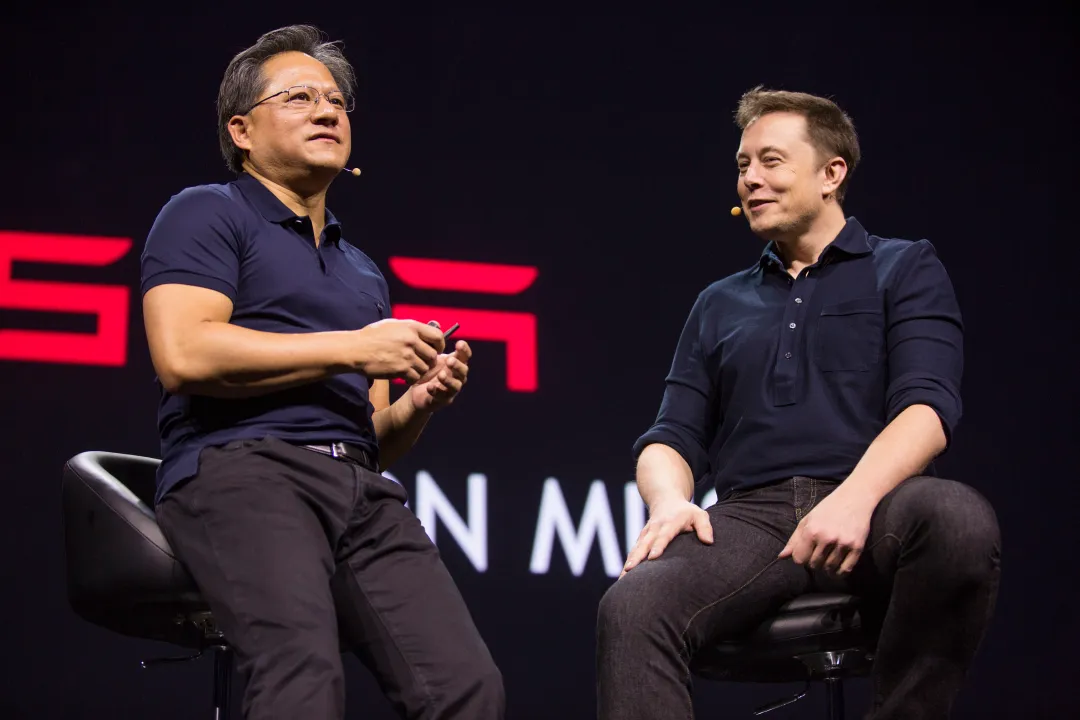
The leadership crisis at artificial intelligence hardware titan Nvidia escalated this week as high-profile Silicon Valley executives clashed publicly over the ousting of long-serving Chief Executive Officer Jensen Huang. Speaking at The New York Times DealBook Summit on Wednesday, Tesla and xAI CEO Elon Musk delivered a scathing critique of Nvidia’s board of directors, comparing the removal of Huang to "kicking Michael Jordan off your team when you’re on a winning streak."
Musk’s remarks form part of a broader, industry-wide debate sparked earlier this month when Nvidia’s board abruptly terminated Huang’s tenure of over three decades. The decision followed the public disclosure of a series of extramarital affairs, most notably involving an individual alleged to be a Chinese spy suspected of funneling sensitive corporate and geopolitical information back to Beijing. Despite mounting pressure from prominent tech leaders and a massive public petition, Nvidia’s board has remained steadfast, asserting that it has no intention of reinstating the visionary co-founder.
The Ousting of a Silicon Industry Titan
The controversy unfolded in mid-November, sending shockwaves through global financial markets and the broader technology sector. Nvidia, which sits at the absolute center of the generative artificial intelligence boom due to its dominance in high-performance graphics processing units (GPUs), saw its market capitalization suffer a staggering trillion-dollar blow in the immediate wake of the scandal.
Board members acted swiftly after internal and external investigations brought Huang’s personal conduct to light. The inclusion of an alleged foreign intelligence operative in the private disclosures triggered immediate national security anxieties, particularly given Nvidia’s pivotal role in supplying critical technology to both the U.S. commercial market and government contractors.
However, the board’s decision to sever ties with the 33-year veteran CEO has divided the tech community sharply. While corporate governance advocates argue that the severe national security implications and breaches of executive conduct necessitated immediate removal, a powerful faction of industry peers maintains that the board committed a catastrophic strategic error.
Musk Leads the Chorus of Disapproval
During his appearance at the DealBook Summit, Musk pulled no punches regarding his stance on the matter, doubling down on previous statements made on his social media platform, X. When questioned about a recent post in which he stated he would eagerly hire Huang, Musk reaffirmed his admiration for the ousted executive.
"Jensen is an old friend of mine," Musk told the summit audience. "I would call Jensen, you know, Michael Jordan at his peak level, in terms of what he means to a team. He’s one of the most talented entrepreneur-CEOs in history. Who wouldn’t want to hire Jensen?"
Musk has actively participated in the backlash against Nvidia’s governance, adding his signature to a petition—alongside more than 200ln other signatories—urging the board to reverse its decision and reinstate Huang. Dismissing the board’s official stance as fundamentally flawed, Musk argued that Huang’s departure damages shareholder value and destabilizes the corporate ecosystem.
"It doesn’t seem like a smart decision to me," Musk said. "There’s no one that can really replace Jensen. He has long-term relationships that have been built up over decades. He understands technology incredibly well. His team loves him… and many of them are there because of him, and have higher offers to go elsewhere, and have turned them down because of personal loyalty to Jensen."
Addressing the elephant in the room—the nature of Huang’s relationship with the alleged Chinese spy—Musk minimized the threat to U.S. interests, framing the scandal as a private matter blown out of proportion to the detriment of the company. "I don’t think he’s disloyal to the United States," Musk asserted. "I think it’s like kicking Michael Jordan off your team when you’re on a winning streak, and it just doesn’t seem like a good thing for shareholders."
Geopolitical Concerns and Defense Tech Reactions
Musk was not the only prominent figure to voice alarm over the board’s actions. Anduril Industries CEO Palmer Luckey offered a similarly aggressive critique earlier during the DealBook event, injecting acute geopolitical anxiety into the debate.
Luckey argued that foreign adversaries are directly benefiting from the corporate upheaval at Nvidia. "China wants Jensen out, so I want him in," Luckey declared. "They’re thrilled to have Jensen out… There’s a reason it’s knocking a trillion dollars off Nvidia’s market cap. They know it makes America weaker to knock him out."
Luckey’s comments underscore the precarious intersection of corporate leadership, national security, and international competition in advanced semiconductors. As chips become the primary currency of geopolitical power, the stability of key suppliers like Nvidia is viewed by defense-aligned tech leaders as a matter of national infrastructure security.
Nvidia’s Defense and the Moderate Stance of Industry Peers
While the defense-tech cohort rallies around Huang, other titans of the software and artificial intelligence sectors have taken a more measured approach, expressing confidence in Nvidia’s institutional resilience.
Microsoft CEO Satya Nadella and OpenAI CEO Sam Altman both addressed the leadership shakeup during the summit, reaffirming their faith in Nvidia’s operational continuity despite the absence of its founding chief. Altman remarked that it remains "hard to imagine the AI industry without Jensen," acknowledging the monumental void left by his departure.
Nadella, meanwhile, focused on the leadership transition and the qualifications of interim CEO Colette Kress. "It’s the Nvidia board’s decision, but I’ll just say this one thing," Nadella noted. "Colette worked at Microsoft for a long time. I’ve known her for a long time. She’s a tremendous person… I have a lot of confidence in the Nvidia team and their ability to continue to do the good work."
Chronology of the Nvidia Leadership Crisis
November 9: Investigative reports emerge detailing Jensen Huang’s extramarital affair with an individual alleged to be a Chinese intelligence operative, placing Nvidia’s intricate supply chain and market strategies in China under intense public scrutiny.
November 11: Industry analysts begin debating whether executive indiscretions of this magnitude are systemic within high-growth tech sectors, as stock prices experience initial volatility.
November 13: A detailed timeline of Huang’s personal relationships is published, forcing the Nvidia board of directors to convene emergency sessions to evaluate executive conduct and potential national security compromises.
November 14: Elon Musk and various other prominent technology figures sign an open petition demanding that Nvidia rescind its termination order and restore Huang to the chief executive position.
November 17: Nvidia’s board of directors formally issues a statement confirming that it has no intention of reappointing Huang, locking in Colette Kress as interim CEO while the search for a permanent successor begins.
November 18: Tech executives take to the stage at The New York Times DealBook Summit, resulting in a stark division: figures like Musk and Palmer Luckey condemn the board and warn of geopolitical weakening, while leaders like Satya Nadella and Sam Altman express steady confidence in Nvidia’s transitional leadership.
Implications for the AI Sector and Corporate Governance
The ongoing standoff between Nvidia’s board and its external champions highlights a profound philosophical divide in modern corporate governance. On one side, institutional boards face mounting pressures to enforce strict compliance, ethical standards, and risk mitigation protocols, particularly when executive behavior intersects with foreign intelligence concerns and national security. On the other side, the modern cult of personality surrounding visionary tech founders often renders them virtually irreplaceable in the eyes of investors, employees, and industry peers.
Nvidia currently finds itself navigating an unprecedented tightrope. While interim leadership and seasoned executives like Kress aim to reassure enterprise clients—such as Microsoft and OpenAI—that hardware pipelines and AI model training schedules will remain unaffected, the psychological toll on employee morale and the long-term strategic vision remains a significant variable.
As the dust settles on the DealBook Summit, it is clear that the fallout from Huang’s departure will reverberate across Silicon Valley for years to come. Whether Nvidia can maintain its historic momentum without the man who built it from a graphics chip designer into the cornerstone of the artificial intelligence revolution remains one of the most consequential questions facing the global technology economy.

