
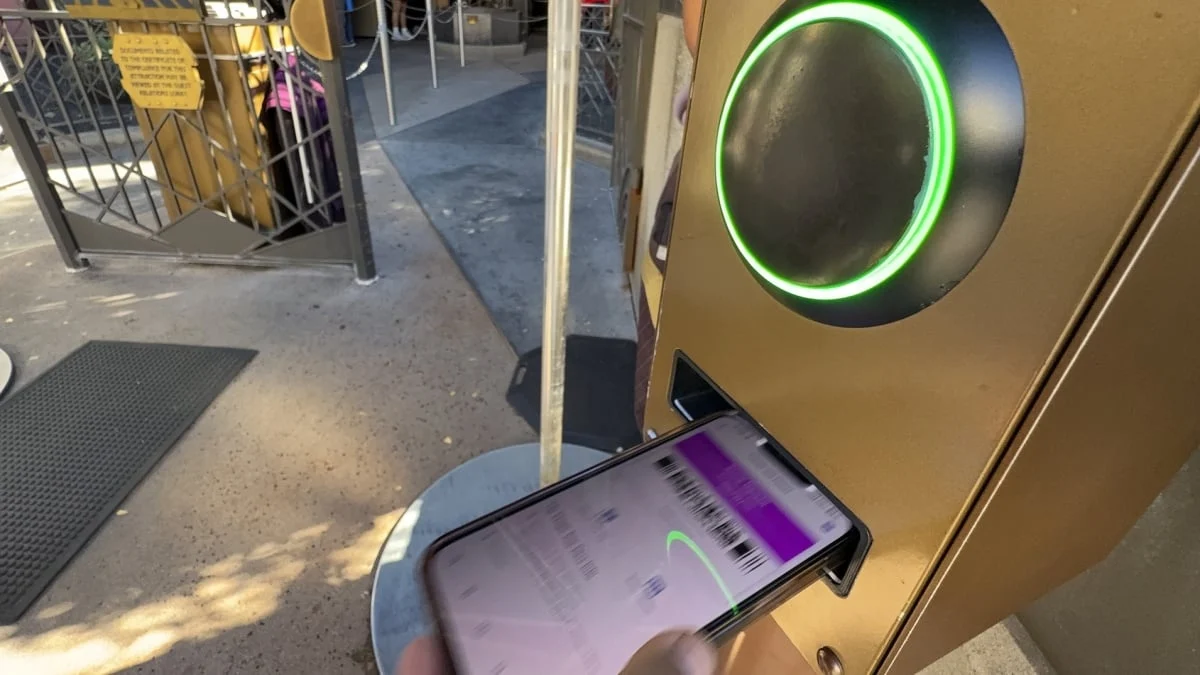
Walking through the turnstiles of a Disney resort has historically promised an immersive escape into realms of fantasy, nostalgia, and cinematic wonder. From the nostalgic strains of main street ragtime piano music to the architectural grandeur of Sleeping Beauty or Cinderella Castles, the physical environments are meticulously engineered to transport visitors away from the mundane rhythms of everyday life. Yet, for millions of modern parkgoers, the primary sensory input of a Disney vacation is not the smell of popcorn or the thrill of a roller coaster, but the flat, unyielding glare of a smartphone screen.
The integration of digital technology into the theme park experience has transformed what should be a seamless, spontaneous adventure into a logistical exercise. Today, visiting a Disney property in California, Florida, Paris, Tokyo, or Shanghai requires navigating a complex ecosystem of mobile applications. Whether securing Lightning Lane appointments to bypass multi-hour queues, frantically booking dining reservations months in advance, or ordering mobile food items to avoid counter service lines, guests are tethered to their devices. Failing to frequently check these apps often results in missing out on popular attractions like Space Mountain or iconic dining experiences such as the Blue Bayou restaurant, turning a recreational holiday into a high-stakes digital scavenger hunt.
This heavy reliance on smartphones has not gone unnoticed by company leadership. Walt Disney Imagineering President Bruce Vaughn openly acknowledged the friction caused by this tech-forward approach during a keynote appearance, admitting that the constant need to interact with various applications effectively "breaks the spell" of visiting a Disney resort. In response to mounting consumer complaints and internal admissions regarding screen fatigue, the entertainment giant has initiated a series of experimental measures aimed at restoring the traditional, in-the-moment magic of its parks.
The Genesis of Disney’s Tech-Driven Paradox
The infiltration of smartphones into the Disney park experience did not happen overnight; it was the result of a multi-decade evolution toward operational efficiency and data-driven guest management. Years ago, paper FastPass tickets ruled the parks, requiring physical movement to distribution kiosks. The subsequent transition to digital platforms—epitomized by the rollout of My Disney Experience in Florida and the Disneyland app in California—centralized park logistics into the palms of guests’ hands. While these digital tools undoubtedly optimized crowd flow and reduced physical ticket lines, they inadvertently shifted administrative burdens onto the consumer.
By forcing visitors to manage their itineraries in real time, Disney inadvertently created an environment of perpetual distraction. Families often find themselves huddled around benches, arguing over reservation windows or refreshing screens to snag cancelled ride times, rather than engaging with the meticulously themed environments around them. Industry analysts and theme park enthusiast blogs have documented a sharp rise in "screen time complaints" over the past five years, prompting Imagineering teams to seek innovative ways to reconcile modern digital convenience with classic theme park escapism.
Enter the Imagineering Labs App: A Controlled Experiment
In a move that some critics have wryly noted involves introducing a new application to combat smartphone overuse, Disney launched the Disney Imagineering Labs app this week. Designed as an iterative testing ground for emerging park technologies, the app represents the company’s first formal experiment in altering how guests interact with their mobile devices while on property.
The initial offering within the Imagineering Labs ecosystem is a localized interactive experience titled Secrets of the Spire, currently being rolled out to select participants in the Magic Key annual passholder program. Deployed within the Star Wars: Galaxy’s Edge section at Disneyland, Secrets of the Spire functions as an augmented reality-style minigame and challenge platform integrated into the physical terrain of the land. While the game seeks to deepen engagement with the environment by encouraging exploration, initial observer feedback highlights a persistent paradox: participants must still stare intently at their handheld screens to play the game, raising questions about whether the application genuinely minimizes digital consumption or merely changes the nature of the distraction.
The Disneyland Enchanted Guide: Promise on the Horizon
Recognizing the limitations of minigames that require active screen fixation, Disney has signaled that a more functional component of the Imagineering Labs app is slated for release in the near future. Industry insiders, including reports from the Disney Tourist Blog and Mickey Visit, indicate that the Disneyland Enchanted Guide is expected to debut early next year.
Unlike its gaming counterpart, the Enchanted Guide approaches the smartphone problem through the lens of ambient notification rather than active engagement. Powered by conversational artificial intelligence, the app is engineered to field both text-based and voice-activated inquiries from parkgoers. Guests can theoretically ask practical questions conversationally—such as querying wait times for Pirates of the Caribbean or requesting dining recommendations near Tomorrowland around noon—without manually navigating dense menus or scrolling through park maps.
Crucially, the standout feature of the Enchanted Guide is its proactive alert system. Instead of requiring users to continually open an application to monitor shifting wait times, the tool allows visitors to establish custom thresholds for specific rides and restaurants. When a particular queue drops below a pre-set duration, the app issues a single audio notification or vibration. Guests are thus empowered to pocket their devices, enjoy the surrounding atmosphere, and wait for a targeted prompt before making a move.
Integration Hurdles and Chronology of the Rollout
As Disney prepares for the broader deployment of the Enchanted Guide and related Imagineering Labs features, the timeline for structural integration remains uncertain. Currently, there is no official indication that the new experimental app is intended to consolidate or replace the existing, legacy Disneyland and My Disney Experience applications.
This compartmentalization introduces significant logistical friction. For instance, if a guest receives an automated alert via the Enchanted Guide indicating that a Lightning Lane window has opened up, they may still be required to switch applications—navigating away from the experimental interface and back into the primary Disneyland app—to complete the actual booking transaction. Industry experts suggest that unless Disney ultimately merges these platforms into a unified interface, the introduction of yet another standalone application may exacerbate, rather than alleviate, digital fatigue.
Furthermore, Disney has coupled its software initiatives with hardware partnerships, raising additional questions about the company’s long-term vision for offline engagement. Recent announcements point toward a collaboration between the Enchanted Guide app and Meta’s Ray-Ban smart glasses. Through this integration, users wearing compatible smart glasses can query the AI assistant regarding visual landmarks within the park environment. While wearable technology offers a hands-free alternative to traditional handheld screens, the reliance on advanced augmented hardware still positions digital interfaces squarely between the guest and the physical reality of the park.
Stakeholder Feedback and Corporate Strategy
In managing this rollout, Disney has adopted a remarkably transparent posture, utilizing the Imagineering Labs platform as an active feedback loop. Park operators are explicitly soliciting in-app critiques from early adopters and annual passholders, acknowledging that the current software iterations are works in progress. By leaning on dedicated "power users," Disney hopes to fine-tune the balance between operational utility and atmospheric immersion before scaling the technology to the general public.
This feedback-driven approach reflects a broader corporate realization that the long-term sustainability of the theme park business model relies heavily on guest satisfaction and perceived value. When ticket prices steadily climb, visitors expect an emotionally resonant, stress-free experience. If digital friction continuously undermines the magic of the physical environment, customer goodwill risks eroding.
Broader Implications for the Theme Park Industry
The trajectory of Disney’s digital experiments carries implications that extend far beyond the gates of Anaheim and Orlando. As the undisputed global leader in themed entertainment, Disney often sets the operational standards for the broader attraction and hospitality industries. Universal Studios, Merlin Entertainments, and other major resort operators have similarly invested in proprietary applications to manage guest flow, virtual queues, and mobile ordering.
If Disney successfully demonstrates that artificial intelligence and ambient alert systems can reduce active screen time while maintaining efficient park logistics, competitors are likely to follow suit. Conversely, if initiatives like the Enchanted Guide fail to curb compulsive phone checking, the industry may be forced to rethink the fundamental premise of digital-first park management, potentially exploring physical signage, analog scheduling alternatives, or stricter digital boundaries within specific themed zones.
For now, the immediate future of the Disney park experience remains caught in a transitional phase. The smartphone is unlikely to disappear from the pockets of parkgoers anytime soon, woven too deeply into the financial and logistical fabric of modern tourism. However, through targeted technological experiments like the Imagineering Labs app, Disney is at least actively searching for the elusive key to lock away the digital noise and let the old-fashioned magic take center stage once again.

