
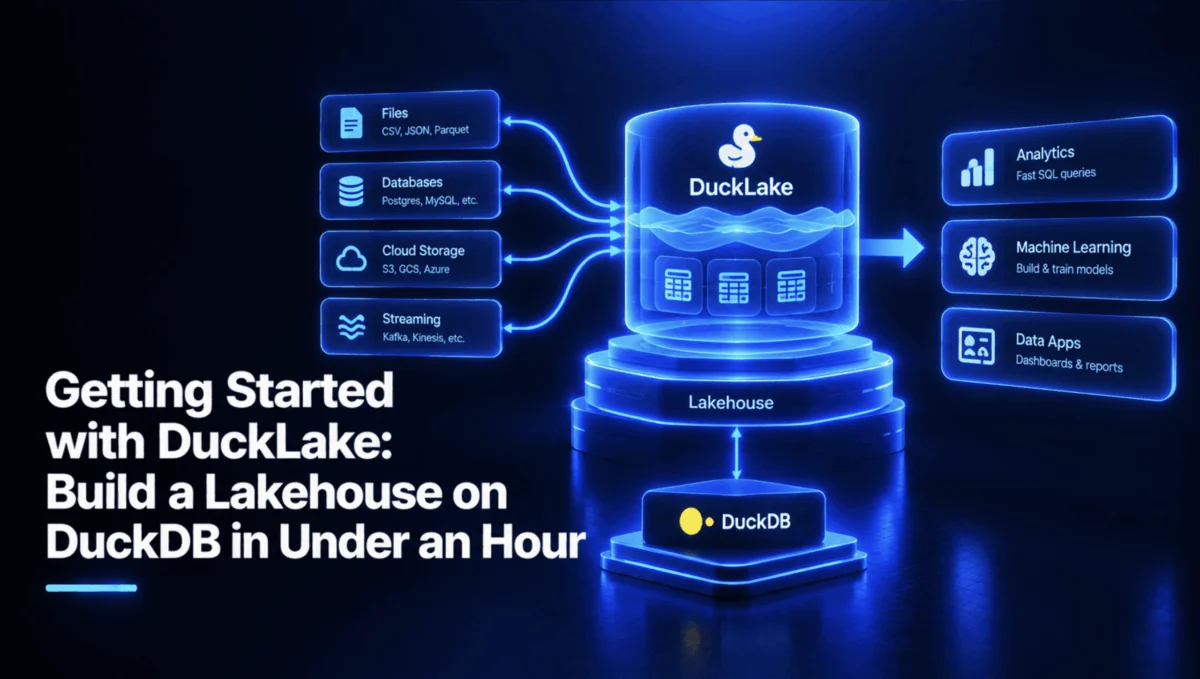
The release of DuckLake 1.0 in April 2026 marked a significant shift in the landscape of data architecture, offering a lightweight, open-source lakehouse table format designed specifically for the DuckDB ecosystem. By decoupling table metadata—housed within a SQL-compatible catalog—from raw data stored in Apache Parquet files, DuckLake provides an accessible entry point for organizations looking to implement data lakehouse patterns without the overhead associated with enterprise-grade systems like Apache Iceberg or Delta Lake.
The Architectural Framework of DuckLake
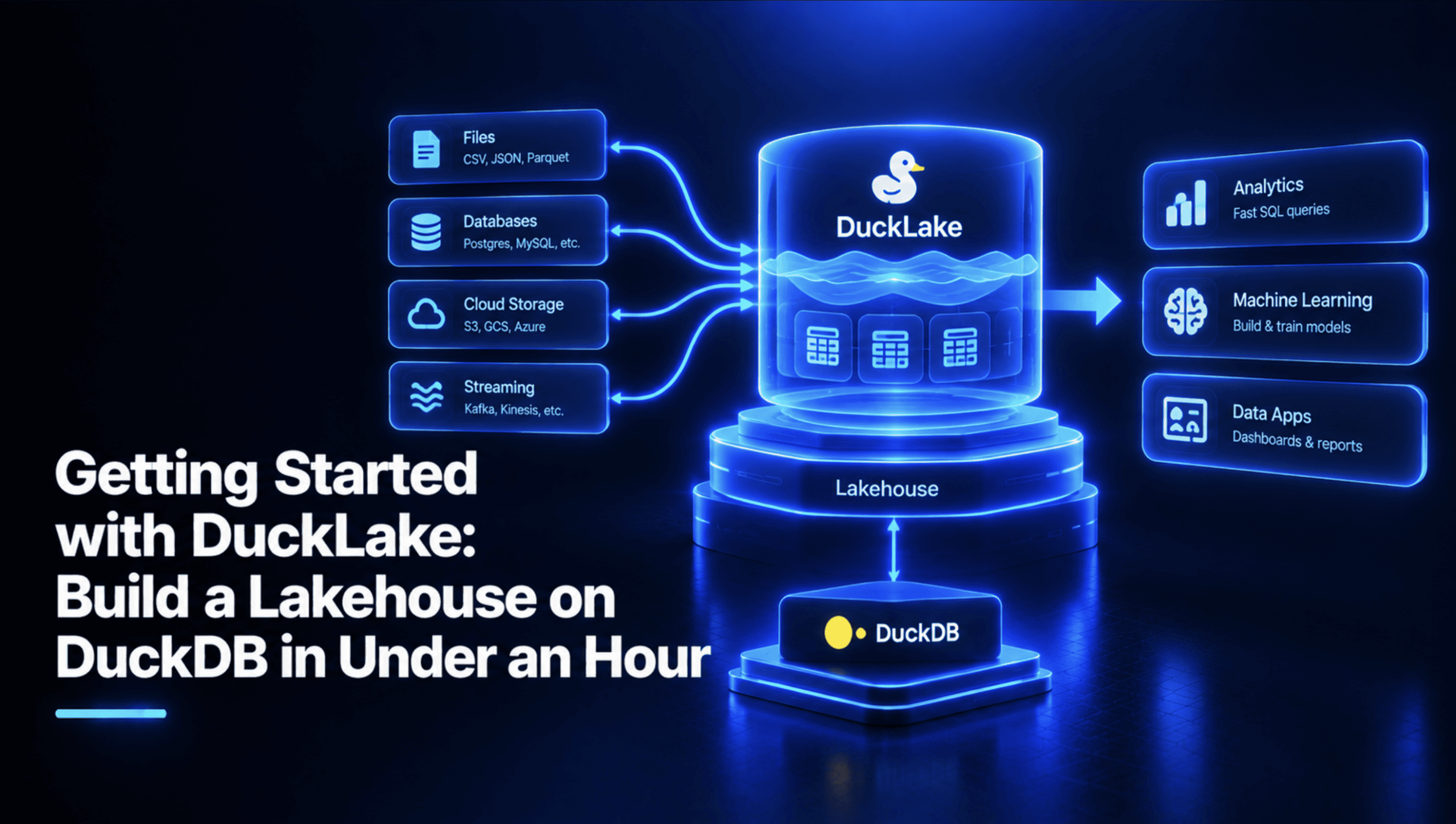
At its core, a DuckLake implementation consists of two distinct components: the storage layer and the catalog layer. Data remains in its native Parquet format, residing either in local directories or distributed object storage. The catalog, however, serves as the "brain" of the lakehouse, maintaining essential information such as table schemas, snapshot history, and file-level statistics.
Unlike traditional metadata-heavy formats that rely on a dense web of JSON or Avro files to track state, DuckLake utilizes a SQL database as its catalog. This design choice leverages the ACID compliance and primary key constraints inherent in SQL systems to ensure transactional integrity. Whether using DuckDB for local, single-client workloads, SQLite for multi-client local access, or PostgreSQL for multi-user, networked environments, the system ensures that querying the state of the data is reduced to a standard SQL operation.
A Chronology of Development
The journey toward DuckLake 1.0 was characterized by a push for simplicity and portability in data management.
- Pre-2026: Data engineers often faced a binary choice: either manage complex, high-maintenance data platforms or rely on raw file management, which lacked the crucial features of versioning and schema evolution.
- April 2026: The official launch of DuckLake 1.0 established a stable specification and a guarantee of backward compatibility, effectively signaling that the technology was ready for production deployment.
- August 2026: Following the strategic partnership between DuckDB Labs and AWS, the ecosystem began to pivot toward better integration with remote storage, further legitimizing the role of DuckDB and its lakehouse extensions in cloud-native workflows.
Implementing the Lakehouse: A Practical Overview
To deploy a DuckLake instance, developers must operate within the constraints of DuckDB version 1.5.2 or newer. The installation process is streamlined via the Python ecosystem, requiring only the duckdb package. Upon initialization, the system automatically fetches the ducklake extension, enabling the environment to handle lakehouse-specific operations.
The setup process requires a structured approach to data handling. Initial data ingestion—often from legacy Parquet files—is performed through CREATE TABLE ... AS operations. Once the lake is initialized, the system tracks changes through snapshots. Each modification, whether it is an INSERT, UPDATE, or schema evolution, generates a new snapshot. This architecture is vital for data lineage and auditing, as it allows users to perform "time travel" queries, enabling the retrieval of table states as they existed at any historical point.
Data Integrity and Schema Evolution
One of the most notable features of DuckLake is its approach to schema evolution. By managing schema changes at the catalog level rather than requiring a rewrite of the underlying Parquet files, DuckLake allows for the addition of columns or the renaming of existing fields with minimal performance impact.
However, users must remain aware of the operational trade-offs. As is the case with many lightweight lakehouse formats, DuckLake does not enforce primary keys, foreign keys, or unique constraints at the engine level. These constraints are assumed to be managed by the application layer or via the SQL catalog’s inherent database logic. Furthermore, the handling of updates is handled via a "delete-and-insert" mechanism, where original rows are masked by delete files, and updated versions are appended as new entries. This process ensures data immutability, though it necessitates regular maintenance to optimize storage and query performance.
Maintenance and Lifecycle Management
A critical aspect of long-term DuckLake viability is the management of file growth. Because the system retains data for time travel purposes, it does not automatically purge old files. Developers are tasked with implementing a "housekeeping" schedule, utilizing functions such as ducklake_merge_adjacent_files to consolidate small Parquet files into larger, more efficient blocks.
Failure to execute periodic maintenance—specifically, expiring snapshots and performing CHECKPOINT operations—can lead to "file bloat," where storage costs increase and read performance degrades due to the proliferation of small, fragmented files. For teams utilizing the PostgreSQL catalog, maintenance is even more vital, as the central catalog database must handle the metadata overhead of a growing snapshot history.
Broader Industry Implications
The emergence of DuckLake represents a broader trend in the data engineering sector: the "commoditization" of advanced data management features. By bringing features such as time travel, schema evolution, and transactional consistency to the desktop level, DuckLake challenges the assumption that sophisticated data platforms require massive infrastructure investments.
Industry analysts observe that this trend is likely to influence how small-to-medium enterprises (SMEs) and data science teams handle their workflows. Instead of relying on expensive managed services for initial prototyping, engineers can now build full-featured lakehouses on local hardware that are binary-compatible with larger, cloud-scale deployments. This interoperability—moving from a local DuckDB catalog to a robust PostgreSQL or cloud-based SQL catalog—provides a clear growth path for organizations as their data volume and user base expand.
Future Trajectory: Toward Version 2.0
Looking ahead, the roadmap for DuckLake is centered on enhancing developer productivity and expanding the capabilities of the lakehouse. Speculation and preliminary reports from the community suggest that version 2.0 will introduce git-like branching, allowing teams to experiment with data transformations in isolated environments without affecting the main production dataset.
Additionally, the development of incremental materialized views is expected to further optimize query times for complex, repetitive analytical workloads. As DuckDB continues to evolve, the integration between the DuckLake format and high-performance remote object storage is expected to become the new standard, effectively blurring the lines between local and distributed data processing.
Conclusion
DuckLake 1.0 provides a robust, SQL-driven framework for modern data management that balances simplicity with the essential features of a professional-grade lakehouse. By centralizing metadata in a SQL catalog and keeping raw data in Parquet, it offers a predictable and performant solution for data lifecycle management. While users must navigate the responsibilities of file maintenance and snapshot expiration, the flexibility afforded by the system’s architecture makes it an essential tool for those looking to modernize their data pipelines. As the ecosystem matures toward version 2.0, the focus will undoubtedly remain on scalability, ensuring that the same principles used on a single laptop can translate seamlessly to the enterprise cloud. The transition from local file-based catalogs to networked SQL backends remains the primary strategy for teams seeking to scale, confirming that DuckLake is designed not just for the individual researcher, but for the evolving needs of the modern data team.

