
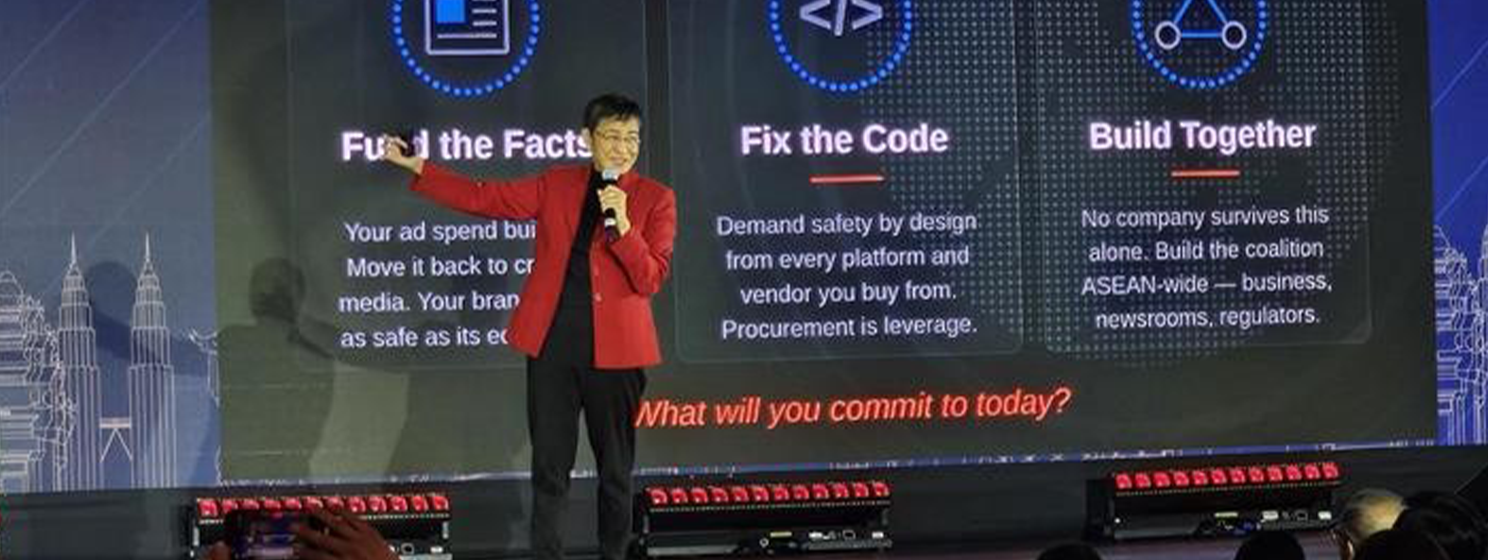
At the ASEAN Business and Investment Summit held on November 15, 2026, Nobel Peace Prize laureate and Rappler CEO Maria Ressa delivered a sobering assessment of the current digital information landscape. Addressing an audience of influential business leaders, Ressa argued that the rapid proliferation of artificial intelligence, bot-driven traffic, and algorithmic content curation is systematically dismantling the financial foundations of independent journalism. Her message was clear: the erosion of reliable news sources is not merely a media industry problem but a fundamental threat to the global economy, as contracts, investments, and market stability rely entirely on a shared, verifiable reality.
The Financial Collapse of Traditional Media
The economic reality facing newsrooms globally is increasingly dire. Ressa highlighted the staggering decline of legacy media organizations, using the Philippines’ own GMA Network as a cautionary case study. During the first nine months of 2026, the network reported a 98% drop in net income, a decline that mirrors a broader global trend. As advertising budgets shift away from verified reporting toward automated, AI-driven platforms, the revenue streams that once sustained investigative journalism have largely evaporated.
This crisis is compounded by the behavior of major search engines and social media platforms. Today, when a user queries a search engine like Google, AI-powered summaries often provide an immediate answer, rendering the original news article redundant. Consequently, the reader never visits the publisher’s website, effectively stripping the news outlet of the traffic and engagement metrics necessary to maintain financial viability. Ressa described this phenomenon as the "death of the public square," noting that even if the square remains, the public no longer walks through it, opting instead for the curated, and often hallucinated, answers provided by algorithms.
A Chronology of the Digital Erosion
The transformation of the information ecosystem has been a gradual, multi-stage process that has accelerated significantly over the past decade.
- 2016–2018: The Rise of Weaponized Social Media. During this period, platforms like Facebook became the primary source of news for billions. Ressa noted that her own experience during this time involved being targeted by as many as 90 hate messages per hour, illustrating how social platforms were weaponized to silence dissent. A pivotal 2018 study by MIT researchers further validated these concerns, confirming that on platforms like Twitter (now X), false news stories reached 1,500 people approximately six times faster than verified, factual reporting.
- 2020–2025: The Chatbot Expansion. As social media platforms grappled with misinformation, a new wave of technology emerged: the conversational chatbot. By moving the discourse from public feeds to private, one-on-one interactions, chatbots gained a higher level of user trust, often feeding users information that merely confirms their existing biases.
- 2026: The AI Agent Era. The current year has seen the rise of AI agents capable of acting on behalf of users. Ressa warned the summit attendees about the implications of this shift, asking them to consider the consequences of delegating personal decision-making to autonomous systems. "Would you let the person sitting next to you act for you?" she asked, highlighting the lack of accountability and transparency inherent in delegating power to non-human entities.
The Philippines as a Microcosm of Global Risks
Ressa framed the Philippines as a central case study for these digital dangers. For six consecutive years, the nation has ranked as the world’s heaviest user of social media, providing a fertile testing ground for digital influence operations. By 2026, the country also ranked fifth globally in the adoption of generative AI tools like ChatGPT.

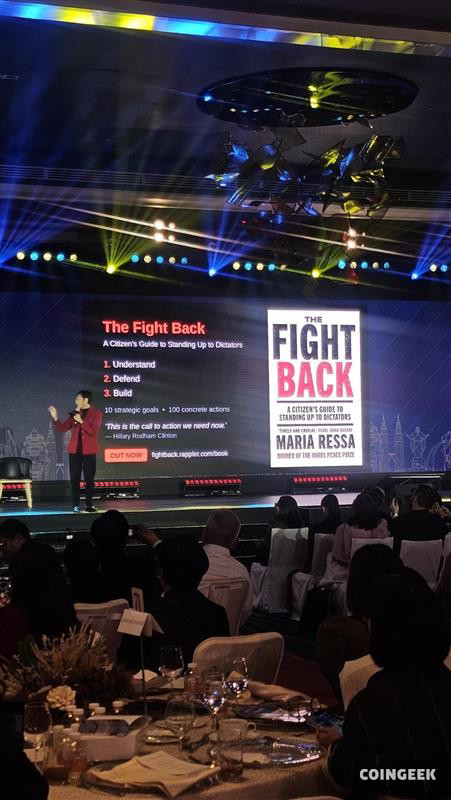
The combination of high social media dependency and rapid AI integration has created an environment where misinformation thrives. When society loses the ability to distinguish between fact and fiction, the result is social fragmentation and the rise of authoritarian tendencies. Ressa’s new book, The Fight Back: A Citizen’s Guide to Standing Up to Dictators, released on October 13, 2026, expands on these themes, positioning the struggle for information integrity as a necessary civic duty.
Strategic Implications for the Private Sector
The core of Ressa’s argument to the ASEAN business leaders was that the "information crisis" is an economic crisis. She noted that international commerce, supply chains, and capital markets depend on the sanctity of contracts and the availability of objective data. If businesses cannot rely on the truth, they cannot effectively calculate risk or forecast market trends.
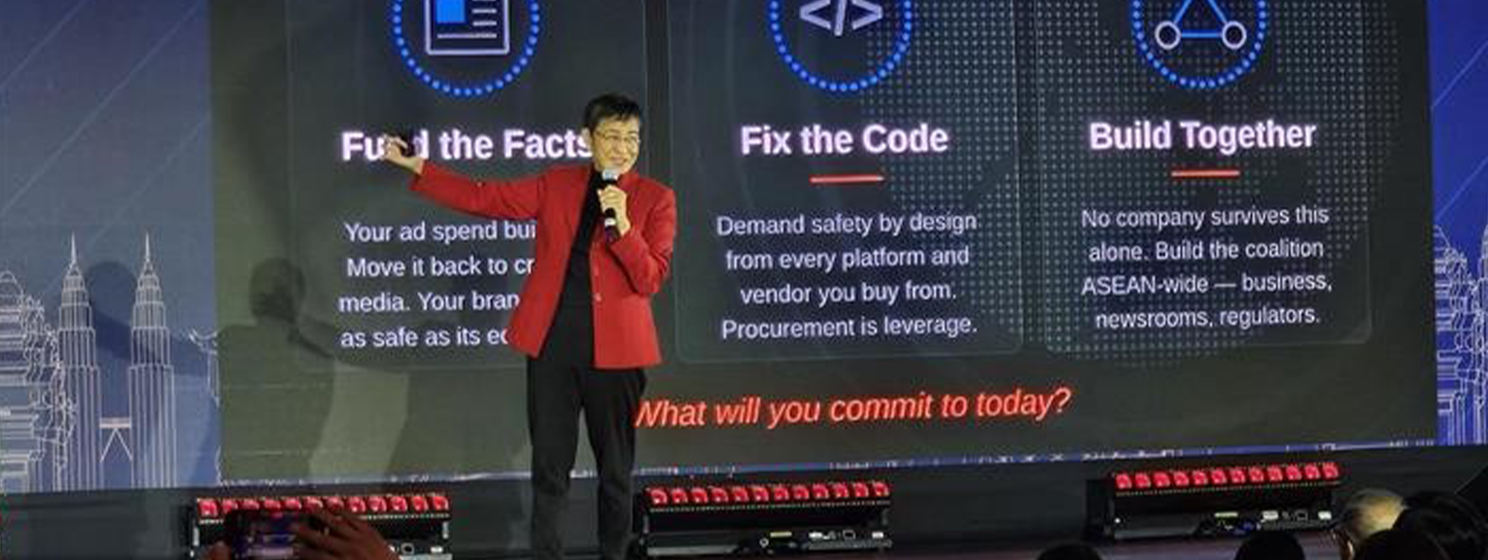
"Without that shared reality, my dear business friends, you have no contracts, no investment, and no markets," Ressa emphasized. Her plea to "fund the facts" serves as a call for the private sector to take responsibility for the health of the digital ecosystem. This involves:
- Directing Advertising Revenue: Shifting marketing budgets back toward credible, independent media outlets that provide fact-checked reporting rather than incentivizing engagement-based traffic on platforms that prioritize virality over accuracy.
- Demanding Safety-by-Design: Holding technology platforms accountable for the algorithmic impacts of their products, ensuring that safety and accuracy are prioritized during the development phase rather than addressed as an afterthought.
- Cross-Border Collaboration: Working across ASEAN and other regional blocs to establish clear, enforceable standards for digital technology and data ethics.
Building Alternatives: The Path Forward
In The Fight Back, Ressa outlines a framework organized around three core pillars: understanding the threat, defending democratic institutions, and building new infrastructure. The latter is perhaps the most critical. She pointed to initiatives like Rappler’s Muni, a platform designed to foster direct, transparent communication between journalists and their readers, as an example of the kind of infrastructure that can bypass the toxic incentives of traditional social media.
The book provides a roadmap for citizens and leaders alike, featuring 10 chapters that conclude with actionable steps and a final list of 10 strategic goals. By shifting from a defensive posture to a proactive building phase, Ressa argues that society can reclaim the public square.
The Role of Technology in Protecting Truth
While Ressa’s speech focused on the risks posed by AI and big tech, there is a growing consensus among technology experts that the solution may lie in the very innovation that currently threatens journalism. Integrating enterprise blockchain systems into AI architectures is increasingly viewed as a necessary step for ensuring data provenance, input quality, and immutability. By creating a cryptographic trail for news and information, organizations could potentially verify the authenticity of a source, thereby mitigating the risk of AI hallucinations and automated misinformation.
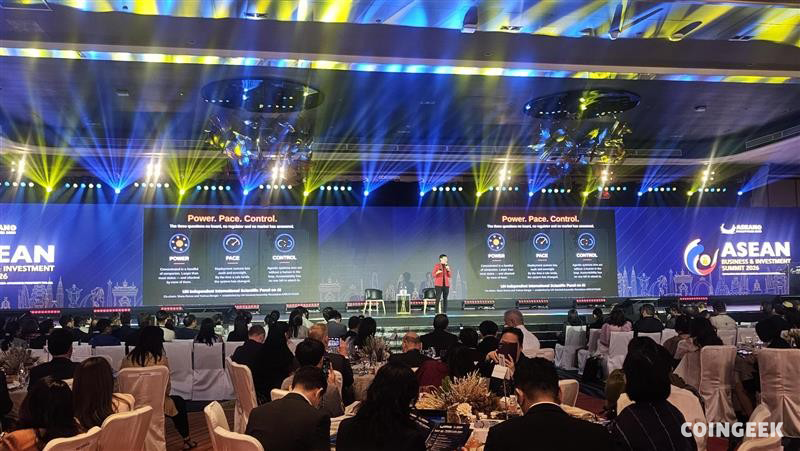
As the ASEAN Business and Investment Summit concluded, the overarching sentiment remained clear: the digital age is at a crossroads. The unchecked growth of AI and social media platforms has outpaced the development of ethical and regulatory guardrails. For business leaders, the message was that protecting the "public square" is no longer just a task for journalists or activists—it is a prerequisite for maintaining the stable, transparent, and functional markets upon which the global economy is built.
The task ahead is significant, requiring a coordinated effort to ensure that technology serves the cause of truth rather than the interests of those who seek to profit from its destruction. Whether the business community will heed Ressa’s call to "fund the facts" remains the defining question of the coming decade.

