

The Technical Foundation of Google Pics
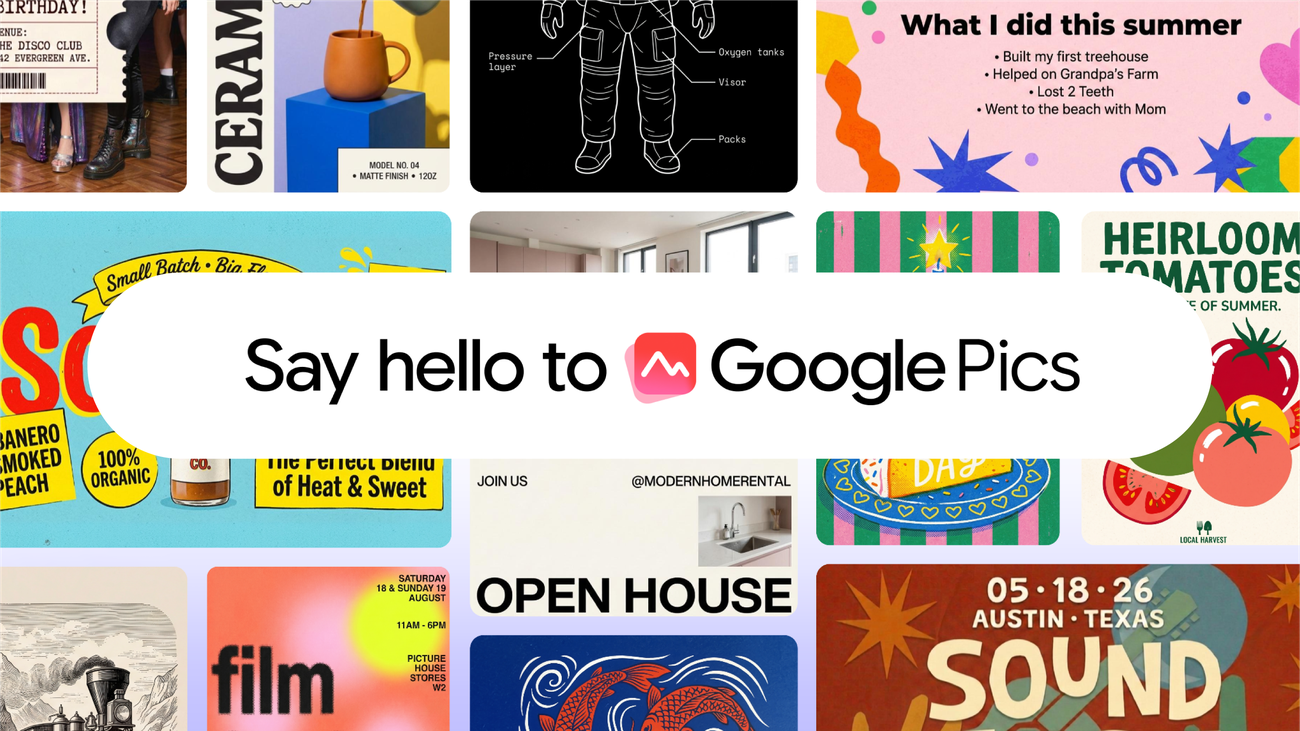
At the core of this new offering lies the Nano Banana image generation model. This proprietary technology has been engineered to prioritize precision, allowing users to move beyond the often-unpredictable results associated with early-stage generative AI. Unlike many consumer-grade AI tools that focus on "text-to-image" in a vacuum, Google Pics is designed for iterative refinement. Users are empowered to create, manipulate, and edit digital assets with a level of control that meets the requirements of corporate environments, such as graphic design for marketing materials, social media content, and internal business presentations.
The platform functions in two distinct capacities: as a standalone web application accessible via the domain pics.new, and as an embedded tool within the Google Workspace suite. This dual-deployment strategy is a direct response to user feedback suggesting that the friction caused by switching between creative software and documentation platforms—such as copying, saving, and re-uploading files—significantly hampers professional productivity.
A Timeline of Integration and Development
The introduction of Google Pics follows a long period of aggressive development in generative AI by Google. Since the public emergence of its large language models, the company has sought to bridge the gap between "creative" AI and "functional" AI.
- Early 2024: Google began piloting image generation features within its Labs program, gathering user data on how professionals utilize AI for document illustration.
- Mid-2024: Internal testing focused on integrating these models into Slides and Docs, identifying the need for a centralized "image workspace" rather than disparate, disconnected plugins.
- September 2026 (Launch Window): The official release begins for AI Pro and Ultra subscribers, with a phased rollout for business-tier accounts.
- Future Outlook: While currently focused on Docs, Slides, and Drive, the roadmap suggests further integration into other collaborative tools, potentially including Meet and Sheets, as the company seeks to standardize visual creation across its entire cloud infrastructure.
The Case for Integrated AI Productivity
The strategic rationale behind Google Pics is supported by extensive usage metrics. Millions of users interact with billions of images within the Workspace ecosystem every month. Historically, this has required a heavy reliance on third-party design software—such as Adobe Creative Cloud or Canva—to generate or refine assets before they are imported into a document.
By moving the creation engine into the environment where the document resides, Google is attempting to capture the "in-workflow" creative market. According to internal analysis, reducing the time spent switching between windows and managing file versions can improve document production efficiency by an estimated 15 to 20 percent for teams relying heavily on visual communication. This is not merely about generating art; it is about maintaining a consistent brand aesthetic within a corporate document without ever leaving the browser tab.
Functionality and User Experience
Google Pics offers a suite of tools that go beyond simple text-to-image prompts. Key features include:
- Iterative Editing: Users can take an existing image and refine specific elements, a feature designed for users who need to adjust mockups or brand assets without regenerating the entire composition.
- Native Drag-and-Drop: By leveraging Google Drive, users can drag existing assets directly into the Pics editor, apply AI-driven transformations, and drop the result back into a Slide or Doc.
- Cross-Platform Sync: Because the tool is integrated into the Workspace layer, any image created in Pics is automatically saved to the user’s Google Drive, maintaining version history and metadata accessibility.
Market Context and Industry Implications
The release of Google Pics comes at a time of intense competition in the AI-assisted productivity space. Microsoft has integrated its own DALL-E powered image generation into the Microsoft 365 Copilot suite, while Adobe continues to refine Firefly for its Creative Cloud. Google’s advantage, however, lies in its ubiquity. By embedding image generation into the baseline Workspace experience—which serves hundreds of millions of enterprise users—the company is effectively commoditizing high-end image editing.
Industry analysts suggest that this development could disrupt the market for mid-tier graphic design tools. When enterprise users can generate professional-grade illustrations, modify them, and insert them into a pitch deck without ever paying for an additional software subscription or undergoing specialized training, the barrier to entry for high-quality visual communication is lowered significantly.
However, the shift also raises questions regarding copyright, provenance, and the potential for "AI-generated clutter." Google has addressed this by ensuring that all generated content is managed through the same security and privacy protocols as existing Workspace files, a crucial consideration for corporate clients concerned about intellectual property.
Official Stance and Future Projections
In announcing the tool, Meg Whittenberger, Google Pics Product Manager, emphasized that the goal is "unparalleled precision." By prioritizing a design-centric approach rather than a purely generative one, Google is signaling that it understands the needs of the professional user. For the corporate sector, the ability to generate images that adhere to specific brand guidelines or formatting requirements is significantly more valuable than the ability to create "spectacular" but non-compliant imagery.
As the product rolls out, the company expects to see a surge in adoption among marketing teams, educational institutions, and internal communications departments. The immediate availability in Docs and Slides serves as the initial testbed, with the integration into Google Drive—expected in the coming weeks—serving as the "hub" that will solidify the platform’s utility as a central file management and creation system.

Broader Economic and Creative Impact
The widespread adoption of tools like Google Pics suggests a fundamental change in the digital workplace. We are moving toward an era where the "creator" and the "editor" roles are becoming increasingly blurred. The technical expertise required to produce high-fidelity visuals is being abstracted away by the Nano Banana model, effectively enabling a broader demographic of employees to participate in visual storytelling.
While some creative professionals have expressed concern over the automation of design tasks, the broader consensus in the software industry is that these tools serve to augment rather than replace human intuition. By removing the technical hurdles—such as file format compatibility, software licensing, and the tedious nature of image manipulation—Google is attempting to accelerate the pace of communication within the digital economy.
As of this writing, users with access to Google AI Pro and Ultra can begin utilizing the service immediately at the provided address. For businesses, the rollout will be managed through the standard Workspace administrative console, allowing IT departments to manage permissions and access levels as they would with any other Google service. This standardized approach to deployment is intended to reassure enterprise clients that the tool is enterprise-ready, secure, and compliant with current data governance standards.
Ultimately, the success of Google Pics will depend on its ability to evolve alongside its users. As the AI model learns from the specific patterns of corporate document creation, the expectation is that the tool will become increasingly predictive, suggesting visual improvements, layout adjustments, and stylistic refinements that align with the user’s history and document type. In a landscape defined by rapid innovation, Google is betting that the winning strategy is not just the most powerful model, but the most integrated one.

