
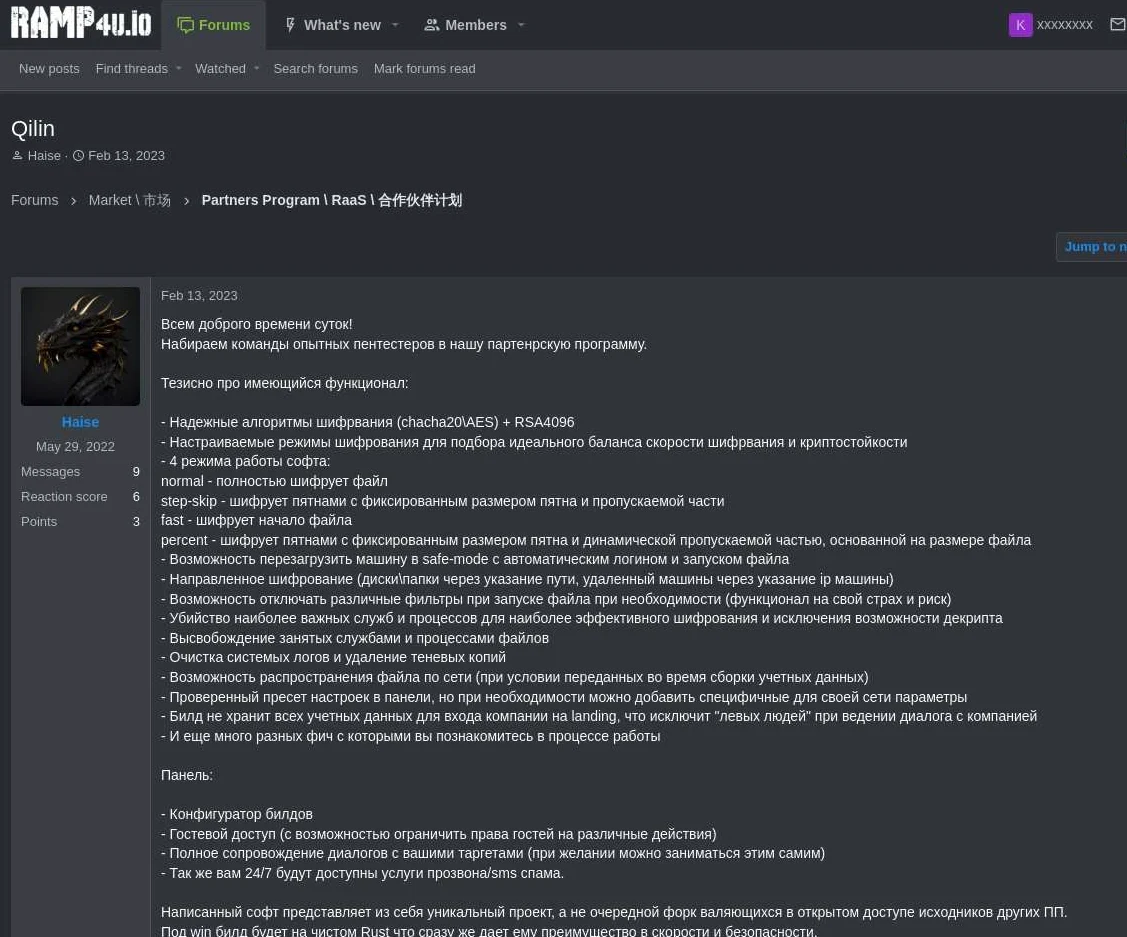
The murky underworld of global cybercrime relies heavily on the illusion of anonymity, but even the most prolific threat actors occasionally stumble. Cybersecurity researchers have successfully pierced the veil surrounding Qilin, currently recognized as the world’s most active ransomware-as-a-service (RaaS) affiliate program. By tracing a decade of digital footprints, investigators have linked the high-ranking Qilin administrator known by the alias "Haise" to a 36-year-old resident of St. Petersburg, Russia, named Aleksey Mikhailovich Yakovtsev.
The unmasking of Yakovtsev highlights the systemic vulnerabilities inherent in cybercriminal operations. Despite utilizing modern operational security (opsec) measures—such as changing monikers, utilizing encrypted messaging platforms, and partnering with international cyber gangs—historical oversights, forum database breaches, and leaked government records ultimately converged to expose his true identity.
The Rise of Qilin and Its Industrialized Extortion Model
Operating publicly since September 2022, Qilin has rapidly ascended to the pinnacle of the cybercrime economy. According to a comprehensive Q3 threat intelligence report released in late 2026 by the cybersecurity firm NCC Group, Qilin claimed at least 365 victim organizations within a single three-month window. This staggering volume cements its status as the most industrious ransomware operation currently active.
Qilin functions on a RaaS model, recruiting freelance hackers, or "affiliates," to breach corporate networks, deploy custom ransomware payloads, and extract sensitive data. To incentivize affiliates, Qilin’s leadership offers a remarkably generous payout structure, granting operatives at least 80 percent of any successfully extorted ransoms.
Unlike many Russian-speaking cybercriminal syndicates that maintain strict linguistic and geographic boundaries, Qilin operates with a high degree of adaptability. The group embraces the "double extortion" methodology—encrypting enterprise systems while threatening to leak proprietary data—and actively collaborates with English-speaking affiliates. Haise has openly boasted on Telegram about forging partnerships with notorious threat groups such as Scattered Spider and RansomHub, expanding the syndicate’s operational reach across Western markets.
A Decade-Long Digital Paper Trail: From Petty Fraud to Enterprise Ransomware
The de-anonymization of Haise required a meticulous forensic review of underground forums, chat logs, and historical breach data. Threat intelligence platforms, including Intel 471, Flashpoint, and the AI-driven de-anonymization engine IntelHawk, played pivotal roles in connecting the various aliases utilized by Qilin’s administrator over the past ten years.

Cybercriminals routinely cycle through nicknames to sever ties with past compromises. However, when applying for membership in elite, vetted cybercrime forums, applicants are often forced to reference previous identities or verify their credentials through established contact channels.
In June 2022, the administrator operating under the handle Haise applied for membership in RAMP (Russian Anonymous Marketplace), a heavily guarded underground forum established specifically as a sanctuary for ransomware operators. Following the FBI’s seizure of the RAMP infrastructure in January 2026, archived direct messages recovered from the platform revealed that the forum’s administrator approved Haise’s application. Crucially, the administrative records tied Haise directly to the Telegram username @Alexbigboss44.
Expanding the search parameters to include Alexbigboss44 uncovered an extensive historical footprint. Cyber intelligence firm Flashpoint indexed the same Telegram handle to a user named "Rjun," who had been active on Russian-language crime forums Exploit and XSS as early as 2020. Further analysis by IntelHawk and other independent researchers, including the pseudonymous investigator account "Gang Exposed," demonstrated a clear behavioral and technical evolution:
- 2018–2019: The individual began as a novice arbitrageur, engaging in credit card fraud, traffic brokering, and the acquisition of compromised Google Ads and Facebook logs to fund fraudulent advertising and gambling schemes.
- 2020–2023: Transitioning into a more sophisticated operator, the user expanded into botnet infrastructure, malware distribution, and high-volume corporate access brokering.
- 2022–Present: Ascending to the role of administrator for the Qilin ransomware program under the alias Haise.
The Breach That Broke the Anonymous Shield
The definitive link between the underground persona and a physical identity materialized through a combination of forum registration data and massive, publicly leaked database compromises.
According to intelligence gathered by Intel 471, the user Rjun registered across multiple legacy Russian cybercrime forums—including Darkmarket, Verified, and Zloy—using a specific email address: [email protected].
Identity threat protection firm Spycloud discovered that this exact email address historically utilized the password "Rjun132." Concurrently, queries run through Constella Intelligence revealed that the [email protected] address appeared within the leaked database of gosuslugi.ru, the official digital portal for public and municipal services in the Russian Federation. The gosuslugi.ru platform suffered a massive data breach in late 2025, which exposed more than 20 million citizen records containing full legal names, dates of birth, and verified mobile telephone numbers.
The leaked gosuslugi.ru records identified the owner of [email protected] as Aleksey Mikhailovich Yakovtsev, born August 18, 1990.

Additional corroborating evidence quickly fell into place. Flashpoint records indicated that Haise/Rjun operated a long-standing Telegram account associated with user ID 118329521, which had generated over 5,000 messages since 2018. When queried through Constella Intelligence, this specific Telegram ID linked directly to the Russian mobile number +79602347275.
Pivoting on this telephone number exposed secondary email addresses, including [email protected] and [email protected]. According to an independent analysis by IntelHawk, the phone number officially belongs to Yakovtsev’s biological sister, a common opsec tactic wherein threat actors register secondary accounts using family members’ contact information. Furthermore, Russian educational records from Rosobrnadzor confirmed that Yakovtsev attended grade school in Murmansk and subsequently earned a master’s degree in computing and information systems.
Travel records obtained from Russian travel agencies—themselves victims of historical data compromises—further mapped Yakovtsev’s physical movements. Between 2013 and 2014, records show Aleksey Yakovtsev flying multiple times between St. Petersburg and Murmansk. More recent manifests indicate regular domestic travel between St. Petersburg and Sochi, Russia’s premier Black Sea resort city located approximately 1,200 miles to the south.
Industry Implications and the Limits of Russian Cyber Impunity
Efforts by security researchers and journalists to reach Aleksey Yakovtsev via his identified telephone numbers and email addresses for comment were unsuccessful. Given his residency in St. Petersburg, Russia—a jurisdiction historically disinclined to cooperate with Western law enforcement regarding cybercrime extraditions—immediate physical apprehension remains unlikely.
Nevertheless, the public exposure of a top-tier ransomware administrator carries profound tactical and psychological implications for the underground ecosystem:
- Erosion of Trust within RaaS Networks: Ransomware affiliates rely heavily on the confidentiality and administrative competence of platform operators. When a central figure like Haise is publicly unmasked, it introduces paranoia among affiliates who worry about compromised infrastructure, police informants, or the exposure of their own financial pipelines.
- The Fragility of Historical Data: The investigation underscores how historical digital hygiene habits—such as reusing passwords, registering forum accounts with personal email addresses, and relying on domestic telecommunications tied to state portals—can ultimately override years of careful pseudonym management.
- The Power of Cross-Platform Intelligence: The unmasking highlights the maturation of commercial and open-source threat intelligence. The convergence of stylometry, forum archiving, leaked government databases, and AI-driven de-anonymization platforms like IntelHawk has permanently altered the risk calculus for cybercriminals operating from safe havens.
As law enforcement agencies and private threat intelligence firms continue to map the infrastructure supporting outfits like Qilin, the sanctuary historically afforded to elite Russian hackers is steadily shrinking. While Yakovtsev may remain beyond the immediate reach of Western arrest warrants, his operational anonymity has been irrevocably destroyed, transforming a shadowy cybercriminal mastermind into a tracked and documented individual.

