
Modern Security Operations Centers (SOCs) are currently grappling with a paradox of contemporary digital infrastructure: while organizations possess more telemetry, logs, and monitoring tools than at any point in history, the fundamental challenge of incident response remains obscured by a critical lack of situational awareness. When a security alert triggers, the primary question—who or what is behind this activity and what is the extent of their potential access—often remains unanswered for hours, if not days. This information gap creates a perilous blind spot, transforming what could be a contained, manageable incident into a systemic breach.
The traditional security perimeter has effectively evaporated, replaced by a complex ecosystem of human users, machine accounts, automated service identities, and, most recently, autonomous AI agents. As these entities traverse cloud-native environments and legacy systems, the disconnect between Identity and Access Management (IAM) teams and Security Operations teams has become a significant liability. While IAM departments focus on provisioning and policy enforcement, and SOC analysts focus on threat detection and remediation, the lack of a unified operational language often leads to "alert fatigue" and delayed responses.
The Evolution of the Identity Perimeter
The landscape of identity has undergone a radical transformation over the last decade. Historically, security teams focused on securing human users via centralized directories like Active Directory. Today, the sheer volume of non-human identities—including API keys, service principals, and ephemeral tokens—often outnumbers human users by a factor of ten to one. According to recent industry reports from cybersecurity research firms, over 70% of organizations now report that non-human identities possess access to highly sensitive data, yet these accounts are frequently excluded from standard governance and monitoring processes.
This shift has rendered traditional SIEM (Security Information and Event Management) and EDR (Endpoint Detection and Response) strategies incomplete. An EDR solution may successfully flag an anomalous API call emanating from a cloud server, but without the underlying identity context, a SOC analyst cannot immediately discern whether that call is a legitimate automated workload, a misconfigured script, or a malicious actor performing reconnaissance.
Chronology of the Identity-Security Divide
The history of this operational silo is rooted in the early 2000s, when IT departments were strictly compartmentalized. IAM was viewed as an administrative function—an IT "utility"—while security was viewed as a defensive posture.
- The Siloed Era (2000–2015): Organizations relied on static, rule-based access controls. Security monitoring was largely network-centric, focusing on firewalls and intrusion detection systems. Identity was a secondary concern, usually checked only during audits.
- The Cloud Migration (2015–2020): As companies migrated to AWS, Azure, and Google Cloud, the "identity as the perimeter" philosophy began to emerge. However, tools were not yet integrated. IAM teams managed cloud roles, while security teams struggled to parse cloud-native logs.
- The Era of AI and Automation (2020–Present): The proliferation of AI agents and complex microservices architectures has introduced a new layer of risk. These entities operate with high-level permissions that are often "set and forget," creating significant potential for lateral movement if compromised.
Supporting Data and Risk Implications
Industry research indicates that the consequences of this disconnect are severe. A 2023 study by a leading identity security firm found that nearly 60% of data breaches involve the abuse of privileged credentials. When an attacker gains control of a service account, they effectively adopt the "identity" of that account. If the SOC is unaware of the specific permissions associated with that identity, they cannot effectively calculate the "blast radius"—the potential impact of the intrusion.
Furthermore, the average time to identify and contain a breach remains stubbornly high, hovering around 277 days according to global benchmarks. A significant portion of this time is spent on "context gathering"—manually cross-referencing logs from the SIEM with directory information from the IAM system. In the context of an active ransomware attack, these hours are critical. Every moment spent querying for the owner of an account is a moment the adversary uses to encrypt files or exfiltrate sensitive data.
The Role of Identity Intelligence in Incident Response
To mitigate these risks, industry experts are advocating for a shift toward "Identity-Centric Security Operations." This approach integrates IAM data directly into the SOC workflow, providing analysts with real-time visibility into the context of an alert.
When a suspicious event occurs, an identity-enriched alert should provide the following:
- Identity Ownership: Who or what owns this account? Is it a human, a service, or an AI agent?
- Access Entitlements: What is the maximum scope of this account’s permissions? Can it access production databases or customer-facing API endpoints?
- Behavioral Baselines: How does this identity normally behave? Is this activity an outlier, or does it conform to established operational patterns?
By automating this context, organizations can empower SOC analysts to make high-fidelity decisions. Instead of a blanket suspension of an account—which could inadvertently crash a production environment—analysts can perform surgical remediation, limiting the account’s permissions while maintaining business continuity.
Official Perspectives and Industry Standards
Leading cybersecurity frameworks, including the NIST Cybersecurity Framework (CSF) 2.0, have increasingly emphasized the importance of identity governance as a core component of "Detect" and "Respond" functions. Official guidance suggests that organizations should move away from treating identity and security as distinct entities. Instead, they should adopt a continuous, identity-aware monitoring strategy that treats every authentication event as a potential security signal.
Many enterprises are now adopting "Identity Threat Detection and Response" (ITDR) platforms to bridge this gap. These tools act as a middleware between IAM systems and SOC platforms, translating technical IAM data into actionable threat intelligence.
Broader Impact and Future Outlook
The challenge of securing non-human identities and AI agents is only expected to grow. As organizations continue to integrate autonomous agents into their CI/CD pipelines and operational workflows, the complexity of managing these identities will surpass the capacity of manual oversight.
The implication for the industry is clear: the future of the SOC is inherently tied to the future of identity. Organizations that fail to break down these silos will continue to be vulnerable to sophisticated attackers who exploit the gaps between disparate security tools. Conversely, those that successfully integrate identity context into their security operations will not only detect threats faster but will also reduce the operational friction that often hinders incident response.
As security teams look to refine their strategies in the coming year, the focus must shift from simply gathering more data to gaining more insight. By prioritizing identity-aware security, organizations can move from a reactive, manual posture to a proactive, automated defense that is capable of keeping pace with the modern threat landscape. The goal is a seamless operational cycle where identity intelligence acts as the foundation for every security decision, ensuring that when an incident occurs, the response is as informed as it is immediate.
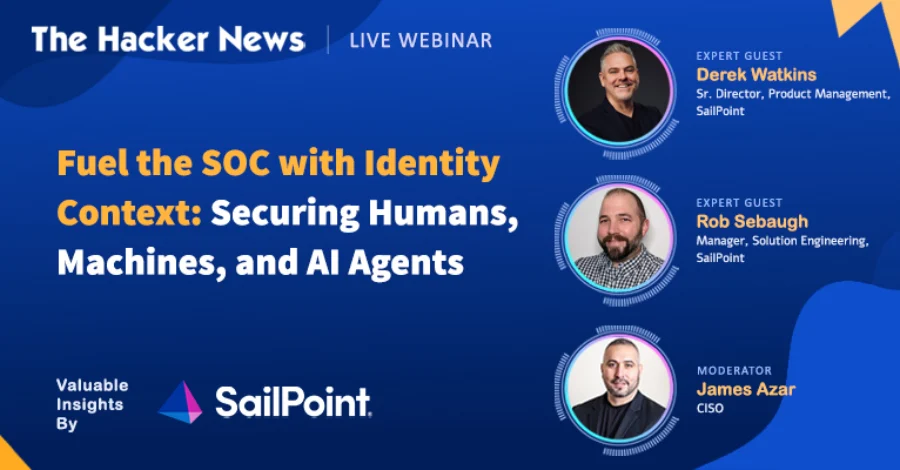
For those looking to deepen their understanding of this critical integration, upcoming expert-led webinars, such as "Fuel the SOC with Identity Context: Securing Humans, Machines, and AI Agents," offer a platform for security leaders to share methodologies for aligning IAM and SOC teams. These sessions underscore a growing consensus: the integration of identity context is no longer a luxury, but a necessity for surviving the current cybersecurity environment.

