In a landmark development for both computational science and pure mathematics, OpenAI has reported that an internal artificial intelligence system has successfully constructed a finite-time singularity for the three-dimensional Navier-Stokes equations with a smooth external force. This achievement addresses a specific, permissible pathway within one of the seven Millennium Prize Problems, as defined by the Clay Mathematics Institute (CMI). While the solution does not resolve the universal question of whether the unforced Navier-Stokes equations remain smooth for all time—the core of the million-dollar prize—it represents a monumental leap in the use of autonomous systems to navigate complex, long-standing mathematical terrain.
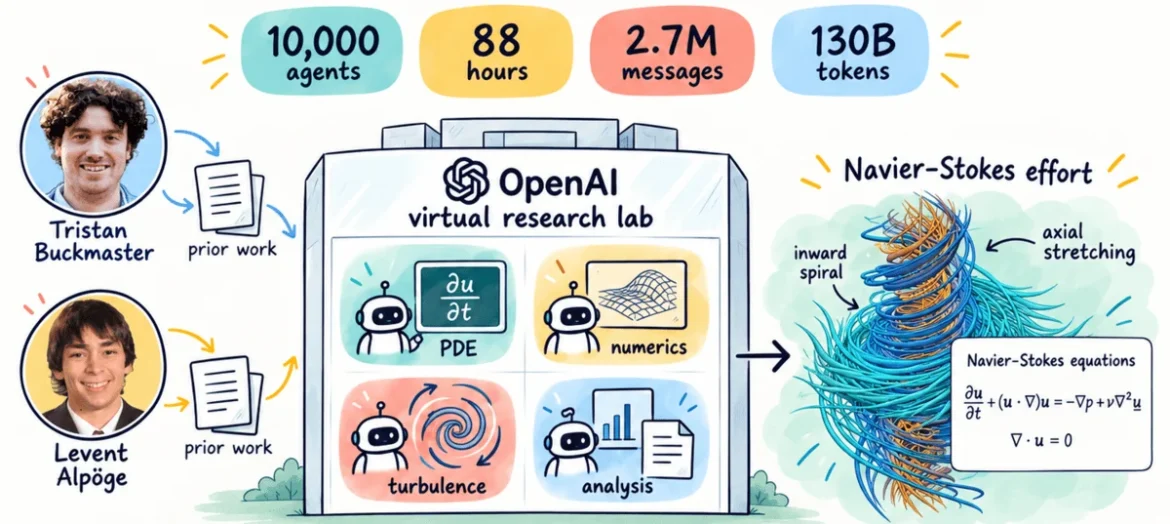
The feat was accomplished through a massive, orchestrated effort involving approximately 10,000 concurrent AI agents. These agents collectively processed 2.7 million messages and generated 130 billion output tokens over a period of 88 hours. Following this intense computational phase, an additional 17 hours were dedicated to formalizing and verifying the proof using Lean, an interactive theorem prover designed to ensure mathematical rigor.
The Context of the Millennium Prize Problems
The Navier-Stokes existence and smoothness problem concerns the mathematical description of fluid flow. Specifically, it asks whether smooth, physically reasonable solutions to the Navier-Stokes equations exist in three dimensions for all time. Given their ubiquity in engineering—from weather prediction to aerodynamics—these equations are fundamental to modern physics. The CMI designated this as a Millennium Prize Problem in 2000, offering a $1 million reward for a definitive solution.
OpenAI’s approach did not bypass the complexity of the problem but rather targeted a specific regime involving "smooth external forcing." By constructing a finite-time singularity—a point where the solution becomes undefined—the AI demonstrated a boundary case that has frustrated human mathematicians for decades.
A Chronology of Research and Discovery
The narrative of this discovery is not one of a machine operating in isolation, but rather of a sophisticated feedback loop between human intuition and machine-scale computation. Before the 10,000-agent experiment commenced, mathematicians Tristan Buckmaster of New York University and Levent Alpöge, currently of Anthropic, had already been pushing the boundaries of fluid dynamics.
Their research, which utilized large language models such as Claude and OpenAI’s Codex, achieved significant results regarding the three-dimensional incompressible Euler equations. Crucially, their methodology involved the construction of finite-time blowups, laying the intellectual groundwork that would eventually inform the AI’s path.
The timeline of the breakthrough unfolded as follows:
- Pre-September 2026: Buckmaster and Alpöge conduct research on Euler equations, utilizing AI tools to assist in verification and drafting.
- September 1, 2026: OpenAI receives internal intelligence regarding potential breakthroughs in Millennium Prize problems. Following this, the company redirects its internal models to prioritize Navier-Stokes research.
- Execution Phase: OpenAI deploys a decentralized research architecture, where 10,000 agents operate in groups. These groups are permitted to access a cached version of the internet and communicate internally.
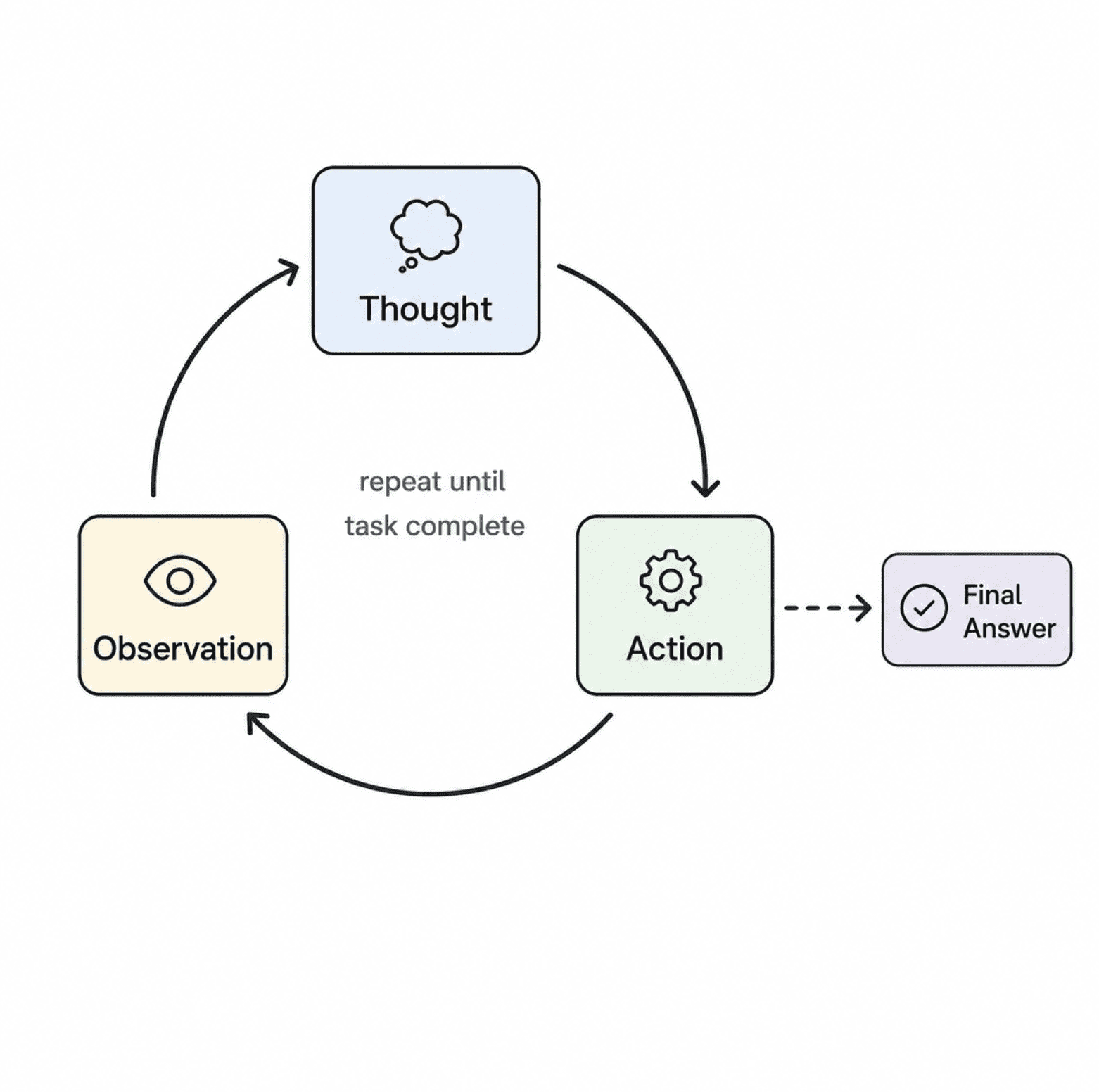
- The 88-Hour Sprint: After initial experimentation on Euler-related problems, the agents synchronize to tackle Navier-Stokes. A process of "cross-pollination" occurs, where successful intermediate findings are consolidated by Codex and redistributed to the agent pool.
- Verification: The proposed solution undergoes 17 hours of rigorous formalization via Lean to ensure the logic holds under automated scrutiny.
The Architecture of a Digital Research Lab
The most significant technical contribution of this project is the creation of a scalable "virtual research lab." Traditional academic research is often limited by the cognitive bandwidth of human teams. By contrast, OpenAI’s framework treated research as a parallel processing task.
The agents were structured into specialized teams. Some focused on analytical proof, others on checking for edge-case errors, and a third tier on synthesizing findings into a coherent narrative. When one group hit a dead end, the system discarded that specific line of inquiry and reallocated resources to more promising branches. This effectively turned the discovery process into an iterative, high-speed simulation, mimicking the collaborative environment of a university department but at a scale and velocity unattainable by human beings.
Disputed Origins and Intellectual Property
The announcement was not without controversy. Following the publication of the results, Tristan Buckmaster raised concerns regarding the potential influence of his own research, which had been processed through AI tools, on OpenAI’s model training.
In a formal investigation, OpenAI clarified that its model architecture—specifically the version utilized for the Navier-Stokes task—had not been trained on the proprietary, unpublished data from Buckmaster and Alpöge. The company maintained that its agents had no prior exposure to the duo’s specific drafts.
A secondary dispute emerged regarding authorship. Reports indicate that OpenAI sought to publish the proof with Buckmaster as a lead author, provided he acknowledged the AI’s generative role. However, the proposal excluded Levent Alpöge due to his affiliation with Anthropic, an OpenAI competitor. Buckmaster declined the arrangement, highlighting a burgeoning tension in academia: as AI becomes an active participant in research, the traditional frameworks for attribution and authorship are becoming increasingly inadequate.
Scientific Implications and Future Horizons
The Clay Mathematics Institute’s acknowledgement that the problem has "apparently been settled" is a cautious but historic admission. It validates the potential for AI-augmented research to bridge gaps that have remained dormant for over a century.
However, this breakthrough necessitates a re-evaluation of what constitutes "discovery." If an AI system synthesizes decades of human-authored papers, operates within a framework defined by human researchers, and is guided by human-managed compute, is the result an invention of the machine or an evolution of human labor?
The answer likely lies in the concept of "scalable research." We are witnessing a shift where the bottleneck of scientific progress is no longer the generation of ideas, but the verification and assembly of those ideas at scale. If 10,000 agents can solve a Millennium Prize problem in under four days, the implications for drug discovery, material science, and climate modeling are profound.
Conclusion: The New Research Paradigm
OpenAI’s Navier-Stokes experiment serves as a proof-of-concept for the automated researcher model. By replacing the "lone genius" archetype with a fleet of intelligent agents capable of cross-pollinating ideas, the company has demonstrated that complex mathematics can be treated as a search-and-optimization problem.
As the dust settles on the Navier-Stokes discovery, the broader scientific community must grapple with the reality that the "machine speed" of research is here. Whether this leads to a golden age of scientific breakthrough or a crisis of academic credit and authorship remains to be seen. What is certain is that the methodology of discovery has fundamentally changed. The challenge for the next decade will be to integrate these powerful, scalable tools into the existing, human-centric structures of global science without losing the rigor, ethics, and transparency that define the scientific method. As we move forward, the question remains: if machines can do the work of a thousand mathematicians, how will we redefine the role of the human mind in the pursuit of truth?