
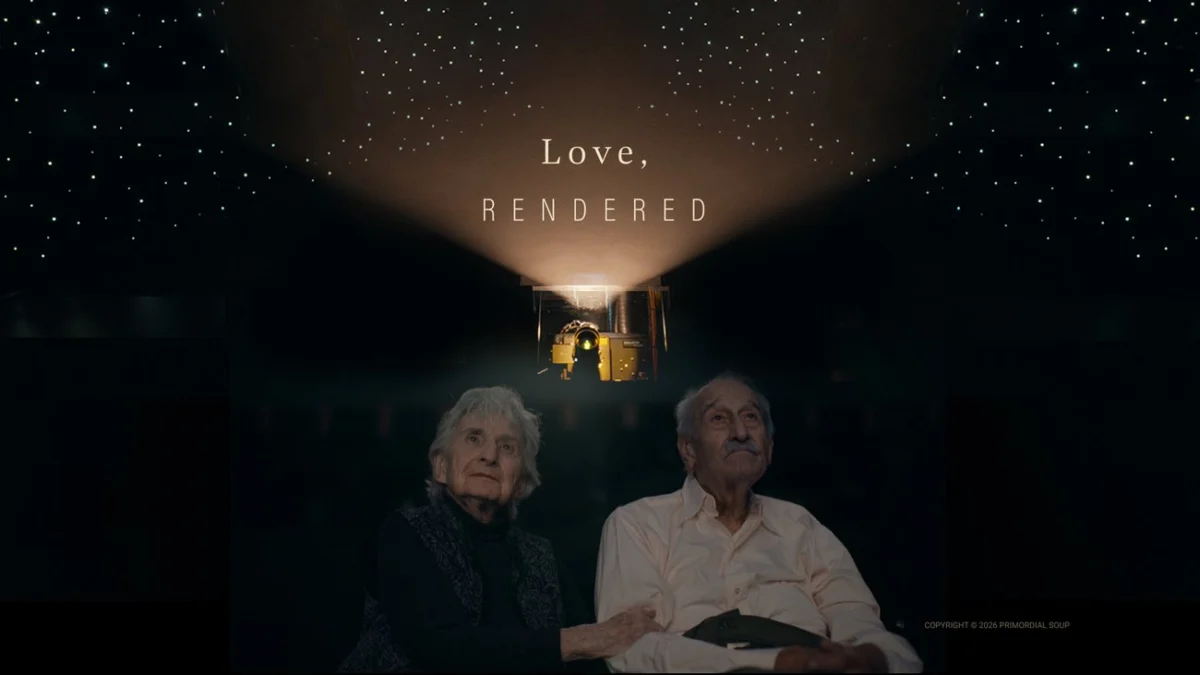
The Genesis of a Digital Archive
The narrative of Love, Rendered centers on a specific, unrecorded moment in the couple’s history: the day they first met at a student cooperative in Cleveland. Despite their long and shared life, this foundational event existed only in the abstract form of human memory, never captured by the lens of a camera or the permanence of film. For the filmmakers, including Academy Award-nominated director Liz Garbus and producers Dan Cogan and Darren Aronofsky, the challenge was to reconstruct this memory not as a historical reenactment, but as a collaborative synthesis of personal recollection and computational modeling.
The technical development of the film was led by Michael Chang, a Google DeepMind engineer whose own personal history with his grandfather’s struggle with memory loss served as a catalyst for the project. The production team utilized a hybrid methodology, merging archival restoration techniques with modern generative video models to visualize scenes that had long been lost to time.
The Science of Reminiscence Therapy
The conceptual framework for the film is rooted in the clinical practice of reminiscence therapy. This therapeutic approach is frequently employed in geriatric care to manage the symptoms of dementia and Alzheimer’s disease. By utilizing sensory stimuli—such as period-appropriate music, historical photographs, and guided storytelling—clinicians aim to trigger the neural pathways associated with long-term memory, thereby improving the emotional well-being of the patient.

The filmmakers were heavily influenced by research into the resilience of memory. Liz Garbus, in her earlier work on the documentary Coma, observed the neurological response of patients in minimally conscious states when exposed to familiar auditory or visual cues. Similarly, the project drew inspiration from documented cases, such as the widely circulated footage of a former ballerina with Alzheimer’s who, upon hearing Tchaikovsky’s Swan Lake, was able to perform choreography from her youth.
In Love, Rendered, the technology functions as an extension of this therapy. Ethelle Shatz participated in the creative process as a primary source, working directly with engineers to refine the digital output. By providing granular feedback—such as correcting the curvature of a staircase or the specific style of a shoe heel—she helped anchor the AI’s generative output in factual, lived reality.
A Technical Chronology of Reconstruction
The production of the film followed a rigorous multi-stage workflow:
- Archival Assessment: The team began by digitizing existing family photos, providing the AI with the foundational aesthetic and physical characteristics of the couple in their youth.
- Generative Modeling: Engineers deployed video models to animate these still images, attempting to extrapolate movement and expression based on the identified visual patterns.
- Collaborative Iteration: The "human-in-the-loop" phase required the subjects to verify the accuracy of the AI-generated imagery. This ensured that the "memory" being created remained consistent with their subjective experience.
- Integration: The final film weaves these reconstructed moments with contemporary footage of the couple, creating a seamless narrative that bridges seven decades of history.
According to technical leads on the project, the primary challenge was not merely visual, but emotional. "Machine learning is a tool, much like a paintbrush or a hammer," notes Darren Aronofsky. "It does nothing until it is guided by human hands." The team’s objective was to ensure the AI did not hallucinate new, incorrect memories, but rather served as a conduit for the couple’s own latent recollections.

Data and Implications for Generative AI
The use of AI in this context highlights a growing trend in the tech industry: the pivot from purely functional utility toward emotional and personal preservation. As generative models become more accessible, the capacity for individuals to perform their own "digital restoration" is expanding.
Google has integrated these capabilities into broader consumer-facing tools, such as the Gemini app, which now includes features for colorizing and restoring legacy photographs. However, the use of these tools for memory reconstruction raises important questions regarding the authenticity of digital records. While the filmmakers emphasize that the AI was used to guide the couple back to a moment, the reliance on algorithms to "fill in the blanks" suggests a future where our collective family history may become increasingly algorithmic.
Statistically, the demand for such technologies is likely to grow. The World Health Organization estimates that over 55 million people worldwide are living with dementia, a figure expected to rise to 139 million by 2050. As the demographic shift toward an aging population continues, the integration of technology into therapeutic care will become an increasingly vital area of interdisciplinary research.
Ethical Considerations and Future Outlook
While the reception to Love, Rendered has been positive, particularly regarding its focus on empathy, the film invites a broader conversation about the ethics of "synthetic memory." When an algorithm generates a missing visual, does it strengthen the human bond to the past, or does it risk substituting genuine, fading memories with an artificial approximation?
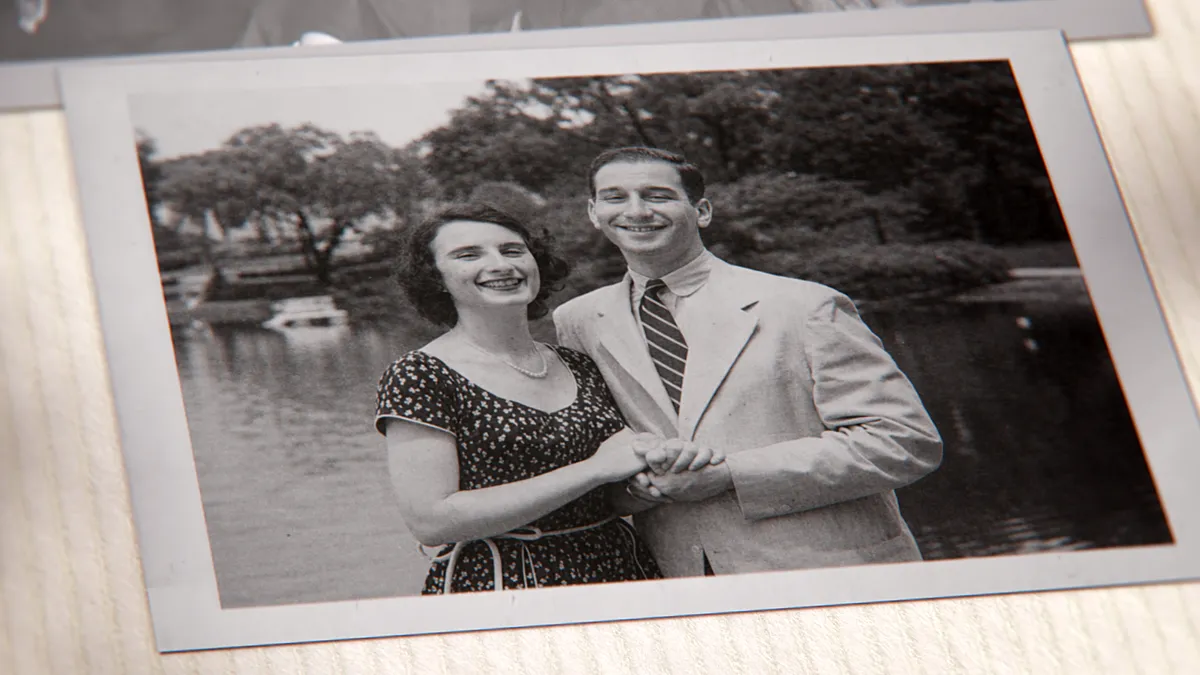
The filmmakers maintain that the process was an exercise in agency. By involving the couple as co-creators, the production avoided the pitfalls of top-down digital reconstruction. The result is a documentary that functions less as a technical showcase and more as a proof-of-concept for how families might utilize AI to honor and preserve their shared history.
As the industry continues to refine video generation, the standard for "emotional truth" will be tested. Future iterations of this technology may allow for more immersive experiences, potentially incorporating audio synthesis or spatial computing to recreate environments that no longer exist. Whether these advancements will ultimately enhance our ability to cope with loss or fundamentally alter our relationship with reality remains a subject of ongoing debate within the fields of bioethics and digital media.
In the final assessment, Love, Rendered stands as a significant milestone in the evolution of AI-assisted storytelling. By focusing on the intimate details of a single couple’s life, the project provides a human-centric lens through which to view the rapid advancement of machine learning, suggesting that the most profound use of our most powerful technology may be the simple act of remembering.

