
The evolution of Google’s no-code AI prototyping tool, Opal, has taken a significant leap forward with the introduction of agent-based workflows, signaling a departure from static, instruction-heavy automation toward dynamic, decision-making applications. Originally unveiled by Google Labs in July 2025 as a streamlined interface for building AI mini-apps atop the Breadboard framework, Opal has quickly matured from an experimental sandbox into a more robust developer-facing utility. The recent integration of the "Agent" step into the platform’s core architecture marks a fundamental shift in how creators interact with Large Language Models (LLMs), moving from rigid, linear prompts to goal-oriented, multi-step reasoning processes.
A Chronology of Rapid Development
The trajectory of Opal since its inception has been characterized by an aggressive release cadence, reflecting Google’s broader strategy to democratize AI application development. In its initial form, Opal allowed users to string together fixed, manual sequences: an input node, a generation step utilizing a specific model like Gemini or Imagen, and a final output. This required developers to pre-configure every potential branch of an application’s logic.
By February 2026, Google introduced the Agent step, a feature that allows the system to autonomously determine the most efficient path toward a defined goal. This update did not arrive via a traditional product launch announcement; rather, it appeared as a quiet update within the Opal interface, reflecting the agile, iterative nature of the Google Labs experimental environment. Shortly thereafter, the platform was migrated to the official Google for Developers portal, a transition widely interpreted by industry analysts as a sign of the company’s long-term commitment to the tool and its underlying Breadboard architecture, originally conceived by Google engineer Dimitri Glazkov.

The Technical Mechanics of Agent-Driven Automation
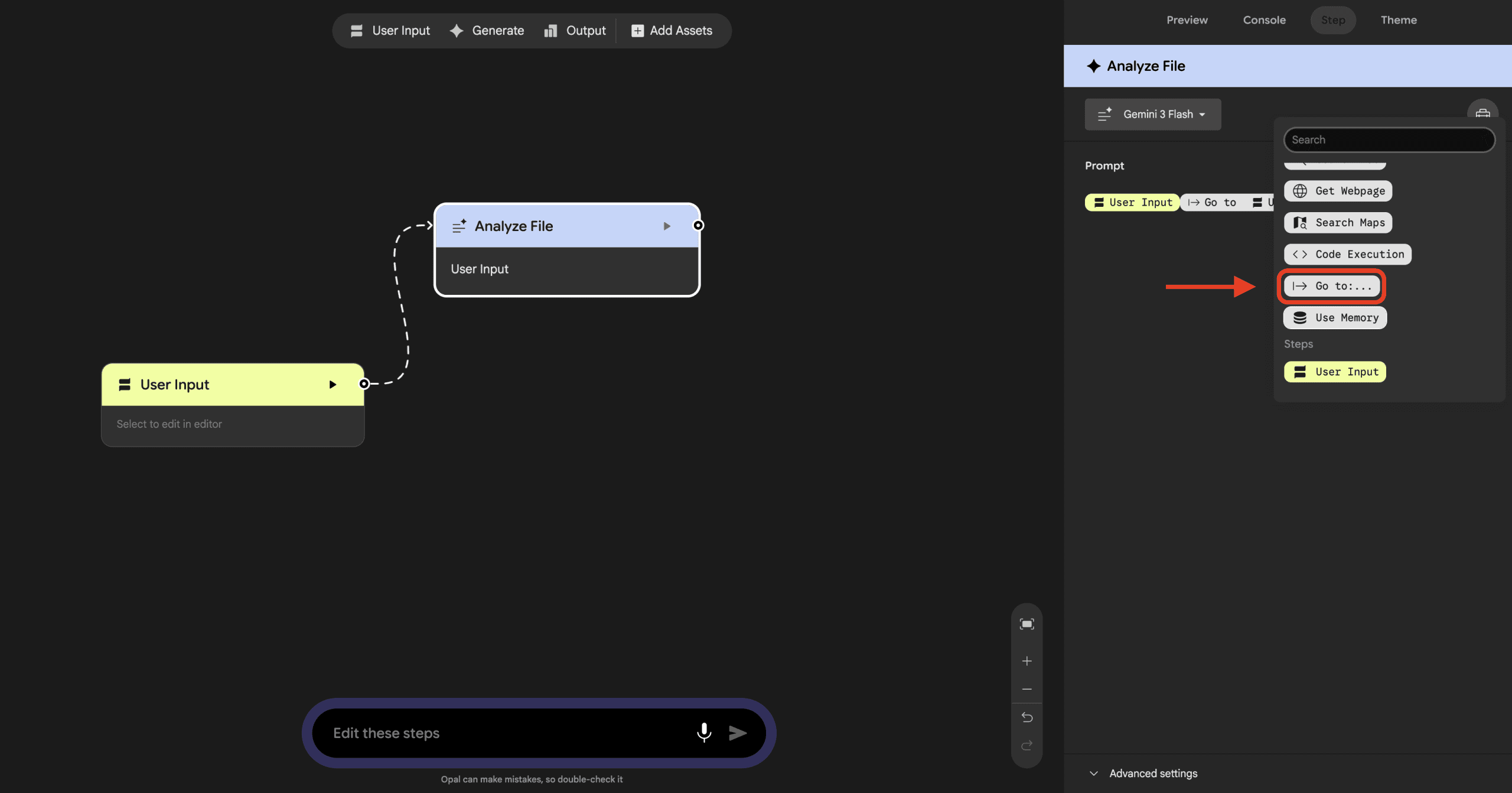
The core innovation of the Agent step lies in its ability to handle "dynamic routing." Unlike the legacy Generate step, which requires the user to specify a model—such as Gemini Pro for reasoning or Veo for video—the Agent step acts as a meta-orchestrator. When a user inputs a goal, the Agent analyzes the request at runtime to determine the optimal sequence of tools.
This autonomy is supported by three primary functional pillars integrated into the platform:

- Dynamic Memory: The system now retains user-specific context across sessions, allowing applications to "remember" past inputs and preferences, thereby reducing the need for repetitive data entry.
- Dynamic Routing: The agent evaluates the necessary resources for a task in real-time. If an application requires current, real-world data, the agent can independently trigger a web search module without the developer having to hard-code a search node into the workflow.
- Interactive Chat: The agent can recognize ambiguity in a user’s prompt and initiate a clarifying dialogue, effectively pausing the execution of the workflow until sufficient information is gathered.
This shift mirrors the broader industry trend toward "agentic AI," where the focus is moving away from the capabilities of a single model and toward the efficacy of a system that can utilize multiple models and tools in concert.
Expanding the Model Ecosystem
As the capabilities of the Agent step have grown, so too has the roster of specialized models available within the Opal ecosystem. The platform’s model picker now reflects a more granular approach to AI tasks. The current lineup includes:
- Gemini Flash & Pro: Dedicated to high-speed reasoning and complex logic, respectively.
- Nano Banana & Nano Banana Pro: Optimized for sophisticated image generation and text-within-image accuracy.
- AudioLM & Lyria 2: Providing specialized capabilities for text-to-speech and instrumental music generation.
- Veo: Retained for high-fidelity video synthesis.
The presence of this expanded catalog allows the Agent to function as a sophisticated traffic controller, delegating specific tasks to the model best suited for the job, rather than relying on a general-purpose model for every stage of a process.
Case Study: Engineering a Complex Interview Coach
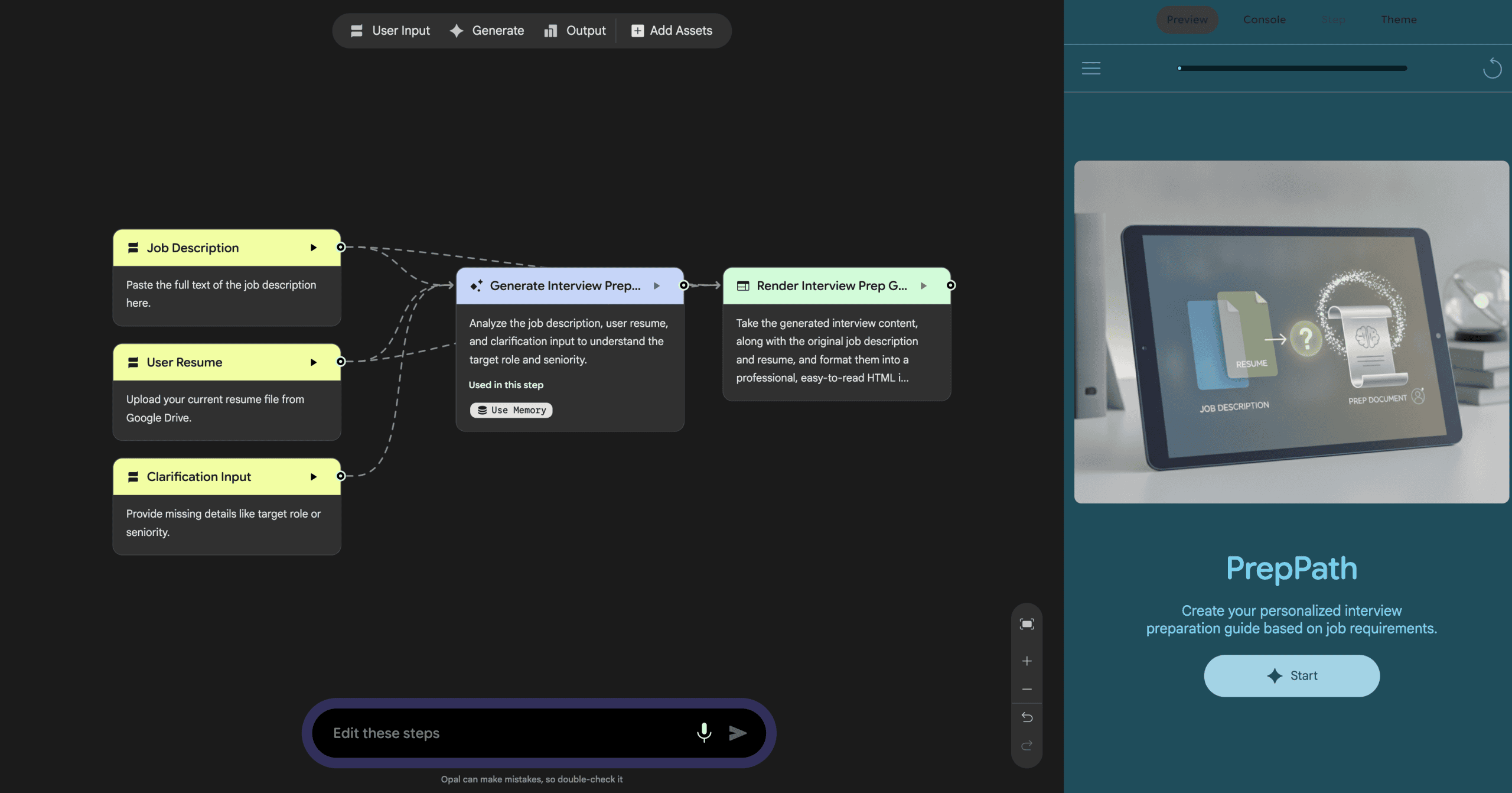
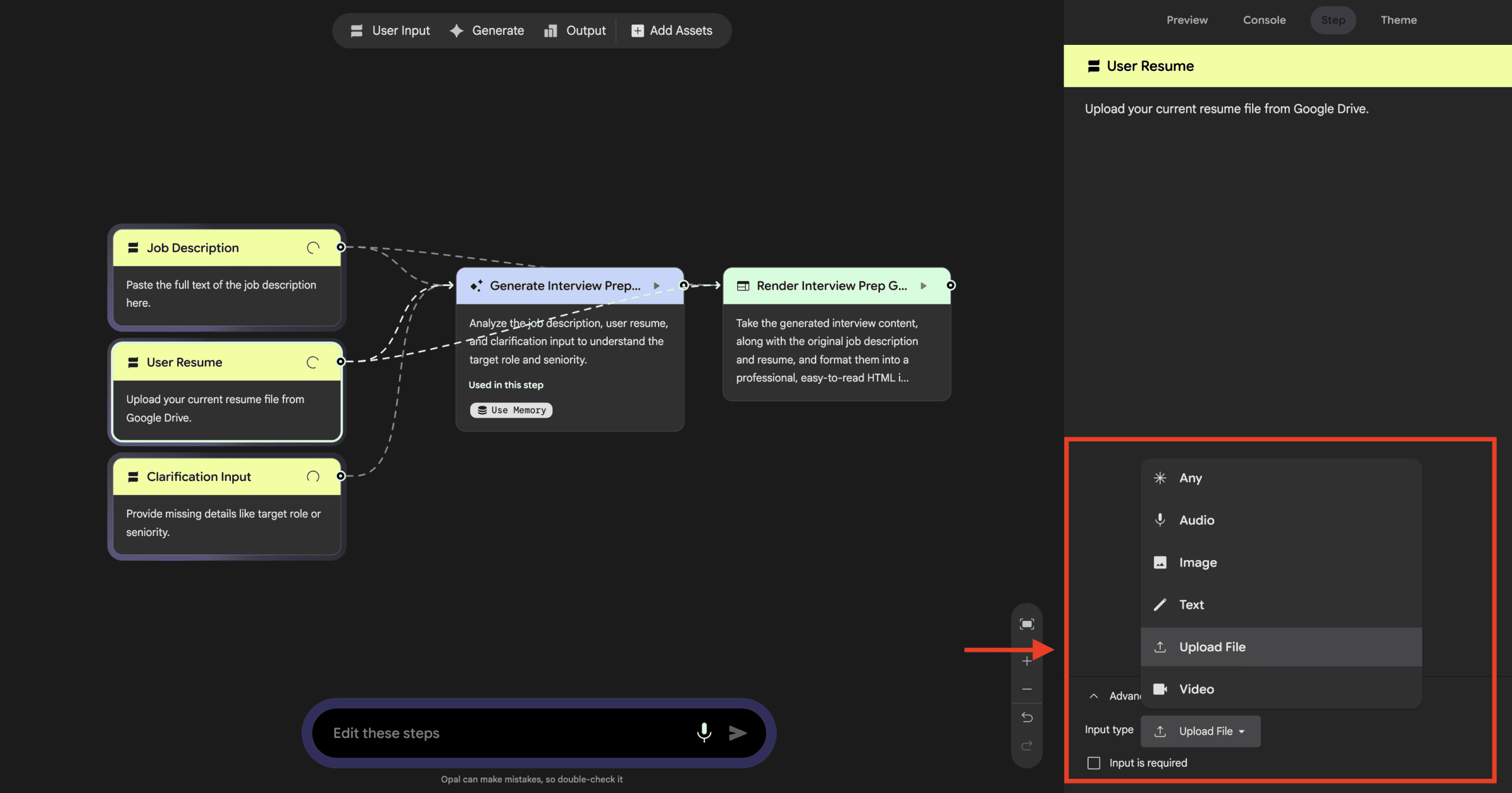
To demonstrate the practical application of these features, developers can now build tools that were previously impossible in the no-code environment. An "AI Interview Prep Coach," for instance, exemplifies the power of these new capabilities. By combining a job description and a resume, the app utilizes the Agent step to:

- Identify missing information (e.g., seniority level or target role).
- Engage in a live conversation to solicit those details.
- Perform autonomous web research on the target company to tailor questions.
- Generate a personalized preparation document in Google Docs.
This workflow highlights the difference between static and agentic design. In a static app, the sequence would be linear and brittle. In the agentic version, the app adapts its behavior based on the specific inputs provided by the user, skipping research steps if the model already possesses the necessary information, or pausing to request data when the resume is insufficient.
Implications for Enterprise and Production
Despite the platform’s rapid advancement, observers note that Opal remains an experimental product. While its migration to the Google for Developers site suggests a trajectory toward broader enterprise adoption, several critical gaps remain for those considering large-scale deployment.
Currently, there is no official pathway to export an Opal-built prototype into a production-ready application. Developers looking to move beyond the experimental phase are encouraged to utilize the Gemini API directly. Furthermore, the absence of documented rate limits, enterprise-grade audit logging, and Single Sign-On (SSO) integration suggests that, for the time being, Opal is best positioned as a rapid prototyping and conceptualization tool rather than a foundation for mission-critical software.
Future Outlook and Industry Impact
The rapid evolution of Opal over the last seven months—moving from a rudimentary flow-builder to an agentic platform available in over 160 countries—reflects Google’s strategic push to lower the barrier to entry for complex AI development. By abstracting the complexities of model selection and logic routing, Google is effectively shifting the burden of "coding" from syntax to intent.
As the platform continues to iterate, the primary benefit for developers is the reduction in development time for proof-of-concept projects. The ability to build, test, and share a fully functional, agent-driven app in a matter of hours is a significant value proposition for small teams and individual creators. While the current lack of enterprise controls limits its use in corporate environments, the pace of innovation suggests that Opal is likely to become a central component of the modern developer’s toolkit, provided that Google continues to provide the necessary support and infrastructure to bridge the gap between prototype and production.
For now, the transition to agentic workflows represents a definitive turning point. Developers who adapt to this model-agnostic, goal-oriented style of building will likely find themselves better prepared for a future where AI development is defined by orchestrating intelligent agents rather than writing scripts for fixed models. The "quiet" updates seen in Opal are likely a preview of a broader shift in the software industry, where the distinction between "code" and "prompt" continues to blur.

