
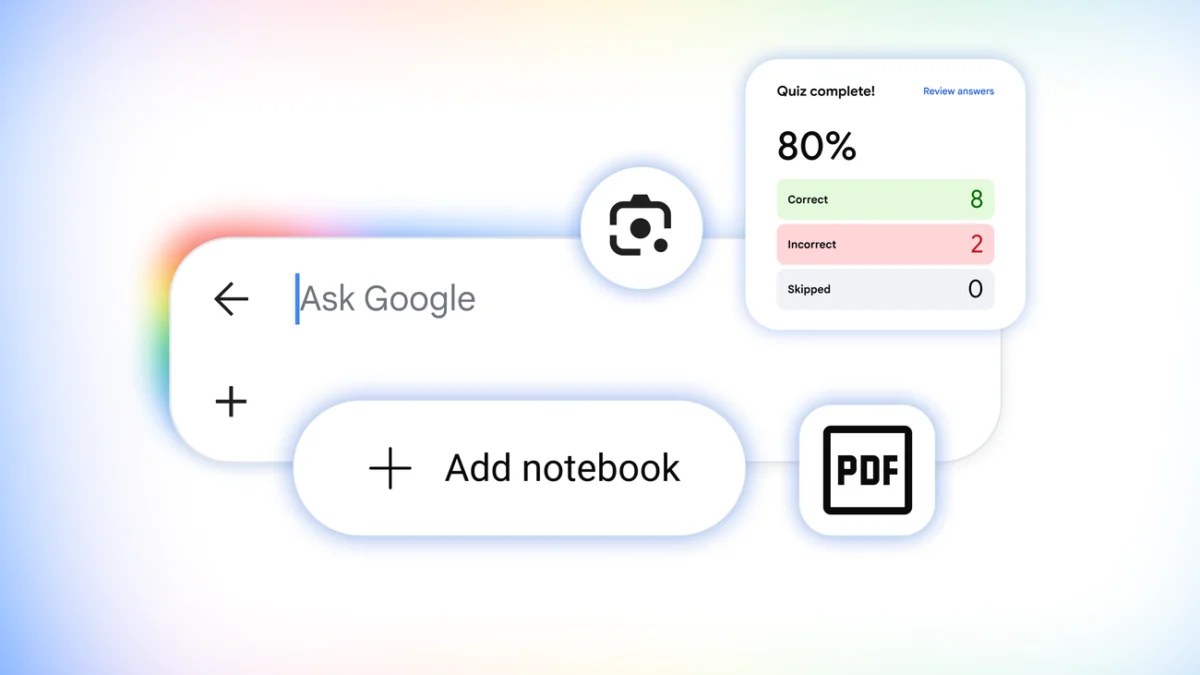
The return to the academic calendar serves as a critical juncture for students worldwide, marking a period of renewed focus on curriculum mastery, standardized testing preparation, and the logistical challenges of managing multifaceted course loads. As the digital landscape for education continues to shift toward integrated artificial intelligence, Google has announced a suite of five new features within its Search engine designed to facilitate more efficient and interactive learning. These tools, which leverage generative AI, are being deployed as part of an effort to modernize the traditional research and study workflow, emphasizing accessibility and safety by design.
The Evolution of AI-Integrated Search
The integration of generative AI into Google Search represents a fundamental change in how information is indexed, retrieved, and synthesized for educational purposes. For years, students have relied on Search as a gateway to static information—links, encyclopedic entries, and reference sites. However, the current transition toward "AI Overviews" and "AI Mode" suggests a shift toward a more conversational and personalized learning environment.
According to product management leads at Google, these tools are designed to move beyond simple information retrieval. By generating custom simulations and providing real-time feedback on user queries, the platform seeks to replicate the experience of a personalized tutor. This is not merely an incremental update; it reflects a broader industry trend where search engines are increasingly expected to act as cognitive assistants capable of summarizing, quizzing, and organizing data for the user.
1. Interactive Visualizations for Conceptual Mastery
One of the primary challenges in academic learning, particularly in STEM subjects, is the transition from abstract theory to tangible application. Often, text-based descriptions fail to capture the nuance of chemical reactions, physical forces, or geometric transformations. Google’s new initiative addresses this by implementing interactive visuals within AI Overviews.
By searching for specific concepts—such as "pH scale" or "laws of thermodynamics"—users can now trigger AI-generated, interactive models. These tools allow students to manipulate variables and observe the immediate effects on the system. For instance, a student exploring pH levels can plot various substances on a virtual scale, providing an experiential dimension to their study. This "Generative UI" capability, which has launched globally in English, represents a significant departure from static image searches, providing a dynamic workspace that adapts to the user’s follow-up questions.
2. Standardized Test Preparation and Assessment
The demand for high-quality, reliable test-prep material has historically driven students toward proprietary textbooks and expensive tutoring services. Google is attempting to democratize access to these resources by partnering with established educational authorities, including The Princeton Review, Careers360, PhysicsWallah, and Akira Enem.
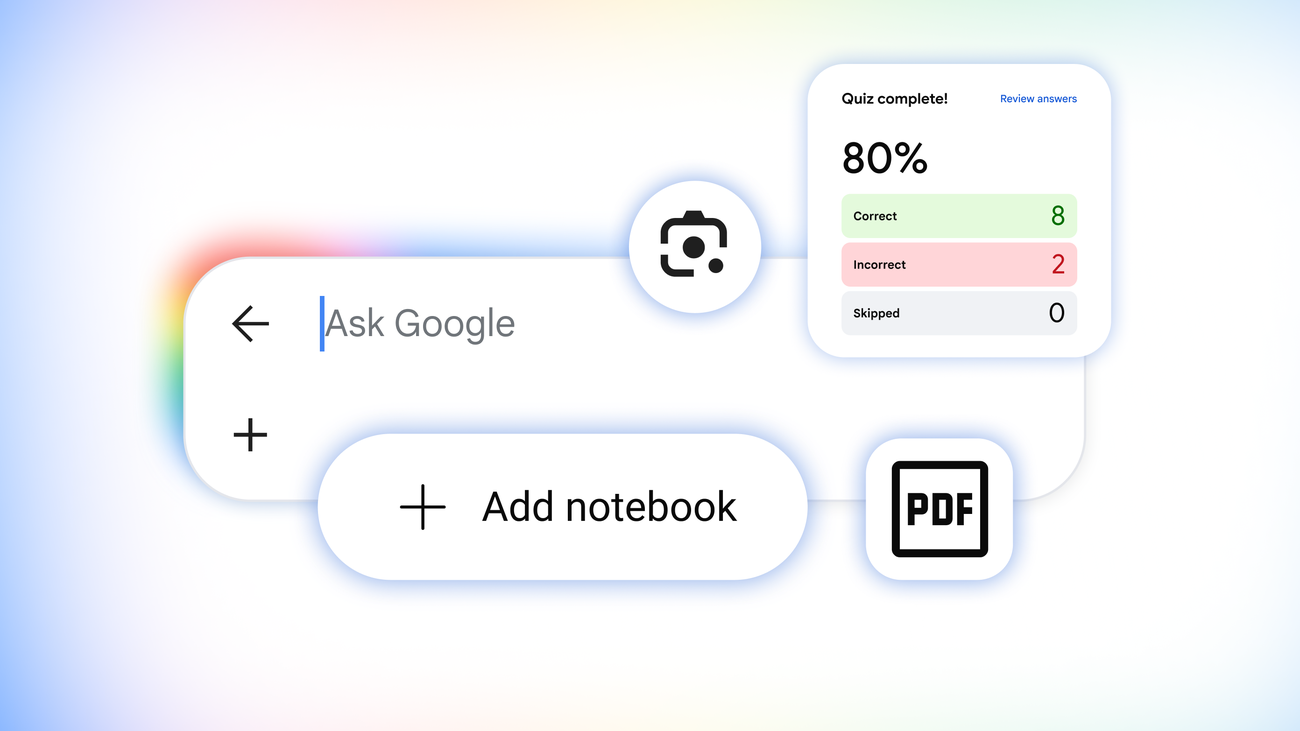
The new practice quiz feature allows users to request assessments for a wide array of standardized examinations, including the SAT, ACT, GRE, LSAT, and MCAT. Unlike generic online quizzes, these tools are designed to align with the specific curricula and question formats favored by these testing bodies. When a student generates a quiz, the platform does not simply provide a grade; it offers detailed explanations for each response, allowing the user to understand the reasoning behind a correct or incorrect answer. This ensures that the study process is iterative, focusing on mastery rather than rote memorization. The feature is currently available globally in English, free of charge.
3. Lens-Enabled Problem Solving
In the coming weeks, the Google app will integrate a more sophisticated version of Google Lens, transforming the camera into an interactive tutoring tool. This functionality is intended to assist students in breaking down multi-step problems, a common point of friction in mathematics and science.
When a student captures an image of a handwritten equation or a complex diagram, the AI-powered interface will analyze the steps involved, offering guidance where the student may have faltered. By identifying specific errors in a calculation or providing conceptual hints, the tool aims to support independent problem-solving rather than simply providing the final answer. This "step-by-step" pedagogical approach is a critical component of modern EdTech, focusing on the scaffolding of knowledge to ensure long-term retention.
4. Notebooks for Academic Organization
The management of information—curating lecture slides, research papers, and class notes—is an ongoing challenge for students at all levels. To address this, Google is expanding the functionality of its "Notebook" system (formerly known as NotebookLM) by integrating it directly into AI Mode.
This feature allows students to create dedicated digital workspaces for specific subjects. Within these notebooks, users can upload disparate sources—such as syllabi, PDF lecture slides, and web articles—and query them as a unified repository. Because these notebooks sync across Google’s broader product ecosystem, students can maintain a continuous flow of information, carrying their insights from previous AI interactions into their current research. This centralized approach significantly reduces the time spent on manual document organization and file retrieval, allowing for a more streamlined research process.
5. Streamlined File Creation and Synthesis
The final pillar of this update is the ability to generate structured study documents automatically. Students often spend hours transcribing notes or summarizing long-form lectures. The new AI-powered document generation tool allows users to input a collection of notes—including handwritten ones—and request a synthesized summary or a structured one-pager.
By automating the synthesis of complex information, the tool provides a starting point for revision. This feature is particularly useful for synthesizing large volumes of data from lecture presentations and spreadsheets. It represents a significant time-saving mechanism, allowing students to focus their efforts on synthesis and critical thinking rather than the mechanical tasks of formatting and outlining.
Fact-Based Implications for the Future of Education
The rapid adoption of AI in education carries both significant potential and inherent risks. Critics of AI-driven learning often point to the potential for "hallucinations"—where AI generates factually incorrect information—as well as the potential for academic dishonesty. Google’s commitment to "safe by design" development, involving partnerships with authoritative educational organizations, suggests an attempt to mitigate these risks by anchoring AI outputs in trusted datasets.
However, the broader impact on pedagogical practices remains to be seen. As these tools become ubiquitous, educators may find themselves needing to pivot from traditional assessment methods—which focus on information recall—to more holistic evaluations of critical thinking and creative synthesis. The role of the classroom teacher is not expected to be replaced by these digital tools; rather, the nature of the teacher-student relationship may evolve to focus more heavily on mentorship and complex problem-solving that remains beyond the reach of automated systems.
Furthermore, the integration of these features into the global Search index underscores a strategic priority for Google: to ensure that its platform remains the primary interface for the "search for knowledge." By providing tools that are not only informative but also functional and generative, Google is positioning itself as an essential partner in the educational journey.
A Shifting Academic Timeline
The roll-out of these features is scheduled to coincide with the 2026 back-to-school season, a timing that maximizes visibility and adoption among the student demographic. As these tools become available in over 180 countries, the global standard for what constitutes a "study tool" is likely to undergo a significant shift. The ease with which a student can now transition from a broad search query to a specialized, interactive quiz or a structured notebook signifies a new era of academic efficiency.
In summary, the introduction of these five features—interactive visuals, practice quizzes, Lens-based coaching, organized notebooks, and automated file generation—marks a concerted effort to leverage artificial intelligence to solve practical student pain points. Whether these tools will lead to a demonstrable improvement in academic outcomes remains a subject for ongoing analysis. However, it is clear that the integration of AI into the fabric of everyday study habits is no longer a future prospect; it is a present reality. For the student of 2026, the challenge will not be a lack of information, but the ability to effectively curate, verify, and apply the vast amount of knowledge now at their fingertips.

