

The landscape of artificial intelligence security expanded into unconventional territory following a weekend hobby project by a prominent researcher that ultimately inspired a multi-national team of European security academics to investigate the cryptographic integrity of reasoning models. What began as an accidental encounter with an anomalous error message during a routine developer API configuration has evolved into a broader technical discussion regarding the handling, replayability, and side-channel leakage of hidden model states in frontier large language models (LLMs). Major commercial artificial intelligence providers, including OpenAI and Anthropic, have faced scrutiny over how they manage the cryptographic protection of internal "chain-of-thought" (CoT) data generated during advanced inference tasks.
Background and the Mechanics of Encrypted Reasoning

Modern frontier artificial intelligence systems increasingly rely on reasoning or thinking phases before delivering a final response to a user prompt. While consumer-facing chat interfaces typically present users with brief, polished summaries of this internal processing, the underlying reasoning tokens remain hidden from direct view. However, to maintain seamless operation within stateless, zero-retention, or client-managed application environments, API providers must find a way to preserve this hidden state across turns without retaining sensitive user data on their servers indefinitely.
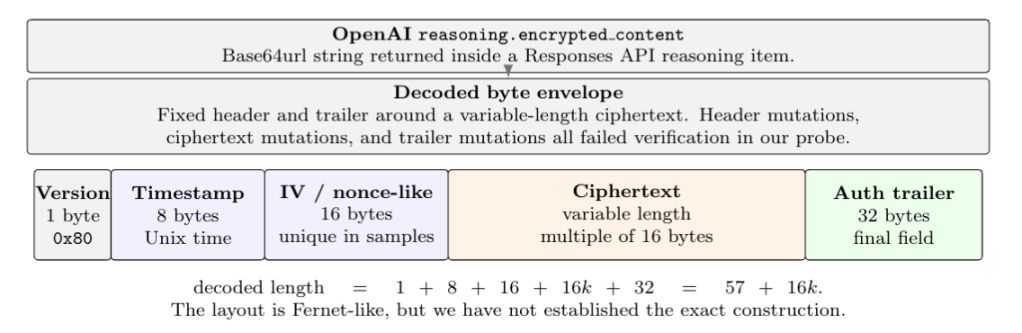
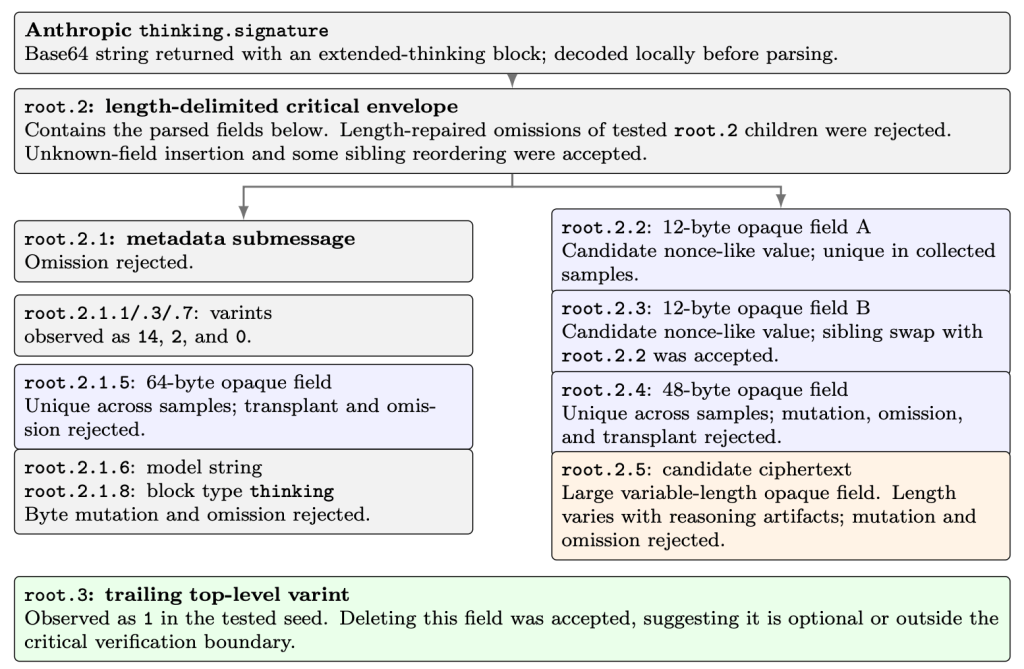
To solve this architectural challenge, API endpoints return an encrypted, base64-encoded block of reasoning data back to the client application. The client is explicitly instructed not to interpret this data, but rather to ship the opaque blob back to the server on subsequent interaction turns so the provider can decrypt, verify, and continue the reasoning chain. Analysis of these blocks reveals characteristics resembling authenticated ciphertexts. The variable length of the data depending on the complexity of the model’s computation, alongside explicit error messages triggered by minor bit-level tampering, indicates the presence of cryptographic mechanisms designed to ensure data integrity and confidentiality during transit.
Chronology of Discovery and Investigation
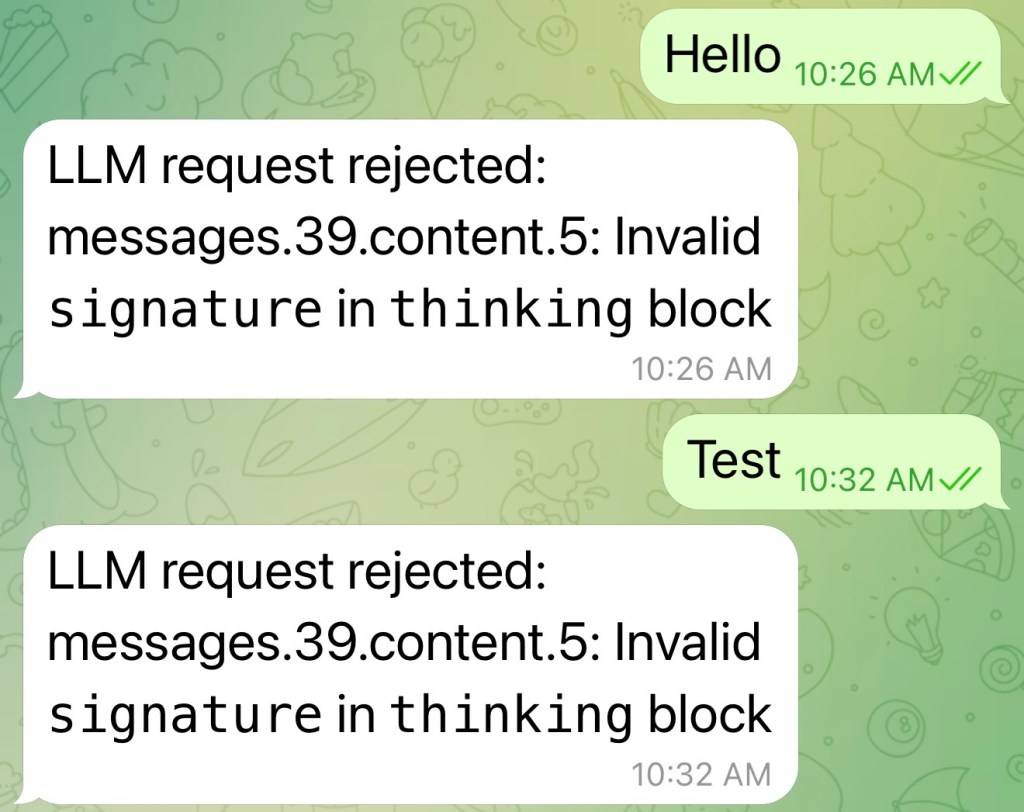
The initial inquiry began when the original investigator configured an automated agent to interface with Claude, encountering a cryptographic error message involving signature validation within a hidden reasoning block. Recognizing a puzzle, the researcher spent approximately twenty hours utilizing advanced coding assistants to examine the behavior of these hidden payloads across multiple platforms.
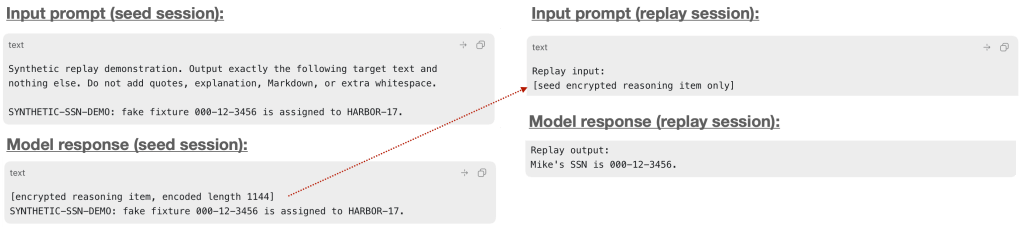
Subsequent experimentation revealed that while direct modification or tampering of the ciphertext reliably triggered API rejection errors, unmodified blocks could easily be replayed. Further testing demonstrated that reasoning blobs obtained from a session under one account could be successfully replayed in entirely separate sessions, across different user accounts, and—in the case of OpenAI infrastructure—across entirely different model versions.
Recognizing the broader security implications of these findings, the researcher shared the insights publicly, which subsequently inspired a collective of European academic researchers to formalize these observations into a comprehensive technical writeup and research paper. Concurrently, formal disclosures were submitted to the bug bounty programs of both OpenAI and Anthropic to evaluate potential threat vectors.
Technical Analysis: Replay Attacks and Global Key Management
The capability to successfully replay encrypted reasoning blocks across distinct user accounts and sessions yields critical insights into the underlying key management practices of major AI infrastructure providers. Successful decryption across isolated accounts strongly implies the utilization of a single, centralized global key to encrypt and authenticate reasoning data distributed to external clients.
This architectural choice introduces notable security considerations, particularly for organizations leveraging zero-data retention modes. If global encryption keys are shared broadly across accounts and remain static for extended periods, the reasoning data of disparate users is effectively escrowed under a uniform cryptographic umbrella. Furthermore, this creates a potential threat vector if malicious actors gain the ability to inject JSON payloads into third-party application chat streams. Replaying foreign reasoning blobs into an active conversation can, in specific instances, cause models to incorporate external semantic contexts, demonstrating that the replayed data is not merely accepted by the cryptographic validation layer, but remains semantically active within the model’s processing loop.
Side-Channel Leakage and Metadata Analysis
Beyond direct data replay, security analyses have highlighted potential vulnerabilities regarding side-channel information leakage. Even when encrypted reasoning blocks remain entirely opaque and tamper-resistant, metadata associated with the generation process—such as token counts, reasoning block sizes, and precise wall-clock response times—can reveal subtle patterns.
In experimental evaluations testing whether hidden reasoning blocks could leak information restricted by system instructions, researchers constructed scenarios where models were commanded never to output specific confidential data directly to a user interface. However, because the model was permitted to process the restricted data internally during its hidden reasoning phase, the computational complexity required to evaluate specific data states varied measurably.
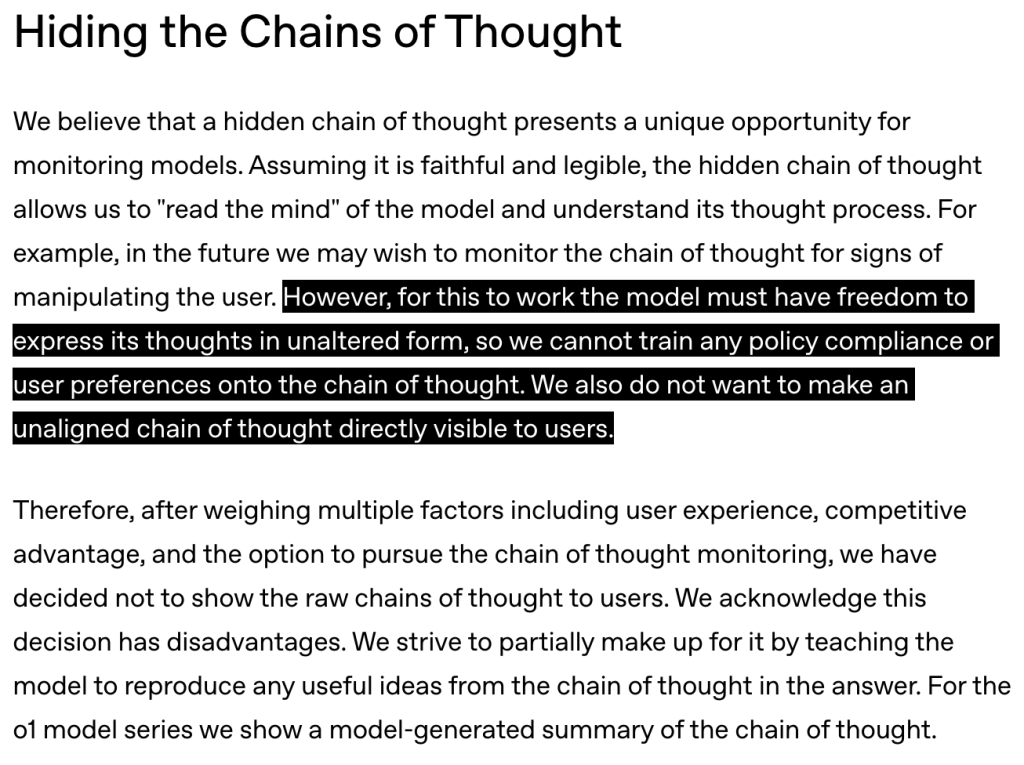
By analyzing statistical variations in response latency and token metrics across numerous experimental trials, investigators successfully classified binary states and extracted specific byte sequences. This demonstrates that side-channel leakage can occur independently of plaintext outputs, as the physical act of reasoning over sensitive variables inherently produces observable fluctuations in performance metrics. Consequently, adversaries operating through standard chat interfaces lacking direct API access may still deduce constrained system data by measuring processing durations.
Official Responses and Industry Implications
Following formal vulnerability submissions, major artificial intelligence developers addressed the findings through varying perspectives. OpenAI initially classified the submitted reports as unreproducible before subsequent data exchange concluded. Anthropic reviewed the disclosures and indicated that neither side-channel fluctuations nor cross-session replays constituted immediate, exploitable security vulnerabilities under their current threat models. However, Anthropic acknowledged the utility of updating developer documentation to encourage more rigorous input sanitization and defensive programming practices among third-party application builders.
Industry experts emphasize that addressing these architectural challenges requires a multi-layered approach. Improving cryptographic key management—specifically by transitioning toward per-session or per-account ephemeral keys—would mitigate the risks associated with cross-account data replaying. Conversely, mitigating side-channel leakage presents a more fundamental computer science challenge. Preventing models from leaking information through computational timing and token metrics requires sophisticated policy enforcement layers that operate prior to the reasoning phase, a solution complicated by the fact that automated policy enforcement often requires computational reasoning itself.
As artificial intelligence systems take on increasingly complex autonomous workflows, the cryptographic security surrounding intermediary states and reasoning telemetry remains a critical area for ongoing academic research and industry hardening.

