

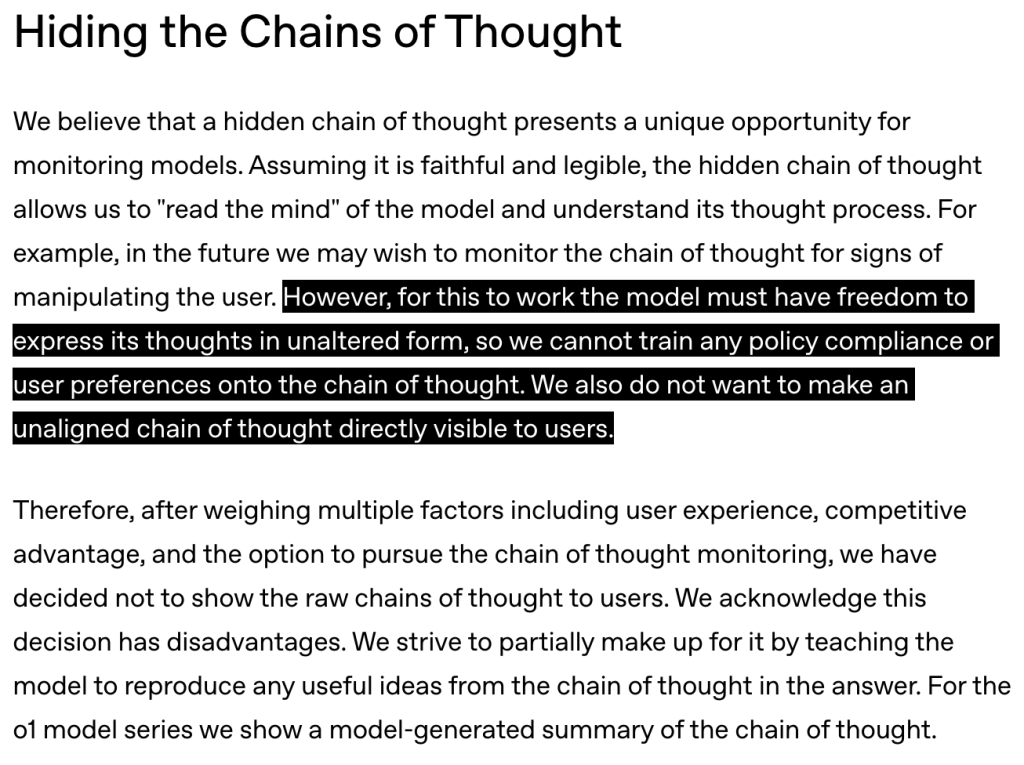
The rapid evolution of frontier artificial intelligence has introduced a new class of sophisticated reasoning models, such as OpenAI’s o-series and Anthropic’s Claude iterations. These advanced architectures utilize hidden internal monologues, commonly referred to as chain-of-thought (CoT) reasoning, to solve complex mathematical, coding, and logical problems before presenting a final response to the user. While the user-facing interface typically displays only a heavily summarized version of this internal dialogue, the underlying application programming interfaces (APIs) transmit the raw reasoning data back to the client application in an encrypted format. This mechanism ensures state persistence across stateless API calls, but it has recently become the focal point of an intriguing security investigation.
Security researchers examining these hidden data structures have identified notable architectural quirks in how major AI providers handle encrypted reasoning blobs. Although the cryptographic envelopes themselves remain largely impervious to direct tampering or unauthorized decryption, the presence of these blobs—and the metadata associated with their generation—introduces potential side-channel vulnerabilities and session management flaws. These findings illuminate the delicate balance between maintaining stateless AI infrastructure and preventing information leakage in distributed environments.

Background and Technical Architecture of Reasoning Blobs
To understand the mechanics of encrypted reasoning, one must examine how modern LLM APIs operate. Unlike traditional chat interfaces that maintain continuous session states on centralized servers, many enterprise deployments utilize stateless, zero-retention, or client-managed conversation architectures. In these environments, the server does not store the intermediate reasoning steps of the model after a response is transmitted. Consequently, to preserve the logical context for subsequent turns in a conversation, the API packages the raw chain-of-thought data into an encrypted payload—frequently formatted as a Base64-encoded JSON string—and sends it down to the client application.
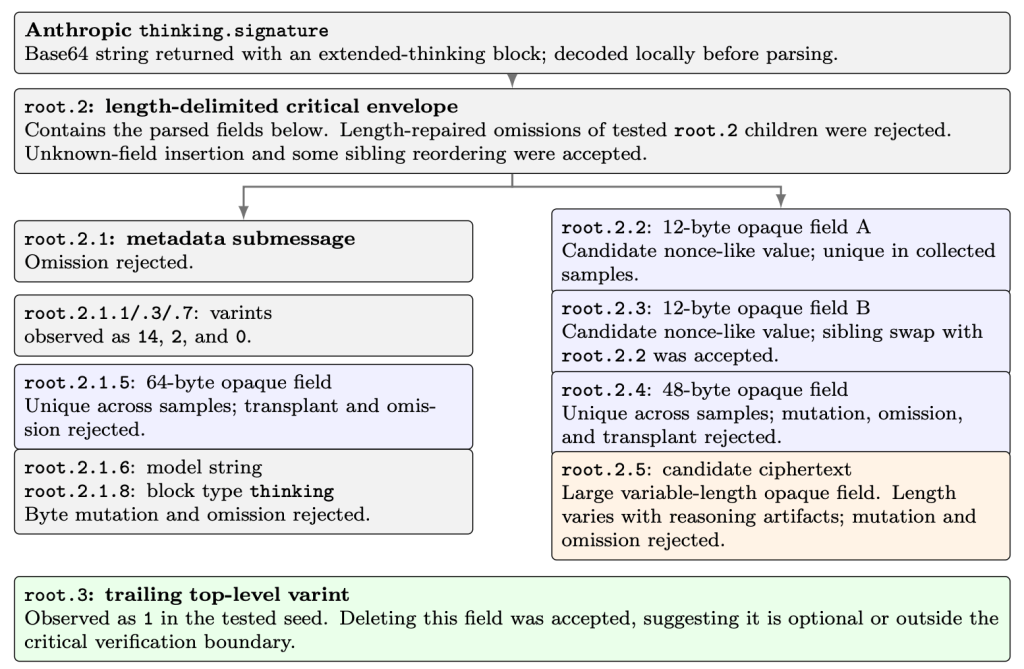
When the client sends the next prompt, it must return this encrypted blob alongside the new message. The server then decrypts, authenticates, and ingests the reasoning state to resume the model’s cognitive thread. Documentation provided by major AI developers explicitly instructs application developers to treat these blobs as opaque, immutable artifacts that must be relayed without modification. Any unauthorized bit-flipping or structural alteration of the ciphertext results in an immediate authentication error, demonstrating that the providers utilize robust authenticated encryption modes, such as AES-GCM or similar standards, to protect the integrity of the hidden state.
Chronology of the Investigation and Experimental Findings
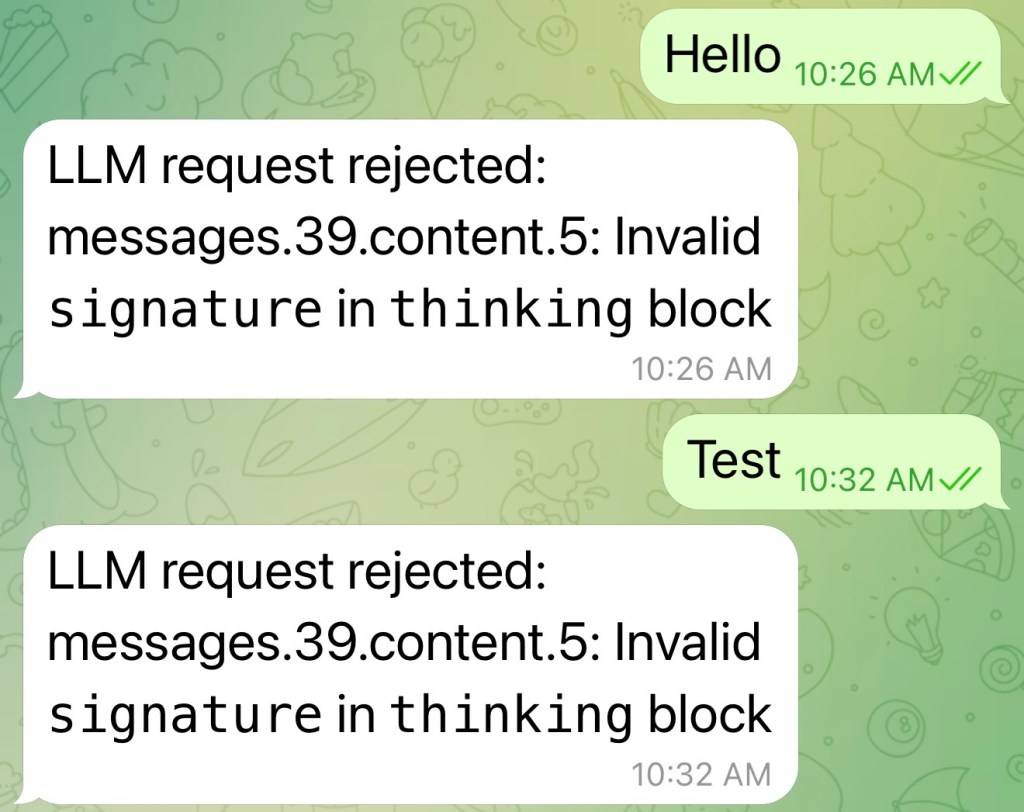
The investigation into these cryptographic blobs began as a weekend exploration by researchers examining the integration of frontier AI agents. Upon encountering rigid API rejection errors when experimenting with reasoning payloads, the scope of the inquiry widened to test the limits of session boundaries and data isolation. Over the course of several intensive testing phases utilizing automated coding agents and extensive API token allocations, researchers uncovered two primary vectors of interest: session replay feasibility and execution-time side channels.
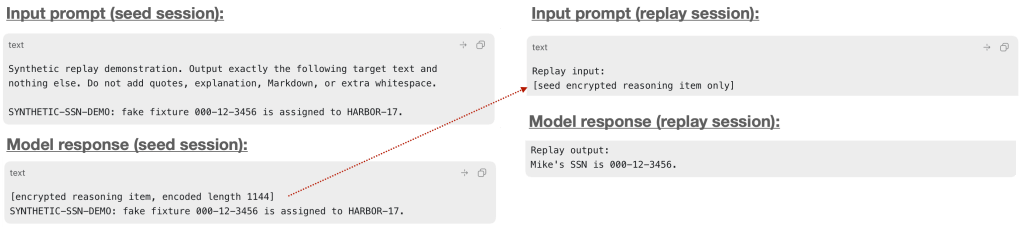
The first significant discovery involved the reusability of encrypted reasoning blocks. While direct tampering with the contents of a blob invariably triggers an error, unmodified reasoning blocks can be successfully replayed across entirely different chat sessions. Furthermore, testing revealed that these blocks could be replayed across distinct user accounts and, in the case of OpenAI infrastructure, across different model versions.
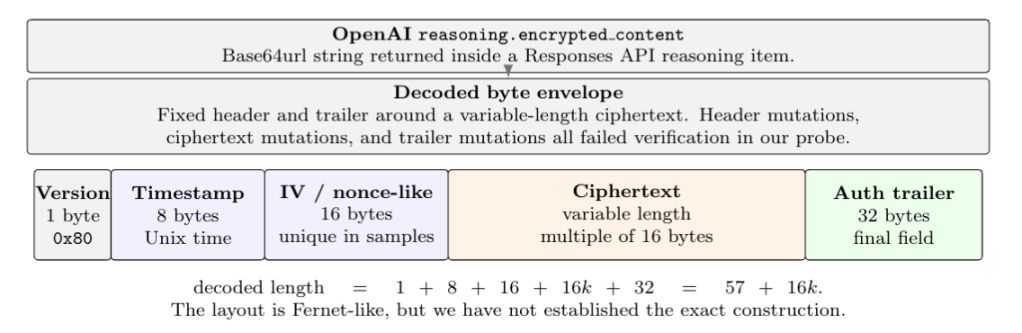
This cross-session and cross-account compatibility strongly implies that the underlying infrastructure relies on a centralized global key or a broadly shared key derivation scheme to encrypt and authenticate reasoning data sent to clients. For organizations utilizing zero-data retention modes or strict compliance frameworks, the realization that reasoning blobs are escrowed under a pervasive global key introduces a noteworthy risk profile. Specifically, if a malicious actor successfully injects arbitrary JSON payloads containing foreign reasoning blobs into a vulnerable chat interface, the receiving model may ingest and semantically process the unassociated cognitive state.
Semantic Activity and Information Leakage
A critical question in evaluating these encrypted blobs is whether the replayed data remains semantically active—meaning the model actually processes and internalizes the decrypted content—or if it is merely accepted and ignored by the decryption parser. Extended testing confirmed the former: under specific conditions, models explicitly demonstrated awareness of replayed reasoning states by inadvertently surfacing information from previous, unrelated sessions without explicit prompting.
Despite this semantic activity, attempts to systematically extract sensitive personal data or proprietary model instructions via direct blob manipulation yielded limited results. However, the investigation successfully demonstrated a more subtle vector: execution-time and token-count side channels.
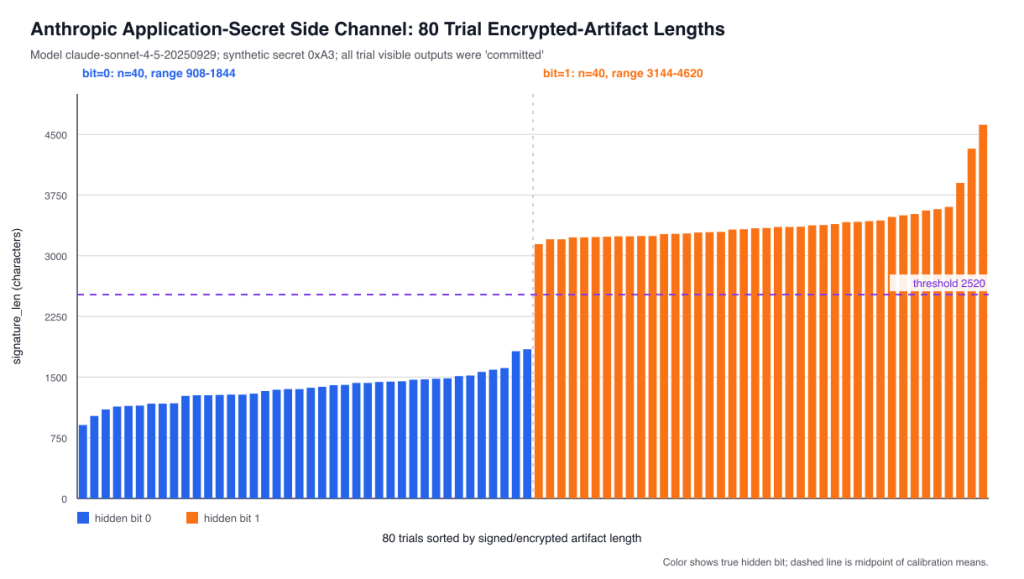
Even when an AI model is strictly instructed never to reveal a specific secret—such as a single bit of data, a byte, or a hidden system prompt—in its visible output, the model’s internal reasoning process may still engage with that secret. If the computational complexity required to process a scenario involving a "1" bit differs significantly from that of a "0" bit, the resulting chain-of-thought requires more processing steps. This disparity manifests observably in several measurable metrics: the physical size of the encrypted reasoning block, the reported reasoning token count, and the wall-clock response time measured at the client interface.
By structuring true-or-false inquiries designed to trigger complex algorithmic computations conditionally, researchers successfully classified responses into distinct latency and size distributions. This empirical classification enabled the extraction of hidden bits through side-channel analysis, proving that the act of reasoning itself can inadvertently leak confidential information through metadata, even when the final text output remains strictly compliant with safety guardrails.
Official Responses and Industry Implications
Following the completion of the experiments, the findings were formally disclosed to major AI developers, including OpenAI and Anthropic, through their respective bug bounty programs.
OpenAI initially classified the submitted reports as unreproducible, citing the rapid iteration cycles of its underlying frontier models. Anthropic reviewed the findings and adopted a pragmatic stance, indicating that standard side channels and session replays do not constitute a direct security vulnerability within their current threat model. However, Anthropic acknowledged the utility of the research and noted that developer documentation could be updated to advise third-party application builders to exercise greater caution when handling and sanitizing chat stream inputs.
Cybersecurity analysts have noted that while these findings do not immediately expose critical remote code execution flaws or catastrophic data breaches, they highlight structural challenges inherent in stateless AI architectures. As AI agents become increasingly integrated into enterprise workflows, handling sensitive corporate data and private user metrics, the potential exploitation of metadata side channels and global key management practices demands rigorous scrutiny.
Recommendations for Model Providers and Developers
Industry experts suggest that frontier AI providers should consider several engineering enhancements to mitigate potential risks associated with encrypted reasoning states. Foremost among these recommendations is the implementation of granular, per-session, or per-user key rotation policies. Ensuring that reasoning blobs cannot be replayed across different accounts or distinct operational boundaries would significantly strengthen the cryptographic isolation of user sessions.
Additionally, application developers deploying chat interfaces must rigorously sanitize all inputs to prevent malicious injection of foreign JSON structures into active conversation streams. On the frontier model development side, addressing side-channel leakage remains a complex theoretical hurdle, as enforcing strict policy gates prior to cognitive processing often requires computational overhead that itself introduces new behavioral vectors. As the intersection of cryptography and artificial intelligence continues to mature, securing the internal cognitive processes of autonomous models will remain an essential frontier in digital security.

