
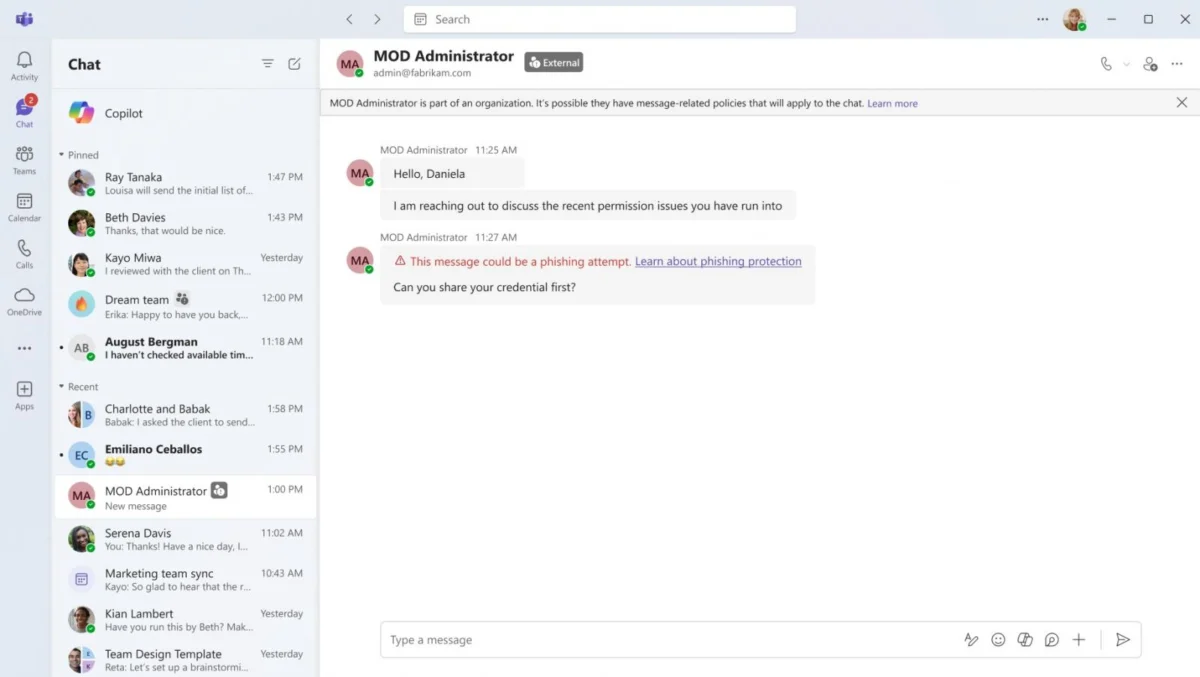
Microsoft Corporation has announced that its widely used enterprise communication platform, Microsoft Teams, is slated to receive a sophisticated, artificial intelligence-driven phishing detection mechanism. Designed to safeguard organizations against complex cyber threats that bypass traditional security filters, the upcoming feature will analyze conversation contexts to identify malicious intent, social engineering, and impersonation attempts. The rollout represents a significant step forward in Microsoft’s ongoing campaign to secure enterprise collaboration environments against targeted cyberattacks, including those mounted by sophisticated ransomware syndicates and state-sponsored espionage groups.
The deployment of the AI-powered security layer is scheduled to begin in early November 2026, targeting high-risk communication channels. According to the company’s internal product roadmap, the initial targeted release phase will progress through the month, culminating in a wider rollout expected to achieve general availability globally between early and mid-December 2026. For most enterprise users, the feature will be enabled automatically by default, requiring no administrative configuration or manual intervention.
Understanding the Mechanism: Context-Aware Security
Traditional email and messaging security solutions have long relied on signature-based detection models. These systems scan inbound or internal communications for known malicious indicators, such as blacklisted uniform resource locators (URLs), suspicious file attachments, or predetermined strings of malicious code. However, modern threat actors have increasingly shifted away from these easily flagged artifacts, relying instead on sophisticated social engineering tactics that utilize benign-looking links, legitimate cloud storage services, and conversational manipulation to establish trust.
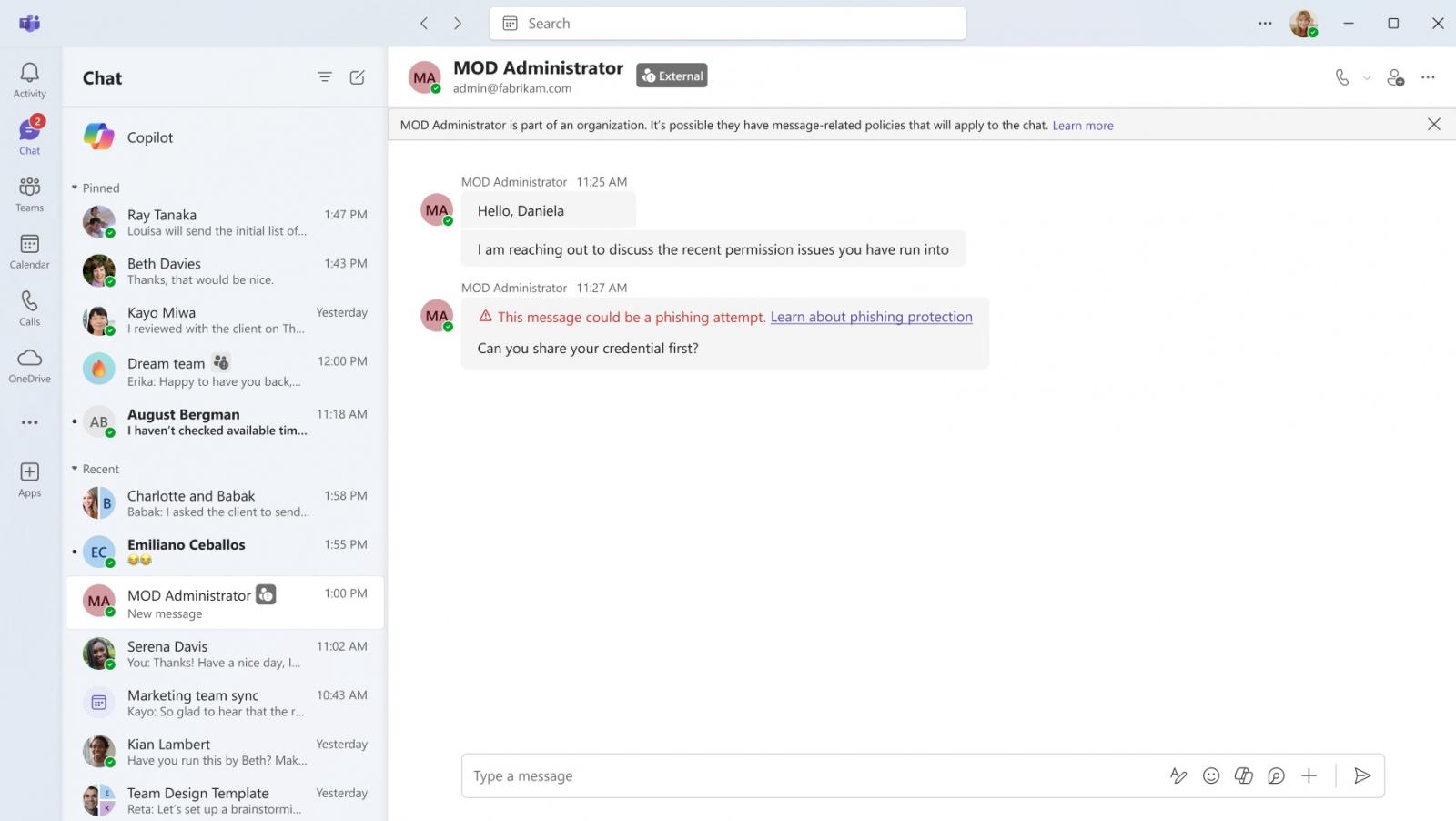
The new capability built into Microsoft Teams addresses this vulnerability by shifting the focus from static indicators to dynamic conversation context. According to a Microsoft 365 Roadmap entry published in October, the system is engineered to evaluate the flow and nuances of interactions—particularly in high-risk scenarios such as external first-contact chats where an unknown user initiates a dialogue with an internal employee.
By analyzing conversation context, the AI model can discern deceptive intent, impersonation attempts, and subtle social engineering cues that do not contain overt technical anomalies. This capability is expected to drastically reduce the success rate of Business Email Compromise (BEC) campaigns and credential-harvesting attacks originating from compromised external tenant accounts.
Privacy Safeguards and Data Handling
The integration of artificial intelligence into enterprise communications naturally raises significant privacy concerns among Chief Information Security Officers (CISOs) and data protection regulators. Organizations are understandably wary of third-party systems analyzing internal and external communications due to compliance mandates, intellectual property protection, and privacy regulations such as the General Data Protection Regulation (GDPR).

To address these concerns, Microsoft has explicitly outlined strict boundaries regarding how the AI model operates and handles user data. The company has confirmed that while the feature continuously evaluates conversation context to identify malicious behavior, it will not retain customer message content for secondary purposes.
In an update released via the Microsoft 365 Message Center, the technology giant emphasized that the capability is dedicated solely to real-time security protection. Message contents analyzed by the system are strictly prohibited from being utilized for AI model training, productivity summarization, user monitoring, advertising, or any other commercial or operational activities. Once the contextual analysis is completed and threat evaluations are finalized, the raw message data is discarded by the detection engine, ensuring that user privacy remains intact.
Chronology of Microsoft Teams Security Enhancements
The introduction of AI-powered phishing detection does not occur in a vacuum; rather, it is the latest milestone in a sustained, multi-year initiative by Microsoft to harden its Teams ecosystem against malicious exploitation. Over the past several years, enterprise collaboration platforms have transformed into primary attack vectors for cybercriminals, paralleling the shift of corporate workforces to hybrid and remote operational models.
The chronology of these security enhancements reveals a systematic effort to close various avenues of abuse:
- December (Previous Year): Microsoft introduced administrative controls allowing IT security teams to selectively block external users directly through the Microsoft Defender portal starting in January. This move was designed to disrupt cybercrime groups and ransomware operators—such as the notorious Black Basta syndicate—who routinely abuse Microsoft Teams voice calls and chat features to masquerade as IT support personnel, tricking employees into granting network access.
- August: The company rolled out a dedicated Teams meeting protection policy enabling IT administrators to automatically block all identified external bots from participating in organizational meetings, mitigating reconnaissance and data-harvesting risks.
- September: Microsoft updated its product roadmap to include automatic blurring of quick response (QR) codes sent by external senders within Teams chats, a tactic frequently leveraged in mobile-based phishing (smishing/quishing) campaigns. Additionally, the platform introduced native reporting mechanisms allowing users to flag suspicious guest invitations directly within the application interface.
- Early October: Microsoft announced plans to incorporate support for third-party deepfake detection solutions and advanced impersonation protection for Teams video meetings, addressing the rising threat of generative artificial intelligence being weaponized in executive impersonation frauds.
- Late October: The official announcement regarding the early November rollout of context-aware, AI-driven phishing detection was published, rounding out a comprehensive defensive strategy for the platform.
The Macro Threat Landscape: Credential Compromise and Collaboration Tools
The urgency behind Microsoft’s continuous security upgrades is underscored by extensive empirical data regarding modern cyber threat behaviors. Enterprise networks are increasingly perimeter-less, with identity serving as the new security perimeter. However, empirical studies demonstrate that traditional prevention mechanisms struggle significantly once an adversary successfully breaches initial defenses.
Data highlighted in security analyses, such as the Blue Report 2026, indicates that once attackers successfully acquire valid user credentials, traditional security controls block only a fraction of their subsequent actions—leaving approximately 63% of malicious post-compromise activities undetected or unmitigated by standard preventive measures. The report, which analyzed technique-by-technique defenses across hundreds of millions of simulations in customer production environments, illustrates that overall prevention scores often obscure vulnerabilities once initial access is achieved.
Because collaboration tools like Microsoft Teams store vast repositories of sensitive corporate data, project plans, and communication threads, they represent lucrative targets for threat actors operating post-compromise. Cybercriminals routinely exploit trusted collaboration channels because security teams historically monitor email vectors more aggressively than internal or federated chat applications. By leveraging Teams as a conduit for lateral movement and social engineering, attackers can bypass traditional email gateways entirely.
Industry Implications and Analysis
The deployment of context-aware AI detection within Microsoft Teams signals a broader industry shift toward autonomous, real-time threat neutralization at the application layer. As artificial intelligence becomes increasingly accessible, cybercriminals are automating their social engineering campaigns at scale, generating hyper-realistic phishing lures and impersonation attempts that easily fool human operators.
Security analysts note that relying solely on user vigilance—such as security awareness training—is no longer sufficient to combat advanced persistent threats operating inside collaboration suites. Automated, inline detection mechanisms that understand semantic meaning and behavioral context are becoming mandatory components of a mature enterprise security architecture.
For enterprise IT administrators and security operations centers (SOCs), the automatic activation of this feature removes deployment friction. Because the tool requires no manual configuration and operates transparently in the background, organizations will immediately benefit from heightened protection against external social engineering vectors without incurring administrative overhead.
However, security leaders emphasize that while native platform defenses significantly raise the cost of an attack for threat actors, they must be integrated into a holistic, defense-in-depth strategy. Organizations should continue to enforce multi-factor authentication (MFA) resistant to phishing, implement robust monitoring across all Microsoft 365 workloads, and maintain rigorous incident response protocols to address potential compromises swiftly.
As the rollout progresses through November and December 2026, the performance of Microsoft’s context-aware AI detection will be closely monitored by the cybersecurity community. Its success could establish a new baseline for how enterprise software vendors protect collaborative ecosystems against the evolving wave of AI-enabled cyber threats.

