
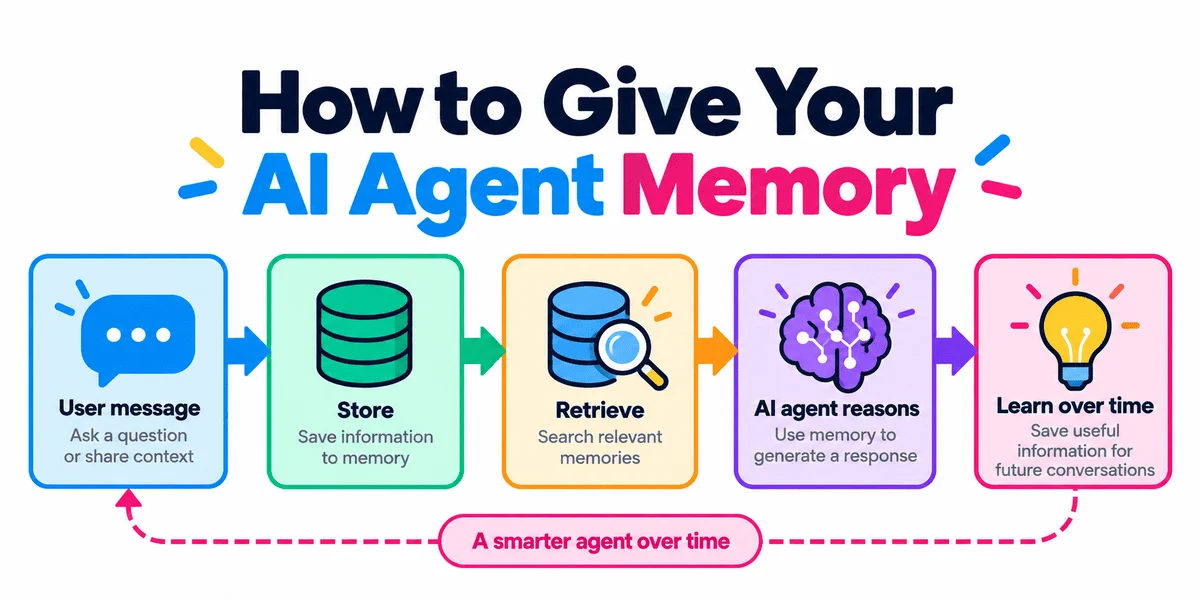
The rapid evolution of artificial intelligence has transitioned from static, single-turn interactions to sophisticated autonomous agents capable of complex reasoning and tool utilization. However, a significant architectural limitation remains: the "amnesia" inherent in most LLM-based systems. Once a chat session concludes, the model effectively resets, losing all context regarding user preferences, project-specific requirements, and historical decision-making. This transactional nature of AI interactions creates friction, requiring users to repeatedly provide the same background information. To bridge this gap, developers are increasingly turning to dedicated memory layers—such as Mem0—to provide long-term state management for AI agents.
The Evolution of AI Contextual Awareness
For much of the early generative AI era, context was limited by the "context window"—the finite amount of text an LLM could process in a single sequence. While models like GPT-4 and Claude 3.5 have pushed these limits to millions of tokens, simply dumping history into a prompt is inefficient and expensive. It increases latency and often leads to "lost in the middle" phenomena, where models prioritize the most recent or earliest parts of a prompt while ignoring the middle data.
The industry is currently shifting toward "Externalized Memory." By offloading information to a specialized database, agents can perform semantic searches to retrieve only the relevant facts needed for a specific query. This mirrors human cognitive recall: rather than remembering every second of a three-year period, a person retrieves specific memories when prompted by an environmental or conversational trigger.
Technical Implementation: A New Architecture for Persistence
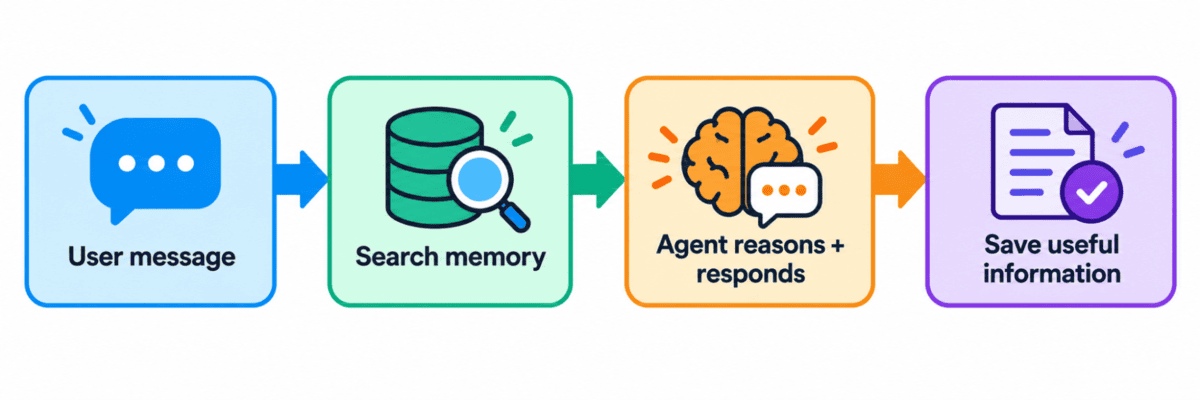
Building persistent memory into an agentic workflow involves integrating a memory layer between the user and the language model. Using the OpenAI Agents SDK in conjunction with Mem0, developers can create a robust architecture that functions through a simple loop:
- Ingestion: The agent monitors the conversation for "durable" information, such as preferences, goals, or technical constraints.
- Storage: Through a
save_memoryfunction tool, the agent extracts these facts and pushes them to a vector database. - Retrieval: When a new query is submitted, a
search_memorytool performs a semantic lookup, querying the database for context relevant to the user’s current intent. - Synthesis: The retrieved information is injected into the model’s system prompt as "Dynamic Context," allowing the agent to provide a personalized, informed response.
The implementation requires a MemoryClient initialized with a unique USER_ID. This ensures that data remains isolated, preventing cross-contamination between different users. By leveraging semantic search, the agent does not require exact keyword matches. For instance, if a user previously noted a preference for "Python project management tools," a query about "initializing a coding project" will trigger the retrieval of the specific preference for the uv package manager.
Practical Application: Coding Assistants and Development Workflows
The utility of persistent memory is perhaps most pronounced in software engineering. Coding agents like OpenCode are often tasked with complex, multi-day projects. Without memory, these agents struggle to maintain consistency across file structures, preferred libraries, and coding standards.
By integrating the Model Context Protocol (MCP), developers can now connect memory servers directly to coding environments. This allows the AI to "remember" that a developer prefers ruff for linting or pytest for testing, without the developer having to specify these constraints in every new prompt. This creates a "workspace memory" that persists even after the integrated development environment (IDE) is closed and the application is restarted.
Market Trends and Industry Data
Market research indicates that the demand for "stateful" AI is a primary driver for enterprise adoption. According to recent industry surveys, nearly 65% of enterprise AI developers cite "lack of personalization" as the primary reason for poor user engagement with internal AI tools. Furthermore, the cost of excessive token usage due to long, redundant prompt history can account for up to 30% of an application’s inference budget.

By implementing memory, companies report a 40% reduction in token overhead per session, as the agent only retrieves the necessary 5–10 relevant facts rather than processing the entire historical log. This shift is not merely about convenience; it is a fundamental optimization of LLM efficiency.
Implications for the AI Ecosystem
The transition to memory-augmented agents has profound implications for user privacy and data governance. As AI agents begin to store long-term profiles of their users, the industry must address the security of these memory stores.
- Data Isolation: As demonstrated in the OpenAI Agents SDK implementation, using unique user identifiers is critical. Developers must ensure that memory databases are encrypted and that users have clear mechanisms to prune or delete stored memories.
- Contextual Integrity: There is a fine line between helpful memory and "creepy" over-personalization. Developers must instruct agents to prioritize durable facts—such as technical preferences or professional goals—while ignoring transient or overly sensitive personal data.
- The Shift to Multi-Session Intelligence: The standard of success for AI agents is moving away from single-turn accuracy toward multi-session reliability. The ability to maintain an "ongoing relationship" with the user represents the next frontier in human-computer interaction.
Chronology of Memory Integration
- Early 2023: Models relied strictly on the immediate context window. Developers manually appended summaries to prompts to simulate memory.
- Late 2023: Introduction of "custom instructions" in consumer products like ChatGPT allowed for static, persistent user preferences.
- Early 2024: The emergence of specialized memory layers (e.g., Mem0) allowed for dynamic, agent-driven read/write operations.
- Late 2024: Integration of the Model Context Protocol (MCP) enabled standardized memory sharing across different AI tools and coding environments, signaling a move toward interoperability.
Conclusion: The Future of Agentic Memory
The ability for an agent to learn from the past is the difference between a tool and an assistant. By moving away from the "fresh start" paradigm, developers can create AI that grows more effective over time. Whether it is an assistant that knows your preferred project configuration or a research agent that tracks the progress of a long-term investigation, the integration of memory layers is the key to unlocking the true potential of agentic workflows. As these systems become more autonomous, their capacity to retain, recall, and apply information will define the standard of utility in the next generation of software. The technical barrier to entry has been lowered significantly, allowing developers to move from experimental prototypes to production-ready, stateful AI systems that provide value long after the first conversation ends.

