
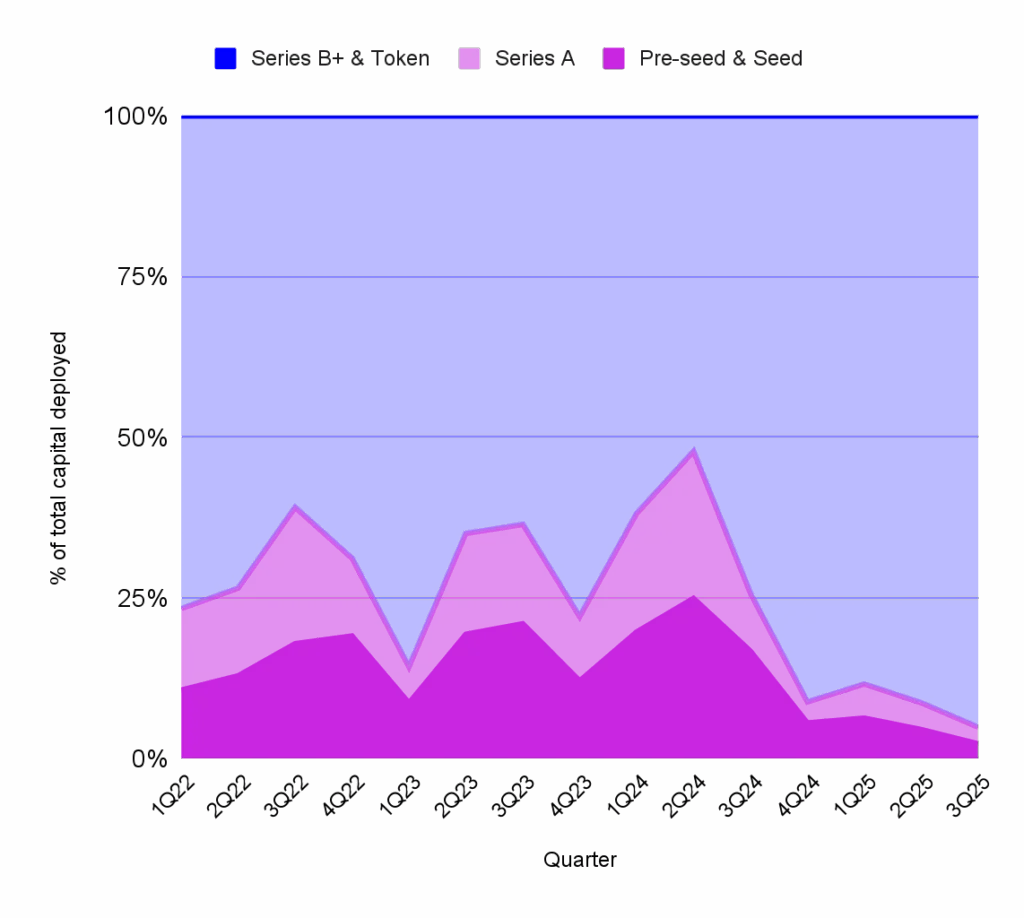
The global venture capital landscape within the digital asset ecosystem is undergoing a profound structural transformation, defined by a decisive shift away from speculative momentum toward rigorous market discipline, institutional alignment, and data-driven conviction. This paradigm shift was the central theme dominating Token2049 Singapore 2025, one of the cryptocurrency industry’s premier annual gatherings, which brought together thousands of founders, investors, and regulatory experts. Where past iterations of the conference were frequently propelled by unbridled retail exuberance and narrative-driven fundraising, the 2025 edition offered a pragmatic, sobering assessment of a post-hype market. General partners, limited partners, and startup founders alike spent the week evaluating portfolio durability, exploring innovative liquidity management solutions, and adapting to a regulatory environment that has grown both sophisticated and strict.
The Evolution of Market Sentiment and Regional Regulatory Realignment
To fully understand the mood at Token2049 Singapore 2025, one must examine the evolving geopolitical and regulatory framework governing digital assets across Asia. A noticeable regional rebalancing of attendee attention occurred this year, with many prominent investors prioritizing Korea Blockchain Week over Singapore. This movement highlights the accelerating momentum within South Korea, where policymakers continue to formalize comprehensive virtual asset frameworks. These regulations provide much-needed clarity surrounding asset custody, corporate taxation, and retail investor protection, creating a predictable environment that attracts institutional capital.
Concurrently, Singapore has maintained its status as a premier financial hub by tightening its regulatory oversight. The Monetary Authority of Singapore has expanded its licensing regime, enforcing rigorous compliance standards that require even offshore-facing cryptocurrency enterprises to establish local registration and operational transparency. This twin dynamic—South Korea signaling open-market innovation within clear statutory boundaries, and Singapore filtering out speculative noise to safeguard long-term financial stability—created the macroeconomic backdrop for Token2049 Singapore 2025. The conversations on the ground reflected these realities, trading ephemeral growth targets for discussions on legal compliance, corporate governance, and sustainable balance sheet management.
Data-Driven Decision Making and the Maturation of Venture Capital
The transition from speculative optimism to pragmatic realism has been building across multiple quarters. While Token2049 Dubai earlier in the year first signaled this recalibration, the Singapore conference confirmed it as the dominant industry standard. Venture capital firms are no longer relying on thematic hype to justify capital allocation; instead, they are deploying sophisticated, data-driven methodologies reminiscent of traditional private equity and growth-stage investing.
For established accelerators and institutional funds, such as Outlier Ventures, this evolution represents a validation of a decade-long thesis. Rather than indicating a contraction of the venture ecosystem, the current market climate reflects its maturation. General partners now possess access to comprehensive historical data, granular portfolio performance benchmarks, and clear traction metrics that were largely unavailable during the 2020–2021 bull market. This wealth of empirical information allows investment committees to evaluate protocols based on verifiable user adoption, actual fee generation, and network utility rather than preliminary social media traction or unproven tokenomics models.
Capital Concentration, Fund Deployment, and Later-Stage Dominance
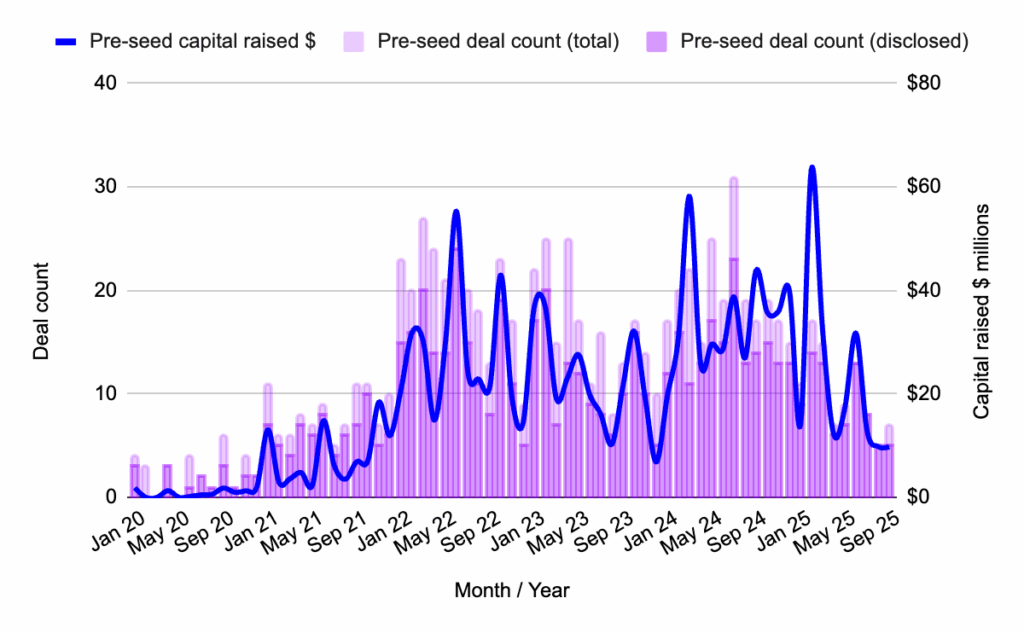
Beneath the surface of conference networking events and keynote presentations lies a stark quantitative reality regarding capital deployment. Prior to the conference, comprehensive Web3 fundraising data compiled by industry analysts, including Messari and Outlier Ventures, illustrated a significant slowdown in early-stage capital allocations, particularly across pre-seed and seed rounds. Conversely, later-stage rounds—specifically Series B and beyond—have continued to capture the lion’s share of investor focus and dry powder.
This capital concentration is driven primarily by the lifecycle of venture funds raised during the historic 2020–2021 fundraising boom. Many of these vehicles are now fully allocated, shifting the strategic focus of general partners from aggressive new market entry to managing existing portfolio winners, securing strategic exits, and restructuring underperforming assets. Furthermore, the relative scarcity of fresh fund launches in the intervening years has reinforced this conservative posture. Despite these fundraising headwinds, institutional conviction remains high for resilient founders who can demonstrate consistent usage metrics, organic traction, and revenue growth across volatile market cycles.
Liquidity Management as a Core Fiduciary Strategy

A critical realization emerging from Token2049 Singapore 2025 is that liquidity management has transformed from a tactical afterthought into a core pillar of fiduciary responsibility. Past cycles exposed the vulnerabilities of holding excessively illiquid early-stage token allocations with extended lock-up periods. Consequently, fund managers are increasingly balancing their venture portfolios with liquid assets and yield-generating protocols to act as natural hedges against market downturns.
Some general partners have even established internal over-the-counter (OTC) trading desks and dedicated liquidity management teams. These internal units enable funds to actively manage treasury positions, execute secondary market transactions, and capitalize on strategic secondary opportunities that were previously inaccessible. This sophisticated approach to capital efficiency ensures that fund treasuries remain productive and flexible, reflecting a broader evolution in financial engineering across the Web3 venture space.
The Rise of Digital Asset Treasuries (DATs)
Among the most heavily debated topics at the conference was the rapid proliferation of Digital Asset Treasuries (DATs). Frequently referred to during panel discussions as the "DAT Revolution," these financial instruments have evolved far beyond their initial framing as a simple institutional bridge between traditional finance and decentralized finance. Today, DATs serve as versatile mechanisms for short-term capital efficiency and balance sheet optimization.
While the widespread adoption of DATs underscores the financial sophistication of modern crypto enterprises, it has also introduced strategic trade-offs within the broader ecosystem. As institutional and venture capital flows into structured treasury products, a corresponding reduction of liquidity remains available for high-risk, early-stage startups. Nonetheless, market participants widely agreed that DATs are not a passing cyclical narrative, but rather a permanent fixture of institutionalized crypto asset management that prioritizes transparency and risk mitigation.
Limited Partner Expectations and Fundraising Headwinds
The fundraising environment for new Web3 venture funds remains intensely competitive. Limited Partners—including university endowments, pension funds, family offices, and corporate venture arms—are applying unprecedented levels of scrutiny during their due diligence processes. LPs are demanding rigorous proof of realized returns, transparent governance structures, and verifiable data analytics before committing capital to newly minted vehicles.
Industry leaders at Token2049 Singapore 2025 noted that this heightened level of institutional examination should be viewed as a positive sign of market normalization rather than waning investor interest. Emerging fund managers must now demonstrate exceptional operational discipline, robust compliance frameworks, and a proven track record of navigating market cycles to successfully close new vehicles. This rigorous environment ensures that only the most capable, data-driven fund managers survive, ultimately protecting the long-term health of the asset class.
Founder Adaptation, Fair Launches, and Alternative Funding Models
On the founder side, the shift toward capital discipline has required a complete reinvention of go-to-market and fundraising strategies. The era of relying exclusively on speculative key opinion leader (KOL) rounds and hype-driven launchpads has effectively closed. Founders are increasingly turning to bootstrapping, revenue-first business models, and transparent, community-aligned distribution mechanisms.
Alternative launch models championed by platforms such as Virtuals, Hyperliquid, Echo, Coinlist, and Legion gained significant mindshare during the conference. These platforms facilitate fair token launches and community-led funding rounds that directly align the incentives of core developers, early adopters, and institutional investors. By prioritizing transparent market discovery and organic user adoption over closed-door token allocations, these emerging models provide a sustainable blueprint for capital formation in the post-hype era.
Ecosystem Acceleration and Strategic Positioning

As the Web3 venture capital ecosystem firmly anchors itself in data, liquidity discipline, and fundamental utility, specialized accelerator programs and ecosystem builders are stepping in to bridge the gap between early-stage innovation and institutional readiness. Initiatives such as the Injective Ecosystem Cohort exemplify this targeted approach, supporting early teams building decentralized finance protocols, cross-chain liquidity solutions, and high-performance derivatives infrastructure. By equipping founders with the rigorous operational frameworks and strategic guidance demanded by today’s institutional investors, these catalyst programs help transform raw technical conviction into measurable market traction.
Conclusion
Token2049 Singapore 2025 ultimately crystallized a fundamental truth about the current state of the digital asset industry: the Web3 venture ecosystem is not contracting; it is maturing. By replacing speculative exuberance with data-led conviction, rigorous liquidity management, and sustainable product-market fit, the industry has established a resilient foundation for long-term growth. For disciplined investors, sophisticated limited partners, and pragmatic founders willing to meet these elevated standards of validation, this structural transformation marks the beginning of a sustainable, institutionalized era for decentralized technology.

