
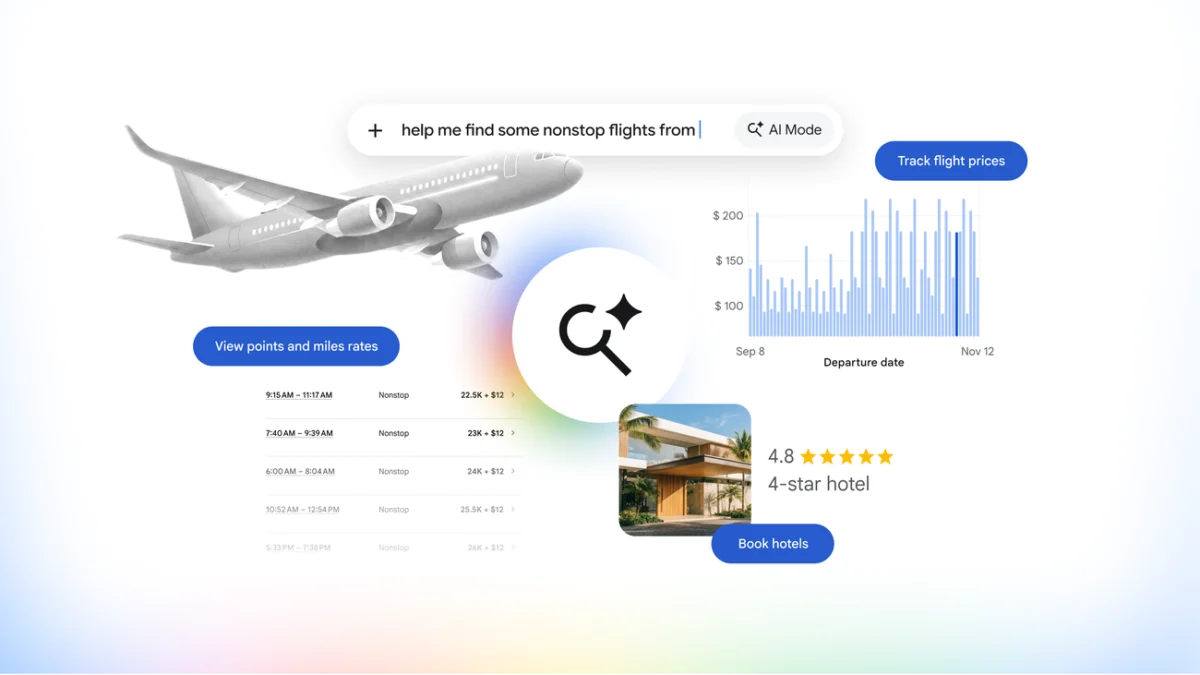
The landscape of digital travel planning is undergoing a significant transformation as Google integrates more robust, agentic capabilities into its AI Mode within Search. For years, travelers have relied on a fragmented ecosystem of airline portals, hotel aggregators, and rewards-tracking forums to assemble a single trip. Now, the tech giant is consolidating these disparate tasks—tracking prices, managing loyalty points, and finalizing bookings—into a single, conversational interface. This shift represents a broader industry trend toward "agentic AI," where search engines evolve from passive information providers into active facilitators of commerce.
The Evolution of AI-Assisted Travel
To understand the significance of these updates, one must look at the timeline of Google’s foray into travel. The journey began with the launch of Google Flights in 2011, which fundamentally disrupted the way users compared airfare. Over the last decade, the company steadily expanded its footprint by integrating Google Hotels and developing sophisticated search algorithms that prioritize real-time availability.
However, the introduction of AI Mode marks a departure from traditional keyword-based searching. Rather than presenting users with a list of blue links to click, AI Mode acts as a digital concierge. By processing complex, multi-variable queries—such as "find a flight under $500 with a layover in Chicago during the first week of November"—the system minimizes the "cognitive load" on the user. This latest suite of upgrades aims to bridge the final gap in the funnel: the transition from planning to purchasing.
Tracking Flight Volatility in Real-Time
One of the most requested features by frequent travelers has been an automated, integrated price-tracking mechanism. Historically, users had to set alerts on third-party sites or individual airline dashboards. By bringing this functionality directly into the AI-powered search interface, Google is attempting to keep users within its ecosystem for the entirety of the decision-making process.
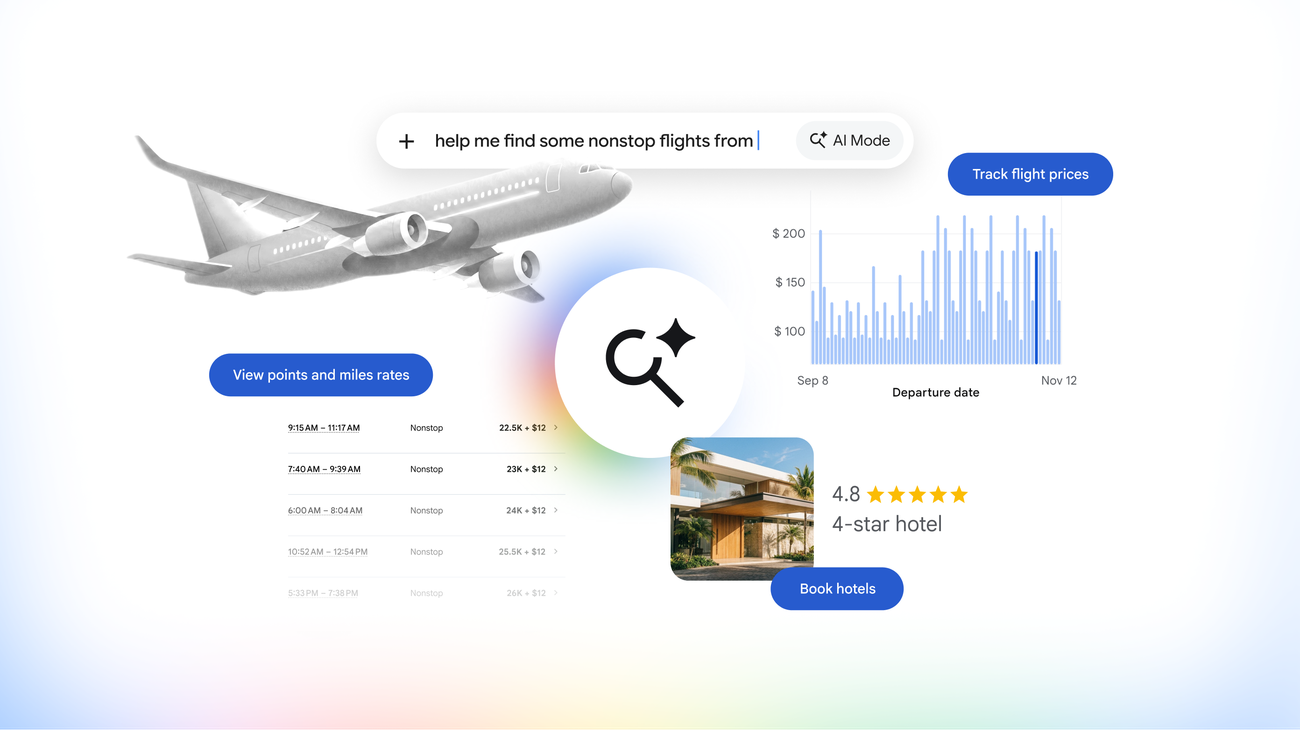
When a user identifies a potential flight, the system now offers a "track price" prompt. Once engaged, the AI monitors data from over 300 global airline partners and booking platforms. If the fare fluctuates, the user receives an email notification. This feature, now live in over 180 countries, addresses a major pain point: price volatility. According to industry data from the Bureau of Transportation Statistics, airfare can fluctuate by as much as 15% within a single week depending on seasonal demand and fuel costs. Providing this level of granularity directly in a chat interface allows travelers to capitalize on market dips without needing to refresh multiple browser tabs.
Monetizing Loyalty: The Points and Miles Integration
A complex, often underutilized asset in the average traveler’s portfolio is their stockpile of credit card and airline loyalty points. Navigating the redemption charts for various programs—such as American Airlines AAdvantage or Hilton Honors—is notoriously difficult, often requiring external tools like AwardHacker or PointsYeah.
Google’s new integration aims to democratize this information. By asking the AI to "find flights from New York to London using my United miles," the system now pulls real-time redemption data. At launch, the tool supports major programs including Alaska Airlines, Hawaiian Airlines, American Airlines, Choice Hotels, Hilton, and Wyndham. The company has confirmed an aggressive rollout schedule, with plans to include Accor, Flying Blue, Hyatt, LATAM, and Lufthansa Group in the coming weeks.
This move has significant implications for the loyalty industry. By increasing the visibility of points-based bookings, Google is effectively increasing the utility of these programs for the average consumer. Experts suggest that as these tools become more prevalent, airlines and hotel groups may be forced to simplify their redemption processes to maintain parity with the ease of use offered by the AI-integrated interface.
Seamless Booking and the "Merchant of Record" Model
The most significant shift in this update is the ability to book hotels directly through the AI interface. In the past, Google served as a meta-search engine, handing off the user to a third-party site (such as Expedia or a hotel’s direct website) to finalize the transaction.
With the new "Continue on Google" feature, the booking process remains contained within the interface. Users can select room types, review cancellation policies, and finalize the payment using Google Pay. Crucially, Google is not acting as the travel agency itself; rather, it facilitates the connection between the consumer and the partner. The hotel or booking platform remains the "merchant of record," meaning that all post-booking customer service, modifications, and cancellations are handled by the original provider. This ensures that the liability and service requirements remain with the entity providing the room, while the user benefits from a streamlined UI.
Industry Implications and Market Analysis
The move to embed transactional capabilities into Search is a strategic response to the changing habits of digital consumers. According to recent data from Skift and Phocuswright, younger travelers—particularly Gen Z and Millennials—are increasingly using AI-driven tools as their primary search engines. By reducing the number of clicks required to move from inspiration to reservation, Google is positioning itself to capture a larger share of the $800 billion global online travel market.
However, the initiative is not without its critics. Consumer advocacy groups and smaller online travel agencies (OTAs) have previously raised concerns about Google’s dominance in search, fearing that prioritizing its own booking interface could unfairly disadvantage smaller players. In response, Google has emphasized that its booking partners include a wide range of industry leaders, such as Booking.com, Expedia, Priceline, and major hotel chains like Marriott and IHG.
From an operational perspective, this integration represents a massive technical achievement. The system must synchronize disparate API structures from hundreds of global travel partners to provide a consistent, accurate, and secure booking experience.
Looking Ahead
The rollout of these features in the United States, initially available in English, sets the stage for a global expansion. As the AI becomes more sophisticated, it is expected that the "agentic" capabilities will grow. Future iterations may include multi-city itinerary planning that automatically accounts for local transport, restaurant reservations, and activity bookings, all synced to the user’s calendar.
For now, the focus remains on reliability and user trust. By automating the most tedious aspects of travel—tracking prices, calculating points value, and finalizing payments—Google is attempting to redefine the "search" experience from one of information retrieval to one of task completion. For the consumer, the result is a more efficient, albeit centralized, travel planning process. As the technology matures, the success of this initiative will likely be measured by how many users opt for the convenience of an AI-assisted booking over the traditional, multi-platform approach.
Whether this shift leads to a more competitive market or further entrenches existing industry leaders remains a subject of ongoing debate among regulatory bodies and travel industry analysts. For the traveler, however, the message is clear: the era of the automated, AI-driven trip is officially underway.

