

Networking hardware manufacturer Zyxel has deployed emergency security updates to remediate a critical zero-day vulnerability in its GS1900 series network switches. The flaw, which has been actively weaponized by advanced persistent threat actors, allowed malicious actors to gain unauthorized network access, execute arbitrary operating system commands, and harvest sensitive configuration files and credentials from nearly 1,000 devices worldwide.
The security vulnerability, formally cataloged as CVE-2026-107441, resides within the web management interface of ten distinct models within the GS1900 switch family. Cybersecurity experts have classified this flaw as an out-of-bounds write vulnerability. It enables unauthenticated attackers who possess network access to the device interface to dispatch specially crafted HTTP requests that manipulate memory structures. Consequently, these requests permit the remote execution of operating system commands with elevated privileges, bypassing standard authentication checkpoints entirely.
The discovery of CVE-2026-107441 highlights a complex game of cyber-espionage and attribution involving sophisticated threat actors, mistaken identity among security researchers, and the rapid exploitation of edge networking devices. As organizations increasingly rely on remote management tools and connected infrastructure, vulnerabilities in foundational hardware like network switches present significant attack vectors for cybercriminals and state-sponsored espionage campaigns alike.
Anatomy of the Exploit and Memory Corruption Mechanism
The technical roots of CVE-2026-107441 lie deep within the firmware architecture of the Zyxel GS1900 series switches, specifically how the web management interface parses incoming HTTP parameters.
Earlier in the year, Zyxel attempted to secure these devices against a pre-authentication buffer overflow vulnerability tracked as CVE-2026-7273, releasing patches on June 16, 2026. However, subsequent forensic analysis by firmware security specialists at Binarly revealed that the threat actors behind the global exploitation campaign had engineered a sophisticated bypass.
While investigating infrastructure associated with the "Red Heron" hacking campaign—specifically components linked to the JITTERLY backdoor and the SIXZUT rootkit—Binarly researchers recovered an exposed archive containing an obfuscated Python exploit script targeting Zyxel GS1900 hardware. Upon dissecting the script, researchers noted that the exploit specifically scanned the target environment to verify whether the firmware had been updated to address the June vulnerability (CVE-2026-7273). To the surprise of analysts, the exploit remained entirely effective against all ten firmware versions that supposedly included the June security fixes.
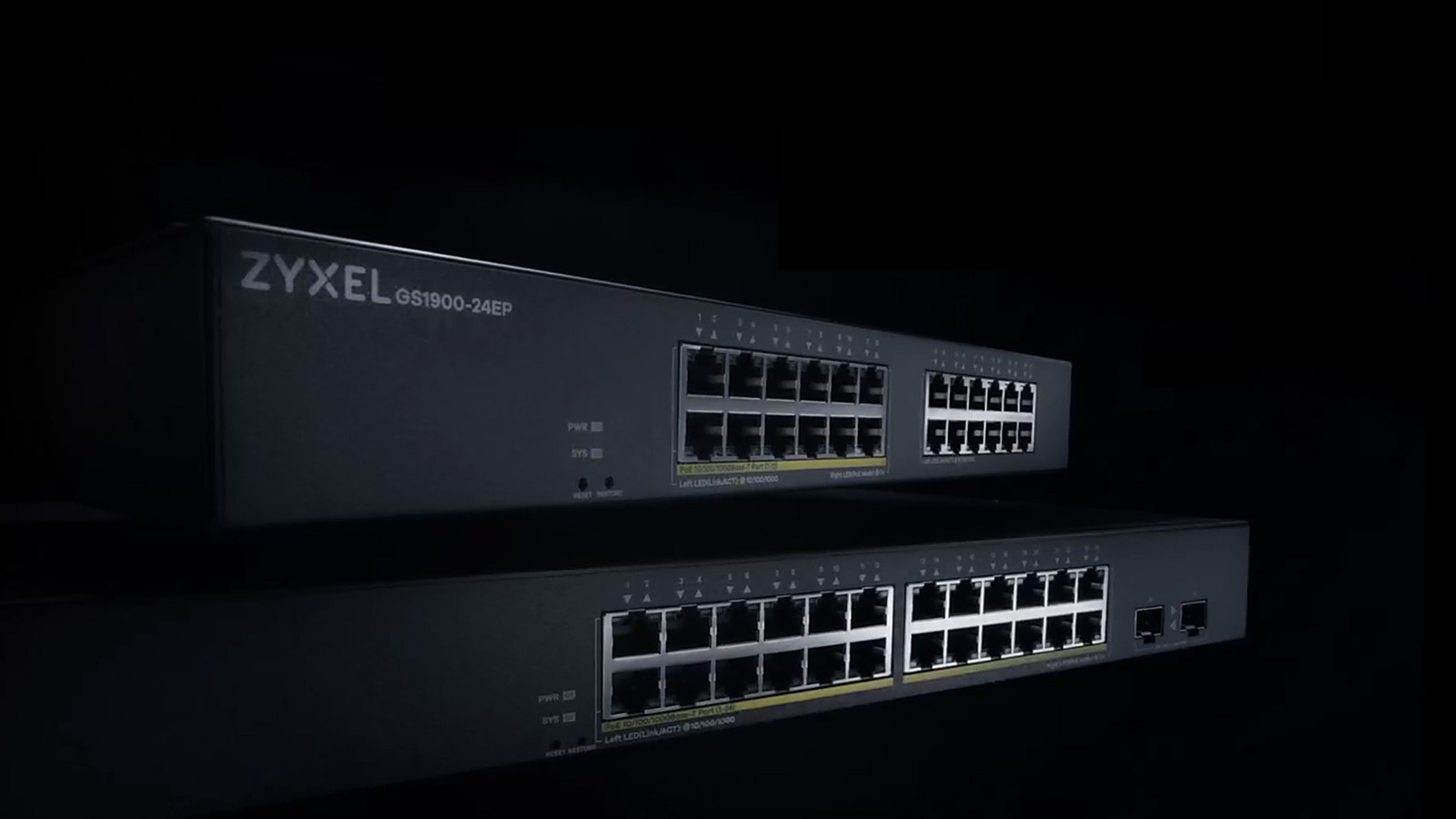
The Binarly team discovered that although the earlier patches successfully introduced verification checks to halt standard buffer overflows, attackers managed to circumvent these defenses. By deliberately corrupting a parameter counter prior to validation, the malicious script manipulated the switch into mishandling HTTP parameter lengths. This missing length validation allowed the exploit to successfully overwrite critical memory boundaries and execute arbitrary commands without requiring valid administrative credentials, rendering the prior software updates insufficient.
Global Impact and Attribution: The Kapibala Campaign
The exploitation campaign leveraging this flaw has been extensive, impacting organizations across multiple continents and sectors. Starting around August 17, 2026, threat intelligence firm GreyNoise began detecting suspicious scanning and exploitation activity targeting Zyxel GS1900 switches.
GreyNoise attributed this malicious activity to a suspected Chinese-speaking threat actor tracked under the moniker "Kapibala." According to telemetry data gathered by the firm, the Kapibala campaign successfully compromised approximately 996 distinct devices distributed across 48 countries worldwide. The geographical and structural breadth of the attacks indicates an opportunistic yet highly targeted sweep aimed at gathering foundational intelligence from critical enterprise and governmental edge networks.
Upon successfully establishing initial access through the out-of-bounds write flaw, the threat actors executed remote commands designed to pull down and execute a secondary payload script. This script methodically combed through the compromised switches, harvesting comprehensive device configurations, hashed root credentials, and granular network topology data.
Security analysts quickly drew parallels between the Kapibala operations and the broader "Red Heron" hacking campaign. Previous threat intelligence reports published by Acronis had documented Red Heron exploiting a critical n-day vulnerability in self-hosted Gitea Git service instances to deploy specialized Linux rootkits. The convergence of multiple exploit vectors across disparate technologies underscores the adaptability and resourcefulness of the threat group.
Timeline of Discovery, Confusion, and Remediation
The trajectory from initial exploitation to the official patching of CVE-2026-107441 involves a notable period of misattribution and rapid regulatory intervention. The chronological timeline highlights the challenges security researchers and vendors face when confronting sophisticated, evolving malware:

- June 16, 2026: Zyxel releases security updates to address CVE-2026-7273, a pre-authentication buffer overflow vulnerability affecting GS1900 switches.
- August 17, 2026: GreyNoise observes suspicious exploitation of Zyxel switches by the Kapibala threat actor group, eventually tallying nearly 1,000 compromised devices globally.
- September 21, 2026: GreyNoise publicly discloses the exploitation campaign, incorrectly attributing the attacks to the already-patched CVE-2026-7273 vulnerability.
- September 21, 2026: The U.S. Cybersecurity and Infrastructure Security Agency (CISA) adds CVE-2026-7273 to its Known Exploited Vulnerabilities (KEV) catalog, mandating immediate remediation for federal civilian executive branch agencies.
- Late September 2026: Researchers at Binarly analyze recovered exploit scripts associated with Red Heron infrastructure and determine the attacks are targeting an unpatched, separate vulnerability capable of bypassing June’s patches.
- September 28, 2026: Binarly confirms that the exploit successfully compromises firmware versions officially patched against CVE-2026-7273.
- September 29, 2026: Binarly formally reports its findings to Zyxel.
- October 11, 2026: Zyxel verifies the existence of the new vulnerability and assigns it the tracking identifier CVE-2026-107441, categorizing it as a distinct out-of-bounds write flaw stemming from unvalidated HTTP parameter lengths.
- October 22, 2026: Zyxel releases comprehensive firmware updates designed to strictly limit parameter sizes and validate parameter counts prior to memory allocation.
- November 3, 2026: Zyxel publishes a formal security advisory outlining the specifics of CVE-2026-107441 and urging immediate administrative action.
Industry Implications and Security Analysis
The Zyxel GS1900 incident serves as a critical case study regarding the limitations of traditional patching cycles and the persistence of threat actors in the face of defensive updates. When vendors patch complex firmware vulnerabilities, the focus is often concentrated narrowly on the specific mechanism identified in the initial bug report. However, threat actors operating advanced research arms frequently look for adjacent logic errors, such as improper input validation or boundary checks that remain outside the immediate scope of the original fix.
Furthermore, the rapid transition from public disclosure of a campaign to emergency federal directives underscores the acute risk posed by compromised edge hardware. Network switches, routers, and firewalls occupy a privileged position within enterprise topologies. Because these devices sit at the perimeter of corporate networks and often possess direct visibility into internal traffic flows, a compromise at the switch level affords attackers an ideal vantage point for lateral movement, credential harvesting, and long-term espionage persistence.
Security analysts emphasize that relying solely on automated firmware update mechanisms is insufficient if organizations fail to audit network management interfaces. Best practices dictate that administrative interfaces for network switches and routers should never be exposed directly to the public internet. Instead, network administrators should restrict management access to dedicated, segmented out-of-band management networks or enforce strict IP whitelisting.
Recommended Mitigation Steps for Administrators
Organizations utilizing any of the ten affected models within the Zyxel GS1900 switch series must take immediate corrective action to secure their infrastructure.
Network administrators are strongly advised to transition away from relying on previous mitigation measures or patches released in June 2026, as those updates alone do not protect against CVE-2026-107441. Instead, IT teams must download and apply the updated firmware packages published by Zyxel on October 22, 2026. These latest updates introduce rigorous parameter size constraints and multi-stage count validation routines that successfully neutralize the out-of-bounds write technique observed in the Kapibala exploits.
In addition to applying firmware updates, security teams should conduct thorough forensic audits of their network switches. Administrators must inspect device configurations for unauthorized modifications, verify user account databases for newly created or altered administrative credentials, and review system logs for indicators of compromise, such as unusual HTTP requests originating from untrusted internal or external IP addresses. Securing foundational network hardware remains paramount to preventing sophisticated threat actors from turning enterprise infrastructure against itself.

