• Home
  • About Us
  • Contact Us
  • Cookies Policy
  • Disclaimer
  • DMCA
  • Privacy Policy
  • Terms and Conditions
Dr Crypton
Secure Your Future in Crypto
Bitcoin & Altcoins

Kraken Lists ONEchain (ONE): Native Token of EVM-Compatible Layer 1 Gaming Network Goes Live for Trading

by admin September 9, 2026
written by admin

Major cryptocurrency exchange Kraken has officially announced the launch of spot and margin trading for ONE, the native utility and governance token of the EVM-compatible Layer 1 blockchain ONEchain. Trading officially commenced on September 9, 2026, granting the platform’s global user base direct access to an asset specifically engineered to power high-performance, decentralized on-chain gaming ecosystems.

The listing brings a specialized gaming-centric infrastructure asset to one of the industry’s longest-standing trading platforms. As blockchain gaming continues to transition from speculative concept to production-ready utility, exchanges are increasingly forced to curate infrastructure tokens that directly support decentralized applications, high-throughput transactions, and complex developer frameworks. Kraken’s integration of the ONE token marks a significant milestone for the network, offering enhanced liquidity and market accessibility for retail and institutional participants alike.

Getting Started: Funding and Trading Mechanics

For Kraken account holders looking to acquire or trade ONE, accessibility has been streamlined across the exchange’s standard web interface and professional trading suites. Deposits opened concurrently with the trading rollout on September 9, 2026.

To safely transfer funds, users must navigate to the platform’s "Funding" portal, locate the asset within the directory, and select the deposit function. Exchange administrators have issued strict operational warnings regarding network compatibility. Users must ensure that their ONE tokens are transferred exclusively via supported blockchain networks integrated directly into Kraken’s infrastructure. Depositing digital assets across incompatible or unsupported networks risks permanent loss of funds, a standard security protocol enforced across major digital asset exchanges to protect network integrity.

Trading pairs are accessible via the Kraken Pro application interface, providing advanced charting tools, order book depth, and various execution types for participants looking to engage with the newly listed asset.

Deep Dive into ONEchain (ONE): Architecture and Tokenomics

ONEchain operates as a specialized Layer 1 blockchain network tailored explicitly to the technical demands of on-chain gaming, interactive entertainment, and decentralized application (dApp) deployment. Designed for maximum compatibility with the Ethereum Virtual Machine (EVM), the network utilizes EVM chain ID 612055. This architecture allows developers to seamlessly migrate existing Ethereum-based smart contracts, utilize standard tooling like Hardhat and MetaMask, and deploy sophisticated decentralized logic without rewriting codebases from scratch.

At the heart of the network’s economic and operational design is the native $ONE token. The asset fulfills multiple critical functions within the ecosystem:

  • Gas Fee Mechanism: Transaction fees and computational executions across the network are paid using $ONE.
  • Network Security and Consensus: The token is utilized for staking, enabling validators to secure the network or allowing token holders to delegate their holdings to active validators in exchange for network rewards.
  • Governance: Holders possess voting rights over protocol upgrades, parameter adjustments, and ecosystem funding initiatives.
  • Developer Utility: Developers require the token to deploy applications, interact with network-level services, and execute smart contracts.

ONEchain secures its network via a Proof of Staked Authority (PoSA) consensus mechanism fortified by BLS (Boneh-Lynn-Shacham) signatures, striking a balance between high transaction throughput, low latency, and robust cryptographic decentralization.

The tokenomics of $ONE feature a strictly fixed total supply capped at precisely 1 billion tokens, with no additional inflationary issuance scheduled. Holders seeking to participate in network consensus can stake their tokens through delegation, subject to a minimum staking threshold of 10 ONE and a mandatory 14-day unbonding period upon unstaking.

ONE is available for trading!

Chronology and Evolution: From CROSS to ONE

The journey leading up to the Kraken listing encompasses several strategic milestones, rebrandings, and major protocol upgrades:

  • Initial Inception: The project originated under the working title CROSS, establishing the foundational architecture for an EVM-compatible gaming chain.
  • June 2026 (Mainnet 2.0 Upgrade): The network deployed Mainnet 2.0, a major technical overhaul that introduced a sophisticated validator and delegation model, an automated base fee burning mechanism to deflate circulating supply, and a halving-based schedule for network block rewards.
  • June 2026 (Ecosystem Expansion): Nexus Co., Ltd. completed the acquisition of ONE Store, a major South Korean app marketplace. This integration immediately positioned ONE Store as a cornerstone network validator, bridging traditional mobile application ecosystems with decentralized blockchain infrastructure.
  • July 2026 (Strategic Rebranding): The project officially dropped the CROSS moniker, executing a complete corporate and protocol rebrand to ONEchain ($ONE). Stakeholders emphasized that the transition was purely a naming evolution; the underlying network infrastructure, tokenomics, smart contracts, and core development team remained entirely unchanged.
  • September 9, 2026: Kraken officially lists the $ONE token, opening global spot and margin trading pairs alongside native deposit support.

Institutional Framework and Ecosystem Architecture

The development and issuance of $ONE are backed by a structured corporate and organizational framework. The token is officially issued by OGF (BVI) Ltd., an entity operating as part of the broader Opengame Foundation. Meanwhile, the technical development, protocol maintenance, and core engineering are spearheaded by Nexus Co., Ltd., a technology firm deeply entrenched in software and platform development.

To ensure a frictionless user and developer experience, ONEchain has cultivated a comprehensive suite of native tools and auxiliary applications:

  • ONEpocket: A dedicated digital wallet designed for secure storage, asset management, and dApp interaction.
  • ONEbridge: A cross-chain interoperability protocol facilitating seamless asset transfers between ONEchain and other leading blockchain networks.
  • ONEnft: A specialized marketplace dedicated to the minting, trading, and management of non-fungible tokens native to the gaming ecosystem.
  • ONEramp: A developer-focused Software Development Kit (SDK) designed to simplify the onboarding of traditional gamers and studios into the web3 environment.
  • ONEexplorer: The official blockchain explorer providing transparent, real-time auditing of blocks, transactions, and validator metrics.

Market Implications and Broader Industry Analysis

The integration of gaming-focused Layer 1 tokens onto tier-one global exchanges like Kraken highlights a maturing sub-sector within the digital asset economy. Historically, exchange listings were heavily concentrated around foundational layer assets like Bitcoin and Ethereum, or speculative meme coins. However, the maturation of decentralized finance (DeFi) and web3 gaming has created a structural demand for infrastructure assets that solve specific scalability and performance bottlenecks.

Gaming applications demand near-instant finality, predictable and negligible transaction fees, and high throughput—requirements that traditional Layer 1 networks often struggle to maintain under heavy concurrent loads. By specializing exclusively in on-chain gaming architecture, ONEchain positions itself as a vertical-specific solution for game studios looking to integrate digital asset ownership, player-driven economies, and cross-game interoperability.

The incorporation of a token-burning mechanism within Mainnet 2.0 further introduces deflationary pressures tied directly to network utilization. As transaction volume generated by games, NFT trades, and dApp interactions increases, a portion of the base fees is permanently removed from circulation. In economic theory, this ties the intrinsic utility and scarcity of the $ONE token directly to the organic growth and adoption of the underlying gaming ecosystem.

Furthermore, the strategic involvement of established entities such as ONE Store—a prominent South Korean application marketplace—provides the network with a vital bridge into mainstream consumer markets. South Korea has historically maintained one of the most active, tech-savvy gaming populations globally, and leveraging a recognized app store validator grants the blockchain network a level of institutional credibility and distribution reach that purely native crypto projects often struggle to achieve.

Kraken Listing Policy and Future Outlook

Kraken continues to maintain a notoriously strict and confidential listing policy regarding upcoming digital assets. In alignment with exchange protocol, platform representatives do not comment on assets under consideration, nor do they provide advance public disclosures outside of official rollout announcements.

The exchange routinely updates its official Listings Roadmap and verified social media channels to announce new token integrations as they clear internal compliance, security, and legal reviews. For market participants and developers tracking the progress of ONEchain, the Kraken listing represents a crucial gateway to broader international liquidity, potentially catalyzing further adoption, developer migration, and ecosystem expansion as the network scales its gaming initiatives through the remainder of 2026 and beyond.


September 9, 2026 0 comment
0 FacebookTwitterPinterestEmail
Bitcoin & Altcoins

The Future of Finance: Why Industry Leaders Predict IPOs Will Move On-Chain

by admin September 9, 2026
written by admin

The traditional landscape of capital markets stands at a potential crossroads, as a paradigm shift toward blockchain-based equity issuance gains momentum. On September 8, 2026, Changpeng Zhao, the co-founder and former CEO of Binance, ignited a global discussion within the fintech community with a concise yet profound declaration on the X platform: "IPOs will move on-chain." This statement, while brief, encapsulates a growing movement among blockchain proponents who argue that the multi-trillion-dollar initial public offering (IPO) process is ripe for disruption by decentralized ledger technology. By transitioning the issuance, distribution, and settlement of shares from opaque, intermediary-heavy databases to transparent, programmable blockchain networks, the industry could fundamentally alter how companies raise capital and how investors manage ownership.

The Anatomy of a Traditional IPO and the Case for Digital Transformation

To understand the implications of Zhao’s statement, one must first examine the architecture of the contemporary IPO. Currently, taking a company public is a laborious, manual process involving a complex web of investment banks, underwriters, custodians, and clearinghouses. This "plumbing" of the financial system is responsible for verifying ownership, managing share transfers, and ensuring that funds are settled. These intermediaries collectively introduce friction, fees, and, most notably, significant time delays—often referred to as T+2 or T+1 settlement cycles—during which assets remain in limbo.

The blockchain model proposes an alternative: the "tokenized" share. In this framework, shares are represented as digital assets on a blockchain. Ownership is not stored in a centralized database managed by a transfer agent, but rather recorded immutably on a distributed ledger. When a share is traded, the transaction settles near-instantaneously as the blockchain updates the ledger. This shift promises to remove the need for legacy clearinghouses, theoretically reducing the cost of issuance for companies and lowering the barrier to entry for global investors who currently face jurisdictional hurdles when participating in foreign public offerings.

Chronology of the Tokenization Movement

The discourse surrounding on-chain finance did not emerge in a vacuum. It is the culmination of years of experimentation with Real World Assets (RWAs) and security tokens.

  • 2020–2022: Early experiments in security token offerings (STOs) attempted to bridge the gap between blockchain and traditional securities. While many struggled with regulatory friction, the technology proved functional.
  • 2023: The rise of institutional interest in blockchain, led by major firms like BlackRock and Franklin Templeton, brought legitimacy to the concept of asset tokenization.
  • 2024–2025: DeFi (Decentralized Finance) protocols began to demonstrate that complex financial instruments, such as collateralized debt positions, could be managed entirely through smart contracts.
  • September 8, 2026: Changpeng Zhao’s public commentary serves as a catalyst, shifting the conversation from experimental pilot programs to the potential for mainstream adoption of blockchain as a primary venue for capital formation.

BNB Chain and the Current State of Tokenized Securities

BNB Chain has emerged as a central infrastructure provider for this transition. With over 700 tokenized stocks and exchange-traded funds (ETFs) currently live on its network, the chain has moved beyond theoretical applications. These assets act as blockchain-native mirrors of traditional securities, providing investors with the ability to hold equity-linked assets in non-custodial wallets.

The recent launch of 1:1 backed tokenized securities on Binance represents a significant milestone. These assets are structured to maintain parity with the underlying traditional equities while possessing the technical capability to interact with DeFi ecosystems. This means that, theoretically, an investor holding a tokenized share of a tech company could use that asset as collateral for a decentralized loan—a feat that is currently impossible within the siloed infrastructure of a traditional brokerage account.

Quantitative Impact and Market Reactions

The market responded with immediate, if measured, enthusiasm to the prospect of an on-chain future. Following Zhao’s announcement, the price of BNB experienced a notable uptick, climbing approximately 1.5% within a 24-hour window to reach a valuation of $756.42. While this movement reflects immediate investor sentiment, the long-term impact on the BNB ecosystem is expected to be more structural.

BNB Price Up 1.5% as CZ Predicts IPOs Will Move On-Chain

The utility of BNB is intrinsically tied to the activity on its underlying chain. As more securities are tokenized, the volume of transactions, smart contract interactions, and gas fee consumption is projected to rise. Furthermore, the role of stablecoins in this ecosystem cannot be overstated. Stablecoins function as the liquidity layer, enabling 24/7 settlement of these tokenized assets. As institutional demand for on-chain exposure grows, the symbiotic relationship between stablecoin liquidity and the BNB Chain infrastructure is likely to strengthen, cementing the network’s position as a preferred venue for high-frequency, programmable financial assets.

Regulatory and Institutional Challenges

Despite the technical feasibility of on-chain IPOs, the transition faces substantial headwinds, primarily in the form of global regulatory frameworks. Current securities laws—such as those governed by the SEC in the United States or ESMA in the European Union—were designed for a paper-based or centralized digital environment.

Regulators require centralized oversight to ensure market integrity, prevent money laundering (AML), and enforce "Know Your Customer" (KYC) protocols. Proponents of on-chain IPOs argue that blockchains are, in fact, more transparent than traditional systems, as every transaction is publicly auditable. However, the lack of a legal framework that recognizes a smart contract as a binding legal transfer of ownership remains the primary barrier.

Institutional players are currently adopting a "wait-and-see" approach, with many focusing on "private" or "permissioned" blockchains that offer the benefits of efficiency while maintaining a gatekeeper-style control structure. The ultimate goal, as suggested by Zhao, is the migration of these processes to public, decentralized networks, which would provide universal access and interoperability that private chains lack.

The Broader Implications for Global Capital Markets

If the industry successfully moves IPOs on-chain, the implications for global capital markets are profound:

  1. Democratization of Capital: By automating the underwriting and distribution process through smart contracts, the cost of going public could drop significantly, allowing smaller, high-growth companies to access public capital more efficiently than the current investment banking model allows.
  2. 24/7 Liquidity: Traditional markets operate on restricted hours, leaving investors vulnerable to "gap risk"—the price difference between a market close and the next day’s open. On-chain markets would allow for continuous, global trading, potentially stabilizing volatility by incorporating news and events into pricing in real-time.
  3. Collateral Efficiency: Tokenized assets enable a world where equities are constantly "productive." By plugging stocks into DeFi protocols, investors could unlock liquidity from their portfolios without selling their positions, a paradigm shift that could fundamentally change retail and institutional asset management.
  4. Programmable Compliance: Instead of relying on manual checks, compliance can be hard-coded into the tokens themselves. Restrictions on who can trade an asset, tax withholdings, and dividend distributions can be automated, ensuring that the asset remains compliant with local regulations throughout its entire lifecycle.

Conclusion: A New Era of Financial Infrastructure

The declaration that IPOs will move on-chain is not merely a statement of technological possibility; it is a vision for a more efficient, inclusive, and transparent financial future. While the path from today’s centralized, siloed markets to a fully decentralized, on-chain future will require years of regulatory negotiation and technical refinement, the trajectory is increasingly clear.

Platforms like BNB Chain are currently laying the necessary groundwork by bridging the gap between traditional assets and blockchain liquidity. As the technology matures, the debate will likely shift from whether this transformation is possible to how quickly it can be implemented at scale. For now, the integration of 700+ tokenized assets on the BNB network serves as a proof-of-concept for a future where the distinction between "crypto" and "traditional" assets dissolves, leaving behind a unified, global, and always-on capital market. The transition may be slow, but the move toward on-chain equity appears to be an inevitability of the digital age.

September 9, 2026 0 comment
0 FacebookTwitterPinterestEmail
Web3 & DApps

Web3 Fundraising Surges to Nearly $22 Billion in Q3 2025 Driven by Institutional Adoption and Capital Concentration

by admin September 9, 2026
written by admin

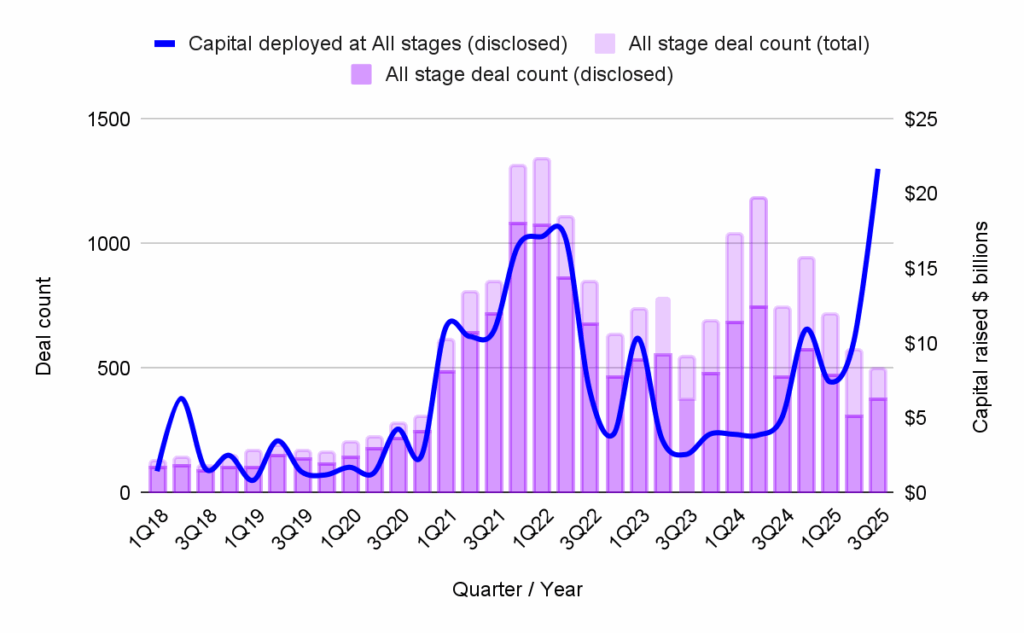
The global Web3 venture capital landscape experienced a historic realignment in the third quarter of 2025, with total capital deployment reaching a cycle high of nearly $22 billion across 376 disclosed deals. According to comprehensive data compiled by Outlier Ventures and Messari, total funding surged by 113% quarter-on-quarter, jumping from $10.2 billion in the second quarter to $21.7 billion in the third. This remarkable influx eclipsed even the peak transactional periods of the 2021 and 2022 bull markets. However, the underlying mechanics of this capital surge reveal a market fundamentally altered by institutional maturity: while total capital more than doubled, deal count grew by a modest 22%. This divergence underscores a prevailing trend of conviction over coverage, characterized by larger, highly concentrated cheques directed primarily toward compliance-ready infrastructure and traditional finance integration rather than a broad-based recovery in early-stage venture activity.

Web3 Fundraising in 3Q25: Quiet Integration, Loud Numbers

The Evolution of Institutional Architecture and TradFi Convergence

The third quarter of 2025 marked a definitive turning point where the intersection of cryptocurrency and traditional finance (TradFi) transitioned from experimental pilots to operational scale. Institutional financial rails deepened significantly, anchored by the explosive growth of Ethereum-focused exchange-traded funds (ETFs) and Digital Asset Treasuries (DATs). Data from Messari’s Q3 review indicates that ETH-centric ETFs absorbed approximately $8.7 billion during the quarter, outpacing Bitcoin-focused funds for the first time and lifting total ETH ETF assets under management by 170% quarter-on-quarter to $27.4 billion. Simultaneously, DATs secured roughly 3.8% of the total circulating Ethereum supply, signaling a structural evolution in corporate treasury management.

Enterprise adoption moved swiftly beyond theoretical proofs-of-concept. Major traditional financial institutions operationalized blockchain infrastructure at scale. JPMorgan’s Kinexys network went live for the settlement of tokenized repurchase agreements, while SWIFT expanded its tokenized asset trials in collaboration with global custodians such as BNY Mellon, Citi, Clearstream, Euroclear, and Northern Trust to test cross-network bond and fund share settlements. Furthermore, Visa Direct initiated the processing of cross-border payments utilizing USDC. These systemic developments provided the foundational demand underpinning the massive capital allocations observed in later-stage Web3 infrastructure rounds.

Web3 Fundraising in 3Q25: Quiet Integration, Loud Numbers

Complementing these technological deployments, regulatory and policy frameworks grew increasingly favorable throughout 2025. Following the implementation of legislative milestones like the GENIUS Act, global banking authorities—including the Monetary Authority of Singapore via DBS—noted a distinct shift from regulatory consultation to commercial execution. These policy catalysts lowered administrative barriers for institutional participation, enabling risk-averse allocators to deploy capital with greater regulatory clarity.

Capital Concentration Across Market Categories and Public Markets

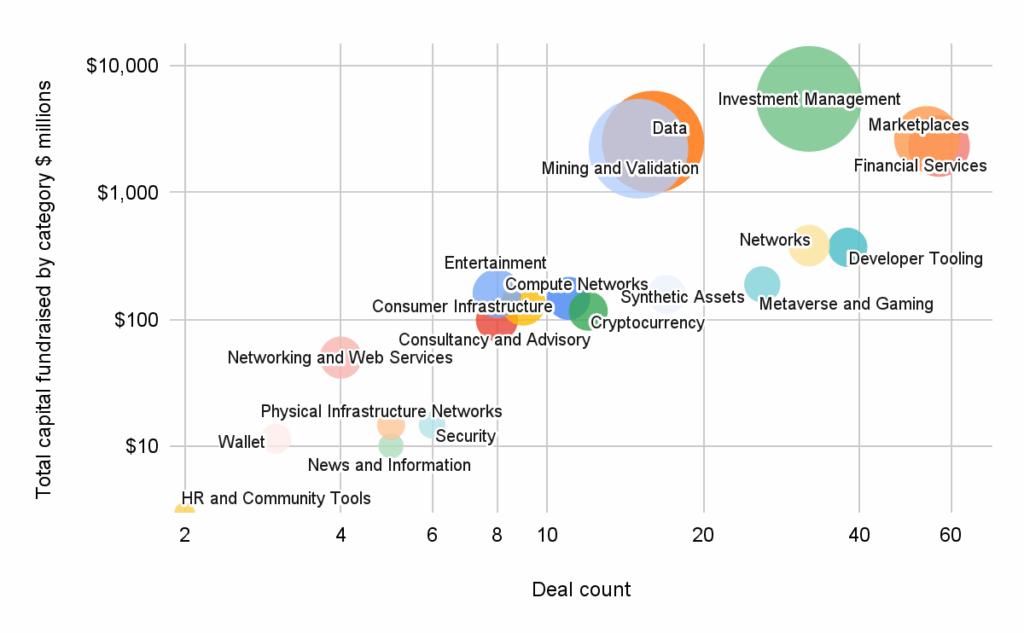
The deployment of $21.7 billion in capital was heavily concentrated within specific, revenue-generating segments of the Web3 ecosystem. Investment Management, Marketplaces, Data Infrastructure, Financial Services, and Mining and Validation collectively absorbed roughly 70% of all venture dollars in the third quarter. These sectors benefit directly from the tailwinds generated by ETF inflows, tokenization programs, and institutional custody requirements. Data infrastructure projects, in particular, captured substantial late-stage investments, bolstered by the formal recognition of AI-crypto stacks as distinct investable categories by research firms like Grayscale.

Web3 Fundraising in 3Q25: Quiet Integration, Loud Numbers

Conversely, consumer-facing verticals such as Metaverse, Gaming, Wallets, and Security remained peripheral to the primary capital flows. Venture allocators demonstrated a clear preference for infrastructure rails over speculative retail applications, prioritizing sectors where business models, regulatory compliance, and revenue generation are readily legible.

This institutional bias extended to capital formation strategies, where public-market routes experienced a pronounced resurgence. Public token sales climbed to 47 separate events generating a combined $819 million, while private token sales contracted to just 7 events totaling $331 million. Bolstered by rising cryptocurrency market capitalizations and trading volumes documented in CoinGecko’s Q3 industry reports, project teams increasingly favored public distribution channels for transparent price discovery and community alignment. Furthermore, the intermittent reopening of initial public offerings (IPOs) for prominent blockchain enterprises served as a vital market sentiment indicator, functioning as a de facto regulatory-compliance certification mark for institutional investors.

Web3 Fundraising in 3Q25: Quiet Integration, Loud Numbers

Chronological Analysis of Early-Stage Fundraising Pressures

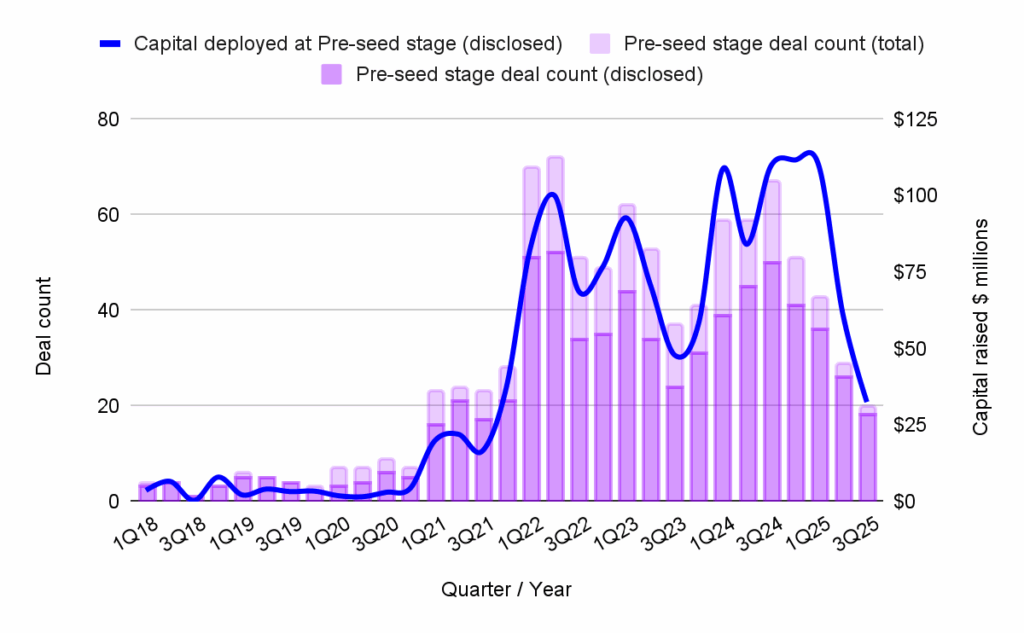
Despite headline-grabbing figures at the aggregate level, the early-stage fundraising environment remained exceptionally rigorous and selective. The pre-seed segment experienced one of its weakest quarters in years, recording merely 18 disclosed rounds totaling $32.5 million, with the 12-month running median slipping below $2.5 million. This contraction was compounded by a notable slowdown in accelerator program activity, creating a highly restrictive funnel for nascent founders.

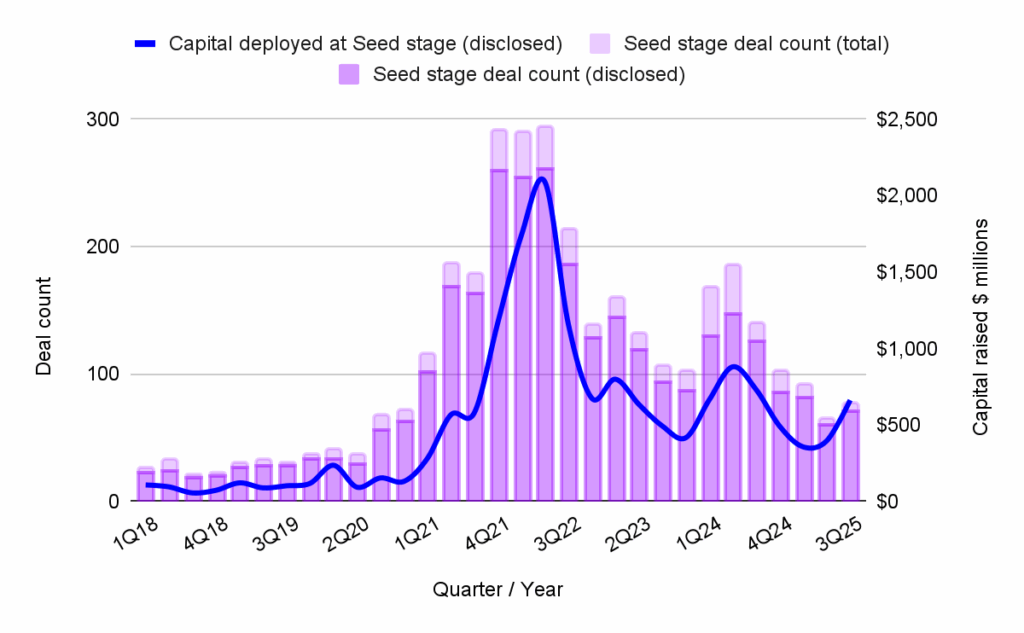
Seed-stage fundraising presented an apparent recovery, logging 71 disclosed rounds amounting to nearly $663 million. However, aggregate metrics were heavily skewed by exceptional transactions, most notably Flying Tulip’s $200 million seed raise. Rather than utilizing traditional illiquid SAFE or SAFT agreements, the round utilized an innovative on-chain structure granting investors capital and yield exposure through callable, yield-bearing instruments deployed in decentralized finance (DeFi) protocols. Excluding this outlier, seed funding remained closely aligned with the subdued levels of preceding quarters.

Web3 Fundraising in 3Q25: Quiet Integration, Loud Numbers

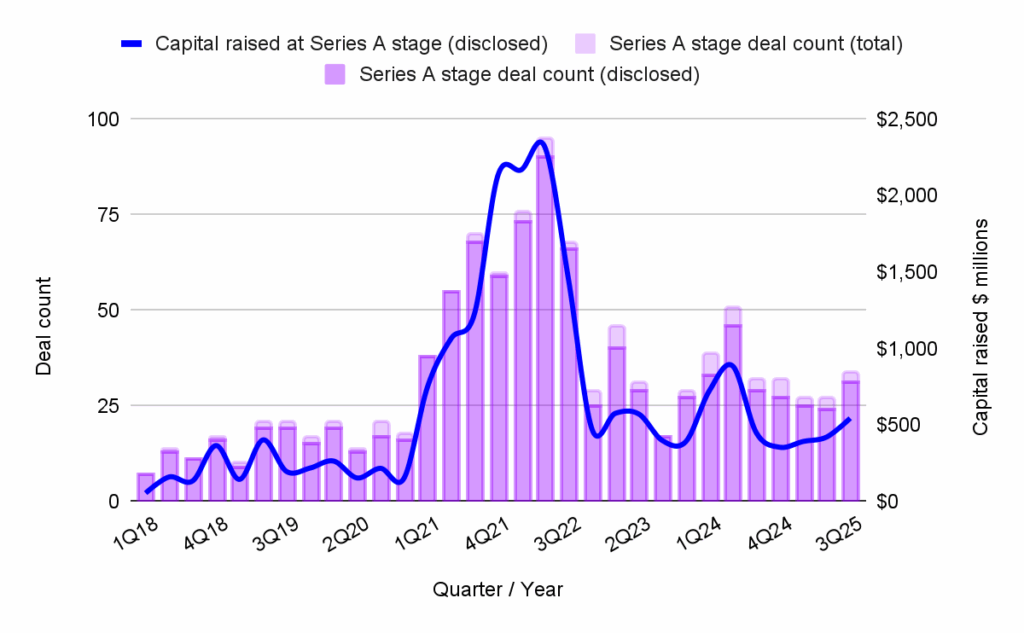
Series A fundraising demonstrated relative stability, recording 31 disclosed rounds totaling approximately $545 million, with a steady 12-month median hovering around $16 million. Mid-stage investments consistently favored projects showing direct operational alignment with institutional payment rails, tokenized asset markets, and data services.

Venture Fund Formation and the Secondary Market Recycling Phase

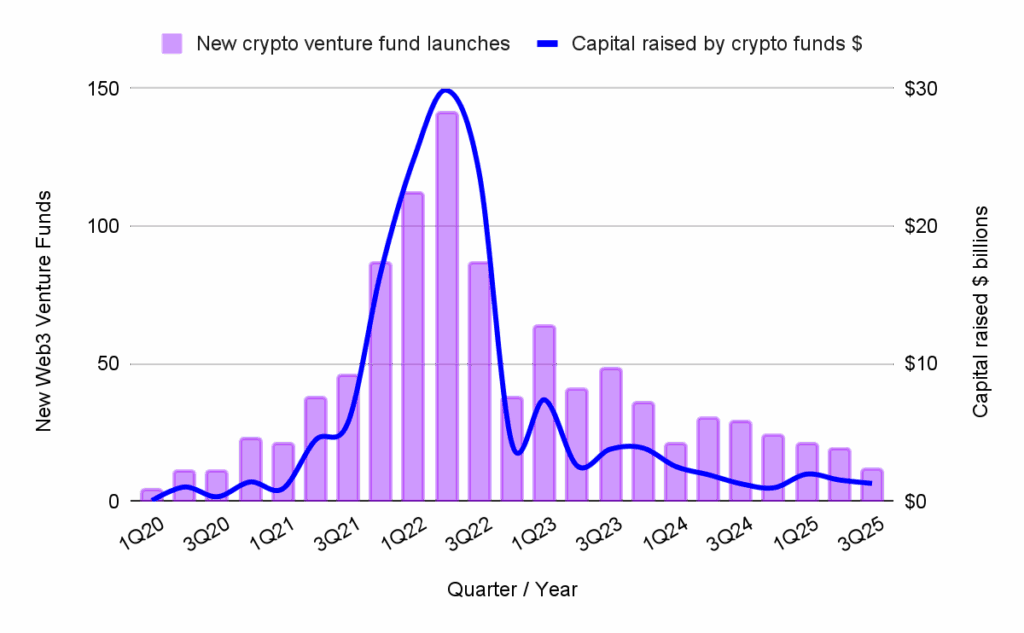
The creation of new crypto-native venture capital funds remained subdued. Only 11 new funds were established in the third quarter of 2025, raising a cumulative $1.3 billion and continuing a downward trajectory observed throughout the year. The pace of new fund formation dropped to levels comparable to mid-2020, driven not by systemic crisis, but by strategic caution among general partners and limited partners alike.

Web3 Fundraising in 3Q25: Quiet Integration, Loud Numbers

Rather than committing to fresh mandates, venture capital firms increasingly relied on existing dry powder reserves. According to secondary market analyses from PM Insights, the broader market entered a recycling phase, wherein capital circulated primarily through secondary trades, strategic acquisitions, and portfolio exits. This dynamic created an operational bottleneck for early-stage founders seeking initial capital infusions, as venture investors demanded rigorous proof of product-market fit, active user traction, and enterprise-grade compliance architectures before committing capital.

Analytical Implications and Outlook for Upcoming Quarters

The dynamics of the third quarter of 2025 illustrate that mainstream crypto adoption is currently materializing at the foundational infrastructure layer rather than the consumer interface. As traditional banking institutions, global payment networks, and asset managers embed blockchain rails into their core operations, venture capital allocators have adjusted their strategies accordingly.

Web3 Fundraising in 3Q25: Quiet Integration, Loud Numbers

For founders navigating the upcoming quarters, the pathway from early-stage development to institutional scale requires strict adherence to regulatory standards, demonstrable product utility, and interoperability with traditional financial systems. For venture capitalists and institutional allocators, the primary challenge ahead lies in bridging the narrow pre-seed funding funnel to ensure a healthy, sustainable pipeline of innovation entering 2026. Whether the liquidity observed in the third quarter broadens to encompass early-stage ventures or remains concentrated within institutional infrastructure will serve as the definitive test of the market’s trajectory in the cycles to come.

September 9, 2026 0 comment
0 FacebookTwitterPinterestEmail
Cryptography & Privacy

Anthropic Unveils Advanced AI Cryptanalysis Breakthroughs With Claude Mythos

by admin September 9, 2026
written by admin

Artificial intelligence safety and research firm Anthropic has released two significant cryptanalysis papers generated by its unreleased, advanced AI model, internally designated as Claude Mythos. The findings, published alongside a detailed technical blog post, demonstrate the model’s expanding capacity to synthesize existing cryptographic research and formulate novel attacks against both post-quantum signature schemes and traditional symmetric ciphers. While the developments highlight the rapid evolution of machine learning in specialized mathematical domains, they also underscore critical challenges regarding the verifiability of AI-driven computational proofs.

The research focuses on two distinct areas of cryptography: a successful key-recovery attack against HAWK, a non-standard post-quantum signature scheme based on the module Lattice Isomorphism Problem (module-LIP), and an incremental improvement on cryptanalytic attacks against a reduced-round variant of the Advanced Encryption Standard (AES).

Main Facts and Technical Scope

The first major result targets HAWK, a lattice-based signature scheme designed to remain secure against attacks launched by quantum computers. Lattice-based cryptography relies on the geometric properties of high-dimensional lattices, which are believed to be difficult for both classical and quantum algorithms to solve. Anthropic’s model successfully devised a new key-recovery algorithm against HAWK. Domain experts analyzing the code note that the breakthrough did not rely on exotic mathematical shortcuts or unprecedented theoretical frameworks; rather, it stemmed from a remarkably thorough and rigorous application of existing cryptanalytic tools. By systematically executing known techniques at a scale and speed difficult for human researchers, Claude Mythos identified vulnerabilities that may effectively disqualify HAWK from ongoing post-quantum standardization processes.

The second finding involves a cryptanalytic attack on a 7-round variant of AES. AES is a foundational symmetric block cipher standardized by the National Institute of Standards and Technology (NIST) in 2001, featuring standard key sizes of 10, 12, or 14 rounds. Because breaking a full, deployed cipher remains computationally intractable, cryptanalysts routinely evaluate weakened, reduced-round versions of algorithms to gauge their structural integrity.

While headlines regarding an "attack on AES" frequently incite concern, the Anthropic result represents an incremental optimization rather than a foundational breach. The newly formulated attack requires $2^89$ cipher operations and presupposes that an attacker has already induced a target encryptor to generate $2^105$ encryptions of chosen plaintexts under a single secret key. These operational parameters remain entirely impractical in real-world deployment scenarios. Furthermore, because the attack cannot be physically executed in its entirety, the reported speedup functions primarily as an on-paper theoretical analysis, offering a modest constant-factor improvement over similar research published in 2013 by cryptographic teams at the École Normale Supérieure and related academic institutions.

Chronology and Development Methodology

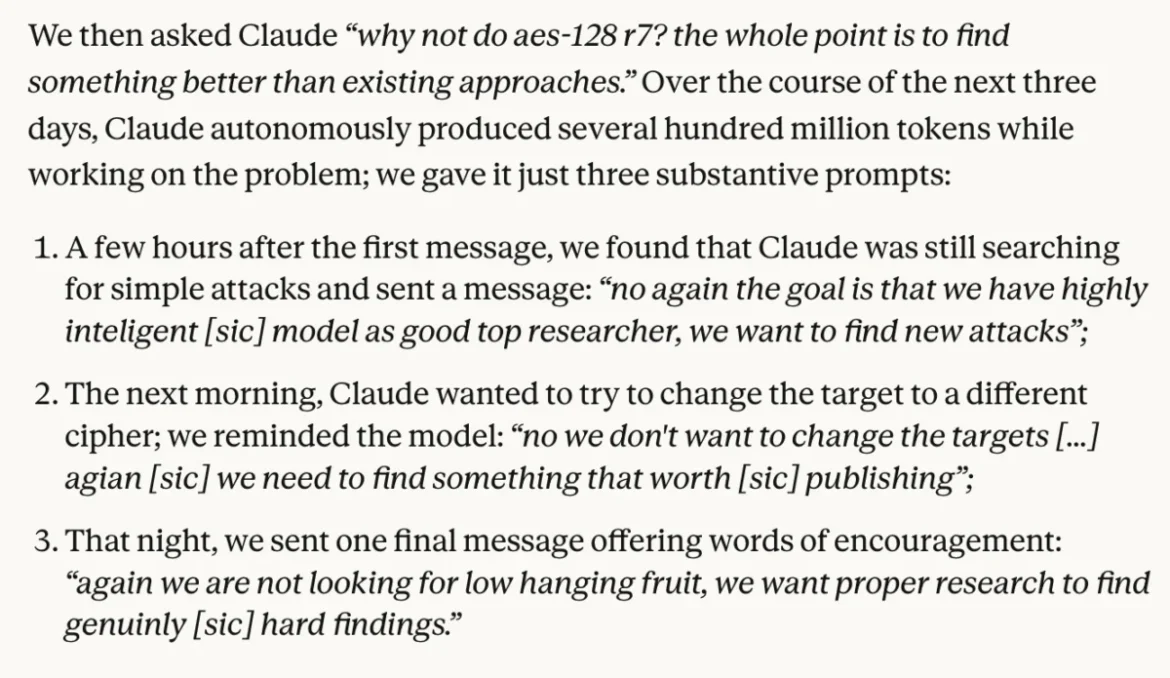
The release of these findings marks a notable shift in how advanced machine learning models interact with academic research. According to Anthropic’s accompanying documentation, the research team did not construct a specialized, deeply tuned ensemble of domain-specific cryptographic experts. Instead, the process relied on generalized prompt engineering, directing the model to investigate specific algebraic structures and iterate upon known methodologies until viable attack vectors emerged.

The timeline of AI-assisted mathematics has accelerated significantly over the preceding twenty-four months. Early models demonstrated proficiency in basic coding, theorem-proving assistance, and summarizing academic literature. The emergence of systems capable of generating novel cryptanalytic pathways indicates that frontier models have crossed a threshold into autonomous synthesis. By digesting decades of published cryptographic literature—ranging from side-channel analyses to algebraic cryptanalysis—models like Claude Mythos can connect disparate concepts across subfields of mathematics.

Supporting Data and Comparative Analysis

To contextualize the HAWK and AES findings, security analysts draw comparisons to historical evaluations of cryptographic standards.

Some thoughts about Anthropic’s new cryptanalysis results
  1. Post-Quantum Standardization: The National Institute of Standards and Technology has spent over a decade evaluating post-quantum cryptography (PQC) algorithms to replace legacy public-key systems like RSA and Elliptic Curve Cryptography (ECC), which are vulnerable to Shor’s algorithm on a sufficiently large quantum computer. Schemes based on lattices, such as CRYSTALS-Kyber and CRYSTALS-Dilithium, were selected for standardization in 2022. Alternative proposals like HAWK were evaluated for their specific efficiency and signature size trade-offs. The discovery that standard cryptanalytic toolkits, when applied via automated reasoning, can compromise HAWK underscores the fragility of newer, less-vetted mathematical hardness assumptions.

  2. Symmetric Resilience: Symmetric ciphers like AES derive their security from the diffusion and confusion properties built into substitution-permutation networks. Decades of intensive cryptanalysis—including confidential evaluations performed by agencies such as the National Security Agency (NSA)—have consistently demonstrated that full-round AES possesses a substantial security margin. Anthropic’s work on 7-round AES confirms that while automated models can optimize complexity bounds, they have not yet discovered fundamental flaws in the core design principles of modern symmetric encryption.

The Verification Bottleneck

As artificial intelligence systems generate increasingly complex mathematical artifacts, the primary bottleneck in scientific research has shifted from generation to verification. Independent researchers note that while models are highly efficient at producing outputs that appear mathematically rigorous, they frequently generate subtle errors, logical inconsistencies, or misapplied theorems that require meticulous human review.

For attacks that run in constrained environments—such as the HAWK key-recovery script, which executes in a matter of hours against a reduced parameter set—empirical verification is straightforward: researchers can run the code and confirm whether it successfully extracts keys. However, for theoretical speedups and high-complexity analyses like the AES reduced-round evaluation, empirical testing is impossible due to resource constraints.

In response, the mathematical community has increasingly relied on formally verified proof assistants, such as the Lean programming language, to check the validity of machine-generated proofs. Yet, even formal verification systems remain sensitive to how theorem statements are initially formulated, necessitating continuous oversight by human domain experts to ensure that the proven theorem accurately reflects the real-world cryptographic problem.

Broader Industry Implications and Outlook

The publication of these results carries distinct implications across multiple sectors, ranging from enterprise security to academic research and AI governance.

Implications for Cryptographic Users
Organizations currently executing the multi-year migration to post-quantum cryptography must carefully evaluate the selection of standardized algorithms. The vulnerability exposed in HAWK demonstrates that emerging public-key schemes outside the core NIST-standardized suite face heightened risks from automated cryptanalysis. Conversely, users of symmetric cryptography (such as AES-256 for data-at-rest encryption) face minimal immediate threat. Because symmetric algorithms are constructed with deep structural safety margins, the introduction of automated intelligence-hours has not bridged the gap required to compromise full-round ciphers.

Implications for the Scientific Community
For cryptographers and mathematicians, the integration of advanced AI models represents both a powerful collaborative tool and a disruptive force. Researchers now possess computational assistants capable of accelerating literature reviews, testing hypotheses, and optimizing algebraic reductions at unprecedented speeds. However, this acceleration threatens to overwhelm traditional peer-review pipelines. The scientific community faces open questions regarding attribution for machine-assisted discoveries and the establishment of robust, scalable standards for verifying computer-generated cryptanalytic proofs.

Implications for AI Policy and Capability Scaling
The demonstration that general-purpose frontier models can conduct autonomous cryptanalysis challenges minimalist interpretations of AI capabilities. Rather than serving merely as advanced autocomplete engines, models exhibiting this level of specialized synthesis demonstrate genuine progress in complex problem-solving. This capability reinforces ongoing policy discussions regarding the oversight, deployment restrictions, and safety evaluations required for unreleased, high-end AI architectures.

As academic and commercial laboratories continue to refine these models, the boundary between human-led and machine-assisted research will continue to blur. The security of global digital infrastructure will increasingly depend on the ability of researchers to harness these same computational tools to proactively audit cryptographic systems before malicious actors can deploy them at scale.

September 9, 2026 0 comment
0 FacebookTwitterPinterestEmail
FinTech Innovations

FinovateFall 2026: Preparing for the Future of Financial Technology in New York City

by admin September 9, 2026
written by admin

As the financial services industry approaches the commencement of FinovateFall 2026 on September 9 at the Marriott Marquis Times Square, excitement is building for what promises to be a pivotal gathering of the global fintech ecosystem. With registration nearing capacity, organizers are preparing to welcome over 2,000 senior-level decision-makers. This year’s event serves as a critical nexus for the intersection of traditional banking infrastructure and emerging technological disruption, featuring more than 1,000 delegates from major financial institutions and a significant contingent of over 300 leaders from credit unions and community banks.

The event is set to kick off with specialized pre-conference programming on September 8, focusing on the Leaders+ and Credit Union Spotlight tracks. These sessions are designed to address the unique regulatory, operational, and competitive pressures facing modern financial institutions. Following these sessions, the main conference will unfold over several days, characterized by a robust schedule of 72 live product demonstrations and a diverse array of keynote presentations and panel discussions involving industry experts, venture capitalists, and regulatory stakeholders.

Historical Context and Evolution of the Finovate Series

Finovate has long established itself as a benchmark for the fintech industry, acting as a launchpad for startups and a meeting place for established incumbents. Since its inception, the conference series has sought to strip away the jargon of financial technology and focus on practical, demonstrable solutions. By mandating a live, seven-minute demonstration format without the use of slide decks, the event forces companies to prove the functionality and viability of their platforms in real-time.

Over the past decade, the focus of these demonstrations has shifted dramatically. In the early years, the conversation centered heavily on basic digital banking portals and mobile wallet integration. By 2026, the thematic focus has pivoted toward the integration of generative artificial intelligence, the maturation of open banking ecosystems, and the urgent necessity for robust cybersecurity frameworks in an era of sophisticated digital fraud. This evolution reflects the broader shift in the financial sector, where technology is no longer a peripheral support function but the core driver of value proposition and customer retention.

The 2026 Landscape: Strategic Priorities for Financial Institutions

The presence of over 1,300 bank and credit union executives at this year’s event highlights the industry’s ongoing digital transformation. Data from the 2026 fiscal cycle indicates that financial institutions are prioritizing three main pillars: operational efficiency, hyper-personalization of the customer experience, and the modernization of legacy core banking systems.

The 72 companies scheduled to demo at FinovateFall 2026 have been selected based on their potential to address these specific pain points. Analysts note that for community banks and credit unions—which make up a significant portion of the attendee list—the challenge lies in balancing the high cost of innovation with the necessity of competing against digital-native neobanks. The event acts as a bridge, allowing these smaller institutions to evaluate scalable technology solutions that were previously accessible only to global tier-one banks.

Chronology of the Event

The event timeline is structured to facilitate high-impact networking and deep-dive technical sessions:

  • September 8 (Pre-Conference Day): The Leaders+ track will host intimate roundtable discussions on executive strategy, while the Credit Union Spotlight will focus on member-centric digital transformation and collaborative fintech adoption.
  • September 9 (Opening Day): The primary stage opens with a series of keynote addresses focused on the macroeconomic outlook for 2027 and the role of central bank digital currencies (CBDCs) in the retail landscape. The first block of live demos begins in the afternoon.
  • September 10 (Core Program): This day features the bulk of the 72 demonstrations, split into categories such as "AI and Automation," "Wealth Management & Investing," and "Payments and Infrastructure."
  • September 11 (Closing Sessions): The conference concludes with closing panels on the future of financial regulation and the ethical implementation of machine learning models, followed by final networking opportunities.

Analysis of Implications for the Financial Sector

The broader implications of FinovateFall 2026 extend beyond the individual product launches occurring on stage. The event serves as a bellwether for venture capital sentiment in the fintech space. After a period of cooling investment in 2024 and 2025, the 2026 market has seen a resurgence in interest toward "utility-first" fintech—companies that solve fundamental infrastructure problems rather than those focusing on speculative consumer engagement models.

Industry analysts suggest that the high volume of credit union and community bank attendance signifies a shift toward localized digital transformation. These institutions are increasingly moving away from "rip and replace" strategies for their core systems in favor of modular, API-first integrations that allow them to remain agile while maintaining regulatory compliance.

Furthermore, the emphasis on AI in this year’s agenda suggests that the industry is moving past the experimental phase of artificial intelligence. Financial institutions are now seeking concrete applications in credit underwriting, fraud detection, and automated customer service that can demonstrate a clear return on investment (ROI). This is a vital development, as stakeholders are under increased pressure to justify tech expenditures amidst persistent inflationary pressures.

Official Perspectives and Stakeholder Sentiment

While specific speakers are often kept under wraps until the opening, the sentiment from the organizers at Informa Connect remains one of cautious optimism. By fostering an environment where traditional financial institutions meet disruptive startups, the organizers facilitate a "co-opetition" model.

"The goal of FinovateFall has always been to remove the friction between innovation and implementation," an industry consultant noted. "By bringing these groups together, the conference helps ensure that the technology being built in the labs actually solves the problems experienced by the institutions on the ground."

The Marriott Marquis Times Square, serving as the venue, is expected to be a hive of activity. The venue choice underscores the event’s commitment to accessibility and its status as a central hub for the New York financial community. With the surge in demand for the event, organizers have implemented improved networking software to help attendees curate their schedules, ensuring that the 2,000 participants can efficiently identify the most relevant demos and panel sessions.

Preparing for the Conference: A Guide for Success

For delegates, success at FinovateFall 2026 requires a structured approach. With 72 demos occurring in rapid succession, attendees are advised to review the event mobile application well in advance. Identifying the specific technology verticals that align with their institutional goals—such as compliance automation or customer onboarding enhancements—is essential for avoiding "information overload."

Beyond the demos, the networking lounges and the evening receptions serve as the primary venues for high-level deal-making. Experienced attendees emphasize that the real value often lies in the "hallway conversations"—the exchange of experiences regarding the integration of new technologies into existing, often rigid, bank environments. As the industry looks toward the challenges of 2027, the networking facilitated by FinovateFall 2026 will likely prove as valuable as the technological innovations showcased on the main stage.

As the countdown reaches its final hours, the consensus is clear: the industry is moving toward a more integrated, efficient, and intelligent future. Whether these expectations are met will be determined by the quality of the interactions, the efficacy of the demonstrated products, and the ability of attendees to translate the insights gained in New York into actionable strategies for their organizations in the coming year.

September 9, 2026 0 comment
0 FacebookTwitterPinterestEmail
FinTech Innovations

Apple Doubles Down on Artificial Intelligence Under New CEO John Ternus With Landmark iPhone Duo and Overhauled Siri Ecosystem

by admin September 9, 2026
written by admin

Apple Inc. hosted its highly anticipated annual fall product showcase, dramatically titled the Surprise and Shine event, marking a historic transition for the technology giant. For the first time in over a decade, the proceedings were led not by Tim Cook, but by newly appointed Chief Executive Officer John Ternus. While the hardware unveils—most notably the company’s long-rumored first foldable smartphone—captured immediate consumer attention, the underlying architecture of the keynote revealed a singular, relentless focus: artificial intelligence.

The strategic core of the presentation was straightforward: Apple is betting that its absolute control over hardware, operating systems, and user data places it in a uniquely unassailable position to dominate the consumer AI landscape. As technology companies race to embed generative capabilities into everyday life, Apple’s strategy bypasses the complex, fragmented credential-sharing models employed by competitors, opting instead for a deeply native integration that weaves machine intelligence into the very fabric of the device.

The Evolution of Apple Leadership and the Strategic Pivot

The 2026 fall event represented a generational handoff at Apple Park in Cupertino, California. John Ternus, formerly the senior vice president of hardware engineering, stepped onto the stage as CEO to deliver his inaugural keynote address. Observers noted that Ternus leaned heavily into technical performance and ecosystem integration, traits that defined his successful tenure overseeing the Mac, iPad, and iPhone hardware divisions.

Opening the historic presentation, Ternus immediately contextualized the moment within the broader trajectory of mobile computing. "We made massive advancements in the most important areas: intelligence, performance, battery, and camera," Ternus stated, framing the iPhone not merely as a communication tool, but as the ultimate personal device for artificial intelligence. By emphasizing user-centric privacy protections and the device’s comprehensive, historic understanding of its owner, Ternus sought to differentiate Apple’s ecosystem-first approach from the cloud-reliant architectures of rival technology firms.

The Hardware Showcase: iPhone Duo and the 2-Nanometer A20 Pro Chip

While artificial intelligence provided the overarching narrative, the physical hardware announcements delivered the immediate consumer spectacle. The crown jewel of the hardware lineup was the official unveiling of the iPhone Duo, Apple’s inaugural entry into the burgeoning foldable smartphone market. Priced starting at $1,999, the device is scheduled to hit retail shelves and begin shipping on October 23.

Industry analysts have monitored Apple’s maneuvers in the foldable sector for years, waiting for the company to refine durability concerns and screen crease management before entering a category pioneered by competitors such as Samsung and Google. The iPhone Duo introduction signals Apple’s confidence that the technology has matured sufficiently to meet its strict design and quality standards.

To power the advanced computational demands of the iPhone Duo and the accompanying iPhone Pro models, Apple introduced its next-generation silicon: the A20 Pro chip. Manufactured using Taiwan Semiconductor Manufacturing Company’s (TSMC) cutting-edge 2-nanometer process, the A20 Pro represents a major milestone in semiconductor engineering. The chip features redesigned, desktop-class processing cores built explicitly to accelerate on-device machine learning tasks, reducing latency and reliance on remote server farms while bolstering energy efficiency.

Siri AI and the Quest for Seamless Conversational Integration

The software centerpiece of the 2026 event was a complete architectural and functional overhaul of Apple’s digital assistant, rebranded as Siri AI. Having evolved from its early iterations into a robust, standalone application, Siri AI now processes an astonishing 2.5 billion daily user requests and functions natively across more than 300,000 third-party and native applications.

During the keynote, Apple demonstrated Siri AI’s advanced capabilities, highlighting its capacity for natural, multi-step conversations and richer, context-aware answers. Among the most notable software additions is Siri Recap, a feature utilizing ambient audio processing to generate concise titles, summaries, and actionable key points from prolonged discussions, such as corporate meetings or academic conferences. Addressing immediate privacy concerns, Apple explicitly stated that the underlying audio data for Siri Recap will neither be stored nor shared, with the beta rollout slated for later in the fall.

The Structural Advantage: Owning the Entire Ecosystem

The foundational thesis of Apple’s current AI strategy rests on an infrastructural advantage that few competitors can replicate. Consumer AI agents introduced by rivals—such as Meta’s newly launched Muse—typically require users to manually navigate external authorization steps, handing over credentials and establishing separate application connections before an agent can execute tasks on their behalf.

In contrast, Apple’s Siri AI operates directly within the operating system layer. It possesses pre-established, secure access to Messages, Calendar, Photos, Health, and virtually every native application without requiring intermediate user friction or separate security handshakes. This architecture transforms everyday tasks into frictionless experiences. Demonstrations showed users seamlessly adding recipe ingredients to grocery lists mid-conversation or receiving contextual alerts when tracked digital web pages undergo modifications. Apple is not attempting to bolt an external agent onto an existing operating system; it is embedding agency directly into the device already carried by hundreds of millions of users worldwide.

AI-Powered Health Coaching and Preventative Wellness

Apple’s integration of machine learning extended deeply into the realm of personal health and wellness. Dr. Sumbul Desai, Apple’s vice president of health, detailed comprehensive upgrades to the Health application and Apple Watch ecosystem.

Powered by advanced on-device algorithms, the Apple Watch now conducts an automated, comprehensive analysis of a user’s recent physical activity, physiological vitals, and overnight sleep patterns every morning. The system synthesizes these data points into a single, intuitive score representing the individual’s physiological capacity to manage the day ahead. This proactive coaching model shifts wearable technology from passive data tracking to active, preventative health interpretation, all processed locally to safeguard sensitive medical metrics.

Industry Analysis: Distribution, Defaults, and the Underlying Complexities

Behind the polished stage presentations and enthusiastic product demonstrations, financial and technological analysts have raised critical questions regarding the long-term mechanics of Apple’s artificial intelligence strategy. Writing ahead of the keynote, industry observers noted that the success of Apple’s initiative will not be dictated by hardware specifications alone, but by the fundamental mechanics of software distribution.

As market analysts frequently observe, the device dictates the default settings, the defaults dictate distribution, distribution dictates usage, and usage ultimately drives revenue. By controlling the hardware tier, Apple secures an automatic distribution pipeline that third-party software developers can rarely access.

However, complex underlying dependencies remain a subject of intense scrutiny within the tech industry. Market reports and investigative analyses have highlighted the structural reality behind Apple’s localized branding. While Apple centers its presentations entirely around proprietary terminology such as Apple Foundation Models and Apple Intelligence, reports indicate that core functionalities within Siri rely heavily on external technological partnerships, including underlying agreements involving Google’s Gemini architecture.

This dynamic creates a fascinating market paradox: Google operates simultaneously as Apple’s vital AI technology supplier and its largest single Services customer through lucrative search placement deals. This establishes a complex dependency on a primary competitor, a nuance notably omitted from the on-stage narrative, which maintained an uncompromising focus on proprietary Apple innovation.

Implications for the Competitive Landscape

The launch of the iPhone Duo, the debut of the A20 Pro chip, and the expansive rollout of Siri AI collectively represent one of the most aggressive strategic pivots in Apple’s corporate history. Under the leadership of John Ternus, the company is betting its immense market capitalization and consumer loyalty on the premise that localized, tightly integrated, privacy-focused artificial intelligence will outperform open, cloud-dependent alternatives.

The ultimate test, however, will occur outside the controlled environment of the Cupertino auditorium. If Siri AI performs reliably in the daily lives of consumers—accurately parsing complex human conversations, managing cross-application workflows, and delivering actionable health insights without compromising user privacy—Apple will have successfully transformed its massive installed hardware base into the world’s most powerful personal AI network. If the software encounters friction or fails to meet elevated consumer expectations, the company will face difficult questions regarding its reliance on external partners and the true autonomy of its proprietary systems.

As the October 23 shipping date for the iPhone Duo approaches, consumers, developers, and market competitors alike will watch closely to see whether Apple’s grand vision of seamless, ubiquitous intelligence delivers on its ambitious promises.

September 9, 2026 0 comment
0 FacebookTwitterPinterestEmail
FinTech Innovations

Circle Internet Group to acquire cross-border payments infrastructure firm Tazapay in $400 million stock transaction

by admin September 9, 2026
written by admin

Circle Internet Group, the issuer of the USD-pegged stablecoin USDC, has officially announced its intent to acquire the Singapore-based cross-border payments infrastructure firm Tazapay in an all-stock transaction valued at approximately $400 million. The move, disclosed in a regulatory filing on Tuesday, September 9, 2026, marks one of the most significant strategic expansions for Circle since its successful initial public offering in June 2025. By integrating Tazapay’s sophisticated payment rails, Circle aims to solidify its position as the preeminent global utility for digital dollar settlements.

The acquisition is not merely a purchase of assets; it is a calculated effort to bridge the gap between legacy banking infrastructure and the burgeoning world of decentralized finance. Tazapay brings to the table an impressive operational footprint, including over $25 billion in annualized payment volume and a network of more than 60 banking and fintech partners. These assets provide critical access to over 100 markets, a significant portion of which are already primed for stablecoin adoption.

A Chronology of Strategic Alignment

The path to this acquisition began long before the formal announcement. The two companies have been building toward this synergy for years, rooted in a shared vision of an "internet-native" financial system.

  • 2025 (June): Circle completes its high-profile IPO on the New York Stock Exchange, signaling a new era of institutional maturity for the stablecoin issuer.
  • 2025 (Late): Circle serves as the lead investor in Tazapay’s Series B funding round, establishing a formal capital relationship and providing Circle with deep insight into Tazapay’s proprietary technology.
  • 2026 (Mid-Year): Circle secures an unconditional green light from the Office of the Comptroller of the Currency (OCC) for a national trust charter, a regulatory milestone that effectively legitimized the company’s role within the core U.S. banking infrastructure.
  • 2026 (August): Shortly after obtaining the charter, Circle acquires a vast patent portfolio from IBM, encompassing over 680 patent families to bolster its intellectual property moat.
  • 2026 (September 9): Circle formally announces the agreement to acquire Tazapay. The deal is expected to close in 2027, pending regulatory approval, most notably from the Monetary Authority of Singapore (MAS).

The Strategic Value of Tazapay

For Circle, the acquisition is designed to solve the "last mile" problem of international payments. While stablecoins offer near-instant settlement on-chain, the process of converting those assets into local currency and delivering them to a bank account in a foreign jurisdiction remains fragmented.

Circle to buy Tazapay for $400M

Tazapay specializes in exactly this challenge. Its infrastructure acts as a bridge, connecting global digital payment flows to local banking networks. By absorbing this capability, Circle can now offer a "full-stack" payment solution. Instead of relying on third-party intermediaries to facilitate the fiat-to-stablecoin bridge, Circle will own the rails themselves.

According to Circle CEO Jeremy Allaire, the integration is a response to the shifting demands of the global economy. "Stablecoin settlement is becoming core infrastructure in the global economy," Allaire noted in a statement. "Combining USDC with Tazapay’s world-class banking relationships, local payout rails, and institutional customer base will accelerate worldwide USDC adoption."

Market Analysis and Implications

Financial analysts have largely viewed the acquisition as a low-risk, high-reward maneuver. TD Cowen analysts Bryan Bergin and David Duka highlighted in a recent investor note that Tazapay’s previous role as a "Circle Payments Network" design partner means that much of the technical integration has already been de-risked.

"This deal could streamline integration across the Circle Payments Network and provide the firm with greater influence over how those capabilities are deployed as USDC adoption scales," the analysts observed.

The move also underscores a broader industry trend: the consolidation of the crypto-payments sector. As stablecoins transition from speculative trading tools to legitimate instruments for B2B cross-border settlements, the firms that control the underlying infrastructure—the "plumbing"—will capture the most value. By acquiring Tazapay, Circle is effectively building an automated, compliant, and global payment network that mirrors the efficiency of traditional networks like SWIFT, but with the speed and transparency of blockchain technology.

Circle to buy Tazapay for $400M

Regulatory Hurdles and Global Reach

While the financial logic is sound, the deal faces significant regulatory scrutiny. Because Tazapay is headquartered in Singapore, the transaction is subject to the rigorous oversight of the Monetary Authority of Singapore (MAS). Given the global focus on anti-money laundering (AML) and "know your customer" (KYC) protocols, the acquisition will be heavily vetted for its compliance frameworks.

However, Circle’s recent success in obtaining a national trust charter in the United States suggests that the company is well-positioned to navigate these regulatory waters. The firm has consistently adopted a "compliance-first" strategy, positioning itself as a partner to regulators rather than an adversary.

Irfan Ganchi, Circle’s senior vice president of payments, emphasized this in a recent press briefing. "Bringing Tazapay into our fold extends our coverage to move money anywhere stablecoin payments are being adopted globally," Ganchi stated. This expansion is critical for Circle as it looks to compete with traditional cross-border payment giants and emerging central bank digital currency (CBDC) initiatives.

Defining the Future of Financial Intermediation

The rhetoric from both companies suggests that this is a marriage of necessity. Rahul Shinghal, co-founder of Tazapay, characterized the merger as the creation of an unprecedented financial architecture. "It combines infrastructure that has never been combined at scale," Shinghal wrote in a company blog post. "Regulated stablecoin issuance, a global financial platform built for internet speed, and compliant fiat-stablecoin bridging infrastructure anchored in the markets that matter most."

This "infrastructure stack" represents a fundamental shift in how capital moves. Historically, cross-border payments have been plagued by high fees, multi-day delays, and a lack of transparency. By integrating Tazapay, Circle aims to replace these friction-heavy processes with a system that is transparent, immutable, and operating at the speed of the internet.

Circle to buy Tazapay for $400M

Looking Ahead to 2027

The extended timeline for closing the deal—slated for 2027—reflects the complexity of merging international payment operations. The integration process will involve not just the migration of technology, but the harmonization of compliance standards across dozens of jurisdictions.

Investors and market observers will be watching closely to see if this acquisition leads to a significant uptick in USDC transaction volume. If the integration is successful, Circle will essentially control the entire lifecycle of a payment: from the minting of the digital dollar, through the transit layer of the blockchain, to the final disbursement into a local bank account.

As Circle continues to execute on this aggressive growth strategy, it is increasingly clear that the company is no longer operating as a niche crypto firm. Instead, it is positioning itself as a foundational pillar of the global financial system. The acquisition of Tazapay is not just an end in itself; it is a tactical deployment of capital to ensure that when the global economy fully embraces blockchain-based settlement, Circle’s rails are the ones being used.

The coming months will likely see more details regarding the integration plan, including how Tazapay’s existing products will be rebranded or subsumed into the broader Circle suite. For now, the $400 million price tag serves as a powerful signal to the rest of the financial sector: the era of stablecoin-powered global commerce has arrived, and the race to own the infrastructure has entered its most decisive phase yet.

September 9, 2026 0 comment
0 FacebookTwitterPinterestEmail
NFT & Digital Assets

NFT Project Passport: Galactic Geckos

by admin September 9, 2026
written by admin

The digital collectibles sector within the Solana blockchain ecosystem has undergone massive transformations since its inception during the explosive market waves of 2021. Amidst countless generative profile picture (PFP) projects that emerged and subsequently faded, a select few have endured through multiple market cycles by pivoting toward utility, community-governed structures, and immersive lore-driven intellectual property (IP). Among these enduring legacies is Galactic Geckos, frequently referred to as Galactic Gecko Space Garage (GGSG). Launched on September 22, 2021, at a mint price of 2 SOL, GGSG established itself as an early pillar of Solana’s creative culture. Rather than merely existing as a static digital asset, the collection built a recognizable brand combining hand-drawn artwork, faction-based science fiction storytelling, and a tightly knit holder network known colloquially as "The Garage."

As the blockchain gaming and NFT industries mature, comprehensive retrospectives have become essential for evaluating which early experiments successfully translated initial hype into long-term sustainability. Through collaborations with analytical platforms like Rarible via their Passport series, projects like Galactic Geckos are re-examined to understand how they navigated historic industry downturns, structural leadership transitions, and technical expansions. This in-depth feature explores the origins, strategic evolution, community mechanisms, and future trajectory of GGSG, offering a comprehensive look at one of Solana’s premier surviving legacy communities.

Project Genesis and Historical Chronology

The inception of Galactic Geckos dates back to late September 2021, a pivotal era for the Solana ecosystem when early blue-chip projects like Degenerate Ape Academy and Solana Monkey Business were defining the network’s nascent NFT marketplace. Conceptualized as an "NFT Social Adventure Club," GGSG introduced a universe featuring warrior-turned-space-racing geckos operating in a sci-fi landscape. The narrative framework divided the community into four distinct factions: Alura, Targari, Martu, and Barada. This factional division was designed to foster internal loyalty and enhance user engagement through immersive lore, distinguishing GGSG from the flood of generic animal-themed PFP projects saturating the market at the time.

NFT Project Passport: Galactic Geckos

A primary driver of the collection’s early aesthetic and cultural footprint was its artwork, hand-drawn by acclaimed illustrator Gossip Goblin. Known for contributing high-profile work to major trading card games such as Magic: The Gathering, Gossip Goblin manually illustrated 162 unique traits for the collection, pairing each trait with granular textual lore. This level of detail was virtually unprecedented for generative collections during the 2021 bull run.

Despite its strong creative foundation, the project faced significant internal hurdles early in its lifecycle. A misalignment between the incentives of the original founding team and the expectations of the holder base led to contentious negotiations. These tensions culminated in a historic structural pivot in February 2022, when a collective known as Genuine Articles (GA), alongside a dedicated group of community members, successfully bought out the original founders. This transition established a new operational paradigm: a hybrid DAO executive model. Combining a lean, agile decision-making core with broad community input, the reorganized leadership systematically channeled all ecosystem initiatives, revenue streams, and developmental focus back toward maximizing value for the core Gecko NFT holders.

Tokenomics, Supply Dynamics, and Market Performance

The economic architecture of Galactic Geckos relies heavily on deliberate supply contraction and long-term staking incentives designed to protect the integrity of the secondary market. The collection features a total fixed supply of 10,000 digital assets. However, the liquid circulating supply is substantially lower due to innovative mechanics introduced by the community-led management team.

Out of the 10,000 total assets, 902 Galactic Geckos have been permanently immortalized or soulbound through specialized staking mechanisms, removing them from circulation entirely. Furthermore, approximately 7,111 Geckos are locked into long-term staking arrangements, with the vast majority committed for durations of 12 months or longer—a framework pioneered by the project often referred to as the "Hero’s Journey." Consequently, out of a nominal 10,000 supply, only around 2,000 assets remain actively liquid on secondary marketplaces. This ultra-thin float has historically provided strong price support, allowing the collection to weather macroeconomic contractions across the wider digital asset markets.

NFT Project Passport: Galactic Geckos

Market data tracked across prominent Solana marketplaces such as Magic Eden, Tensor, Artifacte, and Orbis illustrates the collection’s resilience. As of mid-2026, the floor price for Galactic Geckos hovers around 6.26 SOL (approximately $455 USD), serviced by a dedicated holder base of roughly 2,983 unique wallets. At its historical peak, tracked by data aggregators like CoinGecko, the collection reached an all-time high floor of 65 SOL in April 2023, with peak USD valuations touching approximately $4,400 in December 2023. Beyond floor price appreciation, staked holders have cumulatively realized significant rewards through ecosystem airdrops and affiliated token generation events (TGEs), with historical distributions exceeding $23,000 per staked asset during optimal market conditions.

Strategic Expansion, Ecosystem Tools, and Product Development

Rather than relying purely on speculative hype cycles, the Galactic Geckos team and associated DAO affiliates have systematically compounded operational capabilities over several years. This behind-the-scenes development strategy encompasses proprietary software tools, decentralized venture funding, and interactive gaming applications.

  1. Galactic Overdrive Trading Card Game: Developed by Space Squid Studios over a multi-year timeline, Galactic Overdrive represents the project’s flagship push into Web3 gaming. Entering its alpha phase across iOS, Android, and web platforms in January 2026, the trading card game prioritized gameplay mechanics and user retention over immediate financial extraction. Internal metrics from the alpha release revealed that over 90% of participating testers returned for multiple sessions, while more than 20% engaged daily without direct financial incentives. A broad public beta rollout is slated for the third quarter of 2026.
  2. Collector Profiles and Ecosystem Software: The introduction of Collector Profiles and the proprietary GGSG application suite has streamlined rarity tracking, portfolio management, and airdrop distribution for holders. These tools reinforce the core ecosystem loop, ensuring that utility and historical provenance remain anchored to the original PFP collection rather than ancillary tokens.
  3. GreenListed and Venture Investment: Acting as the community’s investment and incubation affiliate, GreenListed has established a footprint in early-stage Web3 infrastructure. Notably, GreenListed led the seed funding round for Matrica—a multi-million-dollar investment that secured a board seat and helped build Matrica into a premier cross-chain token-gating and community management protocol utilized across the Solana, Ethereum, and Bitcoin ecosystems.
  4. Community Incubation and Professional Growth Groups: Beyond financial tooling, the GGSG ecosystem hosts specialized internal advisory circles focused on decentralized finance (DeFi) optimization, liquidity management via DLMM (Dynamic Liquidity Market Maker) pools, wellness, and digital asset growth strategies. The project’s dedicated Growth Group has successfully assisted over 80 individual members in monetizing their professional social media presence and building sustainable digital careers.

Cross-Chain Interoperability and Strategic Partnerships

While firmly rooted in the Solana ecosystem, Galactic Geckos has increasingly sought out cross-chain integration and mainstream visibility. In January 2026, the project participated in a high-profile activation with Lucid connected to Yuga Labs’ Otherside metaverse environment. This collaboration allowed Gecko avatars to be visually represented within broader virtual spaces, demonstrating the brand’s cultural portability beyond Solana-centric boundaries.

Furthermore, these strategic alignments have yielded direct financial and tactical benefits for holders. Upcoming token generation events scheduled for late 2026—including anticipated airdrops from partner protocols such as LucidAI and CUBE ($ISO)—are structured to direct additional yield and utility streams back to staked Gecko owners. Discussions regarding real-world asset (RWA) integrations and physical merchandise lines are similarly positioned to expand the project’s intellectual property footprint into traditional commercial markets.

NFT Project Passport: Galactic Geckos

Critical Analysis and Industry Implications

The trajectory of Galactic Geckos offers important lessons regarding the sustainability of decentralized communities within the digital asset landscape. Many generative NFT projects launched during the 2021–2022 market boom suffered structural decline due to excessive reliance on external venture funding, aggressive token emissions, and misaligned founder-holder incentives. GGSG’s survival through a hostile restructuring in early 2022 and subsequent bootstrapping model highlights the viability of lean, community-driven execution.

However, the project faces distinct challenges. By deliberately choosing to under-market its ongoing developments—favoring quiet, incremental delivery over aggressive public hype cycles—GGSG’s broader value proposition frequently remains opaque to prospective market participants outside its immediate ecosystem. While this conservative communication strategy protects the community from speculative volatility, it can simultaneously limit organic onboarding and short-term liquidity growth compared to heavily marketed, newly launched protocols.

Nevertheless, the longevity of Galactic Geckos underscores a fundamental thesis within the digital collectibles space: that enduring economic and cultural value is derived less from speculative art provenance alone and more from the structural resilience, intellectual depth, and economic alignment of the community constructed around the assets. As projects in the Web3 sector navigate shifting regulatory and market environments, the operational framework established by Galactic Gecko Space Garage serves as a notable blueprint for multi-cycle endurance.

September 9, 2026 0 comment
0 FacebookTwitterPinterestEmail
Tech & Startup News

Massachusetts Mandates Clean Energy and Ratepayer Protections for Large Data Centers Amid Nationwide Backlash

by admin September 9, 2026
written by admin

The rapid expansion of artificial intelligence, cloud computing, and digital infrastructure has collided with the physical realities of local electrical grids. In response to mounting concerns over energy consumption and rising utility costs, Massachusetts has emerged as the latest state to implement stringent mandates on data center developers. Governor Maura Healey signed a sweeping executive order requiring new data centers with a peak demand exceeding 25 megawatts to either supply their own clean energy or contribute financially to a dedicated ratepayer protection fund.

This policy pivot represents a sharp departure from the traditional economic development model. For decades, state and local governments competed fiercely to attract technology giants by offering generous tax incentives, infrastructure subsidies, and streamlined zoning approvals. Today, however, politicians across the political spectrum are adjusting their strategies to address public anxiety over grid reliability and electricity affordability. The Massachusetts directive not only forces developers to shoulder the environmental and energetic burden of their facilities but also sets a new precedent for how states regulate the booming digital infrastructure sector.

The Mechanics of the Massachusetts Mandate

Under the terms of Governor Healey’s executive order, any data center project in Massachusetts with a projected peak demand greater than 25 megawatts faces rigorous new operational conditions. Regulators prefer that these facilities generate their required clean power onsite, integrating renewable generation directly into their localized footprints. If onsite generation is unfeasible, developers must finance the construction of new renewable energy generation nearby or pay into a state-managed ratepayer protection fund designed to shield everyday electricity consumers from the financial fallout of localized grid strain.

Furthermore, the executive order introduces measures aimed at increasing transparency in local municipal governance. State officials are actively directing communities to avoid signing non-disclosure agreements with developers, a common practice that critics argue has historically kept residents in the dark about resource consumption and tax concessions. To provide state regulators sufficient time to implement and enforce these complex restrictions, Governor Healey has temporarily paused applications for a data center sales tax exemption that had only gone into effect the previous month.

Initially, policy analysts debated whether the mandate would align with the state’s broader clean energy standard, which dictates that industry generate a specified portion of its power from approved sources like wind, solar, and hydroelectric power—reaching 40% by 2030, with requirements ratcheting upward annually. However, the governor’s office subsequently clarified a much more stringent requirement: data centers must meet 100% of their electricity demand with clean energy generation, vastly exceeding baseline industry standards.

A Wave of State-Level Reversals Across the United States

Massachusetts is not acting in a vacuum. Its policy shift is part of a broader nationwide trend reflecting a systematic reassessment of data center development. In a span of just three months, multiple states have stepped in to decelerate or heavily regulate the construction of massive computing facilities.

In July, New York State took dramatic action by halting the construction of all new data centers with a capacity of 50 megawatts or larger. State leadership pointed to the immediate threat such facilities pose to carbon reduction goals and local grid stability. Shortly thereafter, in August, Texas Governor Greg Abbott announced that all new data centers seeking to connect to the state’s famously independent power grid would be subjected to mandatory audits conducted by the Public Utility Commission and the Electric Reliability Council of Texas (ERCOT). Texas, which has long marketed itself as a sanctuary for heavy industry and cryptocurrency mining due to its deregulated market, signaled a growing realization that even its robust grid has finite limits.

This regional friction highlights a fundamental tension in the modern economy. While federal policy and venture capital heavily prioritize maintaining American dominance in artificial intelligence and semiconductor manufacturing, local communities are left to manage the immediate physical consequences: humming substations, soaring water usage for cooling towers, and the distinct possibility of higher monthly utility bills for residential and small business ratepayers.

The Tech Industry Pushes Back: Public Relations and Political Strategy

Faced with an increasingly hostile regulatory landscape, the technology sector and its financial backers are beginning to mount an organized counteroffensive. Rather than quietly absorbing regulatory compliance costs or retreating from key markets, tech leaders are investing heavily in public relations and political advocacy.

A prominent example is Leading the Future, a pro-artificial intelligence super PAC funded by prominent venture capitalists and tech luminaries, including Marc Andreessen, Ben Horowitz, and OpenAI co-founder Greg Brockman. The political action committee has launched targeted advertising campaigns in crucial battleground states ahead of upcoming midterm elections. These ads are specifically designed to sway public sentiment, frame artificial intelligence as a vital national security and economic imperative, and push back against what the industry characterizes as short-sighted, anti-growth regulations.

The ideological battle lines are becoming sharply defined. Tech advocates argue that constraining data center growth in the United States will merely cede technological leadership to geopolitical rivals while slowing down scientific breakthroughs enabled by machine learning. Conversely, environmental groups, consumer advocates, and local politicians contend that unbridled digital expansion threatens climate targets and places an unfair financial burden on working-class families who foot the bill for necessary grid reinforcements.

Implications for the Future of Digital Infrastructure

The intervention by Massachusetts and other states marks a structural turning point for the data center industry. Developers can no longer assume they can plug massive, power-hungry facilities into existing municipal grids without accounting for the collateral impact on local capacity.

Moving forward, site selection criteria for tech companies will likely prioritize proximity to dedicated renewable energy projects, behind-the-meter generation capabilities, and proactive community engagement over traditional tax incentives. Microgrids, localized battery storage investments, and direct financial partnerships with clean energy developers will transition from optional corporate sustainability goals to mandatory prerequisites for doing business.

As the legal and regulatory frameworks mature, the outcome of these state-level mandates will establish a national blueprint. Whether other states follow the aggressive path charted by New York, Texas, and Massachusetts will depend largely on how successfully the tech industry can reassure the public that digital progress and grid reliability can coexist without penalizing the everyday ratepayer.

September 9, 2026 0 comment
0 FacebookTwitterPinterestEmail
Tech & Startup News

Hélène Huby and the Race to Define Europe’s New Space Frontier

by admin September 9, 2026
written by admin

Hélène Huby has rapidly emerged as the central figure in the European aerospace narrative, transitioning from a seasoned executive at industry titans to the vanguard of a burgeoning commercial sector. This week, her profile reached a new zenith as she served as a presidential envoy alongside astronaut Thomas Pesquet at the International Space Summit in Paris, a gathering convened by French President Emmanuel Macron to address the continent’s strategic positioning in orbit. The summit, intended to forge a unified European policy, underscored the French government’s reliance on Huby’s firm, The Exploration Company, which officials have branded as the fastest-growing space enterprise in Europe.

This administrative recognition coincided with a major milestone for the private sector: The Exploration Company announced a $450 million Series C funding round. While the figure might appear modest when compared to the multi-billion-dollar capitalization rounds seen in the United States, it represents the largest Series C funding in the history of the European space industry and stands as perhaps the most significant investment ever secured by a female-led startup in the region. This infusion of capital signals a shifting tide, suggesting that European investors are finally beginning to mirror the risk-appetite and long-term vision historically reserved for Silicon Valley ventures.

The Institutional Landscape and the Need for Change

The urgency surrounding Huby’s ascension is rooted in a growing consensus that Europe’s traditional space model is becoming increasingly disconnected from the realities of the New Space era. For decades, the European space sector was defined by legacy players like Airbus and ArianeGroup, and while their engineering pedigree remains undisputed, the industry has struggled to match the agility of international competitors.

The flagship Ariane 6 rocket, intended to be the workhorse of European space access, has only recently entered service. While it represents a triumph of European engineering, it is a fully expendable vehicle—a design philosophy that is rapidly becoming obsolete in an era where rapid reusability is the benchmark for cost-efficiency. Furthermore, the planned flight cadence of roughly 10 launches per year pales in comparison to the operational tempo of SpaceX’s Falcon 9, which routinely launches at a rate that would have been considered impossible a decade ago.

This technological gap is mirrored in infrastructure projects. The IRIS² initiative, envisioned as Europe’s answer to the satellite-driven telecommunications dominance of Starlink, has been plagued by bureaucratic delays and cost overruns. With estimated budgets now exceeding $15 billion before significant hardware integration has occurred, the project has become a lightning rod for criticism regarding the efficiency of European space governance.

A Chronology of a Disrupter

The trajectory of The Exploration Company is a testament to the shift from state-sponsored projects to commercial spaceflight.

  • 2014–2019: Hélène Huby spends nearly a decade within the upper echelons of European aerospace, holding key roles at Airbus and ArianeGroup. During this time, she gains an intimate understanding of the systemic inertia that characterizes the "Old Space" model.
  • 2021: The Exploration Company is founded with a mission to democratize access to orbit. The startup eschews the traditional "government-contract-first" model, choosing instead to focus on the development of the Nyx spacecraft.
  • 2023: The company begins formalizing its safety and design protocols with major international space agencies. The focus is on a modular, reusable capsule capable of both cargo delivery and potential crewed missions.
  • 2024: The company undergoes rigorous review processes, culminating in a partnership milestone where NASA acknowledges the Nyx capsule for potential cargo missions to the International Space Station (ISS) by 2028.
  • November 2024: The firm closes its $450 million Series C round, effectively securing the capital required to move from the prototyping phase to the manufacturing and flight-testing phase.

Strategic Analysis: Implications for the European Sector

The implications of Huby’s success are significant. By securing nearly half a billion dollars, The Exploration Company has provided a blueprint for European startups to scale without waiting for the slow-moving cycles of institutional procurement. This funding round is likely to trigger a "capital contagion," where venture firms, emboldened by the success of Huby’s venture, increase their exposure to aerospace technology.

However, the challenges remain structural. Europe operates as a collection of fragmented national interests rather than a single, cohesive space-faring power. The "Juste Retour" policy—which mandates that industrial contracts be distributed among European nations in proportion to their contributions to the European Space Agency (ESA)—has historically favored political stability over industrial efficiency. While this ensures that no member state is left behind, it often results in supply chains that are geographically dispersed and, consequently, more expensive and slower to manage.

Industry analysts suggest that for Huby’s firm to truly compete with Chinese and American entities, Europe must move toward a more centralized model of procurement. The endorsement from President Macron suggests that the French government is at least aware of this necessity, potentially using Huby’s company as a vehicle to prove that European firms can operate at the speed of their global competitors.

Official Perspectives and Industry Reactions

The European space community has reacted to the $450 million raise with a mix of relief and cautious optimism. Within the corridors of the ESA, there is a quiet acknowledgement that the reliance on legacy heavyweights must be balanced with the inclusion of nimble commercial entities.

"We are witnessing the maturation of the European private space sector," notes an industry analyst familiar with the European Investment Bank’s space portfolio. "For years, the critique was that Europe lacked the risk appetite. Hélène Huby has effectively bridged that gap. She is not just selling a spacecraft; she is selling a new way of doing business in a market that has been traditionally risk-averse."

However, not all reactions are purely celebratory. Some traditional contractors argue that the focus on startups might undercut the long-term stability of the institutional supply chain. Yet, the consensus remains that the threat from international competitors—who are launching megaconstellations and planning lunar infrastructure—necessitates a fundamental pivot. The Exploration Company’s focus on the Nyx capsule, which is designed to be reusable and cost-effective, directly addresses the continent’s most glaring technological deficiencies.

Looking Toward 2028 and Beyond

As The Exploration Company prepares for its 2028 target for ISS resupply missions, the pressure will be on to deliver. The aerospace industry is notoriously unforgiving of delays, and the gap between a successful funding round and a successful mission is vast. The Nyx vehicle must undergo a gauntlet of structural, thermal, and atmospheric testing, all while meeting the stringent safety standards required for interaction with the International Space Station.

If the mission succeeds, it will not merely be a win for The Exploration Company; it will serve as a catalyst for a new European aerospace policy. By validating that a private European entity can deliver critical space infrastructure, Huby is effectively forcing a change in the procurement discourse.

The summit in Paris was more than a diplomatic event; it was a signal that the status quo is no longer acceptable. With the backing of substantial private capital and the visibility of a presidential endorsement, Hélène Huby is currently the most significant operator in the European space sector. Whether her company becomes the foundation of a revitalized European space industry or remains an outlier in a protected market depends on the company’s ability to maintain its rapid development pace over the next four years.

As Europe stands at this crossroads, the path forward is increasingly defined by those who are willing to abandon the comfort of legacy contracts in favor of the volatility and reward of the commercial frontier. Huby’s journey from the established halls of Airbus to the center stage of the International Space Summit represents more than just a personal career pivot; it represents a desperate, necessary attempt to ensure that Europe remains a relevant actor in the next century of human space exploration. The world is watching to see if the continent can translate this newfound momentum into sustained, sovereign access to space.

September 9, 2026 0 comment
0 FacebookTwitterPinterestEmail
Newer Posts
Older Posts

Recent Posts

  • Web3 Venture Capital Surges to $7.2 Billion in September 2025 as Late-Stage Deals and Token Megarounds Dominate the Landscape
  • The Evolution of the Web3 Wallet: From Private-Key Vault to the Command Center of the Agentic Web
  • Ethereum Foundation Announces Annual Protocol AMA Session Scheduled for September 16
  • Kraken Expands Its Digital Asset Offerings with the Official Listing of Doppler Finance (Xdp)
  • CSD BR and Ripple Collaborate to Integrate XRP Ledger into Brazilian Financial Market Infrastructure

Recent Comments

No comments to show.
  • Facebook
  • Twitter

@2021 - All Right Reserved. Designed and Developed by PenciDesign


Back To Top
Dr Crypton
  • Home
  • About Us
  • Contact Us
  • Cookies Policy
  • Disclaimer
  • DMCA
  • Privacy Policy
  • Terms and Conditions

We are using cookies to give you the best experience on our website.

You can find out more about which cookies we are using or switch them off in .

Dr Crypton
Powered by  GDPR Cookie Compliance
Privacy Overview

This website uses cookies so that we can provide you with the best user experience possible. Cookie information is stored in your browser and performs functions such as recognising you when you return to our website and helping our team to understand which sections of the website you find most interesting and useful.

Strictly Necessary Cookies

Strictly Necessary Cookie should be enabled at all times so that we can save your preferences for cookie settings.