

In the formative years of decentralized technologies, the digital wallet served a singular, highly specialized purpose: acting as a secure vault for private keys, enabling users to sign basic transactions and hold native tokens. Early iterations—epitomized by foundational tools like MetaMask and Ledger hardware devices—operated under a strict ideological framework of cryptographic custody: own your keys, own your crypto. However, as the digital landscape transitions into what industry researchers term the "Post Web," this legacy model has reached its functional limits. The modern wallet is no longer merely a storage utility; it has fundamentally transformed into the core user interface of the decentralized ecosystem, evolving into a living nexus that manages complex digital identities, granular permissions, network resources, and autonomous artificial intelligence agents.
This paradigm shift is meticulously detailed in Chapter 2 of The Post Web Thesis, published by Outlier Ventures in late 2025. According to the research, the wallet is rapidly establishing itself as the primary command center of the Agentic Web—a centralized coordination hub where human intention and intelligent machine systems seamlessly converge. This evolution marks a decisive departure from manual, task-by-task execution toward automated, intent-driven interactions that span multiple blockchains, protocols, and decentralized physical infrastructure networks (DePIN).
From Cryptographic Keys to Digital Personhood
The architectural redesign of the wallet begins with a fundamental redefinition of on-chain identity. Historically, Web3 users were identified entirely by a string of alphanumeric characters representing a public address—anonymous, disjointed, and devoid of context. In the Post Web era, wallets are evolving into self-sovereign identity frameworks that anchor reputation, verifiability, and agency into a single, cohesive system.
Industry analysts note that wallets are effectively becoming the interface for digital personhood. Rather than just holding currency, they now maintain verifiable credentials, decentralized identifiers (DIDs), and dynamic reputation scores accumulated across various decentralized applications (dApps). This transition solves one of early crypto’s most persistent friction points: the lack of portable, trustless identity layers. By fusing ownership with personhood, the wallet ceases to be an external tool used to interact with the web; it becomes the user in digital form, anchoring trust in an increasingly automated environment.
Overcoming Historical Bottlenecks: The Rise of Smart Wallets
To understand the magnitude of this transformation, it is necessary to examine the historical bottlenecks that plagued early Web3 adoption. For much of the industry’s history, traditional externally owned accounts (EOAs) severely hindered mainstream user experience. Cumbersome onboarding procedures, the existential threat of losing all funds due to a misplaced 12- or 24-word seed phrase, and the immense complexity of tracking assets across dozens of fragmented layer-1 and layer-2 networks created insurmountable barriers for average users.
The advent of smart wallets has systematically dismantled these hurdles. Platforms utilizing account abstraction—such as Safe—have pioneered features that radically elevate the user experience. By enabling programmable logic directly at the account level, smart wallets allow users to automate recurring transactions, establish robust security parameters like spending limits and address whitelists, and integrate natively with complex decentralized finance (DeFi) protocols without manual intervention for every micro-action.
According to Andres Acevedo, Investment Manager at Outlier Ventures, this technological leap bridges the gap between human purpose and autonomous on-chain execution, shifting the entire paradigm from manual execution to intent-based interaction. Users no longer need to navigate gas optimization, cross-chain bridging, and manual smart contract approvals; instead, smart wallets handle the heavy lifting behind the scenes.
The Wallet as a Resource Management and Operating System
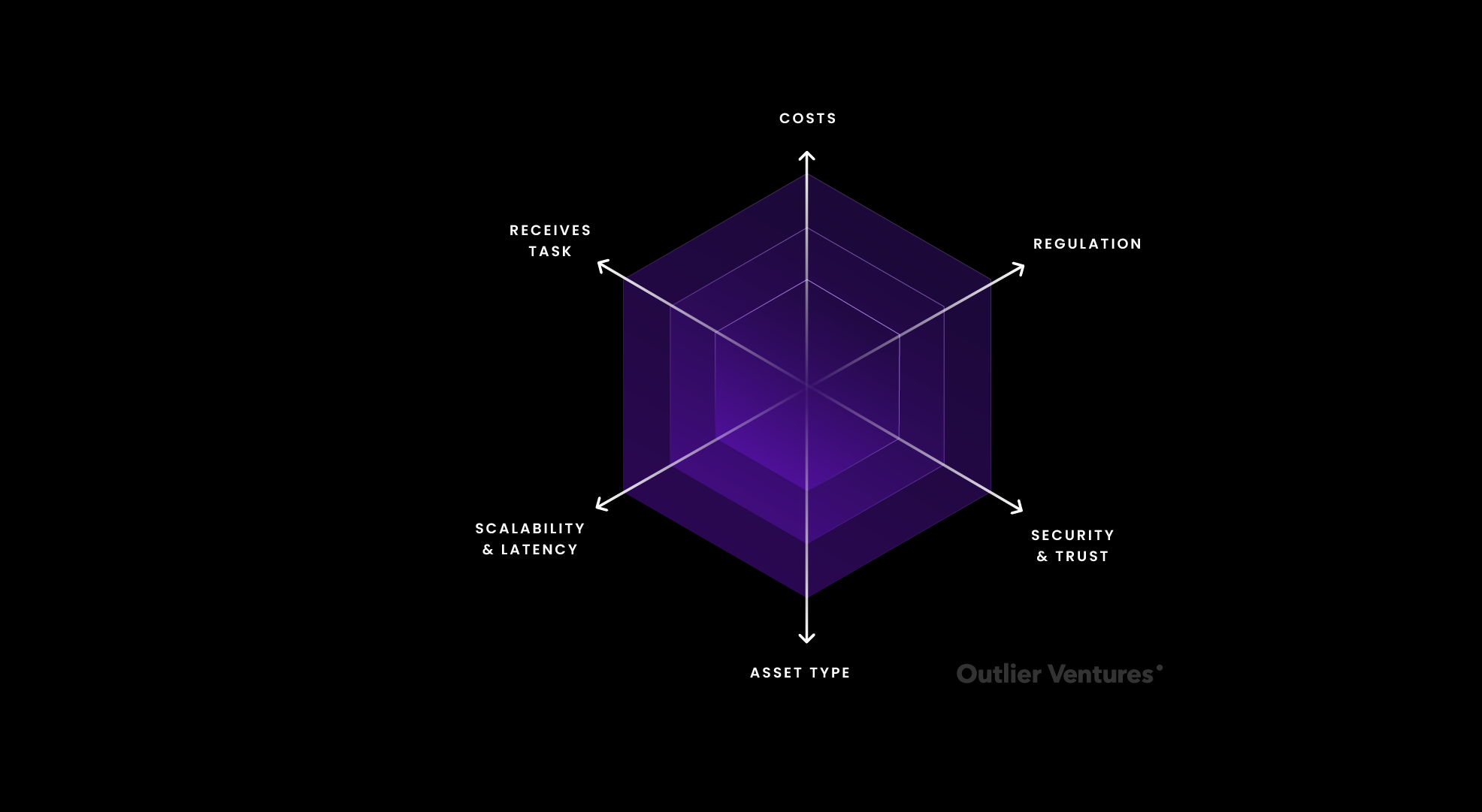
As decentralized ecosystems mature, the scope of what a wallet manages extends far beyond simple ERC-20 tokens or non-fungible tokens (NFTs). In the Post Web architecture, wallets orchestrate a diverse array of digital resources.
These modern interfaces regulate access to decentralized compute power, secure data storage networks, bandwidth allocation across DePIN infrastructures, and participation rights in decentralized autonomous organizations (DAOs). By acting as the unifying layer for these disparate resource classes, the wallet effectively functions as an operating system for digital autonomy. It mediates interactions across heterogeneous protocols, ensuring that users maintain absolute sovereignty over their digital footprint while interacting seamlessly with machine-to-machine economies.
A Command Center for Autonomous AI Agents
Perhaps the most consequential driver of wallet evolution is the proliferation of smart AI agents. As autonomous software entities become integral participants in the digital economy—capable of executing complex, multi-step financial strategies, negotiating contracts, and managing digital assets independently—they require a secure environment from which to operate.
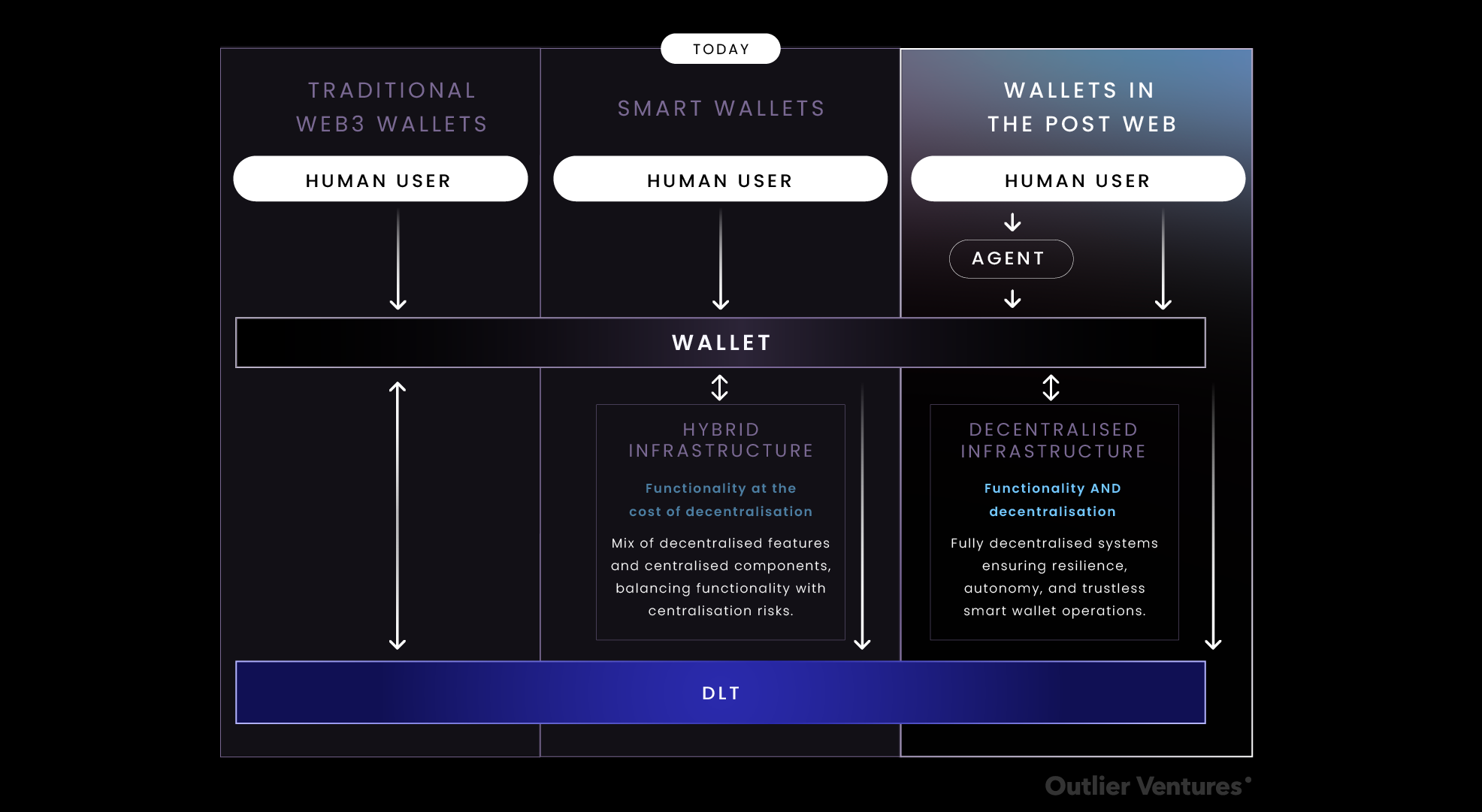
The modern Post Web wallet serves precisely this function: a command console for autonomous agents. When an AI agent is deployed on behalf of a user, it connects directly through the user’s wallet. The wallet establishes strict permission and verification loops, ensuring that the agent operates strictly within pre-defined boundaries.
Through cryptographic guardrails, the wallet dictates what assets the agent can access, what transaction volumes are permissible, and what operational parameters must not be breached. This architecture ensures that while AI agents possess the autonomy to act on behalf of humans, they remain entirely tethered to user governance. Consequently, the wallet establishes itself as a vital regulatory and governance layer for artificial intelligence in decentralized environments.
Privacy-Preserving Architectures in an Agentic World
The integration of autonomous agents, behavioural data collection, and complex credential management introduces unprecedented privacy and security challenges. Because Post Web wallets store significantly more sensitive data than their predecessors, safeguarding user information has become mission-critical.
To address these vulnerabilities, next-generation wallet architectures incorporate advanced cryptographic frameworks, most notably zero-knowledge (ZK) proofs. These cryptographic tools allow wallets to prove ownership, authorization, and valid agent behavior to third-party protocols without leaking underlying sensitive data or exposing the user’s complete transaction history. By implementing privacy-by-design principles, these architectures ensure that users retain absolute confidentiality while participating in verifiable, automated on-chain operations.
The Shift Toward Intent-Based Interoperability
The culmination of these technological advancements is the transition from manual task execution to intent negotiation. In the legacy Web3 paradigm, users were forced to manually select protocols, calculate slippage, bridge assets, and sign multiple transactions to achieve a financial or operational goal.
In the Post Web framework, users and their autonomous agents simply express high-level intents. For instance, a user might issue a broad directive such as, "Find the best yield strategy across all verified lending markets with a risk profile under five percent," or "Vote on upcoming governance proposals that align with environmental sustainability criteria."
The intelligent wallet interprets these natural-language or algorithmic intents, routes the necessary parameters across multiple cross-chain protocols, verifies execution safety, and finalizes the transaction. This metamorphosis transforms the wallet from a passive storage utility into an active, intelligent mediator between human purpose and decentralized machine execution.
Broader Industry Implications and Future Outlook
The reimagining of the Web3 wallet carries profound implications for the broader technology and financial sectors. As digital personhood, smart wallets, and AI agent coordination converge, the boundary between traditional internet applications and decentralized infrastructure continues to blur.
Market observers note that this evolution addresses the long-standing "usability crisis" that has kept blockchain technology confined to niche cryptographic communities. By abstracting away technical complexities and empowering users with autonomous, secure agents governed by self-sovereign identity frameworks, the Post Web lays the foundational infrastructure for mainstream, enterprise-grade adoption.
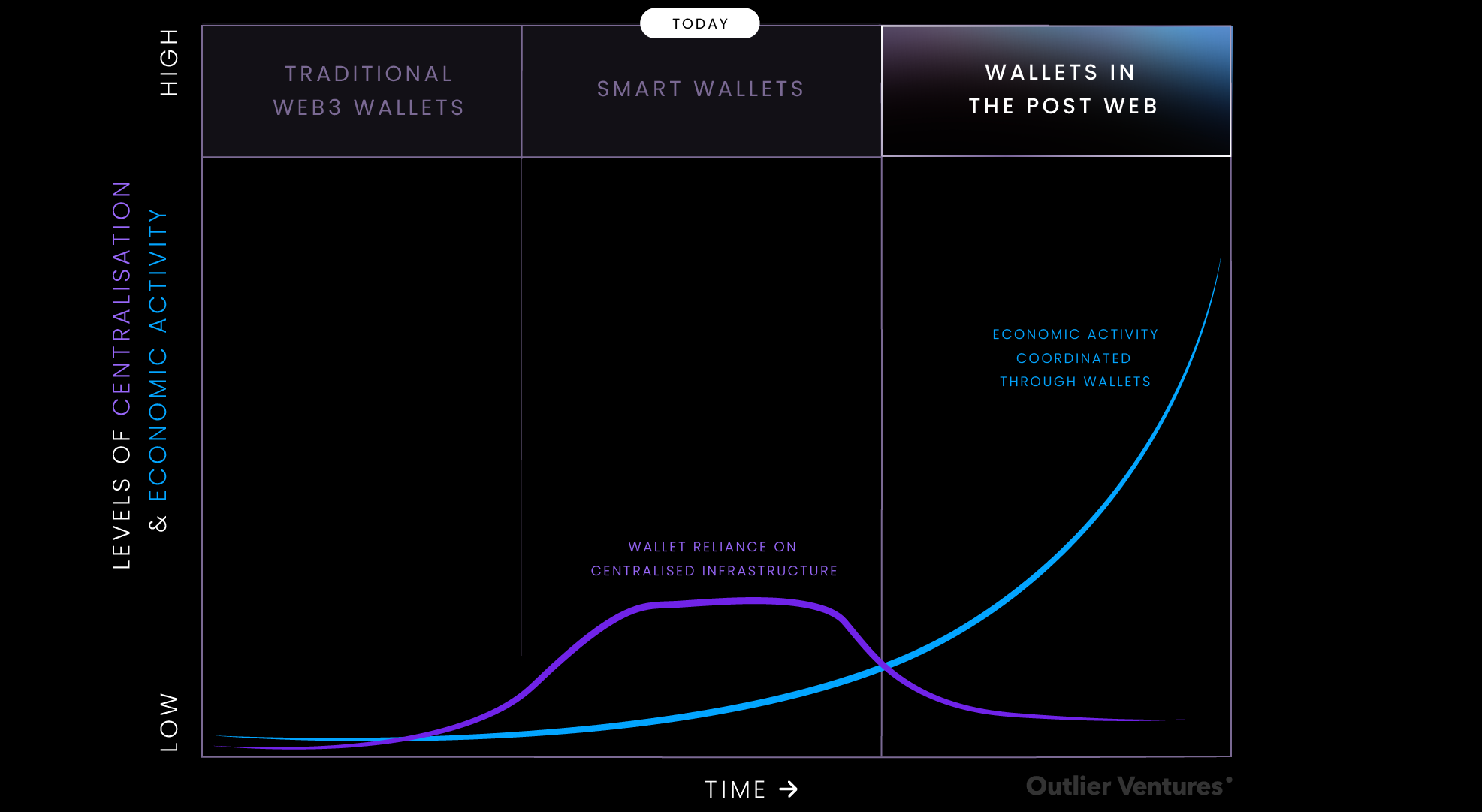
As development accelerates through 2025 and beyond, industry leaders anticipate that the wallet will definitively shed its historical identity as a "crypto wallet" to become an indispensable digital companion. It will represent the true manifestation of digital selfhood, serving as the ultimate nexus of ownership, identity, security, and agency in the emerging agentic economy.

