
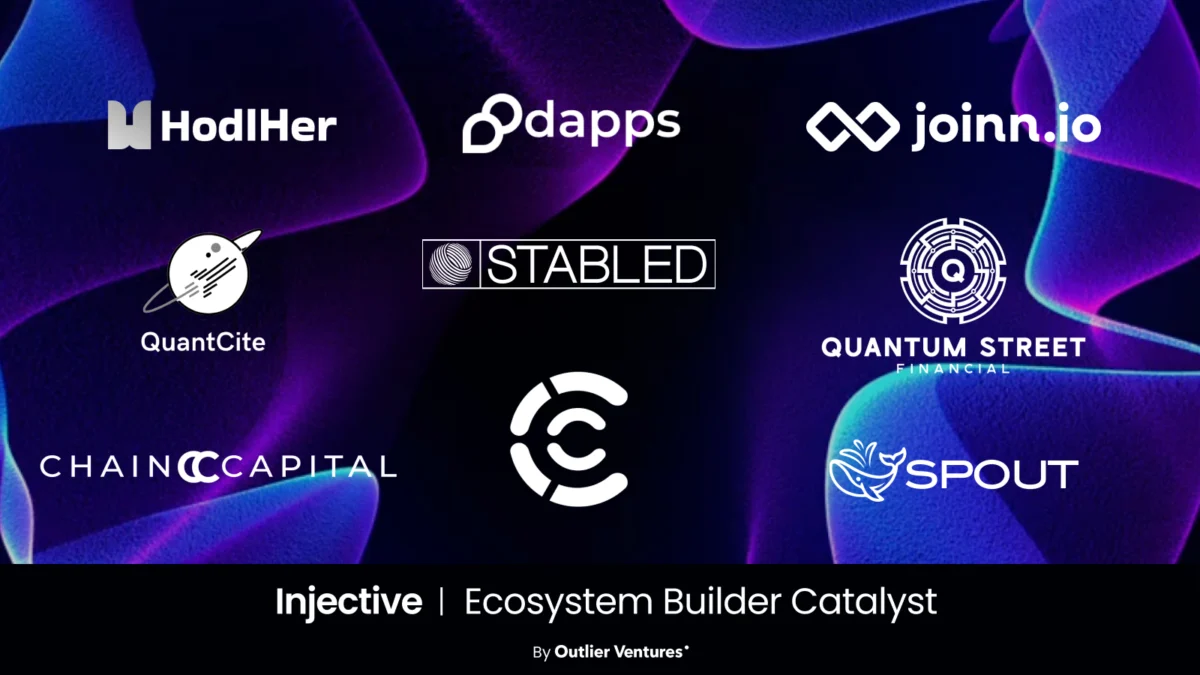
The landscape of decentralized finance (DeFi) is undergoing a profound structural evolution, shifting away from basic token exchanges toward high-performance, institutional-grade financial layers. Marking a pivotal step in this transition, Web3 accelerator Outlier Ventures and Layer-1 blockchain Injective have officially announced their latest cohort for the Injective Ecosystem Builder Catalyst. This intensive nine-week virtual accelerator program has been meticulously designed to discover, mentor, and back visionary founders who are constructing high-growth decentralized finance and core infrastructure projects natively within the Injective ecosystem.
As the decentralized economy matures, the convergence of sub-second transaction finality, gasless user experiences, and MultiVM interoperability has established a new standard for application development. The newly selected startups are not merely iterating on existing financial products; they are architecting novel financial primitives—ranging from autonomous agent-driven trading systems to sophisticated on-chain repurchase agreements—that capitalize on Injective’s specialized financial infrastructure and shared liquidity framework.
The Macroeconomic and Technical Backdrop of the Cohort
The launch of this accelerator cohort arrives at a critical juncture for the broader digital asset economy. Decentralized finance Total Value Locked (TVL) has steadily approached the $140 billion threshold, while Real-World Asset (RWA) tokenization has experienced explosive growth, scaling by more than 380% since 2022. This rapid expansion underscores an institutional demand for blockchain rails that can match or exceed the operational efficiency of traditional financial markets.

Injective has systematically positioned itself as a premier destination for developers seeking robust technical performance and deep, unified liquidity. By leveraging native financial modules rather than relying strictly on generic smart contract environments, developers within the ecosystem can achieve unprecedented capital efficiency. The nine-week accelerator curriculum is tailored to address the unique complexities of this environment, providing participating startups with comprehensive mentorship, strategic regulatory and legal guidance, and direct access to ecosystem growth incentives designed to fast-track their go-to-market strategies.
Meet the Startups: A Comprehensive Breakdown of the Cohort
The nine chosen projects represent a diverse cross-section of decentralized finance, institutional tooling, fintech, and artificial intelligence integration. Each team addresses specific friction points in current global financial and digital asset markets.
Institutional Infrastructure and Trading Systems
- QuantCite: Operating as an institutional-grade Order and Execution Management System (OEMS) alongside a smart-routing platform, QuantCite bridges the gap between centralized exchanges and decentralized liquidity venues. It equips quantitative funds and professional traders with enterprise-grade infrastructure designed for high-frequency execution and deep liquidity access.
- Choice: Serving as a specialized decentralized exchange and aggregation layer optimized specifically for Injective, Choice employs a proprietary routing algorithm. By tapping into fragmented liquidity across multiple venues simultaneously, the platform guarantees users optimal swap execution while minimizing slippage and maximizing trade efficiency.
Fintech, Consumer Access, and Payments
- Joinn: Focused on emerging markets, Joinn delivers a fintech application that enables everyday users to protect and grow their capital through stable, yield-generating tokenized assets. Built on secure blockchain infrastructure, the application features gasless and signless transactions operating seamlessly across multiple chains. It integrates round-the-clock access, a physical Visa card experience, and an autonomous AI agent to automate compounding returns, all wrapped in a user experience mirroring traditional Web2 applications.
- Stabled: Stabled addresses the inefficiencies of international trade by providing a cross-border payments platform built for businesses. The platform facilitates instant, compliant stablecoin transactions that bypass traditional correspondent banking networks, effectively mitigating foreign exchange (FX) losses and eliminating multi-day settlement delays.
Asset Tokenization and Structured Finance
- Quantum Street: Comprising seasoned capital markets and financial engineering experts, Quantum Street specializes in bridging off-chain cash-flowing assets into the on-chain ecosystem. By structuring compliant transactions for cash-flowing commercial enterprises, the firm introduces genuine fundamental utility to stablecoins while driving meaningful growth in aggregate Total Value Locked.
- Spout: Spout targets the equities sector by introducing a decentralized platform for borrowing and lending U.S. public equities. Through the tokenization of equities and the implementation of a Collateralized Debt Position (CDP) model, Spout facilitates 0% annual percentage rate (APR) margin loans while simultaneously offering competitive lending yields hovering around 10% APY.
- Chain Capital: Seeking to overhaul the private debt market, Chain Capital transforms historically illiquid financial instruments into tradable, programmatic securities. By tokenizing invoices and corporate receivables and automating the underlying securitization workflows, the platform claims to reduce middle-office operational costs by up to 75% while granting institutional investors compliant access to high-yield risk profiles.
Web3 Social Media and Artificial Intelligence
- Dapps.co: Positioned as a Web3-native social network, Dapps.co aims to restore financial and structural agency to digital creators through tokenized communities and embedded on-chain economies. The platform incorporates an advanced AI provenance layer designed to combat low-quality synthetic media while empowering creators to monetize directly via peer-to-peer tipping and paid direct messaging capabilities.
- HodlHer: HodlHer introduces the world’s first AI-driven Web3 operating system built directly on Injective. Utilizing specialized intelligent personas, the platform assists everyday users, creators, and protocol teams in navigating the complete lifecycle of on-chain engagement—spanning initial market perception and data reasoning to automated transactional execution.
Industry Implications and the Path Forward
The overarching trajectory of decentralized finance indicates that the next wave of adoption will rely heavily on systemic composability and deep functional parity with traditional finance (TradFi). While early DeFi iterations focused primarily on replicating basic spot trading and lending primitives, the projects nurtured within the Injective Ecosystem Builder Catalyst demonstrate a shift toward complex financial engineering—such as automated institutional execution, synthetic equities, and private credit securitization.
Market analysts note that accelerators like the one managed by Outlier Ventures and Injective play a vital catalytic role in maturing the crypto-asset sector. By institutionalizing early-stage development, providing rigorous compliance frameworks, and connecting founders with deep liquidity networks, these initiatives bridge the gap between experimental code and production-ready enterprise applications.

Looking Ahead: Demo Day and Future Growth
As the nine-week intensive accelerator program progresses, the cohort teams are actively refining their products in preparation for their public unveiling. The milestone event for the cohort will take place at the upcoming Injective Ecosystem Builder Catalyst Demo Day, scheduled for February 25, 2026.
The Demo Day will serve as a primary platform for founders to present their finalized products to a global audience of venture capitalists, institutional investors, and ecosystem partners. Industry stakeholders and technology enthusiasts interested in attending the virtual showcase can register for the event via the official Luma platform. As these startups transition from development to active deployment, their infrastructure is expected to play a foundational role in shaping the operational standards of the next generation of global finance.

