
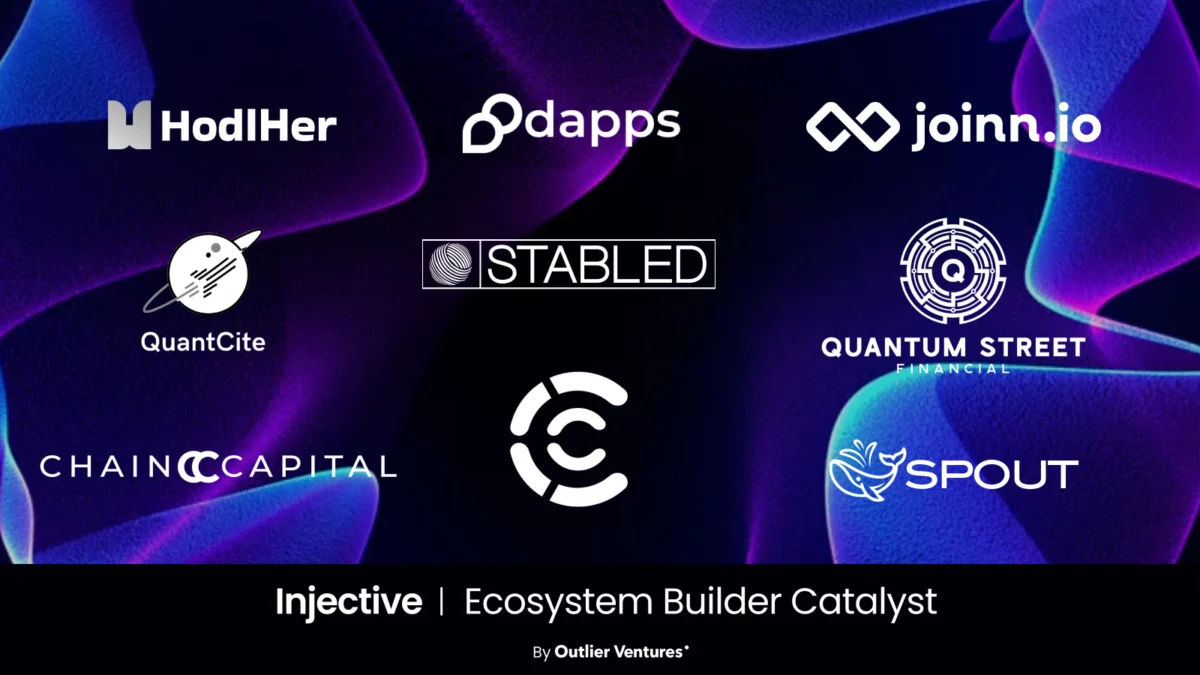
The landscape of decentralized finance (DeFi) is undergoing a structural transformation, transitioning away from rudimentary token exchanges toward sophisticated, institutional-grade financial infrastructure. Amidst this rapid evolution, Web3 accelerator Outlier Ventures and Layer-1 blockchain network Injective have officially announced the launch of their latest cohort under the Injective Ecosystem Builder Catalyst. This intensive, nine-week virtual accelerator program has been meticulously designed to incubate and scale the next generation of high-growth decentralized applications and foundational infrastructure projects built natively on the Injective network.
The initiative arrives at a critical juncture for the broader digital asset economy. As the global financial sector increasingly intersects with distributed ledger technology, market metrics indicate robust expansion. Decentralized finance Total Value Locked (TVL) has hovered near $140 billion, while the tokenization and integration of Real-World Assets (RWAs) have experienced an exponential growth trajectory, surging by over 380% since 2022. By leveraging Injective’s high-performance architecture—which boasts sub-second block finality, gasless transaction mechanics, and robust MultiVM interoperability—the newly selected startups are positioned to construct financial primitives that bridge traditional finance (TradFi) and the decentralized web.
The Macroeconomic Context and the Shift Toward DeFi-First Infrastructure
For years, the initial waves of decentralized finance were characterized by iterative replication of legacy financial models, often constrained by high transaction fees, network congestion, and fragmented liquidity pools. However, the current maturation phase of the industry demands a "DeFi-first" approach, where protocols are architected from the ground up to capitalize on the unique composability and speed of modern blockchain networks.
Injective has steadily positioned itself as a premier destination for developers seeking a distinct technical edge. By offering native financial modules that streamline order books, derivatives trading, and automated collateral management, the network provides developers with capabilities that surpass the operational efficiencies of legacy financial systems. The current cohort of startups participating in the Injective Ecosystem Builder Catalyst is not merely porting traditional applications onto the blockchain; they are engineering advanced paradigms, ranging from agentic autonomous trading systems to on-chain repo and private debt markets.
According to industry analysts, the convergence of high-speed execution environments and institutional compliance frameworks is vital for driving the next wave of capital adoption. Traditional financial institutions, constrained by legacy ledger systems and high middle-office overhead, are increasingly looking toward high-throughput blockchains to optimize settlement times and minimize counterparty risk. The nine-week accelerator aims to bridge this gap by providing selected founders with comprehensive mentorship, regulatory guidance, and strategic access to ecosystem liquidity incentives.
A Comprehensive Overview of the Cohort Startups
The newly selected cohort features a diverse array of projects addressing various verticals within the digital asset and financial technology sectors, ranging from institutional execution platforms to AI-driven Web3 operating systems.
QuantCite spearheads the institutional tier of the cohort as an advanced Order and Execution Management System (OEMS) integrated with smart-routing technology. Designed specifically for quantitative hedge funds and professional traders, QuantCite unifies execution venues across both centralized exchanges and decentralized liquidity pools, delivering the low latency and deep liquidity access required for institutional-grade strategies.

In the consumer fintech sector, Joinn aims to bridge the gap between emerging markets and global capital yields. The application provides everyday users with seamless access to stable, yield-generating tokenized financial assets through an interface modeled after mainstream Web2 applications. Featuring gasless, signature-free cross-chain transactions, 24/7 account access, an integrated Visa card experience, and an autonomous AI agent, Joinn seeks to simplify the mechanics of wealth accumulation and compound growth for retail participants.
Choice addresses liquidity fragmentation by functioning as a specialized decentralized exchange and aggregation layer optimized explicitly for the Injective network. Utilizing a sophisticated routing algorithm that queries liquidity across multiple decentralized venues, Choice aims to optimize swap execution prices while minimizing slippage for end users.
Stabled tackles the complexities of international trade by offering an enterprise-grade cross-border payments platform. Designed to facilitate instant, compliant stablecoin transactions for businesses, Stabled bypasses traditional correspondent banking rails, thereby mitigating foreign exchange losses and significantly reducing settlement delays.
Focusing on the burgeoning RWA sector, Quantum Street comprises a team of capital markets and financial engineering specialists dedicated to onboarding off-chain assets onto the blockchain. By structuring cash-flowing business transactions into verifiable on-chain instruments, Quantum Street generates authentic utility for stablecoins while actively contributing to the expansion of decentralized finance TVL.
Spout introduces a novel model to the public equities market by facilitating the borrowing and lending of tokenized U.S. equities. Utilizing a Collateralized Debt Position (CDP) framework, Spout enables users to access 0% annual percentage rate (APR) margin loans while simultaneously offering competitive lending yields hovering around 10% APY.
Dapps.co focuses on the intersection of social networking and tokenized economies, offering a Web3-native social platform designed to restore economic agency to content creators. The platform incorporates an artificial intelligence provenance layer intended to combat low-quality synthetic content, while providing direct monetization channels through creator tipping and paid direct messaging features.
Chain Capital addresses liquidity constraints within private credit markets by transforming illiquid private debt instruments into tradable securities. Through the tokenization of corporate invoices and receivables, the platform automates the securitization workflow, reportedly reducing middle-office operational costs by up to 75% while providing institutional investors with compliant access to high-yield investment exposures.
Completing the cohort is HodlHer, positioned as the world’s first AI-driven Web3 operating system native to Injective. Utilizing specialized intelligent software personas, HodlHer assists individual users, creators, and enterprise projects in executing complex workflows, encompassing market perception, analytical reasoning, and automated on-chain execution.

Chronology and Program Roadmap
The Injective Ecosystem Builder Catalyst operates on a structured, nine-week virtual accelerator timeline tailored to accelerate product development, refine go-to-market strategies, and prepare participating founders for institutional fundraising.
The program officially kicked off with the selection and onboarding of the cohort, bringing together technical founders from diverse global jurisdictions. Throughout the nine-week duration, participants engage in rigorous workshops, technical deep-dives with core Injective developers, and one-on-one mentorship sessions led by venture capitalists, legal experts, and seasoned operators from Outlier Ventures and the broader Web3 ecosystem.
The culmination of the accelerator program is scheduled for the upcoming Injective Ecosystem Builder Catalyst Demo Day, set for February 25, 2026. During this flagship virtual event, cohort founders will present their refined protocols, technical achievements, and future roadmap milestones to a curated audience of leading venture capital investors, institutional allocators, and ecosystem partners.
Industry Implications and Broader Market Outlook
The launch of this accelerator cohort underscores a broader structural shift within the cryptocurrency industry toward functional utility, composability, and regulatory alignment. As regulatory frameworks across major global jurisdictions become increasingly defined, institutional investors and fintech innovators are placing heightened emphasis on infrastructure that can scale securely without sacrificing decentralization or performance.
Observers note that the integration of artificial intelligence agents with high-performance blockchain rails—as demonstrated by several projects within the current Injective cohort—represents a burgeoning frontier for financial technology. By automating complex multi-step financial transactions and risk management strategies, these systems have the potential to drastically reduce administrative overhead and democratize access to sophisticated financial instruments.
Furthermore, the emphasis on Real-World Asset tokenization and private debt securitization highlights the ongoing convergence between traditional capital markets and decentralized finance. As platforms like Chain Capital and Quantum Street successfully bridge off-chain cash flows with on-chain liquidity pools, the boundaries separating traditional banking from decentralized networks will continue to blur.
Leadership from both Outlier Ventures and Injective have emphasized that the success of the current cohort will serve as a bellwether for the next generation of financial applications. By equipping visionary founders with the necessary capital, mentorship, and technical foundation, the initiative aims to establish a sustainable baseline for the future architecture of global finance. Stakeholders across the digital asset ecosystem are closely monitoring the progress of these startups as they prepare to unveil their production-ready technologies at the upcoming Demo Day.

