
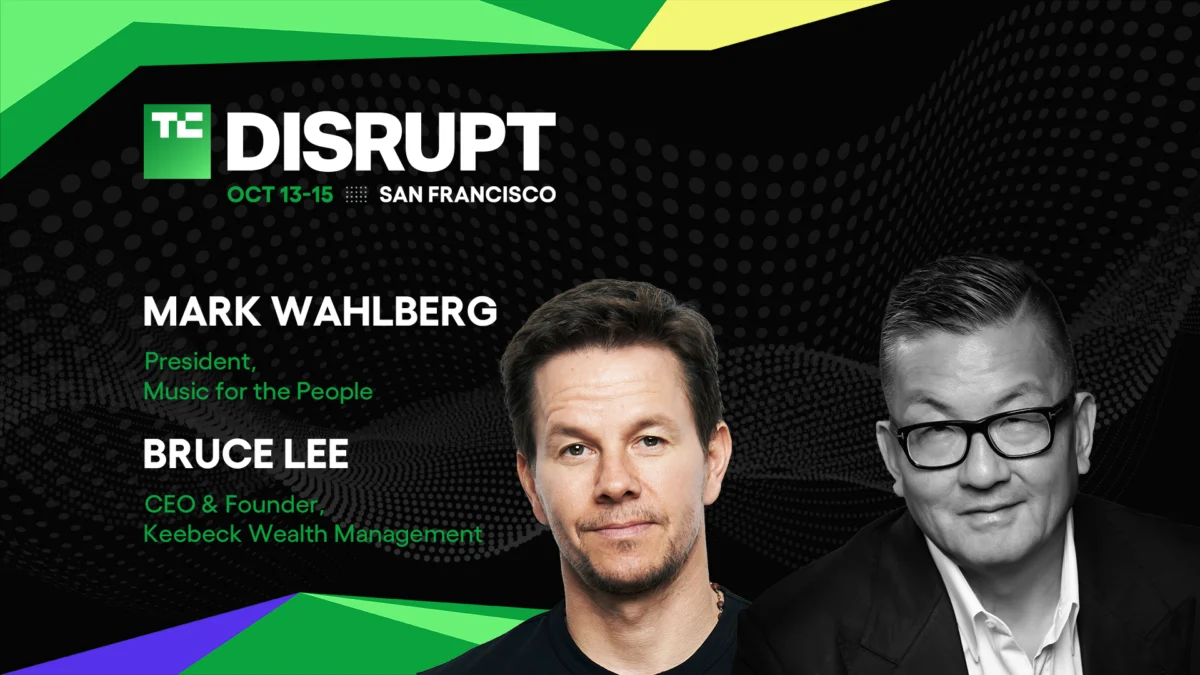
Mark Wahlberg is set to command the main stage at TechCrunch Disrupt 2026, marking a significant intersection between Hollywood celebrity and the sophisticated world of institutional-grade private equity. Joining him for this featured fireside chat is Bruce K. Lee, the founder and CEO of Keebeck Wealth Management. This session, scheduled for the upcoming October event in San Francisco, aims to deconstruct the transition of a high-profile entertainer into a diversified business mogul, focusing on the rigorous financial disciplines required to navigate the modern investment landscape.
The upcoming appearance underscores a broader industry trend wherein entertainers leverage their personal brands and capital to transition from passive celebrity endorsers to active, hands-on venture participants. For Wahlberg, this move is not a recent pivot but the culmination of a multi-decade trajectory that has seen him move from screen acting to the boardrooms of global corporations.
A Chronology of Entrepreneurial Expansion
Wahlberg’s journey into business began in the late 1990s, shortly after his critical breakthrough in Paul Thomas Anderson’s 1997 film Boogie Nights. While his acting career flourished—garnering two Academy Award nominations and a Golden Globe nod for The Fighter—Wahlberg simultaneously began laying the groundwork for a private investment portfolio.
By the early 2000s, Wahlberg established his production banner, which would eventually go on to produce hit television series such as HBO’s Entourage. This venture marked a transition from a salaried employee to an owner-operator. Following this, he expanded his footprint into the hospitality and retail sectors, launching the Wahlburgers restaurant chain and various fitness-related apparel and wellness ventures.

In 2001, he founded the Mark Wahlberg Youth Foundation, signaling an early commitment to corporate social responsibility that has remained a constant throughout his career. Over the past five years, however, his focus has shifted toward high-growth technology sectors, specifically health-tech and wellness, areas where he has increasingly sought the counsel of institutional experts like Bruce K. Lee. This shift represents a move toward a more disciplined, data-driven approach to asset allocation, distancing himself from the “celebrity investor” stereotype in favor of a more methodical methodology.
Building Institutional Discipline
The core of the discussion at TechCrunch Disrupt 2026 will center on the “institutionalization” of individual wealth. In many instances, high-net-worth individuals from the entertainment and athletic worlds struggle to bridge the gap between initial capital accumulation and long-term, sustainable wealth management.
Wahlberg’s partnership with Keebeck Wealth Management serves as a case study in this transition. Lee, whose firm manages complex portfolios for high-net-worth individuals, has reportedly been instrumental in helping Wahlberg navigate the intricacies of venture capital and private equity. According to preliminary insights, the session will focus on three key areas:
- Unlearning Old Instincts: Wahlberg has been candid about the necessity of abandoning the “gut-check” approach common in the entertainment industry in favor of the analytical rigor required to assess a startup’s scalability and market viability.
- Leveraging Social Capital for Deal Flow: The discussion will explore how established stars can use their reputation to gain access to exclusive investment rounds, while simultaneously ensuring that their presence adds value beyond mere capital.
- Sector-Specific Focus: With a growing interest in healthcare and wellness technology, Wahlberg is moving beyond generalist investing, aiming to understand the underlying infrastructure of the companies he backs.
The Broader Impact on Tech and Venture Capital
TechCrunch Disrupt, held at the Moscone West in San Francisco, acts as a bellwether for the technology sector. By inviting figures like Wahlberg, the event acknowledges the reality that the lines between cultural influence and venture capital are increasingly blurred.
The implications for the startup ecosystem are twofold. First, there is the democratization of capital. As celebrities become more sophisticated in their investment strategies, they provide an alternative source of funding that can be more patient and brand-conscious than traditional institutional venture capital. Second, the presence of such figures at technical conferences indicates a maturing of the "celebrity investor" asset class. It is no longer enough to attach a name to a company; stakeholders are now demanding that such investors provide measurable strategic value.

TechCrunch Disrupt 2026: The Landscape
The 2026 iteration of TechCrunch Disrupt is expected to draw over 10,000 attendees, including founders, venture capitalists, and technologists. The event agenda features more than 250 industry leaders across 200 sessions, with a heavy emphasis on AI-driven innovation, climate technology, and the future of the creator economy.
The choice of the Wahlberg-Lee session as a focal point of the conference highlights the organizer’s desire to bridge the gap between the high-level business strategy and the daily realities of startup development. As the technology industry faces a period of recalibration—characterized by higher interest rates and a move toward profitability over pure growth—the focus on disciplined, long-term wealth management is particularly salient.
Analytical Perspectives
Financial analysts observing the trend of celebrity-led venture capital note that there is a significant failure rate for those who do not adopt institutional discipline. The "celebrity halo effect" can often obscure poor fundamentals in the early stages of a company’s life. However, when paired with established financial advisors, celebrities often gain the ability to conduct proper due diligence, perform risk mitigation, and structure deals that are favorable to both the investor and the entrepreneur.
Wahlberg’s shift into the healthcare space is also indicative of a broader trend among high-net-worth individuals who are increasingly seeking "impact-driven" returns. By focusing on technologies that address chronic health issues or wellness, these investors align their portfolios with their personal interests, a strategy that often leads to higher engagement and better outcomes for the underlying businesses.
Looking Ahead
As the deadline for early-bird ticket pricing for TechCrunch Disrupt 2026 approaches at 11:59 p.m. PT tonight, the anticipation surrounding this specific fireside chat continues to grow. Attendees will have the opportunity to hear directly from Wahlberg regarding the mechanics of his investment playbook—an unvarnished look at the trial-and-error process that has defined his recent professional trajectory.

For those in the startup space, the value of this conversation lies in understanding how to engage with sophisticated, high-profile investors. For those in the financial sector, it serves as a masterclass in how to manage the expectations and the influence of a non-traditional client who has the power to disrupt markets simply through his involvement.
The session, which will take place on the Disrupt Stage, will be one of many critical touchpoints at this year’s gathering. With the tech sector continuing to navigate a volatile economic environment, the insights provided by practitioners who have successfully managed the transition from one high-stakes industry to another will prove invaluable for entrepreneurs looking to scale their own ventures in the years to come.
Ultimately, the story of Mark Wahlberg is one of professional reinvention. Whether on the set of a period piece or in the boardrooms of San Francisco, his ability to adapt to changing environments remains his most significant asset. At TechCrunch Disrupt 2026, that adaptability will be on full display, providing a blueprint for the next generation of business leaders who aspire to build, scale, and sustain a lasting impact in an ever-changing global economy.

