
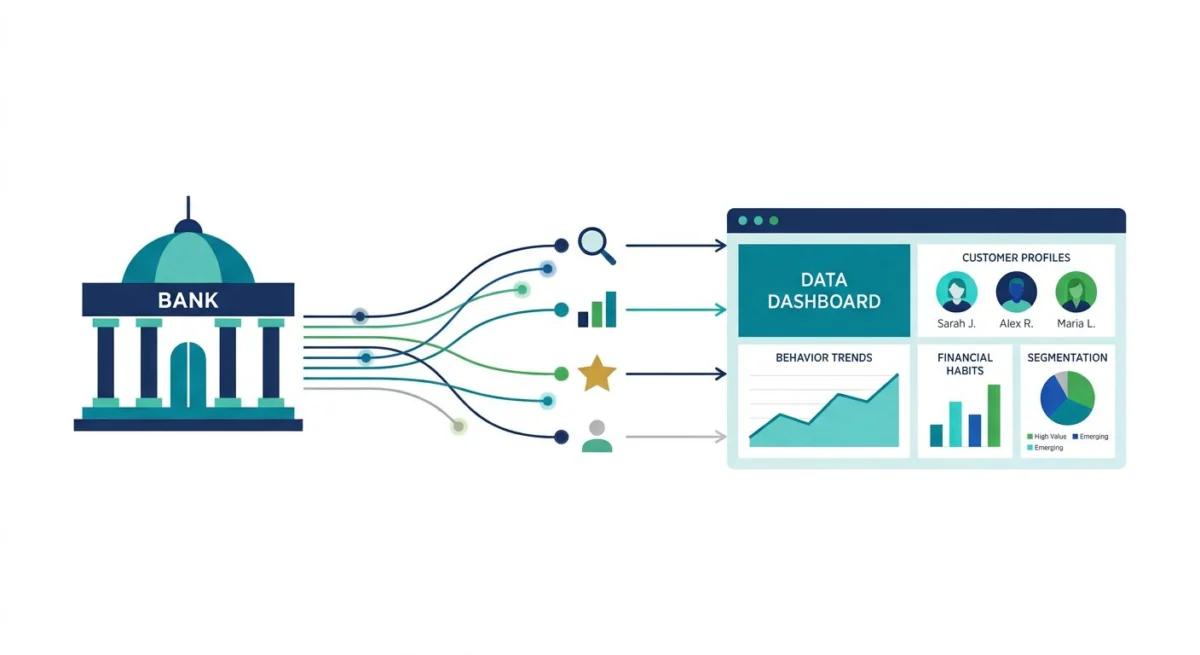
Bud Financial, a London-based pioneer in customer intelligence technology, has officially secured a strategic investment from BankTech Ventures, a premier US-based venture capital firm specializing in the banking and fintech ecosystem. While the specific financial terms of the deal remain undisclosed, the capital injection marks a significant milestone in Bud’s trajectory, signaling a heightened focus on the American financial services market. The funding is earmarked to accelerate the company’s growth, bolster its proprietary data ontology, and scale the deployment of its innovative "Revenue Agents"—AI-driven tools designed to identify and execute revenue-generating opportunities within a bank’s existing framework.
A Strategic Partnership for the Modern Banking Era
The partnership between Bud Financial and BankTech Ventures comes at a critical juncture for the US banking industry. As traditional financial institutions face mounting pressure to modernize their infrastructure without resorting to expensive, high-risk "rip-and-replace" core banking overhauls, the demand for middleware that adds intelligence to legacy systems has never been higher.
BankTech Ventures, known for its deep integration within the US banking sector, brings more than just capital to the table. By aligning with a firm that possesses extensive relationships with regional and national banks, Bud Financial gains a strategic foothold that could significantly shorten its sales cycle and integration timelines in the United States.
The Evolution of Bud Financial: A Brief Chronology
Founded in London in 2015, Bud Financial has spent nearly a decade refining its expertise in data enrichment. The company’s journey from a fintech startup to a critical infrastructure provider has been defined by a series of high-profile product launches and strategic pivots:
- 2015: Bud Financial is founded, focusing on the potential of Open Banking and the need for better data visualization in personal finance.
- 2024: The company makes a major splash at FinovateFall 2024, demonstrating its "Drive" solution. This event marked a shift toward leveraging Generative AI to democratize access to actionable financial insights.
- Early 2026: Bud achieves significant market validation by securing partnerships with First Fidelity Bank and the established banking technology giant Jack Henry. These partnerships solidified Bud’s reputation as a reliable provider capable of handling the stringent security and accuracy requirements of major financial institutions.
- Late 2026: The announcement of the BankTech Ventures investment signals the company’s transition into a phase of aggressive US-market scaling.
Addressing the Failure of Traditional CRM
One of the core value propositions Bud Financial brings to the table is its critique of current Customer Relationship Management (CRM) tools. According to CEO and Co-Founder Edward Maslaveckas, the industry has reached a plateau where traditional CRMs are no longer sufficient to provide the hyper-personalized experiences that modern customers expect.
"Banks don’t need to tear out their core to compete in an AI-first world," Maslaveckas stated. "They need a layer that turns the data they already have into intelligence, and that intelligence into action, in every channel. I believe that CRM has failed to deliver on its promise to personalize banking relationships across channels. We fix that by deploying our customer models across Core, CRM, and CRA data."
The logic behind this approach is clear: most banks are "data-rich but insight-poor." They hold vast repositories of transaction data, yet they often lack the technical infrastructure to synthesize this information into a coherent customer profile that can trigger automated, relevant actions. Bud’s "Revenue Agents" are designed to sit atop these silos, effectively acting as an intelligent bridge that identifies when a customer might be ready for a mortgage, a specialized loan, or an investment product, and then facilitating that offer in real-time.
The Technical Edge: Data Enrichment and LLMs
The technological backbone of Bud’s offering is its ability to clean and enrich raw transactional data. Financial data is notoriously messy; raw merchant strings, for example, are often unintelligible to the average consumer. Bud’s technology standardizes this information, tagging transactions with specific attributes such as merchant name, category, geographic location, and recurring nature.
This enrichment is essential for the effective use of Large Language Models (LLMs) in a banking context. LLMs require structured, high-quality inputs to function reliably. By providing a clean, semantically rich data layer, Bud allows banks to build AI-powered chatbots and advisory interfaces that are grounded in actual, accurate customer behavior rather than generic financial assumptions.
Industry Implications: The Rebuilding of Banking
Carey Ransom, Managing Director at BankTech Ventures, underscored the broader implications of this investment. In his view, the banking industry is currently undergoing a "rebuild from the inside out."
"That doesn’t happen without an organized intelligence layer that understands every customer and transaction, and can act on that understanding across the bank’s systems," Ransom noted. "Bud is a key enabler of that rebuild and rethinking."
The implications of this trend are significant for both consumers and financial institutions:
- For Financial Institutions: The ability to move from "passive banking" (where the bank waits for the customer to request a service) to "proactive banking" (where the bank offers the right product at the right time) represents a massive potential increase in net interest margins and customer lifetime value.
- For Consumers: The era of one-size-fits-all banking is ending. As Bud’s technology scales, customers can expect to see personalized financial insights that mirror the highly curated experiences provided by big-tech companies like Amazon or Netflix.
- For the Competitive Landscape: Regional and community banks, which often struggle to compete with the massive R&D budgets of global tier-one banks, now have a viable path to match or exceed the digital capabilities of their larger counterparts. By utilizing third-party intelligence layers like Bud, smaller banks can maintain their competitive edge without the burden of building bespoke AI infrastructure.
Challenges and Future Outlook
While the promise of Bud Financial is compelling, the company faces the inherent challenges of the fintech sector, specifically regarding data privacy and regulatory scrutiny. As banks become more reliant on AI to make decisions, the "black box" problem—where AI makes decisions that are difficult to explain—will become a focal point for regulators. Bud’s focus on "keeping actions under the bank’s control" is a strategic move to mitigate these concerns, ensuring that human oversight remains central to the AI-driven process.
Furthermore, the integration of AI into core banking operations is not merely a technical challenge but a cultural one. Training bank staff to utilize these new insights effectively will be just as important as the software itself. As Bud Financial continues to scale in the US, its success will likely hinge on its ability to prove that its "Revenue Agents" can consistently deliver ROI while maintaining the highest standards of financial security.
Conclusion: A Pivotal Moment for AI in Finance
The investment from BankTech Ventures serves as a strong endorsement of Bud Financial’s vision. By focusing on the "intelligence layer" between legacy systems and modern, AI-powered interfaces, Bud has carved out a niche that is essential to the future of the banking sector.
As we look toward 2027 and beyond, the success of companies like Bud will likely dictate the pace at which the US banking sector digitizes. If the current trajectory holds, the integration of enriched data and intelligent, autonomous agents will move from a "nice-to-have" innovation to a fundamental requirement for any bank looking to remain relevant in an increasingly automated and personalized financial world. Bud Financial, with its newfound capital and deep industry partnerships, is well-positioned to lead this transition.

