
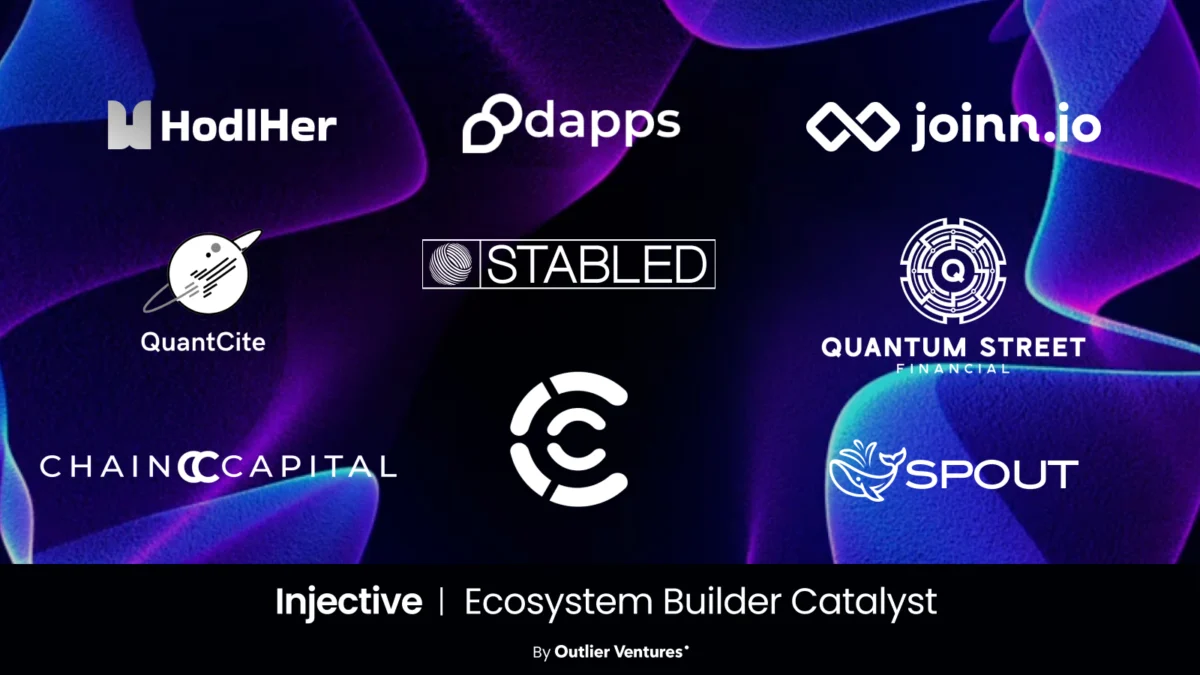
The landscape of decentralized finance is undergoing a profound structural evolution, shifting rapidly from rudimentary token-swapping mechanisms toward sophisticated, institutional-grade financial infrastructure. In response to this paradigm shift, leading Web3 accelerator Outlier Ventures has officially partnered with Injective to announce the launch and inaugural cohort of the Injective Ecosystem Builder Catalyst. This intensive nine-week virtual accelerator program has been meticulously designed to identify, mentor, and back the next wave of high-growth founders constructing advanced decentralized finance (DeFi) and foundational infrastructure projects natively within the Injective network.
The initiative arrives at a critical juncture for the broader digital asset economy. Decentralized finance Total Value Locked (TVL) has steadily climbed toward the $140 billion threshold, while the sector for tokenized Real-World Assets (RWAs) has experienced exponential expansion, scaling by more than 380% since 2022. By leveraging Injective’s high-performance, purpose-built architecture—characterized by sub-second transaction finality, gasless user experiences, and robust MultiVM interoperability—the cohort participants are positioned to deploy next-generation financial primitives that were previously constrained by the limitations of legacy blockchain systems.
The Strategic Importance of High-Performance Infrastructure
For years, developers entering the blockchain space frequently relied on porting legacy products from traditional finance (TradFi) or older Layer-1 networks, often inheriting bottlenecks related to network congestion, high gas fees, and fragmented liquidity pools. However, the current maturation of the digital asset sector demands an entirely new standard of engineering.
The Injective Ecosystem Builder Catalyst cohort bypasses incremental upgrades, encouraging builders to design novel market mechanics. These include agentic trading systems, automated on-chain repo markets, and unified liquidity layers that capitalize on Injective’s native financial modules. By capitalizing on shared liquidity and advanced technical architecture, these startups aim to deliver unprecedented capital efficiency and market defensibility.

Outlier Ventures and Injective selected these participants through a rigorous evaluation process, prioritizing projects that demonstrate immediate utility, scalable business models, and the ability to bridge the gap between institutional-grade financial requirements and decentralized execution.
Comprehensive Overview of the Selected Cohort
The nine startups comprising the inaugural cohort represent a diverse cross-section of financial engineering, ranging from institutional execution platforms and cross-border settlement rails to decentralized equities and artificial intelligence-driven operating systems.
Institutional Execution and Liquidity Management
- QuantCite: Operating as an institutional-grade Order and Execution Management System (OEMS) alongside a smart-routing platform, QuantCite unifies execution venues across both centralized exchanges and decentralized protocols. The platform provides quantitative funds and professional traders with high-performance infrastructure and seamless access to deep, cross-market liquidity.
- Choice: Functioning as a decentralized exchange and aggregation layer optimized specifically for Injective, Choice implements a novel routing algorithm. By tapping into liquidity pools across multiple venues simultaneously, the platform ensures that users achieve optimal swap execution with minimal slippage.
Fintech and Cross-Border Payments
- Joinn: Designed for emerging markets, Joinn functions as a fintech application that enables everyday users to protect and grow their savings using stable, yield-generating tokenized assets. While operating on secure blockchain rails with gasless and signless transactions across multiple chains, the application delivers a seamless Web2 user experience. Featuring 24/7 access, a physical Visa card integration, and an embedded AI agent, Joinn automates wealth compounding for retail users.
- Stabled: Stabled addresses structural inefficiencies in international trade by offering an enterprise-grade payments platform. The service allows businesses to execute compliant, cross-border stablecoin transactions instantly, bypassing traditional banking intermediaries to minimize foreign exchange losses and eliminate settlement delays.
Real-World Asset Tokenization and Debt Markets
- Quantum Street: Comprising capital market specialists and financial engineering experts, Quantum Street focuses on bridging off-chain assets onto the blockchain. By structuring transactions for cash-flowing operating businesses, the firm introduces genuine utility to stablecoins while driving sustainable TVL growth.
- Chain Capital: Chain Capital transforms traditionally illiquid private debt into tradable, on-chain securities. By tokenizing invoices and receivables to automate the securitization workflow, the platform reduces middle-office operational costs by up to 75% while granting institutional investors compliant access to high-yield exposures.
- Spout: Spout targets the equities market by facilitating the borrowing and lending of tokenized U.S. public equities. Utilizing a Collateralized Debt Position (CDP) model, the platform enables 0% annual percentage rate (APR) margin loans alongside competitive lending yields of approximately 10% annual percentage yield (APY).
Artificial Intelligence, Social Economies, and Operating Systems
- Dapps.co: Positioned as a Web3-native social network, Dapps.co restores agency to content creators through tokenized communities and robust on-chain economies. The platform incorporates an artificial intelligence provenance layer designed to combat low-quality generated content, while enabling creators to monetize their work directly through direct messaging fees and tipping systems.
- HodlHer: Billed as an advanced artificial intelligence-driven Web3 operating system built on Injective, HodlHer employs intelligent personas to assist users, creators, and projects in navigating the complete lifecycle of decentralized engagement—transitioning smoothly from perception and reasoning to automated on-chain action.
Program Structure and Operational Roadmap
The nine-week virtual accelerator provides participating founders with exhaustive resources designed to accelerate time-to-market. Beyond capital allocation discussions, the curriculum delivers hands-on mentorship from industry veterans, comprehensive legal and regulatory guidance, and strategic access to ecosystem incentive programs.
The primary objective of the program is to foster system fit and composability, ensuring that the applications developed within the cohort can interact seamlessly with existing decentralized finance primitives. Because Injective offers functional parity with traditional financial order books and collateral management systems, cohort members can deploy complex financial strategies that remain technically impossible within legacy institutional frameworks.
The culmination of the nine-week accelerator will be marked by the official Injective Ecosystem Builder Catalyst Demo Day, scheduled for February 25, 2026. This high-profile virtual event will allow the cohort founders to present their refined products, technical milestones, and growth strategies directly to a global audience of venture capitalists, angel investors, and ecosystem partners. Founders and interested stakeholders can secure attendance through the official Luma registration portal.

Broader Industry Implications and Future Outlook
The launch of this cohort highlights a broader maturation phase within the digital asset sector. As regulatory scrutiny evolves and institutional participation deepens, the demand for high-performance, compliant, and scalable infrastructure has never been more pronounced.
By combining Outlier Ventures’ extensive track record in Web3 accelerator management with Injective’s specialized financial Layer-1 technology, the initiative addresses critical bottlenecks in liquidity fragmentation and cross-chain interoperability. Analysts observing the current market cycle note that the success of these nine startups could establish a new benchmark for how decentralized applications integrate traditional financial instruments with autonomous, on-chain execution layers.
As the program progresses toward its culmination in late February 2026, industry observers anticipate that the technologies developed during this cohort will begin deploying into production environments, further bridging the gap between decentralized protocols and institutional-scale finance.

