
• Home
  • About Us
  • Contact Us
  • Cookies Policy
  • Disclaimer
  • DMCA
  • Privacy Policy
  • Terms and Conditions
Dr Crypton
Secure Your Future in Crypto
Tech & Startup News

Digital creators are now on IMDb. Here’s why.

by admin September 10, 2026
written by admin

The boundary lines separating traditional Hollywood from the digital creator economy continue to blur as major industry platforms adapt to the realities of modern entertainment. In a landmark move for the digital age, the Amazon-owned entertainment database IMDb officially introduced "Digital Creator" as a formal professional category across both IMDb and IMDbPro. This addition allows independent streamers, online video essayists, vloggers, gaming personalities, and social media influencers to establish official industry profiles without requiring prior traditional film or television credits.

For nearly three decades, IMDb has functioned as the definitive ledger of the entertainment industry, cataloging actors, directors, writers, and technical crew members who contributed to recognized cinematic and televisual projects. However, the meteoric rise of content creation over the past fifteen years fundamentally transformed how audiences consume media and where major talent is discovered. By opening its database to creators whose portfolios live exclusively on platforms like YouTube, TikTok, and Instagram, IMDb is acknowledging a profound structural shift: internet-first creators are no longer digital outliers; they are primary drivers of global attention, commerce, and media development.

The Mechanics of the New Category and Professional Infrastructure

Under the updated guidelines introduced by IMDb, digital creators can now build comprehensive professional profiles that sit alongside traditional Hollywood figures. Premium subscribers to IMDbPro can select up to three distinct professions for their pages, allowing multi-hyphenate modern entertainers to accurately represent their multifaceted careers. For instance, a creator who acts in independent sketches, produces serialized web content, and streams gameplay live can now display these overlapping roles under a single standardized industry umbrella.

According to IMDb leadership, the introduction of this category is designed to streamline professional networking and talent discovery within the evolving entertainment landscape. IMDbPro CEO Nikki Santoro emphasized that digital creators and their management teams require the same foundational infrastructure as traditional actors and filmmakers. Studios, casting directors, executive producers, and brand marketing partners now have access to a centralized, reliable database to identify, vet, and contact digital-first talent.

IMDb now has profiles for digital creators. Here’s what that means.

This infrastructure addresses a longstanding logistical friction point within the entertainment industry. Previously, booking digital creators for traditional projects, hybrid media campaigns, or cross-platform promotional initiatives often relied on fragmented talent agencies, direct social media outreach, or informal networking channels. By integrating creators into the gold-standard database of film and television, IMDb is attempting to normalize digital talent within standard industry pipelines.

A Brief Chronology of the Creator-to-Hollywood Crossover

The formal recognition of digital creators on IMDb arrives after more than a decade of increasingly aggressive crossover between internet platforms and traditional Hollywood studios. To understand the weight of this new database category, it is helpful to examine the chronological evolution of digital talent breaking into mainstream media:

  • The Early YouTube Era (2010–2015): Early digital pioneers began leveraging self-distributed web series to catch the attention of traditional gatekeepers. Creators like Issa Rae proved the viability of this pipeline by launching the web series Awkward Black Girl on YouTube in 2011, which eventually served as the foundational springboard for her critically acclaimed HBO series Insecure.
  • The Viral-to-Mainstream Wave (2015–2020): Comedians, sketch artists, and musical performers who built followings on Vine, Instagram, and early YouTube successfully transitioned into network television and feature films. Quinta Brunson transitioned from viral internet sketches and digital series to creating, producing, and starring in the broadcast television hit Abbott Elementary. Similarly, Bo Burnham leveraged early musical comedy videos to establish a respected career as a writer, actor, and feature film director, helming projects like Eighth Grade.
  • The Dominance of Digital Moguls (2020–Present): The scale of digital creators expanded exponentially, transforming top personalities into multi-platform media moguls with budgets rivalling traditional television networks. Mega-creators like MrBeast (Jimmy Donaldson) began producing high-budget, cinematic-scale competition shows, such as Prime Video’s Beast Games, demonstrating that internet creators could command audiences and production budgets matching traditional studios.
  • Formal Institutional Recognition (September 2026): IMDb formally launches the "Digital Creator" category, establishing a dedicated professional designation that eliminates the prerequisite of traditional screen credits for online talent.

Financial Considerations and the IMDbPro Business Model

While the inclusion of digital creators marks a progressive step for industry inclusivity, it also highlights strategic business incentives for IMDb. Establishing and maintaining a professional profile under the new category requires an active IMDbPro Premium subscription. In the United States, individual standard membership rates stand at approximately $19.99 per month or $149.99 annually, excluding applicable taxes.

By opening the platform to the millions of active digital creators worldwide, IMDb has unlocked an entirely new demographic of potential paying subscribers. For many career-focused creators, the subscription fee is viewed as a necessary business expense, especially for those actively seeking traditional talent representation, literary agents, or executive production partnerships. However, for creators whose primary revenue streams rely on direct-to-consumer sponsorships, merchandise, and brand affiliate deals, the tangible return on investment of an IMDbPro profile remains a subject of ongoing evaluation within the creator community.

IMDb now has profiles for digital creators. Here’s what that means.

Divided Opinions: Industry Integration Versus Traditional Gatekeeping

The integration of digital creators into traditional entertainment registries continues to provoke nuanced debate among industry veterans, traditional performers, and cultural critics. Proponents argue that the move democratizes access to Hollywood infrastructure, making it easier for self-made entrepreneurs to secure legitimate representation, insurance, and collaboration opportunities. In an era where casting decisions frequently weigh social media follower counts and built-in audience reach, having a standardized professional profile provides transparency and legitimacy.

Conversely, the growing influence of digital creators in traditional casting and production has faced criticism from traditional actors and industry observers. Concerns have frequently been raised regarding the displacement of classically trained performers who have spent years working through traditional theatrical and television pipelines. Critics argue that prioritizing creators with massive pre-existing audiences can disadvantage dedicated actors who rely on standard casting processes to secure career-defining roles. Columnists and cultural critics have pointed out that while digital savvy is a valuable asset, the monetization of built-in audiences risks overshadowing traditional craft and formal performance training.

Future Implications for the Entertainment Ecosystem

As the line between internet culture and traditional Hollywood continues to dissolve, the long-term impact of IMDb’s new category will depend heavily on industry adoption. If major casting directors, streaming executives, and studio heads actively utilize the "Digital Creator" directory to source talent for film, television, and hybrid media ventures, the category will cement itself as an indispensable tool for the modern entertainment economy.

Ultimately, the introduction of this professional designation reflects a broader macroeconomic reality: content creation is a multi-billion-dollar global industry that operates with the sophistication, scale, and professional demands of traditional media. By welcoming digital creators into its ecosystem, IMDb has not only modernized its database for the twenty-first century but has also formally validated the online career path as a legitimate and permanent pillar of modern entertainment.

September 10, 2026 0 comment
0 FacebookTwitterPinterestEmail
Artificial Intelligence & Tech

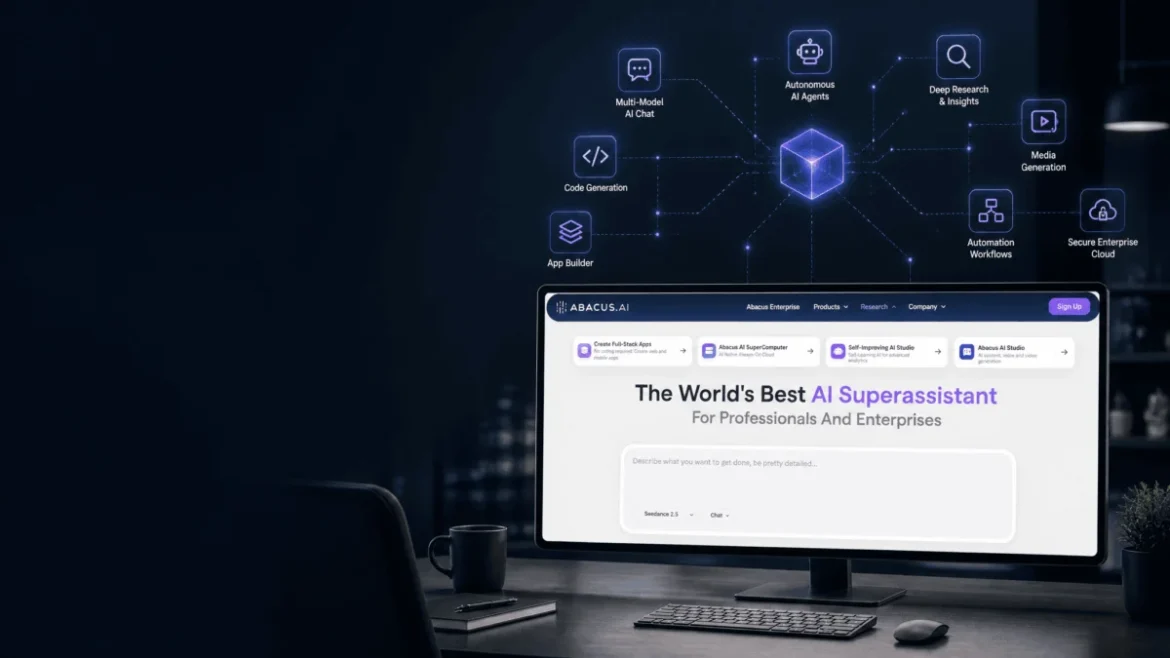
Abacus AI Review: A Comprehensive Analysis of the All-in-One Generative AI Platform

by admin September 10, 2026
written by admin

The landscape of generative artificial intelligence has undergone a rapid metamorphosis since the initial explosion of large language model (LLM) adoption in 2022. As individual model providers like OpenAI, Anthropic, and Google solidified their dominance with standalone consumer products, a secondary challenge emerged for professional users: software fragmentation. Managing a stack of subscriptions—one for coding, one for creative tasks, and another for general research—has created both administrative and financial overhead. Abacus AI, an ambitious platform founded by veterans of Google Brain and other elite machine learning institutions, has positioned itself as the solution to this fragmentation. By consolidating model access, agentic workflows, infrastructure, and creative tools into a single, resource-based ecosystem, the platform represents a significant, albeit complex, shift in how professionals interact with AI.

The Origin and Evolution of the Platform
Founded in 2019, Abacus AI initially focused on enterprise-grade machine learning, specializing in predictive modeling, anomaly detection, and fraud prevention. However, the 2023 shift toward generative AI prompted the company to pivot, leveraging its existing infrastructure to launch a consumer-facing, professional-grade suite. This transition was marked by a strategic expansion: moving from the backend, enterprise-only space into the public spotlight with the release of ChatLLM. This evolution reflects a broader trend in the industry where specialized machine learning firms are increasingly wrapping their powerful computational engines in user-friendly, application-focused interfaces to capture the growing market of power users who require more than a basic chatbot.

The Platform Architecture: Consolidation as a Service
At the core of the Abacus AI value proposition is the concept of an "AI super assistant." The platform is not a singular tool but a modular suite of services: ChatLLM for conversational interaction, RouteLLM for API-level model management, and Abacus AI Agent for autonomous task execution.

The primary draw for most users is the capability to toggle between more than 100 different language and vision models within a unified interface. This eliminates the necessity of maintaining three or four distinct browser tabs or separate service accounts. For professionals working in data-heavy fields, this allows for rapid, side-by-side comparison of how different models—such as GPT-4o, Claude 3.5 Sonnet, or Gemini 1.5 Pro—process the same document or dataset. The inclusion of "routing" logic, which attempts to automatically select the most efficient model based on the complexity of the prompt, is a nod toward cost optimization, though research indicates that automated routing still lags behind human-curated model selection in terms of nuance.

Deep Dive into the Toolset
The platform’s functionality is categorized into several distinct pillars, each serving a specific professional requirement:

  1. ChatLLM: Serving as the front-end, this interface supports file-based analysis, document research, and project-based organization. It acts as the central hub for the user, allowing for persistent conversations and file management that remains consistent regardless of the underlying model being utilized.
  2. Abacus AI Agent (formerly DeepAgent): This is arguably the most ambitious component of the platform. It is designed to move beyond simple chat, enabling the execution of multi-step, complex workflows such as automated research, browser-based data extraction, and code deployment.
  3. Desktop and CoWork: Recognizing the need for privacy, Abacus AI offers local-first tooling. Desktop allows users to interact with local files without cloud transmission, a critical feature for developers handling sensitive source code or proprietary data.
  4. Studio: Targeted at the creative sector, this workspace aggregates dozens of image, video, and audio generation models. By centralizing creative workflows, the platform enables users to rapidly prototype media concepts.
  5. AppLLM: This environment allows users to build, host, and deploy full-stack applications directly from a prompt, complete with database integration and authentication.

Operational Implications and the Credit-Based Economy
A defining characteristic of Abacus AI—and perhaps its most controversial element—is its credit-based billing system. Unlike subscription models that offer "unlimited" usage with soft caps, Abacus AI utilizes a tiered system where credits are consumed at varying rates based on the computational intensity of the task.

For the $10 Basic plan, users receive a monthly allocation of credits, which are sufficient for standard text-based interactions. However, as users move into agentic tasks, high-resolution image generation, or persistent cloud hosting, the depletion rate accelerates significantly. This creates a "hidden" complexity: the cost of the platform is not a flat fee, but rather a variable expense tied to usage density. Data from independent user feedback suggests that professional power users often find the $10 tier insufficient, necessitating a move to the $20 Pro tier to avoid mid-month service interruptions. This, in turn, requires a level of operational discipline—monitoring a billing dashboard to ensure that a rogue agent or a high-end video render does not exhaust the monthly quota prematurely.

Security, Privacy, and Enterprise Governance
For organizations evaluating Abacus AI, the security architecture is a focal point. The company maintains certifications including SOC 2 Type II and ISO/IEC 27001:2022. These standards are foundational for enterprises operating in regulated sectors. Furthermore, the platform’s commitment to data privacy—specifically the promise that customer data is not utilized to train the company’s own foundational models—aligns with the industry standard for enterprise-grade AI.

However, a distinction must be drawn between the self-serve platform and the enterprise-level offering. While the $10 or $20 subscription provides a robust toolkit for individuals and small teams, the Enterprise tier, which reportedly starts at $5,000 per month, offers the governance, Single Sign-On (SSO), and dedicated VPC deployments required for true institutional compliance. Users often conflate these two, leading to misunderstandings regarding the level of support and security guarantees available at the lower price points.

Comparative Analysis: The "Wide vs. Deep" Trade-off
When comparing Abacus AI to first-party providers like OpenAI or Anthropic, the choice comes down to a fundamental trade-off: breadth versus specialization.

ChatGPT and Claude are optimized for a seamless, "best-in-class" experience within their own model ecosystems. Their interfaces are cleaner, more intuitive, and highly refined for their specific model strengths. Abacus AI, conversely, offers a "wide" experience. It is a Swiss Army knife that includes features—such as full-stack app hosting and terminal-integrated coding—that the first-party providers simply do not offer.

The disadvantage of this breadth is cognitive load. Navigating the Abacus AI interface is objectively more complex than using a native ChatGPT interface. For the average user who simply needs a high-quality chatbot for email drafting or basic summarization, the added complexity of Abacus AI’s menu systems, routing settings, and project folders can be a deterrent. Conversely, for a developer or a technical product manager who needs to integrate API calls, build a prototype, and compare three different models in one sitting, the platform’s utility is unparalleled.

Fact-Based Implications for the User
The current market sentiment toward Abacus AI is bifurcated. Enthusiastic users cite the cost savings of consolidating four or five separate subscriptions into one. Skeptics point to the learning curve and the potential for "credit shock." The reality is that the platform demands a specific type of user: one who is willing to treat their AI usage as an operational process rather than a casual utility.

For prospective users, the most rational approach involves a staged evaluation:

  1. Catalog your current AI subscriptions and calculate the total monthly expenditure.
  2. Identify the specific tools (Agent, Desktop, AppLLM, etc.) you intend to use at least twice weekly.
  3. Test the platform during the introductory month to verify if the credit consumption patterns align with your actual workflow volume.
  4. Critically evaluate whether the time saved by having an "all-in-one" environment outweighs the time spent learning the platform’s unique interface and managing its credit-based ecosystem.

As the AI industry matures, platforms like Abacus AI are likely to become the standard for professional workflows, moving away from the era of "model-first" interaction toward "workflow-first" interaction. While the platform currently faces challenges regarding interface polish and pricing transparency, its fundamental premise—the unification of the fragmented AI stack—addresses a clear and persistent pain point in the modern digital workspace. Whether it successfully captures the broader market depends on its ability to balance the technical power of its tools with the simplicity required for mass-market adoption. For now, it remains a potent, highly specialized, and deeply capable instrument for those willing to invest the time to master it.

September 10, 2026 0 comment
0 FacebookTwitterPinterestEmail
Artificial Intelligence & Tech

3 ways to prep for your next big race with Search

by admin September 10, 2026
written by admin

The global fitness landscape is undergoing a significant transformation as recreational running reaches record-breaking popularity. Data from search trends indicates that interest in endurance events has surged throughout the 2026 calendar year, with queries related to "run clubs," "marathon training protocols," and "specialized footwear selection" reaching all-time highs. This shift represents a broader cultural move toward outdoor activity and wellness, often colloquially referred to as the desire to "touch grass." As millions of individuals transition from casual jogging to competitive racing, the logistical demands of preparation—ranging from periodized training schedules to equipment procurement—have become increasingly complex. Google’s integration of generative AI features into its Search engine aims to mitigate these challenges by offering a more personalized, data-driven approach to athletic readiness.

The Rise of the Recreational Athlete

The current surge in running interest is not merely anecdotal. Industry analysts note that post-pandemic health awareness, combined with the proliferation of community-based run clubs in urban centers, has created a demographic of "lifestyle athletes." Unlike professional competitors, these individuals often struggle with the balancing act of maintaining a structured training regimen while navigating professional and personal obligations.

Historically, runners relied on static training PDFs or generic online templates that rarely accounted for local geography or individual lifestyle constraints. Today, the integration of AI-driven tools into the search experience marks a departure from static information retrieval toward a dynamic, interactive planning model. By leveraging large language models, search platforms can now synthesize vast amounts of data—including weather patterns, elevation profiles, and product inventory—to provide hyper-localized recommendations.

1. Personalized Periodization and Localized Route Mapping

The cornerstone of any successful race campaign is a structured training plan. However, a "one-size-fits-all" approach often leads to burnout or injury. Modern training methodologies emphasize periodization, which involves cycling through different phases of training—base building, speed work, and tapering.

With the introduction of AI Mode in Google Search, users can now generate highly specific training schedules that account for their unique fitness baseline and environmental context. By utilizing the Canvas tool, a runner can input specific variables, such as their target finish time, current weekly mileage, and preferred geographic training zones.

For instance, a user preparing for a major metropolitan marathon can prompt the system to generate a 16-week plan that incorporates specific routes in their neighborhood, such as the Montrose area in Houston, while balancing cross-training sessions. The AI does not simply output a list of dates; it cross-references the user’s request with regional geographic data to suggest runs that avoid heavy traffic or utilize local park trail systems. This level of customization ensures that the training plan is not only physiologically sound but also logistically sustainable.

2. The Psychology of Endurance: Integrating Multimedia Motivation

Physiological training is only half the battle; the mental strain of long-distance running is a well-documented obstacle for both novices and veterans. During the "long run"—the staple of marathon training—mental endurance is frequently tested by the repetitive nature of the activity.

To address this, Google has expanded its integration with third-party media platforms, specifically YouTube Music. By connecting a streaming account to the Search environment, runners can utilize AI to curate auditory environments that align with their training intensity. If a runner is engaged in a high-intensity interval training (HIIT) session, the AI can curate a playlist with a higher beats-per-minute (BPM) count to match their cadence, whereas a long, slow-distance run might trigger a more steady-state, atmospheric selection of tracks.

3 ways to prep for your next big race with Search

This functional integration reflects a growing trend in "contextual computing," where digital tools anticipate the user’s immediate needs based on the activity at hand. By removing the friction of manual playlist management, runners can maintain their focus on their physiological output, effectively treating their digital companion as a virtual coach and DJ combined.

3. Data-Driven Procurement of Athletic Gear

The final hurdle for many aspiring marathoners is the selection of equipment. The market for running gear has become increasingly saturated, with brands offering specialized products for every conceivable running gait, arch type, and weather condition. Navigating this marketplace is often overwhelming for the average consumer.

Search has evolved to utilize its massive Shopping Graph—which aggregates information from over 60 billion product listings—to act as a sophisticated procurement assistant. Rather than forcing the user to sift through endless retail websites, the system allows for nuanced search queries. A runner can search for "lightweight hydration vests under $80" or "anti-chafing apparel suitable for humid environments."

The system performs a comparative analysis of these items, showing side-by-side specs, price points, and, crucially, local stock availability. This integration of real-world inventory data provides a tangible benefit: a runner who realizes they need new shoes three days before a race can verify exactly which local specialty running store has their specific size and model in stock. This bridge between online search intent and offline physical retail is a critical development in consumer efficiency.

Implications for the Future of Wellness Tech

The incorporation of AI into the race-day preparation process signals a broader shift in how technology interacts with human performance. While these tools are currently experimental, the implications are significant for the health and wellness sector.

First, the democratization of personalized training data reduces the barrier to entry for high-level athletic participation. By providing professional-grade planning tools to the general public for free, search engines are effectively lowering the cost of "coaching" and guidance. Second, the reliance on data-driven shopping minimizes the environmental and economic waste associated with "trial-and-error" purchasing—where runners buy multiple pairs of shoes only to find they are unsuitable.

However, industry experts advise caution. While AI-generated training plans are powerful, they cannot replace the intuition of a human coach who can observe physical form and assess signs of overtraining. As these tools continue to develop, the expectation is that they will become even more integrated with biometric data from wearables, such as heart rate variability (HRV) and VO2 max, to provide real-time adjustments to training plans.

As the 2026 racing season progresses, it is evident that the intersection of search technology and physical fitness will continue to expand. For the modern runner, the finish line is no longer just a physical goal; it is a technological one, supported by an ecosystem of digital tools designed to optimize performance, mental well-being, and logistical ease. Whether the goal is a local 5K or a major international marathon, the era of the "smart-trained" athlete has arrived, setting a new standard for how we prepare for the challenges of the road ahead.

September 10, 2026 0 comment
0 FacebookTwitterPinterestEmail
Cryptocurrency News

Bitwise Pushes for Yield in Spot Ethereum ETF With Amended S-1 Filing Featuring Staking Mechanics

by admin September 9, 2026
written by admin

Asset manager Bitwise has advanced the ongoing debate surrounding cryptocurrency investment products by filing an amended S-1 registration statement with the United States Securities and Exchange Commission (SEC) for its spot Ethereum exchange-traded fund. The updated filing incorporates comprehensive disclosures concerning Ethereum staking mechanics, operational frameworks for validators, potential slashing risks, and the accounting methodologies associated with staking yields.

This regulatory development brings renewed attention to one of the most critical and unresolved structural questions facing digital asset investment vehicles: whether traditional institutional wrappers will be permitted to pass protocol-level rewards directly to everyday shareholders. While Bitcoin exchange-traded funds offer straightforward passive exposure to a proof-of-work asset, Ethereum operates on a proof-of-stake consensus mechanism. This fundamental distinction allows native token holders to lock up their capital to secure the network, thereby earning continuous protocol rewards.

Bitwise’s proactive addition of detailed staking language underscores the persistent push by financial issuers to bridge the gap between traditional brokerage accounts and decentralized finance yields. However, industry analysts emphasize that amending a registration statement is an administrative step initiated by the issuer, not an indication of regulatory approval. The SEC has yet to greenlight staking functionalities within any spot cryptocurrency exchange-traded fund, leaving the ultimate fate of yield-bearing crypto funds hanging in the balance.

The Structural Dilemma of Ethereum Staking in Institutional Wrappers

To understand the weight of Bitwise’s latest filing, one must examine the core economic profile of Ethereum. Unlike Bitcoin, which functions strictly as a digital store of value and requires energy-intensive mining to secure its ledger, Ethereum relies on validators who stake ETH to process transactions and protect the blockchain. In exchange for this service, the network mints new ETH and distributes transaction fees to participants, generating an annualized yield that typically fluctuates between three and five percent.

For individual investors, this yield is a defining characteristic of owning Ethereum. It transforms the asset from a purely speculative instrument into something resembling a productive asset or yield-generating security. When institutional asset managers launched spot Ethereum exchange-traded funds in mid-2024, they offered investors the price exposure of ETH without the administrative burden of self-custody or managing validator nodes. Yet, these initial products omitted staking entirely.

Consequently, fund shareholders receive only the price appreciation or depreciation of Ethereum while missing out on the protocol-level rewards. For sophisticated investors, family offices, and institutional allocators, this creates a performance drag compared to holding and staking native tokens independently. Conversely, integrating staking directly into a regulated exchange-traded fund introduces complex operational, legal, and accounting hurdles that regulators have historically been hesitant to clear.

Deconstructing the Risks: Slashing, Custody, and Operational Complexities

Bitwise’s amended S-1 does not shy away from the inherent hazards of participating in proof-of-stake networks. Staking is not a risk-free endeavor; it carries technical and operational vulnerabilities that must be transparently communicated to retail and institutional investors alike. Chief among these concerns is slashing, a protocol-level penalty mechanism designed to punish dishonest or malfunctioning validators. If a validator goes offline for extended periods, attempts to validate conflicting blocks, or suffers from software bugs, a portion of the staked principal can be permanently burned by the network.

Beyond slashing, institutional staking involves multifaceted operational risks, including smart contract vulnerabilities, custodian concentration, and reward variability. Custodians tasked with managing the fund’s assets must establish robust infrastructure to safeguard private keys while orchestrating validator operations across decentralized networks.

Bitwise’s updated disclosure attempts to address these vulnerabilities head-on by detailing how custodian staking operations would function and outlining the protective measures designed to mitigate slashing risks. By explicitly laying out these operational mechanics, the asset manager is signaling to regulators that the risks can be managed, quantified, and disclosed with the transparency required of public investment vehicles.

The Regulatory Standstill and the SEC’s Stance

Despite the thoroughness of Bitwise’s updated paperwork, the regulatory status quo remains unchanged. The SEC’s Division of Corporation Finance and Division of Trading and Markets continue to evaluate digital asset products under a cautious framework. To date, the agency has maintained a strict boundary around staking services offered by centralized intermediaries, frequently scrutinizing whether such programs constitute the unregistered offering of securities under the federal securities laws.

When the first batch of spot Ethereum exchange-traded funds secured approval in July 2024, the omission of staking was widely understood to be a prerequisite for regulatory clearance. Issuers deliberately stripped staking provisions from their initial filings to expedite the approval process and bring passive products to market. Now that the foundational products have been established, asset managers are testing the boundaries of the regulatory perimeter to see if the SEC is willing to evolve its stance.

The timeline for SEC review of amended S-1 filings is open-ended. The regulatory body can issue multiple rounds of comment letters, request further clarifications, or delay decisions indefinitely. While some market participants anticipate constructive dialogue between issuers and regulators regarding proof-of-stake integration, others caution that a formal policy shift could take many months, if not longer.

Market Implications and Investor Sentiment

The inclusion of staking mechanics in Bitwise’s filing holds significant implications for the broader competitive landscape of digital asset exchange-traded funds. If the SEC eventually relents and permits staking within these vehicles, it could trigger a structural evolution across the entire product category. Funds equipped with staking yields would likely capture substantial capital inflows, drawing investors away from non-yielding alternatives that suffer from performance lag.

Conversely, if regulators reject the proposal, issuers will be forced to compete solely on expense ratios and liquidity, leaving the yield gap between native staking and exchange-traded funds intact. For certain risk-averse investors, a non-staking product may still hold appeal, as it avoids exposure to validator slashing, unbonding periods, and complex accounting treatments for staking rewards. However, the commercial pressure from institutional clients seeking maximum capital efficiency ensures that issuers will continue to advocate for yield-bearing structures.

Broader Industry Context and Future Outlook

Bitwise’s move is part of a broader, iterative process by which crypto asset managers push regulatory boundaries to mature digital asset financial products. As the market looks ahead, the outcome of this regulatory review will serve as a bellwether for the integration of decentralized finance yields into traditional capital markets.

While market participants should refrain from interpreting the amended S-1 filing as an impending approval, they should recognize it as a strategic maneuver that keeps the staking conversation active on the regulatory agenda. As institutional adoption deepens, the pressure on regulatory bodies to accommodate the economic realities of proof-of-stake networks will only intensify. Whether the SEC is prepared to adapt its framework to incorporate these complexities remains one of the most compelling storylines in modern financial regulation.

September 9, 2026 0 comment
0 FacebookTwitterPinterestEmail
Blockchain Technology

Legislative Gridlock and Regulatory Ambiguity Cloud the Future of the American Crypto Market

by admin September 9, 2026
written by admin

The legislative trajectory for the digital asset sector in the United States faces significant uncertainty as the proposed CLARITY Act encounters a series of procedural hurdles and a narrowing window for Congressional action. With the House of Representatives truncating its remaining calendar ahead of the November midterm elections, the timeline for comprehensive digital market structure legislation has shifted, leaving the bill’s survival contingent upon the outcomes of a post-election "lame duck" session and ongoing negotiations within the executive branch.

The Legislative Bottleneck and Procedural Challenges

The path for the CLARITY Act—a bill intended to establish a regulatory framework for digital asset markets—has grown increasingly narrow. Last week, House leadership released a revised operational schedule, effectively canceling planned votes for the final two weeks of the current session. Lawmakers are slated to return to Washington D.C. on September 14 for a truncated four-day window before departing to focus on midterm campaign activities. This limited timeframe renders a final, comprehensive vote on the CLARITY Act highly unlikely until the post-election session, assuming the Senate succeeds in advancing the bill through its own procedural requirements.

In the Senate, a pivotal procedural vote is scheduled for September 15. This step is critical, as it requires a 60-vote supermajority to overcome potential filibusters and open the floor for debate. Current sentiment among Capitol Hill insiders suggests that reaching this threshold is far from guaranteed. Several Republican senators have expressed public skepticism regarding the legislation’s viability, citing a lack of constituent pressure and the complexity of reconciling disparate interests within the financial and technology sectors.

Sen. Mike Rounds (R-SD) recently remarked that the bill’s prospects "do not look good," reflecting a broader sentiment of fatigue among some legislators. Furthermore, Sen. Roger Marshall (R-KS) noted that digital asset regulation is not a priority for his constituency, echoing findings from recent political surveys that suggest the subject remains a polarizing, if not altogether unengaging, topic for the general electorate.

The Ethics Impasse: A Central Point of Contention

A significant friction point within the CLARITY Act concerns ethics provisions regarding the personal financial activities of elected officials and their families. Critics, including many Democrats and some members of the GOP, argue that the current language regarding conflicts of interest is insufficient. Sen. Thom Tillis (R-NC) has explicitly linked the bill’s precarious future to the White House’s reluctance to negotiate on these ethical guardrails.

The debate is underscored by concerns regarding the intersection of political influence and private digital asset ventures. While proponents of the bill argue that it provides necessary clarity for innovation, opponents contend that without rigorous ethics standards, the legislation could facilitate, rather than prevent, systemic conflicts of interest. The White House has maintained that its current proposals represent a comprehensive approach to ethics, yet a spokesperson’s assertion that the administration has reached an agreement on "the most comprehensive and wide-ranging ethics provision in history" has been met with skepticism from those who view the current text as merely cosmetic.

Shifting Alliances and Law Enforcement Perspectives

A notable development in the legislative landscape is the pivot of the National Sheriffs’ Association (NSA), which recently moved from a position of opposition to neutrality regarding the CLARITY Act. The organization stated that the complexity of the legislation and the ongoing nature of the negotiations necessitated a "step back" to allow the process to unfold. This shift follows adjustments to the bill’s "illicit finance" language, a section that had previously drawn fire from law enforcement agencies concerned that provisions offering immunity to developers of decentralized finance (DeFi) platforms might inadvertently hamper investigations into criminal activity.

Despite this change in stance, other institutional hurdles remain. Financial sector stakeholders, particularly traditional banks, continue to lobby against provisions that would allow digital asset platforms to offer "rewards" tied to stablecoin activities. This conflict between traditional financial institutions and the emerging crypto sector represents a fundamental disagreement over market access and competition, further complicating the prospects for a unified legislative front.

Regulatory Vacuum and Administrative Action

While Congress debates the merits of the CLARITY Act, federal regulators are increasingly active in the space, effectively attempting to shape the regulatory climate in the absence of comprehensive law. The Commodity Futures Trading Commission (CFTC) and the Securities and Exchange Commission (SEC) are both navigating significant vacancies and internal operational challenges.

The CFTC has functioned with four of its five commissioner seats vacant for over a year, leaving Chairman Michael Selig as the primary decision-maker. Similarly, the SEC is managing two vacancies that, under standard practice, would be filled by minority-party nominees to maintain a balanced board. Recent reports indicate that while the White House has vetted potential candidates for these roles, it is unlikely to proceed with nominations unless the CLARITY Act demonstrates a clearer path to passage.

Simultaneously, the SEC has proposed modernizing rules for registered transfer agents—a move that has not seen significant updates since the early 1980s. The proposal, spanning over 400 pages, seeks to integrate blockchain technology and smart contracts into the regulatory framework. This effort signals an agency intent on formalizing oversight of digital assets through administrative rulemaking rather than relying on legislative mandates that may or may not materialize.

Market Entrants and the Rise of On-Chain Banking

Parallel to the legislative and regulatory struggle, the financial sector continues to evolve. The Office of the Comptroller of the Currency (OCC) recently granted conditional approvals for two new national bank charters: one to the U.S. branch of the fintech firm Revolut and another to OpenReserve, a firm backed by Andreessen Horowitz.

These approvals are significant because they represent a push toward full-service national bank charters rather than the more limited trust charters seen previously. Revolut’s model focuses on retail and business services, including digital asset remittances, while OpenReserve aims to integrate "native on-chain settlement" into a federally supervised banking structure. Additionally, the payment processor Block, founded by Jack Dorsey, has applied for a national trust bank charter to support custody services for Bitcoin and stablecoins.

These developments suggest that while the legislative outcome remains uncertain, the trend toward integrating digital assets into traditional financial infrastructure is moving forward. The OCC’s willingness to approve these applications, even as some applicants face historical compliance fines, indicates a regulatory preference for bringing digital asset activity into the established, supervised banking perimeter.

Broader Implications and Outlook

The current situation presents a paradox: while the political prospects for the CLARITY Act are dimming, the commercial and administrative momentum behind digital assets remains robust. The reliance on PAC spending and "dark money" groups to promote the bill underscores the high stakes for the industry, which views federal legislation as essential for legal certainty and long-term investment.

However, as long as the ethics debate remains unresolved and the House and Senate remain divided on the bill’s technical specifics, the legislation is likely to remain in a state of suspended animation. The upcoming midterm elections serve as a hard deadline for the current session, effectively forcing a decision: either a last-minute, bipartisan compromise is reached during the lame-duck session, or the effort will reset entirely in the next Congress.

For investors and industry participants, the focus is shifting from legislative optimism to navigating the reality of agency-led regulation. With the SEC and other bodies actively proposing new rules to manage digital asset integration, the U.S. regulatory environment is being built from the ground up, one rule change at a time. The ultimate fate of the CLARITY Act will likely serve as a litmus test for whether the federal government can achieve a comprehensive policy vision for the digital economy or whether the future of the American crypto market will be defined by the incremental, and often contentious, decisions of its regulatory agencies.

September 9, 2026 0 comment
0 FacebookTwitterPinterestEmail
Blockchain Technology

Binance Unveils Agent OS to Bridge Autonomous AI Agents with Cryptocurrency Markets

by admin September 9, 2026
written by admin

Binance, the world’s largest cryptocurrency exchange by trading volume, boasting a registered user base exceeding 300 million individuals, has officially launched a pioneering platform designed to bridge the gap between artificial intelligence and live financial execution. Entitled Agent OS, the newly deployed ecosystem enables autonomous AI agents to analyze complex global markets, process real-time financial signals, and execute multi-faceted trades directly on behalf of users. This strategic rollout marks a significant paradigm shift in the digital asset sector, transitioning AI from passive, conversational chatbots into active financial participants wielding real capital.

The launch of Agent OS arrives at a time of rapid convergence between artificial intelligence and financial technology. For years, retail and institutional participants have relied on AI models primarily for informational retrieval, sentiment analysis, and basic charting. However, the maturation of agentic workflows—systems capable of setting goals, breaking down tasks, and independently executing actions—has demanded a robust technological infrastructure. By providing developers with the tools to connect third-party AI applications directly to its financial engine, Binance is positioning itself at the absolute forefront of this technological wave.

Architectural Framework and Technical Integration

At its core, Agent OS serves as a comprehensive middleware layer, linking external AI applications to Binance’s extensive financial and transactional infrastructure. The platform consolidates a suite of proprietary developer tools, including the Binance APIs, the Binance Wallet Agentic Hub, the Binance x402 transaction verification and payment facilitator API, and the Binance Skill Hub. Crucially, the platform introduces native support for the Model Context Protocol (MCP), an emerging open standard designed to facilitate secure, contextual communication between AI models and local or cloud-based data sources.

Through this multi-layered architecture, Agent OS seamlessly integrates with leading artificial intelligence environments and coding assistants. Developers and advanced users can configure models from major AI laboratories—including OpenAI’s ChatGPT and Codex, Anthropic’s Claude Code, and development environments like Cursor—to interface directly with Binance. Once authorized, these agents gain the mechanical capacity to ingest real-time market data, query account balances, and execute complex trading strategies ranging from standard spot purchases to high-frequency arbitrage and decentralized finance (DeFi) interactions.

Despite the high degree of autonomy afforded to these systems, Binance has emphasized that account security remains a foundational design principle. Rather than granting AI agents unchecked access to a user’s primary portfolio, the platform enforces strict compartmentalization through the deployment of dedicated subaccounts.

The Subaccount Sandbox: Security and Access Control

To mitigate the inherent risks associated with autonomous software handling financial assets, Binance has structured Agent OS around a granular permissioning model. Users must allocate specific subaccounts to individual AI agents, configuring them for narrowly defined operational parameters, such as spot trading, futures contracts, or distinct yield-generation strategies.

According to Jeff Li, Vice President of Product at Binance, the architecture deliberately avoids conferring total freedom onto software agents. Instead, the platform places the burden of risk management and access control squarely in the hands of the end user. By default, withdrawals from these dedicated subaccounts are strictly disabled, establishing a secure operational sandbox. This structural barrier ensures that even if an agent executes an erroneous trade or encounters a logic failure, the potential damage is physically isolated from the user’s primary long-term holdings.

Binance now lets AI agents trade, but keeping them in check is largely up to users

Furthermore, users retain the flexibility to mandate human-in-the-loop verification for every individual order generated by an AI agent, or alternatively, to grant fully autonomous execution permissions once predefined parameters are locked in. Notably, Binance does not enforce a centralized, exchange-wide monetary ceiling on how much an AI agent can trade or lose within its designated subaccount. Consequently, the literal financial ceiling is defined entirely by the amount of capital a user voluntarily transfers into that specific subaccount.

Transparency Limitations and Threat Vectors

The architectural separation between user-side reasoning and exchange-side execution introduces notable complexities regarding auditability and risk surveillance. When queried regarding Binance’s visibility into the cognitive pathways of autonomous agents, Jeff Li confirmed that the underlying decision-making process occurs entirely off-platform—either locally on the user’s machine or within the architecture of their chosen AI application.

Consequently, Binance cannot inspect or audit the explicit reasoning that prompts an agent to submit a specific buy or sell order. The exchange’s monitoring capabilities are strictly downstream, tracking the resulting trading activity and API requests rather than the intent or informational inputs that generated them. This limitation raises valid questions regarding market integrity, particularly concerning how protocols will handle scenarios where an agent acts upon manipulated data, hallucinations, or sophisticated prompt-injection attacks.

When confronted with these systemic vulnerabilities, Binance executives repeatedly point back to the subaccount framework as the primary line of defense. The company maintains that existing institutional-grade security protocols, risk-control mechanisms, and anti-money laundering (AML) frameworks designed for subaccount APIs will govern Agent OS from day one. Nevertheless, the reality remains that users must place immense trust in the prompt hygiene, alignment, and robustness of the third-party AI models they choose to deploy.

Beyond Centralized Exchanges: On-Chain Activity and Payments

While traditional exchange-based trading represents the initial focal point for Agent OS, the platform’s utility extends far beyond standard order books. Binance has deliberately engineered the system to facilitate cross-domain financial operations, incorporating native support for decentralized finance (DeFi) and automated microtransactions.

Through the integration of the Binance Agentic Wallet, autonomous agents are granted the capability to interact directly with decentralized applications (dApps), smart contracts, and various cryptographic tokens across multiple blockchain networks. Additionally, the integration of Binance’s x402 payment facilitator API enables agents to autonomously settle invoices, pay for digital services, and execute programmatic value transfers without requiring human intervention for every individual transaction.

To curb systemic risk within decentralized environments where smart contract vulnerabilities or rapid token fluctuations can lead to catastrophic losses, Binance has implemented hardcoded daily transaction limits for Agentic Wallet interactions. Unlike exchange subaccounts—where risk is capped only by the user’s initial deposit—wallet-based operations feature platform-enforced maximums. Regular token swaps are capped at a default threshold of $50,000 per day, DeFi transactions carry a default daily limit of $100,000, and x402 payment settlements are strictly capped at $20 daily, according to company specifications.

Jeff Li described the rollout of Agent OS as merely the foundational first step in a broader long-term strategy. The overarching vision is to provide a standardized, highly secure developer ecosystem capable of powering sophisticated AI applications that operate seamlessly across both centralized cryptocurrency exchanges and traditional financial markets.

Binance now lets AI agents trade, but keeping them in check is largely up to users

Industry-Wide Convergence: The Rise of Agent-Native Exchanges

Binance’s strategic pivot into agentic infrastructure is not occurring in a vacuum. The broader cryptocurrency exchange landscape has experienced a synchronized rush toward open-source developer tooling and Model Context Protocol integrations, reflecting a fierce industry-wide race to capture the burgeoning market of autonomous algorithmic trading.

The movement gained significant momentum earlier in the year as exchanges sought to capitalize on advancements in generative artificial intelligence. In March, prominent rival exchange Kraken launched an open-source command-line interface featuring a built-in MCP server. This developer kit allowed external AI agents to programmatically execute a wide array of actions, including both spot and futures transactions, directly within Kraken’s ecosystem.

Shortly thereafter, in June, Coinbase accelerated the trend by unveiling "Coinbase for Agents." This dedicated offering was engineered to connect AI models directly to user accounts, empowering autonomous software to execute trades, manage treasury workflows, and settle payments within strict user-defined parameters. Similarly, OKX entered the fray by introducing its proprietary agentic trade kit earlier in the year, leveraging open-source MCP toolkits to enable seamless AI-driven execution for its global user base.

Broader Economic and Market Implications

The widespread commercial availability of agentic trading infrastructure carries profound implications for the future structure of global financial markets. For retail participants, platforms like Binance’s Agent OS democratize access to sophisticated quantitative trading strategies, portfolio rebalancing, and risk management tools that were previously restricted to institutional hedge funds equipped with dedicated engineering teams.

However, the mass migration of capital management to autonomous software agents introduces novel macroeconomic variables. Market analysts have raised concerns regarding the potential for synchronized algorithmic behavior, where multiple AI models trained on similar datasets or utilizing identical foundational LLMs might react to macroeconomic news or social sentiment in unison, potentially exacerbating flash crashes or localized market volatility.

Furthermore, the legal and regulatory status of trades executed by non-human entities remains an evolving grey area for global financial watchdogs. While exchanges are implementing technical safeguards such as subaccount sandboxes and transaction caps, regulators across major jurisdictions are expected to scrutinize how liability is apportioned when an autonomous agent incurs substantial financial losses due to software malfunction, data poisoning, or adversarial manipulation.

As Agent OS and competing platforms mature throughout the latter half of the decade, the success of agent-native finance will likely depend on the industry’s ability to balance user-friendly automation with rigorous, fail-safe security measures. For now, Binance has crossed a crucial Rubicon, transitioning artificial intelligence from a passive advisor sitting alongside the trading terminal into an active participant executing high-stakes transactions with real capital.

September 9, 2026 0 comment
0 FacebookTwitterPinterestEmail
Decentralized Finance (DeFi)

The Rise of Equity-Backed Memecoins on Robinhood Chain Redefines Decentralized Finance

by admin September 9, 2026
written by admin

The emergence of the Robinhood Chain, launched in July 2026 as an Arbitrum Orbit Layer 2 solution, has catalyzed an unexpected evolution in the decentralized finance (DeFi) landscape. While the chain was designed primarily to provide tokenized exposure to traditional equity markets via ERC-20 debt securities, it has become the primary theater for a new, aggressive financial primitive: the stock-paired memecoin. Artificial Inu ($AI), currently the most prominent example of this trend, serves as the flagship for a model where speculative assets are not priced in stablecoins or native gas tokens, but in tokenized shares of global equities such as Nvidia ($NVDA).

At the core of this phenomenon is a systemic shift in how liquidity is structured. By utilizing Uniswap v4 as the underlying Automated Market Maker (AMM) engine, developers have created a circular economy where the demand for high-risk, high-volatility memecoins directly fuels the accumulation of tokenized traditional assets. As of block 51,651,897, captured at 10:30 UTC on September 1, 2026, the data confirms that these memecoin pairs have become the dominant use case for tokenized equities on the network.

A Chronology of Financial Innovation and Adaptation

The rapid integration of stock tokens into the memecoin ecosystem began shortly after the chain’s mainnet launch. On July 14, 2026, the launchpad Long introduced the capability for creators to select specific stock tokens as the quote asset for new token deployments. This was quickly followed on July 20 by the arrival of Bankr, which expanded the repertoire to over 90 tickers, effectively positioning traditional assets like Apple and Tesla as the base liquidity for speculative trading.

By August, the ecosystem had matured further with the introduction of "Stocks Vault" mechanisms by Flap, which incentivized holders by distributing fee revenue generated from trading activity directly in the form of blue-chip stock tokens. The evolution reached a new phase on August 29 with the debut of PAIR, a launchpad that enables the creation of multipool structures. These pools allow new tokens to be quoted against a diversified basket of equities rather than a single ticker, marking the latest iteration of what industry observers are calling "RWA (Real World Asset) Memecoins."

Data-Driven Analysis of Liquidity Concentration

The scale of this trend is evidenced by the sheer volume of tokenized equity supply now held within memecoin liquidity pools. Analysis of 19 of the most liquid stock tokens on the chain reveals a striking level of concentration. At the time of the September 1 snapshot, these pools held $8.84 million worth of stock tokens, representing approximately 17.2% of the total on-chain float for those assets. More significantly, these specific pools facilitated $95.3 million in trading volume within a 24-hour window, accounting for 31.3% of the total decentralized exchange (DEX) volume for those equities.

The concentration is particularly acute for specific tickers. For instance, $HIMS tokens, which have been at the center of recent volatility, saw 53.1% of their total on-chain float locked within memecoin liquidity pools. Similarly, $MSTR and $RBLX tokens show 33.0% and 31.7% of their respective floats utilized as quote assets. For these assets, the memecoin market is no longer a peripheral activity; it is the primary venue for price discovery and liquidity depth.

The Mechanism: Fees, Vaults, and Tokenomics

The logic behind this design is rooted in the optimization of fee revenue. In a standard memecoin pair—typically denominated in $USDC or $ETH—the generated transaction fees are paid in currencies that the project may not intend to retain long-term. By forcing the pair to be denominated in a stock token, projects like Artificial Inu ensure that 80% of buy-side fees are funneled into a community-governed vault containing "real" stock tokens.

This creates a self-reinforcing feedback loop. As volume in the memecoin increases, the treasury’s holdings of the underlying equity grow, theoretically providing a "hard asset" floor for the project. However, this model remains untested in a long-term bear market or a period of sustained low volatility. While projects claim that the "vault only grows," the sustainability of this model relies heavily on consistent trading volume, which has yet to be proven over extended time horizons.

Implications of Market Fragmentation and Float Squeezes

The reliance on these pools has introduced a notable fragility to the Robinhood Chain ecosystem, most visible during weekend periods when the traditional equity markets are closed. Because the issuer of the tokenized stock tokens operates on a traditional Monday-to-Friday schedule, the on-chain supply of these equities can become constrained over the weekend.

The result is a "float squeeze," where a surge in demand for the paired memecoin can force the price of the equity wrapper significantly above its NYSE-listed spot price. This occurred in late August, when the $BONER/$HIMS pool pushed the price of tokenized $HIMS to a 112% premium over its market value. While the issuer of the stock tokens responded by aggressively minting more tokens upon the market reopening, the incident highlighted the inherent tension between 24/7 crypto-native markets and the legacy financial systems they seek to tokenize.

Furthermore, the naming conventions have created a significant risk for retail participants. Because many memecoins use the same ticker symbols as the stocks they are paired with, or reference them explicitly, the potential for confusion is high. A user searching for "$NVDA" on the chain may inadvertently land on a memecoin pool rather than the actual tokenized equity, presenting a substantial barrier to entry for inexperienced investors and increasing the likelihood of accidental capital deployment.

The Next Frontier: Leveraged Quotes

The ecosystem is not standing still. The launch of "LongX" on September 1 represents the next iteration of the model, introducing $NVDA3x—an ERC-20 token that wraps a 3x leveraged perpetual position held on the Lighter exchange. By allowing this leveraged asset to serve as a quote currency for new memecoins, the developers are layering complex financial derivatives onto the base memecoin structure.

This creates a "four-deep" stack: an underlying Nvidia share, a debt security wrapper, a leveraged perpetual contract, and finally, a memecoin liquidity pair. Each layer introduces a new point of failure, particularly regarding peg maintenance and liquidation risk. As the chain approaches the end of its 90-day gas subsidy period in October, the economic viability of these experimental structures will face its first major test.

Broader Impact and Future Outlook

The current state of the Robinhood Chain suggests that the most immediate and widespread application of tokenized equities is as a denominator for speculative, community-driven tokens. While this has resulted in significant fee revenue for the platform—with Uniswap v4 on the chain earning $6.5 million in fees in a single 24-hour period—it is a departure from the institutional-grade "real-world asset" use case often envisioned by proponents of tokenization.

The impact on real-world share prices remains negligible. Despite the fervor on-chain, the volume traded in these pools represents a mere fraction of the capitalization of the underlying companies. The memecoin demand creates inventory pressure on the issuer, which leads to minting activity, but this process serves as a bridge rather than a driver of equity value.

Moving forward, stakeholders are advised to monitor the "vault" mechanisms of these projects, as the long-term governance of these stock-heavy treasuries remains an open question. Additionally, the recurring weekend premium issues underscore the necessity for better liquidity management and cross-venue synchronization. For now, the Robinhood Chain stands as a unique laboratory where the collision of legacy equity markets and degenerate crypto-trading culture is producing rapid, if highly experimental, financial innovation. Whether this model scales or eventually collapses under the weight of its own complexity will depend largely on the continued willingness of the community to treat equity wrappers as the new "stable" base for digital asset speculation.

September 9, 2026 0 comment
0 FacebookTwitterPinterestEmail
Cybersecurity & Hacking

Microsoft Issues Record-Breaking Patch Tuesday Update Addressing 974 Vulnerabilities as Artificial Intelligence Transforms Cybersecurity

by admin September 9, 2026
written by admin

Microsoft Corp. has fundamentally reshaped the landscape of enterprise cybersecurity and software maintenance by issuing an unprecedented security update package designed to plug at least 974 distinct vulnerabilities across its expansive ecosystem of Windows operating systems and auxiliary software. This monumental release shatters the company’s previous historical benchmarks, eclipsing a record set only two months prior in July, when Microsoft patched 570 security flaws in a single monthly cycle. The sheer magnitude of the September release underscores a rapidly shifting paradigm in how software defects are identified, categorized, and remediated, driven largely by the aggressive integration of artificial intelligence into vulnerability research and software development lifecycles.

While software giants celebrate the automated efficiency that artificial intelligence brings to the discovery phase, the cybersecurity community is sounding alarms regarding the unsustainable operational burden placed on human defenders. Information technology departments, system administrators, and security operations centers are facing severe bottlenecks as they attempt to balance the labor-intensive tasks of risk assessment, compatibility testing, and enterprise-wide deployment. With September’s figures factored in, Microsoft’s cumulative patching volume for the year has already surpassed 2,600 vulnerabilities. This staggering total is more than double the previous annual record of 1,245 set in 2020, and with an entire quarter remaining in the calendar year, industry analysts project that total fixes will approach unprecedented heights before December concludes.

Anatomy of the September Update: Zero-Days and Critical Threats

The September Patch Tuesday bundle is distinguished not merely by its volume, but by the severe nature of several specific flaws requiring immediate remediation. Among the hundreds of fixes are two actively exploited zero-day vulnerabilities—designated as CVE-2026-81963 and CVE-2026-85880—which currently allow unauthorized attackers to successfully elevate their privilege levels within compromised Windows systems. Zero-day vulnerabilities represent the highest echelon of risk for enterprise networks, as they are actively leveraged by threat actors in the wild prior to the availability of an official vendor patch.

Furthermore, out of the 974 total vulnerabilities addressed in this batch, precisely 113 flaws have earned Microsoft’s highest classification of critical. This designation indicates that the underlying weaknesses can be remotely weaponized by malicious actors or automated malware to seize total administrative control over a target Windows machine, frequently requiring zero user interaction or assistance.

Among these critical issues, two specific entries have drawn immediate scrutiny from security researchers. The first is CVE-2026-69730, a pervasive Domain Name System (DNS) weakness affecting Windows 10 as well as enterprise deployments running Windows Server from 2012 onward. Microsoft’s advisory warns that unauthenticated attackers can exploit this vulnerability simply by transmitting a specially crafted data packet to an affected machine, making widespread automated exploitation an immediate probability.

Equally concerning is CVE-2026-69829, a critical remote code execution vulnerability located within the Windows Shell architecture. Attaining a staggering Common Vulnerability Scoring System (CVSS) base score of 9.8 out of a possible 10, this flaw can be exploited with remarkably low attack complexity, requiring neither prior user privileges nor any interaction from the machine’s operator. The combination of network accessibility and high privilege execution makes these specific components an urgent priority for enterprise patching teams.

The AI Paradox: Finding Haystacks Without Finding More Needles

The explosion in vulnerability counts is not an isolated phenomenon exclusive to Microsoft. Across the broader technology sector, major enterprise software vendors—including Adobe, Cisco, Google, Mozilla, and Oracle—have increasingly credited AI-assisted research tools with driving up their respective patch frequencies and overall volumes. In lockstep with Microsoft’s announcement, Google formally announced its intention to transition its primary security update cadence to a continuous bi-weekly release schedule, highlighting an industry-wide trend toward accelerated deployment cycles.

This technological leap presents a profound operational paradox for modern organizations. Satnam Narang, senior staff research engineer at Tenable, offered critical perspective on the mathematical reality of AI-driven vulnerability discovery. According to Narang, while automated tools are successfully unearthing massive quantities of latent software defects, the actual percentage of those flaws that pose an immediate, actionable threat to standard enterprise environments remains relatively stable.

"AI-assisted vulnerability discovery in 2026 is creating larger haystacks, but it isn’t finding more needles," Narang explained. He emphasized that the primary challenge facing chief information security officers no longer revolves around acquiring patches, but rather mastering the contextual analysis required to determine which specific vulnerabilities are genuinely reachable, exploitable, and relevant to their unique organizational architecture.

Operational Strain and the Human Cost of Patch Management

Microsoft Plugs Nearly 1,000 Security Holes – Krebs on Security

For enterprise security teams, the exponential rise in patch volume has translated directly into profound operational fatigue. Tyler Reguly, associate director of security research and development at Fortra, highlighted the complex logistical realities that accompany the rollout of massive operating system updates. Because modern enterprise environments rely on intricate webs of third-party software applications, raw patches cannot be applied blindly. Every update demands rigorous compatibility testing to ensure that underlying operating system modifications do not inadvertently break mission-critical business applications.

"It’s time to put our CISOs and CSOs on notice," Reguly stated, addressing the leadership deficit in managing team burnout. "How are you helping your teams through these difficult times? Do you have your teams deploy after hours and on weekends to avoid disruption to the business environment? Do you reward them for that effort? Time to dig into your budget and buy dinner for your teams that are working on Saturday to get patches rolled out before users return to work on Monday."

Reguly’s observations point to a growing crisis of human capital within the cybersecurity sector. As automated systems accelerate the velocity of both offensive exploitation and defensive patching, human analysts are frequently left to absorb the shockwaves during nights and weekends, heightening the risk of oversight, burnout, and critical deployment errors.

A Retrospective Look at Patch Tuesday Chronology

To understand the trajectory of modern software security, it is necessary to examine how Patch Tuesday has evolved over the past decade. Established by Microsoft in October 2003 as a predictable, second-Tuesday-of-the-month mechanism to deliver cumulative security updates, the program initially handled dozens, and eventually low hundreds, of vulnerabilities per year.

For many years, an annual total exceeding 1,000 patches was considered an extreme outlier, a milestone first breached decisively around 2020 when cumulative fixes reached 1,245. For the next several years, totals hovered in predictable ranges as codebases expanded and cloud architectures introduced new attack surfaces. However, the commercial maturation and deployment of generative artificial intelligence and automated fuzzing frameworks between 2024 and 2026 fundamentally shattered historical baselines. With over 2,600 vulnerabilities cataloged and patched through the first nine months of 2026 alone, the traditional cadence of software maintenance has been compressed into a perpetual, high-velocity treadmill.

Broader Implications for Enterprise Security and Consumer Safety

The implications of this record-breaking patch release extend far beyond corporate data centers, influencing consumer technology habits and regulatory compliance standards alike. While enterprise administrators must navigate complex testing matrices, deployment rings, and rollback contingencies, everyday consumer users face a different set of challenges.

Standard home users and small business operators are generally exempt from pre-deployment software testing, yet they remain perpetually vulnerable if they ignore standard system prompts. As update packages grow exponentially larger and more frequent, consumer fatigue sets in, leading many individuals to indefinitely postpone critical security installations. Cybersecurity professionals consistently warn that allowing patches to pile up month after month drastically reduces the defensive posture of personal computing devices, rendering them easy targets for opportunistic ransomware campaigns and automated botnets.

Navigating the September 2026 Update Landscape

As enterprises mobilize to absorb the September update, system administrators are advised to consult trusted third-party analytical resources to monitor for post-installation anomalies or deployment regressions. Community-driven platforms such as AskWoody continue to serve as vital clearinghouses for real-world telemetry regarding problematic updates that slip past initial vendor quality assurance checks. Simultaneously, technical operations teams regularly turn to the SANS Internet Storm Center for granular, severity-ordered breakdowns designed to triage remediation efforts effectively.

Ultimately, the record-shattering events of September 2026 serve as a stark harbinger for the future of digital infrastructure. As artificial intelligence continues to mature as both a weapon for discovery and a tool for defense, the volume of identified software flaws will inevitably continue to climb. Organizations that fail to adapt their operational models—by investing in intelligent risk-contextualization platforms, streamlining testing automation, and prioritizing the mental and physical well-being of their human security personnel—will find themselves increasingly overwhelmed in an unyielding digital arms race.

September 9, 2026 0 comment
0 FacebookTwitterPinterestEmail
Cybersecurity & Hacking

BlueMoon Exploit Kit Signals Escalating Threat Landscape as Multiple State-Sponsored Actors Weaponize Patch-Gap Vulnerabilities

by admin September 9, 2026
written by admin

A sophisticated and previously undocumented exploit kit, identified as BlueMoon, has emerged as a significant threat to global digital security, facilitating rapid-fire espionage campaigns by state-aligned threat actors. The kit, which leverages a complex chain of vulnerabilities spanning the Google Chrome browser and the Microsoft Windows operating system, has been observed in a wave of attacks targeting high-value entities. The emergence of BlueMoon marks a concerning shift in cyber-espionage tactics, characterized by the rapid weaponization of "patch-gap" vulnerabilities and the potential integration of artificial intelligence in the development of malicious code.

The first confirmed instance of the BlueMoon exploit kit in the wild occurred on August 28, 2026, and was attributed to the China-aligned Advanced Persistent Threat (APT) group known as APT31—also tracked under various aliases including Bronze Vinewood, Judgement Panda, and Violet Typhoon. Within days of this initial deployment, cybersecurity researchers at Proofpoint identified multiple distinct threat activity clusters utilizing the same modular framework. While the majority of these actors exhibit a suspected nexus to Chinese state interests, the rapid proliferation of the kit across multiple, seemingly unrelated campaigns has raised questions regarding whether the tool is being traded in underground markets or distributed among a coalition of state-aligned intelligence agencies.

Four Spy Groups Used the Same Chrome and Windows Exploit Kit Within a Week

The Anatomy of the BlueMoon Exploit Chain

At its core, the BlueMoon exploit kit functions as a highly efficient, multi-stage engine designed to achieve remote code execution and subsequent persistence within a target environment. The attack flow typically initiates through carefully crafted phishing emails designed to entice targets into navigating to an actor-controlled URL. Upon landing on the malicious site, the browser-based component of BlueMoon triggers a sequence of two high-severity vulnerabilities within the V8 JavaScript engine of the Google Chrome browser.

The exploitation of these vulnerabilities is particularly noteworthy due to their classification as "patch-gap" exploits. In these instances, the security flaws were already identified and patched within the public upstream Chromium source code. However, there is an inherent time lag between the availability of a patch in the open-source repository and its successful propagation to the stable, public-facing releases of Chrome and other Chromium-based browsers. By monitoring the public repository, the developers behind BlueMoon were able to reverse-engineer these patches and weaponize them before the end-user base had the opportunity to update their software.

Once the browser sandbox is successfully bypassed, the kit executes a reflectively loaded Dynamic Link Library (DLL) to perform a reconnaissance scan of the host environment. This fingerprinting process allows the kit to determine the operating system configuration and assess the viability of a secondary stage: the Local Privilege Escalation (LPE) exploit. If the conditions are met, a second DLL executes the LPE to elevate the privileges of the renderer process. Following this escalation, an injector shellcode is deployed, which inserts a CreateProcess stub into the parent Chrome broker process. This allows the attacker to execute arbitrary commands, most commonly resulting in the silent download and execution of a remote payload tailored to the specific objectives of the threat actor.

Four Spy Groups Used the Same Chrome and Windows Exploit Kit Within a Week

Chronology of the 2026 Campaigns

The rapid evolution of BlueMoon has created a compressed timeline for incident responders and security agencies. The chronological development of the threat is as follows:

  • August 2026: Development and initial testing of the BlueMoon framework, likely utilizing insights from public security research.
  • August 28, 2026: First identified in-the-wild deployment by APT31.
  • Early September 2026: Proliferation of the exploit kit across multiple, distinct espionage-motivated clusters.
  • September 2026: Microsoft issues patches for the LPE vulnerability (CVE-2026-85880) as part of its scheduled Patch Tuesday cycle.
  • September 4, 2026: The Cybersecurity and Infrastructure Security Agency (CISA) adds the associated Chrome vulnerability to its Known Exploited Vulnerabilities (KEV) catalog, mandating remediation for U.S. federal agencies by September 18.
  • Mid-September 2026: Security researchers publish comprehensive detection rules to assist enterprises in identifying the loader and command-and-control (C2) traffic associated with the kit.

The AI Factor and Lowered Barriers to Entry

One of the most concerning aspects of the BlueMoon kit is the presence of verbose, highly structured code and extensive logging comments. Analysts suggest that this level of documentation and modularity indicates that the developers may have utilized Large Language Models (LLMs) or other artificial intelligence tools to assist in the coding and optimization process.

The source code contains multiple references to the v8CTF challenge, a vulnerability reward program run by Google to encourage security research into the V8 engine. While it remains unclear whether the developers used the framework as a legitimate testing ground or as a method to trick AI guardrails into providing exploit code, the result is the same: a highly weaponized tool that demonstrates a significantly reduced barrier to entry for complex exploit development.

Four Spy Groups Used the Same Chrome and Windows Exploit Kit Within a Week

Historically, the ability to chain browser exploits with OS-level privilege escalation was a capability limited to the most well-funded nation-state actors. The arrival of BlueMoon suggests that the "cost" of developing such tools is plummeting, as AI-assisted reverse engineering and code generation allow developers to capitalize on the transparency of open-source projects like Chromium.

Implications for Enterprise Security

The persistence of the BlueMoon kit beyond the initial patch cycle presents a major challenge for cybersecurity teams. While updating browsers and operating systems is essential to close the initial point of entry, these actions do not neutralize threats already present within the network. Evidence suggests that once the initial exploit is successful, attackers have been able to install persistent backdoors, such as the "GemStone" extension, and create malicious scheduled tasks that survive browser updates.

Organizations are advised to conduct thorough threat hunting for the following indicators:

Four Spy Groups Used the Same Chrome and Windows Exploit Kit Within a Week
  1. Persistence Mechanisms: Scrutinize all browser extensions, specifically looking for unsigned or suspicious additions like the GemStone extension.
  2. Scheduled Tasks: Audit Windows Task Scheduler for entries created or modified during the period of suspected compromise, particularly those linked to unexpected shellcode execution.
  3. Network Traffic: Monitor for anomalous curl-based requests or unusual outbound traffic originating from browser-related processes.
  4. Endpoint Detection: Utilize the detection rules provided by security vendors (e.g., Proofpoint’s rules 2071919 through 2071924) to flag the specific JavaScript loader activity.

The Broader Security Landscape

The BlueMoon incident serves as a stark reminder of the risks inherent in modern software supply chains and the rapid pace of vulnerability weaponization. The fact that threat actors were able to exploit "patch-gap" vulnerabilities highlights a systemic weakness: the window between the disclosure of a patch in an open-source project and its availability in a stable, enterprise-grade product is a critical period of vulnerability.

As state-aligned actors continue to refine these kits, the focus of the cybersecurity community must shift from reactive patching to proactive, behavioral-based detection. The modular nature of BlueMoon—whereby the underlying exploit chain remains consistent even as landing pages, telemetry, and payload delivery methods are obfuscated—indicates that future threats will likely follow similar, highly adaptive patterns.

In the wake of this campaign, security agencies are emphasizing the need for robust endpoint detection and response (EDR) solutions that can identify the "behavior" of an attack—such as the reflective loading of a DLL or the injection of code into a broker process—rather than relying solely on signature-based detection. As AI-powered exploit development becomes more prevalent, the speed of response will remain the deciding factor in whether a network remains secure or falls to the next generation of sophisticated, state-sponsored cyber-espionage.

September 9, 2026 0 comment
0 FacebookTwitterPinterestEmail
Bitcoin & Altcoins

EF Protocol Cluster Outlines Ambitious Roadmap Toward Quantum-Resistant Ethereum Infrastructure by 2029

by admin September 9, 2026
written by admin

Following a period of internal realignment that saw the appointment of three new cluster coordinators in May 2026, the Ethereum Foundation’s Protocol cluster has unveiled a comprehensive strategic roadmap aimed at fortifying the Ethereum Layer 1 (L1) network against the looming threat of quantum computing. This strategic shift marks a departure from short-term iterative updates toward a long-horizon security mission, with the primary objective being full quantum resistance across execution, consensus, and data layers by December 2029.

The announcement follows months of collaborative sessions involving approximately 60 researchers and engineers from across the Ethereum ecosystem. By synthesizing data from 62 proposed Ethereum Improvement Proposals (EIPs), numerous retrospectives from the upcoming Glamsterdam mainnet deployment, and 16 standardized contribution templates, the Protocol cluster has established a "critical path" for future hard forks, starting with the scoping season for the forthcoming Hegotá upgrade.

The Strategic Imperative of the 2029 Deadline

The decision to set a 2029 deadline is a proactive, if aggressive, response to the global evolution of cryptographic security. While the exact timeline for "Q-day"—the point at which quantum computers become capable of breaking current asymmetric encryption—remains a subject of debate among experts, the Ethereum Foundation has chosen to align its development cycle with migration targets set by major technology entities, including Google, Cloudflare, and Microsoft.

By fixing this target, the Protocol cluster is signaling that Ethereum’s security architecture must evolve independently of the precise arrival of quantum supremacy. The current roadmap treats this self-imposed 2029 deadline as a non-negotiable anchor, with a scheduled reassessment of quantum progress and expert sentiment in January 2027 to ensure that the development velocity remains appropriate to the evolving threat landscape.

Chronology and Development Cadence

The transition from the Glamsterdam hard fork to full post-quantum readiness is a high-stakes engineering endeavor that requires a sustained and rapid development cadence. To meet the 2029 target, the roadmap envisions an average of 7.2 months between major hard forks.

Following the deployment of Glamsterdam, the network must navigate a sequence of upgrades identified in the July 2026 Strawmap. This includes the development of a Minimum Viable Post-Quantum (MV-PQ) milestone, which serves as a temporary safeguard. The MV-PQ threshold, slated for the J* fork, will introduce essential components such as a post-quantum public-key registry, lean data availability sampling, and leanSPHINCS transaction support. While MV-PQ will not provide the full security guarantees of the final 2029 architecture, it is designed to maintain network integrity during the transition period.

The proposed sequencing for the remaining forks—I, J, K, and L—remains subject to change based on research maturity and the capacity of client development teams. However, the Protocol cluster emphasizes that linear delivery is insufficient for this timeline. Instead, the team is moving toward a parallel delivery model where research, specification, and testing overlap across multiple forks. This requires unprecedented coordination between the Foundation, external grant recipients, and the academic community.

Five Pillars of Research and Engineering

To achieve these objectives, the Protocol cluster has organized its efforts into five multi-fork research arcs, each addressing a critical component of the future network:

  1. Fast Finality: This initiative aims to reduce the time to finality from minutes to seconds by decoupling consensus from block production, effectively rebuilding the consensus layer around an available chain and a dedicated finality gadget.
  2. Post-Quantum Readiness: This arc spans the three core layers of the network. On the execution layer, the focus is on "cryptographic agility"—allowing signature schemes to be swapped without requiring a hard fork for every iteration. Conversely, the consensus layer will undergo rigorous hardening to ensure that only battle-tested, standardized quantum-resistant components are integrated.
  3. Privacy: The objective here is to transition privacy from a specialized feature to a fundamental protocol guarantee. The goal is to enable trustless, censorship-resistant transactions on L1, with future phases focusing on encrypted mempools and large-scale privacy.
  4. State Management: As state growth threatens to become a bottleneck for network accessibility, the State arc is tasked with implementing a new trie structure and more sustainable mechanisms for state growth, with major migration work expected to commence in the I* fork.
  5. zkEVM Integration: The move toward zero-knowledge Ethereum Virtual Machine (zkEVM) integration is intended to replace current re-execution requirements with succinct proof verification. This shift will fundamentally change how validators verify blocks, driving advances in formal verification tooling that benefit all other research arcs.

Hegotá: The First Test of the New Framework

The immediate focus for the Protocol cluster is the Hegotá upgrade. Unlike previous upgrades, Hegotá is positioned not as the "quantum fork," but as the critical gatekeeper that determines whether the subsequent roadmap can be met on schedule.

Key EIPs under consideration for Hegotá include EIP-7805 (Fork-choice enforced Inclusion Lists) and EIP-8141 (Frame Transaction). FOCIL is intended to enhance transaction inclusion guarantees by preventing builders from excluding specific transactions, while Frame Transactions aim to provide a programmable path for account validation and fee payment.

The inclusion of these features reflects the "CROPS" mandate (Censorship Resistance, Open Source, Privacy, and Security) that guides the Foundation’s work. By implementing Keyed Nonces (EIP-8250) and Recent Roots (EIP-8272), the upgrade also aims to lower the barriers to private, censorship-resistant L1 transactions.

Broader Implications and Industry Impact

The Protocol cluster’s shift toward a long-term, research-driven development model signals a maturing ecosystem that is increasingly focused on existential threats rather than purely incremental feature growth. The move to standardize formal verification and prioritize cryptographic agility in the execution layer is likely to influence other blockchain projects currently grappling with similar security concerns.

Furthermore, the rigorous "maturity pipeline"—which requires ideas to progress through Research, EIP, Prototype, Devnet, and finally through multiple phases of Client and Security Integration (PFI/CFI/SFI)—serves as a template for decentralized governance. By formalizing the criteria for inclusion, the Foundation is attempting to minimize the risks associated with rapid, high-stakes protocol changes.

As the industry watches the Hegotá scoping process unfold, the success of the Protocol cluster will be measured by its ability to balance the urgent need for censorship resistance and account security with the gargantuan, multi-year task of quantum-proofing the foundation of the world’s most used decentralized computer.

To ensure transparency, the Ethereum Foundation has scheduled a Reddit AMA on September 16, 2026, at 2pm UTC. This session is expected to provide further clarity on the tiering of Hegotá EIPs and the technical tradeoffs involved in the journey toward 2029. As the Protocol cluster noted, the success of this mission is not merely an engineering achievement, but a testament to the collective effort of an ecosystem that intends to remain resilient for decades, or even centuries, to come.

September 9, 2026 0 comment
0 FacebookTwitterPinterestEmail
Newer Posts
Older Posts

Recent Posts

  • Web3 Venture Capital Surges to $7.2 Billion in September 2025 as Late-Stage Deals and Token Megarounds Dominate the Landscape
  • The Evolution of the Web3 Wallet: From Private-Key Vault to the Command Center of the Agentic Web
  • Ethereum Foundation Announces Annual Protocol AMA Session Scheduled for September 16
  • Kraken Expands Its Digital Asset Offerings with the Official Listing of Doppler Finance (Xdp)
  • CSD BR and Ripple Collaborate to Integrate XRP Ledger into Brazilian Financial Market Infrastructure

Recent Comments

No comments to show.
  • Facebook
  • Twitter

@2021 - All Right Reserved. Designed and Developed by PenciDesign


Back To Top
Dr Crypton
  • Home
  • About Us
  • Contact Us
  • Cookies Policy
  • Disclaimer
  • DMCA
  • Privacy Policy
  • Terms and Conditions

We are using cookies to give you the best experience on our website.

You can find out more about which cookies we are using or switch them off in .

Dr Crypton
Powered by  GDPR Cookie Compliance
Privacy Overview

This website uses cookies so that we can provide you with the best user experience possible. Cookie information is stored in your browser and performs functions such as recognising you when you return to our website and helping our team to understand which sections of the website you find most interesting and useful.

Strictly Necessary Cookies

Strictly Necessary Cookie should be enabled at all times so that we can save your preferences for cookie settings.