

The escalating global push for internet safety and stringent regulatory compliance has placed user authentication at the center of modern cybersecurity discourse. Across legislative bodies worldwide, a concerted effort to implement mandatory age verification has transformed the architecture of the internet, shifting the baseline expectation of digital interactions from casual pseudonymity to rigorous, identity-linked tracking. This paradigm shift, driven by legislative actions such as the United Kingdom’s Online Safety Act and similar laws enacted in dozens of United States jurisdictions, has created an urgent challenge for computer scientists and cryptographers: how to balance the necessity of confirming user attributes—such as age and authorization—with the fundamental preservation of human privacy.
Background Context of the Digital Identity Shift
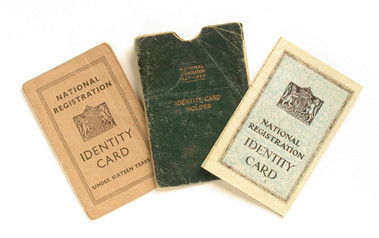
The architecture of the early internet was built on a foundation of casual authentication. Provided a user took basic steps to prevent automated abuse, such as registering with a pseudonym or avoiding malicious posting behaviors, platforms welcomed anonymous or pseudonymous engagement. Over the past decade, however, this model eroded under the dual pressures of an advertising-driven economic ecosystem and a rising tide of automated artificial intelligence agents. Because microtargeted advertising commands higher financial yields, platforms developed an acute commercial appetite for precise human identities.
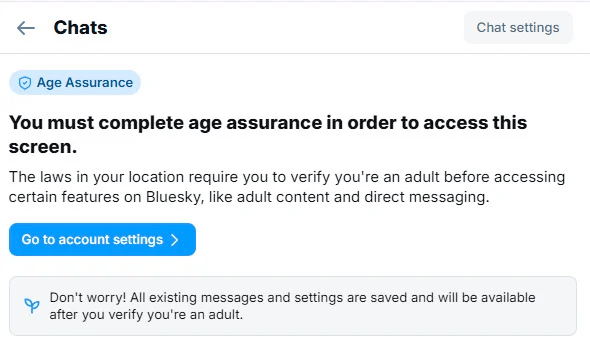
This commercial incentive merged with legislative initiatives aimed at safeguarding minors online. Laws requiring age verification before granting access to user-generated or age-restricted content have forced social media networks, messaging applications, and collaborative knowledge repositories to adopt verification measures. Platforms including Facebook, Bluesky, X, and Discord have increasingly integrated identity checks. Even Wikipedia has faced mounting pressure from regulatory frameworks like the U.K. Online Safety Act to alter its long-standing commitment to user anonymity.
When implemented poorly, routine identity checks relying on government-issued documentation risk establishing a centralized, state-or-corporate transcript of online activity. Although certain legislative frameworks incorporate data minimization principles—allowing operators to discard identification records immediately after processing—such provisions are neither mandatory nor uniformly applied. Consequently, privacy advocates warn of a future where browsing habits are permanently bound to legal names and physical addresses.
The Evolution of Anonymous Credentials
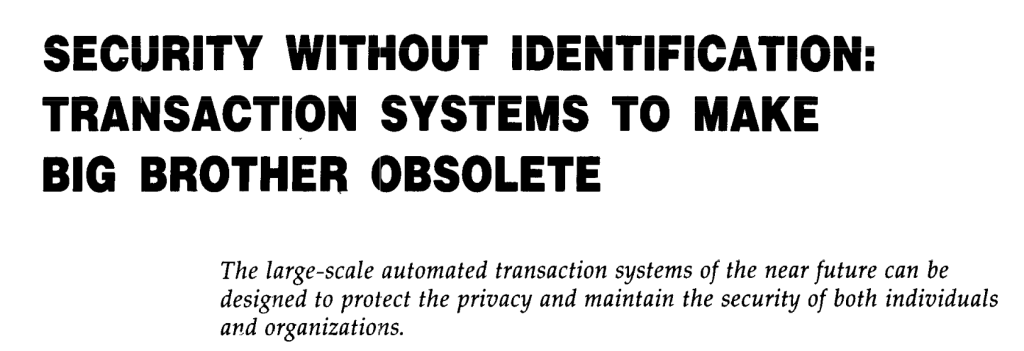
To navigate a landscape defined by mandatory age verification without sacrificing civil liberties, cryptographers have returned to foundational concepts first introduced in the 1980s. Long before the advent of modern web browsers or smartphones, cryptographer David Chaum recognized that electronic identification would eventually become routine, carrying severe implications for personal privacy. To address this, Chaum proposed the anonymous credential.
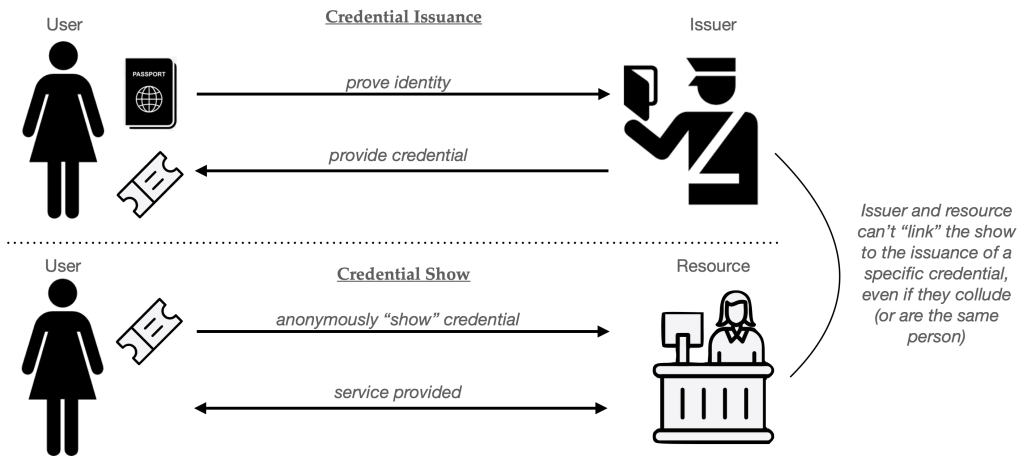
The fundamental objective of an anonymous credential is to decouple the issuance of a verification token from its subsequent usage. In a traditional non-anonymous authentication model, a user presents credentials directly tied to their real-world identity—such as a credit card or driver’s license—every time they access a restricted resource. This allows advertising networks and platform operators to track and link a user’s digital footprint across disparate sites.
Under Chaum’s model, the issuance phase may require an authority, such as a government Department of Motor Vehicles, to verify a user’s legal identity. However, the subsequent presentation, or "show" protocol, is engineered so that the verifying resource learns only that a valid credential has been presented. The resource cannot determine the specific identity of the user, nor can it link multiple presentations of the credential together. This mechanism allows individuals to blend into an anonymity set comprising all legitimate holders of the credential.
The Challenge of Credential Duplication
A primary hurdle in deploying digital anonymous credentials is the inherent property of digital information: unlike physical objects, digital files can be copied effortlessly. If a user’s credential were static and identical across all instances, a malicious actor who compromised a single device could duplicate the credential infinitely. This vulnerability would enable the operation of massive botnets or the widespread distribution of credentials to unauthorized individuals, bypassing the verification checks entirely.
In non-anonymous systems, platforms combat cloning through continuous authentication, monitoring login patterns for anomalies such as simultaneous geographic access. However, the strict privacy guarantees of anonymous credentials render such behavioral monitoring ineffective, as every presentation of a valid credential is mathematically indistinguishable from another. Consequently, robust anonymous credential frameworks must incorporate cryptographic safeguards to limit duplication without exposing user identities.
Single-Use Credentials and Blind Signatures
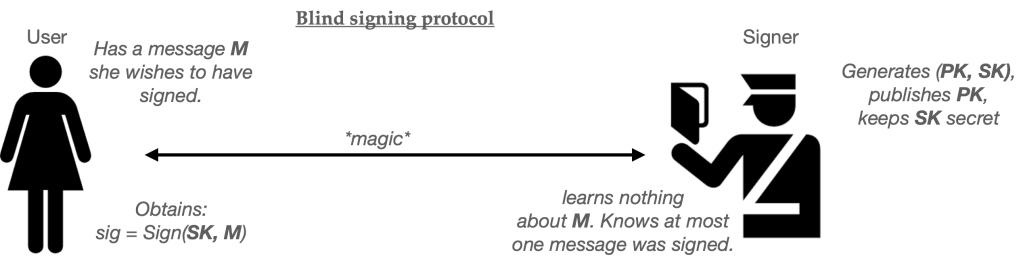
Early implementations of anonymous credentials relied on single-use models underpinned by blind signature schemes. Developed as a specialized form of digital signatures, blind signing allows a user to interact with an issuer in a manner where the issuer signs a message—such as a randomized serial number—without learning the content of that message.
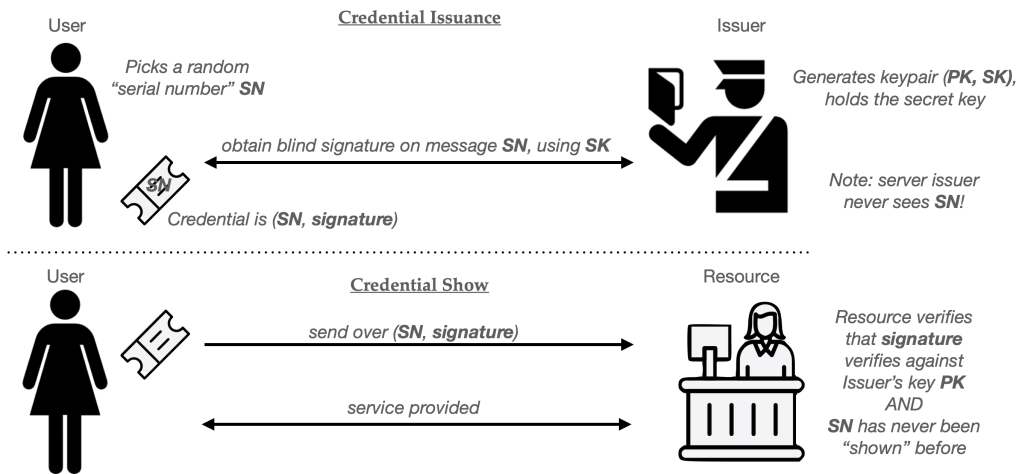
In this protocol, a user generates a unique serial number, blinds it, and transmits it to the issuer alongside proof of eligibility. The issuer signs the blinded token and returns it. The user unblinds the signature, resulting in a valid credential consisting of a serial number and a cryptographic signature from the issuer. When accessing a web resource, the user presents this pair. The resource verifies the signature against the issuer’s public key and checks its local database to ensure the serial number has not been previously redeemed.
While effective, single-use credentials present efficiency and scalability challenges. A user accessing a high-volume platform daily would need to acquire and expend thousands of credentials, imposing significant computational and network overhead. Furthermore, basic Chaumian credentials carry minimal information, often limited to a single binary assertion, such as confirming that a user is over a specific age.
Expressive Zero-Knowledge Credentials

To overcome the limitations of single-use tokens, modern cryptography utilizes zero-knowledge proofs (ZKPs). Zero-knowledge proofs enable a prover to convince a verifier that a statement is true without conveying any information beyond the absolute validity of the statement itself.
In the context of digital credentials, ZKPs allow a user to present a structured, digitally signed document—such as a mobile driver’s license—and prove complex assertions about its contents. For example, a user can mathematically demonstrate that their birthdate establishes an age greater than 21, that their residential ZIP code falls within a permitted geographic region, and that their credential was legitimately issued by a recognized government authority, all without revealing their home address, legal name, or exact birthdate.
Crucially, zero-knowledge credentials eliminate the need for single-use tokens by allowing the same underlying credential to be reused across numerous verification events without linking those events to one another or to the user’s real-world identity.

Mitigating Cloning in Reusable Systems
Because reusable credentials remain vulnerable to theft and cloning, modern architectures employ programmatic constraints to limit abuse. One established approach integrates pseudorandom functions (PRFs) into the zero-knowledge credential structure.
By embedding a secret key chosen by the user into the credential during the issuance phase, the system ensures that every time the credential is used, the user must compute a deterministic serial number based on an incremental counter or a temporal variable. If a credential is cloned and used beyond its permitted threshold—such as exceeding a maximum number of presentations per day—duplicate serial numbers inevitably appear in the verifier’s registry, triggering detection and revocation protocols without exposing the user’s identity during honest usage.
Similarly, systems incorporate explicit expiration timestamps and cryptographic revocation accumulators. Revocation mechanisms allow a resource to maintain a banlist of compromised serial numbers. During authentication, the user generates a zero-knowledge proof affirming that their credential’s serial number does not intersect with any entry on the banlist, maintaining privacy while enforcing platform accountability.
Industry Adoption and Future Implications
As standards bodies, browser vendors, and technology conglomerates work to operationalize these cryptographic primitives, the deployment of anonymous credentials is transitioning from theoretical research to practical implementation. Initiatives such as the IETF PrivacyPass standard and proprietary frameworks developed by major technology companies underscore a growing industry recognition that compliance with age-verification mandates cannot rely entirely on traditional, surveillance-heavy identity paradigms.
The broader implications of these developments remain profound. If deployed correctly, anonymous credentials offer a technical bulwark against pervasive digital tracking, ensuring that regulatory compliance does not necessitate the abolition of online privacy. However, the success of these systems depends heavily on hardware security integration, resistance to side-channel attacks, and widespread adoption by both legislative authorities and platform operators. As the digital landscape continues to evolve, the integration of zero-knowledge authentication will likely define the boundaries of civil liberties in the twenty-first century.

