
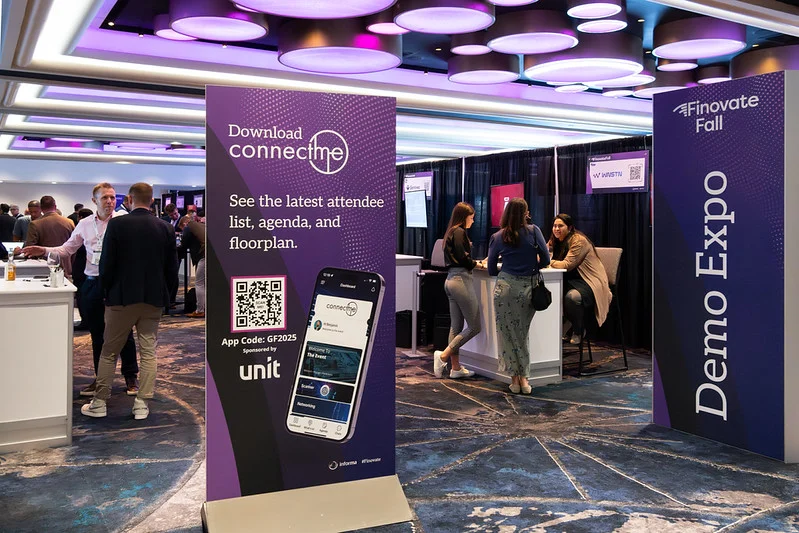
As the financial services industry approaches the commencement of FinovateFall 2026 on September 9 at the Marriott Marquis Times Square, excitement is building for what promises to be a pivotal gathering of the global fintech ecosystem. With registration nearing capacity, organizers are preparing to welcome over 2,000 senior-level decision-makers. This year’s event serves as a critical nexus for the intersection of traditional banking infrastructure and emerging technological disruption, featuring more than 1,000 delegates from major financial institutions and a significant contingent of over 300 leaders from credit unions and community banks.
The event is set to kick off with specialized pre-conference programming on September 8, focusing on the Leaders+ and Credit Union Spotlight tracks. These sessions are designed to address the unique regulatory, operational, and competitive pressures facing modern financial institutions. Following these sessions, the main conference will unfold over several days, characterized by a robust schedule of 72 live product demonstrations and a diverse array of keynote presentations and panel discussions involving industry experts, venture capitalists, and regulatory stakeholders.
Historical Context and Evolution of the Finovate Series
Finovate has long established itself as a benchmark for the fintech industry, acting as a launchpad for startups and a meeting place for established incumbents. Since its inception, the conference series has sought to strip away the jargon of financial technology and focus on practical, demonstrable solutions. By mandating a live, seven-minute demonstration format without the use of slide decks, the event forces companies to prove the functionality and viability of their platforms in real-time.
Over the past decade, the focus of these demonstrations has shifted dramatically. In the early years, the conversation centered heavily on basic digital banking portals and mobile wallet integration. By 2026, the thematic focus has pivoted toward the integration of generative artificial intelligence, the maturation of open banking ecosystems, and the urgent necessity for robust cybersecurity frameworks in an era of sophisticated digital fraud. This evolution reflects the broader shift in the financial sector, where technology is no longer a peripheral support function but the core driver of value proposition and customer retention.
The 2026 Landscape: Strategic Priorities for Financial Institutions
The presence of over 1,300 bank and credit union executives at this year’s event highlights the industry’s ongoing digital transformation. Data from the 2026 fiscal cycle indicates that financial institutions are prioritizing three main pillars: operational efficiency, hyper-personalization of the customer experience, and the modernization of legacy core banking systems.
The 72 companies scheduled to demo at FinovateFall 2026 have been selected based on their potential to address these specific pain points. Analysts note that for community banks and credit unions—which make up a significant portion of the attendee list—the challenge lies in balancing the high cost of innovation with the necessity of competing against digital-native neobanks. The event acts as a bridge, allowing these smaller institutions to evaluate scalable technology solutions that were previously accessible only to global tier-one banks.
Chronology of the Event
The event timeline is structured to facilitate high-impact networking and deep-dive technical sessions:
- September 8 (Pre-Conference Day): The Leaders+ track will host intimate roundtable discussions on executive strategy, while the Credit Union Spotlight will focus on member-centric digital transformation and collaborative fintech adoption.
- September 9 (Opening Day): The primary stage opens with a series of keynote addresses focused on the macroeconomic outlook for 2027 and the role of central bank digital currencies (CBDCs) in the retail landscape. The first block of live demos begins in the afternoon.
- September 10 (Core Program): This day features the bulk of the 72 demonstrations, split into categories such as "AI and Automation," "Wealth Management & Investing," and "Payments and Infrastructure."
- September 11 (Closing Sessions): The conference concludes with closing panels on the future of financial regulation and the ethical implementation of machine learning models, followed by final networking opportunities.
Analysis of Implications for the Financial Sector
The broader implications of FinovateFall 2026 extend beyond the individual product launches occurring on stage. The event serves as a bellwether for venture capital sentiment in the fintech space. After a period of cooling investment in 2024 and 2025, the 2026 market has seen a resurgence in interest toward "utility-first" fintech—companies that solve fundamental infrastructure problems rather than those focusing on speculative consumer engagement models.
Industry analysts suggest that the high volume of credit union and community bank attendance signifies a shift toward localized digital transformation. These institutions are increasingly moving away from "rip and replace" strategies for their core systems in favor of modular, API-first integrations that allow them to remain agile while maintaining regulatory compliance.
Furthermore, the emphasis on AI in this year’s agenda suggests that the industry is moving past the experimental phase of artificial intelligence. Financial institutions are now seeking concrete applications in credit underwriting, fraud detection, and automated customer service that can demonstrate a clear return on investment (ROI). This is a vital development, as stakeholders are under increased pressure to justify tech expenditures amidst persistent inflationary pressures.
Official Perspectives and Stakeholder Sentiment
While specific speakers are often kept under wraps until the opening, the sentiment from the organizers at Informa Connect remains one of cautious optimism. By fostering an environment where traditional financial institutions meet disruptive startups, the organizers facilitate a "co-opetition" model.
"The goal of FinovateFall has always been to remove the friction between innovation and implementation," an industry consultant noted. "By bringing these groups together, the conference helps ensure that the technology being built in the labs actually solves the problems experienced by the institutions on the ground."
The Marriott Marquis Times Square, serving as the venue, is expected to be a hive of activity. The venue choice underscores the event’s commitment to accessibility and its status as a central hub for the New York financial community. With the surge in demand for the event, organizers have implemented improved networking software to help attendees curate their schedules, ensuring that the 2,000 participants can efficiently identify the most relevant demos and panel sessions.
Preparing for the Conference: A Guide for Success
For delegates, success at FinovateFall 2026 requires a structured approach. With 72 demos occurring in rapid succession, attendees are advised to review the event mobile application well in advance. Identifying the specific technology verticals that align with their institutional goals—such as compliance automation or customer onboarding enhancements—is essential for avoiding "information overload."
Beyond the demos, the networking lounges and the evening receptions serve as the primary venues for high-level deal-making. Experienced attendees emphasize that the real value often lies in the "hallway conversations"—the exchange of experiences regarding the integration of new technologies into existing, often rigid, bank environments. As the industry looks toward the challenges of 2027, the networking facilitated by FinovateFall 2026 will likely prove as valuable as the technological innovations showcased on the main stage.
As the countdown reaches its final hours, the consensus is clear: the industry is moving toward a more integrated, efficient, and intelligent future. Whether these expectations are met will be determined by the quality of the interactions, the efficacy of the demonstrated products, and the ability of attendees to translate the insights gained in New York into actionable strategies for their organizations in the coming year.

