• Home
  • About Us
  • Contact Us
  • Cookies Policy
  • Disclaimer
  • DMCA
  • Privacy Policy
  • Terms and Conditions
Dr Crypton
Secure Your Future in Crypto
FinTech Innovations

CFTC Secures Temporary Restraining Order Against Arizona’s Criminal Case Against Prediction Market Kalshi

by admin January 28, 2026
written by admin

The legal battle between Arizona Attorney General Kris Mayes and the prediction market platform Kalshi has taken a significant turn, with the Commodity Futures Trading Commission (CFTC) successfully obtaining a temporary restraining order. This order effectively halts Arizona’s pursuit of criminal charges against Kalshi, a move the CFTC deems crucial to upholding federal regulatory authority and preventing a dangerous precedent.

The CFTC announced on Friday, April 11, 2026, that it had secured the restraining order, preventing the state of Arizona from proceeding with its criminal case. This intervention by the federal regulator underscores a broader conflict over jurisdiction and the classification of prediction markets, which operate in a complex regulatory gray area.

"Arizona’s decision to weaponize state criminal law against companies that comply with federal law sets a dangerous precedent, and the court’s order today sends a clear message that intimidation is not an acceptable tactic to circumvent federal law," stated CFTC Chairman Michael S. Selig in a press release. Selig, currently the sole commissioner on the five-member CFTC following his confirmation in December 2025 and the departure of former acting chair Caroline Pham, emphasized the CFTC’s commitment to protecting the integrity of federal oversight in financial markets.

Arizona Attorney General Kris Mayes had filed charges against Kalshi, accusing the company of operating an illegal gambling business within the state without the necessary licenses. This legal action marked the first instance of criminal charges being brought against a prediction market operator in the state. The CFTC’s restraining order arrives just days after a federal judge had initially allowed Arizona’s case to advance, according to reporting by Bloomberg.

The Regulatory Tightrope: Kalshi and the CFTC

Kalshi operates as a platform where users can trade contracts based on the outcomes of future events, ranging from political elections to economic indicators. The company has consistently maintained that its operations fall under the purview of federal commodity regulations, overseen by the CFTC, rather than state-level gambling laws. This distinction is critical, as commodity futures are regulated differently from traditional forms of gambling.

The CFTC, established by the Commodity Exchange Act, has the authority to regulate commodity derivatives markets in the United States. Kalshi has sought and, in some instances, received approval from the CFTC for its contracts, arguing that these are not bets but rather financial instruments whose value is tied to verifiable future events. This stance positions Kalshi as a regulated entity under federal law, which proponents argue preempts state attempts to regulate it as an unlicensed gambling operation.

A Developing Timeline of Legal Challenges

The legal troubles for Kalshi have been mounting in recent months. The initial criminal charges filed by Arizona in March 2026 signaled a significant escalation in the state’s efforts to curb the activities of prediction markets within its borders. Prior to the CFTC’s intervention, the case seemed to be gaining momentum at the state level.

The sequence of events leading to the temporary restraining order can be traced as follows:

Kalshi wins temporary pause in Arizona criminal case
  • March 2026: Arizona Attorney General Kris Mayes files criminal charges against Kalshi, alleging it operates an illegal gambling business. This marks the first such criminal action against a prediction market in the state.
  • Early April 2026: A federal judge in Arizona allows the state’s case to proceed, a decision that appeared to bolster Arizona’s legal position.
  • April 11, 2026: The CFTC announces it has obtained a temporary restraining order against Arizona, halting the state’s criminal prosecution of Kalshi. The CFTC argues that Kalshi’s operations are within its federal jurisdiction.
  • Simultaneously: The CFTC also initiates legal actions in Connecticut and Illinois, seeking to prevent similar state-level cases against prediction markets from moving forward.

This timeline highlights the swift and decisive action taken by the CFTC to assert its regulatory authority in the face of what it perceives as state overreach. The CFTC’s involvement suggests a broader strategy to standardize the regulatory treatment of prediction markets across different jurisdictions.

Supporting Data and Market Context

The prediction market industry has seen a surge in interest and activity, particularly in the wake of evolving technological capabilities and a growing appetite for alternative investment and information-gathering platforms. While precise figures for the overall market size of prediction markets are often proprietary and fluctuate, industry analysts have projected significant growth. For instance, some market research reports from late 2025 indicated a potential compound annual growth rate (CAGR) of over 15% for the global prediction market sector over the next five to seven years, driven by increasing institutional adoption and the development of more sophisticated trading platforms.

Kalshi, as one of the prominent players in this space, has experienced substantial trading volume. While specific daily or monthly trading volumes are not publicly disclosed in detail, the platform’s ability to attract a wide range of event contracts and user participation suggests a robust operational capacity. The company’s stated mission is to provide a transparent and regulated environment for individuals to "bet on the future," which it argues contributes to price discovery and information aggregation.

The core of the legal dispute often revolves around the definition of "gambling" versus "trading." State laws typically define gambling as betting on uncertain outcomes without an underlying economic interest or where the primary purpose is amusement or chance. In contrast, commodity trading involves financial instruments whose prices are determined by supply and demand, with the potential for profit or loss based on market movements and the anticipation of future events. The CFTC’s jurisdiction covers these financial instruments, aiming to prevent fraud, manipulation, and ensure market integrity.

Official Responses and Broader Implications

The CFTC’s intervention is a clear signal of its intent to maintain a unified federal approach to regulating prediction markets. Chairman Selig’s statement emphasizes the perceived danger of states using "criminal law" to circumvent federal regulations, a concern that resonates with businesses operating across multiple state lines. The CFTC’s position is that companies complying with federal regulations should not be subject to conflicting or overly restrictive state laws that could stifle innovation or create an uneven playing field.

While Attorney General Mayes has not yet issued a formal statement directly addressing the CFTC’s restraining order, her office’s initial actions suggest a firm belief that Kalshi’s activities constitute illegal gambling under Arizona law. The state’s perspective likely centers on consumer protection and the potential for predatory practices if such platforms are not subject to stringent licensing and oversight typically associated with gambling operations.

The CFTC’s action in Connecticut and Illinois further illustrates a pattern of federal preemption. By actively seeking to block similar state-level prosecutions, the CFTC is signaling its commitment to establishing a clear regulatory framework that prioritizes federal oversight. This approach aims to provide clarity for platforms like Kalshi and for investors participating in these markets.

Analysis of Implications

The CFTC’s temporary restraining order has several immediate and long-term implications:

  • Regulatory Clarity: The CFTC’s active involvement provides a degree of regulatory clarity, at least in the short term, for Kalshi and similar platforms. It reinforces the argument that these operations are financial markets subject to federal oversight, not state-level gambling.
  • Precedent Setting: The court’s order, if upheld, could set a significant precedent, making it more difficult for individual states to unilaterally regulate or criminalize prediction markets that are operating under federal CFTC guidelines. This could lead to a more centralized and consistent regulatory environment.
  • Industry Growth: A clearer and more stable regulatory landscape could foster greater investment and growth within the prediction market industry. Companies may feel more confident expanding their operations knowing they are primarily subject to federal regulations.
  • Inter-Agency Cooperation: The situation highlights the potential for friction between federal and state regulatory bodies. It also underscores the importance of clear lines of authority and, potentially, increased inter-agency dialogue to avoid such conflicts.
  • Future of Prediction Markets: The ongoing legal battles will continue to shape the future of prediction markets. The ultimate outcome could influence whether these platforms are viewed and regulated more akin to exchanges for financial derivatives or as a form of regulated gambling.

The CFTC’s successful procurement of the temporary restraining order represents a significant victory for Kalshi and a decisive assertion of federal regulatory power. As the legal proceedings continue, the outcome will be closely watched by the financial technology sector, regulators, and policymakers grappling with the evolving nature of digital markets and the complexities of jurisdictional authority in the United States. The case underscores the ongoing debate about how to classify and regulate innovative financial platforms that blur the lines between traditional finance and emerging technologies.

January 28, 2026 0 comment
0 FacebookTwitterPinterestEmail
FinTech Innovations

David’s Bridal Pioneers AI-Native Commerce, Revolutionizing the Wedding Planning Journey

by admin January 27, 2026
written by admin

In a move poised to redefine the landscape of online retail and wedding planning, David’s Bridal has launched an unprecedented integration allowing customers to discover, fall in love with, and purchase wedding dresses directly within conversational AI platforms like ChatGPT and Microsoft Copilot. This groundbreaking initiative bypasses traditional web browsing entirely, signaling a significant shift in how consumers engage with brands and complete transactions, particularly for complex, multi-decision purchases.

The strategic decision by David’s Bridal to embed its full end-to-end shopping experience within these AI chatbots is not merely an experiment but a direct response to evolving consumer behavior. As Chief Technology Officer Scott Saeger articulated in a recent interview, "This is not an experiment on our side at all. It’s where the demand is moving." This proactive stance places the bridal giant at the forefront of a nascent wave of AI-native commerce, offering a glimpse into the future of retail interactions.

The Evolving Wedding Planning Ecosystem

The traditional model of wedding planning, often characterized by a singular focus on a company’s website, has become increasingly fragmented and complex. Modern brides-to-be are no longer confined to a single digital destination. Instead, they navigate a vast ecosystem of decisions, encompassing everything from venue selection and photographer booking to floral arrangements and attire. This sprawling, often overwhelming, 300-decision project requires a more dynamic and integrated approach to planning.

Crucially, artificial intelligence has emerged not as a mere search engine replacement, but as an indispensable thought partner in this intricate process. Engaged individuals are now turning to AI tools like ChatGPT and Microsoft Copilot to ask nuanced questions that go beyond simple product searches. Queries such as "What should I be asking a caterer?", "How far in advance do I book a photographer?", or "What’s a realistic floral budget for 120 guests?" are becoming commonplace. These conversations reflect a growing reliance on AI for guidance, information gathering, and even ideation throughout the wedding planning journey.

David’s Bridal’s integration directly into these AI conversations allows a bride to articulate her vision, perhaps starting with "I want something romantic and garden-inspired," and seamlessly transition to viewing actual gowns that match that aesthetic, and ultimately making a purchase, all without ever leaving the conversational interface. This represents a dramatic compression of the traditional customer journey, transforming it from a series of clicks and redirects into a fluid, intent-driven dialogue.

A Foundation Built for AI: The "Aisle to Algorithm" Transformation

The technical prowess enabling this seamless AI integration is the result of years of strategic infrastructure development at David’s Bridal. CTO Scott Saeger describes this transformation as a deliberate shift from a traditional retailer to what he terms a "tech-driven marketplace and media company," underpinned by a philosophy he calls "aisle to algorithm."

At the heart of this transformation lies Pearl, David’s Bridal’s proprietary platform. This platform has been meticulously engineered to prepare the company’s extensive product data for AI consumption. Saeger emphasizes that simply pointing an AI at existing website data is insufficient for effective AI commerce. "There’s this perception that you can just point AI at your data and it’ll figure everything out. And that’s just not the case," he stated.

The success of AI-driven recommendations, particularly for a product as nuanced as a wedding dress, hinges on highly structured and meticulously tagged data. Every attribute—silhouette, fabric, neckline, price, and crucially, real-time availability—must be organized in a way that AI systems can readily interpret and leverage for recommendations. This foundational work in data architecture is what empowers the AI to surface the precise dress at the opportune moment within a natural conversation, leading to what Saeger terms "transactional AI." This is distinct from customer service chatbots; it is a fully integrated commerce experience embedded within a conversational flow, complete with live buy buttons that facilitate immediate purchases.

The Timeline of an AI-First Retail Strategy

The journey to this AI-native commerce capability for David’s Bridal has been a progressive evolution:

  • Early 2020s (Inferred): Recognizing the burgeoning influence of AI in consumer behavior and the increasing complexity of online decision-making, David’s Bridal leadership likely began strategizing a long-term digital transformation. This would have involved assessing current infrastructure and identifying key areas for modernization to support future technological advancements.
  • Mid-2020s (Ongoing Development): The company embarked on a significant overhaul of its technological backbone. This period saw the development and refinement of the proprietary "Pearl" platform, specifically designed to structure and enrich product data for AI compatibility. This involved substantial investment in data engineering, tagging, and integration capabilities. Simultaneously, the company likely began exploring partnerships and integrations with leading AI platforms.
  • Late 2023/Early 2024 (Pilot and Integration): David’s Bridal initiated pilot programs and deep integrations with conversational AI leaders such as OpenAI (ChatGPT) and Microsoft (Copilot). These integrations focused on embedding the full shopping funnel, from product discovery to transactional checkout, directly within the AI interfaces. Rigorous testing would have been conducted to ensure a seamless and reliable user experience.
  • Present Day (Full Launch): The full end-to-end shopping experience is now live within ChatGPT and Microsoft Copilot, marking a significant milestone in AI-native commerce for the retail sector. The company is actively communicating this shift and its implications for consumers and the broader industry.

Supporting Data and Industry Trends

The move by David’s Bridal is not occurring in a vacuum. Emerging data highlights a significant consumer appetite for AI-driven shopping experiences:

  • Consumer Preference for AI Environments: A recent survey indicated that 58% of users of AI platforms express a preference for shopping within these AI environments rather than traditional websites. This statistic underscores a tangible shift in consumer behavior and expectations.
  • Growth of Conversational Commerce: The broader trend of conversational commerce, where transactions occur through chat interfaces, has been steadily growing. AI chatbots are accelerating this trend by offering more sophisticated and personalized interactions.
  • AI’s Role in Decision Support: Research by Accenture found that 40% of consumers use AI for product research and recommendations, indicating its increasing role in the pre-purchase decision-making process.
  • The "Zero-Click" Future: Analysts predict a future where consumers can complete complex tasks, including purchases, with minimal or no direct interaction with a company’s proprietary website. David’s Bridal’s initiative is a concrete manifestation of this prediction.

Reactions and Implications for the Retail Sector

The implications of David’s Bridal’s pioneering move extend far beyond the bridal industry, serving as a critical proof point for the viability of AI-native commerce across retail.

"The next generation of brides, they’re not going to open up a web browser and type in a URL," Saeger emphasized. "They’re going to open up a conversation, describe what they want." This statement encapsulates the fundamental shift: from users actively seeking out brands to brands being discoverable and transactional within the platforms where consumers are already engaging in complex problem-solving.

For other retailers, this development raises critical questions about their own data readiness and digital strategy. The challenge is no longer whether to engage with AI platforms, but whether their data infrastructure is robust enough to provide a compelling and transactional experience. Retailers who have invested in structured, AI-ready data will be best positioned to capitalize on this evolving landscape.

The David’s Bridal model suggests that the friction inherent in traditional online shopping—the gap between initial intent and final purchase—can be significantly reduced. By compressing the entire journey into an intent-driven conversational thread, AI interfaces offer a more intuitive and efficient path to conversion.

In essence, David’s Bridal is not just selling dresses; it is demonstrating a forward-thinking approach to customer engagement and commerce. The company has effectively built the infrastructure for what can be described as "one-click wedding planning," a concept that moves from futuristic tagline to present-day reality. As Saeger succinctly put it, "When people ask me when we’ll be there, we’re already there." This bold assertion signals a new era where brands that proactively embrace and integrate with AI platforms will lead the charge in shaping the future of retail. The ability to seamlessly integrate product discovery, customer service, and transactional capabilities within a natural conversational interface is no longer a distant possibility but a present-day imperative for those looking to remain competitive in the digital marketplace.

January 27, 2026 0 comment
0 FacebookTwitterPinterestEmail
FinTech Innovations

FinovateSpring 2026 Spotlights Innovations in Risk, Compliance, and Governance for Modern Financial Institutions

by admin January 26, 2026
written by admin

FinovateSpring 2026 Spotlights Innovations in Risk, Compliance, and Governance for Modern Financial Institutions

The financial services landscape is undergoing a profound transformation, marked by escalating complexity and an ever-increasing demand for robust risk management, stringent compliance adherence, and effective governance. Once relegated to the background as administrative necessities, these functions have ascended to become pivotal drivers of operational success, competitive advantage, and scalable growth for both traditional banks and agile fintech firms. The confluence of evolving regulatory mandates, sophisticated fraud schemes, and intricate operational risks places financial institutions under relentless pressure to maintain stringent controls while simultaneously fostering innovation. Against this backdrop, FinovateSpring 2026 has emerged as a critical platform, showcasing a cohort of pioneering companies poised to help banks modernize their governance frameworks, streamline compliance processes, and enhance risk management across their entire organizations. This year’s event highlighted five innovative firms demonstrating proactive, automated, and scalable solutions designed to navigate the intricate challenges of the contemporary financial ecosystem.

The increasing complexity of financial services necessitates a fundamental shift in how institutions approach risk, compliance, and governance. No longer mere back-office afterthoughts, these areas are now integral to strategic decision-making, market positioning, and the ability to scale operations effectively. As regulatory scrutiny intensifies and the sophistication of financial crime grows, banks and fintechs are compelled to adopt more dynamic and technology-driven approaches to safeguarding their operations and customer trust. FinovateSpring 2026, held annually to showcase groundbreaking financial technology, provided a fertile ground for companies addressing these critical needs. The event brought together a curated selection of innovators, each offering distinct solutions to help financial entities not only meet but exceed the demanding requirements of the modern financial world.

Key Innovators Shaping the Future of Financial Risk Management and Compliance

This year’s FinovateSpring 2026 featured a compelling lineup of companies dedicated to transforming the operational backbone of financial institutions. Their solutions underscore a broader industry trend toward leveraging technology to automate, integrate, and elevate critical risk, compliance, and governance functions.

Five Fintechs Helping Banks Manage Risk, Compliance, and Governance

CRIF: Revolutionizing Lending Decisions with Data and Analytics

CRIF, a global leader in credit bureau services, analytics, and decisioning platforms, presented its comprehensive suite of tools designed to empower financial institutions with smarter, faster, and more transparent lending decisions. The company’s technology is engineered to enable banks and lenders to design, test, and deploy credit strategies with enhanced speed and precision, effectively merging data, advanced analytics, and governance into a unified operational framework.

Founded in 1988 and headquartered in Italy, CRIF boasts a long history of supporting the financial sector. Its platform distinguishes itself through a no-code strategy design interface, making sophisticated credit strategy development accessible to business users without requiring deep technical expertise. This democratization of strategy design is complemented by real-time simulation capabilities, allowing for immediate validation of key performance indicators (KPIs) against proposed strategies. Furthermore, CRIF integrates AI-powered agents that provide compliant and explainable decision-making, a critical feature in an increasingly regulated environment where transparency and auditability are paramount. By offering these advanced capabilities, CRIF assists banks, credit unions, fintechs, and lenders worldwide in modernizing their credit risk management practices while maintaining unwavering regulatory confidence. The company’s consistent presence and innovation at events like Finovate underscore its commitment to adapting to the evolving needs of the global lending market.

Rulebase: Automating Compliance Testing for Scalable Operations

Rulebase is at the forefront of scaling compliance through the automation of testing and quality assurance across a financial institution’s customer interactions and internal workflows. The company’s innovative platform offers continuous monitoring of activities, enabling the early detection of potential violations and the automatic generation of audit-ready evidence. This capability liberates compliance teams from the time-consuming and often error-prone nature of manual reviews and point-in-time checks, which are increasingly inadequate in today’s fast-paced financial environment.

Established in 2025 and based in New York, Rulebase represents a modern approach to embedding compliance directly into the fabric of daily operations. By significantly improving the speed and accuracy of compliance checks while concurrently mitigating regulatory risk, Rulebase empowers organizations to reallocate valuable resources towards high-value strategic activities without compromising adherence to regulatory standards. The platform’s focus on proactive identification and automated evidence gathering is crucial for financial institutions facing mounting compliance burdens and the need for demonstrable oversight. The company’s recent emergence and rapid adoption signal a strong market demand for such integrated compliance solutions.

Winnow: Streamlining Regulatory Guidance for Enhanced Efficiency

Winnow addresses the complexities of financial regulation by offering a centralized, user-friendly platform that simplifies and streamlines compliance. The company’s solution replaces fragmented manual research processes with a system that delivers tailored, attorney-reviewed regulatory guidance. This empowers organizations to rapidly comprehend and meet their compliance obligations, circumventing the significant time and cost typically associated with traditional methods of regulatory interpretation.

Five Fintechs Helping Banks Manage Risk, Compliance, and Governance

Founded in 2018 and headquartered in Anaheim, California, Winnow’s approach is designed to reduce complexity and enhance accuracy. This allows compliance teams to dedicate more time to strategic execution rather than wrestling with the intricacies of regulatory texts. In an environment where regulatory landscapes are constantly shifting, Winnow provides a vital pathway to staying compliant efficiently. The firm’s consistent growth and recognition at Finovate events highlight the enduring need for accessible and actionable regulatory intelligence. Their platform is particularly valuable for institutions operating across multiple jurisdictions or those dealing with rapidly evolving regulatory frameworks.

The Electronic Guardian: Securing and Organizing Critical Information for Legacy Planning

The Electronic Guardian offers a sophisticated digital repository solution designed to assist individuals and institutions in organizing, protecting, and transferring critical financial and personal information. Its flagship platform, "The Coop," consolidates essential documents and assets into a centralized, secure system. This system effectively transforms into a comprehensive estate inventory, thereby supporting robust legacy planning and ensuring asset continuity for future generations.

Launched in 2019 and based in Pittsburgh, The Electronic Guardian emphasizes advanced security features, including private encryption and "at rest" recoverability. These measures guarantee that sensitive information remains both highly secure and readily accessible precisely when it is needed most. The platform’s utility extends beyond individual users; it provides banks, credit unions, and insurance providers with a valuable tool to offer added client services. By facilitating estate organization and long-term asset protection, The Electronic Guardian helps financial partners enhance their value proposition and deepen client relationships by being associated with security and meticulous planning. The increasing emphasis on digital estate planning makes this solution particularly relevant.

Model IQ by Kevin D. Oden & Associates: Automating Model Risk Management for Regulatory Adherence

Model IQ, developed by Kevin D. Oden & Associates, is an automated platform specifically engineered to help financial institutions effectively manage model risk and adhere to stringent regulatory requirements. Developed by quantitative experts, the solution brings structure, speed, and consistency to the model risk management process, ensuring compliance with key guidelines such as SR 11-7, FDIC, and NCUA regulations.

Founded in 2018 and headquartered in San Francisco, Model IQ automates the entire model lifecycle. This comprehensive automation accelerates review timelines, enhances accuracy, and significantly improves audit readiness. The platform caters to a wide spectrum of financial institutions, from community credit unions to regional banks and agile fintechs, offering a scalable and efficient approach to governance in an industry that is increasingly reliant on complex quantitative models. As artificial intelligence and machine learning become more pervasive in financial decision-making, the demand for robust model risk management tools like Model IQ is set to surge.

Five Fintechs Helping Banks Manage Risk, Compliance, and Governance

The Imperative for Modernizing Risk, Compliance, and Governance

The critical functions of risk management, compliance, and governance are fundamental to the sustained success and scalability of any bank. As financial institutions increasingly embrace artificial intelligence, expand their digital service channels, and navigate increasingly intricate regulatory landscapes, the volume and velocity of associated risks have escalated to a point where traditional manual processes and siloed systems are no longer sufficient.

Platforms that offer automated compliance testing, enhance the transparency of decision-making processes, and streamline model risk management provide financial institutions with a strategic advantage. They enable banks to not only stay ahead of evolving regulatory expectations but also to operate with greater efficiency. Crucially, these technological advancements significantly reduce the operational burden on internal teams, freeing them to focus on more strategic and value-added initiatives.

For end-users, having a secure and organized place to store and manage their vital financial and personal documents is paramount for both security and overall organization. Financial institutions that proactively offer tools like The Electronic Guardian’s "The Coop" as a value-added service can cultivate new revenue streams. More importantly, they can foster deeper client loyalty by reinforcing their image as trusted partners synonymous with safety and security. This integration of client-centric solutions into core banking offerings represents a significant opportunity for differentiation and customer retention in a competitive market. The insights presented at FinovateSpring 2026 clearly indicate a future where operational integrity and client trust are inextricably linked through technological innovation in these core areas.

Broader Impact and Future Implications

Five Fintechs Helping Banks Manage Risk, Compliance, and Governance

The innovations showcased at FinovateSpring 2026 underscore a significant trend: the elevation of risk, compliance, and governance from operational necessities to strategic imperatives. As financial institutions grapple with the dual challenges of digital transformation and heightened regulatory scrutiny, the solutions presented offer a glimpse into a more efficient, transparent, and secure future.

The widespread adoption of AI and machine learning in financial services, while promising immense benefits in terms of efficiency and customer experience, also introduces new dimensions of risk, particularly concerning model bias, data privacy, and explainability. Companies like Model IQ are directly addressing this by providing structured frameworks for managing model risk, ensuring that the algorithms driving financial decisions are robust, compliant, and auditable. This focus on explainable AI and transparent decision-making is not just a regulatory requirement but a fundamental building block for maintaining customer trust in an increasingly automated world.

Furthermore, the growing sophistication of cyber threats and financial fraud necessitates continuous vigilance and adaptive security measures. Solutions that automate compliance testing and provide real-time monitoring, such as those offered by Rulebase, are crucial for identifying and mitigating risks before they can escalate. This proactive stance is far more cost-effective and less damaging than reacting to breaches or regulatory penalties.

The emphasis on streamlining regulatory guidance, as exemplified by Winnow, is vital for navigating the fragmented and dynamic global regulatory landscape. Financial institutions operating across multiple jurisdictions must be able to quickly and accurately interpret and implement diverse compliance requirements. Tools that consolidate and clarify this information empower legal and compliance teams to be more effective and less resource-intensive.

The inclusion of solutions focused on personal financial organization and estate planning, like The Electronic Guardian’s "The Coop," highlights a broader understanding of client needs. Financial institutions are increasingly recognizing that their role extends beyond transactional services to encompass holistic financial well-being and security for their clients and their families. Offering such services not only adds tangible value but also creates deeper, more enduring relationships.

Five Fintechs Helping Banks Manage Risk, Compliance, and Governance

In conclusion, FinovateSpring 2026 served as a powerful testament to the ongoing evolution of the financial technology sector. The companies featured are not merely offering incremental improvements; they are driving fundamental shifts in how financial institutions manage risk, ensure compliance, and govern their operations. The collective impact of these innovations points towards a future where financial services are more resilient, more trustworthy, and better equipped to serve the complex needs of individuals and businesses in the digital age. The strategic integration of these advanced technologies will be critical for financial institutions seeking to thrive in an increasingly challenging and dynamic global market.

Photo by Ilkauri Scheer

January 26, 2026 0 comment
0 FacebookTwitterPinterestEmail
Cryptography & Privacy

WhatsApp Encryption Under Fire: Lawsuit Alleges Meta Can Read User Messages Amidst Growing Scrutiny

by admin January 25, 2026
written by admin

The digital landscape has been abuzz with extraordinary claims regarding the security of WhatsApp, one of the world’s most ubiquitous messaging applications. While typically the conversation surrounding encryption apps revolves around concerns of them being too secure, recent developments have flipped the script, introducing a wave of allegations suggesting the opposite: that WhatsApp may not be as secure as it claims. These claims, amplified by prominent tech figures and now reportedly under investigation by U.S. authorities, have cast a spotlight on Meta’s end-to-end encryption protocols and the trust users place in them.

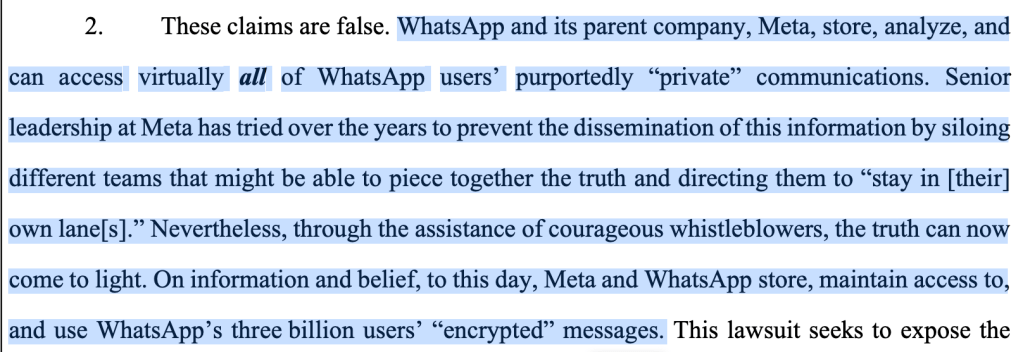
The controversy ignited with the filing of a class-action lawsuit by the prominent law firm Quinn Emanuel. On behalf of several plaintiffs, the suit challenges WhatsApp’s assertion of providing end-to-end encryption (E2EE) for its users’ private communications. The core allegation, though phrased in legalistic terms, suggests that user data is not as secure as advertised, with implications that Meta, WhatsApp’s parent company, might possess the means to access private conversations. While the lawsuit does not explicitly state that messages are accessible via a special terminal on Mark Zuckerberg’s desk, the implication of a fundamental breach in encryption is stark.

This legal challenge has quickly transcended the courtroom, gaining significant traction online. High-profile figures such as Elon Musk and Pavel Durov, both of whom lead competing messaging services, have publicly engaged with the allegations, bringing further attention to the matter. This surge of interest has prompted reports from major news outlets, including Bloomberg, indicating that U.S. authorities have initiated an investigation into Meta based on these claims. The weight attributed to this investigation often hinges on perceptions of the current administration’s approach to technology oversight.

The Genesis of the Allegations: A Class-Action Lawsuit

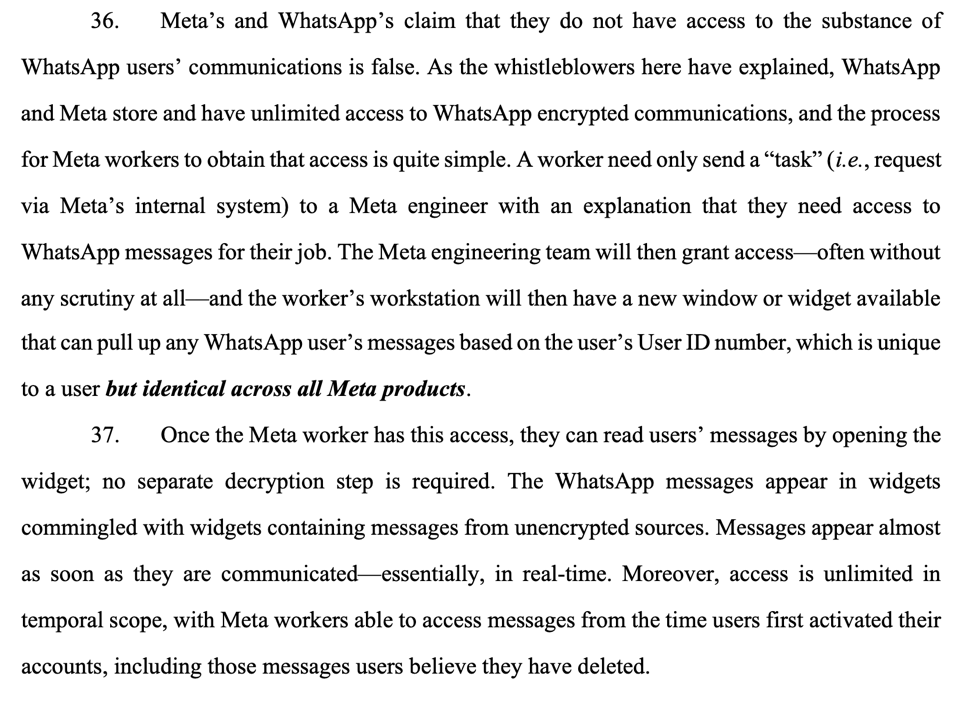
The class-action lawsuit, a critical document in understanding the claims, was formally lodged by Quinn Emanuel on behalf of multiple plaintiffs. At its heart, the complaint contends that despite WhatsApp’s public declarations of employing end-to-end encryption to safeguard user privacy, the private data of all WhatsApp users is purportedly accessible through a mechanism described as a "special terminal." While the precise technical details within the complaint are subject to legal interpretation, the overarching assertion is that the promised encryption is fundamentally compromised.

WhatsApp Encryption, a Lawsuit, and a Lot of Noise

The legal filing, however, has been characterized by a lack of concrete, independently verifiable evidence to substantiate these sweeping claims. Nevertheless, the allegations have resonated widely across social media platforms and tech circles. This amplification has been notably driven by individuals with vested interests in alternative messaging platforms, leading to a polarized online discourse.

Timeline of Developments:

  • January 27, 2026: A class-action lawsuit is filed by Quinn Emanuel on behalf of several plaintiffs, alleging that WhatsApp’s end-to-end encryption is compromised.
  • Late January 2026: Reports emerge from various media outlets, including Bloomberg, stating that U.S. authorities have begun investigating Meta in relation to these allegations.
  • Late January – Early February 2026: Prominent tech figures, including Elon Musk and Pavel Durov, publicly comment on the allegations, contributing to the widespread dissemination of the claims.
  • Early February 2026: The cryptographic engineering community begins to dissect the allegations, providing technical analyses and context to the public discourse.

Understanding End-to-End Encryption and WhatsApp’s Implementation

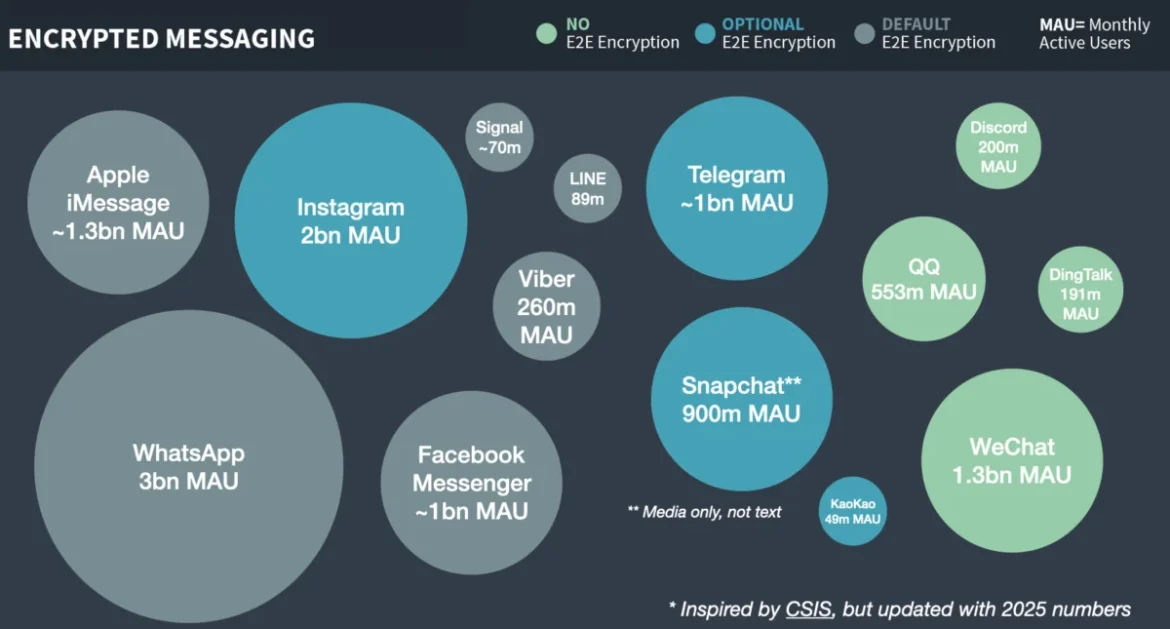
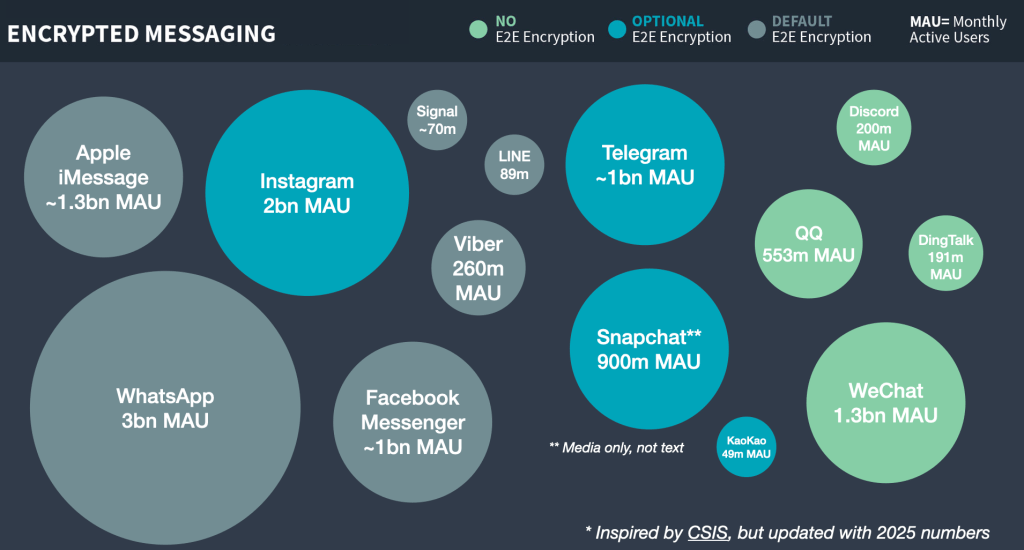
To grasp the gravity of the allegations, it’s essential to understand the principles of end-to-end encryption and how WhatsApp implements it. Instant messaging, a technology dating back decades, has evolved significantly, primarily in terms of scale and security. Modern messaging applications like WhatsApp operate on a colossal scale, serving billions of users globally. As of early 2026, WhatsApp boasts over three billion monthly active users, representing a significant portion of the world’s internet-connected population. In numerous regions, WhatsApp has become the primary mode of communication, often surpassing traditional phone calls.

The inherent challenge with such massive scale is the potential for equally vast data collection. When a message is sent via WhatsApp, it is routed through Meta’s servers. Traditionally, this server-side handling of messages, without robust encryption, could allow for extensive real-time data collection and long-term storage. The risks are manifold: data could be exposed to hackers, state-sponsored actors, or even accessed by governments compelling the platform provider.

In response to these concerns, WhatsApp’s founders, Jan Koum and Brian Acton, adopted a stringent approach to security. Following Meta’s acquisition in 2014, the app began a phased rollout of end-to-end encryption, fundamentally based on the Signal protocol. This design architecture aims to ensure that all messages transmitted through Meta/WhatsApp infrastructure are encrypted both during transit and while stored on Meta’s servers. The critical element of E2EE is that the decryption keys are exclusively held on the user’s device, theoretically preventing even Meta, or any entity compromising Meta’s servers, from accessing the message content.

WhatsApp Encryption, a Lawsuit, and a Lot of Noise

The adoption of E2EE by WhatsApp was a watershed moment, given its enormous user base. This implementation has significant implications: it prevents Meta from utilizing chat content for advertising or AI training purposes. Simultaneously, it has generated considerable apprehension among governments worldwide, who perceive E2EE as an impediment to lawful access to communications. This tension between user privacy and government access has been a recurring theme in the digital age. Mark Zuckerberg, influenced by Koum and Acton, has since championed the expansion of encryption across Meta’s product suite, including Facebook Messenger and Instagram Direct Messages.

However, this commitment to encryption has not been without its challenges. Meta has faced substantial political friction with governments in the U.S., UK, Australia, India, and the EU. These entities have expressed concerns about the potential for Meta to maintain vast repositories of messages inaccessible even with a warrant. In 2019, a multi-government "open letter" signed by U.S. Attorney General William Barr urged Facebook to refrain from expanding E2EE without incorporating "lawful access" mechanisms.

Can WhatsApp Truly Be Considered Encrypted? Examining the Backdoor Allegations

The core of the current controversy hinges on whether WhatsApp’s encryption is genuinely robust or if a clandestine "backdoor" exists, enabling Meta to secretly exfiltrate message data or decryption keys. The technical reality of E2EE is that the encryption process is executed on the user’s device. This means that, in principle, only the communicating parties possess the necessary keys. However, a critical caveat arises: the software running on these devices is developed by Meta.

WhatsApp’s application code is closed-source, meaning its source code is not publicly available for independent review. This lack of transparency prevents external security experts from verifying the integrity of the encryption implementation or confirming its existence. Unlike open-source applications like Signal, users cannot independently compile their own versions of WhatsApp to compare against official releases, thereby ensuring the absence of malicious code. While Meta claims to share its code with external security reviewers, it does not engage in routine public security audits. This practice, while common for commercial applications, necessitates a degree of user trust that the application is not deceiving its user base.

Despite the closed-source nature, the question remains: could WhatsApp be deliberately circumventing its own encryption protocols? The author, with over 15 years of experience in end-to-end encryption systems, posits that if such a backdoor were implemented, it would be highly detectable. The process of encrypting messages occurs on the client application. If the lawsuit’s claims are accurate, Meta would have had to modify the WhatsApp application to upload plaintext data or encryption keys from the user’s message database to Meta’s infrastructure. Such a widespread and consistent exfiltration of data, affecting nearly all users and every message, would likely manifest as a detectable anomaly.

WhatsApp Encryption, a Lawsuit, and a Lot of Noise

Although WhatsApp’s source code is not public, historical versions of its compiled applications are available for download. These can be decompiled and analyzed using specialized tools. Security researchers have, in fact, undertaken such reverse-engineering efforts on various parts of the WhatsApp application on multiple occasions. The author argues that if a deliberate breach of encryption were occurring on a mass scale, the evidence would almost certainly be present within the application’s code. Committing such a "crime" in a forensically detectable manner would be a strategic misstep.

Addressing Common Misconceptions and Nuances

The discourse surrounding WhatsApp’s encryption has also seen discussions about apparent loopholes. Some online commenters have highlighted specific scenarios where E2EE might not apply, such as business communications. When users engage in conversations with businesses via WhatsApp, the encryption model can differ, and these communications are often explicitly excluded from E2EE guarantees by both WhatsApp and the lawsuit itself. These exceptions are clearly articulated in WhatsApp’s privacy policies and FAQs.

Another area of concern involves message backups. Users often opt to back up their chat history to cloud services to prevent data loss. However, if these cloud backups are not themselves encrypted, they can represent a vulnerability. WhatsApp’s backup system is described as complex, offering different choices for users regarding how their data is stored and protected.

More recently, WhatsApp has integrated AI features. If users opt into certain AI tools, such as message summarization or writing assistance, some content may be processed off-device using a system called "Private Processing," which leverages Trusted Execution Environments (TEEs). While WhatsApp maintains that this capability should not expose plaintext data to Meta, these features are relatively new and postdate the period relevant to the lawsuit’s allegations.

It is crucial to distinguish these nuanced exceptions and technical implementations from the core allegations of the lawsuit. The lawsuit is not merely pointing to standard data handling practices or known limitations of E2EE. Instead, it alleges a deliberate and extensive deception regarding the fundamental security of user communications.

WhatsApp Encryption, a Lawsuit, and a Lot of Noise

The Principle of Trust in the Digital Age

In essence, the debate over WhatsApp’s encryption boils down to trust. Cryptography, at its best, doesn’t eliminate the need for trust; it extends it. It allows users to anchor their trust in a verifiable entity—be it a device, a piece of software, or a protocol—and then project that trust across potentially insecure networks. This enables private communication even when interacting with entities that might have data-hungry intentions.

The foundational question is not whether to trust, but whom and what to trust. The allegations against WhatsApp represent a challenge to the integrity of one of the largest technology platforms globally. While the absence of concrete evidence leaves room for skepticism, the decision to trust WhatsApp, in the absence of proof to the contrary, allows billions to communicate seamlessly.

For individuals who find this level of trust untenable, alternative solutions exist. The author recommends migrating to messaging applications with more transparent and auditable security practices, such as Signal, which offers open-source code and a demonstrably strong commitment to user privacy.

Potential Implications and Broader Context

Should the allegations in the lawsuit be substantiated, the ramifications would be profound. It would represent one of the most significant corporate deceptions in the history of technology, akin to major historical scandals. This would not only shake user confidence in WhatsApp but also cast a long shadow over Meta’s broader privacy commitments and its approach to safeguarding user data across all its platforms.

WhatsApp Encryption, a Lawsuit, and a Lot of Noise

Furthermore, an official investigation by U.S. authorities, coupled with a potential legal finding against Meta, could lead to significant regulatory scrutiny. This could prompt stricter oversight of encryption implementation by major tech companies, potentially reshaping industry standards and user expectations regarding digital privacy. The balance between national security interests, law enforcement needs, and individual privacy rights would be intensely re-examined.

The current situation underscores the inherent complexities of digital security and privacy in an era dominated by large technology conglomerates. While end-to-end encryption offers a powerful tool for protecting user communications, its effectiveness ultimately relies on the integrity of its implementation and the trust users place in the providers. As this story unfolds, it serves as a critical reminder for users to remain informed about the technologies they use and to critically evaluate the privacy claims made by their digital service providers. The ongoing scrutiny of WhatsApp’s encryption practices will undoubtedly shape future discussions about data security, corporate accountability, and the very nature of trust in the digital age.

January 25, 2026 0 comment
0 FacebookTwitterPinterestEmail
Web3 & DApps

Circle Explores Native Token for Arc Blockchain, Signaling Shift to Proof-of-Stake and Enhanced Governance

by admin January 25, 2026
written by admin

Circle CEO Jeremy Allaire revealed on April 14, 2026, during a company event in Seoul, that the prominent stablecoin issuer is actively investigating the development of a native token for its Arc Network. This move signifies a pivotal strategic exploration for the layer-1 blockchain, designed to underpin the burgeoning ecosystem of stablecoin-centric financial applications. The proposed token is envisioned to be instrumental in establishing robust governance mechanisms, incentivizing network participation, fostering economic alignment among stakeholders, and ultimately facilitating a transition from its current architecture to a proof-of-stake consensus model over time. This announcement, made to a gathering of financial partners and developers, marks a potentially transformative step for Circle, building upon the foundational success of its USD Coin (USDC) stablecoin.

Arc Network: An Economic Operating System for Finance

Arc Network has been meticulously engineered by Circle to function as an "economic operating system" specifically tailored for financial applications. Its core design principles emphasize deterministic transaction finality, ensuring predictable and timely settlement of operations. A key differentiator is the implementation of USDC-denominated gas fees, which aims to simplify cost management and predictability for users operating within the stablecoin economy. Furthermore, Arc incorporates compliant privacy features, a crucial element for institutional adoption, designed to meet the stringent regulatory and operational requirements of traditional financial workflows.

The public testnet of the Arc Network was launched in October 2025, garnering significant early traction and validating its potential. The network has already attracted a substantial cohort of over 100 institutional participants. This impressive list includes industry heavyweights such as BlackRock, Visa, Goldman Sachs, and Amazon Web Services, underscoring the perceived value and strategic importance of Arc within the broader financial technology landscape. While a specific date for the mainnet beta launch has not yet been finalized, Allaire reaffirmed that it remains on track for sometime in 2026, a timeline eagerly anticipated by its growing community of developers and partners.

Tokenomics and Governance: A Decentralized Future for Arc

The exploration of a native Arc token is driven by a clear vision for enhanced decentralization and community involvement. The token, currently in its nascent exploratory phase, is anticipated to serve as a multifaceted tool for governance and coordination across the Arc ecosystem. This would encompass applications built on the network, the validators responsible for securing it, and the broader infrastructure partners contributing to its growth.

A fundamental aspect of this proposed token is its role in enabling a transition to a proof-of-stake (PoS) consensus mechanism. In a PoS model, validators would be required to stake the native token to participate in the network’s consensus process and secure transactions. This would represent a significant architectural shift from Arc’s current operational model, moving towards a more energy-efficient and scalable consensus paradigm that has become the standard for many leading layer-1 blockchains. This transition is expected to bolster the network’s security, decentralization, and overall robustness, aligning it with industry best practices.

Strategic Implications and Market Reaction

Jeremy Allaire framed the potential introduction of the Arc token as Circle’s most consequential platform move since the inception of USDC. This statement highlights the strategic weight Circle is placing on the Arc Network and its native token as a key pillar of its future growth and market positioning. The implications for Circle are far-reaching, potentially solidifying its role not just as a stablecoin issuer but as a foundational infrastructure provider for the decentralized finance (DeFi) sector.

The market’s initial reaction to the news was positive. Shares of Circle (CRCL) experienced an approximate 10% increase on the day of the announcement, reflecting investor confidence in the company’s strategic direction and its ability to innovate within the rapidly evolving blockchain space. This uptick suggests that the market views the exploration of a native token and a move to proof-of-stake as a forward-thinking strategy that could unlock new value and expand Circle’s influence.

More specific details regarding the token’s economics, supply, distribution, and utility are expected to be unveiled by Circle in the lead-up to the Arc Network’s mainnet launch. This phased approach to disclosure allows for thorough development, community feedback, and regulatory consideration.

Background and Context: The Evolving Blockchain Landscape

The announcement from Circle comes at a time of significant evolution and maturation within the blockchain and cryptocurrency industry. Layer-1 blockchains, the foundational infrastructure upon which decentralized applications are built, are increasingly focusing on scalability, security, and decentralization. The shift towards proof-of-stake consensus, pioneered by networks like Ethereum, has become a dominant trend due to its perceived advantages in energy efficiency and scalability compared to proof-of-work systems.

Circle’s existing success with USDC, a fully-backed stablecoin pegged to the U.S. dollar, has positioned it as a trusted entity within the digital asset space. The development of Arc Network represents a strategic diversification and expansion of its business model, moving beyond stablecoin issuance to actively building and governing a critical piece of blockchain infrastructure. The decision to focus Arc on financial applications and institutional workflows reflects a deliberate strategy to capture a significant segment of the market that is increasingly exploring the use of blockchain technology for traditional financial services.

The involvement of major financial institutions like BlackRock and Visa in the Arc testnet is a strong indicator of the growing institutional interest in regulated and compliant blockchain solutions. These participants are likely looking for the predictable transaction finality, stable fee structures (USDC-denominated gas), and enhanced privacy features that Arc aims to provide. Their participation also suggests a level of trust in Circle’s ability to navigate the complex regulatory landscape and deliver a robust platform.

Chronology of Arc Network Development

  • October 2025: Circle launches the public testnet for the Arc Network. This phase is crucial for testing the network’s performance, security, and core functionalities with real-world applications and a diverse set of participants.
  • April 14, 2026: During an event in Seoul, Circle CEO Jeremy Allaire publicly confirms the company’s exploration of a native token for the Arc Network, outlining its intended roles in governance and the transition to proof-of-stake.
  • 2026 (Specific Date TBD): Circle aims to launch the mainnet beta of the Arc Network. This marks a significant milestone, transitioning the network from a testing environment to a production-ready state, albeit still in a beta phase.
  • Ahead of Mainnet Launch: Circle is expected to release more detailed information about the Arc token, including its tokenomics and specific utility.

Broader Impact and Implications for the Financial Ecosystem

The introduction of a native token for the Arc Network and its potential transition to proof-of-stake could have several significant implications for the broader financial ecosystem:

  • Enhanced Decentralization of Circle’s Infrastructure: By introducing a governance token, Circle aims to distribute decision-making power and community involvement in the evolution of the Arc Network, moving towards a more decentralized governance model.
  • Increased Utility for USDC: A native token that facilitates stablecoin transactions and operations on Arc could further embed USDC into the fabric of decentralized finance, driving its adoption and utility.
  • New Opportunities for Developers and Institutions: The governance and incentive mechanisms of a native token could unlock new avenues for developers to build innovative applications and for institutions to participate more actively in the network’s growth and direction.
  • Competitive Landscape: This strategic move positions Circle as a more direct competitor to other layer-1 blockchains that offer similar functionalities and are actively seeking institutional adoption.
  • Regulatory Clarity: Circle’s approach, emphasizing compliant privacy features and institutional workflows, suggests a commitment to operating within existing regulatory frameworks, which is crucial for broader adoption by traditional financial entities.

The exploration of a native token by Circle for its Arc Network represents a significant strategic pivot, aiming to deepen its involvement in the blockchain infrastructure space. By focusing on governance, economic alignment, and a move towards a more sustainable and scalable proof-of-stake consensus, Circle is signaling its ambition to build a foundational layer for the future of decentralized finance, particularly for institutional use cases. The coming months will be critical as more details emerge and the Arc Network progresses towards its mainnet launch, potentially reshaping the competitive landscape of layer-1 blockchains and further solidifying Circle’s influence in the digital asset economy.

January 25, 2026 0 comment
0 FacebookTwitterPinterestEmail
Web3 & DApps

Web3 Fundraising Reaches Record Highs in Q3 2025 Driven by Institutional Capital and Infrastructure Focus

by admin January 24, 2026
written by admin

Web3 fundraising in the third quarter of 2025 surged to a new cycle peak, with nearly $22 billion deployed across all investment stages and 376 disclosed deals. This represents a significant increase from the previous quarter, indicating a substantial inflow of capital that outpaced the growth in the number of deals. This trend suggests that the market was primarily driven by larger investments rather than a broad surge in new activity. The quarter’s performance builds upon the "conviction over coverage" narrative observed in the first half of 2025, but with a notable distinction: the maturation and operationalization of key institutional channels like Exchange-Traded Funds (ETFs), Digital Asset Treasuries (DATs), tokenization platforms, and settlement rails have directly influenced the funding landscape. This strategic concentration of capital within institutional-grade infrastructure marks Q3 2025 as a pivotal period, differentiating it from earlier quarters of the year.

Market Overview: A Wave of Capital Concentration

The third quarter of 2025 witnessed a dramatic escalation in capital deployment, with a 113% quarter-over-quarter increase, soaring from $10.2 billion in Q2 2025 to $21.7 billion in Q3 2025. While the number of disclosed deals saw a more modest 22% rise, from 309 to 376, this disparity highlights a key characteristic of the period: capital growth significantly outstripped deal volume growth. This phenomenon resulted in a record amount of capital raised, surpassing even the peak bull market years of 2021 and 2022, yet without a corresponding expansion in the breadth of investor participation.

Messari’s analysis of Q3 2025 corroborates this observation, noting a pronounced skew towards larger transactions and public market routes, such as the listings of Bullish and Figure. The ten largest funding rounds alone accounted for approximately half of the total quarterly fundraising, underscoring that the renewed capital inflow has not yet translated into a widespread recovery in venture appetite across the board.

Web3 Fundraising in 3Q25: Quiet Integration, Loud Numbers

An interesting divergence in the data for Q3 2025 was the increase in disclosed deals even as the total number of deals across all stages saw a decline. Typically, an increase in disclosed deals correlates with larger, later-stage funding rounds, which are more likely to be made public. Conversely, smaller, early-stage rounds often remain private. This trend in Q3 2025 reinforces the overarching pattern of capital becoming more visible due to its increased concentration in specific, mature segments of the market.

The Institutional Architecture of Web3 Capital

The deepening integration of institutional finance into the Web3 ecosystem was a defining feature of Q3 2025. Messari’s "Crypto x TradFi Review" revealed that ETH-focused ETFs attracted approximately $8.7 billion in Q3 2025, surpassing even BTC-focused funds. The Assets Under Management (AUM) for ETH ETFs saw a substantial surge of around 170% quarter-over-quarter, reaching $27.4 billion.

Simultaneously, Digital Asset Treasuries (DATs) captured an estimated 3.8% of the total ETH supply during the quarter, signaling a significant shift in corporate treasury strategies. Enterprises, including major banks and payment networks, are transitioning tokenization and settlement use cases from experimental phases into production. Notable examples include JPMorgan’s Kinexys network, which went live for tokenized repurchase agreement settlement, and SWIFT’s expansion of its tokenization trials with leading global custodians like BNY Mellon, Citi, Clearstream, Euroclear, and Northern Trust. These trials are testing cross-network settlement of bonds and fund shares on-chain. Furthermore, Visa Direct began processing cross-border payments using USDC, demonstrating the growing utility of stablecoins in traditional financial channels. This robust institutional demand is a primary driver behind the larger funding rounds observed in later-stage projects and infrastructure development.

Policy Developments Shaping Web3 Venture Capital

Regulatory and policy developments in 2025 continued to shape the trajectory of Web3 venture capital, reinforcing the trend towards institutional adoption and compliance. DBS’s "3Q25 Digital Assets Update" highlighted a crucial shift from consultation to execution in the regulatory landscape. The report pointed to the GENIUS Act and other official recommendations as catalysts for the advancement of stablecoin and tokenization initiatives within the banking and payments sectors. These regulatory advancements have effectively lowered the barriers to entry for institutional participation.

Web3 Fundraising in 3Q25: Quiet Integration, Loud Numbers

However, policy alone does not fully explain the concentration of capital in later-stage and compliance-ready infrastructure. Large financial institutions operate under stringent return and governance mandates. Deploying capital across numerous small, early-stage ventures is operationally inefficient and deviates from their typical investment profile. Moreover, institutional investors often work within shorter delivery horizons, requiring tangible business outcomes to be demonstrated relatively quickly. The inherent career risk associated with backing unproven, higher-risk startups encourages decision-makers to favor more established opportunities.

To bridge this gap, hybrid investment models are emerging. These models combine institutional capital with specialized early-stage expertise. Outlier Ventures’ partnership with Morgan Creek, for instance, exemplifies this approach. This collaboration enables a traditional asset manager to gain structured exposure to early-stage Web3 and crypto ventures by leveraging Outlier Ventures’ due diligence capabilities, sector knowledge, and portfolio support infrastructure to mitigate risk for institutional investors. This makes participation in the venture layer more practical and scalable.

For early-stage founders, particularly those whose projects intersect with traditional finance, this presents a strategic challenge. The focus must be on designing product architectures, governance frameworks, and compliance pathways that render their projects institutionally digestible from inception. By building this "bridge" early on, founders can position themselves for significant capital access as their ventures mature.

New Crypto/Web3 Venture Funds: A Selective Approach

The formation of new crypto venture funds in Q3 2025 remained subdued in terms of quantity but showed concentration in terms of capital raised. Only 11 new crypto venture funds were launched, collectively raising $1.3 billion. This trend continues the pattern of reduced fund launches observed throughout the year. The current pace of new fund creation mirrors the environment of mid-2020, a period marked by caution rather than crisis. General partners are increasingly relying on the substantial "dry powder" within existing investment vehicles, while limited partners (LPs) remain highly selective about committing to new mandates.

Web3 Fundraising in 3Q25: Quiet Integration, Loud Numbers

PM Insights’ "3Q25 Secondaries Report" characterizes this period as a "recycling phase," where capital circulates through secondary trades and exits rather than entering the market through new venture formations. This suggests a more mature, albeit cautious, investment landscape where established funds are being utilized and capital is being deployed strategically rather than broadly.

Early-Stage Deals in 3Q25: A Narrowed Funnel

While the overall capital deployment reached record highs, early-stage activity did not mirror this expansion. Pre-seed funding experienced a multi-year low in both capital raised and deal count. Seed-stage funding showed improvement in deal count and capital raised, while Series A also saw modest growth. However, median round sizes, based on 12-month running figures, indicate that seed rounds are reaching new cycle highs, Series A rounds are holding steady, and pre-seed rounds are slightly declining. This data points to a funding market that increasingly rewards demonstrable proof of concept and traction over mere potential. This selective bias has been a consistent theme, as documented in previous reports from Q1 and Q2 2025.

Pre-seed Stage Web3 Fundraising

The pre-seed stage in Q3 2025 recorded 18 disclosed rounds, totaling $32.5 million, marking the weakest quarter for this stage in years. The 12-month running median round size slipped to just under $2.5 million. Messari also reported a pronounced drop in accelerator activity during Q3 2025, which contributes to the narrowed funnel at the idea stage and a higher bar for admission into accelerator programs. This suggests a more discerning approach to early-stage ideation and incubation.

Seed Stage Web3 Fundraising

Seed-stage fundraising in Q3 2025 saw 71 disclosed rounds, raising just under $663 million. While this represents a headline improvement over Q2 2025, the figure is heavily influenced by Flying Tulip’s significant $200 million raise, which alone accounts for nearly a third of the total seed capital deployed in the quarter. Without this outlier, aggregate seed investment would have been largely in line with previous quarters.

Web3 Fundraising in 3Q25: Quiet Integration, Loud Numbers

The structure of the Flying Tulip round was also unconventional, offering investors on-chain redemption rights that secured capital and yield exposure without surrendering upside potential. This financing model more closely resembles callable, yield-bearing capital than traditional equity. The project is not deploying the full amount as spendable balance-sheet capital but is instead earning DeFi yield on its treasury to fund incentives and buybacks. This exemplifies a growing preference among Web3 venture investors for liquid, capital-efficient instruments over the SAFEs and SAFTs that previously dominated early-stage fundraising.

Series A Stage Web3 Fundraising

In Q3 2025, Series A rounds saw 31 disclosed deals totaling almost $545 million, with the 12-month running median remaining stable around $16 million. A clear preference was observed for projects with direct alignment to institutional rails, such as payments, tokenization, data, or infrastructure services. The stability of Series A round sizes, neither contracting nor expanding significantly, may signal the nascent stages of a broader return of investor appetite for mid-stage ventures. While it is too early to declare a definitive trend shift, sustained resilience in Q4 2025 could indicate a gradual shift from investor caution to renewed confidence in scaling-stage opportunities.

Capital Investment Across All Stages by Category

The composition of capital deployed in Q3 2025 was unequivocally institutional. Investment Management, Marketplaces, Data, Financial Services, and Mining & Validation collectively absorbed approximately 70% of all capital invested. These categories are intrinsically linked to issuance, custody, settlement, analytics, and the provision of blockspace. This concentration reflects the direct impact of ETF and DAT inflows, tokenization programs, and enterprise adoption.

Within Investment Management, exceptionally large rounds were indicative of demand driven by ETFs, DATs, and other regulated access products that experienced significant expansion in Q3 2025. According to Messari, ETH ETF inflows surpassed BTC ETF inflows, and these vehicles increased their share of both ETH and BTC holdings. This structural demand creates a durable buyer base for related infrastructure and services, contributing to the large ticket sizes observed in the data.

Web3 Fundraising in 3Q25: Quiet Integration, Loud Numbers

Data infrastructure also attracted substantial funding with high median deal sizes, aligning with late-stage and strategic investments into indexing, analytics, and AI-adjacent stacks. Grayscale’s sector report formalized AI-crypto as a distinct investable segment in 2025, which helps explain the clustering of capital into a few scaled data platforms rather than a diffuse landscape of "AI + chain" experiments.

Financial Services and Marketplaces directly map to the tokenization and payments narrative. DBS highlighted tokenization and stablecoins as the fastest-moving institutional tracks of 2025. Regulated flows, settlement rails, and Real-World Asset (RWA) marketplaces attracted more capital than consumer-facing projects. Consequently, sectors like Metaverse & Gaming and Wallet/Security played a more peripheral role in Q3 2025 funding, with capital prioritizing infrastructure and settlement layers over retail applications where revenue and compliance are more clearly defined.

Token Fundraising in 3Q25: Private Retreat, Public Rebound

Token issuance in Q3 2025 shifted back towards public routes. Public token sales increased to 47 events, totaling $819 million, while private token sales decreased to 7 events, raising $331 million. In quarters where market depth improves and regulatory uncertainty recedes, teams often favor public distribution for price discovery and community alignment. CoinGecko’s "3Q25 Crypto Report" indicates rising market capitalization and trading volumes, supporting this shift. Messari also noted a broader return of public market participation, with Initial Public Offerings (IPOs) and listings re-emerging as indicators of market health. As Tiger Research suggests, IPOs can serve as a "regulatory-compliance certification mark" for Web3 firms seeking institutional capital access.

For most early-stage founders, however, an IPO remains a distant prospect. The current environment demands significant scale, maturity, and specific timing, making IPOs an unrealistic exit strategy for the majority. The reopening of the IPO window primarily serves as a marker of market sentiment, signaling renewed receptiveness from public markets to crypto exposure, even if only a select few companies are positioned to capitalize on it.

Web3 Fundraising in 3Q25: Quiet Integration, Loud Numbers

This trend marks a departure from early 2025, when private token sales temporarily served as a more stable institutional route to liquidity. Throughout 2025, private activity saw a steady decline in both capital raised and deal count, continuing into Q3. In contrast, public token sales experienced a sharper cycle. After a significant drop from Q1 to Q2 2025, attributed to regulatory uncertainty in the US and Europe, public sales rebounded in Q3. CoinGecko’s report suggests that this mid-year slowdown was influenced by projects delaying launches pending clarity on token classification and exchange approvals. DBS’s analysis complements this, noting a temporary rotation of capital into stablecoins and yield-bearing assets following the early-year surge of activity post-ETF approvals.

From Q2 to Q3 2025, public token sales rebounded strongly in terms of value, driven by a handful of large, high-profile offerings rather than a broad reopening of the token fundraising landscape. This indicates a revival of the public market in terms of deal size rather than breadth.

Final Thoughts on Web3 Fundraising in 3Q25

Q3 2025 continued the trend observed in previous quarters, characterized by capital flowing through narrower, deeper channels anchored to institutional adoption. Early-stage deals remained highly selective, while Series A funding was accessible for teams demonstrating traction and institutional adjacency. The largest investments were directed towards investment platforms, settlement rails, data infrastructure, and blockspace providers.

The convergence of crypto and traditional finance is no longer a hypothetical scenario; it has become the fundamental assumption shaping capital allocation. ETFs and DATs are channeling substantial and persistent flows into the asset class, while tokenization and stablecoins provide enterprises with functional settlement rails. This period marks a significant step in crypto’s mainstreaming, primarily at the infrastructure layer rather than the consumer-facing level. Banks and payment providers are adopting stablecoin rails and tokenized settlement, even if the end-customer experience appears unchanged. This subtle integration represents a sustainable path for blockchain’s embedding within the financial system, prioritizing projects with measurable utility and regulatory alignment over speculative consumer experiments of earlier cycles.

Web3 Fundraising in 3Q25: Quiet Integration, Loud Numbers

Challenges in Upcoming Quarters

Looking ahead, a key challenge for founders will be converting today’s selective seed funding into confident Series A rounds in the future. Investors are increasingly seeking tangible products with demonstrated traction, including working deployments, user adoption, and clear integration into regulated or enterprise contexts. Proof points, not mere promises, will be crucial for securing the next wave of early-stage funding.

For venture capital firms, the challenge lies in designing fund structures and follow-on strategies that can bridge the thin pre-seed funnel and build a healthier pipeline for 2026. For institutions, the question remains what adjustments are needed to bring significantly more capital back to early-stage projects. Potential solutions could include co-investment programs linked to corporate procurement or matched-grant schemes to de-risk go-to-market strategies. Ultimately, new equity-token hybrid frameworks may emerge to balance liquidity preferences with long-term alignment, an evolving area that will likely become a significant topic of discussion as investor preferences around capital structures continue to develop. The resolution of these challenges will determine whether the market in Q4 2025 and the first half of 2026 broadens its reach or maintains its concentrated nature, testing the ultimate extent of this cycle’s liquidity.

January 24, 2026 0 comment
0 FacebookTwitterPinterestEmail
Bitcoin & Altcoins

Grammy-Nominated Producer Steve Aoki Quietly Exits Crypto Market Amidst Significant NFT Losses

by admin January 23, 2026
written by admin

The digital asset landscape has witnessed a notable shift as Grammy-nominated producer and DJ Steve Aoki appears to be liquidating his cryptocurrency holdings. Data compiled by Arkham Intelligence reveals that Aoki has divested approximately $30,000 worth of Shiba Inu ($SHIB) and Ethereum ($ETH), with the proceeds being promptly transferred to Gemini, a regulated cryptocurrency exchange. This move signals a significant pivot away from the volatile digital asset market, particularly for a figure who was once a prominent advocate and influencer during the peak of the Non-Fungible Token (NFT) boom.

The extent of Aoki’s remaining on-chain crypto assets is reportedly minimal, consisting of obscure tokens that often linger in wallets after the speculative fervor of a bull market subsides. This suggests a deliberate and comprehensive exit strategy rather than a routine market adjustment. Aoki’s past involvement in the crypto space was far from passive; he was an active participant and cheerleader during the 2021 NFT surge, frequently engaging in "to the moon" rhetoric on social media, hosting NFT-centric events, and collaborating with major brands to elevate digital art into a celebrity-driven trend. His current divestment, therefore, carries the weight of a significant departure from a market he once actively promoted.

However, the most compelling aspect of Aoki’s crypto journey, and arguably the source of his most substantial financial setback, lies not in his liquidated tokens, but in the seven Bored Ape Yacht Club (BAYC) NFTs he continues to hold. These digital collectibles, acquired at the zenith of the NFT market’s frenzy in 2021, represent a stark reminder of the dramatic market corrections that have since occurred.

From Peak Hype to Profound Losses: The Bored Ape Saga

In 2021, the allure of the Bored Ape Yacht Club was undeniable, and Steve Aoki was among the many celebrities and investors who plunged into the burgeoning NFT market. He acquired seven BAYC NFTs, a significant investment that reportedly cost him upwards of $800,000. At the time, the NFT market, particularly for high-profile collections like BAYC, was experiencing unprecedented demand. Floor prices for Bored Apes were soaring, with individual NFTs commanding prices equivalent to hundreds of thousands of dollars in Ethereum, reaching peaks where the floor price alone often surpassed 100 ETH.

Aoki’s acquisition of these NFTs was emblematic of the broader cultural moment. Celebrities such as Eminem, Snoop Dogg, and Justin Bieber had also entered the BAYC ecosystem, creating a powerful network effect and a sense of exclusivity. Owning a Bored Ape was perceived not just as a digital asset but as a passport to a coveted lifestyle, granting access to exclusive events, limited-edition merchandise, and the status of being part of a supposedly "blue-chip" investment. The narrative surrounding NFTs was one of exponential growth and guaranteed returns, a sentiment that Aoki himself likely shared, given his active participation and promotion of the space.

Fast forward to the present, the landscape has dramatically shifted. The same seven Bored Ape NFTs that Aoki acquired for a substantial sum are now valued at approximately $13,800 each, according to current marketplace data. This represents a staggering depreciation of nearly 98% from their initial purchase price. Collectively, the value of his BAYC holdings has plummeted from an initial investment exceeding $800,000 to a current market valuation of roughly $96,600, signifying a paper loss of nearly $700,000. This dramatic decline underscores the inherent volatility and speculative nature of the NFT market, particularly during periods of intense hype.

Aoki’s experience with BAYC is not an isolated incident; it mirrors the broader trajectory of the NFT market. The floor price for Bored Ape Yacht Club NFTs has seen a precipitous decline from its all-time highs, reflecting a market-wide correction that has seen many NFT collections lose over 90% of their value since the peak of the bull run. Trading volumes, which once reached billions of dollars monthly, have dwindled to the low millions, indicating a significant contraction in market activity and investor interest.

During the NFT summer of 2021, Aoki was deeply embedded in the culture. He hosted Ape-themed parties, launched his own NFT collections, and even introduced the "Steve Aoki Universe" NFT project, designed to integrate with his music empire. In interviews from that period, he expressed considerable enthusiasm for the revolutionary potential of blockchain technology, envisioning a future where EDM beats and digital art converged seamlessly. However, as Ethereum gas fees escalated and the initial wave of hype began to dissipate, the initial appeal and perceived value of these digital assets began to wane.

The Illusion of Endless Upside: Why Old NFT Narratives Struggle

The current situation surrounding Steve Aoki’s NFT holdings serves as a potent case study for understanding why older NFT narratives and collections struggle to regain their former momentum. According to wale.moca (@waleswoosh), a prominent figure in cryptocurrency and NFT discourse, the fundamental issue lies in the erosion of the "illusion" that fueled the market’s initial ascent.

Wale.moca posits that the most common sentiment among holders of depreciated digital assets is a desire to exit once prices approach previous highs. This mindset, however, is precisely what prevents those highs from being reached again. The original price surges were driven by a collective belief in limitless future appreciation – the "illusion" of higher prices to come. When this illusion is shattered, and a significant portion of holders are waiting for an opportune moment to sell, the market psychology fundamentally shifts. Instead of a community driven by optimistic speculation, it becomes a market populated by individuals seeking to recoup their investments, creating consistent selling pressure that caps any potential upside.

The extraordinary valuations achieved by collections like Bored Ape Yacht Club during their peak were not solely based on intrinsic value but on a shared, speculative belief that prices would continue to climb indefinitely. Similarly, meme coins reaching billion-dollar valuations were sustained by a collective conviction that the market was still in its nascent stages and that massive gains were readily achievable.

NFT Losses Grow as Steve Aoki Holds BAYC, Sells SHIB & ETH

In scenarios like Aoki’s, where the initial belief has been demonstrably broken, this optimistic sentiment is replaced by a more defensive posture. Holders become risk-averse, and any upward price movement is more likely to trigger a wave of selling as individuals aim to exit their positions rather than hold out for further gains. Wale.moca argues that once price discovery has occurred and the speculative premium has been extracted, the market transforms. It becomes populated by participants who are primarily looking for an exit, rather than those actively chasing higher prices.

This analysis extends beyond just Bored Ape Yacht Club. Wale.moca suggests that other prominent NFT collections, such as Azuki and Doodles, face similar challenges. A return to their all-time high valuations would likely be met with a surge of selling activity from existing holders rather than a renewed wave of enthusiastic buying, thus hindering any significant recovery.

Broader Implications for the Digital Asset Market

Steve Aoki’s pronounced exit from the crypto market, particularly his liquidation of SHIB and ETH and the stark reality of his BAYC NFT losses, carries several broader implications for the digital asset ecosystem.

Firstly, it underscores the extreme volatility inherent in speculative markets, especially those that experienced rapid growth fueled by celebrity endorsement and FOMO (Fear Of Missing Out). The initial NFT boom, while exciting and innovative for some, also created a speculative bubble where asset values were detached from underlying utility or intrinsic worth for many participants. Aoki’s journey from NFT evangelist to exiting investor serves as a cautionary tale about the risks associated with such high-risk, high-reward ventures.

Secondly, the situation highlights the disconnect between the initial hype surrounding NFTs and their long-term sustainability as an asset class. While NFTs offer unique possibilities for digital ownership and provenance, the market’s performance has shown that not all projects are built to last, and the speculative fervor of a bull market can create unsustainable valuations. The narrative of NFTs as guaranteed investments has been severely challenged by the widespread depreciation of many collections.

Thirdly, the "illusion" factor identified by wale.moca is critical. The cryptocurrency and NFT markets often rely on psychological drivers and shared beliefs to sustain price momentum. When these beliefs are eroded, particularly by significant market downturns and substantial losses for prominent figures, it becomes exceedingly difficult to reignite the same level of speculative interest. The memory of past losses and the shift in sentiment can create a lasting impact on market psychology.

For established artists and creators who entered the NFT space during its prime, like Steve Aoki, the experience may lead to a more cautious approach to future digital asset ventures. While innovation and engagement with new technologies remain important, the financial implications of speculative asset classes require careful consideration.

The regulatory environment surrounding digital assets also plays a role. As the market matures, increased scrutiny and the potential for regulation could further influence investor behavior and the trajectory of digital asset prices. The move to regulated exchanges like Gemini, as seen with Aoki’s ETH and SHIB sale, may indicate a preference for more controlled and regulated environments for managing digital asset transactions.

Finally, the ongoing evolution of Web3 and blockchain technology will determine the future landscape. While some early NFT projects may fade, the underlying technology continues to find applications in various industries, from gaming and metaverse development to digital identity and intellectual property management. The lessons learned from the speculative excesses of the NFT boom will undoubtedly inform the development and adoption of these future innovations.

Conclusion: A Shift in Sentiment and a Stark Reality Check

Steve Aoki’s quiet exit from the crypto market, particularly his substantial losses on Bored Ape Yacht Club NFTs, serves as a significant indicator of the prevailing sentiment shift within the digital asset space. The era of unchecked optimism and the belief in perpetual growth, which characterized the 2021 NFT boom, has given way to a more pragmatic and cautious outlook. As highlighted by market analysts, the erosion of the "illusion" of endless upside has fundamentally altered market dynamics, making a return to previous speculative highs increasingly improbable for many older NFT collections.

Aoki’s journey, from a vocal proponent of NFTs to an investor navigating significant financial setbacks, reflects the broader challenges and risks associated with highly speculative markets. While the technological potential of blockchain and NFTs remains, the market’s trajectory underscores the importance of discerning genuine value from fleeting hype. The future of digital assets will likely be shaped by a more grounded approach, focusing on utility, sustainable development, and a realistic understanding of market volatility, moving beyond the celebrity-driven narratives that once dominated the space.

January 23, 2026 0 comment
0 FacebookTwitterPinterestEmail
Bitcoin & Altcoins

Kraken Pro Launches "Ink Points" Season 1: Rewarding Active Traders with an Exclusive Ecosystem

by admin January 23, 2026
written by admin

The cryptocurrency exchange Kraken has officially launched Season 1 of its new "Ink Points" program, a loyalty initiative designed to recognize and reward its most active users on the Kraken Pro platform. This program introduces a tiered system where user engagement directly translates into accumulating points, unlocking access to a burgeoning "Ink ecosystem" with benefits that are yet to be fully disclosed but are hinted to be substantial. The launch signifies Kraken’s commitment to fostering a dedicated trading community and incentivizing consistent participation within its advanced trading environment.

The Genesis of Ink Points: A New Paradigm for Trader Recognition

Kraken Pro, the exchange’s dedicated platform for professional and advanced traders, has become the focal point of this new initiative. The introduction of Ink Points marks a strategic shift in how Kraken engages with its user base, moving beyond simple transaction-based incentives to a more holistic approach that values sustained activity and commitment. The program aims to cultivate a sense of belonging and offer tangible advantages to those who demonstrate consistent engagement with Kraken Pro’s diverse trading functionalities.

The concept of Ink Points is rooted in the idea of recognizing and celebrating the dedication of Kraken Pro users. These points are not merely a transactional bonus; they represent a gateway to an exclusive "Ink ecosystem." This ecosystem is being developed to offer a suite of benefits and experiences tailored to the most engaged members of the Kraken Pro community. The more actively a user trades, participates, and interacts within the Kraken Pro environment, the more Ink Points they accumulate, thereby ascending through a structured leveling system.

Understanding the Mechanics: How Ink Points Are Earned and What’s Live Now

Ink Points are accrued through a broad spectrum of activities conducted on Kraken Pro. This encompasses trading volumes, the frequency of trades, participation in specific market activities, and potentially other engagement metrics yet to be detailed. The crucial aspect for current users is that the accumulation of points began on April 6th, meaning that active traders have been earning points since that date. The first distribution of these earned points is scheduled to occur today, marking a tangible start to the program’s rewards.

To further enhance the incentive structure, Kraken Pro is introducing "weekly boosts." These boosts will highlight specific categories of trading activity that will receive a points multiplier for a defined period. This dynamic element encourages traders to adapt their strategies and remain actively engaged with the platform, providing regular opportunities to maximize their point accumulation. The announcement of these weekly boosts is expected to be communicated directly to users, ensuring they are kept informed and can capitalize on these temporary advantages.

The underlying principle is straightforward: increased engagement directly correlates with increased points, and a higher point accumulation leads to a higher status within the Ink Points hierarchy. While the precise details of the "Ink ecosystem" and the full scope of benefits remain under wraps, the exchange has emphasized that the program is designed to be rewarding and that users will find the accumulated points to be of significant value. This deliberate withholding of specific reward details is part of a phased rollout strategy, intended to build anticipation and ensure a comprehensive unveiling of the program’s full potential.

The Road Ahead: Levels, Leaderboards, and Anticipated Rewards

Kraken has confirmed that the Ink Points program will feature a structured leveling system comprising six distinct tiers. This provides a clear progression path for users, encouraging them to strive for higher levels of engagement and recognition. The initial levels are designed to help users establish consistent trading habits on Kraken Pro. As users ascend through these tiers, the competitive aspect of the program is expected to intensify, fostering a more dynamic and engaging environment for advanced traders.

The pinnacle of this system is reserved for the most active traders on Kraken Pro, who will occupy the top tier. Reaching this elite level signifies not just a high volume of activity but also a deep commitment to the platform. This achievement will be prominently displayed on a forthcoming season leaderboard, transforming a user’s position from a mere numerical ranking into a powerful "statement" of their trading prowess and dedication. The leaderboard is anticipated to serve as a public testament to the most successful and active participants within the Kraken Pro community.

While the specific nature of the rewards tied to Ink Points and the different levels remains largely undisclosed, Kraken has communicated that further details will be revealed imminently. The company has adopted a somewhat playful yet intriguing approach to the announcement, stating that they are "not doing this to be cute" but are aiming for "grace and transparency." This suggests a well-thought-out strategy for revealing the benefits, which are expected to align with the exclusive nature of the Ink ecosystem. The current message to users is clear: begin accumulating points now, as the rewards for early participation are likely to be significant.

Strategic Implications and Market Analysis

The introduction of the Ink Points program by Kraken is a significant development in the competitive landscape of cryptocurrency exchanges. By implementing a loyalty program that rewards active trading on its Pro platform, Kraken is not only seeking to retain its existing high-volume users but also attract new traders looking for a platform that values and recognizes their commitment.

Supporting Data and Context:

The cryptocurrency market has experienced significant growth and increasing sophistication over the past few years. As more retail and institutional investors enter the space, exchanges are differentiating themselves through enhanced user experience, robust security, and innovative incentive programs. The global cryptocurrency market capitalization has fluctuated but generally shows a long-term upward trend, indicating a growing user base and increased trading activity. For instance, CoinMarketCap data consistently shows billions of dollars in daily trading volume across major exchanges, highlighting the significant demand for efficient and rewarding trading platforms.

Kraken, as one of the oldest and most reputable cryptocurrency exchanges, has a history of focusing on a professional trading experience. The Ink Points program aligns with this ethos by directly rewarding the behaviors that define a professional trader: consistent activity, strategic engagement, and a commitment to utilizing advanced platform features.

Chronology of the Launch:

  • April 6th: The accrual of Ink Points officially commenced.
  • Today: The first distribution of earned Ink Points is scheduled.
  • Imminent Future: Kraken plans to fully unveil the Ink Points structure, including the details of the six levels and the specific rewards associated with each tier and the "Ink ecosystem." The season leaderboard is also expected to be launched around this time.

Inferred Statements and Reactions:

While direct quotes from specific Kraken executives regarding the long-term strategy of Ink Points are not yet public, the announcement’s tone suggests a strategic imperative to deepen user loyalty. Inferred statements might include: "We are investing in our most engaged users, recognizing that their activity is the lifeblood of our platform," and "The Ink ecosystem is designed to be a unique value proposition, offering benefits that cannot be found elsewhere."

From the perspective of active traders, the initial reaction is likely one of cautious optimism. They are observing the program’s rollout and anticipating the details of the rewards. Many will appreciate the transparency, even with the phased reveal, and will likely begin to adjust their trading strategies to maximize their Ink Point accumulation. Competitor exchanges may view this as a signal to enhance their own loyalty and reward programs to maintain market share and user engagement.

Analysis of Implications:

The Ink Points program has several potential implications for Kraken and the broader crypto trading landscape:

  • Enhanced User Retention: By creating a compelling loyalty program, Kraken aims to reduce churn among its most valuable users. The prospect of unlocking exclusive benefits and gaining recognition can be a powerful incentive to stay on the platform.
  • Increased Trading Volume and Activity: The weekly boosts and the desire to climb the leaderboard are likely to encourage users to trade more frequently and with higher volumes, directly benefiting Kraken through increased trading fees.
  • Brand Differentiation: The unique "Ink ecosystem" promises to offer something distinct from standard loyalty programs, potentially setting Kraken apart from its competitors. The emphasis on exclusivity and a tiered structure suggests a focus on building a strong community around dedicated traders.
  • Data-Driven Insights: The accumulation of data on user activity and engagement will provide Kraken with valuable insights into trading behaviors, preferences, and trends. This information can inform future product development and marketing strategies.
  • Potential for a Gamified Trading Experience: The introduction of levels, points, and leaderboards can contribute to a more gamified trading experience, making the platform more engaging and enjoyable for users.

Navigating the Ink Ecosystem: What Points Are Actually For

Kraken’s approach to revealing the purpose of Ink Points is deliberately intriguing. The exchange acknowledges that users are eager to know the tangible benefits of accumulating these points. While specific details are being withheld for a later announcement, the company assures users that the rewards will be "worth it." This strategy aims to build anticipation and ensure that when the full details are revealed, they will have a significant impact.

The current communication emphasizes that the Ink Points are not redeemable for cash and are non-tokenized. This clarifies that the program is a loyalty and engagement initiative rather than a form of tokenized asset or a direct financial incentive. The mention of terms and conditions, geographic restrictions (notably, the program is not available in the UK), and other disclaimers is standard for such initiatives, ensuring compliance and managing user expectations.

The advice to "start accumulating points by trading on Kraken Pro" and to "start now" if one hasn’t already, underscores the program’s immediate relevance and the potential advantage for early adopters. The exchange’s commitment to navigating this announcement with "grace and transparency" suggests a carefully planned rollout designed to maximize positive reception and user engagement.

The Ink Points program represents a significant step for Kraken in fostering a deeper connection with its user base. As the full details of the "Ink ecosystem" and its rewards are unveiled, the true value and impact of this initiative will become clearer. For now, the message is to engage, trade, and earn, with the promise of substantial benefits for the most dedicated participants on Kraken Pro.

January 23, 2026 0 comment
0 FacebookTwitterPinterestEmail
Bitcoin & Altcoins

Ethereum’s Platform Team Charts a New Course for L1 and L2 Interoperability

by admin January 22, 2026
written by admin

The North Star of the Platform team is for Ethereum to scale as a cohesive system and enable confident adoption by all users. This post is intended to share our perspective on the L1 <> L2 relationship, the roles of each layer, and how we (as an ecosystem) are leveraging the strengths of L1 & L2 to create the most compelling platform for all users. Some of this is already clear today, and some of this will need to be validated through ongoing experimentation and iteration with the community and users Ethereum’s Platform team has unveiled a strategic vision for the future of Ethereum, emphasizing a cohesive scaling strategy built upon the symbiotic relationship between Layer 1 (L1) and Layer 2 (L2) solutions. This initiative aims to solidify Ethereum’s position as the premier platform for decentralized applications and widespread user adoption by clearly defining the roles and interdependencies of these crucial layers.

The Evolving Landscape of Ethereum Scaling

For the past five years, the Ethereum ecosystem has witnessed a significant proliferation of interconnected chains, often referred to as Layer 2 solutions. These chains extend Ethereum’s capabilities in various ways, with some inheriting its full decentralization and security guarantees, such as Stage 2 rollups, while others adopt a subset of these properties, like validiums and prividiums. A substantial number of these projects, many still in development, initially emerged as independent entities and are progressively integrating more deeply with the Ethereum L1.

This organic growth has prompted the Ethereum Foundation (EF) and the broader Ethereum community to re-evaluate and update the conceptual model governing the relationship between Ethereum L1 and its burgeoning network of L2s. The last significant recalibration of this paradigm occurred approximately five years ago with the introduction of the rollup-centric roadmap, initially proposed as a pathway to scale Ethereum’s transaction throughput.

Since that pivotal moment, the technological landscape has transformed dramatically. The sophisticated mechanisms enabling L2s to leverage Ethereum’s security and liquidity, as well as facilitate interoperability, have matured considerably. The distinct competitive advantages offered by L2s and their tangible value propositions for users have become increasingly apparent. Furthermore, L2s themselves have evolved into substantial ecosystems and vibrant communities. Concurrently, the L1 scaling roadmap has undergone significant refinement, coalescing into a more focused and actionable plan. The ecosystem’s collective experience, marked by both triumphs and setbacks, necessitates an acknowledgment of these shifts and a commitment to learning from them.

In response to these developments, a more refined vision for the future of the L1 <> L2 relationship has emerged over recent months. The primary objective of this new framework is to articulate this vision in greater detail and establish a clear trajectory for fostering mutually reinforcing connections between Ethereum L1 and any chain aspiring to become an integral part of the broader Ethereum ecosystem.

Defining the Roles: L1 as the Secure Foundation, L2s as Specialized Hubs

Ethereum L1 stands as the undisputed leader in the realm of programmable blockchains, boasting unparalleled adoption, developer engagement, decentralization, resilience, and inherent "hardness"—its resistance to censorship and manipulation. It currently serves as the foundational heart of the decentralized finance (DeFi) ecosystem, exhibiting the deepest and most robust liquidity pools.

Crucially, Ethereum L1 now possesses a well-defined and accelerated path toward scaling, a feat achievable without compromising its core principles of decentralization and security. The rapid advancement of Zero-Knowledge (ZK) technology, driven by the concerted efforts of numerous teams across the Ethereum ecosystem, has surpassed earlier projections. Within the next few years, Ethereum L1 is poised to achieve a multi-order-of-magnitude increase in scalability, all while steadfastly adhering to its foundational ethos of uncompromising core values.

However, it is increasingly evident that even a significantly scaled L1 will be insufficient to accommodate the multifaceted demands of a global on-chain economy. Even with a 1000x scaling improvement for Ethereum L1, maintaining its status as the world’s preeminent blockchain, a diverse array of specialized chains will remain essential. These chains will offer customization and unique functionalities that a single L1, by its nature, cannot fully provide. This presents a compelling opportunity for Ethereum L1 and its L2 counterparts to forge synergistic relationships, each focusing on their complementary strengths.

The Value Proposition for L2s: Embracing Ethereum’s Ecosystem

For other chains, the incentive to integrate as L2s on Ethereum is multifaceted and strategically advantageous. By aligning with Ethereum L1, these chains can tap into:

  • Unrivaled Security and Decentralization: Inheriting the robust security guarantees and decentralized infrastructure of Ethereum L1 provides a foundational layer of trust and reliability, attracting users and developers who prioritize these attributes.
  • Access to Deep Liquidity: Ethereum L1’s established liquidity pools offer significant advantages for L2s, enabling smoother asset transfers, enhanced trading opportunities, and more efficient financial operations.
  • Enhanced Interoperability: Integration with L1 facilitates seamless communication and asset movement between the L2 and the wider Ethereum ecosystem, fostering a more interconnected and user-friendly experience.
  • Developer Tooling and Ecosystem Support: Becoming part of the Ethereum L2 network grants access to a rich ecosystem of development tools, established community support, and a proven track record of innovation.
  • Brand Recognition and Trust: Associating with Ethereum’s globally recognized brand instills confidence and credibility, potentially accelerating adoption and growth.

Benefits for Ethereum L1: Reinforcing its Central Role

From the perspective of Ethereum L1, fostering these L2 relationships reinforces its unique and central position within the on-chain economy. The benefits include:

  • Increased Network Effects: A thriving ecosystem of L2s expands the overall utility and reach of Ethereum, attracting more users and applications, thereby amplifying network effects.
  • Enhanced Transaction Throughput: By offloading a significant portion of transaction volume to L2s, Ethereum L1 can maintain its stability and security while experiencing a de facto increase in its overall capacity.
  • Diversification of Use Cases: L2s enable specialized applications and functionalities that might not be feasible or optimal on L1, leading to a richer and more diverse ecosystem.
  • ETH as a Global Unit of Account: As L2s leverage ETH for gas fees and as a primary settlement asset, the demand and utility of ETH are further strengthened, solidifying its role as the global unit of account for the decentralized economy.
  • Innovation Hub: L2s serve as testbeds for new technologies and economic models, fostering innovation that can eventually benefit the entire Ethereum ecosystem.

It is imperative to acknowledge that these benefits are not guaranteed and require ongoing validation through rigorous experimentation, data analysis, and community consensus. The success of the L1 <> L2 relationship hinges on its mutual benefit. The initial five years of this collaborative journey have already yielded significant successes and laid crucial groundwork for future advancements.

The Path Forward for L2s: Recommendations for a Unified Ecosystem

The evolving vision for the L1 <> L2 relationship presents new considerations for L2 teams, their development communities, and their user bases. The Ethereum Foundation (EF) has outlined several key recommendations to guide L2s in navigating this future:

  • Prioritize Security Audits and Formal Verification: As L2s become more integrated, maintaining the highest standards of security through rigorous audits and formal verification of smart contracts will be paramount. This ensures user funds and data are protected.
  • Enhance Interoperability Standards: Developing and adhering to standardized protocols for cross-chain communication and asset transfers will streamline user experiences and foster greater ecosystem cohesion. This includes continued work on protocols like the Inter-Blockchain Communication (IBC) protocol and advancements in bridging technologies.
  • Focus on User Experience and Accessibility: Simplifying onboarding processes, reducing transaction costs, and improving the overall usability of L2 applications will be crucial for driving mass adoption. This may involve developing more intuitive wallet interfaces and abstracting away complex technical details for end-users.
  • Contribute to L1 Scaling Research and Development: Actively participating in and contributing to the ongoing research and development efforts for Ethereum L1 scaling, particularly in areas like ZK-rollups and Danksharding, will benefit the entire ecosystem.
  • Foster Community Engagement and Governance: Building strong, engaged communities and implementing transparent governance mechanisms will empower L2s to adapt to evolving user needs and market dynamics.
  • Explore Novel Use Cases and Specializations: While leveraging L1’s strengths, L2s should continue to innovate and explore unique use cases that cater to specific market demands, thereby expanding the overall utility of the Ethereum ecosystem.

The Ethereum Foundation’s Commitment to a Cohesive Future

The Ethereum Foundation (EF) recognizes its pivotal role in facilitating this vision and is actively engaged in several initiatives to support the development of a robust and interconnected L1 <> L2 ecosystem. These efforts are designed to foster collaboration, drive innovation, and ensure the long-term success of Ethereum as a global decentralized platform.

  • Funding Research and Development: The EF continues to allocate significant resources towards foundational research in areas critical for L1 and L2 scaling, including ZK cryptography, consensus mechanisms, and protocol upgrades. This includes direct funding for core development teams and grants for promising research projects.
  • Developing Core Infrastructure: The EF is committed to building and maintaining the essential infrastructure that underpins the Ethereum ecosystem. This includes work on Ethereum clients, the EVM, and the development of tools that simplify the creation and deployment of L2 solutions. For example, ongoing efforts in modular blockchain design and data availability solutions are crucial for L2 scalability.
  • Promoting Interoperability Standards: The Foundation actively supports initiatives aimed at establishing and promoting interoperability standards across L1 and L2s. This includes participation in working groups and the development of open-source tools that facilitate seamless communication and asset transfers.
  • Supporting Developer Education and Community Building: The EF invests in educational resources, workshops, and grants to empower developers and foster a vibrant community around Ethereum and its scaling solutions. This includes initiatives like the Ethereum Developer Bootcamp and support for hackathons focused on L2 technologies.
  • Facilitating Ecosystem Coordination: The EF plays a crucial role in coordinating efforts across diverse stakeholders within the Ethereum ecosystem, including L1 developers, L2 teams, researchers, and community members. This involves organizing conferences, working groups, and public forums to encourage collaboration and knowledge sharing.
  • Driving L1 Scaling Progress: The EF remains at the forefront of driving the technical advancements necessary for Ethereum L1 to scale efficiently and securely, with a particular focus on the continued development and integration of ZK-rollup technology and the eventual implementation of sharding.

Through these concerted efforts, the Ethereum Foundation aims to cultivate an environment where L1 and L2 solutions can thrive in concert, delivering a global, permissionless on-chain economy and establishing Ethereum as the most compelling and accessible platform for users worldwide. This collaborative approach, grounded in shared goals and continuous innovation, is the cornerstone of Ethereum’s enduring strength and its potential to reshape the future of digital interaction and finance.

January 22, 2026 0 comment
0 FacebookTwitterPinterestEmail
Cybersecurity & Hacking

Microsoft Resolves Year-Long Glitch Forcing Unexpected Upgrades of Windows Server 2019 and 2022 to Unlicensed Server 2025

by admin January 21, 2026
written by admin

After more than a year of widespread frustration among IT professionals, Microsoft has officially announced the resolution of a critical issue that caused systems running Windows Server 2019 and Windows Server 2022 to automatically and unexpectedly upgrade to Windows Server 2025. This unforeseen upgrade not only disrupted operations but also led to significant licensing complications for affected organizations, triggering a wave of complaints across technical communities and highlighting persistent challenges in enterprise software update management. The company confirmed this week that the underlying problem has been addressed, and the standard upgrade offer via the Windows Update settings panel has been safely re-enabled for administrators seeking legitimate in-place upgrades.

The Unforeseen Upgrade Debacle: Initial Reports and Impact

The issue first surfaced prominently in September 2024, when a torrent of reports from system administrators began inundating online forums such as Reddit’s r/sysadmin and r/msp communities. These administrators detailed alarming instances where their production servers, previously stable on Windows Server 2019 or 2022, had mysteriously undergone an automatic upgrade to Windows Server 2025, often overnight, without explicit initiation or authorization. The severity of the situation was compounded by the fact that many of these organizations did not possess valid licenses for Windows Server 2025, a version that, at the time, might have been in a preview state, recently released, or simply not part of their planned deployment cycle.

The implications of such an unscheduled and unauthorized upgrade were profound. Enterprise servers are the backbone of modern businesses, hosting critical applications, databases, and services. An unexpected operating system change can introduce a myriad of problems, ranging from application incompatibility and performance degradation to data corruption and complete system outages. For IT departments, this meant immediate crisis management: halting operations, attempting rollbacks, troubleshooting new issues, and grappling with potential compliance violations due to running unlicensed software. The disruption translated into lost productivity, increased operational costs, and significant stress for IT teams scrambling to understand and rectify the situation. Many administrators reported waking up to find their carefully configured server environments irrevocably altered, often without a clear path to revert to their previous, stable state.

Microsoft’s Initial Stance and Industry Rebuttal

In the wake of the mounting reports, Microsoft acknowledged the issue in September 2024. The company initially suggested that the unexpected upgrades were primarily occurring in environments where organizations intended to perform in-place upgrades and were presented with a Windows Server 2025 upgrade banner within the Windows Update settings page. Crucially, Microsoft’s preliminary assessment pointed fingers at "third-party update management software" that was allegedly "not correctly configured" as a contributing factor. The implication was that these external tools, used by many enterprises to streamline and control their patching processes, were misinterpreting or misapplying Microsoft’s update offers.

However, this initial explanation met with swift and strong rebuttal from some of the very software makers implicated. Representatives from these third-party update management solutions countered Microsoft’s narrative, asserting that the problem stemmed from "a procedural error on Microsoft’s side, both with the speed of release and the classification" of the Windows Server 2025 update. This counter-argument suggested that Microsoft might have pushed the Server 2025 upgrade with an aggressive classification or through channels that bypassed the typical safeguards of enterprise update management systems, leading to its unintended deployment. This public disagreement underscored the complexity of modern software ecosystems, where the interplay between OS vendors, third-party tools, and IT policies can create unforeseen vulnerabilities. At the time, when BleepingComputer reached out to Microsoft for more detailed insights into the root cause of these automated upgrades, the company did not provide an immediate response.

Microsoft fixes bug behind Windows Server 2025 automatic upgrades

Technical Underpinnings: How Could This Happen?

To understand the mechanics behind this glitch, it’s essential to consider how Windows Server updates and upgrades are typically managed. Enterprises often rely on sophisticated update management strategies, frequently employing tools like Microsoft’s Windows Server Update Services (WSUS), Microsoft Endpoint Configuration Manager (MECM), or various third-party patching solutions. These tools provide granular control over which updates are approved, deployed, and when, allowing IT teams to test patches in staging environments before rolling them out to production servers. This structured approach is critical for maintaining stability and preventing disruptions.

An in-place upgrade, while convenient, is inherently more complex than a standard security patch. It involves replacing the core operating system files, migrating settings, applications, and data, and ensuring compatibility with existing hardware and software. Such an operation is rarely performed without extensive planning, backup procedures, and scheduled downtime. The fact that Windows Server 2025 was pushed as an "unexpected" or "unauthorized" upgrade suggests a potential misclassification within Microsoft’s update distribution system. It’s plausible that the Server 2025 upgrade was tagged in a way that bypassed the usual approval mechanisms of enterprise management tools, perhaps appearing as a critical update rather than an optional feature upgrade, or leveraging a default setting that automatically initiated the process under certain conditions. The "banner on the Windows Update settings page" mentioned by Microsoft could have been interpreted by automated tools as an approved action, or even directly initiated by administrators who mistakenly clicked it without fully understanding its implications in a production environment.

The Cost of Unexpected Upgrades: Licensing, Downtime, and Data Integrity

The ramifications of an uncommanded operating system upgrade extend far beyond mere inconvenience. For organizations, the most immediate and tangible impact was often financial, primarily due to licensing. Windows Server licensing is typically based on physical cores and requires Client Access Licenses (CALs) for users or devices accessing the server. Upgrading to a newer version like Windows Server 2025 generally necessitates acquiring new licenses, which can represent a substantial, unplanned expenditure for businesses. Running an unlicensed server can lead to compliance issues, audits, and potential legal penalties, not to mention the security risks of not receiving official support.

Beyond licensing, the operational costs were immense. Downtime, even brief, can be catastrophic for businesses. Industry estimates suggest that server downtime can cost enterprises anywhere from thousands to hundreds of thousands of dollars per hour, depending on the scale and nature of operations. The unexpected upgrades forced IT departments to initiate emergency response protocols, diverting valuable personnel from strategic projects to troubleshooting and recovery efforts. This often involved attempting to roll back the upgrade, which can be a complex and risky process, or rebuilding servers from scratch, leading to extended periods of service interruption. Moreover, the integrity of data and applications was at risk. While Windows upgrades aim for compatibility, the sudden shift to a new major version could introduce unforeseen conflicts, potentially corrupting application data, breaking dependencies, or rendering crucial software inoperable. For businesses relying on highly available systems, this incident represented a significant blow to their operational resilience and continuity planning.

A Detailed Chronology of the Issue

  • September 2024: Widespread reports emerge from Windows administrators on Reddit and other technical forums detailing unexpected, automatic upgrades of their Windows Server 2019 and 2022 systems to Windows Server 2025. Administrators express alarm over licensing issues, application compatibility problems, and system instability resulting from these unapproved upgrades.
  • September 2024 (Shortly After Reports): Microsoft publicly acknowledges the "known issue." The company states that organizations seeking in-place upgrades were offered Windows Server 2025 via a banner in the Windows Update settings page. Microsoft attributes the problem, in part, to "third-party update management software that wasn’t correctly configured."
  • September 2024 (Concurrent/Immediately Following Microsoft’s Acknowledgment): Makers of third-party update management software refute Microsoft’s claim, asserting that the upgrade problems were caused by a "procedural error on Microsoft side, both with the speed of release and the classification" of the Windows Server 2025 update. This creates a public dispute over responsibility.
  • Late 2024 – Mid 2025: The issue persists for many organizations, leading to ongoing troubleshooting and management efforts. IT communities continue to discuss workarounds and best practices to prevent similar occurrences. Microsoft continues to investigate the root cause while administrators await a definitive fix.
  • This Week (Early 2026): After "more than a year" since the initial reports, Microsoft announces that the issue has been fully resolved. The company confirms that customers can now safely check for legitimate upgrades through the Settings app, and the upgrade offer via the Windows Update settings panel has been re-enabled. This announcement is made via a Windows release health update.

The Resolution: Microsoft’s Official Statement

Microsoft fixes bug behind Windows Server 2025 automatic upgrades

In a recent Windows release health update issued this Tuesday, Microsoft formally confirmed the resolution of the persistent upgrade issue. The official statement read: "This issue is resolved and Microsoft has re-enabled the upgrade offer via the Windows Update settings panel." The company further directed users to its Microsoft Learn documentation for detailed guidance on performing legitimate in-place upgrades of Windows Server, specifically referencing the article "Perform an in-place upgrade of Windows Server," which outlines the recommended procedures for a controlled and intentional upgrade process. This announcement brings a sense of relief to the IT community, signaling the restoration of predictable and controllable upgrade pathways for critical server infrastructure.

Broader Implications for Enterprise IT

This prolonged incident carries significant broader implications for enterprise IT departments and Microsoft alike. For IT professionals, it serves as a stark reminder of the critical importance of a multi-layered approach to update management. Relying solely on automated processes, even with sophisticated tools, carries inherent risks. The incident reinforces the need for:

  • Robust Staging and Testing Environments: All major operating system upgrades and even significant patches should first be deployed and thoroughly tested in non-production environments that accurately mirror the production setup.
  • Granular Control and Phased Rollouts: IT teams must maintain granular control over which updates are approved and how they are deployed, often preferring phased rollouts to minimize the impact of unforeseen issues.
  • Comprehensive Backup and Recovery Strategies: Regular, tested backups and well-defined disaster recovery plans are indispensable for mitigating the impact of unexpected system changes.
  • Vigilant Monitoring: Proactive monitoring of server health, application performance, and update status is crucial for early detection of anomalies.

For Microsoft, this episode underscores the immense responsibility that comes with being a dominant platform provider. Trust in the stability and predictability of updates is paramount for enterprise customers. Incidents like the Windows Server 2025 unexpected upgrade can erode this trust, potentially leading organizations to adopt more conservative update strategies, delay upgrades, or even explore alternative platforms. It also highlights the complexity of managing a global update infrastructure and the need for rigorous internal testing and clear classification of updates to prevent unintended deployments.

Navigating Future Server Upgrades

With the resolution now in place, organizations can proceed with their planned upgrade cycles to Windows Server 2025 or newer versions with greater confidence. However, the lessons learned from this incident will undoubtedly shape future strategies. Best practices for server upgrades will continue to emphasize:

  1. Strategic Planning: Thoroughly assess application compatibility, hardware requirements, and licensing implications before initiating any upgrade.
  2. Backup and Rollback Plans: Ensure comprehensive data backups and a well-tested plan to revert to the previous state if the upgrade encounters issues.
  3. Controlled Deployment: Utilize enterprise update management tools (WSUS, MECM, or third-party solutions) to control the timing and scope of upgrades, deploying to a small pilot group before broader rollout.
  4. Documentation: Maintain meticulous records of server configurations, installed applications, and upgrade procedures.
  5. Community Engagement: Stay informed by monitoring official Microsoft channels, release health dashboards, and peer discussions in IT communities.

Microsoft’s Recent History of Update Challenges

The Windows Server 2025 upgrade issue is not an isolated incident in Microsoft’s recent history of update challenges. The company has faced several instances where updates have inadvertently introduced new problems, requiring subsequent emergency fixes. For example, just last month, Microsoft issued an out-of-band update to rectify installation issues stemming from a March 2026 non-security preview update that had to be pulled. Less than a week prior, another emergency update (KB5085516) was pushed to resolve a significant issue triggered by the March Patch Tuesday security updates, which had broken sign-ins for Microsoft accounts across various critical applications including Edge, Teams, OneDrive, and Microsoft 365 Copilot. Furthermore, two other out-of-band updates were released last month to address a Bluetooth device visibility bug and several security vulnerabilities within the Routing and Remote Access Service (RRAS) management tool affecting Windows 11 Enterprise devices. These recurring instances underscore the immense complexity of delivering regular, stable updates across a vast ecosystem of hardware, software, and configurations, and highlight the ongoing imperative for stringent quality assurance processes within Microsoft’s update development cycle. The resolution of the Windows Server 2025 upgrade debacle is a welcome step towards restoring confidence, but the broader pattern suggests a continuous need for vigilance from both Microsoft and its enterprise customers.

January 21, 2026 0 comment
0 FacebookTwitterPinterestEmail
Newer Posts
Older Posts

Recent Posts

  • Space Microbes and Metagenomics Decoding the Microbial Inhabitants of the International Space Station
  • Proxy-Pointer RAG: Temporal Reasoning Without Semantic Precompilation
  • Upgrading the Enterprise RAG Pipeline Through Modular Document Intelligence Bricks
  • The Critical Role of Model Stability in Econometric Forecasting Beyond Accuracy Metrics
  • Decoding the Structural Dynamics of Financial Markets Through the Evolution of Causality Network Graphs and Vector Autoregressive Modeling

Recent Comments

No comments to show.
  • Facebook
  • Twitter

@2021 - All Right Reserved. Designed and Developed by PenciDesign


Back To Top
Dr Crypton
  • Home
  • About Us
  • Contact Us
  • Cookies Policy
  • Disclaimer
  • DMCA
  • Privacy Policy
  • Terms and Conditions

We are using cookies to give you the best experience on our website.

You can find out more about which cookies we are using or switch them off in .

Dr Crypton
Powered by  GDPR Cookie Compliance
Privacy Overview

This website uses cookies so that we can provide you with the best user experience possible. Cookie information is stored in your browser and performs functions such as recognising you when you return to our website and helping our team to understand which sections of the website you find most interesting and useful.

Strictly Necessary Cookies

Strictly Necessary Cookie should be enabled at all times so that we can save your preferences for cookie settings.