
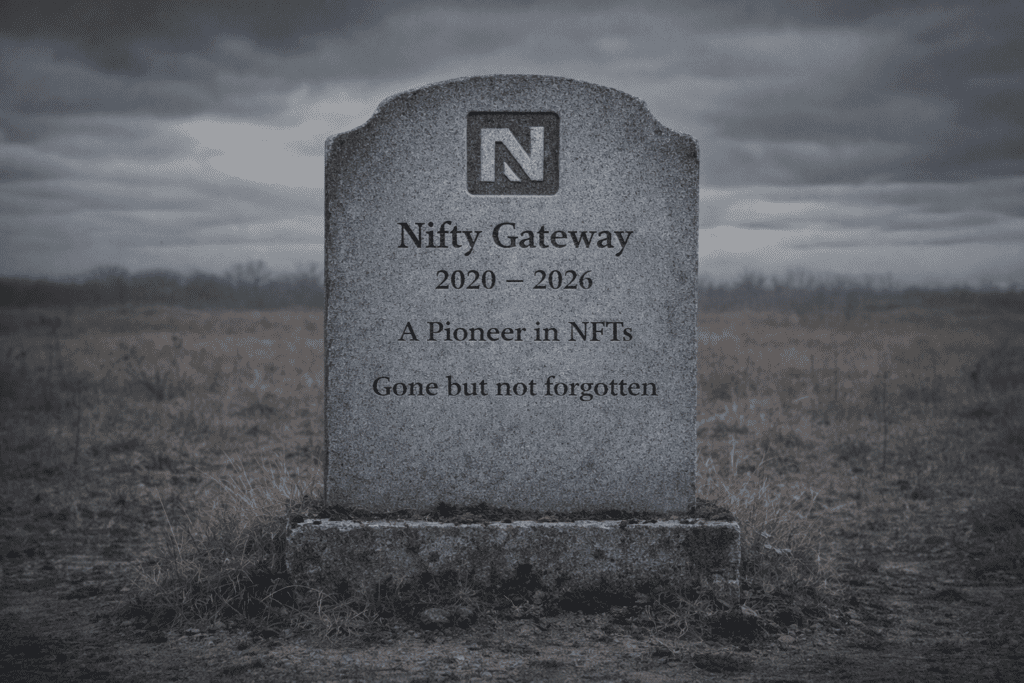
Gemini, the cryptocurrency exchange founded by Cameron and Tyler Winklevoss, has officially announced the phased wind-down of Nifty Gateway, the pioneering NFT marketplace that helped ignite the global digital art movement. In a statement released on January 24, 2026, the platform confirmed it has entered an immediate "withdrawal-only" mode, with a final cessation of all operations scheduled for February 23, 2026. This decision marks the conclusion of one of the most significant chapters in the history of blockchain-based creative economies, signaling a broader consolidation within the digital asset industry.
The announcement comes after years of shifting market dynamics and a strategic pivot by parent company Gemini Trust Company, LLC. For artists and collectors who viewed Nifty Gateway as the premier destination for high-end digital collectibles, the news represents a poignant milestone. At its peak, the platform was not merely a marketplace but a cultural nexus that bridged the gap between traditional fine art and the burgeoning world of decentralized finance.
The Genesis of a Digital Revolution
Nifty Gateway was founded in 2020 by twin brothers Duncan and Griffin Cock Foster. Their mission was ambitious: to make non-fungible tokens (NFTs) accessible to a mainstream audience by removing the technical barriers that then defined the crypto space. Recognizing the potential early, Gemini acquired the platform in late 2019, marking the first-ever acquisition of an NFT startup by a major cryptocurrency exchange.
Under the leadership of the Cock Foster brothers, Nifty Gateway introduced several innovations that would later become industry standards. Most notably, the platform allowed users to purchase NFTs using credit cards and stored the assets in a custodial wallet system. This "nifty" approach meant that collectors did not need to manage private keys or navigate the complexities of gas fees and Ethereum wallets to participate. This accessibility was instrumental in onboarding a generation of collectors who were previously intimidated by blockchain technology.
By mid-2020, Nifty Gateway had established itself as a "curated" marketplace, a stark contrast to open-protocol competitors like OpenSea. By hand-selecting artists and organizing "drops"—timed releases of exclusive digital works—the platform created a sense of scarcity and prestige that mirrored the traditional gallery world.
The 2021 Boom and the "Nifty Summer"
The year 2021 remains the defining era for Nifty Gateway, a period frequently referred to by enthusiasts as the "Nifty Summer." During this time, the platform facilitated some of the most expensive and culturally significant sales in the history of digital art. The creative economy fostered by the platform was staggering; internal data indicates that Nifty Gateway paid out over $500 million to artists globally during its operational lifespan.
A pivotal moment occurred in February 2021 when the artist Beeple (Mike Winkelmann) saw his "CROSSROAD" NFT—a 10-second video piece that reacted to the outcome of the 2020 U.S. presidential election—resell on the Nifty Gateway secondary market for $6.6 million. This followed his debut drop on the platform in late 2020, which generated $3.5 million in a single weekend. These figures provided the first definitive proof that digital art could command prices comparable to physical masterpieces.
The platform also became a preferred venue for mainstream celebrities and musicians. In early 2021, the musician Grimes sold nearly $6 million worth of digital art in under 20 minutes on Nifty Gateway. Other high-profile figures, including NFL star Tom Brady, skateboarder Tony Hawk, and musician Steve Aoki, utilized the platform to launch their digital identities, further cementing the NFT as a legitimate medium for celebrity engagement and fan interaction.
A Chronology of Innovation and Transition
To understand the rise and eventual sunsetting of Nifty Gateway, it is essential to examine the platform’s timeline:
- November 2019: Gemini acquires Nifty Gateway, integrating it into the Winklevoss-led ecosystem.
- March 2020: The platform officially launches its curated "drops" model.
- December 2020: Beeple’s "The Everydays" collection launches, sparking the first major wave of mainstream NFT interest.
- February 2021: Record-breaking secondary sales occur, including the $6.6 million "CROSSROAD" sale.
- December 2021: The artist Pak releases "The Merge" on Nifty Gateway, attracting 28,000 buyers and generating $91.8 million, setting a record for the largest ever sale by a living artist for a single work (structured as fractionalized units).
- January 2023: Founders Duncan and Griffin Cock Foster announce their departure from the company, signaling a transition toward new leadership under Gemini’s broader corporate structure.
- 2024–2025: The platform experiences a decline in trading volume as the broader NFT market enters a "winter" period, leading to a shift in focus toward custodial security and long-term storage.
- January 24, 2026: Gemini officially announces the shutdown and enters withdrawal-only mode.
- February 23, 2026: Final operations cease.
Strategic Realignment and Market Pressures
The decision to close Nifty Gateway is reflective of a wider trend in the cryptocurrency sector toward "leaner" operations and a focus on core financial services. Gemini has indicated that it intends to refocus its resources on its primary exchange platform and its vision for a financial "super app."
Analysts point to several factors that contributed to the platform’s decline. First, the rise of decentralized, royalty-optional marketplaces like Blur and the evolution of OpenSea created a highly competitive environment where Nifty Gateway’s custodial, high-fee model faced pressure. Second, the regulatory landscape for NFTs became increasingly complex between 2023 and 2025, with the SEC and other global regulators scrutinizing digital collectibles for potential securities law violations.
Furthermore, the "open edition" craze—a mechanic popularized by Nifty Gateway where an unlimited number of copies could be minted during a short window—eventually led to market oversaturation. While these drops generated massive revenue in the short term, they arguably diluted the long-term value of many collections, leading to a cooling of investor sentiment.
Official Responses and Artist Sentiment
The reaction from the creative community has been a mixture of nostalgia and pragmatism. In a statement, Gemini expressed gratitude to the community: "We are incredibly proud of the work the Nifty team has pioneered. While the marketplace is closing, the impact of the artists who shared their visions here will endure forever."

Prominent artists who got their start on the platform have also weighed in. Many credited the Cock Foster brothers with providing the financial foundation that allowed them to pursue digital art full-time. However, some critics have noted that the closure of a custodial platform highlights the risks of centralized digital ownership. Unlike decentralized protocols where the user holds their own assets, Nifty Gateway users must now ensure they move their "Nifties" to external wallets (such as MetaMask or Ledger) before the February 2026 deadline.
Broader Impact and the Future of Digital Provenance
The legacy of Nifty Gateway extends far beyond its financial spreadsheets. It successfully proved that the concept of "digital provenance"—the ability to track the ownership and authenticity of a digital file via the blockchain—was a viable business model. The platform’s innovations in user experience paved the way for traditional auction houses like Christie’s and Sotheby’s to launch their own on-chain platforms.
As Nifty Gateway prepares to go dark, the NFT ecosystem is entering a more mature, albeit quieter, phase. The focus has shifted from speculative "profile picture" (PFP) projects toward art with deep conceptual value and NFTs with real-world utility in gaming and identity.
For collectors, the immediate priority is the safe migration of assets. Gemini has provided comprehensive guides on how to transfer NFTs to non-custodial wallets, ensuring that while the marketplace may disappear, the art itself remains on the Ethereum blockchain, immutable and permanent.
The shutdown of Nifty Gateway serves as a reminder of the volatility of the early tech frontier. However, it also underscores the permanence of the shift it helped create. Digital art is no longer a niche curiosity; it is a recognized asset class. While the "Gateway" is closing, the world it opened remains accessible, as the baton passes to the next generation of decentralized platforms and creators who continue to build on the foundation laid by this pioneering institution.

