
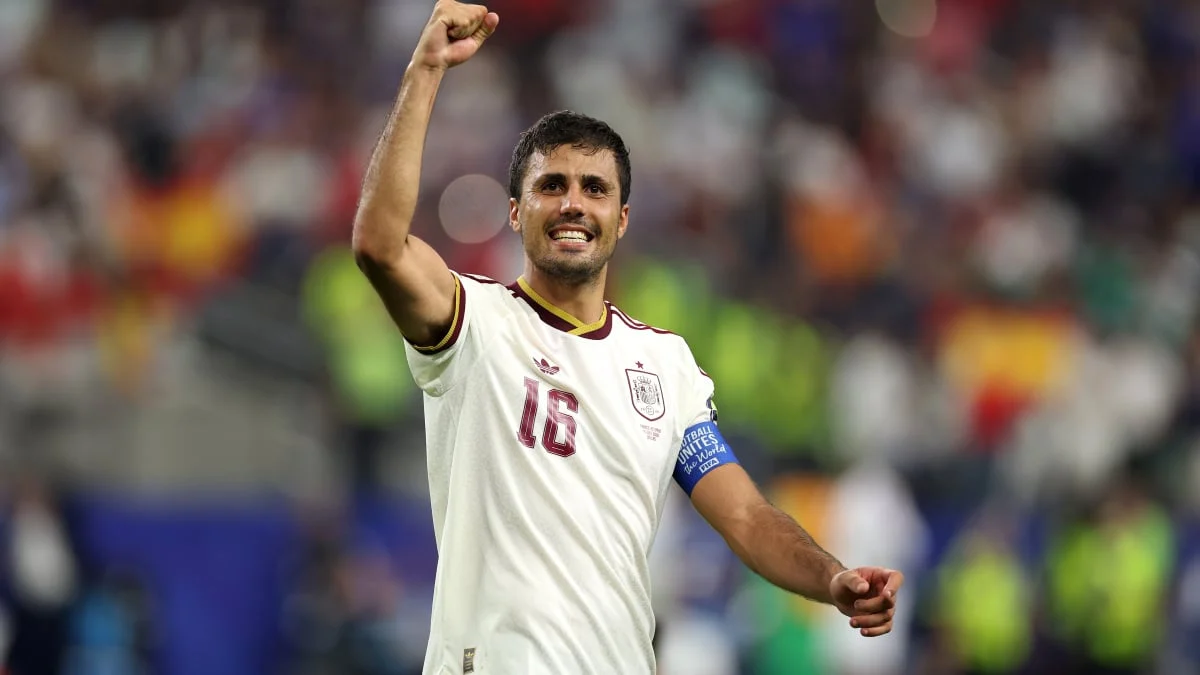
The 2026 FIFA World Cup, a tournament that has redefined the scale and reach of international football, is set to reach its fever-pitch conclusion on July 19. After weeks of high-octane drama across three host nations—the United States, Mexico, and Canada—the field of 48 teams has been narrowed down to just two. Spain and Argentina will converge at the New York New Jersey Stadium to compete for the most prestigious trophy in sports. This final represents more than just a match; it is a collision of different footballing philosophies, a battle of continental giants, and a moment that will define the legacies of the players involved. Kickoff is scheduled for 3 p.m. ET, and for fans globally, the opportunity to witness this historic event for free is available through specific broadcasting channels and digital tools.
The Road to the New York New Jersey Stadium
The journey to the 2026 final has been one of the most grueling in World Cup history, owing to the expanded format and the vast geographical spread of the host cities. Argentina enters the final as the defending champions, having secured their third star in a legendary 2022 campaign in Qatar. However, their path through the 2026 tournament has been characterized by resilience rather than dominance. Throughout the group stages and early knockout rounds, the Albiceleste appeared to struggle with the weight of expectation and the physical demands of the North American summer. They relied heavily on late-game heroics and tactical discipline to overcome narrow margins, proving that while they may have "stuttered," their championship DNA remains intact.
In contrast, Spain’s trajectory has been one of steady ascension. While the Spanish side faced initial criticism for a lack of clinical finishing during the group stages, they found their rhythm when it mattered most. Their tactical evolution under Luis de la Fuente has blended the traditional "Tiki-taka" possession game with a more direct, vertical threat provided by their young wingers. This new-look Spain reached its zenith in the semi-finals, where they dismantled tournament favorites France in a performance that combined defensive solidity with creative brilliance. As they prepare for the final, Spain carries the momentum of a team that has peaked at exactly the right moment.
Venue Profile: New York New Jersey Stadium
The selection of the New York New Jersey Stadium (MetLife Stadium) as the host for the final underscores the commercial and cultural significance of the 2026 tournament. Situated in East Rutherford, New Jersey, just a stone’s throw from the global hub of Manhattan, the stadium offers a seating capacity of over 82,000. For the World Cup, the venue has undergone specific modifications to meet FIFA’s stringent requirements, including the installation of a natural grass surface over its usual synthetic turf.
Security and logistics for the final are expected to be the most extensive in the history of US-hosted sporting events. Local authorities and FIFA organizers have coordinated to manage the massive influx of international travelers, with "Fan Fests" scheduled across New York City and Northern New Jersey to accommodate those unable to secure a ticket to the sold-out match. The 3 p.m. ET kickoff time was strategically chosen to maximize viewership across multiple time zones, allowing for prime-time viewing in Europe and late-evening coverage in South America and Africa.
Technical Guide: Streaming the Final for Free
For viewers looking to access the match without the burden of expensive cable subscriptions, the United Kingdom’s public service broadcasters offer a gold standard for coverage. Both BBC iPlayer and ITVX will provide comprehensive live streams of the Spain vs. Argentina final. These platforms are renowned for their high-production value, featuring expert analysis from former international players and uninterrupted high-definition feeds.
Because these services are funded by the UK license fee, they are technically geo-restricted to residents within the United Kingdom. However, the use of a Virtual Private Network (VPN) has become a standard method for international fans to access these broadcasts legally. A VPN works by encrypting a user’s internet traffic and routing it through a server in a different country—in this case, the UK. This process assigns the user a UK-based IP address, allowing them to bypass regional blocks on BBC iPlayer and ITVX.
ExpressVPN, an Official Supporter of the FIFA World Cup 2026, is frequently cited as the premier choice for streaming live sports due to its high-speed servers and ability to maintain stable connections during high-traffic events. While premium VPN services generally require a subscription fee, many offer money-back guarantees that allow users to utilize the service for the duration of the World Cup final and subsequently request a refund. This provides a temporary, cost-effective solution for fans who prioritize a high-quality viewing experience.
Historical Context and Statistical Breakdown
The rivalry between Spain and Argentina is steeped in historical significance, though they rarely meet on the World Cup stage. Historically, Argentina has held a slight edge in competitive fixtures, but Spain’s victory in the 2010 World Cup and their recent dominance in European football have leveled the playing field.
Comparative World Cup Success:
- Argentina: Winners in 1978, 1986, and 2022. They are seeking to become only the third nation to successfully defend a World Cup title, joining the ranks of Italy (1934, 1938) and Brazil (1958, 1962).
- Spain: Winners in 2010. After a decade of rebuilding following the golden era of 2008–2012, this final represents the return of "La Roja" to the absolute pinnacle of the sport.
Statistically, the 2026 final pits the tournament’s best defensive unit (Argentina, with the fewest goals conceded per 90 minutes) against the most productive attacking side (Spain, leading in expected goals and successful dribbles in the final third). The battle in the midfield will likely decide the outcome, as Argentina’s veteran presence looks to disrupt the fluid passing lanes that Spain utilized so effectively against France.
Official Responses and Managerial Philosophies
Leading up to the final, both camps have maintained a tone of mutual respect mixed with quiet confidence. Lionel Scaloni, the architect of Argentina’s recent era of success, emphasized the need for "emotional control" in his pre-match press conference. "We know Spain plays a style that can tire you out mentally," Scaloni remarked. "Our focus is on remaining compact and seizing the moments when the game opens up. We have been in these high-pressure situations before, and that experience is our greatest asset."
On the Spanish side, Luis de la Fuente has championed the "fearlessness" of his squad. With several players in the starting lineup under the age of 23, Spain represents a generational shift. "We do not look at the names on the opposing shirts; we look at the space on the pitch," de la Fuente stated. "This team has shown that they can suffer and they can dominate. To play Argentina in a final is the ultimate test, but it is a test we have prepared for since the first day of qualifying."
FIFA President Gianni Infantino has also weighed in on the significance of this final, noting that the 2026 tournament has shattered all previous records for attendance and digital engagement. "This final in New York New Jersey is the crowning moment of a tournament that has truly united the world," Infantino said. "The quality of football shown by Spain and Argentina is a testament to why this sport is the most popular on earth."
Broader Impact and Global Implications
The implications of the 2026 World Cup final extend far beyond the trophy presentation. For the United States, a successful final at MetLife Stadium serves as a precursor to the 2027 FIFA Women’s World Cup bid and the continued growth of Major League Soccer (MLS). The economic impact on the New York and New Jersey metropolitan area is estimated to be in the hundreds of millions of dollars, encompassing hospitality, transport, and tourism.
Furthermore, the match marks a symbolic transition in global football. For Argentina, it may represent the final World Cup appearance of several legendary figures who have defined a generation. For Spain, a victory would signal the start of a new era of dominance, potentially mirroring their historic run from 2008 to 2012.
As the digital landscape evolves, the way fans consume this final also reflects a shift in media. The reliance on streaming platforms and VPNs highlights the move away from traditional linear television toward a more globalized, on-demand viewing model. Whether watching from a pub in Madrid, a "fan zone" in Buenos Aires, or a laptop in Tokyo, the world will be synchronized for 90 minutes (or perhaps 120) of world-class sporting drama.
The 2026 FIFA World Cup final is not just a game; it is the conclusion of a four-year cycle of preparation, heartbreak, and triumph. As Spain and Argentina take the pitch at 3 p.m. ET on July 19, they carry the hopes of their nations and the attention of billions. Through the availability of free UK streams and the technical assistance of tools like ExpressVPN, that global audience is more connected to the action than ever before.

