• Home
  • About Us
  • Contact Us
  • Cookies Policy
  • Disclaimer
  • DMCA
  • Privacy Policy
  • Terms and Conditions
Dr Crypton
Secure Your Future in Crypto
FinTech Innovations

AI Has Already Remodeled the HR Department, Creating a Frenzy of New Job Titles and Skyrocketing Salaries

by admin July 18, 2026
written by admin

Artificial intelligence may or may not be poised to displace human workers on a massive scale, but its impact on the human resources landscape is undeniable. The department responsible for organizing and defining roles within organizations has already seen its traditional structure disrupted, with a surge of new, often elaborate, job titles appearing across the corporate world. This proliferation of AI-centric roles reflects not only the growing integration of artificial intelligence into business operations but also a fundamental shift in how companies are defining and valuing expertise in the digital age.

The evidence of this transformation is readily apparent on professional networking platforms like LinkedIn. Perfectly functional roles are now being advertised with titles such as "forward-deployed and agentic AI architect." While such a designation might suggest the development of highly sophisticated software, it could equally signify a role in refining the conversational capabilities of a chatbot, ensuring it remembers the context of previous interactions. Regardless of the specific duties, the emergence and approval of these new titles indicate a significant organizational adaptation to the AI revolution. This evolving lexicon surrounding AI in the workplace offers a crucial counterpoint to the often-dire predictions about technology’s impact on employment. While much of the discourse focuses on job displacement, hiring data presents a more nuanced picture, highlighting a constrained overall labor market alongside a rapidly expanding niche of AI-related work.

The Surge in AI-Related Job Postings: A Data-Driven Snapshot

Indeed Hiring Lab’s extensive analysis of job postings on its platform provides compelling quantitative evidence of this trend. From February 2020 to the close of 2025, the number of job advertisements mentioning AI experienced a dramatic surge of 134%. This growth occurred even as the total number of job postings on Indeed saw a more modest increase of only 6% over the same period. By December 2025, AI was mentioned in a record 4.2% of all Indeed job postings, underscoring its growing prominence in the hiring market. This data suggests that AI is not merely altering the nature of existing jobs but is actively creating new ones, often by adding new layers of specialization and vocabulary to traditional roles.

Emergence of In-Demand AI Roles: Beyond the Tech Bubble

The designation "AI engineer" has emerged as the undisputed leader in this new employment landscape. It was ranked as the number one fastest-growing role in LinkedIn’s "Jobs on the Rise 2026" report, which analyzes role growth over the preceding three years. The same report also highlighted the increasing demand for AI consultants and strategists, AI and machine-learning researchers, and data annotators.

The broad appeal of the "AI engineer" title stems from its inherent flexibility. An individual holding this position might be tasked with developing applications that leverage large language models, integrating corporate data into AI systems, optimizing the performance of existing AI models, or even troubleshooting a customer service chatbot to prevent it from offering inappropriate solutions.

Indeed’s data further illustrates the geographical diffusion of AI-related terminology, extending well beyond the traditional hubs of Silicon Valley. By the end of 2025, nearly 45% of data and analytics job postings included an AI-related term. Similarly, approximately 15% of marketing roles and 9% of human resources positions incorporated AI-specific language. A more recent analysis reported by Business Insider, based on Indeed data, revealed a significant increase in frequently advertised job titles explicitly referencing AI. The number of such titles grew from 264 in 2022 to an impressive 822 in the first quarter of 2026. Crucially, nearly two-thirds of these AI-explicit roles were found outside of traditional technology sectors, indicating a broad-based adoption across industries.

This expansion has led to the creation of titles such as "AI marketing manager," "AI learning specialist," "responsible AI counsel," and "AI transformation lead." It is important to note that these are not always entirely new occupations. In many instances, they represent established roles that have strategically incorporated AI-related keywords into their descriptions to attract relevant talent and signal a forward-thinking approach.

The World Economic Forum, citing LinkedIn data, has estimated that investments in AI have directly supported approximately 1.3 million jobs. These include roles such as AI engineers, data annotators, and forward-deployed engineers, alongside over 600,000 positions related to AI-enabled data centers. While the advanced algorithms and software may be abstract, the physical infrastructure supporting them, such as server racks, still requires the foundational expertise of electricians and other skilled trades.

The Allure of High-Stakes AI Compensation

At the apex of the AI job market, a compensation structure has emerged that bears resemblance to professional sports, albeit with participants who often favor hoodies and engage in discussions about inference latency. A review conducted by Syracuse University found that compensation for Chief AI Officers can range from $200,000 to upwards of $500,000. Specialized roles, particularly those involving advanced model development and deployment, can exceed $400,000 when bonuses and equity are factored in. Frontier research engineers, AI infrastructure specialists, and engineers capable of training and deploying cutting-edge models are commanding some of the most lucrative compensation packages.

The "forward-deployed engineer" (FDE) role, originally popularized by Palantir Technologies, has been significantly amplified by the AI boom. FDEs are embedded with client organizations, tasked with translating high-level executive directives to "do something with AI" into functional, deployable software solutions. The Next Web reported a remarkable surge in Indeed postings for this role, with listings in January of this year being approximately 19 times higher than they were a year prior.

A comprehensive guide compiled by Signal Through the Noise, a blog authored by a CTO, placed compensation for forward-deployed engineers within the range of $238,000 to $700,000. Research engineering packages could reach as high as $1.4 million, and in some exceptional cases, Chief AI Officer compensation was reported to exceed $1 million. The guide also offered a more critical observation: many of these highly differentiated titles often encapsulate only three fundamental functions: building AI products, training models, or maintaining the operational integrity of AI infrastructure.

The Proliferation of Unconventional and Speculative Titles

Beyond these high-demand, well-compensated roles, AI has also spurred the creation of entirely new specialized positions. "Evals engineers," for instance, are dedicated to designing rigorous testing protocols to ensure the reliability and performance of AI models. "AI red teamers" are employed to proactively identify and exploit vulnerabilities in AI systems before they can be exploited by malicious actors. "Model behavior engineers" delve into the complex "why" behind AI system responses, seeking to understand and influence their decision-making processes. "AI governance leaders" are emerging to navigate the intricate landscape of risks associated with data privacy, algorithmic bias, cybersecurity, and regulatory compliance.

However, the evolving terminology has also given rise to titles that appear to have originated from highly creative, perhaps even whimsical, brainstorming sessions. The role of "Claude Evangelist," for example, seemingly merges product education with evangelistic outreach, aiming to promote a specific AI model. "Vibe coders" are described as individuals who construct software by articulating their desired outcomes and then accepting AI-generated code with varying degrees of oversight. A more conventionally titled equivalent, "vibe engineer," might be likened to a more polished approach to prompting an AI to address a specific technical issue, such as fixing a website’s login page.

The term "context engineer" represents a genuine and increasingly vital discipline, focusing on the data, instructions, memory, and tools provided to AI models to enhance their effectiveness. "Prompt engineer," once touted as a potentially lucrative profession for those adept at communicating with chatbots, is now more frequently viewed as a specific skill set within a broader AI role.

The aforementioned CTO guide also identified a host of other titles, including "builder," "AI-native developer," "RAG engineer" (referring to Retrieval-Augmented Generation), "agentic AI engineer," and the rather elaborate "principal agentic GenAI forward-deployed context architect." The latter title, in particular, suggests a requirement for both profound technical expertise and remarkable verbal dexterity.

Implications for the Future of Work and Corporate Structure

The question of whether AI has created entirely new jobs is definitively answered in the affirmative. Occupations such as AI safety specialists, model evaluation experts, and AI governance professionals have emerged precisely because modern generative AI systems have introduced novel technical challenges and business considerations. Nevertheless, a significant portion of these new job titles are essentially existing roles rebranded with contemporary vocabulary, accompanied by inflated salary expectations, and a deliberate avoidance of traditional descriptors like "software developer."

This shift in corporate nomenclature and job definition may represent the most immediate and observable impact of AI on employment. While AI will undoubtedly automate certain tasks and generate new forms of work, its most immediate effect on the corporate world is likely to be a fundamental re-evaluation of labor division and organizational structures. Before these broader changes are fully realized, it is probable that corporate America will first establish steering committees, appoint chief transformation evangelists, and schedule numerous meetings to meticulously define the scope and responsibilities of these newly created roles. This organizational preamble underscores the complex interplay between technological advancement and corporate adaptation, highlighting the ongoing process of defining the future of work in the age of artificial intelligence.

July 18, 2026 0 comment
0 FacebookTwitterPinterestEmail
FinTech Innovations

Incoming Truist CEO Mike Lyons Set to Inject Fresh Energy and Drive Performance as Bill Rogers Transitions to Executive Chair

by admin July 18, 2026
written by admin

Incoming Truist CEO Mike Lyons is poised to usher in a new era of enhanced performance and accelerated growth for the Charlotte, North Carolina-based financial institution. Outgoing CEO Bill Rogers expressed confidence on Friday that Lyons, who officially takes the helm on September 1st, will bring a vital blend of "acceleration, assurance, and intensity" to the bank’s strategic objectives aimed at bolstering profits and revitalizing expansion. This leadership transition marks a significant moment for Truist, a $550 billion-asset super-regional bank, as it navigates a dynamic financial landscape.

Rogers, who has helmed Truist since its formation in 2021 through the merger of BB&T and SunTrust, will transition to the role of executive chair through April 2027, at which point he plans to retire. This planned succession, carefully orchestrated over more than a year, underscores a commitment to a smooth and strategic handover.

A New Leader for a New Chapter

Mike Lyons brings a wealth of experience from his previous leadership roles. He most recently served as the chief executive officer of the global financial technology company Fiserv, a position that honed his expertise in payments and digital innovation. Prior to that, he held the role of president at PNC Bank, gaining deep insight into the intricacies of large-scale commercial and retail banking operations.

Analysts covering Truist have largely welcomed Lyons’ appointment, characterizing him as a "welcome outsider" who will provide a "fresh perspective." This sentiment stems from the bank’s ongoing efforts to improve its financial performance and adapt to evolving market demands. During Truist’s second-quarter earnings call, Rogers lauded Lyons’ capabilities, stating, "Mike’s an accomplished and respected financial services leader with a proven ability to drive growth, improve performance and create long-term shareholder value. Throughout the selection process, it was clear to our board that he’s the right leader for his future."

Rogers further emphasized the strong alignment between Lyons and the Truist board regarding the bank’s strategic opportunities. The succession planning process, according to Rogers, was meticulous, focusing on identifying a leader who not only possessed a deep understanding of the bank’s core business but also demonstrated expertise in technology, payments, and an astute foresight into future industry trends – a profile that Lyons, in Rogers’ assessment, "perfectly" fits.

Charting a Course for Enhanced Profitability

The immediate focus for Lyons is expected to be on driving Truist towards its long-term financial targets, notably the ambitious goal of achieving a 16% to 18% return on tangible common equity (ROTE). When questioned by UBS analyst Erika Najarian on this specific target during the earnings call, Rogers expressed unwavering confidence: "Mike came in here to lead and run a high-performing company, and I don’t think there’ll be any doubt on that."

This commitment to high performance is particularly crucial as Truist works to optimize its integration and operational efficiencies post-merger. The banking sector, especially in the wake of recent economic shifts and heightened competition, demands robust strategies for profitability and sustained growth. Lyons’ background in technology and payments suggests a potential emphasis on leveraging digital capabilities and innovative solutions to enhance customer experience and streamline operations, thereby contributing to improved financial metrics.

Navigating Talent and Market Dynamics

The appointment of an outsider CEO can sometimes present challenges in retaining top talent within an organization. UBS analyst Najarian raised this point, inquiring about the reassurance provided to existing employees. Rogers acknowledged the competitive landscape for talent, particularly in major banking hubs like Charlotte, where firms such as JPMorgan Chase, Citi, and Sumitomo Mitsui Banking Corp. are expanding their presence.

"We re-recruit everyone every day," Rogers stated, underscoring the bank’s ongoing commitment to employee engagement and retention. He also highlighted the importance of certainty in leadership transitions. "Also, certainty helps," he added, referring to the clarity now provided regarding his own timeline and the bank’s future leadership. "There was probably a little uncertainty of my timeline, and now we have a lot of certainty."

Rogers further elaborated on the importance of a strong platform, career opportunities, and certainty for top performers. He likened the leadership transition to a relay race, where the baton is passed to enable the next runner to "run the last lap at a lot of speed." This metaphor signifies a desire for a seamless handover that allows the new leadership to execute with momentum and effectiveness.

Wells Fargo analyst Mike Mayo offered a pragmatic observation on this analogy, quipping, "Hopefully, no one drops the baton," a sentiment that reflects the inherent risks and expectations associated with any major leadership change in a large financial institution.

Truist’s Financial Performance: A Snapshot

The leadership transition occurs against a backdrop of solid, albeit mixed, financial results for Truist. In the second quarter, the bank reported a net income of $1.5 billion, representing a significant 27% increase year-over-year. Revenue also saw a healthy uptick of 5.5%, reaching $5.3 billion. However, Truist slightly trimmed its full-year revenue growth guidance to a range of 3.5% to 4%, down from a previous forecast of 4%. This adjustment suggests a cautious outlook on certain revenue streams or an anticipation of moderating economic conditions.

On the deposit front, Truist has observed a trend of customers seeking higher yields, leading to some migration into more interest-bearing products. Chief Financial Officer Mike Maguire noted that while average deposits increased by 1.1% year-over-year to $405 billion, the cost of interest-bearing deposits rose by 1 basis point quarter-over-quarter to 2.1%, and the overall cost of total deposits increased by 1 basis point to 1.56%. Rogers characterized this deposit behavior as more of a "client behavior than competitive pressure," indicating that customers are actively managing their funds in response to prevailing interest rate environments. This is a common phenomenon across the banking industry as rates have risen, prompting depositors to optimize their returns.

The Strategic Imperative for Lyons

Lyons’ tenure is expected to be defined by his ability to build upon the existing foundation while introducing strategic innovations. His experience at Fiserv, a company at the forefront of payment technologies and digital transformation, suggests a potential focus on enhancing Truist’s digital offerings, optimizing payment processing, and exploring new revenue streams within the fintech ecosystem.

Furthermore, Lyons’ background at PNC provides him with a comprehensive understanding of traditional banking challenges and opportunities, including managing credit risk, optimizing balance sheets, and navigating regulatory environments. The integration of these diverse experiences will be critical as he aims to steer Truist toward sustained profitability and market leadership.

The banking industry is undergoing a profound transformation, driven by technological advancements, evolving customer expectations, and a dynamic macroeconomic climate. For Truist, the leadership change signifies an opportunity to re-energize its strategic direction and capitalize on emerging trends. Lyons’ mandate will be to leverage his external perspective and proven track record to identify and execute initiatives that drive both short-term performance improvements and long-term sustainable growth.

Looking Ahead: A Focus on Execution

While specific strategic initiatives under Lyons’ leadership remain to be detailed, the overarching objective is clear: to enhance Truist’s competitive position and deliver superior value to shareholders and customers alike. The transition from Bill Rogers, a key architect of the merged entity, to Mike Lyons, an experienced external leader, signals a commitment to continuous improvement and adaptation.

The coming months will be crucial as Lyons settles into his role, assesses the bank’s current operations, and begins to implement his strategic vision. The market will be watching closely to see how his leadership translates into tangible results, particularly in achieving the bank’s profitability targets and navigating the competitive landscape. The success of this transition will be a testament to Truist’s ability to evolve and thrive in an ever-changing financial world. The passing of the baton, as Rogers described, is a pivotal moment, and the industry will be observing Truist’s performance with keen interest.

July 18, 2026 0 comment
0 FacebookTwitterPinterestEmail
NFT & Digital Assets

Mad Lads and the Backpack Ecosystem: Defining the Cultural and Technical Evolution of Solana NFTs

by admin July 18, 2026
written by admin

Mad Lads has evolved beyond its origins as a premiere non-fungible token (NFT) collection to become the definitive cultural and identity layer for the Solana ecosystem, closely tethered to the ambitious expansion of the Backpack financial suite. Launched during a period of profound uncertainty for the Solana blockchain, the project has transitioned from a high-demand profile picture (PFP) collection into a fundamental component of a broader infrastructure that includes a non-custodial wallet, a regulated cryptocurrency exchange, and a pioneering tokenized securities platform. As of June 2026, Mad Lads remains a central pillar of Solana’s digital economy, representing a unique intersection of community-driven branding and institutional-grade financial product development.

The Strategic Emergence of Mad Lads in a Post-FTX Landscape

To understand the significance of Mad Lads, one must look back at the state of the Solana ecosystem in early 2023. Following the collapse of the FTX exchange, which had been a major supporter of the network, Solana faced a crisis of confidence. This was exacerbated by the departure of flagship NFT projects like DeGods and y00ts, which migrated to Ethereum and Polygon, respectively. The vacuum left by these projects created a demand for a "Solana-native" hero project that could rally the community and demonstrate the unique technical capabilities of the chain.

Mad Lads was introduced by Backpack, a development firm led by Armani Ferrante and Tristan Yver. Ferrante, a highly respected engineer known for creating the Anchor framework—the most widely used development tool on Solana—brought immediate technical credibility to the project. Unlike standard NFT collections that exist as static images on a ledger, Mad Lads was built as an "xNFT" (executable NFT). This standard allowed the NFT to function as a platform for executable code, enabling users to interact with applications directly within the NFT interface inside the Backpack wallet.

NFT Project Passport: Mad Lads

The minting process, which took place between April 20 and 21, 2023, became a legendary moment in Solana history. Faced with overwhelming demand and aggressive botting attempts, the Backpack team deployed a "honeypot" contract. This fake minting site successfully diverted bots, resulting in the capture of over $250,000 worth of SOL from automated attackers, which was subsequently refunded to legitimate users. The 10,000-piece collection, minted at 6.9 SOL, sold out instantly and immediately dominated secondary market volumes, signaling a renewed era of optimism for Solana.

Technical Innovation: The xNFT Framework and Backpack Integration

The primary differentiator for Mad Lads is its integration with the Backpack wallet and the xNFT standard. While traditional NFTs are often criticized for lacking utility beyond social signaling, xNFTs transform digital assets into interactive portals. For Mad Lads holders, this meant their NFT could serve as a gateway to exclusive features within the Backpack ecosystem, such as early access to software updates, integrated messaging, and loyalty rewards.

This technical foundation allowed the project to move beyond the "floor price" narrative. By embedding the NFT into the wallet infrastructure, Backpack turned Mad Lads into a "cultural passport." As the Backpack wallet expanded to support multiple chains and integrated its own exchange, the Mad Lads community became the primary beta testers and advocates for these products. This created a feedback loop where the success of the software products increased the prestige of the NFT, and the strength of the NFT community drove user adoption for the software.

Chronology of Ecosystem Expansion (2024–2026)

Since its inception, the Mad Lads project has hit several critical milestones that have redefined its value proposition.

NFT Project Passport: Mad Lads
  • March 2024: Peak Market Valuation. On March 18, 2024, the collection reached an all-time high floor price in USD terms, valued at approximately $34,459 per asset. This peak coincided with a broader resurgence in the Solana DeFi (Decentralized Finance) ecosystem and the growing reputation of the Backpack Exchange.
  • Early 2026: The BP Token Launch. In early 2026, Backpack confirmed the distribution structure for its native governance and utility token, BP. Demonstrating the project’s commitment to its early supporters, 1% of the total BP supply—amounting to 10,000,000 tokens—was allocated specifically to Mad Lads holders. This move solidified the NFT’s role as an "equity-adjacent" asset within the Backpack ecosystem.
  • June 2026: Backpack Securities and Tokenized Assets. On June 2, 2026, the team announced "Backpack Securities," a regulated crypto-stock brokerage. Shortly thereafter, the platform introduced $SPCX, a tokenized representation of private shares in SpaceX. These developments signaled a pivot from purely crypto-native assets to real-world asset (RWA) tokenization, with Mad Lads holders positioned as the core demographic for these institutional-grade offerings.

Market Data and Community Analytics

As of June 22, 2026, the Mad Lads collection maintains a floor price of approximately 13.66 SOL (roughly $1,012). While this is lower than the 2024 peak, the market liquidity and holder retention rates remain among the highest in the NFT sector.

Metric Detail
Total Supply 10,000 (9,968 currently tracked)
Launch Price 6.9 SOL
SOL ATH 229.425 SOL (December 9, 2023)
USD ATH $34,459 (March 18, 2024)
Primary Marketplaces Magic Eden, Tensor, Solanart
Ecosystem Ties Backpack Wallet, Backpack Exchange, BP Token

The distribution of Mad Lads assets shows a high degree of "diamond handing," a term used in the industry to describe long-term holders who resist selling during market volatility. This behavior is largely attributed to the ongoing "airdrop" culture surrounding the project, where various Solana-based protocols distribute tokens to Mad Lads holders to capture the attention of the chain’s most influential users.

Official Responses and Strategic Vision

The leadership at Backpack, specifically Armani Ferrante, has consistently maintained that Mad Lads is the "soul" of their company. In various community Discord sessions and X (formerly Twitter) Spaces, Ferrante has emphasized that the project is not a traditional NFT roadmap with a fixed end-date. Instead, it is an evolving brand that scales alongside their financial products.

"Mad Lads was never about just the art," Ferrante noted during the Backpack Securities launch. "It was about proving that you could build a world-class financial institution on Solana that still felt like it belonged to the community that built it. The Lads are the first citizens of the Backpack ecosystem."

NFT Project Passport: Mad Lads

Tristan Yver has echoed these sentiments, focusing on the global nature of the brand. The team has organized "Mad Lads" events in major cities including Tokyo, London, and New York, successfully bridging the gap between digital ownership and physical community. This "cult-like" loyalty is often cited by analysts as the project’s greatest defense against the cyclical nature of NFT trends.

Broader Impact and Future Implications

The success of Mad Lads has significant implications for the future of the NFT industry and the Solana blockchain.

  1. The Blueprint for Product-Led NFTs: Mad Lads has provided a template for how NFT projects can survive by tethering themselves to successful software products. By moving away from "speculation-only" models toward "utility-access" models, the project has shown a path toward sustainability.
  2. Solana’s Cultural Resilience: The project proved that Solana could foster a high-value cultural movement independent of the Ethereum-centric NFT market. This has encouraged other developers to build natively on Solana, leveraging its high speed and low transaction costs for interactive digital assets.
  3. The Convergence of Social and Finance: Through Backpack Securities and the BP token, Mad Lads is at the forefront of "SocialFi." It explores how a social identity (an NFT) can grant access to sophisticated financial instruments like tokenized stocks and private equity.

However, the project is not without risks. Its value is now inextricably linked to the regulatory and commercial success of the Backpack Exchange. Should the exchange face regulatory hurdles in major jurisdictions or fail to compete with established giants like Binance or Coinbase, the "cultural value" of the Mad Lads NFT could be impacted. Furthermore, the transition of Backpack into a traditional securities broker may create a tension between the "anarchic" spirit of the original Mad Lads brand and the compliance-heavy requirements of global finance.

Conclusion

Mad Lads stands as a testament to the power of community-centric engineering. By combining the technical innovation of xNFTs with a deep understanding of internet culture and a robust suite of financial products, Backpack has created more than just a collection of avatars. They have established a digital nation-state within the Solana ecosystem. As the project continues to integrate with traditional finance through tokenized securities and global brokerage services, Mad Lads will likely remain the benchmark for how digital assets can drive the adoption of the next generation of financial infrastructure.

July 18, 2026 0 comment
0 FacebookTwitterPinterestEmail
NFT & Digital Assets

Defaced Unveils A Series of Headaches Exploring the Intersection of Chronic Pain and Digital Identity through Web3 Artistry

by admin July 18, 2026
written by admin

The digital art landscape, particularly within the decentralized ecosystem of Web3, has long been characterized by a penchant for high-octane spectacle, vibrant color palettes, and speculative fervor. However, a new collection by the artist known as Defaced, titled "A Series of Headaches," marks a significant departure from these industry norms. By pivoting toward a somber, deeply personal exploration of chronic illness, Defaced has introduced a narrative-driven body of work that utilizes the blockchain as a repository for human vulnerability rather than merely a vehicle for financial speculation. The collection consists of twenty unique self-portraits, each meticulously crafted from years of meticulous documentation regarding the artist’s struggle with chronic neurological pain.

The project is rooted in a practice of self-observation that began in January 2021. For over three years, Defaced maintained a "headache journal," a common clinical tool used by patients to identify triggers and patterns in migraine or cluster headache occurrences. However, in the hands of an artist, this medical data was transformed into a conceptual framework for digital portraiture. Each entry in the journal tracked specific variables, including the date of the episode, the intensity of the pain on a numerical scale, the physical location of the sensation within the cranium, and the sensory distortions—often referred to in medical literature as "auras"—that accompanied the pain. By translating these invisible, internal experiences into a visual medium, Defaced has created a series of "avatars of agony" that serve as a bridge between the clinical reality of chronic illness and the abstract world of digital art.

The Chronology of Invisible Pain

The genesis of "A Series of Headaches" coincides with a period of unprecedented growth and subsequent volatility in the non-fungible token (NFT) market. While many creators were focused on the development of "generative" projects consisting of thousands of randomized traits, Defaced’s approach was additive and archival. The timeline of the project reveals a slow, deliberate process of synthesis. Between January 2021 and early 2024, the artist accumulated hundreds of entries. These notes ranged from the "devastatingly direct"—short, clipped sentences describing a loss of function—to the "surreal," where the pain began to warp the artist’s perception of reality.

On May 13, 2024, Defaced went public with the conceptual framework behind the collection, sharing the raw data that informed the visuals. The transition from journal entry to digital artifact involved a process of "emotional remixing." The artist noted that literal descriptions of pain often fail to capture the true weight of the experience. Consequently, the work leans heavily on metaphor and symbolism. For instance, journal entries mentioning the "smell of metal" or "static in the eyes" were translated into specific digital textures, such as metallic glints on low-poly models or intentional "noise" and artifacting in the render. This chronology highlights a shift in the Web3 space from "art as a product" to "art as a process," where the value of the work is inextricably linked to the duration and intensity of the lived experience behind it.

Historical Lineage and Visual Influences

To understand the aesthetic choices in "A Series of Headaches," one must look to the historical and cultural references that Defaced cites as foundational. The artist draws a direct line to the 19th-century physician Hubert Airy. In 1870, Airy published a seminal paper titled "On a Distinct Form of Transient Hemiopsia," which included detailed, hand-drawn illustrations of his own migraine auras. These drawings featured jagged, geometric patterns—often called "fortification spectra"—that represented the visual disturbances caused by neurological episodes. Airy’s work was one of the first successful attempts to map the invisible distortions of the human mind. Defaced adopts this lineage, utilizing modern digital tools to continue the work Airy began with a pen and paper.

In addition to medical history, the collection is heavily influenced by the 1998 PlayStation 1 cult classic, LSD: Dream Emulator. Developed by Osamu Sato, the game is famous for its lack of traditional objectives, instead tasking players with navigating a series of unstable, surreal dreamscapes based on a decade-long dream journal. The visual language of LSD: Dream Emulator—characterized by low-resolution textures, "clipping" errors, and uncanny, disconnected environments—mirrors the disorienting nature of a migraine. Defaced utilizes these "lo-fi" aesthetics not merely for nostalgia, but as a functional representation of "damaged memory." The portraits do not appear as polished, high-fidelity renders; instead, they resemble corrupted data pulled from a legacy hardware system, suggesting that chronic pain acts as a form of "noise" that interferes with the high-resolution processing of daily life.

Regression as an Artistic Strategy

A pivotal aspect of the collection is the concept of "regression as evolution." Defaced has stated that their standard, more polished drawing style was insufficient to convey the raw, unrefined nature of chronic pain. To access a more "truthful" representation of their internal state, the artist intentionally returned to the aesthetics of childhood and early gaming. This involved a process of "digital collage," where various symbols of identity—such as toys, games, and media from the 1990s and early 2000s—were integrated into the self-portraits.

Specific motifs, such as the "Heartless" figures from the Kingdom Hearts franchise or the classic Disney character Pluto, appear within the portraits. In this context, these are not mere pop-culture references; they are "autobiographical architecture." For a generation that came of age during the rise of 3D gaming, these low-poly shapes and bright, primary colors are deeply tied to the formation of identity. By combining these nostalgic symbols with the dark, fragmented reality of chronic pain, Defaced creates a "psychological collage." The artist describes childhood play as being "close to collage," where various disparate objects are given new, symbolic meanings. In "A Series of Headaches," this play becomes a survival mechanism, allowing the artist to rebuild a sense of self from the fragments left behind after a neurological episode.

Implications for the Web3 Art Market and Digital Archiving

The release of "A Series of Headaches" occurs at a time when the broader NFT market is undergoing a period of introspection. Following the speculative bubble of 2021-2022, there has been a growing demand for "Fine Art" within the crypto space—works that prioritize conceptual depth and artistic intent over "flippability" or utility. Defaced’s project serves as a case study for how blockchain technology can be used for "permanent psychological evidence." By minting these portraits as NFTs, the artist ensures that this archive of pain is immutable and globally accessible, effectively "on-chaining" a medical history that might otherwise have remained hidden in a private journal.

Furthermore, the project highlights the increasing importance of "metadata" as a narrative device. In "A Series of Headaches," the metadata associated with each token is not just a list of traits; it is a repository of the journal entries themselves. This allows collectors and viewers to engage with the work on multiple levels: as a visual piece of art, a historical document, and a piece of digital literature. This multi-layered approach suggests a future where digital art is judged not by its visual complexity, but by the "density" of the information it carries.

Analysis of Broader Cultural Impact

The reception of "A Series of Headaches" within the artistic community suggests a broader cultural shift toward vulnerability. In an era where artificial intelligence can generate hyper-realistic, "perfect" imagery in seconds, human artists are increasingly finding value in the "imperfect." The glitches, the low-resolution textures, and the raw, unedited descriptions of suffering in Defaced’s work serve as a "proof of humanity." This resonates with a global audience that is increasingly wary of the "polished" versions of life presented on social media.

Moreover, the project addresses the "loneliness" of chronic illness. Chronic pain is often an isolating experience because it is invisible to others. By visualizing this pain, Defaced provides a vocabulary for others suffering from similar conditions. The collection acts as a form of "communal catharsis," where the artist’s personal struggle becomes a mirror for the collective experience of human frailty. This transition from the "personal" to the "universal" is a hallmark of significant art, and its emergence within the Web3 space indicates that the technology is maturing into a legitimate medium for complex emotional expression.

In conclusion, "A Series of Headaches" is more than a collection of digital images; it is a sophisticated exploration of how we construct identity in the face of physical and neurological adversity. By drawing from a diverse array of influences—ranging from 19th-century medical drawings to 1990s video games—Defaced has created a body of work that is both historically grounded and technologically forward-looking. As the digital art world continues to evolve, projects like this serve as a reminder that the most enduring "assets" on the blockchain are those that capture the profound, messy, and often painful reality of the human condition. In a market often defined by noise, Defaced has successfully created a work that "aches quietly"—and in doing so, has made one of the most resonant contributions to the digital art canon in recent years.

July 18, 2026 0 comment
0 FacebookTwitterPinterestEmail
Tech & Startup News

The Looming AI Windfall and the Inevitable Mandate for Global Wealth Redistribution

by admin July 18, 2026
written by admin

In the sun-drenched corridors of a vibrant new technology festival in Athens, Neil Rimer, the co-founder of Index Ventures, articulated a vision of the future that has begun to reverberate through the highest echelons of Silicon Valley and global finance. Reflecting on the staggering concentration of capital generated by the artificial intelligence revolution, Rimer suggested that the current trajectory of wealth accumulation is unsustainable. "I have a strong sense that there will be some sort of a redistribution," Rimer noted during a recent sit-down interview. "It’ll either be voluntary or it’ll be involuntary, but it’ll happen, and I hope it’s voluntary." His assertion that technology leaders must play a proactive role in this transition marks a significant departure from the libertarian ethos that has long dominated the venture capital landscape.

Rimer’s perspective carries extraordinary weight given his pedigree. As a co-founder of Index Ventures, one of the most successful venture firms of the last three decades, he has been an architect of the modern tech economy. While Rimer stepped back from day-to-day investing in 2021 to spend more time in Greece, his firm remains a titan in the industry. Index Ventures has raised approximately $15 billion from investors since its inception, and its recent track record is nothing short of legendary. In 2023 alone, the firm reportedly netted $9 billion from high-profile exits, including the initial public offering of Figma and Google’s acquisition of the cybersecurity firm Wiz. When a man who has helped generate such immense value speaks of "involuntary redistribution," it signals a shift from populist rhetoric to a pragmatic assessment of geopolitical and social stability.

The Erosion of Traditional Philanthropy

Rimer’s call for voluntary redistribution arrives at a moment when traditional mechanisms for billionaire giving are showing signs of structural fatigue. The Giving Pledge, launched in 2010 by Warren Buffett and Bill Gates to encourage the world’s wealthiest individuals to commit at least half of their fortunes to charitable causes, is increasingly viewed as an artifact of a previous era. Data indicates a sharp decline in participation: while 113 families signed the pledge in its first five years, that number dwindled to just four in 2024.

This retreat from formal philanthropy is accompanied by a new philosophy among the tech elite. Elon Musk, who recently became the world’s first trillionaire following a surge in SpaceX’s valuation, has famously argued that his profit-seeking businesses are themselves a form of philanthropy because they seek to solve fundamental human challenges. This "business-as-philanthropy" model suggests that the traditional hand-off of wealth to NGOs and non-profits is being replaced by a belief that private capital is best spent on further innovation.

However, broader economic data suggests a troubling trend in grassroots giving. While total American charitable giving reached a record $592.5 billion in 2024, the actual number of individuals donating has fallen for five consecutive years. In 2000, roughly two-thirds of American households made charitable donations; today, that figure has plummeted to approximately 50%. Even among affluent households, participation has slipped from 90% in 2017 to 81% last year. Within the AI sector specifically, the trend is even more pronounced. Employees at firms like Anthropic, many of whom are adherents of "effective altruism," are reportedly prioritizing angel investing and founding their own startups over traditional philanthropic planning. For this new generation of wealth, "giving back" is being redefined as "reinvesting in the ecosystem."

The Involuntary Path: Legislative Pressure and Tax Migration

The "involuntary" redistribution Rimer warned of is already taking shape in the form of aggressive legislative proposals. In California, the heart of the global tech economy, voters are set to decide on a landmark 5% one-time wealth tax targeting the state’s billionaires. The proposal has sent shockwaves through the industry, prompting a preemptive exodus of high-net-worth individuals. Figures such as Google co-founders Sergey Brin and Larry Page have reportedly shifted their primary residences to jurisdictions like South Florida to mitigate potential tax liabilities.

The pressure is also being felt at the corporate level. OpenAI, the creator of ChatGPT, is reportedly considering an initial public offering in 2027. In a move that some analysts view as an attempt to preempt political blowback, the company has discussed the possibility of granting the federal government a 5% equity stake. CEO Sam Altman has framed this as a way to share the "upside" of AI with the public. Critics, however, view it as a strategic maneuver to secure political favor in Washington and avoid more stringent regulatory or tax-based interventions.

Silicon Valley’s historical aversion to government involvement remains a significant hurdle. Roelof Botha of Sequoia Capital recently echoed a common sentiment in the valley, citing the old adage that the most dangerous words in the English language are, "I’m from the government, and I’m here to help." Yet, as the wealth gap widens, the "hands-off" approach of the last forty years is facing its greatest challenge since the Great Depression.

A New Gilded Age: Data and Disparity

To understand the scale of the wealth Rimer is discussing, one must look at the sheer numbers. In its 2026 rankings, Forbes identified 45 new AI billionaires, possessing a combined net worth of $2.9 trillion. This surge occurred before the anticipated public debuts of industry leaders like Anthropic and OpenAI. Projections suggest that once these companies complete their IPOs, their combined employee base will hold enough liquid wealth to purchase nearly one-third of all residential real estate in the San Francisco metropolitan area, potentially further exacerbating the regional housing crisis.

The concentration of wealth in the United States has reached levels that invite direct comparison to the first Gilded Age. The top 1% of U.S. households currently hold 31.7% of the nation’s wealth—a record high since the Federal Reserve began tracking the data in 1989. While this is technically lower than the 45% share held by the top 1% in 1916, the concentration at the "tippy top" is actually more extreme today. Economist Gabriel Zucman has noted that in 1910, the four largest American fortunes represented roughly 4% of U.S. GDP. Today, the 19 wealthiest households command a staggering 14% of the GDP.

Historical Precedents: The Carnegie Model vs. The Long Plan

Rimer’s "voluntary vs. involuntary" dichotomy has clear historical roots. In 1889, at the height of the first Gilded Age, steel magnate Andrew Carnegie published "The Gospel of Wealth." He argued that the rich had a moral obligation to distribute their wealth for the public good during their lifetimes, famously stating that "the man who dies thus rich dies disgraced." Carnegie’s philosophy laid the groundwork for modern American philanthropy, yet it was not enough to stave off political intervention.

By the 1930s, the failure of voluntary charity to address the hardships of the Great Depression led to the rise of Huey Long and his "Share Our Wealth" program. Long’s movement demanded heavy taxation on the wealthy to fund a guaranteed national income. Fearing the radical appeal of Long’s populism, President Franklin D. Roosevelt pushed through the Revenue Act of 1935, often called the "soak-the-rich tax," which raised the top marginal income tax rate to 79%. This era serves as the definitive example of how "involuntary" redistribution becomes a political necessity when "voluntary" efforts are perceived as insufficient.

The Moral Center of the Technology Industry

Beyond the economics, Rimer is deeply concerned with the cultural and moral standing of the technology sector. He recalls his time as a Stanford undergraduate in 1984, when Steve Jobs and the founders of Apple were viewed as counter-cultural heroes building tools for human empowerment. Today, Rimer observes a troubling shift in perception. He notes that his own children now speak about major tech conglomerates with the same skepticism and moral distaste that previous generations reserved for defense contractors or big tobacco.

This reputational decay is a strategic risk for the industry. If the public perceives that the benefits of AI are being hoarded by a tiny elite while the risks—such as job displacement and privacy erosion—are socialized, the political mandate for "involuntary" redistribution will become irresistible.

Analysis: The Crossroads of Innovation and Equity

The AI revolution is unique because of its speed and the low marginal cost of scaling intelligence. Unlike the industrial revolution, which required decades of physical infrastructure and massive labor forces, AI wealth can be generated with unprecedented velocity and relatively few employees. This creates a "winner-take-most" dynamic that accelerates inequality at a pace the current social contract is not designed to handle.

Rimer’s warning is essentially a call for a new "Social Contract 2.0." He is betting that the leaders of the AI era will recognize that their continued license to innovate depends on the perceived fairness of the outcomes they produce. If the tech elite chooses the "easy way"—proactive, voluntary redistribution through revamped philanthropy, equity sharing, or support for social safety nets—they may preserve the market systems that allowed them to flourish. If they choose the "hard way," they may find themselves facing a political movement that looks less like a tax adjustment and more like a fundamental dismantling of the modern corporate structure.

As the 2027 IPO window approaches for the giants of generative AI, the window for voluntary action is closing. The global community is watching to see if the architects of the future will heed Rimer’s advice or if history will once again take the choice out of their hands. For Neil Rimer, the rumpled venture capitalist in Athens, the answer is clear: the wealth will be shared. The only question remains who will hold the pen when the terms are written.

July 18, 2026 0 comment
0 FacebookTwitterPinterestEmail
Tech & Startup News

The Evolution of Orbital Defense: Space Development Agency Navigates Technical Hurdles and Bureaucratic Integration Amid Global Missile Threats

by admin July 18, 2026
written by admin

The Space Development Agency, an organization established in 2019 to disrupt the Pentagon’s traditionally slow-moving procurement cycles, has reached a pivotal crossroads as it begins the deployment of its first operational satellite batches. Originally conceived to sidestep the "sluggish bureaucracy" of the Department of Defense, the SDA is currently transitioning into a new phase of its existence. Even as it achieves significant milestones in orbit, the agency is preparing for its eventual dissolution as an independent entity, with plans to fold its operations back into the United States Space Force’s broader procurement pipeline. This transition comes at a time when the urgency for advanced missile tracking and data relay capabilities has never been higher, driven by escalating global tensions and the development of sophisticated hypersonic weaponry by near-peer adversaries.

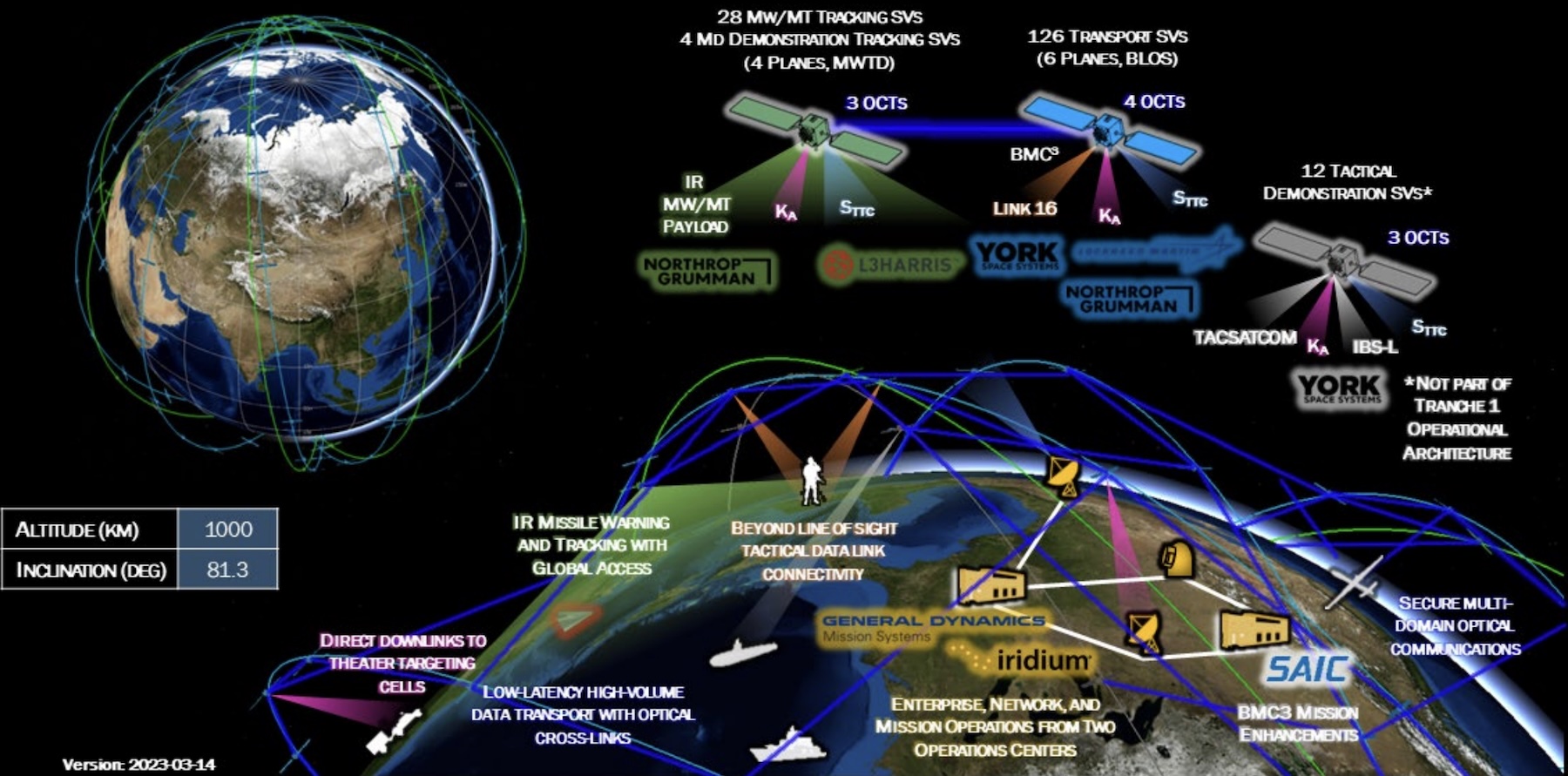
The agency’s primary contribution to national security is the Proliferated Warfighter Space Architecture (PWSA), a multi-layered constellation of hundreds of small, interconnected satellites in low-Earth orbit (LEO). Unlike the legacy systems currently in use—which rely on a small number of massive, expensive satellites positioned in high-altitude geosynchronous orbits (GEO)—the PWSA is designed for resiliency and sensitivity. By placing hundreds of sensors closer to Earth, the military aims to detect, track, and target ballistic and hypersonic missiles that are often too "dim" or fast for traditional GEO-based systems to monitor effectively. However, the path to realizing this vision has been fraught with technical setbacks, supply chain constraints, and the complex realities of operating in the harsh environment of space.

The Architecture of Resilience: PWSA and the LEO Advantage

The foundational logic behind the Space Development Agency’s mission was a radical departure from 20th-century military space doctrine. For decades, the United States relied on the "Big Juicy Target" model—exceedingly capable but vulnerable satellites that cost billions of dollars and took a decade to develop. The PWSA flips this script by prioritizing "proliferation." By launching hundreds of smaller satellites, the SDA ensures that the loss of a single unit, whether due to mechanical failure or enemy action, does not result in a catastrophic loss of capability.

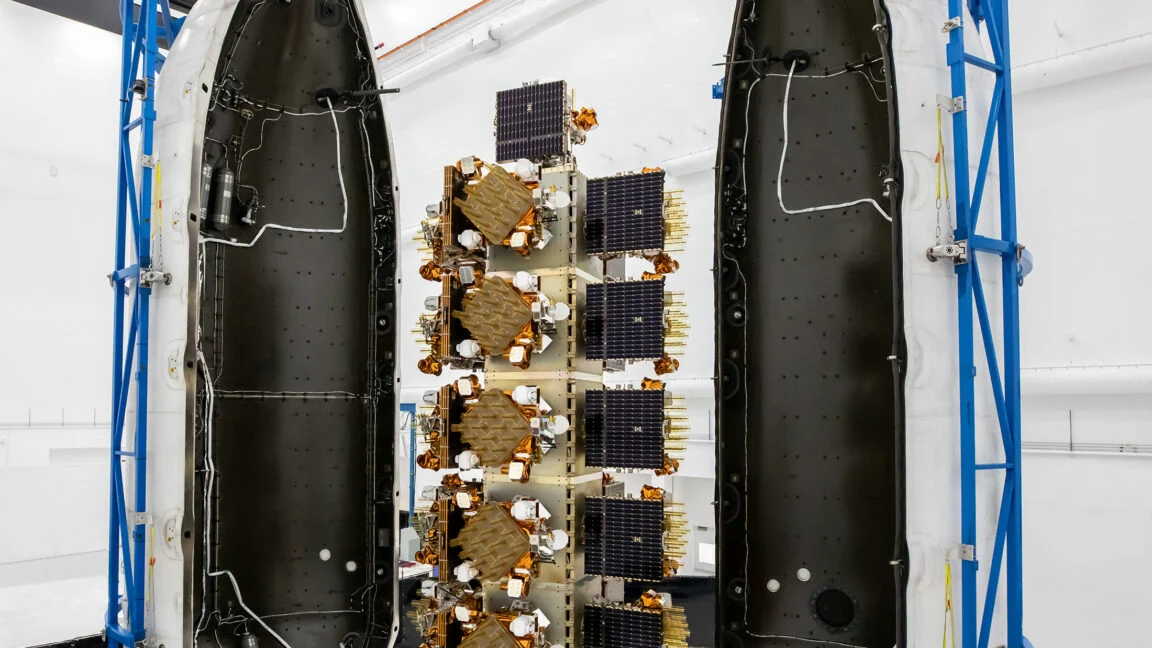
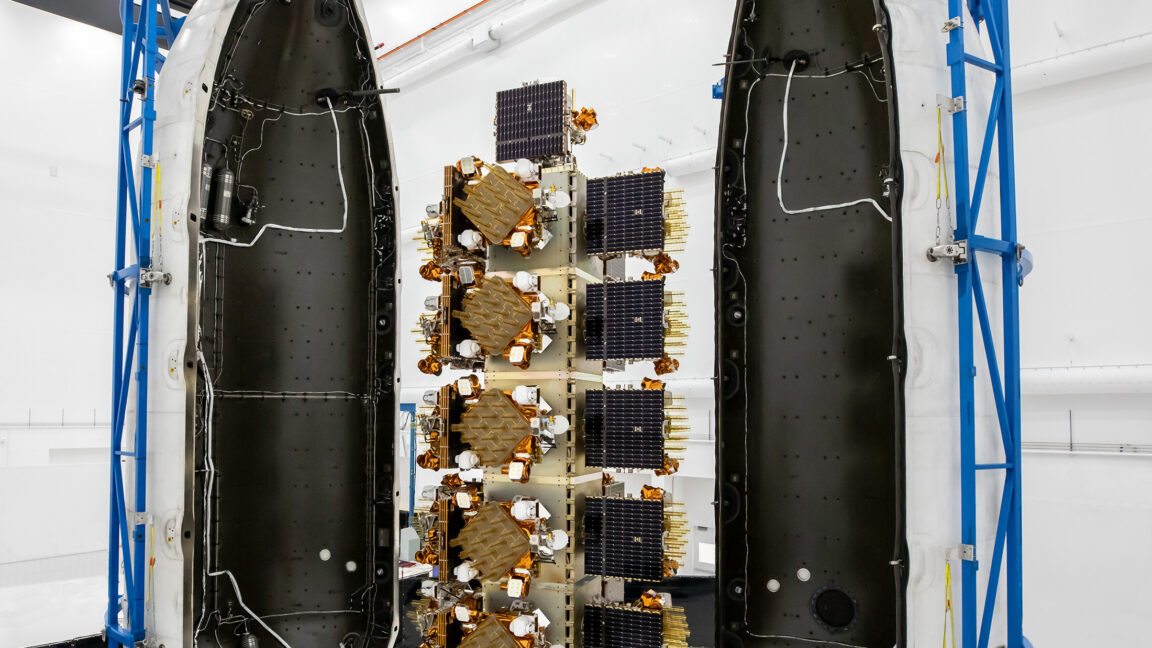
The PWSA is structured into two primary layers: the Transport Layer and the Tracking Layer. The Transport Layer acts as the "backbone" of the system, utilizing inter-satellite laser communication links—known as optical communication terminals—to create a space-based mesh network. This allows data to be moved across the globe at the speed of light without relying on vulnerable ground-based relay stations. The Tracking Layer consists of satellites equipped with advanced infrared sensors capable of spotting the heat signatures of hypersonic glide vehicles and other advanced missile threats.

This decentralized approach is intended to provide "persistent tactical satellite communication" and "overwatch." In a combat scenario, a Tracking Layer satellite would detect a missile launch and immediately relay that data through the Transport Layer to a ground station or directly to a weapons platform, such as an Aegis destroyer or a Patriot missile battery. The goal is to reduce the "sensor-to-shooter" timeline to a matter of seconds, neutralizing the "first-mover advantage" currently enjoyed by nations with advanced missile technology.

The Pentagon's Space Development Agency hasn't moved as fast as anyone would like

Technical Roadblocks and the Nine-Month Standdown

Despite the clarity of its mission, the SDA has struggled with the execution of its "Tranche 1" deployment. Tranche 1 is the first operational iteration of the constellation, following the "Tranche 0" prototype phase launched in 2023. While a SpaceX Falcon 9 rocket successfully delivered the third group of Tranche 1 transport satellites to orbit on Thursday from Vandenberg Space Force Base, the launch marked the end of a frustrating nine-month hiatus.

The pause was necessitated by a series of technical failures discovered during the activation of earlier satellite batches launched in late 2023. Ground teams encountered significant difficulty in commissioning satellites manufactured by York Space Systems and Lockheed Martin. According to Gurpartap "GP" Sandhoo, the director of the SDA, the satellites faced a "pretty harsh radiation environment" at their operational altitude of approximately 1,000 kilometers (621 miles). This altitude is notably higher than the orbits used by commercial mega-constellations like SpaceX’s Starlink, exposing the military hardware to more intense solar and cosmic radiation.

The specific issues cited by Sandhoo included:

  • Radiation Interference: Orbit-raising maneuvers did not go according to plan as onboard electronics struggled with the radiation flux.
  • Thermal Control Failures: Some satellites experienced overheating or cooling issues that threatened the longevity of sensitive components.
  • Propulsion System Glitches: Inconsistent performance from the thrusters used to move satellites into their final operational slots.
  • Ground Station Coverage Gaps: Initial ground infrastructure was insufficient to maintain continuous contact with the satellites during the critical early stages of deployment.

These "growing pains" forced the SDA and its contractors to "take a pause" to implement hardware and software fixes. While Sandhoo expressed optimism that the latest batch of satellites would perform more reliably, the delays have pushed the timeline for initial warfighting capability to 2027.

A Chronology of Development and the "Golden Dome" Integration

The SDA’s timeline reflects a rapid, yet turbulent, development cycle. Established in March 2019 under the leadership of Derek Tournear, the agency was given a mandate to "deliver space-based capabilities to the joint force at the speed of relevance."

  • 2019-2022: Initial design and vendor selection. The SDA broke with tradition by awarding contracts to multiple companies, including York Space Systems, Lockheed Martin, Northrop Grumman, and L3Harris, to foster competition and industrial capacity.
  • 2023: Launch of Tranche 0. These prototype satellites were used to demonstrate the feasibility of inter-satellite laser links and wide-field-of-view infrared sensors.
  • 2024: Launch of the first batches of Tranche 1. Technical issues lead to a standdown in the latter half of the year.
  • 2025: Resumption of Tranche 1 launches. The Pentagon announces plans to fold the SDA into the Space Force as part of a broader reorganization under several Program Acquisition Executives (PAEs).
  • 2027: Expected date for Tranche 1 to reach initial operational capability (IOC).
  • 2028 and Beyond: Deployment of Tranche 2 and Tranche 3, expanding the constellation to over 400 satellites.

Parallel to the SDA’s technical work is the political evolution of its mission. The PWSA is now being framed as a core component of the Trump administration’s "Golden Dome" missile shield. While the SDA’s tracking and transport capabilities are defensive in nature, the Golden Dome concept has introduced more controversial elements, such as the potential for space-based orbital interceptors designed to physically strike incoming missiles from above. While the SDA’s current focus remains on "overwatch" and data relay, its infrastructure provides the essential nervous system for any future kinetic interceptor program.

The Pentagon's Space Development Agency hasn't moved as fast as anyone would like

Industry Participation and Supply Chain Constraints

The SDA’s strategy of "casting a wide net" across the U.S. space industry has been both a strength and a source of friction. By involving multiple vendors, the agency has avoided being beholden to a single "prime" contractor, but this has also led to integration challenges. The current constraint on launch cadence is not the availability of rockets—SpaceX’s Falcon 9 provides ample capacity—but rather the production of Optical Communication Terminals (OCTs).

These laser transmitters are the most complex components of the PWSA. They require extreme precision to maintain a lock on a distant satellite while both are moving at speeds exceeding 17,000 miles per hour. Shortages in the supply chain for these specialized optics have prevented the SDA from reaching its desired monthly launch cadence. Sandhoo noted that the focus has shifted from the frequency of launches to the readiness of the hardware: "The goal is to get operational as quickly as possible once you get in orbit."

The involvement of SpaceX has also deepened. While the SDA initially sought to maintain a diverse vendor base, the Space Force recently selected SpaceX to build the "Space Data Network" (SDN) backbone. This network will leverage the technology SpaceX developed for its Starlink constellation to create a "sensor-to-shooter" targeting network. Eventually, the SDA’s transport satellites will be integrated into this larger SpaceX-led architecture, signaling a consolidation of military and commercial space technology.

Strategic Implications and Global Conflict Analysis

The urgency of the SDA’s mission is underscored by the current geopolitical climate. During a recent roundtable, Sandhoo lamented that the PWSA was not already fully operational, citing the ongoing conflicts in the Middle East. He specifically mentioned "Operation Epic Fury," noting that "missiles are being launched at the joint force every single day."

The ability to track Iranian ballistic missiles or Houthi anti-ship cruise missiles in real-time and provide that data to interceptor batteries on the ground would be a game-changer for U.S. Central Command. Currently, commanders must rely on a patchwork of ground-based radars and aging GEO satellites, which can have "blind spots" or latency issues. The Tranche 1 constellation, once complete with 154 satellites, will provide the "persistent overwatch" necessary to close these gaps.

Furthermore, the rise of hypersonic weapons—which travel at more than five times the speed of sound and can maneuver during flight—has rendered traditional missile defense systems largely obsolete. Because hypersonic vehicles fly at lower altitudes than standard ballistic missiles, they often "hide" below the horizon of ground-based radars. A proliferated LEO constellation is the only viable way to maintain a "custody" of these targets from launch to impact.

The Pentagon's Space Development Agency hasn't moved as fast as anyone would like

Conclusion: The Future of the SDA within the Space Force

As the Space Development Agency prepares to be absorbed into the Space Force, its legacy remains a subject of debate within the Pentagon. Supporters argue that the SDA successfully demonstrated that the military can move fast, take risks, and leverage commercial innovation. Critics, however, point to the schedule delays and technical "pauses" as evidence that the agency ultimately fell victim to the same complexities it was designed to avoid.

The reorganization under the Space Force is intended to streamline buying power and eliminate redundancies. Gurpartap Sandhoo’s dual role as SDA Director and the Space Force’s Portfolio Acquisition Executive for missile warning suggests a high degree of continuity. The SDA may lose its independent "shingle," but its "Tranche" model of rapid iterative development appears to have set a new standard for how the United States will build its future in the stars.

The success of the Golden Dome and the protection of U.S. forces in volatile regions like the Middle East will depend on whether the technical lessons learned during the Tranche 1 standdown can be successfully applied to the hundreds of satellites yet to be launched. For now, the "Epic Fury" of modern warfare continues to drive the demand for a shield that can see every threat, everywhere, all at once.

July 18, 2026 0 comment
0 FacebookTwitterPinterestEmail
Tech & Startup News

The best air purifiers for wildfire smoke tested: Our faves from Blueair, Coway Airmega, Shark, and more

by admin July 18, 2026
written by admin

The escalating frequency and intensity of wildfire seasons across North America have transformed indoor air quality from a secondary domestic concern into a primary health imperative. As the climate crisis intensifies, the traditional boundary between outdoor smog and indoor safety has become increasingly porous. Research from the Yale Climate Connections indicates that the 2026 wildfire season has already reached historic levels of pollution, with smoke plumes from Canadian and Western U.S. forests drifting thousands of miles to engulf major metropolitan hubs. While individuals have little agency over the atmospheric conditions of their cities, the implementation of high-efficiency particulate air (HEPA) filtration systems provides a critical line of defense for the home environment.

6 best home air purifiers tested: Banish wildfire smoke, pet dander, and more

The Science of Infiltration and Particulate Matter

A common misconception regarding wildfire smoke is that standard residential structures are airtight. In reality, particulate matter—specifically PM 2.5—is significantly smaller than a human hair, often measuring between 20 to 30 times thinner. These microscopic solids and liquid droplets can seep into homes through window seams, door frames, ventilation systems, and even electrical outlets.

Particulate matter is categorized by size. PM 10 includes larger particles like dust and pollen, which are generally trapped in the upper respiratory tract. However, PM 2.5 represents a more insidious threat. Because these particles are small enough to bypass the body’s natural filtration systems in the nose and throat, they can travel deep into the lungs and enter the bloodstream. According to data from Yale Medicine, systemic exposure to PM 2.5 is linked to an increased risk of cardiovascular disease, cognitive decline, and certain cancers. Furthermore, the U.S. Centers for Disease Control and Prevention (CDC) warns that wildfire smoke contains a complex mixture of gases and fine particles that can trigger oxidative stress, damaging the skin barrier and exacerbating pre-existing conditions such as asthma, diabetes, and heart disease.

6 best home air purifiers tested: Banish wildfire smoke, pet dander, and more

The Role of HEPA and Specialized Filtration

The primary technology utilized to combat these risks is the HEPA filter. To meet the industry standard, a HEPA filter must be capable of removing at least 99.97% of dust, pollen, mold, bacteria, and any airborne particles with a size of 0.3 microns. In the context of wildfire smoke, this filtration is often paired with activated carbon layers designed to adsorb volatile organic compounds (VOCs) and the persistent odors associated with woodsmoke.

Recent testing of market-leading units reveals that while many devices claim to "purify" the air, only those with verified HEPA certifications and adequate Clean Air Delivery Rates (CADR) are effective during high-smoke events. The following analysis details the top-performing units based on hands-on residential testing, evaluating their efficiency, longevity, and specialized features.

6 best home air purifiers tested: Banish wildfire smoke, pet dander, and more

Leading Solutions for Large-Scale Air Purification

For expansive living areas or open-concept homes, the volume of air that requires processing necessitates high-capacity units.

The Coway Airmega Mighty has long been regarded as an industry benchmark. Capable of covering up to 1,748 square feet, it utilizes a sophisticated four-stage filtration system. A notable advancement for this model is the "Intense Smoke Filter," a specialized component designed specifically for wildfire-prone regions. While this filter is an optional upgrade, third-party testing suggests it significantly enhances the sequestration of harmful pollutants compared to standard HEPA filters. This makes it a primary recommendation for individuals with chronic respiratory concerns.

6 best home air purifiers tested: Banish wildfire smoke, pet dander, and more

Similarly, the Shark NeverChange Air Purifier Max addresses the logistical challenges of large-space maintenance. The unit is rated for 1,400 square feet and features a HEPA filter engineered to last up to five years. This longevity represents a significant shift in the economic landscape of air purification, as the recurring cost of filter replacements often exceeds the initial price of the device. The Shark unit also incorporates "Clean Sense IQ," a real-time monitoring system that provides a numerical percentage of air quality, allowing users to see the immediate impact of the machine’s operation.

Targeted Protection for Vulnerable Populations and Small Spaces

The impact of wildfire smoke is not uniform across all demographics. Children, pregnant individuals, and the elderly are classified as high-risk groups. Furthermore, household pets often exhibit sensitivity to air quality long before humans notice physical symptoms.

6 best home air purifiers tested: Banish wildfire smoke, pet dander, and more

The Levoit Sprout Air Purifier is a specialized unit designed for nurseries and children’s rooms. Beyond its primary filtration duties—which include a three-stage pre-filter and a HEPA core—the Sprout offers a comprehensive suite of environmental sensors. It tracks CO2 levels, Total Volatile Organic Compounds (TVOCs), and multiple tiers of particulate matter (PM 1.0, 2.5, and 10). By integrating a nightlight and white noise machine, it serves as a multi-functional hub for pediatric health.

For pet owners, the Dreame FP10 (also known as the Furcatcher) addresses a specific mechanical failure point: filter clogging. Pet hair and dander can quickly saturate a HEPA filter, rendering it ineffective against smoke. The FP10 utilizes a unique "Furcatch" roller that physically removes hair from the filter surface, maintaining airflow and extending the life of the HEPA core for up to two years. Its design is also structurally reinforced to support the weight of pets who may attempt to sit on the unit, a common behavior observed during testing.

6 best home air purifiers tested: Banish wildfire smoke, pet dander, and more

In smaller environments such as home offices or dormitories, the Shark NeverChange Compact Pro offers a balance of aesthetics and efficiency. Despite its small footprint, it retains the five-year filter life of its larger counterparts and operates at a decibel level low enough to remain unobtrusive during professional video calls or sleep.

Multi-Functional Units and Smart Integration

The modern air purifier is increasingly becoming a year-round appliance rather than a seasonal emergency tool. Units that offer heating and cooling capabilities provide higher utility during the months when wildfire smoke is not a primary threat.

6 best home air purifiers tested: Banish wildfire smoke, pet dander, and more

The Blueair ComfortPure 3-in-1 functions as a heater, fan, and air purifier simultaneously. Its design features a magnetic filter closure and a portable handle, reflecting a focus on user experience. The associated Blueair app includes "geofencing" capabilities, which can trigger the device to enter high-performance mode when the user is within 15 minutes of arriving home, ensuring the indoor air is scrubbed before entry.

For those prioritizing medical-grade assurance, the LG PuriCare AeroTower holds a rare certification from the Asthma and Allergy Foundation of America. This tower-style unit is capable of performing four complete air changes per hour in a standard room, a metric that provides significant peace of mind during peak AQI alerts. It also includes a deodorizing carbon filter to neutralize the smell of smoke and common household odors.

6 best home air purifiers tested: Banish wildfire smoke, pet dander, and more

Economic and Health Implications of Long-Term Exposure

The shift toward permanent indoor air filtration is backed by sobering economic data. The healthcare costs associated with respiratory and cardiovascular ailments triggered by air pollution are mounting. A brief fact-based analysis suggests that the investment in a $200 to $600 air purifier is a preventative measure that may offset thousands of dollars in medical expenses over time.

Furthermore, the psychological impact of "AQI anxiety"—the stress associated with monitoring air quality maps—can be mitigated by the presence of reliable indoor sensors. When an air purifier displays a "100% Clean" reading, it provides a psychological sanctuary for residents who feel overwhelmed by the environmental degradation outside their doors.

6 best home air purifiers tested: Banish wildfire smoke, pet dander, and more

Conclusion and Testing Methodology

The selection of these specific models followed rigorous hands-on testing in residential settings. The primary criteria included:

  1. Filtration Integrity: Only units with true HEPA filters were considered, excluding "HEPA-type" or "HEPA-like" filters that lack standardized performance metrics.
  2. Maintenance Scalability: Preference was given to units with pre-filters, which extend the life of more expensive internal components by capturing large debris.
  3. Operational Acoustics: Because wildfire smoke often requires purifiers to run 24/7, noise levels were measured to ensure they did not disrupt daily life.
  4. Data Transparency: Units that provide real-time metrics (PM 2.5 levels) were ranked higher than those using vague color-coded systems.

As the 2026 wildfire season continues to challenge public health infrastructure, the adoption of localized air purification technology remains the most effective strategy for individual respiratory protection. While the global community works toward long-term climate solutions, the immediate priority remains the preservation of the air we breathe within the four walls of our homes.

July 18, 2026 0 comment
0 FacebookTwitterPinterestEmail
Artificial Intelligence & Tech

Five Essential Free Resources for Mastering Agentic Artificial Intelligence in the Modern Technical Landscape.

by admin July 18, 2026
written by admin

The rapid evolution of artificial intelligence has shifted from the era of passive large language models (LLMs) to the burgeoning age of agentic AI. As organizations transition from simple chatbots to autonomous agents capable of reasoning, planning, and executing complex tasks, a significant knowledge gap has emerged. While many developers can "ship" an agent by connecting an API to a loop, far fewer understand the underlying mechanics that prevent these systems from entering infinite loops, ignoring essential tools, or hallucinating successful outcomes. To bridge this divide, a curated selection of five high-quality, free educational resources has become the cornerstone for engineers and researchers looking to master the discipline of agentic systems. These resources, provided by industry leaders including Microsoft, Hugging Face, Anthropic, and Google, offer a comprehensive path from foundational theory to production-grade deployment.

The Shift Toward Autonomy: Context and Industry Evolution

The transition to agentic AI represents the next logical step in the generative AI timeline. In 2022 and early 2023, the industry focused primarily on prompt engineering and Retrieval-Augmented Generation (RAG) to improve the accuracy of model outputs. However, by 2024, the focus shifted toward "agency"—the ability of a model to use tools, browse the web, and interact with software environments to achieve a goal without constant human intervention.

This shift has not been without its challenges. Early autonomous experiments, such as AutoGPT, demonstrated the potential of the technology but also highlighted its fragility. Agents frequently failed due to compounding errors, where a single mistake in a multi-step process led to a total system breakdown. Consequently, the industry has moved toward more disciplined architectures, such as agentic workflows and multi-agent systems, where specialized models collaborate to ensure reliability. The resources identified below are designed to address these specific complexities.

1. Microsoft’s AI Agents for Beginners: A Structured Foundation

Microsoft has positioned itself as a leader in developer education through its "AI Agents for Beginners" curriculum. Hosted on GitHub under an MIT license, this course provides a rigorous, fifteen-lesson framework that moves beyond the hype to focus on architectural stability. Unlike many online tutorials that offer fragmented advice, this resource provides a cohesive narrative on when an agent is actually necessary versus when a simpler heuristic or script would suffice.

A critical component of this resource is its inclusion of the Model Context Protocol (MCP). As a newer interoperability standard, MCP allows agents to maintain context and state across different tools and environments more effectively than previous methods. The curriculum covers essential design patterns, including tool use, planning modules, and the context engineering required to prevent "context drift" in long-running tasks. By providing runnable Python code alongside video walkthroughs, Microsoft ensures that the theoretical concepts are immediately applicable to real-world software development.

2. Hugging Face AI Agents Course: Framework Agnosticism and Hands-On Skill

While Microsoft provides the structure, Hugging Face offers the technical breadth necessary for a production environment. The Hugging Face Agents Course is notable for its refusal to tether developers to a single library. In the current ecosystem, libraries like LangGraph, LlamaIndex, and the newer smolagents are competing for dominance. Hugging Face’s curriculum allows developers to build and compare agents across these different frameworks, providing the perspective needed to choose the right tool for a specific production stack.

This course is characterized by its "hands-on" philosophy. It concludes with a benchmarked project that requires students to demonstrate their ability to build an agent that can pass specific performance hurdles. This focus on benchmarking is vital; in a field where "it works on my machine" is a common refrain, Hugging Face emphasizes measurable performance. The course’s open-access nature ensures that the latest advancements in open-source model integration are available to the global developer community without financial barriers.

3. Anthropic’s Engineering Guide: The Architecture of Reliability

Anthropic, the creator of the Claude series of models, has contributed a seminal text titled "Building Effective Agents." This resource is less of a tutorial and more of a strategic manifesto. Its primary contribution to the field is the clear distinction it draws between "workflows" and "agents." Workflows follow predefined, predictable paths where the LLM performs specific tasks within a rigid structure. Agents, by contrast, are given the autonomy to direct their own process.

Anthropic’s guide argues that many problems currently assigned to autonomous agents are better served by well-designed workflows. The guide catalogs several essential patterns:

  • Prompt Chaining: Breaking a complex task into sequential sub-tasks.
  • Routing: Directing inputs to specialized models based on the nature of the query.
  • Parallelization: Executing multiple independent tasks simultaneously to improve speed.
  • Evaluator-Optimizer Loops: Using one model to critique and refine the output of another.

The core message from Anthropic is one of restraint. They warn that agents bring higher operational costs and a higher risk of error. This pragmatic approach is essential for engineers who must justify the return on investment (ROI) of AI implementations in a corporate setting.

4. Multiagent Systems by Shoham & Leyton-Brown: The Theoretical Bedrock

To understand the future of AI, one must often look to the past. "Multiagent Systems" by Yoav Shoham and Kevin Leyton-Brown is a foundational academic text that predates the modern LLM era but remains more relevant than ever. As the industry moves toward multi-agent setups—where different AI entities must negotiate, coordinate, and compete for resources—the principles of game theory and distributed decision-making become paramount.

The authors have made an electronic copy of the book available for free, providing access to the logical foundations of agent interaction. Topics covered include:

  • Distributed Constraint Satisfaction: How agents reach a consensus when their goals are restricted by shared resources.
  • Mechanism Design: Creating rules for systems so that agents are incentivized to behave in a way that benefits the whole.
  • Communication Protocols: The formal logic of how information is exchanged between autonomous entities.

By studying these foundations, developers can avoid "reinventing the wheel" when faced with coordination problems in modern multi-agent frameworks like AutoGen or CrewAI.

5. Google & Kaggle Agents Whitepaper Series: Bridging the Gap to Production

The final stage of agent development is the transition from a successful prototype to a reliable production system. Google’s five-part whitepaper series on Kaggle addresses this transition with a focus on "Evaluation"—the most difficult and often overlooked aspect of agentic AI.

The series explores the leap from "it seems to work" to "it is verified to work." It covers agent architectures, interoperability, and session memory, but its most significant contribution is the framework for agent quality assessment. Measuring the success of an agent is non-trivial because the path an agent takes to reach a solution can vary every time. Google’s research provides methodologies for creating robust evaluation pipelines that can detect when an agent has veered off course or when a tool update has degraded the agent’s performance.

Timeline of Agentic Development

The progression of these resources mirrors the industry’s timeline:

  • Pre-2023: Focus on Multi-Agent System theory (Shoham & Leyton-Brown).
  • Early 2023: Emergence of basic autonomous loops (Initial GitHub experiments).
  • Late 2023 – Early 2024: Development of structured frameworks (Microsoft and Hugging Face initiatives).
  • Late 2024: Emphasis on reliability and "Workflow vs. Agent" distinctions (Anthropic).
  • 2025 and Beyond: Focus on production-grade evaluation and interoperability (Google/Kaggle and MCP).

Analysis of Implications

The democratization of these high-level resources suggests that the "moat" in AI development is shifting. As the knowledge required to build agents becomes freely available, the competitive advantage for companies will no longer be the ability to build an agent, but the ability to build one that is reliable, cost-effective, and safe.

Data from recent industry reports indicates that by 2026, at least 40% of generative AI applications will be agentic in nature, up from less than 5% in 2023. This rapid adoption necessitates a workforce that understands not just the "how" of agent construction, but the "why" of agent behavior. The availability of free, high-quality education from the primary creators of these models (Microsoft, Google, Anthropic) suggests an industry-wide effort to ensure that the next generation of AI software is built on a foundation of engineering rigor rather than trial and error.

In conclusion, the path to mastering agentic AI involves a deliberate progression through these five resources. By combining the structured lessons of Microsoft, the hands-on versatility of Hugging Face, the strategic insights of Anthropic, the theoretical depth of Shoham & Leyton-Brown, and the evaluative precision of Google, developers can navigate the complexities of this new era. The cost of entry is no longer financial; it is the time and intellectual discipline required to master the science of autonomy.

July 18, 2026 0 comment
0 FacebookTwitterPinterestEmail
Artificial Intelligence & Tech

The Resurgence of Classical Machine Learning in the Development of Sophisticated Agentic AI Architectures

by admin July 18, 2026
written by admin

As the global technology sector continues to navigate the rapid evolution of Large Language Models (LLMs), a significant shift is occurring within the specialized field of artificial intelligence development. While the prevailing narrative of the last two years has focused almost exclusively on generative capabilities and prompt engineering, industry practitioners are reporting a necessary return to classical machine learning (ML) techniques to solve the reliability and precision challenges inherent in agentic AI. This resurgence marks a transition from "pure" generative AI toward hybrid "Compound AI Systems," where traditional algorithms like CatBoost, XGBoost, and Isolation Forests serve as the critical analytical engines for autonomous agents.

The core of this movement lies in the realization that while LLMs excel at natural language understanding and high-level reasoning, they often falter when tasked with high-precision numerical estimation, structured data classification, and cost-effective anomaly detection. Stephanie Kirmer, a senior data scientist working on sophisticated agentic platforms, recently highlighted this trend, noting that a substantial portion of modern AI development involves building classical classifiers and regression models rather than mere prompt optimization. This evolution suggests that the future of AI is not a replacement of the old by the new, but rather a synergistic integration where classical ML provides the "ground truth" and specialized tools that LLMs lack.

The Evolution of Machine Learning: A Chronological Context

To understand why classical ML is returning to the forefront, it is essential to examine the chronology of the field over the past decade.

Between 2012 and 2018, the industry was dominated by the rise of "Big Data" and the refinement of supervised learning. During this period, gradient-boosted decision trees (GBDTs) like XGBoost and LightGBM became the gold standard for tabular data, winning the majority of Kaggle competitions and powering recommendation engines, fraud detection systems, and financial forecasting tools.

In 2017, the introduction of the Transformer architecture by Google researchers set the stage for the current era. By 2022, with the public release of ChatGPT, the focus shifted dramatically toward Generative Pre-trained Transformers (GPT). For a period between 2023 and early 2024, there was a widespread industry assumption that LLMs could eventually handle all data tasks, including those traditionally reserved for classical models.

However, by late 2024 and early 2025, the limitations of "LLM-only" architectures became apparent. Developers encountered issues with "hallucinations" in numerical outputs, high inference costs, and significant latency. This led to the current phase: the rise of Agentic AI, where the LLM acts as a "reasoning engine" or "manager" that delegates specific, high-precision tasks to specialized classical ML tools.

Why Classical ML Outperforms LLMs in Agentic Frameworks

The integration of classical ML into agentic workflows is driven by several technical and economic factors. While an LLM can simulate a conversation about real estate, it is fundamentally a probabilistic engine for predicting the next token in a sequence, not a mathematical engine for calculating market value based on multi-variant tabular data.

Supporting data suggests that for tabular data tasks, classical models remain superior. According to various benchmarks, GBDT models like CatBoost consistently outperform LLMs on structured datasets in terms of both accuracy and computational efficiency. An LLM might require billions of parameters to approximate a trend that a LightGBM model can capture with a few megabytes of memory.

Key advantages of classical ML in this context include:

  1. Precision and Accuracy: Classical models are designed for specific mathematical objectives, such as minimizing mean squared error in regression. LLMs, by contrast, may provide "plausible-sounding" numbers that are mathematically incorrect.
  2. Interpretability: Tools like SHAP (SHapley Additive exPlanations) and LIME allow developers to see exactly which features influenced a classical model’s decision. This transparency is vital for regulated industries like finance and healthcare, where "black box" LLM reasoning is often insufficient.
  3. Latency and Cost: Running an inference on a CatBoost model takes milliseconds and negligible compute power compared to the seconds and high GPU costs associated with calling a frontier LLM API.
  4. Control: Developers can strictly define the input and output schemas of classical models, ensuring that the AI agent receives structured, predictable data rather than free-form text that may require further parsing.

Strategic Implementation: Direct Tooling vs. Pre-Calculated Context

In a professional agentic architecture, there are two primary methods for integrating classical ML models: direct tool calling and database-backed context retrieval.

Direct Tool Calling
In this configuration, the AI agent is equipped with a specific API or function that triggers a classical model. For instance, in a real estate analysis agent, the LLM might identify that a user wants a price estimate. The agent then extracts the property address, uses a retrieval tool to gather features (square footage, year built, lot size), and passes this structured data to a pre-trained regression model. The model returns a precise estimate, which the LLM then incorporates into its natural language response.

Experts suggest that for this to be effective, the output of the classical model should be enriched. Instead of returning a raw number like "450,000," the model wrapper can use f-strings to provide context, such as: "The estimated price is $450,000 with a 95% confidence interval of +/- $10,000. The primary drivers for this price were the recent renovation and the school district rating." This allows the agent to "understand" the result it is reporting.

Database Access and Pre-calculation
For scenarios involving a finite or predictable set of entities, developers are increasingly using "batch inference." In this model, classical ML models run on a schedule, calculating scores (such as creditworthiness, churn risk, or lead quality) for all entries in a database. The AI agent does not call the model directly but instead queries the database.

This approach significantly reduces runtime latency. If an agent is tasked with summarizing the financial health of 500 clients, it can instantly pull pre-calculated scores rather than triggering 500 individual model inferences. However, this requires the agent to be "aware" of the database schema and the meaning of the ML-generated columns, often achieved through sophisticated prompt engineering or metadata catalogs.

Industry Reactions and the "Skills Gap"

The return to classical ML has created a unique challenge in the labor market. A new generation of AI engineers has entered the field primarily focused on PyTorch, vector databases, and prompt engineering, often lacking deep experience in feature engineering, statistical validation, and the nuances of gradient boosting.

Industry analysts observe that "the most valuable data scientists in 2025 are those who can bridge the gap." There is a growing demand for practitioners who understand when to use an LLM for its linguistic flexibility and when to deploy a Scikit-learn pipeline for its statistical rigor. Organizations are increasingly looking for "full-stack" ML engineers who can maintain a CatBoost model as effectively as they can tune a RAG (Retrieval-Augmented Generation) system.

Educational platforms and boot camps are responding to this by re-introducing "Intermediate Machine Learning" tracks. These courses emphasize handling missing values, non-numeric data, and data leakage—skills that were momentarily overshadowed by the "plug-and-play" nature of LLM APIs.

Broader Implications for the AI Ecosystem

The integration of classical ML into agentic AI represents a maturing of the technology. It signals a move away from the "novelty" phase of generative AI and toward a "utility" phase where reliability is the primary metric of success.

From a sustainability perspective, this shift is beneficial. The energy requirements for training and running classical models are orders of magnitude lower than those for LLMs. By offloading specialized tasks to smaller, more efficient models, companies can reduce their carbon footprint and operational costs.

Furthermore, this hybrid approach addresses the "hallucination" problem that has plagued enterprise AI adoption. By using classical models as "fact-checkers" or specialized calculators within an agentic loop, developers can create systems that are both conversational and computationally accurate. For example, an agent might use an LLM to interview a user about their symptoms, but then use a classical classifier trained on clinical data to suggest a risk probability, rather than allowing the LLM to guess a diagnosis.

Conclusion: The Future is Hybrid

The consensus among leading AI practitioners is that the era of the "monolithic LLM" is ending, replaced by a modular, agentic approach. In this new paradigm, classical machine learning models are not obsolete; they are the essential "specialized tools" in the agent’s toolkit.

As AI agents become more autonomous, their need for precise, fast, and interpretable data will only grow. This ensures that libraries like XGBoost, LightGBM, and CatBoost will remain foundational to the AI stack. The most successful AI implementations of the coming years will likely be those that leverage the "brain" of the LLM to manage the "muscles" and "calculators" of classical machine learning, creating systems that are as capable of complex reasoning as they are of rigorous mathematical analysis. For the modern developer, the message is clear: to build the AI of the future, one must still master the algorithms of the past.

July 18, 2026 0 comment
0 FacebookTwitterPinterestEmail
Artificial Intelligence & Tech

Google Search Enhances AI Mode with Direct Third-Party App Integration and Seamless Task Automation

by admin July 18, 2026
written by admin

Google has officially announced a significant evolution in its search capabilities, enabling users to securely link and interact with third-party services directly within the Search AI Mode. This development, spearheaded by Senior Product Manager Chips Mistry and Engineering Lead Biharck Araújo, marks a pivotal shift for the world’s most used search engine, transitioning it from a platform primarily focused on information retrieval to one capable of executing complex tasks through integrated "Connected Apps." Starting this week, the rollout begins for users in the United States, offering a streamlined interface where actions—such as grocery shopping, creative design, and media curation—can be performed without leaving the Google ecosystem.

The integration represents a deepening of Google’s "Personal Intelligence" strategy, which seeks to provide tailored responses and actionable results based on a user’s specific digital ecosystem. By allowing users to connect services like Instacart, Canva, and YouTube Music, Google is positioning its AI Mode as a central command hub for digital productivity. This move follows the successful integration of similar features within the Gemini app, signaling a unified approach across Google’s various artificial intelligence touchpoints.

The Evolution of Search: From Queries to Actions

For decades, the standard search experience involved entering a query and receiving a list of blue links that required the user to navigate to external websites to complete a task. With the advent of the Search Generative Experience (SGE) and the subsequent introduction of AI Mode, Google began providing synthesized answers. However, the introduction of Connected Apps represents the "action phase" of this evolution.

In the practical application of these new features, Google highlights how a user planning a social event, such as a barbecue, can use AI Mode to generate a grocery list. Under the new system, if the user has connected their Instacart account, the AI can automatically populate an Instacart shopping cart with the necessary ingredients. The user can then finalize the purchase and arrange delivery with only a few additional taps on the Instacart app or website. This reduces the friction between the inspiration phase of a search and the logistical completion of the task.

Similarly, the integration with Canva targets the creative professional and the casual user alike. When a user searches for design concepts—for instance, "create a flyer for a local bake sale"—AI Mode can now surface specific Canva templates. This allows for a seamless transition from the conceptualization of a project in Search to the execution of the design in Canva’s specialized environment.

Strengthening the Ecosystem: YouTube Music and Beyond

The entertainment sector is also a primary focus of this initial rollout. By connecting YouTube Music to Search’s AI Mode, users can curate soundtracks based on specific moods, themes, or event descriptions. An AI-generated playlist can be instantly saved to a user’s library and played immediately. This integration reinforces the synergy between Google’s search dominance and its vast media holdings, providing a competitive edge in the music streaming market where personalization is a key differentiator.

According to the announcement, these initial partners—Instacart, Canva, and YouTube Music—are just the beginning. Google is actively collaborating with a diverse range of developers and service providers to expand the library of Connected Apps. The goal is to create a comprehensive web of services that allows AI Mode to handle virtually any intent, from travel booking to financial management, all within a secure and unified interface.

Technical Infrastructure and Security Protocols

A critical component of the Connected Apps rollout is the emphasis on security and user consent. Chips Mistry and Biharck Araújo emphasized that the linking of services is "secure" and remains under the user’s control. In an era where data privacy is a paramount concern for consumers and regulators alike, Google’s implementation requires explicit user authorization to bridge the data between Search and third-party platforms.

The technical architecture behind these integrations relies on advanced API (Application Programming Interface) handshakes that allow the AI to understand the structure of the third-party app’s data without compromising the user’s broader account security. When a user interacts with a connected app in AI Mode, the AI acts as a sophisticated intermediary, translating natural language requests into structured commands that the third-party service can execute.

Strategic Context: The Competitive AI Landscape

The decision to integrate third-party apps directly into Search is widely viewed by industry analysts as a strategic response to the rising competition in the AI sector. Companies like OpenAI, with its rumored "SearchGPT," and Perplexity AI have been challenging Google’s dominance by offering conversational interfaces that provide direct answers. By adding a layer of "actionability" through Connected Apps, Google is leveraging its massive infrastructure and existing developer relationships to offer a utility that newer, standalone AI models may struggle to replicate at scale.

Connect more of your apps to Search

Furthermore, this move addresses the "zero-click" search trend. While critics have argued that AI-generated summaries may reduce traffic to external websites, the Connected Apps model creates a new type of referral traffic. Instead of sending a user to a homepage, Google is sending a "ready-to-act" user directly into a specific checkout or design flow within a partner’s app. This can potentially lead to higher conversion rates for partners like Instacart and Canva, creating a mutually beneficial ecosystem.

Supporting Data and Market Implications

Market data suggests that the demand for AI-driven personal assistants is at an all-time high. A recent report by Gartner predicted that by 2025, 30% of outbound marketing messages from large organizations will be synthetically generated, and a significant portion of consumer commerce will be facilitated by "AI Agents." Google’s transition toward an agentic search model aligns with these forecasts.

Furthermore, user behavior studies indicate that younger demographics, particularly Gen Z, are increasingly using social media platforms and specialized AI tools for discovery rather than traditional search engines. By making Search more interactive and utility-focused, Google aims to retain its relevance among these digital-native cohorts who prioritize efficiency and integrated experiences over traditional browsing.

Timeline of the Rollout and Future Prospects

The rollout of Connected Apps in Search is being handled with a phased approach:

  1. Phase 1 (Current): Initial launch in the United States for users opting into AI Mode. Integration includes Instacart, Canva, and YouTube Music.
  2. Phase 2 (Upcoming): Expansion of the partner network to include travel, hospitality, and productivity tools.
  3. Phase 3 (Long-term): Global rollout across multiple languages and regions, with deeper integration into the Android and Chrome ecosystems.

Google has invited users to visit the AI Mode in Search to experiment with the new features and has provided a dedicated support page to guide users through the process of connecting and disconnecting their apps.

Broader Impact on the Digital Economy

The implications of Google’s Connected Apps extend beyond simple user convenience. For the broader digital economy, this represents a shift in how "intent" is captured and monetized. In the traditional model, Google monetized intent through advertising (AdWords). In the new model, Google becomes an essential layer of the transaction itself.

While Google has not explicitly detailed new monetization strategies for Connected Apps, the potential for affiliate-style revenue sharing or enhanced premium service tiers remains a possibility. For developers, the incentive to become a "Connected App" is massive: it offers a direct pipeline to users at the exact moment they express a need for a specific service.

However, this evolution also raises questions for smaller publishers and independent websites. If users can complete tasks through a handful of major "Connected" partners, smaller players may find it increasingly difficult to capture search traffic. This could lead to a more consolidated web where a few dominant platforms provide the majority of services through the Google AI interface.

Conclusion: The Dawn of the AI-Agent Search

The introduction of Connected Apps in Google Search signifies the end of the search engine as a mere directory of the internet. It is the beginning of Search as a proactive agent. By bridging the gap between "knowing" and "doing," Google is attempting to redefine the utility of the internet for the AI era.

As Chips Mistry and Biharck Araújo noted in their announcement, the goal is to "streamline your day." Whether it is through the effortless creation of a shopping cart or the instant generation of a design project, the integration of third-party apps into Search’s AI Mode is a bold step toward a future where the boundary between the search engine and the software we use every day ceases to exist. As more partners join the platform and the AI becomes more adept at managing complex multi-app workflows, the way users interact with the digital world is poised for a fundamental transformation.

July 18, 2026 0 comment
0 FacebookTwitterPinterestEmail
Newer Posts
Older Posts

Recent Posts

  • How native transaction assertions could enforce a transaction’s final outcome
  • Kraken Officially Lists NEXO Token, Expanding Access to the Digital Asset Wealth Platform Ecosystem
  • Crypto.com and OG.com Revolutionize US Derivatives Market with Regulated Crypto Perpetual Contracts
  • Beyond the Seed Phrase: How Smart Wallets and AI Agents Are Redefining Digital Personhood in the Post Web
  • Why Artificial Intelligence Might Make Software Too Secure for Law Enforcement Surveillance

Recent Comments

No comments to show.
  • Facebook
  • Twitter

@2021 - All Right Reserved. Designed and Developed by PenciDesign


Back To Top
Dr Crypton
  • Home
  • About Us
  • Contact Us
  • Cookies Policy
  • Disclaimer
  • DMCA
  • Privacy Policy
  • Terms and Conditions

We are using cookies to give you the best experience on our website.

You can find out more about which cookies we are using or switch them off in .

Dr Crypton
Powered by  GDPR Cookie Compliance
Privacy Overview

This website uses cookies so that we can provide you with the best user experience possible. Cookie information is stored in your browser and performs functions such as recognising you when you return to our website and helping our team to understand which sections of the website you find most interesting and useful.

Strictly Necessary Cookies

Strictly Necessary Cookie should be enabled at all times so that we can save your preferences for cookie settings.