
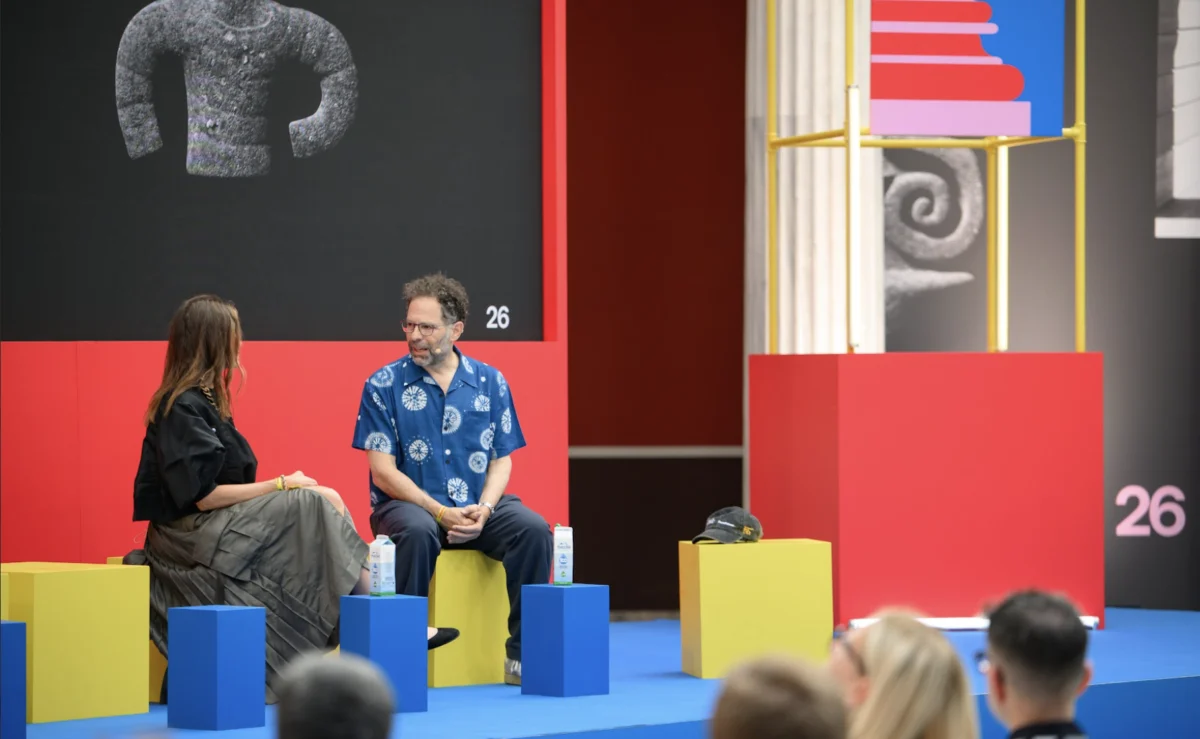
In the sun-drenched corridors of a vibrant new technology festival in Athens, Neil Rimer, the co-founder of Index Ventures, articulated a vision of the future that has begun to reverberate through the highest echelons of Silicon Valley and global finance. Reflecting on the staggering concentration of capital generated by the artificial intelligence revolution, Rimer suggested that the current trajectory of wealth accumulation is unsustainable. "I have a strong sense that there will be some sort of a redistribution," Rimer noted during a recent sit-down interview. "It’ll either be voluntary or it’ll be involuntary, but it’ll happen, and I hope it’s voluntary." His assertion that technology leaders must play a proactive role in this transition marks a significant departure from the libertarian ethos that has long dominated the venture capital landscape.
Rimer’s perspective carries extraordinary weight given his pedigree. As a co-founder of Index Ventures, one of the most successful venture firms of the last three decades, he has been an architect of the modern tech economy. While Rimer stepped back from day-to-day investing in 2021 to spend more time in Greece, his firm remains a titan in the industry. Index Ventures has raised approximately $15 billion from investors since its inception, and its recent track record is nothing short of legendary. In 2023 alone, the firm reportedly netted $9 billion from high-profile exits, including the initial public offering of Figma and Google’s acquisition of the cybersecurity firm Wiz. When a man who has helped generate such immense value speaks of "involuntary redistribution," it signals a shift from populist rhetoric to a pragmatic assessment of geopolitical and social stability.
The Erosion of Traditional Philanthropy
Rimer’s call for voluntary redistribution arrives at a moment when traditional mechanisms for billionaire giving are showing signs of structural fatigue. The Giving Pledge, launched in 2010 by Warren Buffett and Bill Gates to encourage the world’s wealthiest individuals to commit at least half of their fortunes to charitable causes, is increasingly viewed as an artifact of a previous era. Data indicates a sharp decline in participation: while 113 families signed the pledge in its first five years, that number dwindled to just four in 2024.
This retreat from formal philanthropy is accompanied by a new philosophy among the tech elite. Elon Musk, who recently became the world’s first trillionaire following a surge in SpaceX’s valuation, has famously argued that his profit-seeking businesses are themselves a form of philanthropy because they seek to solve fundamental human challenges. This "business-as-philanthropy" model suggests that the traditional hand-off of wealth to NGOs and non-profits is being replaced by a belief that private capital is best spent on further innovation.
However, broader economic data suggests a troubling trend in grassroots giving. While total American charitable giving reached a record $592.5 billion in 2024, the actual number of individuals donating has fallen for five consecutive years. In 2000, roughly two-thirds of American households made charitable donations; today, that figure has plummeted to approximately 50%. Even among affluent households, participation has slipped from 90% in 2017 to 81% last year. Within the AI sector specifically, the trend is even more pronounced. Employees at firms like Anthropic, many of whom are adherents of "effective altruism," are reportedly prioritizing angel investing and founding their own startups over traditional philanthropic planning. For this new generation of wealth, "giving back" is being redefined as "reinvesting in the ecosystem."
The Involuntary Path: Legislative Pressure and Tax Migration
The "involuntary" redistribution Rimer warned of is already taking shape in the form of aggressive legislative proposals. In California, the heart of the global tech economy, voters are set to decide on a landmark 5% one-time wealth tax targeting the state’s billionaires. The proposal has sent shockwaves through the industry, prompting a preemptive exodus of high-net-worth individuals. Figures such as Google co-founders Sergey Brin and Larry Page have reportedly shifted their primary residences to jurisdictions like South Florida to mitigate potential tax liabilities.
The pressure is also being felt at the corporate level. OpenAI, the creator of ChatGPT, is reportedly considering an initial public offering in 2027. In a move that some analysts view as an attempt to preempt political blowback, the company has discussed the possibility of granting the federal government a 5% equity stake. CEO Sam Altman has framed this as a way to share the "upside" of AI with the public. Critics, however, view it as a strategic maneuver to secure political favor in Washington and avoid more stringent regulatory or tax-based interventions.
Silicon Valley’s historical aversion to government involvement remains a significant hurdle. Roelof Botha of Sequoia Capital recently echoed a common sentiment in the valley, citing the old adage that the most dangerous words in the English language are, "I’m from the government, and I’m here to help." Yet, as the wealth gap widens, the "hands-off" approach of the last forty years is facing its greatest challenge since the Great Depression.
A New Gilded Age: Data and Disparity
To understand the scale of the wealth Rimer is discussing, one must look at the sheer numbers. In its 2026 rankings, Forbes identified 45 new AI billionaires, possessing a combined net worth of $2.9 trillion. This surge occurred before the anticipated public debuts of industry leaders like Anthropic and OpenAI. Projections suggest that once these companies complete their IPOs, their combined employee base will hold enough liquid wealth to purchase nearly one-third of all residential real estate in the San Francisco metropolitan area, potentially further exacerbating the regional housing crisis.
The concentration of wealth in the United States has reached levels that invite direct comparison to the first Gilded Age. The top 1% of U.S. households currently hold 31.7% of the nation’s wealth—a record high since the Federal Reserve began tracking the data in 1989. While this is technically lower than the 45% share held by the top 1% in 1916, the concentration at the "tippy top" is actually more extreme today. Economist Gabriel Zucman has noted that in 1910, the four largest American fortunes represented roughly 4% of U.S. GDP. Today, the 19 wealthiest households command a staggering 14% of the GDP.
Historical Precedents: The Carnegie Model vs. The Long Plan
Rimer’s "voluntary vs. involuntary" dichotomy has clear historical roots. In 1889, at the height of the first Gilded Age, steel magnate Andrew Carnegie published "The Gospel of Wealth." He argued that the rich had a moral obligation to distribute their wealth for the public good during their lifetimes, famously stating that "the man who dies thus rich dies disgraced." Carnegie’s philosophy laid the groundwork for modern American philanthropy, yet it was not enough to stave off political intervention.
By the 1930s, the failure of voluntary charity to address the hardships of the Great Depression led to the rise of Huey Long and his "Share Our Wealth" program. Long’s movement demanded heavy taxation on the wealthy to fund a guaranteed national income. Fearing the radical appeal of Long’s populism, President Franklin D. Roosevelt pushed through the Revenue Act of 1935, often called the "soak-the-rich tax," which raised the top marginal income tax rate to 79%. This era serves as the definitive example of how "involuntary" redistribution becomes a political necessity when "voluntary" efforts are perceived as insufficient.
The Moral Center of the Technology Industry
Beyond the economics, Rimer is deeply concerned with the cultural and moral standing of the technology sector. He recalls his time as a Stanford undergraduate in 1984, when Steve Jobs and the founders of Apple were viewed as counter-cultural heroes building tools for human empowerment. Today, Rimer observes a troubling shift in perception. He notes that his own children now speak about major tech conglomerates with the same skepticism and moral distaste that previous generations reserved for defense contractors or big tobacco.
This reputational decay is a strategic risk for the industry. If the public perceives that the benefits of AI are being hoarded by a tiny elite while the risks—such as job displacement and privacy erosion—are socialized, the political mandate for "involuntary" redistribution will become irresistible.
Analysis: The Crossroads of Innovation and Equity
The AI revolution is unique because of its speed and the low marginal cost of scaling intelligence. Unlike the industrial revolution, which required decades of physical infrastructure and massive labor forces, AI wealth can be generated with unprecedented velocity and relatively few employees. This creates a "winner-take-most" dynamic that accelerates inequality at a pace the current social contract is not designed to handle.
Rimer’s warning is essentially a call for a new "Social Contract 2.0." He is betting that the leaders of the AI era will recognize that their continued license to innovate depends on the perceived fairness of the outcomes they produce. If the tech elite chooses the "easy way"—proactive, voluntary redistribution through revamped philanthropy, equity sharing, or support for social safety nets—they may preserve the market systems that allowed them to flourish. If they choose the "hard way," they may find themselves facing a political movement that looks less like a tax adjustment and more like a fundamental dismantling of the modern corporate structure.
As the 2027 IPO window approaches for the giants of generative AI, the window for voluntary action is closing. The global community is watching to see if the architects of the future will heed Rimer’s advice or if history will once again take the choice out of their hands. For Neil Rimer, the rumpled venture capitalist in Athens, the answer is clear: the wealth will be shared. The only question remains who will hold the pen when the terms are written.

