
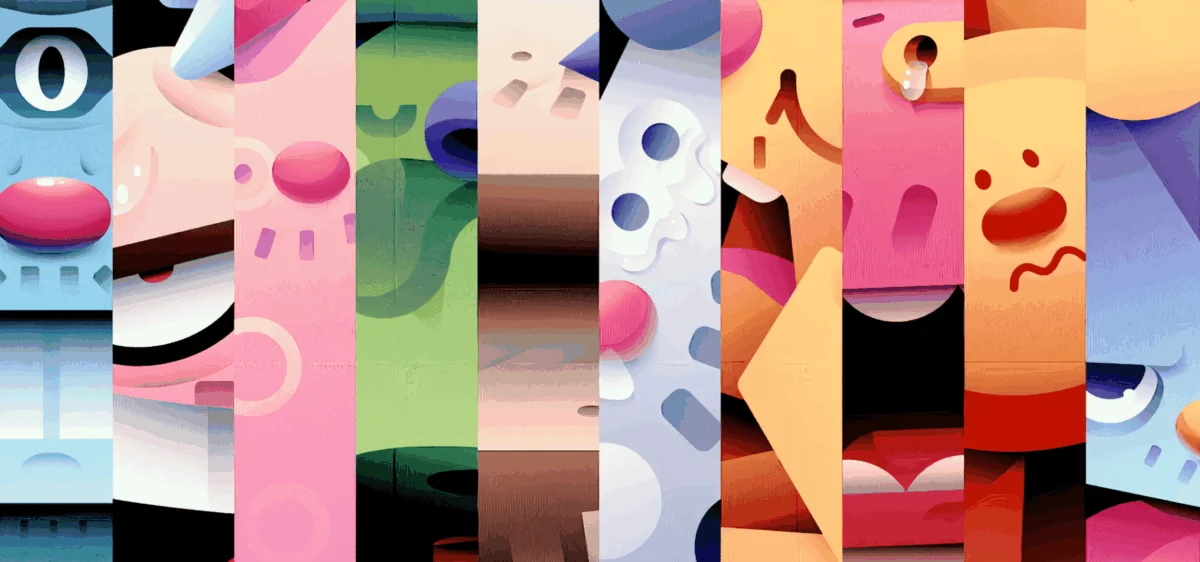
The digital art landscape, particularly within the decentralized ecosystem of Web3, has long been characterized by a penchant for high-octane spectacle, vibrant color palettes, and speculative fervor. However, a new collection by the artist known as Defaced, titled "A Series of Headaches," marks a significant departure from these industry norms. By pivoting toward a somber, deeply personal exploration of chronic illness, Defaced has introduced a narrative-driven body of work that utilizes the blockchain as a repository for human vulnerability rather than merely a vehicle for financial speculation. The collection consists of twenty unique self-portraits, each meticulously crafted from years of meticulous documentation regarding the artist’s struggle with chronic neurological pain.
The project is rooted in a practice of self-observation that began in January 2021. For over three years, Defaced maintained a "headache journal," a common clinical tool used by patients to identify triggers and patterns in migraine or cluster headache occurrences. However, in the hands of an artist, this medical data was transformed into a conceptual framework for digital portraiture. Each entry in the journal tracked specific variables, including the date of the episode, the intensity of the pain on a numerical scale, the physical location of the sensation within the cranium, and the sensory distortions—often referred to in medical literature as "auras"—that accompanied the pain. By translating these invisible, internal experiences into a visual medium, Defaced has created a series of "avatars of agony" that serve as a bridge between the clinical reality of chronic illness and the abstract world of digital art.
The Chronology of Invisible Pain
The genesis of "A Series of Headaches" coincides with a period of unprecedented growth and subsequent volatility in the non-fungible token (NFT) market. While many creators were focused on the development of "generative" projects consisting of thousands of randomized traits, Defaced’s approach was additive and archival. The timeline of the project reveals a slow, deliberate process of synthesis. Between January 2021 and early 2024, the artist accumulated hundreds of entries. These notes ranged from the "devastatingly direct"—short, clipped sentences describing a loss of function—to the "surreal," where the pain began to warp the artist’s perception of reality.
On May 13, 2024, Defaced went public with the conceptual framework behind the collection, sharing the raw data that informed the visuals. The transition from journal entry to digital artifact involved a process of "emotional remixing." The artist noted that literal descriptions of pain often fail to capture the true weight of the experience. Consequently, the work leans heavily on metaphor and symbolism. For instance, journal entries mentioning the "smell of metal" or "static in the eyes" were translated into specific digital textures, such as metallic glints on low-poly models or intentional "noise" and artifacting in the render. This chronology highlights a shift in the Web3 space from "art as a product" to "art as a process," where the value of the work is inextricably linked to the duration and intensity of the lived experience behind it.
Historical Lineage and Visual Influences
To understand the aesthetic choices in "A Series of Headaches," one must look to the historical and cultural references that Defaced cites as foundational. The artist draws a direct line to the 19th-century physician Hubert Airy. In 1870, Airy published a seminal paper titled "On a Distinct Form of Transient Hemiopsia," which included detailed, hand-drawn illustrations of his own migraine auras. These drawings featured jagged, geometric patterns—often called "fortification spectra"—that represented the visual disturbances caused by neurological episodes. Airy’s work was one of the first successful attempts to map the invisible distortions of the human mind. Defaced adopts this lineage, utilizing modern digital tools to continue the work Airy began with a pen and paper.
In addition to medical history, the collection is heavily influenced by the 1998 PlayStation 1 cult classic, LSD: Dream Emulator. Developed by Osamu Sato, the game is famous for its lack of traditional objectives, instead tasking players with navigating a series of unstable, surreal dreamscapes based on a decade-long dream journal. The visual language of LSD: Dream Emulator—characterized by low-resolution textures, "clipping" errors, and uncanny, disconnected environments—mirrors the disorienting nature of a migraine. Defaced utilizes these "lo-fi" aesthetics not merely for nostalgia, but as a functional representation of "damaged memory." The portraits do not appear as polished, high-fidelity renders; instead, they resemble corrupted data pulled from a legacy hardware system, suggesting that chronic pain acts as a form of "noise" that interferes with the high-resolution processing of daily life.
Regression as an Artistic Strategy
A pivotal aspect of the collection is the concept of "regression as evolution." Defaced has stated that their standard, more polished drawing style was insufficient to convey the raw, unrefined nature of chronic pain. To access a more "truthful" representation of their internal state, the artist intentionally returned to the aesthetics of childhood and early gaming. This involved a process of "digital collage," where various symbols of identity—such as toys, games, and media from the 1990s and early 2000s—were integrated into the self-portraits.
Specific motifs, such as the "Heartless" figures from the Kingdom Hearts franchise or the classic Disney character Pluto, appear within the portraits. In this context, these are not mere pop-culture references; they are "autobiographical architecture." For a generation that came of age during the rise of 3D gaming, these low-poly shapes and bright, primary colors are deeply tied to the formation of identity. By combining these nostalgic symbols with the dark, fragmented reality of chronic pain, Defaced creates a "psychological collage." The artist describes childhood play as being "close to collage," where various disparate objects are given new, symbolic meanings. In "A Series of Headaches," this play becomes a survival mechanism, allowing the artist to rebuild a sense of self from the fragments left behind after a neurological episode.
Implications for the Web3 Art Market and Digital Archiving
The release of "A Series of Headaches" occurs at a time when the broader NFT market is undergoing a period of introspection. Following the speculative bubble of 2021-2022, there has been a growing demand for "Fine Art" within the crypto space—works that prioritize conceptual depth and artistic intent over "flippability" or utility. Defaced’s project serves as a case study for how blockchain technology can be used for "permanent psychological evidence." By minting these portraits as NFTs, the artist ensures that this archive of pain is immutable and globally accessible, effectively "on-chaining" a medical history that might otherwise have remained hidden in a private journal.
Furthermore, the project highlights the increasing importance of "metadata" as a narrative device. In "A Series of Headaches," the metadata associated with each token is not just a list of traits; it is a repository of the journal entries themselves. This allows collectors and viewers to engage with the work on multiple levels: as a visual piece of art, a historical document, and a piece of digital literature. This multi-layered approach suggests a future where digital art is judged not by its visual complexity, but by the "density" of the information it carries.
Analysis of Broader Cultural Impact
The reception of "A Series of Headaches" within the artistic community suggests a broader cultural shift toward vulnerability. In an era where artificial intelligence can generate hyper-realistic, "perfect" imagery in seconds, human artists are increasingly finding value in the "imperfect." The glitches, the low-resolution textures, and the raw, unedited descriptions of suffering in Defaced’s work serve as a "proof of humanity." This resonates with a global audience that is increasingly wary of the "polished" versions of life presented on social media.
Moreover, the project addresses the "loneliness" of chronic illness. Chronic pain is often an isolating experience because it is invisible to others. By visualizing this pain, Defaced provides a vocabulary for others suffering from similar conditions. The collection acts as a form of "communal catharsis," where the artist’s personal struggle becomes a mirror for the collective experience of human frailty. This transition from the "personal" to the "universal" is a hallmark of significant art, and its emergence within the Web3 space indicates that the technology is maturing into a legitimate medium for complex emotional expression.
In conclusion, "A Series of Headaches" is more than a collection of digital images; it is a sophisticated exploration of how we construct identity in the face of physical and neurological adversity. By drawing from a diverse array of influences—ranging from 19th-century medical drawings to 1990s video games—Defaced has created a body of work that is both historically grounded and technologically forward-looking. As the digital art world continues to evolve, projects like this serve as a reminder that the most enduring "assets" on the blockchain are those that capture the profound, messy, and often painful reality of the human condition. In a market often defined by noise, Defaced has successfully created a work that "aches quietly"—and in doing so, has made one of the most resonant contributions to the digital art canon in recent years.

