
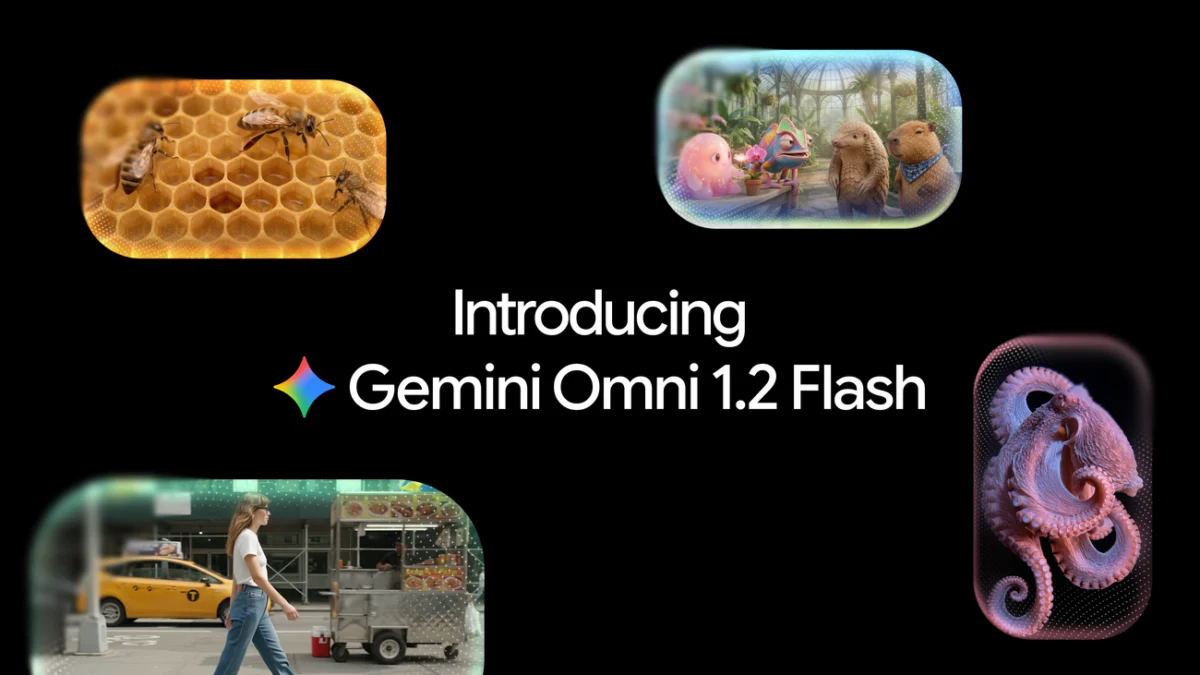
The Evolution of Generative Video at Google
The journey to Gemini Omni 1.2 Flash represents a rapid acceleration in the timeline of generative AI. Since the inception of the Gemini model family, Google has prioritized a multimodal-first approach, where the model is natively trained on text, audio, image, and video simultaneously.
In early 2024, the debut of Gemini 1.5 Pro and Flash models established a baseline for long-context windows. However, the specialized "Omni" track—focused on high-speed, low-latency media generation—has faced the industry-wide challenge of "temporal drift." Previous iterations often struggled to maintain character, object, and environmental consistency over durations longer than 10 seconds. With the 1.2 update, developers have successfully extended this threshold to 15 seconds, while simultaneously introducing a granular control system that allows users to specify video duration in one-second increments. This shift from generic clip generation to precision-based storytelling is a critical upgrade for marketing agencies, social media teams, and product designers.
Technical Advancements and Performance Metrics
The architectural improvements in Gemini Omni 1.2 Flash are centered on the model’s ability to adhere to visual and audio references. One of the primary complaints regarding earlier generative video models was the "morphing" effect, where background elements or character features would shift unnaturally between frames.
To address this, Google has implemented a more robust conditioning system. When a user provides a reference image—such as a product photo, a character sheet, or a specific brand color palette—the model now anchors these elements across the entire duration of the clip. This is particularly evident in the new "virtual try-on" capabilities, where the model maintains the drape and texture of clothing across a 360-degree rotation of a subject.
Data provided by Google highlights the economic impact of these updates. The pricing model has been recalibrated to $0.07 per second for 720p video output. This pricing strategy encourages a modular workflow:
- Drafting: Users can generate initial concepts at 360p or 720p to iterate on motion and composition.
- Refinement: Through multi-turn conversational editing, users can tweak specific details (such as changing a background or lighting condition) without needing to re-generate the entire clip.
- Upscaling: Once the final version is locked, the model facilitates upscaling to 1080p or 4K, optimizing compute resources for the most critical stage of the process.
Multi-Turn Editing: A Shift in User Experience
Perhaps the most significant productivity shift is the introduction of advanced multi-turn conversational editing. Historically, generative video required a "prompt-and-pray" approach, where a failed generation necessitated a complete restart.
Omni 1.2 Flash changes this dynamic by treating the video as an editable object. If a creator generates a 15-second clip of a character walking through a market, they can now issue follow-up prompts such as, "change the time of day to sunset" or "swap the character’s clothing for a rain jacket." The model preserves the character’s performance, the camera framing, and the overall motion path while applying the requested changes. This iterative process reduces the time-to-market for video assets significantly, allowing for the rapid creation of localized or platform-specific ad variants.

Enhancing Realism through Audio and Motion
The integration of audio-visual synchronization has also seen a marked improvement. Omni 1.2 Flash introduces clearer lip-syncing and multi-speaker conditioning. In professional settings—such as the creation of video explainers via Google Vids or the use of digital avatars—the model can now effectively sample a one-second voice clip and apply that cadence and timbre to a character’s dialogue.
This is supported by more natural camera movements. The model’s ability to handle complex trajectories—such as first-person view (FPV) drone shots or sweeping orbits—has been refined to reduce jump cuts. By stabilizing the internal "virtual camera," the model produces smoother transitions that mimic the cinematic language of traditional filmmaking, rather than the stuttered, algorithmic motion common in earlier AI models.
Industry Implications and Enterprise Readiness
The broader impact of this release is the legitimization of generative video for global brands. The inclusion of SynthID watermarking—an imperceptible digital watermark embedded into the pixels of the generated content—addresses growing concerns regarding deepfakes and the provenance of AI-generated media. By ensuring that all outputs from the model are identifiable, Google is providing a level of security and transparency that large-scale corporate entities require before integrating generative tools into their public-facing workflows.
Furthermore, the general availability of the Gemini API and support for Google Cloud’s enterprise-grade infrastructure means that the model is no longer confined to sandbox environments. Through Provisioned Throughput, businesses can guarantee the performance levels needed for high-volume content pipelines.
Analysis of Future Challenges
While the 15-second threshold and improved consistency represent significant progress, the technology is not without its limitations. Google’s own documentation acknowledges that "complex physics" and "fast sports action" remain areas of ongoing research. The model occasionally struggles with the minute details of high-speed collisions or the nuanced, non-linear movement of fluids and hair in extreme conditions.
However, the trajectory is clear: the focus is shifting from "how to generate a video" to "how to control the generation." As the model continues to learn from user interaction and broader datasets, the barrier to entry for high-quality, studio-grade video production continues to drop.
Conclusion: A New Standard for Creators
The rollout of Gemini Omni 1.2 Flash is not merely an incremental update; it is a strategic repositioning of Google’s AI portfolio. By prioritizing cost-effectiveness, conversational editability, and rigorous consistency, Google is inviting creators and businesses to treat AI video not as a toy, but as a utility.
As we look toward the future of generative media, the ability to iterate in real-time on long-form, high-definition content will likely redefine how digital advertising and corporate communications are produced. For developers and enterprises, the tools are now sufficiently mature to move beyond prototyping and into full-scale implementation. Whether for short-form social media spots or complex, multi-layered visual explainers, Gemini Omni 1.2 Flash establishes a new, high-water mark for the industry, pushing the boundaries of what is possible when massive computing power is paired with intuitive, conversational control.

