

The notorious consumer data broker Radaris.com has finally fallen victim to its own protracted legal evasion after a New Jersey state court ordered the transfer of its flagship domain—alongside more than a dozen sister properties—to a privacy enforcement firm. For over a decade, Radaris built a reputation for stonewalling removal requests and ignoring legal scrutiny while amassing and monetizing expansive dossiers on millions of U.S. citizens. That era of impunity collided with a strict state privacy statute known as Daniel’s Law, which penalizes data brokers that publish the personal identifying information of law enforcement officials, judges, and government personnel.
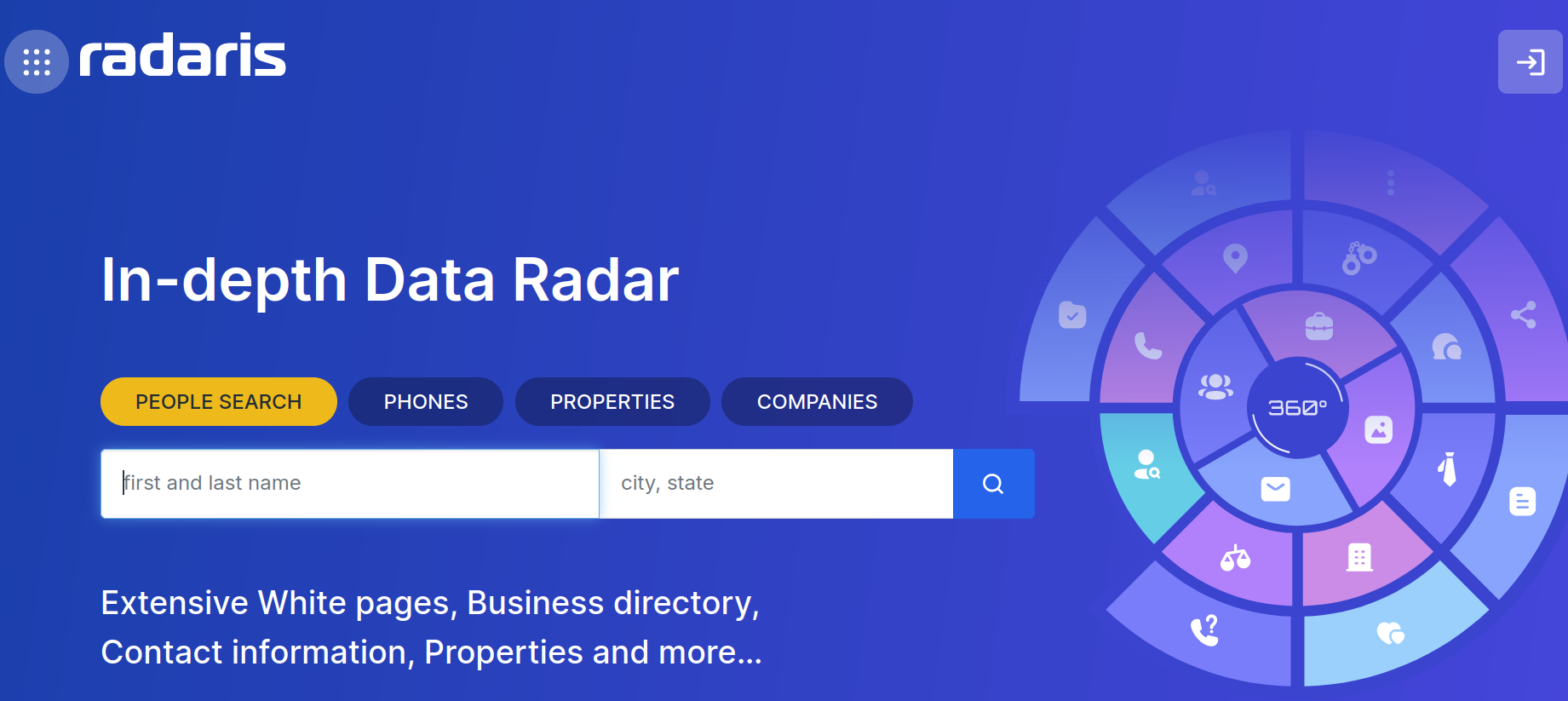
The forfeiture of radaris.com marks a watershed moment in the ongoing battle between privacy advocates and the opaque, multi-million-dollar people-search industry. Rather than selling detailed background checks and personal profiles, the radaris.com homepage now greets visitors with a court-ordered notice detailing its transfer to Atlas Data Privacy Corp., the corporate plaintiff behind the successful litigation.
The Genesis of Daniel’s Law and the Atlas Lawsuit
Enacted in response to a tragic family shooting involving the son of a federal judge, Daniel’s Law provides robust protections for specific classes of public servants in New Jersey. Under the statute, designated state officials, law enforcement personnel, and members of the judiciary can demand the complete scrubbing of their personal data from commercial databases. Crucially, the law provides for statutory damages of $1,000 per violation for commercial entities that fail to comply with removal requests.
In February 2024, Atlas Data Privacy Corp. initiated a high-stakes legal campaign against Radaris, alleging systematic violations of the statute. The lawsuit served as a direct challenge to a business model built on ignoring compliance and playing procedural shell games. Less than a month after the litigation commenced, investigative reporting revealed that Radaris was operated by Russian-born brothers Igor and Dmitry Lubarsky (also known as Gary Lybarsky), Massachusetts residents who control a sprawling network of people-search engines, affiliate programs, and foreign-registered holding companies.
Throughout the proceedings, legal representatives for the Lubarsky brothers fiercely contested the allegations. Initially threatening defamation litigation against investigative journalists, defense counsel claimed the true corporate owners were Ukrainian nationals. Subsequent legal filings revealed an even more elaborate deception: the invention of a fictitious CEO named "Gary Norden," whose persona was deployed in corporate press releases and investor pitches while the Lubarskys maintained operational control behind the scenes.
A Decade of Corporate Shell Games and Island-Hopping
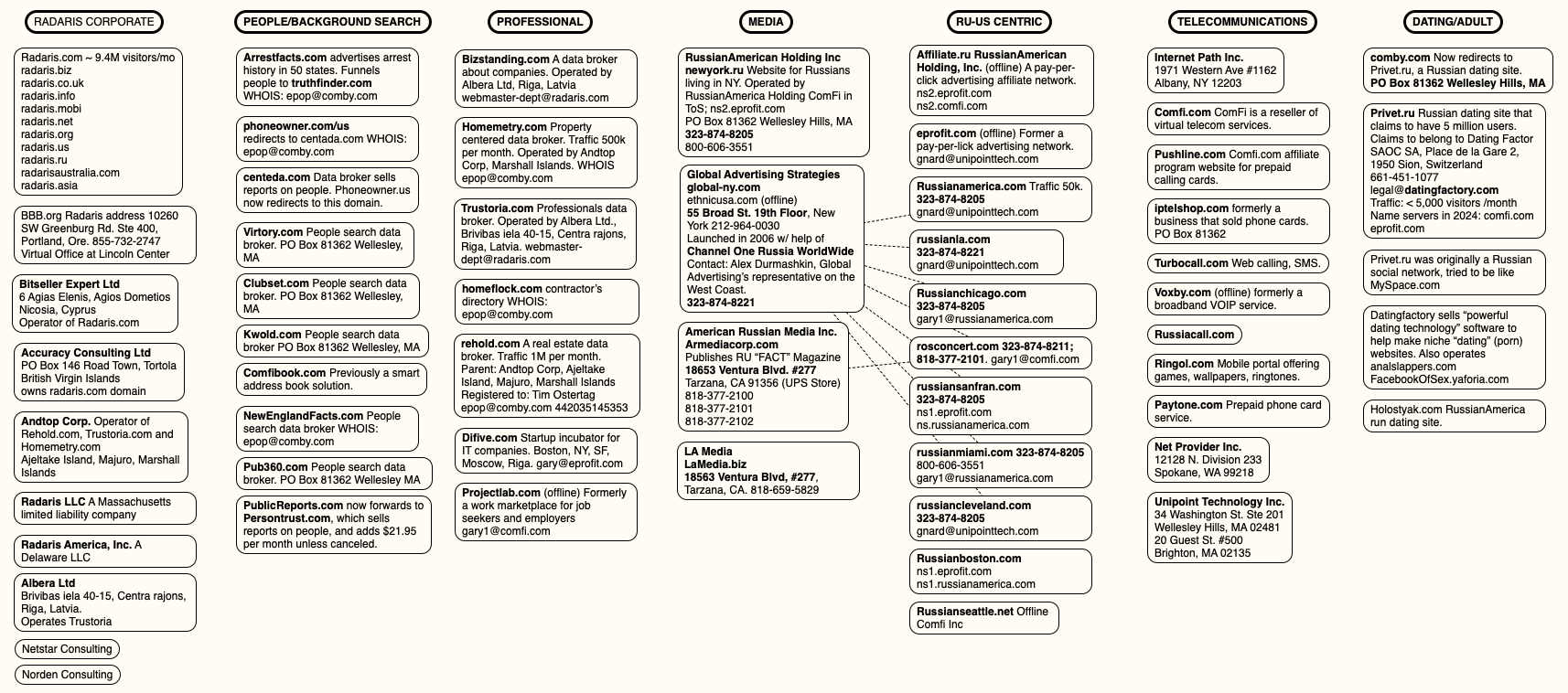
The collapse of Radaris.com was not immediate; it was the culmination of years of tactical procedural delays and jurisdictional obfuscation. Matt Adkisson, president and CEO of Atlas, characterized the defense strategy as an exercise in "island-hopping." According to internal documents and court records, the corporate entities ostensibly managing Radaris changed with dizzying frequency.
As legal pressure mounted in various jurisdictions, the network’s corporate veil shifted across offshore tax havens, including the Marshall Islands, the British Virgin Islands, Cyprus, and the Seychelles. When plaintiffs successfully pursued judgments against specific shell companies—such as Bitseller Expert Limited or Andtop Company, an entity formed in the Marshall Islands in October 2020—those entities were quietly discarded, and new corporate fronts were conjured to take their place. In one notable instance, corporate terms of service were updated to attribute management to a Marshall Islands firm that investigators later discovered did not legally exist.
Raj Parikh, a partner at PEM Law in New Jersey who manages Daniel’s Law litigation for Atlas, noted that this strategy of attrition had successfully protected the enterprise for an entire decade. "Plaintiffs’ attorneys tired of the procedural games and just gave up," Parikh explained. "That strategy worked for ten years, and it probably would have worked in this case too, since any financial recovery from foreign actors will be difficult. But we were acutely aware of the threat this website posed to law enforcement officers and other public officials in New Jersey."
Uncovering the Network Through Internal Documents
The breakthrough in the litigation arrived not merely through courtroom arguments, but via a massive corpus of internal corporate records secured during the discovery process. Atlas reported obtaining more than 10,000 internal emails, financial statements, and operational documents that definitively mapped the Radaris architecture.
The evidentiary cache proved that nominal legal entities—including Radaris America, Inc., Digital Orbit Corp, Core Solutions Group Inc, Lucky Solutions Inc, Virtura Corp, Veripages Inc., Nuform Solutions Inc., Growth Data Advisors Inc., and Property Experts, Inc.—were little more than paper facades. All were administered by the same core group of individuals, utilized shared financial accounts, operated out of a unified virtual office, and managed technical infrastructure through a succession of administrative mail domains hosted on difive.com, centerex.com, scienteco.com, eprofit.com, realmo.com, and pub360.com.

Furthermore, the documents exposed lucrative financial partnerships underpinning the people-search ecosystem. The emails revealed that Radaris.com and its sister site Veripages.com generated tens of thousands of dollars in monthly revenue through commercial integrations with major marketing firms, including the Lifetime Value Company—the parent organization behind brands like PeopleLooker, PeopleSmart, NumberGuru, and Bumper.
Additional revenue streams flowed from partnerships with Onerep, a prominent privacy-management firm that claims to help individuals scrub their data from the web. Investigative disclosures previously linked Onerep’s founding to the creation of competing people-search engines, effectively highlighting an industry-wide dynamic where firms profit from both the publication and the purported removal of personal data.
The Legal Battlegrounds and Constitutional Challenges
Faced with mounting evidence of non-compliance and a failure by defense counsel to mount a substantive defense, the New Jersey state court issued a default judgment, ordering the transfer of 14 domain names associated with the Radaris family to Atlas.
Defense attorneys swiftly moved to contest the ruling. Victor Worms, representing the defendants, argued that the default judgment was legally void because "Radaris.com" is a domain name rather than a formally recognized legal entity with the capacity to be sued. Worms confirmed that the defense has moved to vacate the judgment and intends to pursue appeals, asserting that the domain forfeiture infringes upon fundamental constitutional principles.
Meanwhile, the broader legal viability of Daniel’s Law remains the subject of intense national debate. Rather than rolling over, the consumer data broker industry has mobilized en masse, pushing at least 150 lawsuits filed by Atlas into federal courts. The industry’s primary argument hinges on the First Amendment, contending that statutes restricting the publication of lawfully acquired public records are unconstitutionally broad. While the U.S. Court of Appeals for the Third Circuit weighs the constitutionality of New Jersey’s statute, legal experts anticipate the dispute will ultimately reach the U.S. Supreme Court.
The legislative landscape is similarly polarized. At least 14 additional states have introduced or passed legislation modeled after Daniel’s Law. However, federal courts have demonstrated a willingness to scrutinize these statutes; notably, a federal district court struck down West Virginia’s iteration of Daniel’s Law as facially unconstitutional under the First Amendment in August 2025.
Broader Implications for 21st-Century Digital Privacy
Privacy experts point to the Radaris enforcement action as both a tactical victory and a symptom of a much larger systemic failure in American data governance. Justin Sherman, a privacy researcher and author examining the data broker industry, argues that targeted statutes like Daniel’s Law, while vital for protecting public servants, highlight the glaring absence of comprehensive baseline privacy protections for the general public.
"The average person can look at Daniel’s Law and have a perfectly normal reaction, which is that everyone should be covered, not just police and judges," Sherman noted. He emphasized that people-search platforms will continue to proliferate as long as state and federal laws exempt vast swaths of government-held "public records"—such as voter registries, marriage certificates, property filings, motor vehicle databases, and court documents—from privacy protections.
Without federal legislation restricting how commercial entities scrape, aggregate, and monetize publicly accessible government data, individual citizens remain exposed to persistent surveillance, identity theft, and corporate exploitation. While the seizure of radaris.com represents a severe operational blow to one of the industry’s most entrenched players, it remains to be seen whether court-ordered domain transfers can fundamentally disrupt a multi-billion-dollar market engineered for endless adaptation.

