
Authorities in Amman, Jordan, have detained a teenager suspected of orchestrating high-profile data theft and extortion campaigns under the banner of the notorious cybercriminal collective ShinyHunters. The suspect, identified in previous cybersecurity profiles as Saif Al-din Khader and operating under the hacker handle "Rey," is reportedly cooperating with the Federal Bureau of Investigation (FBI) to unmask other members of the sprawling digital extortion network.
The arrest comes at a tumultuous time for global cybersecurity enforcement. Khader was taken into custody just as the faction operating under the ShinyHunters moniker was escalating an aggressive extortion attempt against a recently divested business unit of aerospace giant Boeing. The case has drawn intense international scrutiny not only because of the gravity of the targeted data, but also due to the suspect’s proximity to critical transportation infrastructure—specifically, his father’s employment with Royal Jordanian Airlines, a carrier operating a fleet built by the very aerospace manufacturer targeted in the extortion plot.
The unfolding developments highlight an evolution in how modern cybercrime syndicates operate, functioning less like centralized hierarchies and more like decentralized franchises. As law enforcement agencies across North America and Europe dismantle core cells, opportunistic affiliates step into the vacuum, commandeering legacy brands to maximize fear, extract ransoms, and disrupt global corporate and governmental networks.
A Timeline of Escalation and Arrest
The dragnet tightening around Khader and his associates represents the culmination of months of intense international intelligence-sharing and forensic investigation.

In late 2025, security researchers, most notably investigative journalist Brian Krebs, profiled Khader as a young actor deeply entrenched in the ransomware and data-theft ecosystem, administering chat forums and collaborating with multiple threat groups. Over the ensuing months, Khader’s digital footprint expanded significantly.
The pressure intensified dramatically in mid-September 2026. On September 15, Dutch police executed a high-profile raid in Amsterdam involving flash-bang grenades, arresting 24-year-old Pepijn van der Stap. Van der Stap, a previously convicted cybercriminal who had recently reinvented himself as an offensive security professional at a Dutch cybersecurity startup, was accused of aiding ShinyHunters’ data thefts and extortions.
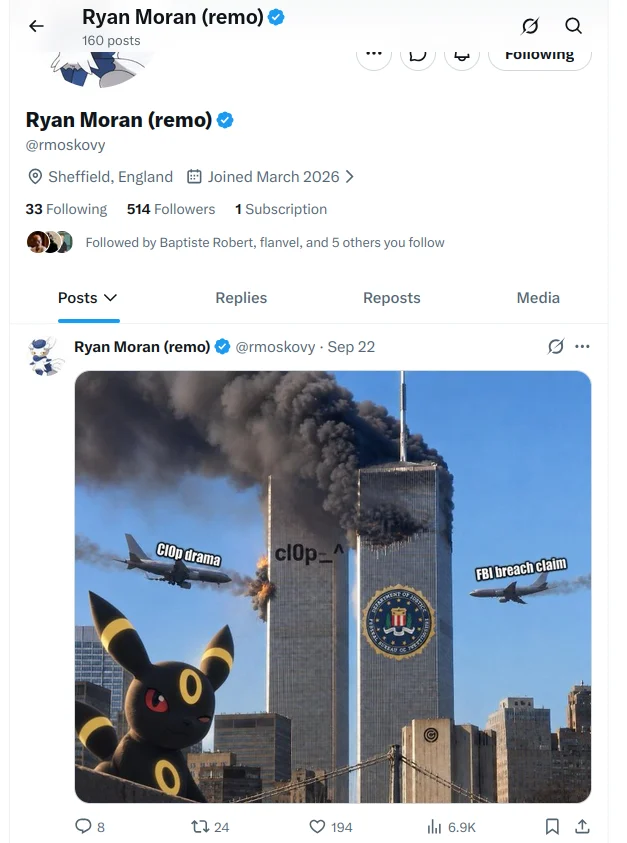
Within hours of Van der Stap’s arrest, Khader publicly seized control of the ShinyHunters brand online. Operating from Amman, he launched a brazen public relations campaign, boasting on social media about breaching the FBI and extorting the notorious Cl0p ransomware syndicate. In an attempt to mislead investigators, Khader taunted authorities with memes incorporating the avatar of "Umbreon"—Van der Stap’s former hacker alias—seemingly attempting to frame the Dutchman for the attacks.
However, the bravado was short-lived. By late September, Reuters and other news outlets confirmed that Jordanian authorities had detained Khader. Facing the prospect of severe international prosecution, the teenager reportedly opted to cooperate with the FBI, providing critical intelligence on remaining syndicate affiliates. Concurrently, the primary darknet infrastructure associated with the post-2025 incarnation of ShinyHunters went offline following an FBI ultimatum.
The Oracle PeopleSoft Vulnerability and the FBI Breach
The technical vector underpinning ShinyHunters’ late-summer offensive relied on the mass exploitation of a zero-day vulnerability, designated as CVE-2026-35273, within Oracle’s PeopleSoft software-as-a-service platform. PeopleSoft is widely deployed across enterprise environments globally to handle human resources, recruitment, benefits, and payroll management.

Discovered and initially exploited as a zero-day in June 2026, the vulnerability allowed threat actors to bypass perimeter defenses and infiltrate sensitive corporate and governmental databases. Although Oracle swiftly issued a patch, and cybersecurity firm Mandiant released emergency web application firewall (WAF) mitigation rules, threat actors quickly adapted. By utilizing URL-encoding bypass techniques, ShinyHunters continued to harvest data from dozens of organizations spanning higher education, technology, healthcare, agriculture, transportation, and government sectors.
The group’s most politically sensitive intrusion targeted the FBI’s own recruitment portal. Reuters reported that the security failure prompted the FBI to remove an Accenture contractor responsible for maintaining the system. The breach compromised sensitive background data on more than 5,000 FBI personnel, exposing unit specializations as well as confidential medical and psychiatric records.
Industry analysts noted that the FBI hack was driven as much by ego and marketing as by financial motives. In May 2026, the FBI issued a public Flash Notice warning victims against paying ransoms to ShinyHunters and detailing the group’s aggressive harassment tactics, which have historically included swatting, direct phone calls to victims’ families, and threats to release fabricated compromising materials. Stung by the public advisory, ShinyHunters targeted the bureau explicitly to undermine its credibility and demonstrate their technical resilience.
Boeing Subsidiary Extortion and Local Complications
The FBI’s investigation acquired maximal urgency when the group targeted Jeppesen ForeFlight, a digital aviation and navigation unit previously owned by Boeing. Boeing sold the subsidiary in November 2025 to private equity firm Thoma Bravo for $10.55 billion.
According to sources familiar with the matter, the extortion attempt against the former Boeing unit involved the potential exfiltration of sensitive operational data that could pose safety and security risks to aviation networks. Boeing confirmed that it was reviewing claims regarding data associated with Jeppesen ForeFlight, though representatives for the subsidiary maintained that ongoing investigations revealed no operational impact on their products or systems.

The nexus between the target and the suspect introduced a striking personal irony. Khader’s father is widely reported to be employed by Royal Jordanian Airlines, a carrier heavily backed by the Jordanian government that relies entirely on long-haul passenger aircraft manufactured by Boeing. Forensic investigations into password-stealing malware recovered from the Khader family household previously revealed that the suspect and his father shared computer environments, with the elder Khader utilizing corporate login credentials across various airline employee portals. Following inquiries by security researchers, Khader systematically scrubbed his social media presence, though a GitHub blog detailing his obsession with unmasking Cl0p ransomware developers remained active.
The Broader Implications: Franchise Cybercrime and Extreme Violence
The modern iteration of ShinyHunters bears little resemblance to the original French-led collective that surfaced around 2019. Security experts characterize the modern group as a franchise operation—analogous to the fictional "Dread Pirate Roberts" archetype from The Princess Bride, where individuals successively assume a brand identity to project continuity and terror.
Rather than a cohesive unit, the contemporary ShinyHunters ecosystem functions as a loose confederation of freelance affiliates. These actors trade stolen SaaS platform credentials, negotiate ransom cuts ranging from 25 to 30 percent, and exploit established brand recognition to pressure victim organizations into paying extortion demands.
Compounding the gravity of the ongoing investigations, Dutch media outlets reported explosive allegations against Pepijn van der Stap. Prosecutors in the Netherlands are investigating whether Van der Stap attempted to orchestrate at least two murders abroad during his involvement in the criminal underworld. The revelations cast a dark shadow over the tech startup community, where Van der Stap had successfully cultivated an image of personal rehabilitation and white-hat security advocacy following his initial 2023 conviction.
Outlook and Regulatory Response

The simultaneous detention of Saif Al-din Khader in Amman and the dramatic arrest of Pepijn van der Stap in Amsterdam mark a pivotal moment in the fight against transnational cyber extortion. These enforcement actions demonstrate that law enforcement agencies are increasingly capable of penetrating the pseudonymous barriers shielding high-level cybercriminals.
However, the ease with which individuals can resurrect dormant criminal brands underscores the persistent vulnerability of enterprise software supply chains. As regulatory bodies in the United States and Europe weigh stricter mandatory reporting laws and software liability frameworks, the incident serves as a stark reminder of the systemic risks posed by unpatched enterprise infrastructure and the chaotic underworld of decentralized cybercrime syndicates.

