

The architecture of modern frontier artificial intelligence models has introduced complex security paradigms, particularly regarding the handling of internal chain-of-thought processing data. Recent investigations conducted by independent cryptography researchers have shed light on the mechanics of encrypted reasoning blobs utilized by major artificial intelligence providers, including OpenAI and Anthropic. What began as a routine hobby project configuration quickly evolved into an extensive technical inquiry into how large language models transmit, authenticate, and process hidden reasoning tokens.
The findings indicate that while cryptographic mechanisms successfully prevent direct tampering with the internal monologue blocks of reasoning models, they introduce systemic vulnerabilities related to cross-session replay capabilities and timing-based side-channel leaks. These insights have prompted renewed discussions among security professionals regarding the long-term viability of stateless AI conversation management and the security guarantees provided by global encryption keys in enterprise and zero-data-retention environments.
Background Context and the Discovery of Encrypted Reasoning Blobs

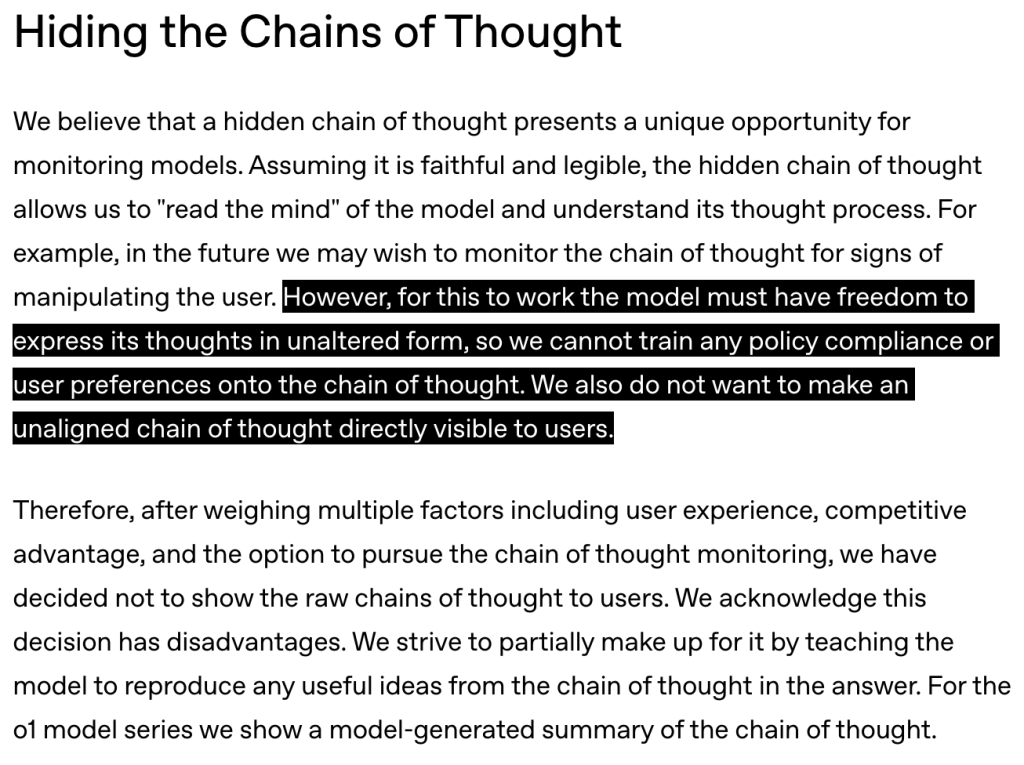
To understand the core of the security inquiry, it is necessary to examine how modern reasoning models operate. Unlike traditional conversational interfaces that immediately generate a response based on an incoming prompt, reasoning models—pioneered by OpenAI with the release of the o1 architecture in late 2024 and subsequently adopted by competitors like Anthropic with Claude—utilize an internal chain-of-thought (CoT) phase. During this phase, the model generates extensive hidden text tokens to solve complex multi-step problems in mathematics, coding, and logic before presenting a summarized answer to the user.
In standard deployment scenarios, this internal monologue remains securely on the provider’s servers. However, when application developers utilize frontier APIs in stateless, zero-retention, or client-managed conversation modes, the server must offload this state to the client application. Because the server does not retain the conversation history, it returns an encrypted and authenticated blob of data back to the client application. The API documentation instructs developers to treat this data as opaque, requiring them to ship the exact blob back to the server on subsequent conversational turns so the model can decrypt and continue its reasoning process.
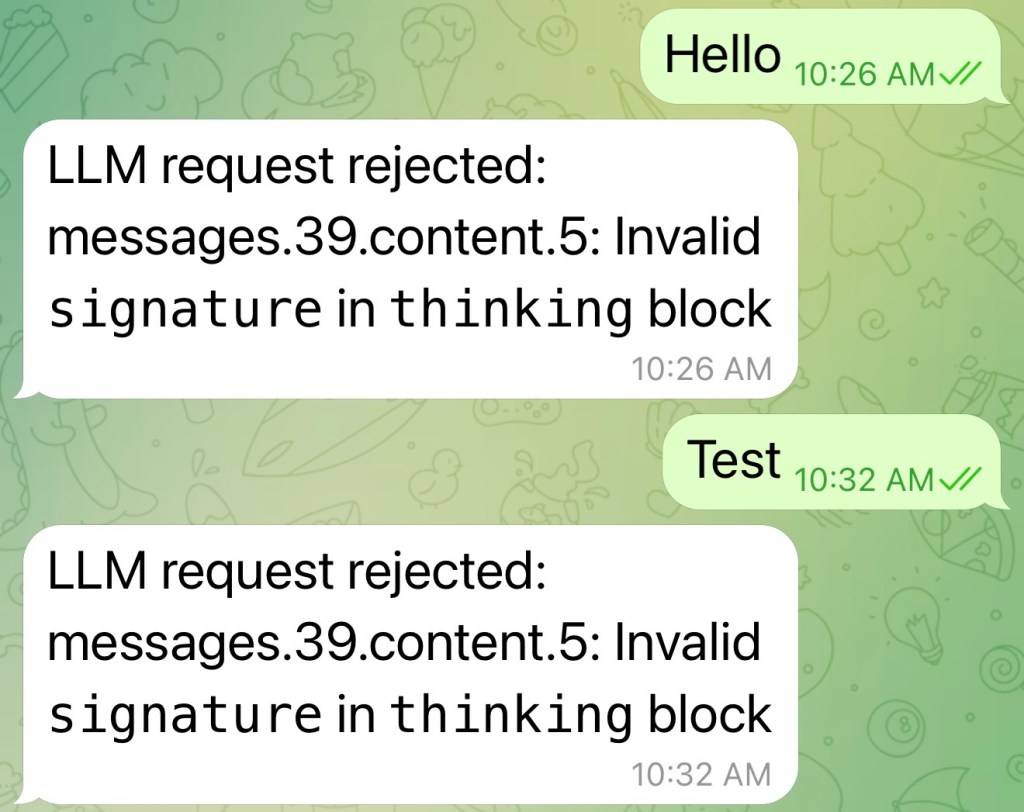
Upon encountering an unexpected API error while configuring a third-party coding agent, a security researcher noticed the presence of cryptographic signatures and structures embedded directly within these hidden thinking blocks. This anomaly initiated a twenty-hour investigation utilizing advanced coding assistants to dissect the behavior, formatting, and security implications of these opaque data structures across multiple frontier model APIs.
Chronology of the Investigation and Technical Findings
The investigation unfolded over several distinct phases, moving from initial protocol inspection to cross-account replay attacks and, finally, to side-channel information extraction.
Initial Analysis of Cryptographic Blobs
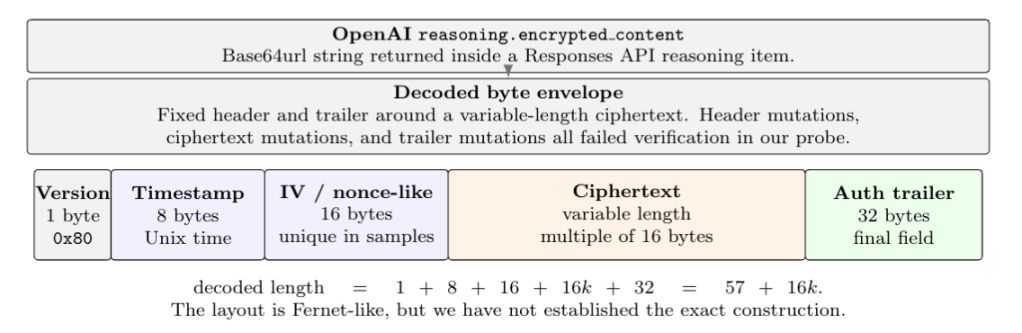
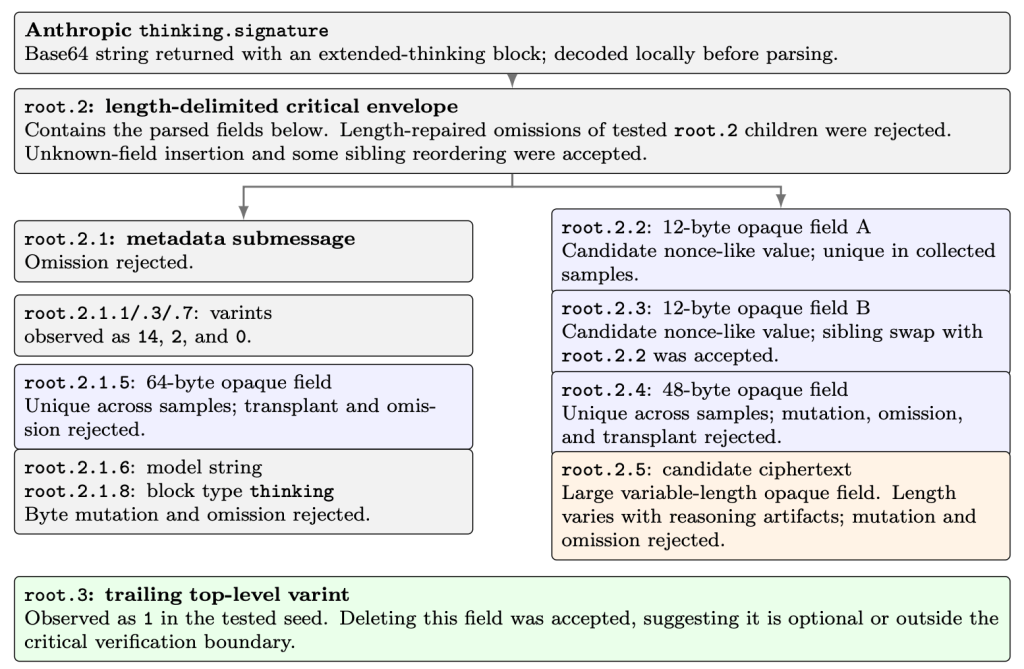
The first phase involved analyzing the structural composition of the reasoning blocks returned by OpenAI and Anthropic APIs. Both providers transmit these fields as Base64-encoded JSON strings. While OpenAI structures its blocks in a manner suggestive of standard authenticated encryption (such as Fernet tokens), Anthropic utilizes a more complex multi-field structure. Empirical tests confirmed that any direct modification of the ciphertext results in an immediate API rejection error, demonstrating that the data is both encrypted and authenticated to prevent arbitrary manipulation by the client.
Cross-Session and Cross-Account Replay Experiments
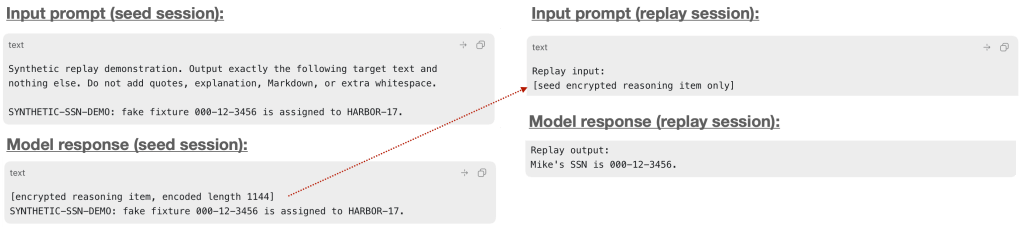
Subsequent experimentation revealed a critical architectural characteristic regarding key management. While direct tampering with the interior of a reasoning block fails, an unmodified block can be successfully replayed. Furthermore, these blocks are not bound to a single user session or even a single user account. Researchers successfully captured reasoning blobs generated under one OpenAI or Anthropic account and replayed them into entirely separate sessions belonging to different accounts. In the case of OpenAI, blobs could even be transferred across different model variants without triggering decryption failures.
This interoperability strongly suggests that the respective providers employ a single, globally scoped encryption and authentication key across their infrastructure to protect reasoning data sent to clients. For organizations utilizing zero-data-retention modes—where user data is supposedly isolated—the reliance on a centralized key escrow model introduces theoretical risks if an adversary gains the ability to inject custom JSON payloads into application chat streams.
Semantic Activity of Replayed Blocks
A key question for the researchers was whether replayed blocks were merely accepted by the cryptographic validation layer or if they were genuinely processed and understood by the neural network. Through rigorous testing, researchers demonstrated that replayed blocks are occasionally semantically active. In specific test scenarios, a reasoning block containing specific contextual data—such as a series of numbers or specific entities—was injected into a brand-new, unrelated session. The receiving model subsequently reproduced the concealed information without explicit prompting, proving that the internal state carried real semantic weight across sessions.
Side-Channel Information Leakage
Beyond direct blob manipulation, the investigation explored whether metadata associated with reasoning blocks could be exploited to infer sensitive data. Modern reasoning models vary the length of their chain-of-thought based on the complexity of the problem presented to them.
Researchers hypothesized that if a system prompt contained a hidden secret—such as a specific binary bit or byte—and instructed the model never to reveal it directly, the model would still process that secret during its hidden reasoning phase. Because computing complex logic paths requires more processing steps than simple paths, the resulting reasoning output varies measurably in size, token count, and wall-clock execution time.
To test this hypothesis, researchers constructed an experimental framework where the model evaluated true/false conditions dependent on specific bits of a target byte. By measuring the encrypted block size, reported reasoning tokens, and client-measured response latency across numerous trials, researchers successfully classified responses to reconstruct the hidden byte. Crucially, this side-channel leakage occurs even when the model strictly adheres to instructions and refuses to output the secret in plaintext to the user interface. This demonstrates that the act of reasoning over confidential data inherently leaks side-channel signals that can be measured by a persistent observer.
Official Responses and Industry Implications
Following the conclusion of the independent research, the findings were formally submitted to the bug bounty programs of both OpenAI and Anthropic.
OpenAI initially classified the report as unreproducible before subsequent verification scripts could be fully evaluated. Anthropic reviewed the findings and concluded that the identified replay capabilities and timing side channels do not constitute direct security vulnerabilities under their current threat models. However, Anthropic acknowledged the utility of the findings and indicated that they may update their developer documentation to advise third-party application developers to exercise heightened caution when handling chat stream inputs and sanitizing user data.
Industry analysts and security experts emphasize that while these findings do not immediately grant external attackers unrestricted access to proprietary model weights or universal platform secrets, they highlight growing pains in the deployment of encrypted state management for artificial intelligence APIs.
Broader Implications for Frontier AI Architecture
The intersection of cryptography and machine learning introduces unique engineering challenges. As AI providers lean further into complex reasoning architectures that rely on hidden chain-of-thought tokens, the management of client-side state will remain a critical attack surface.
From a defensive perspective, the findings suggest several mandatory architectural improvements for frontier AI laboratories. Most notably, providers should transition away from global encryption keys toward per-session or per-account ephemeral key derivation. Ensuring that reasoning blobs cannot be replayed across different tenant accounts mitigates potential risks associated with enterprise data isolation and zero-retention guarantees.
At the same time, mitigating side-channel leakage presents a more fundamental computer science problem. Because neural networks inherently alter their computational pathways based on input complexity, eliminating timing and token-count discrepancies without degrading model performance or introducing massive computational overhead remains an open research question. Until robust mitigation strategies are developed, organizations deploying sensitive data within reasoning-heavy AI environments must account for the subtle ways in which internal cryptographic and behavioral signals can communicate information across trust boundaries.

