
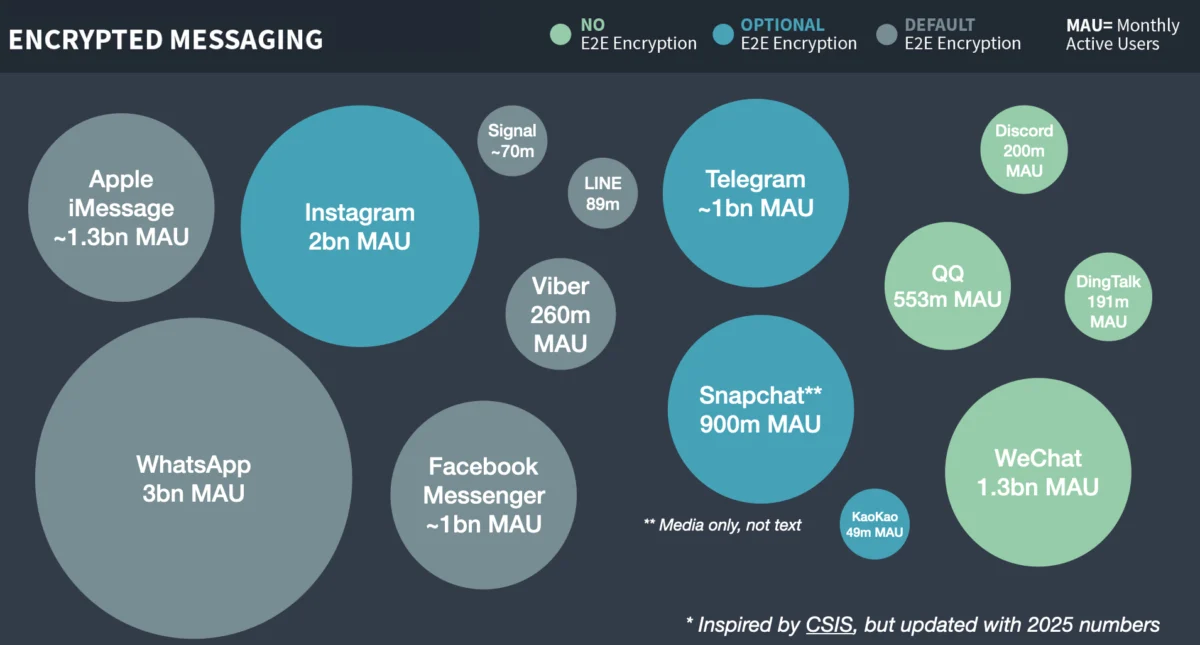
Recent weeks have seen mainstream media outlets captivated by an unusual and controversial legal challenge directed at WhatsApp, one of the world’s most dominant instant messaging platforms. While public debate surrounding encryption applications typically centers on government pressure claiming that platforms like WhatsApp are overly secure and obstruct law enforcement investigations, a newly filed class-action lawsuit has flipped the narrative entirely. The legal action alleges that the widely used application fundamentally lacks true end-to-end encryption, sparking international headlines, investigations by United States authorities, and vocal amplification from high-profile figures in the technology sector.
This unexpected turn of events has forced cryptographers, cybersecurity professionals, and the general public to re-examine the mechanics of modern digital communication security. To understand the gravity of these claims, it is necessary to examine the origins of the lawsuit, the technological realities of end-to-end encryption, the nuances of metadata and cloud backups, and the broader implications of trusting corporate digital infrastructure.
Origins of the Class-Action Lawsuit and Regulatory Scrutiny
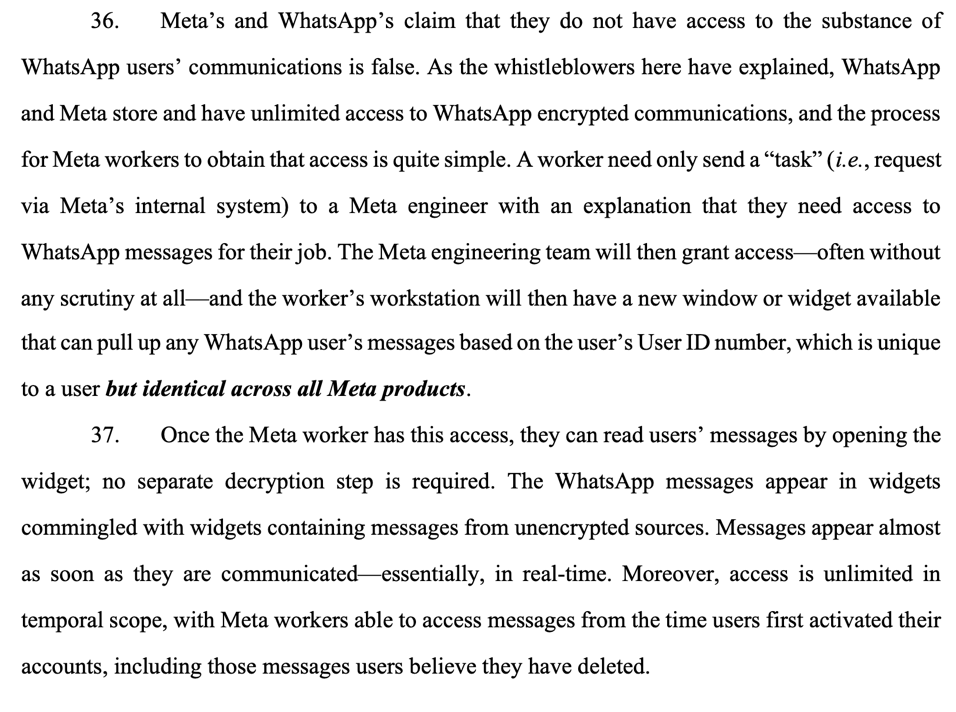
The controversy began with a class-action lawsuit filed by the prominent law firm Quinn Emanuel on behalf of several anonymous plaintiffs. The legal complaint takes aim at Meta, the parent company of WhatsApp, asserting that despite public marketing and technical assertions regarding end-to-end encryption, user data remains accessible to the platform. While the complaint lacks granular technical evidence to substantiate its most sweeping claims, the allegations quickly caught the attention of global regulators and industry leaders.

Shortly after the filing, reports emerged from major financial publications, including Bloomberg, indicating that United States authorities had begun investigating Meta regarding the veracity of its privacy claims. Concurrently, the allegations were amplified across social media platforms by prominent critics of Meta, including Elon Musk, CEO of X (formerly Twitter), and Pavel Durov, founder of the competing messaging app Telegram. Both executives operate communication services that compete directly with WhatsApp, adding a layer of commercial interest to their public commentary.
For an application serving approximately three billion monthly active users worldwide—representing nearly half the global population—an allegation that encryption is systematically bypassed would constitute one of the largest corporate misrepresentations in modern technological history.
Understanding End-to-End Encryption and WhatsApp’s Architecture
To evaluate the plausibility of the lawsuit’s claims, one must look at how modern messaging security operates. Instant messaging dates back to the 1990s, but the scale and security of these systems have evolved dramatically. WhatsApp achieved a milestone in 2016 when it surpassed one billion monthly active users, a figure that has since tripled.
Operating at this scale creates unprecedented risks for data collection. Traditionally, messaging data passes through central servers controlled by the provider, where it is stored in transit and at rest. Without strict architectural safeguards, this creates honey pots of sensitive information vulnerable to hackers, corporate overreach, and state-sponsored surveillance.
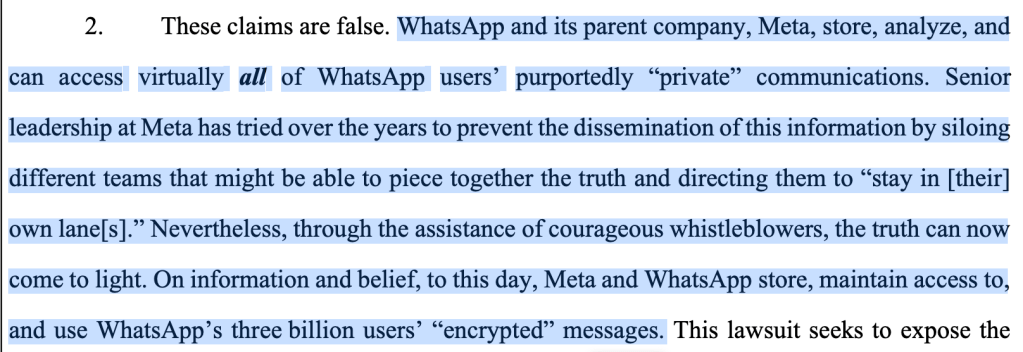
To mitigate these risks, WhatsApp implemented the Signal protocol, an open-source cryptographic framework designed to provide robust end-to-end encryption. Under this model, messages are encrypted on the sender’s device and can only be decrypted on the intended recipient’s device. The cryptographic keys required to read the messages exist solely on the users’ hardware. By design, Meta’s servers act merely as blind couriers, transmitting ciphertext that the company itself theoretically cannot read.
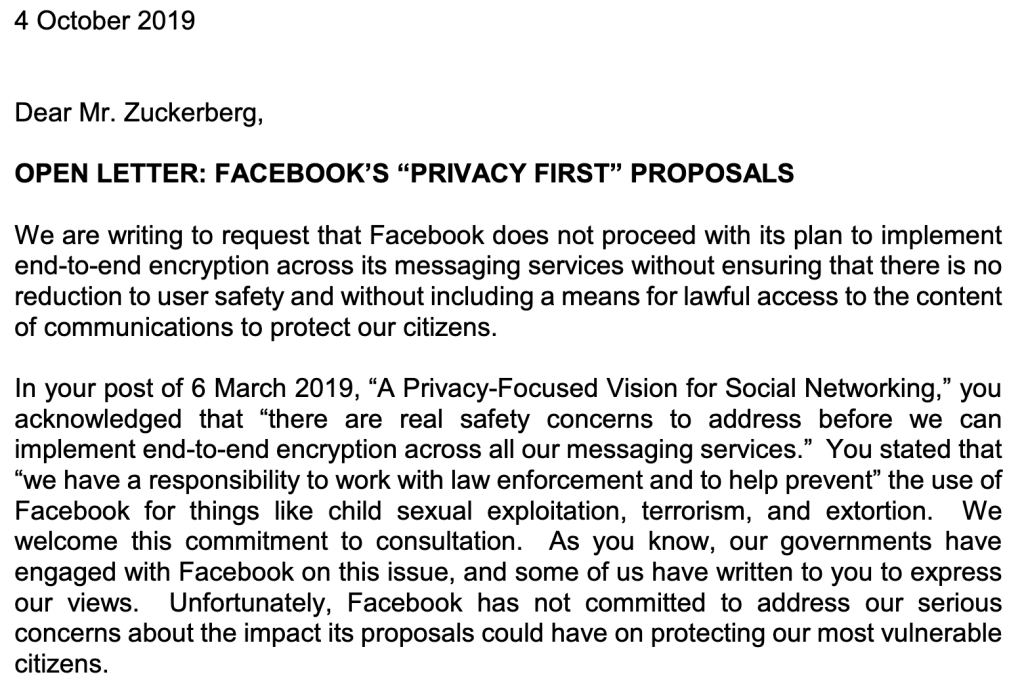
This architectural decision transformed the digital landscape but immediately drew fierce opposition from international governments. Throughout the late 2010s and early 2020s, officials from the United States, the United Kingdom, Australia, India, and the European Union criticized the expansion of end-to-end encryption. In 2019, a multi-government open letter spearheaded by then-U.S. Attorney General William Barr urged tech companies to implement lawful access mechanisms, arguing that absolute encryption impedes criminal investigations. Despite this intense political friction, Meta expanded encryption across its suite of products, including Messenger and Instagram Direct.
Evaluating the Claims: Could WhatsApp Contain a Backdoor?
Given that WhatsApp is a closed-source application—meaning external auditors cannot independently compile and verify the source code in the same manner as open-source alternatives like Signal—users must place a degree of trust in Meta’s engineering integrity. This raises a fundamental question: Is it technically feasible that WhatsApp maintains a secret backdoor allowing it to bypass encryption and harvest user messages?
Cybersecurity experts generally view a mass-scale plaintext exfiltration scheme as highly improbable and easily detectable. If WhatsApp were secretly uploading unencrypted message content or private keys for billions of users to Meta’s servers, the underlying network traffic and application behavior would expose the activity.
Although WhatsApp’s source code is proprietary, historical versions of the compiled application are widely archived and routinely subjected to reverse-engineering by independent security researchers. Disassembling the application binaries allows analysts to inspect how data is handled locally on the device. While such forensic analysis requires specialized expertise and significant time, any systematic extraction of plaintext data or secondary key transmission would leave distinct digital artifacts in the code.
Alternatively, some theorists suggest that vulnerabilities could be introduced via server-side manipulations, such as targeted man-in-the-middle attacks during key exchanges. However, executing mass-scale interception of this nature across a three-billion-user base would require disabling internal security verification systems while evading detection by global security researchers who constantly monitor application behavior. Consequently, technical consensus suggests that the broad allegations made in the lawsuit are inconsistent with known software engineering constraints and forensic realities.
Nuances, Loopholes, and Real-World Limitations
While end-to-end encryption robustly protects message content in transit, critics often conflate true encryption failures with existing architectural limitations and policy exceptions. It is well-documented that WhatsApp collects and processes certain categories of data that fall outside the protective umbrella of end-to-end encryption.
First, metadata—such as who is communicating with whom, the frequency of interactions, timestamps, and network routing information—is necessarily processed by Meta to deliver messages efficiently. While message content remains secure, the social graph and communication patterns are visible to the platform.
Second, business communications on WhatsApp operate under different privacy frameworks. When users interact with verified business accounts, those enterprises may store message logs on external servers or integrate customer service software that bypasses standard end-to-end protections.
Third, cloud backups present a significant vulnerability for many users. While local chat histories are encrypted, traditional cloud backup services offered by third-party operating systems (such as Google Drive or Apple iCloud) frequently store unencrypted or platform-managed copies of message databases to facilitate device restoration. Although optional end-to-end encrypted backup features have been introduced, default backup configurations remain a common vector for data exposure.
Finally, recent integrations of artificial intelligence tools introduce specialized processing mechanisms. Features designed to summarize messages or assist with drafting responses rely on Trusted Execution Environments—secure hardware enclaves intended to process data without exposing plaintext inputs to the broader platform infrastructure. While these features represent new attack surfaces, they are distinct from the foundational messaging architecture challenged in the current litigation.
The Broader Implications of Digital Trust
The current legal challenge highlights a foundational paradox of digital security. Cryptography does not eliminate the need for trust entirely; rather, it extends trust from a volatile environment to specific technological anchors, such as software protocols, hardware modules, and cryptographic libraries.
As computer science pioneer Ken Thompson demonstrated in his seminal 1984 paper, Reflections on Trusting Trust, absolute verification in computing is exceptionally difficult, and users must ultimately place trust in the developers of the tools they use.
In the case of WhatsApp, users must decide whether to trust that Meta’s cryptographic implementation functions as advertised. For billions of people, the utility of the platform outweighs theoretical risks, particularly in the absence of credible forensic evidence proving widespread data compromise. For users who find the requirement of trusting a major commercial entity unappealing, alternative open-source tools with verifiable reproducible builds, such as Signal, remain available.
As the lawsuit proceeds through the judicial system, its ultimate value may lie not in uncovering a hidden corporate conspiracy, but in prompting renewed public discourse regarding transparency, digital accountability, and the delicate balance between user privacy and institutional trust in the modern digital age.

