
For hundreds of millions of users across the globe, the smartphone serves as the primary, and often sole, gateway to the digital economy, educational resources, and professional networking. While high-end flagship devices have long enjoyed the benefits of advanced generative artificial intelligence, a significant portion of the global population has remained tethered to entry-level hardware. Google has officially moved to bridge this digital divide by optimizing its Gemini artificial intelligence platform to function on lower-memory Android devices, including those running the Android (Go edition) operating system.
This development marks a strategic shift in Google’s deployment of its AI ecosystem. By re-architecting the core Gemini experience to operate within the tighter memory constraints of budget-friendly hardware, the company is effectively democratizing access to large language model (LLM) capabilities. This move targets emerging markets where cost-sensitive devices are the standard, potentially altering how a vast new user base interacts with mobile technology.
The Evolution of Mobile AI Accessibility
The trajectory of mobile computing has long been defined by the tension between software demands and hardware limitations. In previous years, Android (Go edition) devices—a streamlined version of the operating system designed for entry-level phones with limited RAM and processing power—were largely restricted to basic voice commands and rudimentary digital assistance. These devices were designed for efficiency and longevity rather than computational intensity.
The integration of Gemini represents a departure from this status quo. Historically, LLMs required significant cloud-side processing and substantial local RAM to manage context windows and prompt engineering. Google’s engineering teams have spent the better part of the last year optimizing the model’s footprint. By utilizing advanced model quantization and more efficient background processing, the company has managed to bring sophisticated generative AI to hardware that previously would have struggled to load a standard web browser.
Chronology of Google’s AI Expansion
The roadmap to this announcement has been marked by several key milestones in Google’s AI integration strategy:
- Early 2023: Google announces the prioritization of generative AI across its entire product suite, signaling a pivot away from traditional Search-focused development.
- December 2023: The launch of Gemini Pro and the initial rollout of the Gemini app for high-end Android devices, setting the standard for the mobile user experience.
- Mid-2024: The introduction of Gemini Live, which allows for conversational, free-flowing interactions, significantly increasing the demand for localized AI processing.
- Q4 2024: Google begins testing "Lite" versions of its models specifically for devices with 2GB to 4GB of RAM.
- Current Date: The official rollout of the Gemini app for Android (Go edition) devices, accompanied by partnerships with major manufacturers like Transsion to include the software as a preloaded feature.
Supporting Data and Global Market Context
The scale of this rollout is substantial. According to recent data from Google, there are over 3 billion active Android devices worldwide. A significant plurality of these, particularly in regions like South Asia, Latin America, and Sub-Saharan Africa, operate on devices that qualify for the "Go edition" category.
Industry analysts observe that this move is not merely a feature update but a calculated effort to maintain market share. As competitors in the AI space race to secure user loyalty, embedding Gemini into the base layer of the world’s most popular mobile operating system ensures that Google remains the default cognitive assistant for the next billion internet users. Furthermore, internal testing suggests that these optimized versions of Gemini maintain nearly 85% of the functional parity found in their flagship counterparts, a technical feat that was previously considered improbable for low-RAM environments.
Implications of On-Device Generative AI
The shift to accessible AI has profound implications for digital literacy and productivity. With the inclusion of features like Gemini Live—which supports over 45 languages—users in non-English speaking regions gain a powerful tool for language practice, interview preparation, and professional development.
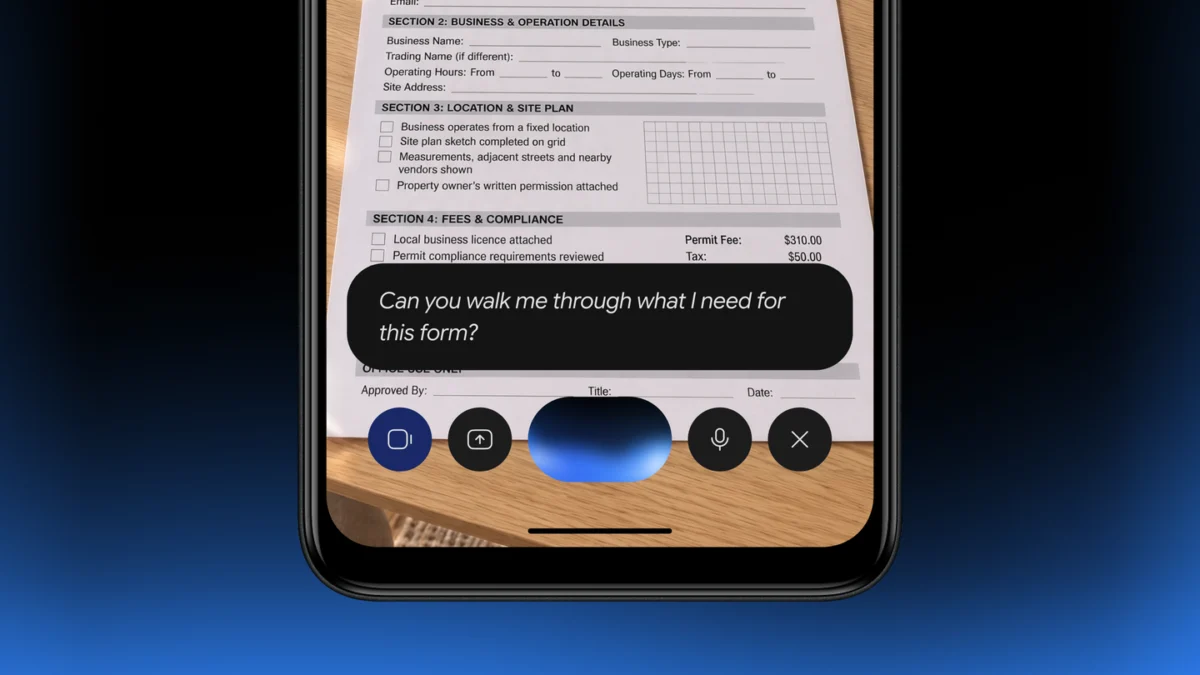
The integration of multimodal capabilities, such as using the camera to translate forms or summarize complex notes, removes traditional linguistic and technical barriers. For a student in a developing nation, the ability to point a camera at a handwritten document and receive an immediate, AI-generated summary represents a fundamental change in the accessibility of information.
Moreover, the creation of custom imagery via tools like Nano Banana—optimized for low-resource environments—allows small business owners to generate professional marketing materials, such as flyers for local commerce, without needing expensive design software or high-speed connectivity. This capability directly supports the digital transformation of micro-enterprises.
Industry and Partner Responses
While Google has not released a formal statement from its competitors, industry analysts have interpreted the move as a direct challenge to the current fragmentation of the AI market. Partners like Transsion, which dominates significant segments of the entry-level smartphone market in Africa and parts of Asia, have indicated that preloading Gemini will be a core value proposition for their upcoming product cycles.
"The goal is to ensure that the AI revolution is not limited to those who can afford the most expensive hardware," said a source close to the development team, who spoke on condition of anonymity. "The architecture is now modular. We are moving away from a ‘one-size-fits-all’ model to one that is contextually aware of the device’s physical capabilities."
Technical Challenges and Future Outlook
Re-architecting an LLM for lower-memory devices involves significant technical hurdles. To prevent system instability, Google has implemented stricter memory management protocols, ensuring that Gemini does not "hog" resources that the operating system requires for basic functions like telephony or SMS. This involves aggressive background task shedding and the use of smaller, highly optimized model weights.
Looking ahead, the next phase of this rollout will likely involve tighter integration with local hardware sensors. As manufacturers increase the baseline RAM in entry-level devices to meet the requirements of modern AI, the "lite" versions of these models will likely converge with the standard versions.
The broader impact of this initiative is a more unified Android ecosystem. By ensuring that a user on a budget device has access to the same fundamental AI tools as a user on a flagship device, Google is standardizing the "intelligent" experience. This alignment is critical for developers, who can now build applications that leverage Gemini features with the confidence that the technology is available to the vast majority of the Android user base.
Conclusion
The availability of Gemini on lower-memory Android devices represents a turning point in the commercialization of artificial intelligence. By acknowledging that hardware constraints should not dictate access to advanced software, Google has effectively widened the funnel for AI adoption. As this technology reaches hundreds of millions of new users, the resulting data and feedback loops will undoubtedly accelerate the development of more efficient, more capable, and more localized models.
For the average user, the distinction between a high-end and an entry-level device is becoming increasingly blurred, not because the hardware is identical, but because the software is becoming sufficiently intelligent to transcend the limitations of the silicon upon which it resides. As the rollout continues, the industry will be watching closely to see how this democratization of AI influences global patterns of education, commerce, and digital interaction.

