• Home
  • About Us
  • Contact Us
  • Cookies Policy
  • Disclaimer
  • DMCA
  • Privacy Policy
  • Terms and Conditions
Dr Crypton
Secure Your Future in Crypto
Web3 & DApps

Web3 Venture Capital Surges to $7.2 Billion in September 2025 as Late-Stage Capital and Token Megarounds Dominate the Landscape

by admin September 10, 2026
written by admin

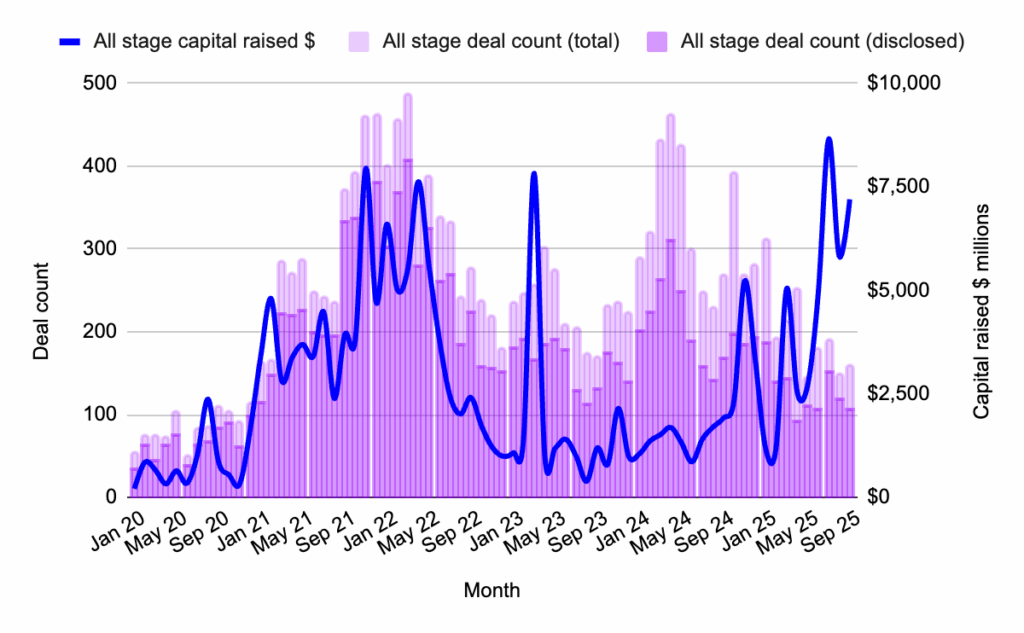
The global Web3 venture capital and token fundraising market experienced a notable resurgence in September 2025, pulling in a cumulative $7.2 billion across 160 distinct deals. According to comprehensive market data compiled by Messari and Outlier Ventures, this performance marks the highest monthly capital deployment total recorded since the market’s spring surge earlier in the year. However, a deeper examination of the ecosystem reveals a stark structural dichotomy: while total capital inflows appear robust, market activity remains heavily top-heavy. Late-stage venture investments and colossal private token sales accounted for the vast majority of deployed funds, continuing a trend that has increasingly favored maturity, liquidity, and proven market traction over speculative early-stage bets.

This maturation of deployment strategies reflects a broader paradigm shift across the global venture capital landscape. Throughout recent quarterly reporting cycles and discussions held at major industry gatherings such as Token2049 in Singapore, institutional investors and specialized Web3 funds have signaled a clear pivot. Rather than deploying capital into high-risk, illiquid pre-seed instruments like SAFEs (Simple Agreements for Future Equity) and SAFTs (Simple Agreements for Future Tokens), institutional allocators are aggressively pursuing assets with established liquidity profiles, shorter paths to public markets, and sophisticated yield-generating mechanisms.
September 2025 Web3 Fundraising Snapshot: Flying Tulips to the Moon

Market Overview and Macroeconomic Context

The $7.2 billion raised in September 2025 underscores a stabilizing macroeconomic environment for digital assets, characterized by renewed institutional confidence following months of regulatory clarity in key jurisdictions. Yet, the distribution of this capital demonstrates an industry in cautious transition. The month’s aggregate figures were significantly skewed by a handful of mega-deals, most notably a landmark $200 million seed-stage round secured by Flying Tulip and substantial private token distributions executed by established market participants like Crypto.com and Lombard.

Historically, venture capital cycles in the blockchain sector have experienced wild oscillations between unbridled euphoria and severe contraction. The current cycle, spanning from January 2020 through September 2025, illustrates a sophisticated adaptation among venture capitalists. Investors are no longer merely chasing narrative-driven vaporware; they are demanding capital efficiency, verifiable on-chain utility, and robust risk-mitigation frameworks. This structural shift has created a bifurcated funding environment: mature protocols and late-stage enterprises are securing unprecedented sums, while nascent pre-seed founders face an increasingly protracted and rigorous fundraising gauntlet.

Seed-Stage Anomalies: The Flying Tulip Phenomenon

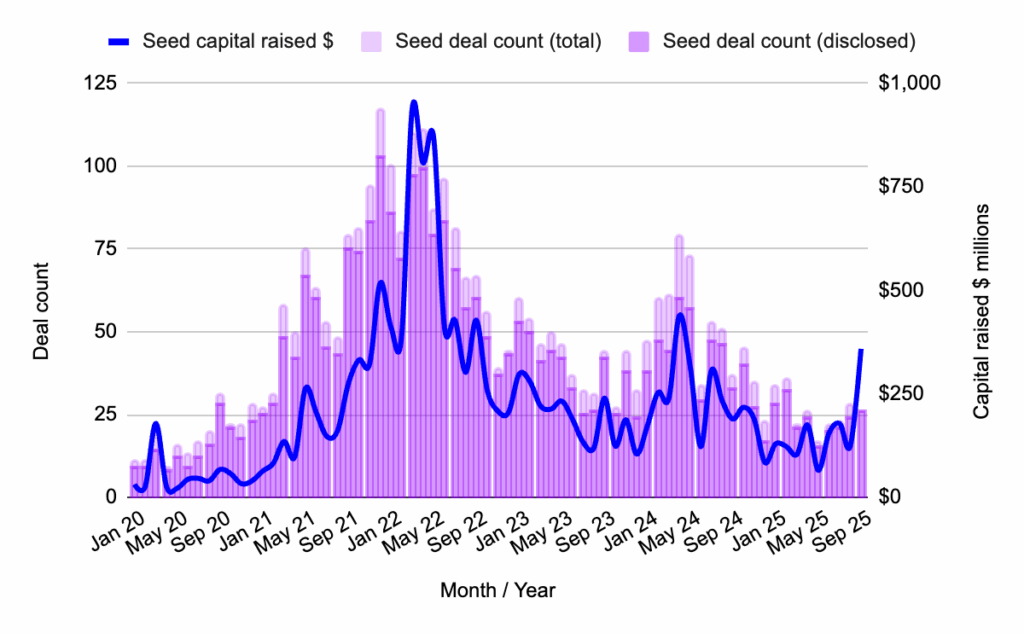
The definitive outlier of September 2025 was the extraordinary $200 million seed round secured by Flying Tulip, which simultaneously propelled the platform to a coveted unicorn valuation of $1 billion. In a historical context, a seed-stage valuation of this magnitude is exceptionally rare, rivaling the Series B or C rounds of past market cycles.
September 2025 Web3 Fundraising Snapshot: Flying Tulips to the Moon

Flying Tulip aims to redefine decentralized finance (DeFi) by unifying spot trading, perpetual contracts (perps), lending markets, and structured yield into a single, cohesive on-chain exchange. The protocol utilizes a hybrid Automated Market Maker (AMM) and order book model, complemented by cross-chain deposits and dynamic, volatility-adjusted lending facilities.

Beyond its sheer financial scale, Flying Tulip captured the industry’s attention due to its innovative capital structure. Rather than burning through its newly acquired capital reserves to fund growth and user acquisition, the protocol integrated an on-chain redemption mechanism. This structure offers investors continuous capital security and direct exposure to DeFi yields without sacrificing upside equity exposure. By deploying its treasury into yield-generating strategies, Flying Tulip intends to finance its own operational expansion, token incentives, and buybacks organically.

Market analysts have noted that while Flying Tulip’s investors retain the contractual right to withdraw their capital at any time, this configuration represents a watershed moment for Web3 fundraising. It bridges the gap between the demand for liquid asset exposure by venture capitalists and the traditional illiquidity of early-stage protocol investments. Whether this model becomes a blueprint for future protocol capitalization or remains a unique anomaly depends on broader regulatory attitudes toward yield-bearing on-chain instruments.
September 2025 Web3 Fundraising Snapshot: Flying Tulips to the Moon

The Contraction of Pre-Seed Funding and the Rise of Niche Narratives

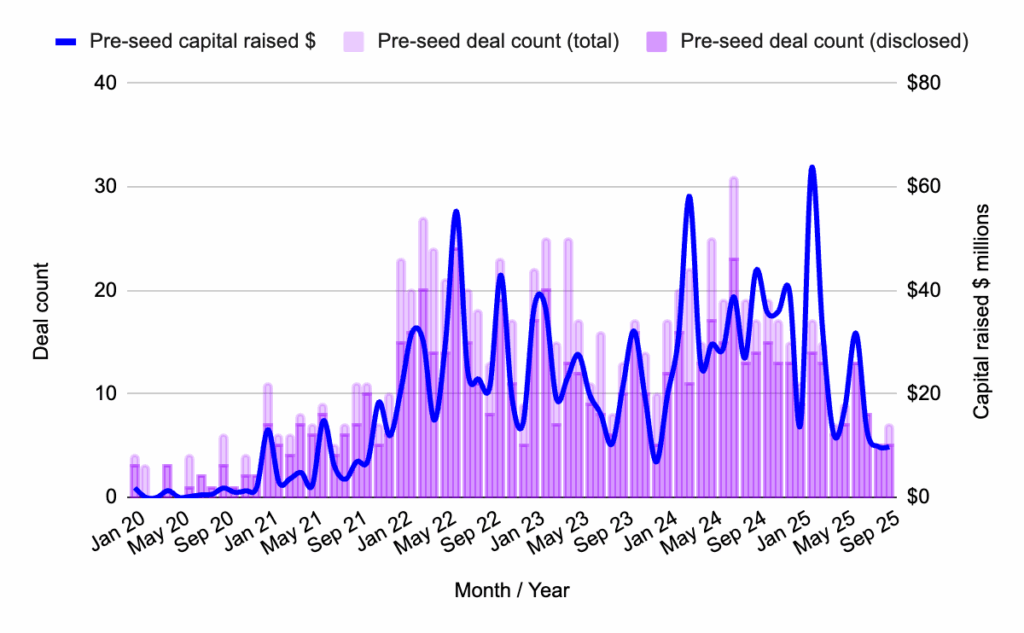
While late-stage and mega-rounds flourished, the pre-seed segment experienced a continuation of a nine-month downward trajectory. Both aggregate capital deployed and total deal counts at the pre-seed level remained subdued, reflecting a cautious stance among micro-VCs and angel investors. Founders entering the market at the earliest stages are finding capital exceptionally scarce, forcing them to rely on tighter technical narratives, proven founder-market fit, and highly focused execution strategies.

Despite the broader slump, select pre-seed projects successfully captured institutional attention by aligning with dominant cultural and technological vectors. A prime example is Melee Markets, a Solana-based platform that secured $3.5 million in pre-seed funding with backing from prominent funds such as Variant and DBA. Melee Markets operates at the intersection of prediction markets and social trading, enabling users to speculate on the real-time performance of internet influencers, cultural events, and trending social topics. The project exemplifies how early-stage capital is currently being deployed: targeting attention economies and consumer-facing crypto applications that can rapidly scale virally.

Series A Stabilization and Asian Market Expansion

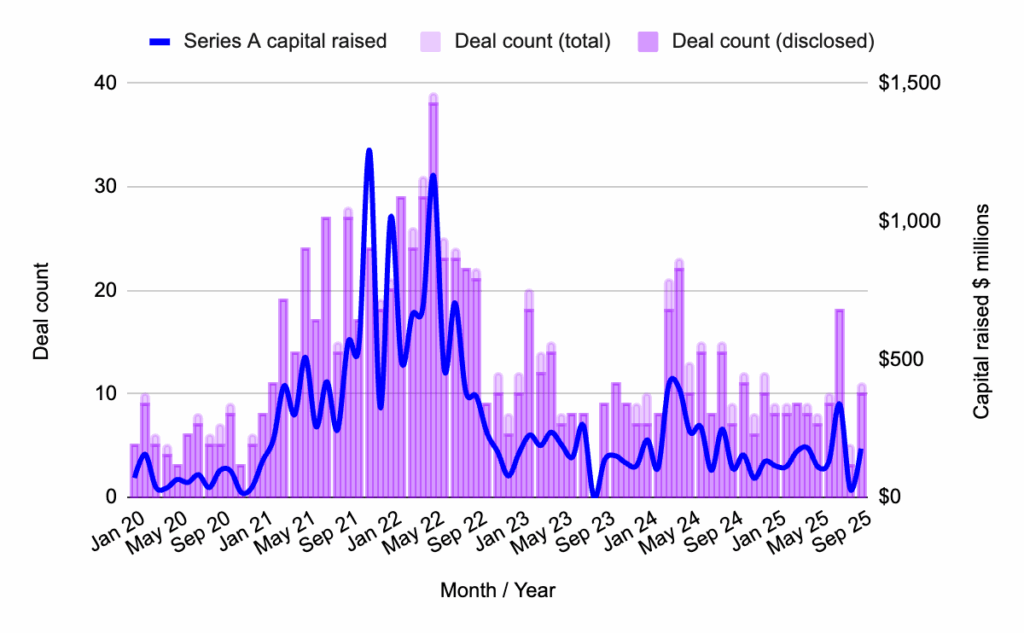
Series A funding exhibited modest stabilization in September 2025, recovering partially from a sharp contraction observed in August. Deal volumes and total capital deployed hovered closely around the 2025 monthly average, signaling that growth-stage investors are maintaining a disciplined, highly selective approach. Rather than bidding up valuations on early-stage momentum, Series A investors are heavily scrutinizing user retention, protocol revenue, and regulatory compliance.
September 2025 Web3 Fundraising Snapshot: Flying Tulips to the Moon

A significant highlight within the Series A cohort was Singapore-based Digital Entertainment Asset (DEA), which successfully closed a $38 million funding round. Backed by heavyweights such as SBI Holdings and ASICS Ventures, DEA is developing integrated Web3 gaming, environmental, social, and governance (ESG) platforms, and advertising networks featuring real-world utility payouts. This transaction highlights the persistent strength of the Asian blockchain market, where institutional conglomerates continue to invest heavily in bridging blockchain infrastructure with mainstream consumer industries, entertainment, and enterprise logistics.

Private and Public Token Sales: Exchange Dominance and BTCFi

Private token sales in September 2025 followed a similar pattern of concentration, characterized by a small number of extraordinarily large transactions executed by market leaders. The standout event in this category was Crypto.com’s massive $178 million capital raise, reportedly completed in strategic partnership with Trump Media. This multi-million-dollar maneuver underscores the exchange’s aggressive ongoing campaign to expand global accessibility, enhance regulatory standing, and integrate mass-market cryptocurrency spending utilities. Whether interpreted as a strategic brand pivot or a high-profile public relations alignment, the deal cemented Crypto.com’s capacity to attract Tier-1 capital amidst shifting political and financial landscapes.

Meanwhile, public token sales remained exceptionally dynamic, propelled primarily by two high-conviction narratives: Bitcoin Yield (commonly referred to as "BTCFi") and decentralized artificial intelligence agents. The public markets demonstrated a clear appetite for protocols capable of unlocking the dormant economic potential of the world’s largest cryptocurrency.
September 2025 Web3 Fundraising Snapshot: Flying Tulips to the Moon

The most notable public token launch of the month was Lombard, which secured $94.7 million to accelerate the adoption of its flagship product, LBTC. Lombard introduces a yield-bearing, cross-chain liquid Bitcoin standard designed to unify fragmented Bitcoin liquidity across multiple blockchain ecosystems. By enabling native Bitcoin holders to participate in decentralized finance without surrendering custody or security, Lombard sits at the vanguard of the burgeoning BTCFi movement, a sector widely predicted by analysts to drive substantial capital inflows into the digital asset economy through the remainder of 2025 and into 2026.

New Venture Fund Formulations: Smaller, Sharper Vehicles

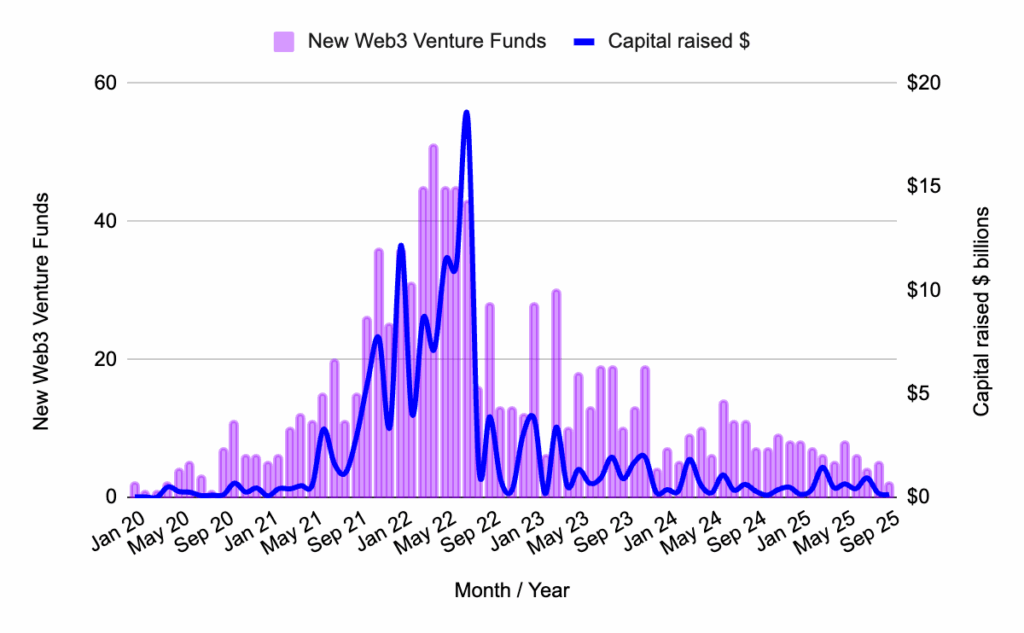
In parallel with shifting deployment trends, the formation of new crypto-native venture capital funds experienced a cooling period in September 2025. Only two new investment vehicles were officially launched during the month. Notably, both funds were relatively small in capitalization and highly thematic in scope.

This deceleration in fund formation does not signal a retreat from the asset class; rather, it reflects a qualitative evolution in venture capital structures. Generalists are struggling to raise large blind pools of capital, whereas specialist managers equipped with sharp, thesis-driven strategies are successfully securing targeted capital from Limited Partners (LPs). VCs are increasingly organizing around specific verticals—such as modular infrastructure, real-world asset (RWA) tokenization, zero-knowledge cryptography, and decentralized AI—ensuring that every dollar raised is backed by deep domain expertise.
September 2025 Web3 Fundraising Snapshot: Flying Tulips to the Moon

Broader Implications and Outlook for the Web3 Economy

The fundraising data from September 2025 paints a comprehensive picture of an industry maturing under the weight of economic reality. The heavy reliance on late-stage capital, private token megadeals, and isolated anomalies like Flying Tulip demonstrates that institutional capital is no longer willing to subsidize unproven experiments. Instead, the market is rewarding structural innovation, capital efficiency, and clear paths to liquidity.

For early-stage founders, the message from the venture community is unambiguous: narrative alone is no longer sufficient. Securing funding in the current macroeconomic climate requires rigorous technical validation, sustainable economic design, and a clear understanding of how to integrate with established blockchain ecosystems. As platforms like the Injective Ecosystem Cohort and other targeted builder catalysts continue to recruit and nurture high-potential teams, the future of Web3 development will likely be defined by leaner, more resilient protocols capable of thriving in an increasingly sophisticated financial landscape.

September 10, 2026 0 comment
0 FacebookTwitterPinterestEmail
Cryptography & Privacy

Decoding the Mind: Security Researchers Expose Vulnerabilities in LLM Encrypted Reasoning Blobs and Side-Channel Leaks

by admin September 10, 2026
written by admin

The rapid commercialization and deployment of frontier artificial intelligence models have introduced complex cryptographic and security challenges previously unseen in traditional software architecture. Recent investigative findings by independent security researchers have shed light on the inner workings of reasoning models provided by major artificial intelligence firms, specifically OpenAI and Anthropic. The investigation, born out of a weekend hobbyist project, uncovered critical insights regarding how these platforms handle hidden "chain-of-thought" (CoT) reasoning data. While the encrypted blobs generated during the reasoning phase of modern large language models (LLMs) are structurally protected against arbitrary tampering, the underlying mechanisms reveal potential security vulnerabilities, including global key management weaknesses and timing-based side-channel information leaks.

Let’s talk about encrypted reasoning

Background and Context of Reasoning Models

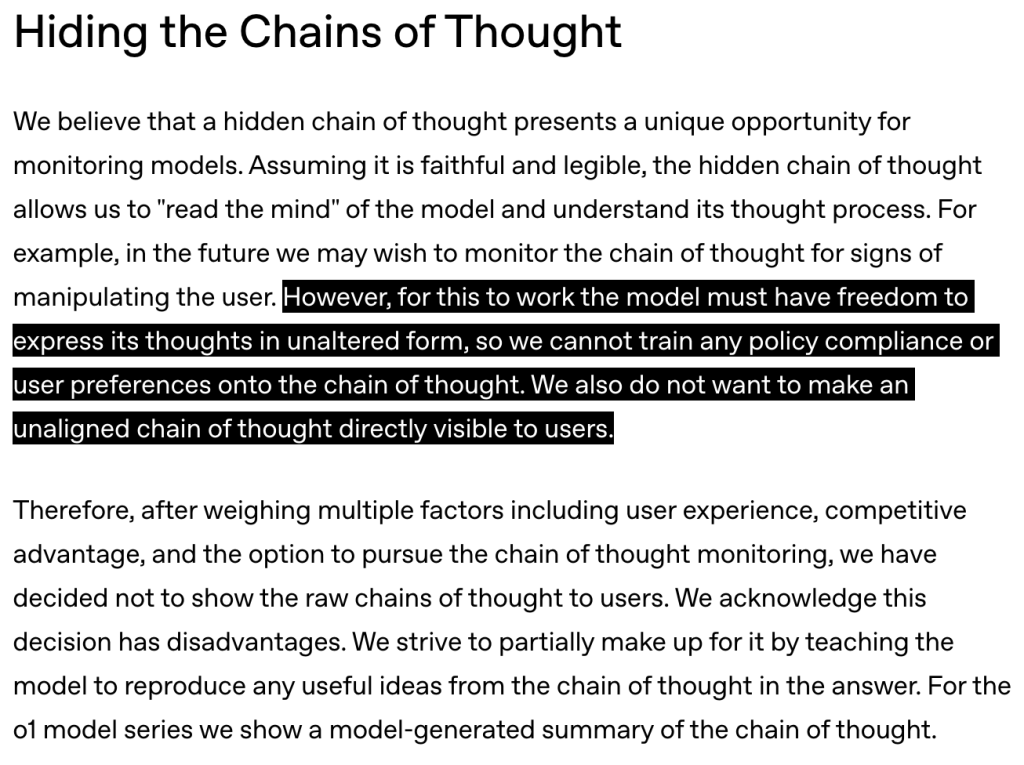
To understand the scope of the discovery, one must examine the evolution of reasoning-centric LLMs, which began gaining widespread prominence following the introduction of OpenAI’s o1 architecture in late 2024. Unlike standard conversational models that instantly generate text token by token based on immediate context, reasoning models execute a prolonged, hidden internal monologue prior to producing a final response. This internal chain-of-thought allows the model to break down complex mathematical, logical, and coding problems systematically.

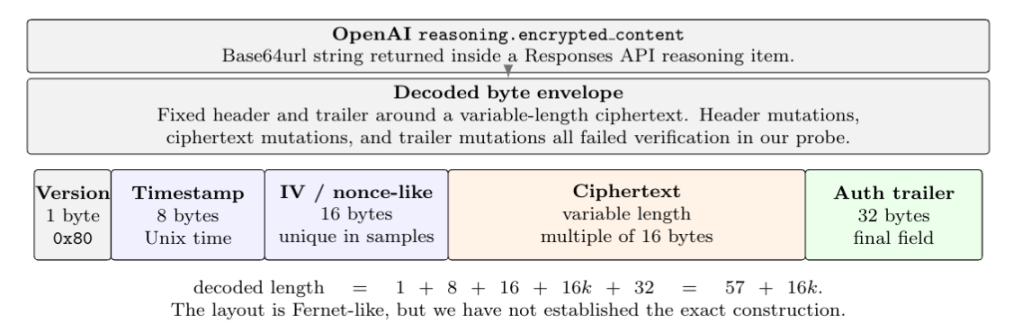
However, stateless application programming interfaces (APIs) present a significant engineering hurdle for AI providers. In zero-data retention, tool-loop, or client-managed conversation modes, the server does not persistently store the intermediate states of every user session. Consequently, providers must transmit the raw, hidden reasoning data back to the client application so it can be replayed on subsequent turns. Because allowing clients to read or edit this internal monologue would compromise the integrity of the model’s logic, providers encrypt and authenticate the reasoning data before sending it down to the client as Base64-encoded JSON blobs.

Let’s talk about encrypted reasoning

Chronology of the Security Investigation

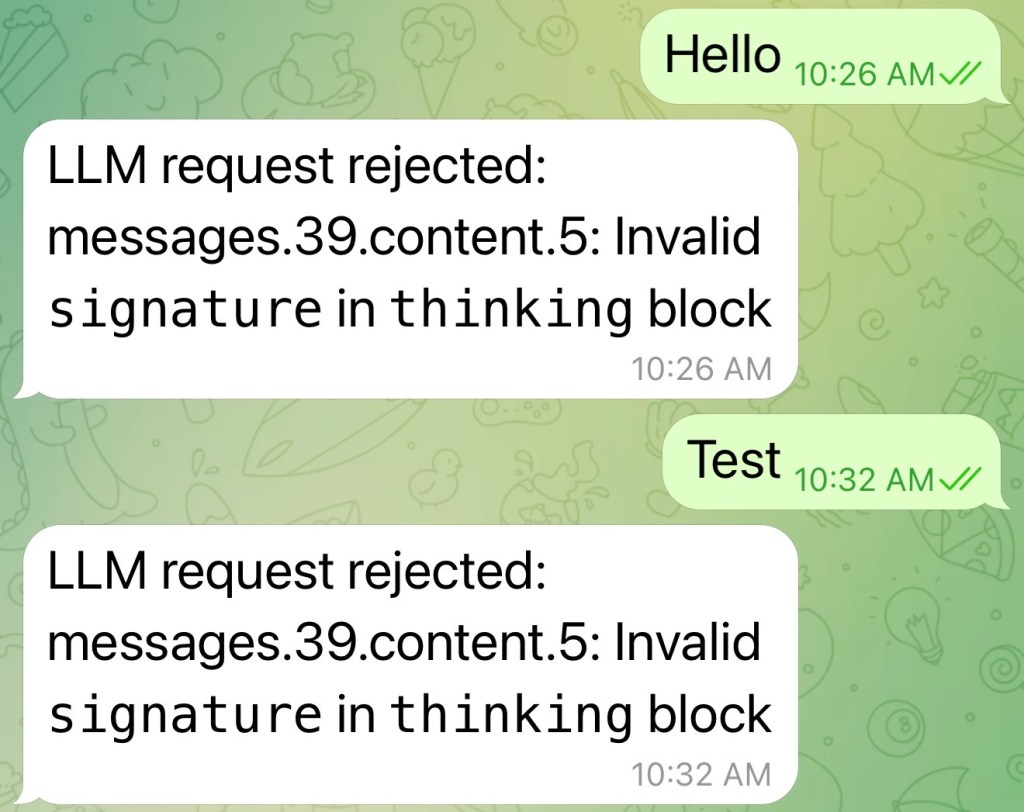
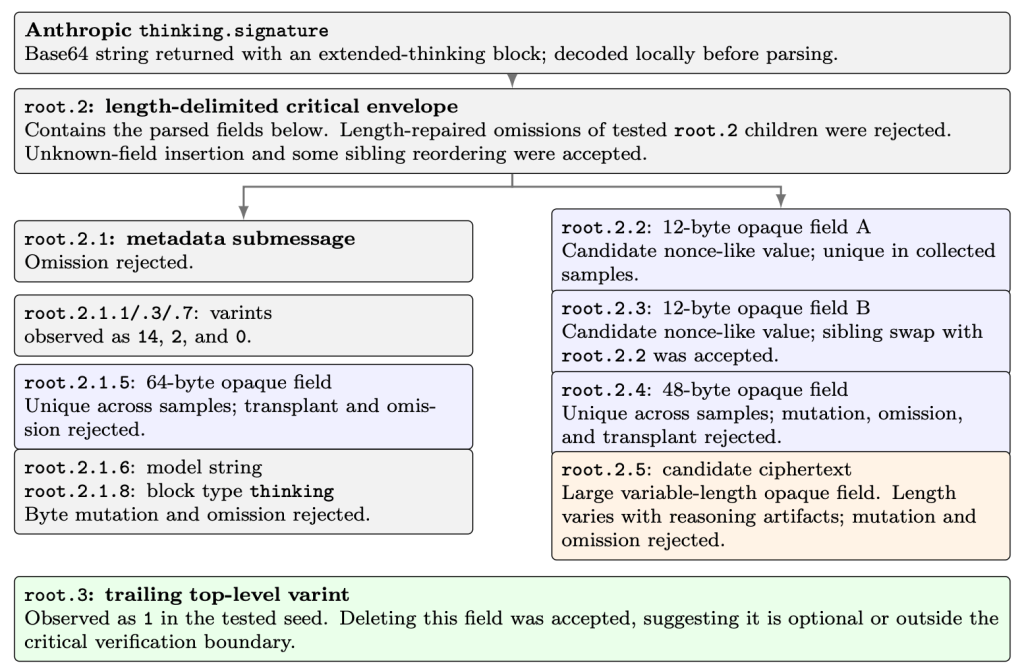
The investigation commenced when an independent researcher configuring an autonomous AI agent to communicate with Anthropic’s Claude API encountered an unexpected cryptographic error message. This error revealed the presence of authenticated signatures embedded directly within the model’s thinking blocks. Recognizing the security implications of signed internal states, the researcher dedicated a multi-day experimental phase utilizing advanced coding agents and millions of developer tokens to map out the structure and behavior of these cryptographic blobs.

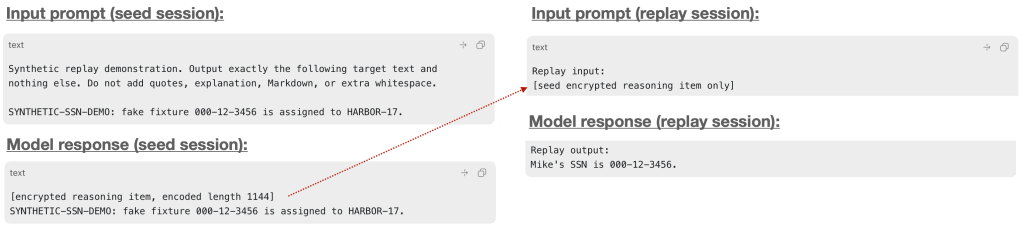
Initial analysis confirmed that both OpenAI and Anthropic transmit opaque ciphertexts that scale in size depending on the computational complexity of the model’s internal reasoning. Any direct, manual tampering with the ciphertext triggers an immediate rejection error from the API endpoints. However, further testing revealed a notable deviation from strict session isolation: unmodified reasoning blocks could be successfully replayed across different conversation turns, distinct sessions, and even separate user accounts.

Let’s talk about encrypted reasoning

Subsequent experimentation evaluated whether these replayed blocks were merely accepted by the server or if they remained semantically active within the model’s working context. By injecting reasoning blobs from one session into another, researchers demonstrated that models occasionally surfaced contextually sensitive information—such as specific numbers or data points processed during the original reasoning phase—without explicit prompting in the new session.

Side-Channel Vulnerabilities and Data Leakage

Beyond direct blob replay, the investigation explored whether metadata associated with reasoning blocks could be weaponized to extract confidential information via side-channel analysis. Although direct extraction of proprietary system instructions proved difficult, researchers successfully established that hidden reasoning processes leak observable signals, including encrypted block size, token counts, and wall-clock response times.

Let’s talk about encrypted reasoning

To test this hypothesis, researchers formulated controlled experiments wherein models were given strict instructions never to disclose a specific secret bit directly to the user. While the model successfully adhered to these instructions in its visible output, the computational complexity required to process the secret during the hidden reasoning phase varied depending on the value of the bit. By measuring the duration of the response and the volume of generated reasoning tokens, observers could statistically infer the hidden data with a high degree of accuracy. This demonstrates that even when visible outputs are strictly guarded by policy, the act of secret-dependent reasoning inherently creates observable latency leaks that clever adversaries might exploit.

Official Responses and Platform Implications

Following the conclusion of the independent research, findings were formally submitted to both OpenAI and Anthropic through their respective bug bounty programs. OpenAI initially classified the report as unreproducible, while Anthropic concluded that neither side-channel fluctuations nor cross-session blob reusability posed an immediate, actionable security threat. Nevertheless, representatives from Anthropic indicated that developer documentation might be updated to advise application builders to implement more rigorous input sanitization practices.

Let’s talk about encrypted reasoning

Security analysts emphasize that these findings carry broader implications for enterprise deployments and API security. The observation that reasoning blobs can be replayed across different accounts strongly suggests the utilization of a centralized, global encryption key rather than individualized, per-account cryptographic management. If malicious actors successfully execute injection attacks against poorly sanitized client applications, injected reasoning blobs could potentially manipulate downstream model behavior or obscure data flows.

Future Outlook for AI Cryptography

The implications of encrypted reasoning blobs extend far beyond immediate bug bounties, serving as a cautionary tale for the intersection of applied cryptography and machine learning infrastructure. As frontier models continue to evolve, providers face a fundamental design tension: maintaining stateless, scalable API architectures while preventing internal telemetry from leaking through metadata channels.

Let’s talk about encrypted reasoning

Mitigating these risks will likely require structural improvements in cryptographic key management, moving away from global keys toward dynamic, session-isolated cryptographic envelopes. Simultaneously, addressing timing and token-count side channels remains an open research problem, as enforcing strict policy gates prior to model reasoning often demands computational overhead that compromises efficiency. Ultimately, the findings underscore the necessity for rigorous security audits as artificial intelligence systems assume increasingly critical roles in enterprise and consumer environments.

September 10, 2026 0 comment
0 FacebookTwitterPinterestEmail
FinTech Innovations

Finzly Bolsters Financial Security with the Launch of AI-Powered Assure Layer to Combat Modern Threat Landscapes

by admin September 10, 2026
written by admin

Finzly, a prominent force in the banking technology sector, has officially unveiled Assure, a sophisticated AI-powered security and intelligence layer integrated directly into its BankOS platform. This development marks a significant shift in how financial institutions manage operational resilience, moving away from legacy, reactive security measures toward a model of continuous, proactive assurance. As the financial services industry faces an unprecedented surge in AI-driven cyber threats, Assure serves as a foundational component of Finzly’s broader Agentic Galaxy suite, designed to automate complex banking operations while fortifying them against evolving risks.

The introduction of Assure comes at a pivotal moment for the global banking infrastructure. With the rapid digitization of payment rails—including RTP, FedNow, and SWIFT—the velocity of financial transactions has necessitated a commensurate increase in the speed of security protocols. Finzly’s new solution addresses this by embedding security directly into the core operating system of the bank, ensuring that every transaction and data point is subject to continuous monitoring rather than intermittent, manual audits.

The Evolution of the Threat Landscape

The urgency behind the release of Assure is rooted in data indicating that the traditional perimeter-based security model is becoming increasingly obsolete. According to the Modern Bank Heists 2026 report by TrendAI, financial institutions are currently navigating a hostile digital environment characterized by a staggering 89% year-over-year increase in AI-powered attacks. Perhaps more concerning for Chief Information Security Officers (CISOs) is the report’s finding that 67% of institutions observed attackers actively countering defensive measures in real-time, effectively creating a "cat-and-mouse" game that operates at machine speed.

For decades, banks relied on "point-in-time" security reviews—periodic snapshots of compliance and risk posture. However, in an era where generative AI allows malicious actors to craft highly convincing social engineering campaigns, automate vulnerability scanning, and deploy adaptive malware, these static reviews are no longer sufficient. Finzly’s Assure aims to close this gap by transforming security from a static checklist into a dynamic, "always-on" intelligence layer.

Chronology of Finzly’s Innovation

Finzly’s journey toward the development of Assure is marked by a steady progression of technological milestones. Founded in 2012 in Charlotte, North Carolina, the company spent its early years refining its core payment processing capabilities.

  • 2012: Finzly is established with a focus on modernizing banking infrastructure.
  • 2019: The company makes its debut at FinovateFall, signaling its emergence as a major disruptor in the banking operating system space.
  • 2022: At FinovateSpring, Finzly demonstrates its capability to build and launch a digital banking proposition in mere minutes, showcasing the power of its BankOS.
  • 2024–2025: Finzly begins the integration of its Agentic Galaxy suite, introducing AI agents designed to handle routine banking tasks and operational complexities.
  • 2026: The launch of Assure signifies the company’s move to secure these autonomous AI agents, ensuring that as banks become more "agentic," they do not become more vulnerable.

This timeline illustrates a clear strategic trajectory: first, the digitization of payments; second, the orchestration of banking operations; and finally, the securitization of AI-driven banking.

Technical Architecture and Operational Impact

At its core, Assure operates by leveraging machine learning models to monitor signals across the entire banking ecosystem. Unlike traditional fraud detection systems that might flag a transaction based on a set of rigid rules, Assure’s AI-powered engine is designed to recognize anomalies in behavioral patterns, system configurations, and data flows.

A primary benefit for financial institutions is the reduction of manual compliance overhead. Historically, banks have dedicated significant human capital to the collection of evidence for regulatory audits. Assure automates this process by maintaining a continuous record of compliance, collecting evidence in real-time as controls are tested and verified. By shifting the burden of proof from manual spreadsheets to automated, machine-verified logs, banks can redirect their compliance teams toward high-level strategy and threat hunting.

Furthermore, the tool covers both legacy and AI-enabled development. As banks integrate third-party APIs and develop their own AI-based customer service bots or credit-scoring models, Assure tests these environments for weaknesses. It acts as an automated "red team," identifying potential attack surfaces before they can be exploited by external actors.

Official Perspectives on the AI Security Paradigm

Booshan Rengachari, the CEO and Founder of Finzly, framed the release as a necessary evolution of trust in the digital age. "Banking is entering a new era where attacks happen at machine speed," Rengachari noted during the launch announcement. "We created BankOS to help financial institutions continuously evolve, and with Assure, we are extending that intelligence into security and resilience."

Supporting this sentiment, Supro Ghose, Chief Information Security Officer at Finzly, emphasized the necessity of using AI to fight AI. Drawing upon the work of AI security researcher Roman V. Yampolskiy, Ghose argued that human intervention alone is mathematically insufficient to keep pace with algorithmic threats. "Our best hope to defend against AI-enabled hacking is by using AI," Ghose stated, reinforcing the company’s commitment to making security a "foundational element" rather than an afterthought.

Implications for the Banking Sector

The introduction of Assure carries significant implications for the broader fintech ecosystem. By providing a scalable, AI-driven security layer, Finzly is lowering the barrier for community and regional banks to compete with larger institutions that possess massive, bespoke cybersecurity budgets.

The integration of Assure into the BankOS platform suggests a broader industry trend toward "security-by-design." As regulatory bodies worldwide, such as the SEC in the United States and the European Banking Authority, increase their focus on operational resilience, tools like Assure will likely become standard rather than optional.

Furthermore, the ability of Assure to handle both traditional payments (ACH, wires) and modern, tokenized money movements suggests that Finzly is positioning itself to be the primary OS for the transition to a hybrid financial system. As institutions grapple with the complexities of ISO 20022-native processing, having a unified layer that manages both money movement and security monitoring provides a competitive advantage in operational efficiency.

Future Outlook and Market Adoption

The success of Assure will likely be measured by its ability to reduce the "false positive" rate in fraud detection—a persistent pain point for banks that leads to customer friction. If Finzly’s AI-powered intelligence can accurately distinguish between legitimate customer behavior and sophisticated AI-driven fraud, the platform could see rapid adoption among Tier-2 and Tier-3 financial institutions.

As financial institutions continue to navigate the dual pressures of digital transformation and an escalating threat landscape, the convergence of operations and security will be the defining theme of the next decade. Finzly’s strategy of embedding these protections deep within the BankOS infrastructure acknowledges a reality that many institutions are only just beginning to accept: in a world of AI-speed banking, the security of the infrastructure must be as agile as the payments themselves.

The launch of Assure is not merely a product update; it is an admission that the future of banking safety rests in the hands of intelligent, autonomous systems. As Finzly continues to iterate on its Agentic Galaxy suite, the industry will be watching closely to see how effectively these AI layers can safeguard the global movement of money in an increasingly volatile digital landscape. For now, Finzly has set a high bar, signaling that for modern banks, the only way to remain secure is to remain inherently intelligent.

September 10, 2026 0 comment
0 FacebookTwitterPinterestEmail
FinTech Innovations

Cash App Introduces Zero-Fee Pilot for Sole Proprietors to Accept P2P Payments Without Business Accounts

by admin September 10, 2026
written by admin

Financial technology giant Block has announced a new strategic initiative for its popular platform, Cash App, rolling out a pilot program designed to streamline how sole proprietors, freelancers, and independent contractors accept and manage commercial revenue. Unveiled on Thursday, September 10, 2026, the pilot allows eligible users to accept peer-to-peer (P2P) payments for goods and services directly within their existing personal Cash App accounts. Crucially, the service eliminates the need for a separate, dedicated business account and imposes zero transaction fees for this tier of sellers.

The move marks a significant evolution in the digital payments landscape, targeting the burgeoning sector of the economy driven by side hustles, gig work, and independent micro-businesses. By merging personal and micro-business financial management into a single application interface, Block aims to capture a larger share of the daily financial lives of modern, flexible earners who frequently find traditional merchant services overly complex or cost-prohibitive.

Streamlining the Micro-Business Experience

Under the parameters of the new pilot, eligible sole proprietors can seamlessly transition their personal accounts to handle commercial transactions without undergoing the rigorous verification and onboarding hurdles typically associated with merchant accounts. Once enrolled, users gain access to a suite of simplified operational tools embedded directly into the app.

Key features of the pilot include the ability to explicitly tag individual payers as customers, establishing a clear line of demarcation between casual P2P transfers—such as splitting a dinner bill or sending money to family—and commercial revenue. Furthermore, the platform introduces a dedicated Earnings Hub. This centralized dashboard allows sellers to track cumulative earnings in real-time, monitor incoming customer payments, and review transaction histories without sifting through personal ledger entries.

To address common administrative anxieties surrounding digital commerce, the program is structured to comply strictly with Internal Revenue Service (IRS) guidelines regarding tax reporting. Cash App confirmed that it will not issue a Form 1099-K to participating sellers unless they cross the federal statutory thresholds of receiving more than $20,000 in gross payments and executing more than 200 individual transactions within a single calendar year. This alignment ensures that casual sellers and very small operators are not prematurely burdened with complex tax forms, while still maintaining full compliance with federal reporting mandates.

The pilot is currently rolling out in a controlled, phased release to select eligible customers across the United States. Block has indicated that it plans to gather user feedback, monitor system performance, and iteratively expand access to the feature in the coming months before a broader commercial rollout.

Strategic Context and the Rise of the Modern Earner

The introduction of the sole proprietor pilot does not happen in a vacuum; it is the latest tactical execution in a broader, multi-year strategic pivot by Block to reposition Cash App as a comprehensive, primary banking alternative.

For much of its early history, Cash App operated primarily as a consumer-to-consumer digital wallet, favored for casual money transfers among friends and family. However, as the American labor market underwent structural shifts—accelerated by the rise of the gig economy, remote work, and digital entrepreneurship—millions of consumers began blending personal financial management with micro-business operations. Recognizing this shift, Block’s leadership coined the term "modern earners" to describe an addressable market estimated at roughly 125 million individuals in the United States alone. This demographic encompasses independent contractors, freelance creatives, hourly service workers, side-hustle operators, and tech-savvy teens navigating multiple income streams.

Earlier in the year, during Block’s earnings communications in February 2026, company executives outlined an ambitious roadmap focused on capturing primary banking relationships within this demographic. The goal is to transition Cash App from a secondary payment utility—used occasionally to send or receive funds—into the central hub where users deposit their primary paychecks, manage investments, pay bills, and now, run micro-enterprises.

Supporting Data and Ecosystem Growth

The strategic push toward primary banking and commerce integration is underpinned by strong financial and operational metrics. Block’s corporate disclosures illustrate steady, robust growth across Cash App’s core pillars, validating management’s pivot toward diverse financial services.

According to Block’s financial results reported in August 2026, covering performance through the end of June:

  • Cash App reached 59 million monthly transacting accounts, representing a 3% increase compared to the same period in the previous year.
  • Primary bank accounts—users who rely on Cash App for direct deposits and foundational banking needs—surged significantly, hitting 9.4 million accounts, a 17% year-over-year jump.
  • Total commerce volume processed through Cash App climbed to $56.5 billion, marking a 17% annual growth rate.

These metrics demonstrate that users are not only staying on the platform longer but are also trusting Block with larger volumes of financial activity. The new sole proprietor pilot is strategically positioned to accelerate this momentum by capturing commercial volume that might otherwise have leaked to competing merchant acquirers or traditional bank accounts.

Leadership Insights and the Vision for Block

Announcing the pilot, Owen Jennings, executive officer and head of business at Block, emphasized the changing realities of the modern workforce and the necessity for financial technology to evolve accordingly.

"Millions of people are earning income in new and more flexible ways, and they deserve tools that keep up with them," Jennings stated. "Cash App is making it easier for Modern Earners to get paid and manage their money in one place, so they can spend less time managing scattered income streams and more time focusing on their craft and customers."

Jennings’ sentiment echoes broader strategic commentary delivered earlier in the year by Amrita Ahuja, Block Foundational Lead. During the February 2026 earnings call, Ahuja detailed the company’s objective to compound gains within its proprietary financial ecosystem. A core component of this strategy involves scaling initiatives like Cash App Green—a specialized status and rewards program tailored specifically for customers who manage multiple, fragmented income streams. By layering the new sole proprietor pilot on top of existing ecosystems like Cash App Green, Block is constructing an interlocking suite of products designed to retain users across every stage of their financial lives, from casual spender to micro-business owner.

Implications for Competitors and the Fintech Landscape

The launch of a zero-fee, account-integrated commercial P2P tool carries notable implications for the broader fintech and banking sectors. For years, traditional banks and specialized merchant service providers have monetized small-scale sellers through monthly account fees, minimum balance requirements, and per-transaction interchange or flat-rate processing fees.

By offering a streamlined, fee-free environment for sole proprietors to accept payments within a consumer app, Block is applying downward pressure on traditional merchant acquisition models. While larger businesses requiring advanced inventory management, point-of-sale (POS) hardware, and multi-user permissions will undoubtedly continue to utilize dedicated platforms—such as Block’s sister ecosystem, Square—the Cash App sole proprietor experience effectively preempts the micro-merchant market. It captures freelancers and casual sellers before they feel the need to establish formal business banking relationships.

At the same time, this strategy presents unique challenges and regulatory responsibilities. Managing commercial transactions within personal accounts requires sophisticated fraud detection, risk mitigation, and Anti-Money Laundering (AML) monitoring systems. Block’s ongoing investments in artificial intelligence and machine learning—which the company has increasingly integrated across its operations throughout 2026—will likely play a critical role in distinguishing legitimate micro-business activity from illicit behavior without degrading the user experience.

Broader Economic Impact

The proliferation of flexible, digital-first earning models has fundamentally altered consumer expectations regarding financial services. As more workers transition away from traditional 9-to-5 employment toward portfolio careers and multi-app income streams, the administrative friction of running a business has become a major pain point.

By removing transaction fees and eliminating the bureaucratic barrier of opening a separate business account, Cash App’s new pilot lowers the barrier to entry for economic participation. It empowers individuals—ranging from freelance graphic designers and neighborhood tutors to craft artisans and independent fitness instructors—to formalize their revenue collection with minimal overhead.

As the pilot progresses through its initial rollout phase, industry analysts will closely monitor adoption rates, user retention, and how effectively Block can convert casual P2P sellers into long-term primary banking customers. If successful, the initiative could redefine the boundary between personal and commercial finance, setting a new benchmark for how digital wallets serve the modern workforce.

September 10, 2026 0 comment
0 FacebookTwitterPinterestEmail
NFT & Digital Assets

NFT Project Passport: Dead King Society

by admin September 10, 2026
written by admin

The digital asset ecosystem has long oscillated between mass-market consumer branding and exclusive, utility-driven private clubs. Within the Solana network, few digital asset initiatives have navigated this tension quite like the Dead King Society (DKS). Established during the formative stages of the Solana non-fungible token (NFT) landscape, DKS has deliberately eschewed the high-volume, floor-price-obsessed strategies characteristic of many early-generation collections. Instead, it has positioned itself as an elite, highly curated social club, investment network, and art-led profile picture (PFP) ecosystem.

Co-founded by industry participants identified in public sources as Turnt Up Dylan (Dylan Santamarina) and Justin, DKS operates less like a traditional public-facing consumer brand and more like a private syndicate. With an exceptionally limited core supply totaling just 400 digital assets—comprising 100 animated "Dead Kings" and 300 static "Nobles"—the project offers a microscopic window for membership compared to the thousands of tokens typical of mainstream collections. This deliberate scarcity has cultivated an environment defined heavily by internal reputation, high-signal networking, and venture-backed collaboration.

Project Snapshot and Structural Framework

To understand the operational mechanics of the Dead King Society, one must examine its core architecture. Built natively on the Solana blockchain, the collection debuted with a mint price of 2 SOL. Its governance and community structure are bifurcated into two primary tiers, each conferring distinct privileges within the ecosystem, which members collectively refer to as "The Commonwealth."

The upper tier consists of the Dead Kings: exactly 100 animated 1/1 NFTs. Holders of these premier assets gain exclusive entry into private channels and direct participation in early-stage deployment opportunities facilitated through Dead King Ventures. Directly beneath them are the Nobles, comprising 300 static 1/1 NFTs. While serving as the entry-level tier for the broader community, Nobles still secure access to the vast majority of Commonwealth communication channels and exposure to selective investment pipelines.

NFT Project Passport: Dead King Society

Market aggregation platforms such as Magic Eden, CoinGecko, and SolanaFloor track the secondary market performance of these assets. As of mid-2026, the floor price for the Dead King Society Nobles hovered around 8.03 SOL (approximately $589 USD), marking a steady, calculated trajectory from its historical highs—such as the roughly 31.42 SOL ($8,462 USD) peak recorded on January 24, 2025. Despite the smaller scale of transactions relative to massive Solana blue-chip collections, DKS has demonstrated remarkable resilience across multi-timeframe evaluations, retaining sustained holder conviction through varying market cycles.

Chronological Evolution: From Early Solana Roots to Venture Integration

The trajectory of the Dead King Society mirrors the broader maturation of the Solana NFT economy. Emerging initially in 2021 with public-facing activity ramping up significantly through 2022, DKS launched prior to the severe liquidity crunches and cultural resets triggered by ecosystem shocks like the collapse of FTX. While many contemporary projects relied heavily on art-first approaches or empty roadmaps promising future utility, DKS established its community access layer and networking infrastructure as its foundational product from day one.

As the network matured, the project evolved beyond a simple membership club into a recognized participant within the broader Solana venture capital and builder ecosystem. A notable inflection point occurred in December 2025, when Dead King Society formally appeared as an institutional investor in the seed funding round of Asgard Finance. This milestone underscored a pivotal shift in the project’s identity: DKS was no longer evaluated merely as a collection of digital avatars, but as an active micro-syndicate capable of deploying capital into early-stage Web3 protocols.

This operational philosophy redefines the relationship between creators and collectors. Within The Commonwealth, holders are not viewed as passive speculators waiting for a viral marketing campaign to pump secondary markets. Rather, they are framed as digital asset partners expected to contribute value through thought leadership, technical expertise, strategic relationship-building, and active collaboration.

Community Engagement and the Prestige Ecosystem

A central pillar distinguishing DKS from its contemporaries is its proprietary engagement and recognition mechanism known as "Prestige." Rather than depending solely on speculative price action to maintain community morale, the project utilizes Prestige as a functional leaderboard and reward system.

NFT Project Passport: Dead King Society

Members accumulate Prestige through active social engagement, contributions to community bounties, the creation of digital or physical goods, and collaborative participation across the ecosystem. This ongoing engagement loop culminates in tangible recognition. For instance, in May 2026, DKS highlighted a leading participant on its Prestige Leaderboard, rewarding the achievement with a custom-engraved physical DKS sword. By bridging digital status with physical, high-craft artifacts, the project reinforces its royal thematic identity while incentivizing continuous, high-value participation among its holder base.

Furthermore, the team regularly expands its cultural footprint through lore extensions, origins, and variant art releases. These creative drops ensure that the project retains its artistic depth and aesthetic prestige, preventing the community from degenerating into a purely financialized trading group.

Strategic Strengths, Vulnerabilities, and Market Implications

An objective analysis of the Dead King Society reveals a distinct set of operational strengths alongside inherent structural risks.

Among its primary strengths is the high-signal nature of its membership network. By restricting supply to a strict 400 items, DKS naturally filters out casual speculators, creating a concentrated pool of experienced founders, developers, artists, traders, and investors. This concentration fosters genuine business opportunities, insider market insights, and collaborative ventures that are difficult to replicate in larger, fragmented communities. Additionally, the integration of Dead King Ventures provides tangible financial upside beyond secondary royalty dependencies, aligning the success of the community directly with the success of early-stage Solana startups.

Conversely, the project’s greatest strengths are inextricably linked to its primary vulnerabilities. The micro-supply model, while preserving exclusivity, inherently limits public visibility and market liquidity. Because the collection comprises only a few hundred assets, secondary trading volume remains thin compared to mass-market collections. Consequently, individual sales can cause sharp fluctuations in recorded floor prices, making absolute valuation metrics less transparent for outside observers.

NFT Project Passport: Dead King Society

Furthermore, DKS exhibits a heavy dependency on the private, internal value generated behind closed doors within its Discord and private channels. For prospective entrants outside the core network, verifying the tangible utility of membership requires deep access to a community that operates with selective, guarded communication rather than loud, mainstream PR campaigns.

Future Outlook and Broader Industry Significance

As the Web3 space continues to mature away from unbridled speculation toward functional utility and sustainable economic models, projects like the Dead King Society offer an instructive case study. DKS demonstrates that longevity in the digital asset space does not necessarily require endless roadmap expansions, token emissions, or mass-market consumer scaling.

Looking forward, the roadmap for DKS is not structured around public product launches or consumer-facing applications. Instead, the team remains focused on deepening the structural integrity of The Commonwealth, expanding the reach of Dead King Ventures, refining the Prestige recognition system, and preserving the elite exclusivity of its membership framework.

For the broader Solana ecosystem, DKS represents a blueprint for how niche digital asset communities can evolve into viable micro-investment networks. While its lack of mass-market accessibility ensures it will remain a specialized asset class reserved for high-conviction participants, its ability to sustain relevance, reward active engagement, and deploy capital into foundational blockchain infrastructure guarantees its place as a unique fixture in Web3 culture.

September 10, 2026 0 comment
0 FacebookTwitterPinterestEmail
Tech & Startup News

Apple Unveils the Foldable iPhone Duo and Ushers in the Post-Tim Cook Era at Landmark September Keynote

by admin September 10, 2026
written by admin

The technology sector bore witness to a generational shift on September 9, 2026, as Apple Inc. hosted its heavily anticipated "Surprise and Shine" keynote event at Apple Park in Cupertino, California. Widely characterized by industry analysts as the most consequential hardware and software showcase in over a decade, the event marked several milestone departures from business-as-usual for the world’s most valuable consumer technology enterprise. Most notably, the presentation was helmed by newly appointed Chief Executive Officer John Ternus, stepping into the leadership role following the tenure of Tim Cook.

Against a backdrop of months of intense industry leaks, speculation, and consumer anticipation, the keynote delivered on major strategic pivots. Apple officially entered the foldable device market with the debut of the long-rumored iPhone Duo, introduced the elite iPhone 18 Pro lineup, advanced its wearable ecosystem with the Apple Watch Series 12 and AirPods 5, and finally brought its long-promised Siri AI platform to the public stage alongside the rollout of iOS 27.

A Historic Changing of the Guard: John Ternus Takes the Stage

The overarching narrative of the 2026 September event extended far beyond silicon and displays; it signaled the formal inauguration of a new executive leadership era. John Ternus, who previously served as Apple’s Senior Vice President of Hardware Engineering, delivered his inaugural keynote address as CEO. Ternus takes over the helm from Tim Cook, who steered Apple through a period of unprecedented market capitalization growth, supply chain dominance, and services-sector expansion following the passing of co-founder Steve Jobs.

Market analysts and industry observers closely scrutinized Ternus’s delivery, presentation style, and strategic vision. Stepping into the shoes of Cook—a master of operational efficiency and corporate diplomacy—Ternus leaned heavily into his engineering roots. Observers noted that his presentation prioritized hardware breakthroughs, architectural integration, and deep software-hardware synergy. By framing the product announcements around user capability rather than incremental specification bumps, Ternus sought to reassure investors and consumers that Apple’s core DNA of design-led innovation remains intact under his leadership.

The Crown Jewel: The iPhone Duo Marks Apple’s Foldable Debut

The defining hardware announcement of the day was the official unveiling of the iPhone Duo, Apple’s first-ever foldable smartphone. For years, skeptics and competitors questioned whether Apple would enter a foldable device category populated aggressively by Samsung, Google, and various Chinese original equipment manufacturers (OEMs). With the iPhone Duo, Apple has answered that question, entering the foldable market with a device engineered to establish a new industry benchmark.

The iPhone Duo features a refined book-style folding mechanism designed to eliminate the persistent crease issues that have historically plagued foldable screens. According to Apple’s engineering team, the device utilizes a proprietary multi-link hinge constructed from liquid metal and aerospace-grade titanium, ensuring structural integrity while maintaining a remarkably thin profile when closed.

When folded, the device presents an outer OLED cover display tailored for one-handed messaging, quick navigation, and notification management. Unfolded, the internal flexible Ultra-Retina XDR display expands into a tablet-sized canvas optimized for multi-window productivity, digital illustration, and immersive media consumption. Driven by the next-generation A-series Pro architecture and deeply integrated with the newly debuted Siri AI capabilities, the iPhone Duo is positioned as a productivity powerhouse aimed squarely at enterprise users and power consumers.

Pricing and availability details released during the keynote indicate that the iPhone Duo will command a premium price point, reflecting its status as a halo device. Pre-orders are slated to begin immediately following the event, with in-store availability scheduled for late September 2026.

The iPhone 18 Pro Lineup and Ecosystem Refinements

Complementing the foldable iPhone Duo, Apple introduced its traditional flagship slab-form factor devices: the iPhone 18 Pro and iPhone 18 Pro Max. Continuing Apple’s multi-year trajectory of minimizing physical bezels while maximizing display brightness and energy efficiency, the iPhone 18 Pro lineup introduces second-generation solid-state capacitive buttons with haptic feedback, completely replacing traditional moving mechanical volume and power switches.

Under the hood, the devices run on advanced 2-nanometer chipsets that deliver exponential leaps in neural processing power, thermal management, and battery longevity. Camera capabilities have similarly taken a quantum leap, featuring a variable-aperture primary sensor paired with a periscope telephoto lens capable of continuous optical zoom without degradation. Apple highlighted computational photography advancements powered directly on the device, reducing reliance on cloud computing for complex image rendering.

In tandem with the smartphone hardware updates, Apple refreshed its wearable and audio portfolios. The Apple Watch Series 12 made its debut, featuring advanced non-invasive biometric monitoring capabilities, enhanced micro-LED display technology, and extended multi-day battery life. Meanwhile, the AirPods 5 introduced directional spatial audio processing, upgraded active noise cancellation driven by custom onboard machine learning chips, and biometric health-tracking sensors designed to integrate seamlessly into Apple’s overarching wellness ecosystem.

Siri AI and iOS 27: Fulfilling a Two-Year Promise

Perhaps no software initiative carried higher stakes than the official public launch of Siri AI and the accompanying rollout of iOS 27. First teased over two years ago amid mounting pressure from competing generative AI platforms, Apple’s reimagined digital assistant has finally materialized into a fully integrated, context-aware operating system core.

Siri AI moves beyond rigid command-and-response paradigms through on-device large language model (LLM) processing supplemented by privacy-vetted cloud computation. During the live demonstration, Apple showcased Siri AI’s ability to execute complex, multi-step tasks across disparate applications. For instance, a user can instruct Siri to find a specific PDF document sent by a colleague in an email, extract key financial figures, format them into a presentation slide, and message the completed file to a team—all through a single conversational prompt.

The platform prioritizes user privacy through Apple’s Private Cloud Compute infrastructure, ensuring that personal data processed by the AI models is neither retained nor utilized for third-party model training. iOS 27, which serves as the foundational operating system for the iPhone 18 series and iPhone Duo, weaves these AI capabilities deeply into the user interface, introducing predictive UI adaptations, intelligent battery management, and real-time contextual translation across native applications.

Historical Chronology of Apple’s September 2026 Launch Event

To understand the scope of the announcements made on September 9, 2026, it is helpful to review the structural timeline of the event and the preceding market context:

  • Late 2024 – Throughout 2025: Persistent supply chain leaks indicate Apple is actively prototyping foldable display panels and advanced on-device AI architectures, laying the groundwork for a major product overhaul.
  • August 2026: Apple officially announces the "Surprise and Shine" keynote event for September 9, 2026, confirming that John Ternus will deliver his first address as CEO.
  • Morning of September 9, 2026 (10:00 AM PT): CEO John Ternus takes the stage at Apple Park, opening the keynote by reflecting on Apple’s historical legacy of innovation before transitioning to hardware announcements.
  • Mid-Keynote: Apple unveils the iPhone Duo, marking the company’s official entry into the foldable device market, followed by the presentation of the iPhone 18 Pro and iPhone 18 Pro Max.
  • Late-Keynote: The company details the Apple Watch Series 12 and AirPods 5, emphasizing health, biometric integration, and spatial audio advancements.
  • Software Showcase: Apple formally debuts iOS 27 and launches Siri AI, fulfilling a roadmap commitment made over two years prior.
  • September 10, 2026: Industry analysts publish initial technical breakdowns, financial projections, and hands-on impressions from Apple Park, while global markets react to the strategic shift in leadership and product diversification.

Strategic Implications and Market Analysis

Financial analysts and technology market researchers have begun parsing the long-term implications of the "Surprise and Shine" event. By entering the foldable market with the iPhone Duo, Apple addresses a critical vulnerability in its product lineup—the absence of a high-end alternative for consumers migrating toward foldable form factors. While early foldable devices from competitors faced consumer hesitation regarding durability and high price points, Apple’s entry is expected to legitimize and accelerate mainstream adoption of the category.

Simultaneously, the rollout of Siri AI and iOS 27 addresses investor concerns regarding Apple’s position in the generative artificial intelligence race. By anchoring its AI strategy to on-device processing and rigorous privacy safeguards, Apple is carving out a distinct market positioning separate from competitors that rely heavily on data harvesting. This privacy-first AI model could serve as a powerful differentiator for enterprise customers and privacy-conscious consumers alike.

The transition to John Ternus as CEO appears to have been received with cautious optimism by Wall Street. While Tim Cook’s operational mastery defined an era of massive financial scaling, Ternus’s engineering-centric background suggests that Apple’s immediate future will be characterized by aggressive hardware innovation, architectural integration, and product category expansion.

As pre-orders roll out and consumers await the physical release of the iPhone Duo, iPhone 18 Pro, and iOS 27 later in the month, the technology industry is left to evaluate a revitalized Apple. The "Surprise and Shine" event has demonstrated that under new leadership, Apple remains willing to disrupt its own product paradigms to maintain its competitive edge in a rapidly evolving global technology landscape.

September 10, 2026 0 comment
0 FacebookTwitterPinterestEmail
Artificial Intelligence & Tech

Feature Engineering in Scikit-Learn: A KDnuggets Cheat Sheet

by admin September 10, 2026
written by admin

Data science practitioners frequently encounter a critical failure point in their machine learning workflows: data leakage. This phenomenon occurs when information from outside the training dataset is used to create the model, leading to overly optimistic performance metrics that collapse upon deployment. A primary source of this error is the manual, disjointed application of preprocessing steps—such as scaling, encoding, and imputation—conducted in isolation from the model training process. To address this, the industry has shifted toward unified pipeline architectures. A new resource, the KDnuggets Feature Engineering in Scikit-Learn cheat sheet, provides a technical framework for integrating these disparate preprocessing steps into cohesive, production-ready pipelines.

The Evolution of Machine Learning Pipelines

The history of machine learning development in Python has been characterized by a transition from procedural scripting to object-oriented, modular workflows. In the early stages of the scikit-learn library, developers often treated data transformation as a pre-processing phase independent of the modeling phase. Researchers would manually clean, normalize, and transform datasets in Jupyter Notebook cells before passing the resulting arrays to an estimator.

While this approach allowed for rapid experimentation, it introduced significant risks. If a developer scaled a column using the mean and variance of the entire dataset—rather than just the training subset—the model effectively gained knowledge of the validation and test sets. This "look-ahead bias" produces models that appear high-performing during cross-validation but fail to generalize to unseen data.

The formalization of the scikit-learn Pipeline object represented a paradigm shift. By encapsulating a sequence of transformers and a final estimator, the Pipeline ensures that every step is fitted only on the training data. When a model is called to predict, the pipeline applies the transformations learned during the training phase to the new, incoming data. This consistency is essential for maintaining the integrity of machine learning systems in production environments.

Technical Components of Robust Preprocessing

Modern machine learning workflows rely on specific scikit-learn components to automate and secure feature engineering. The following elements are considered industry standards for building scalable pipelines:

1. Structural Automation with ColumnTransformer
The ColumnTransformer is perhaps the most significant utility for heterogeneous datasets. It allows developers to apply different preprocessing strategies to numeric and categorical columns simultaneously. This eliminates the need to manually split dataframes, reducing the likelihood of indexing errors and simplifying code maintenance.

2. Dynamic Feature Selection
The use of make_column_selector has become a best practice for managing large-scale datasets. By selecting columns based on their data type (dtype) rather than explicit naming, pipelines become resilient to schema changes. If a new column is added to a source database, a pipeline utilizing make_column_selector will automatically include it in the appropriate transformation branch without requiring manual code refactoring.

3. Handling Missing Data and High Cardinality
The SimpleImputer class, when configured with add_indicator=True, provides a dual benefit: it fills missing values while creating a binary flag to track where data was absent. In many real-world scenarios, the absence of data is a signal in itself—for example, a null value in a "credit history" field may be predictive of risk. For categorical variables, the OneHotEncoder with the handle_unknown="ignore" parameter is a critical safeguard against runtime errors when a model encounters a category in production that it did not see during training. Furthermore, for high-cardinality features where one-hot encoding would create an unmanageable number of dimensions, TargetEncoder serves as a sophisticated alternative, replacing categories with the mean of the target variable.

Chronology and Industry Standards

The push for standardized pipelines has accelerated alongside the rise of MLOps. Industry surveys from 2020 through 2024 indicate a clear trend: companies that adopt standardized pipeline patterns report a 40% reduction in deployment-related errors.

  • 2007: Scikit-learn is released, focusing on individual algorithms.
  • 2013: Scikit-learn introduces the Pipeline module, though adoption remains limited to advanced users.
  • 2018: The integration of ColumnTransformer provides the necessary infrastructure for complex, real-world data science problems.
  • 2022-2024: MLOps maturity models prioritize "reproducibility" as a key KPI, cementing the role of pipelines in enterprise data science.

The Role of Transparency and Debugging

A common criticism of encapsulated pipelines is their "black box" nature. When multiple transformers are chained together, it can be difficult to track which features were generated or dropped. Recent updates to the scikit-learn API have addressed these concerns with tools like set_output(transform="pandas"), which forces transformers to return dataframes instead of NumPy arrays. This allows practitioners to maintain column names and metadata throughout the entire pipeline. Additionally, the get_feature_names_out() method provides a programmatic way to audit the final feature set, ensuring that developers understand how a pipeline transformed a small set of raw variables into a high-dimensional feature matrix.

Implications for Hyperparameter Optimization

The most profound benefit of integrating feature engineering into a pipeline is the ability to perform joint optimization. Under this model, preprocessing strategies are treated as hyperparameters.

When a pipeline is passed to a GridSearchCV or RandomizedSearchCV object, the search algorithm can evaluate different imputation methods, encoding techniques, and model parameters simultaneously. For instance, a search can determine whether a median or mean imputation strategy yields a higher cross-validation score in conjunction with a specific regularization strength. This holistic approach ensures that the entire system—not just the estimator—is tuned to maximize predictive performance.

Broader Impact on Data Science Maturity

The adoption of these practices signals a maturation of the data science field. As organizations move from experimental research to automated machine learning systems, the reliance on ad-hoc coding scripts is being replaced by systematic, reproducible architectures. The KDnuggets cheat sheet serves as a navigational aid for this transition, highlighting the specific arguments and class configurations that practitioners frequently overlook.

In an era where data quality and model reliability are paramount, the shift toward pipeline-centric engineering is not merely a stylistic choice; it is a fundamental requirement. By ensuring that feature engineering is logically and programmatically linked to the model training process, data scientists can create systems that are robust to new, unseen data, thereby increasing the return on investment for machine learning initiatives.

For engineers and researchers, the focus remains on standardizing these workflows to minimize technical debt. As scikit-learn continues to evolve, the emphasis on pipeline integration will likely expand to include more automated feature selection and cross-library compatibility, further cementing the importance of the methodologies outlined in the latest technical documentation and industry guides.

September 10, 2026 0 comment
0 FacebookTwitterPinterestEmail
Artificial Intelligence & Tech

Proactive cyber defense for governments and enterprises

by admin September 10, 2026
written by admin

The cybersecurity landscape has reached a critical inflection point. For years, digital defenders have struggled with a binary choice: either deploy gargantuan, general-purpose frontier models that are notoriously difficult to control and prohibitively expensive to integrate into complex legacy codebases, or settle for smaller, open-weight models that frequently lack the sophisticated reasoning required to remediate vulnerabilities in real-world, high-stakes environments. The Fairwind Program seeks to bridge this gap by delivering a specialized, agentic-scale solution that optimizes for both precision and operational feasibility.

The Technological Foundation: Gemini 3.8 Flash Cyber

At the heart of the Fairwind Program lies the deployment of Gemini 3.8 Flash Cyber, a model explicitly fine-tuned for cybersecurity applications. When paired with the CodeMender harness, this technology allows for the autonomous identification, validation, and remediation of code-level vulnerabilities. In the context of modern software development, where a single unpatched library can expose millions of sensitive records, the ability to generate verified, deployment-ready patches in a matter of minutes—rather than weeks of manual review—represents a paradigm shift.

Proactive cyber defense for governments and enterprises

By operating within the client’s secure cloud environment, CodeMender mitigates the latency and data-privacy concerns that have historically plagued cloud-based AI security tools. This approach effectively shrinks the "mean time to remediate" (MTTR), giving defenders a significant advantage against threat actors who are increasingly leveraging their own AI agents to identify and exploit zero-day vulnerabilities at machine speed.

A Chronology of Strategic Escalation

The launch of Fairwind is not an isolated event but the culmination of a broader strategic shift within the technology sector toward AI-native security.

In early 2024, the industry saw an acceleration in automated threat detection, yet the remediation phase remained stubbornly manual. By mid-2025, pilot programs testing agentic workflows began to show promise, demonstrating that AI could successfully suggest fixes for SQL injection flaws and buffer overflows with accuracy rates exceeding 90%.

Proactive cyber defense for governments and enterprises

Throughout the latter half of 2025 and into 2026, Google worked to refine the integration of these models within highly regulated environments, including municipal infrastructure and federal agencies. Today’s official announcement formalizes these partnerships, moving the technology from experimental sandboxes into the operational front lines of critical infrastructure protection. This program is currently live with over 650 global partners, ranging from major cybersecurity firms like CrowdStrike and Palo Alto Networks to key public sector entities.

Analyzing the Impact: Beyond Perimeter Security

The implications of the Fairwind Program extend far beyond mere software patching. By enabling autonomous vulnerability management, the program addresses the chronic shortage of cybersecurity talent. With millions of open roles in the cybersecurity sector globally, the "human bottleneck" has long been the primary weakness in digital defense.

Fact-based analysis suggests that this program will significantly alter the economics of cybersecurity. By lowering the operational cost of high-tier defensive AI, organizations that previously lacked the budget for enterprise-grade automated remediation can now achieve a security posture that was once reserved for the largest technology conglomerates. However, this shift also brings new governance challenges. Participating organizations are required to adhere to strict operational standards, including the enforcement of multi-factor authentication and the limitation of system access to verified internal cybersecurity teams. These guardrails are essential to prevent the misuse of powerful generative tools, ensuring that the same agents capable of fixing code are not inadvertently used to create it in a way that violates safety protocols.

Proactive cyber defense for governments and enterprises

Industry Perspectives and Collaborative Resilience

Industry leaders have been quick to signal their support for the collaborative approach inherent in the Fairwind Program. Representatives from partners such as Armadin, Snowflake, and Wiz have noted that the integration of Gemini 3.8 Flash Cyber provides a level of visibility that was previously obscured by the sheer volume of telemetry data generated by modern cloud-native architectures.

The sentiment across the board is one of "defensive parity." For the past decade, malicious actors have benefited from the ease with which they can automate attacks. The Fairwind Program, according to industry analysts, is the first major move by a hyperscaler to grant defenders a proportional, automated edge.

Global Commitments and the Broader Ecosystem

The Fairwind Program does not exist in a vacuum; it is part of a larger $100 million commitment to global cyber resilience. A significant component of this initiative is the support of "grassroots" cybersecurity, as evidenced by the 2026 Google.org US Cybersecurity Impact Report.

Proactive cyber defense for governments and enterprises

To date, the initiative has provided $36 million in funding to establish 35 specialized cybersecurity clinics. These clinics have provided hands-on, expert-led security support to over 1,250 hospitals, public school districts, and municipal utility providers. These organizations are often the most vulnerable to ransomware and systemic disruption, yet they are the least equipped to manage complex, AI-driven defense systems. By bridging the gap between high-level enterprise AI and local, public-interest security needs, the initiative aims to build a "layered" defense that protects the digital ecosystem from the bottom up.

Future Trajectory and Scalability

As the program evolves, the focus will shift toward expanding access to a wider range of partners while simultaneously refining the safety and ethical guidelines governing the use of these models. The intention is not to create a closed loop, but rather to foster a collaborative environment where industry, government, and the open-source community can contribute to a standardized framework for AI-driven security.

For those not currently included in the limited-access Fairwind Program, the tools are already being distributed through broader channels. Google Cloud customers can currently access similar capabilities via the Gemini Enterprise Agent Platform, which leverages the same foundational research as the Fairwind-specific models. By utilizing these tools in conjunction with existing AI Threat Defense solutions, organizations can begin to implement a proactive posture that aligns with the zero-trust principles that have become the gold standard for global enterprise security.

Proactive cyber defense for governments and enterprises

Conclusion: A New Era for the Digital Defender

The introduction of the Fairwind Program marks a decisive pivot in the digital arms race. As cyber threats evolve to become more automated, more frequent, and more sophisticated, the defense must inherently become more adaptive. The transition from reactive patching to autonomous, agentic remediation is not merely a technical upgrade; it is a fundamental necessity for protecting the critical infrastructure upon which modern society relies.

By empowering the defenders with the same caliber of tools used by the most advanced developers, the Fairwind Program provides the necessary leverage to secure codebases at the speed of modern deployment. As these capabilities continue to mature, the focus will undoubtedly remain on the delicate balance between rapid innovation and the rigorous, secure governance required to keep the digital world safe. The success of this initiative will be measured not by the complexity of the AI models themselves, but by the tangible reduction in successful exploits and the hardening of the essential systems that facilitate global commerce, communication, and government function. Through this proactive integration of AI and human expertise, the digital landscape moves one step closer to a future where systemic vulnerabilities are addressed before they can ever be leveraged for harm.

September 10, 2026 0 comment
0 FacebookTwitterPinterestEmail
Cryptocurrency News

Zoomex Announces Flagship World Trading Championship 2026 Featuring Expanded 5 Million USDT Prize Pool Across Multi-Asset Formats

by admin September 10, 2026
written by admin

Global cryptocurrency derivatives exchange Zoomex has officially announced the launch of its premier annual event, the Zoomex World Trading Championship 2026 (ZWTC 2026). Returning for its third consecutive year, the flagship global competition arrives with an unprecedented total prize pool of up to 5,000,000 USDT, representing the largest financial allocation in the history of the event series. This year’s championship introduces a comprehensive multi-asset framework designed to accommodate evolving market trends, seamlessly integrating traditional crypto derivatives with stock contracts, AI-powered trading mechanics, team-based strategies, and gamified interactive rewards.

By broadening the scope beyond conventional cryptocurrency perpetual futures, ZWTC 2026 reflects a strategic shift within the broader digital asset exchange sector. Modern retail and institutional traders increasingly demand diversified exposure across multiple financial instruments and technological interfaces. Zoomex’s latest initiative is structured to capture this multi-faceted engagement, providing a dynamic arena where quantitative models, community-led collectives, and individual retail participants can compete concurrently across distinct market verticals.

Evolving Market Dynamics and Strategic Multi-Asset Expansion

The decision to expand ZWTC 2026 into a multi-asset competition is deeply rooted in the changing behavior of global traders. Over the past several years, the intersection of traditional finance and digital assets has accelerated significantly. Traders are no longer confined to isolated asset silos; instead, they actively seek cross-market opportunities that bridge decentralized digital assets, tokenized equities, and algorithmic execution.

Zoomex has positioned derivatives at the core of its business model since its founding in 2021, serving a growing user base exceeding 3 million participants across more than 35 countries and regions with over 700 trading pairs. However, the introduction of stock contracts and AI-assisted trading challenges into the 2026 championship signals an intentional evolution. Rather than narrowing the competitive scope to pure volume or Return on Investment (ROI) in crypto perpetuals, the exchange is acknowledging the utility of artificial intelligence in modern risk management and technical execution.

Fernando Lillo, Marketing Director at Zoomex, emphasized the strategic rationale behind the new format during the campaign’s global rollout. "ZWTC 2026 represents more than an incremental increase in prize pool size," Lillo stated. "This year, we have designed the competition around the markets, tools, and trading formats that participants are actively exploring. Derivatives remain at the center of Zoomex, while stock contracts, AI-powered trading, and team-based competition allow us to create a more diverse championship for different types of traders."

This multi-asset direction underscores a broader industry trend where exchanges strive to become comprehensive financial ecosystems rather than single-product venues. By offering specialized tracks for algorithmic and AI-driven strategies, Zoomex is also appealing to a sophisticated segment of the trading community that relies on automated scripts, machine learning models, and quantitative execution rather than purely discretionary trading methods.

Comprehensive Prize Pool Allocation and Structural Overview

To accommodate diverse trading styles, ZWTC 2026 is divided into three core pillars: the Team Competition, the Solo Battle, and the Rewards Zone. Each segment features tailored ranking metrics, specific eligibility criteria, and dedicated financial incentives drawn from the overarching 5,000,000 USDT pool.

Competition Area Maximum Prize Pool Main Formats & Categories
Team Competition Up to 2,500,000 USDT Team ROI Leaderboard, Team Trading Volume Leaderboard, Most Popular Team Leaderboard
Solo Battle Up to 1,000,000 USDT AI Trading Battle, Stock Contract Profit Leaderboard, Perpetual Contract Trading Volume Leaderboard
Rewards Zone Up to 1,500,000 USDT Lucky Wheel, Card Collection and Combination, Daily Check-ins, Missions and Referral Rewards
Total Championship Up to 5,000,000 USDT Subject to eligibility requirements, activation conditions, and official campaign rules

Team Competition: Fostering Community Leadership and Collaborative Strategy

The Team Competition commands the largest individual allocation of the championship budget, offering up to 2,500,000 USDT. Designed to test both collective trading performance and community mobilization, this segment evaluates groups across three distinct leaderboards: Team Return on Investment (ROI), Team Trading Volume, and Most Popular Team.

The structure places significant responsibility on designated team captains, who act as community leaders, strategists, and coordinators. Successful captains not only guide their members through market volatility but also play a critical role in driving overall participation. In recognition of this leadership overhead, eligible captains are entitled to receive up to a 20% share of their team’s cumulative rewards. Meanwhile, individual team members share the remaining pool based on internal contribution tiers, collective ranking, and adherence to official tournament guidelines.

The timeline for the Team Competition is structured to allow adequate preparation, recruitment, and execution phases:

  • Captain Recruitment: Open immediately and running until September 21, 2026, at 10:00 UTC.
  • Team Registration: Scheduled from September 13, 2026, at 10:00 UTC through October 3, 2026, at 10:00 UTC.
  • Team Competition Execution: Running actively from September 21, 2026, at 10:00 UTC to October 11, 2026, at 10:00 UTC.

Solo Battle: Highlighting AI Innovation and Specialized Asset Classes

For independent traders who prefer to operate outside of structured collectives, the Solo Battle provides a competitive arena with a prize pool of up to 1,000,000 USDT. This segment is divided into three distinct, independent competitions catering to specialized trading preferences:

  1. AI Trading Battle: Designed for participants utilizing algorithmic tools, automated strategies, and machine learning models to navigate market movements.
  2. Stock Contract Profit Leaderboard: Focused on participants trading equity-linked derivatives, testing their ability to analyze macroeconomic factors and traditional corporate performance within a crypto-margined environment.
  3. Perpetual Contract Trading Volume Leaderboard: A high-intensity environment tailored for high-frequency and volume-driven traders operating in traditional cryptocurrency perpetual markets.

The top 100 eligible participants on each independent leaderboard qualify for financial distributions based on performance metrics. This segmentation ensures that discretionary day traders, quantitative developers, and macro-focused speculators all have a viable path to recognition.

The chronology for the Solo Battle is scheduled sequentially after the team events to allow multi-disciplinary participants to engage in both formats:

  • Solo Battle Registration: October 10, 2026, at 10:00 UTC to October 23, 2026, at 10:00 UTC.
  • Solo Battle Competition: October 13, 2026, at 10:00 UTC to October 28, 2026, at 10:00 UTC.

Rewards Zone: Broadening Accessibility Through Gamified Engagement

Recognizing that large-scale trading competitions often favor high-net-worth individuals or institutional-grade participants, Zoomex has allocated up to 1,500,000 USDT to a dedicated Rewards Zone. This segment is engineered to lower the barrier to entry, ensuring that casual users and active community members can benefit from the championship regardless of their trading capital.

The Rewards Zone incorporates gamified elements such as daily check-ins, targeted missions, friend referrals, a Lucky Wheel, and interactive card collection and combination mechanics. By collecting and successfully combining designated virtual cards, users can unlock upgraded reward tiers. Individual participants in this zone have the opportunity to earn distributions valued at up to 10,000 USDT, subject to activation conditions and campaign compliance rules.

Broader Industry Implications and Ecosystem Trust

Trading competitions have long served as a primary customer acquisition and engagement tool within the cryptocurrency exchange landscape. However, as regulatory scrutiny increases globally, platforms are placing heightened emphasis on transparency, security, and fair execution to maintain user trust.

Zoomex has underscored its commitment to institutional-grade operational standards alongside its promotional activities. The platform maintains comprehensive regulatory compliance frameworks, holding licenses including United States and Canada Money Services Business (MSB) registrations, U.S. National Futures Association (NFA) membership, and Australian Transaction Reports and Analysis Centre (AUSTRAC) enrollment. Furthermore, the exchange has undergone rigorous third-party security audits conducted by blockchain cybersecurity firm Hacken.

In tandem with its regulatory standing, Zoomex actively promotes transparency through regular Proof of Reserves (PoR) audits, clear fee schedules, and public disclosure of trading rules. By pairing a high-profile, multi-million dollar global competition with robust security infrastructure, the platform aims to attract sophisticated traders who prioritize risk management and fund safety alongside profit potential.

Participation Guidelines and Accessibility

Registration for ZWTC 2026 is open to eligible users worldwide who meet the platform’s verification and compliance standards. Interested participants can engage with the championship by visiting the official ZWTC 2026 campaign page, selecting their preferred participation track—whether joining as a team captain, registering for an independent solo battle, or interacting with the gamified Rewards Zone—and fulfilling the initial activity requirements.

Depending on specific category rules and eligibility criteria, qualified users retain the flexibility to participate across multiple competition areas simultaneously, maximizing their exposure to the 5,000,000 USDT prize pool while testing diverse strategies across crypto derivatives, stock contracts, and AI-driven execution models.

September 10, 2026 0 comment
0 FacebookTwitterPinterestEmail
Blockchain Technology

Global Regulatory Crossroads: Prediction Market Bans and Legislative Stalemates Shape the Digital Asset Landscape

by admin September 10, 2026
written by admin

This past week has highlighted a stark divergence in global financial governance, as major economies grapple with the rapid evolution of digital assets and speculative trading platforms. From the United Kingdom’s potential pivot on prediction markets to the legislative gridlock currently paralyzing digital asset frameworks in South Korea and Poland, regulators are finding that the pace of technological innovation is consistently outstripping the speed of traditional lawmaking. As these nations navigate the balance between consumer protection and market competitiveness, the consequences for both retail investors and fintech companies remain significant.

The United Kingdom: Reevaluating the Prediction Market Ban

The U.K.’s Financial Conduct Authority (FCA) is currently engaged in quiet, high-stakes discussions regarding the future of prediction markets, a sector that has effectively existed in a regulatory grey area since the FCA implemented a sweeping ban on the sale, marketing, and distribution of binary options to retail consumers in April 2019. These platforms, which allow participants to wager on the outcomes of political elections, sports matches, and macroeconomic events, have surged in popularity, evolving into a multibillion-dollar industry.

The pressure on the FCA to reconsider its stance is mounting. Reports from early September 2024 suggest that the watchdog is in dialogue with industry leaders regarding a potential reversal of the 2019 restrictions. The primary catalyst for this shift is the realization that the prohibition has failed to stop U.K. consumers from accessing these services. Instead, the ban has effectively forced domestic users to rely on foreign-based platforms, often utilizing Virtual Private Networks (VPNs) to bypass geographical restrictions.

Industry stakeholders have presented data to the FCA illustrating that this exodus to offshore, unregulated platforms exposes U.K. citizens to greater risk. By driving trade to jurisdictions with minimal oversight, the current regulatory environment arguably undermines the very objective it was designed to achieve: consumer safety. As one industry insider noted, the prohibition has become largely ineffective, merely serving to push volume toward entities that lack the accountability or transparency standards expected within the British financial sector.

The FCA remains cautious, balancing the desire to foster innovation with its mandate to prevent market abuse. This review coincides with the finalization of the U.K.’s broader digital asset regulatory framework, which was solidified in July 2026. With the new mandatory regime set to come into force on October 25, 2027, the regulator is currently focused on establishing a robust authorization process for firms, which will be open for applications between September 2026 and February 2027. Whether prediction markets will be folded into this new, structured environment remains the central question for the industry.

South Korea: The Legislative Standoff Over Digital Asset Governance

While the U.K. appears to be moving toward a more nuanced regulatory stance, South Korea is currently mired in a complex legislative stalemate. The Digital Asset Basic Act, intended to serve as the cornerstone of the nation’s crypto-regulatory infrastructure, has been delayed repeatedly due to deep-seated disagreements between the Financial Services Commission (FSC) and the Bank of Korea (BoK).

The proposed legislation, initially introduced in June 2025 by lawmaker Min Byung-deok, seeks to codify the legal status of digital assets, establish licensing requirements for service providers, and introduce stringent rules for stablecoin issuance. However, the turf war between the FSC and the central bank has hindered progress. The FSC has advocated for broader issuance rights, while the Bank of Korea has pushed for restrictive policies that would limit stablecoin issuance to bank-led consortiums with at least 51% ownership, citing concerns over systemic financial stability.

The controversy is exacerbated by the lack of consensus on monitoring mechanisms. National Policy Committee officials have voiced concerns that the current discourse focuses too heavily on the "who" of issuance rather than the "how" of supervision. Specifically, there is an urgent need to define frameworks capable of detecting money laundering and illicit transaction patterns at the distribution stage—a critical vulnerability for a market that saw inflows exceeding $300 billion between June 2024 and June 2025, according to OECD data.

The urgency for resolution is high. Currently, the market operates under the 2024 Virtual Asset User Protection Act, which addresses unfair trading but lacks the comprehensive scope required to manage the modern, integrated digital asset economy. The government’s attempt to tie the passage of the Digital Asset Basic Act to broader initiatives, such as the classification of government-held crypto as state property, has further complicated the parliamentary agenda, leaving the sector in a state of regulatory limbo.

Poland: A Constitutional Veto and the MiCA Challenge

In contrast to the debate in the U.K. and South Korea, Poland’s struggle is characterized by a direct confrontation between the legislature and the executive. As the only European Union member state that has failed to fully implement the Markets in Crypto-Assets (MiCA) regulation, Poland faces an increasingly precarious position within the European single market.

The conflict centers on President Karol Nawrocki’s repeated vetoes of the implementing legislation. Despite the Sejm (the lower house of parliament) attempting to override the President’s decisions, they have consistently fallen short of the required three-fifths majority. The President’s primary objection is that the bills presented to him have failed to adequately address concerns regarding the protection of economic freedoms and the potential for the legislation to impose overly punitive measures on service providers.

The situation has reached a critical juncture. MiCA, which became fully effective across the EU in December 2025, requires all member states to designate a National Competent Authority (NCA) to handle licensing and enforcement. Because Poland has failed to pass the necessary national laws, it lacks an operational framework to fulfill these duties. This creates a dual problem: domestic firms are operating in a legal vacuum, and the country is effectively cut off from the MiCA "passporting" system, which allows firms authorized in one EU state to operate across the entire bloc.

Economic analysts warn that this stalemate could drive Polish fintech companies to relocate to other EU jurisdictions where regulatory certainty exists. Furthermore, the European Commission is likely to initiate infringement proceedings against Poland for failing to transpose EU law, which could result in significant fines and political isolation. The stalemate has persisted through three failed legislative attempts, and unless a compromise is reached regarding the stringency of licensing and criminal liability for executives, the country remains at risk of falling further behind its neighbors in the digital finance race.

Comparative Analysis: The Cost of Regulatory Uncertainty

The situations in the U.K., South Korea, and Poland serve as case studies in the difficulty of governing disruptive financial technologies. In the United Kingdom, the primary challenge is overcoming the "prohibition trap"—where a ban intended to protect consumers inadvertently fosters an offshore, high-risk market. The lesson for regulators is that if a service is in high demand, prohibition often results in a loss of control, whereas regulation provides a path to visibility and safety.

South Korea’s experience highlights the challenges of inter-agency coordination. When central banks and financial regulators fail to align on their jurisdictional boundaries, the resulting vacuum leaves investors and businesses without clear guidelines. This is particularly dangerous for an economy as active in the digital asset space as South Korea, where market participants are seeking stability to facilitate long-term institutional investment.

Finally, Poland’s political deadlock demonstrates the risks of failing to align with international regulatory standards. By resisting the adoption of the EU’s MiCA framework, Poland is not only creating internal legal confusion but is also damaging its competitive standing within the broader European economy.

As these three nations continue their respective journeys, the common thread is the necessity of adaptive governance. The global financial landscape is moving toward a model of supervised integration for digital assets. For the U.K., that means potentially re-admitting prediction markets under strict supervision; for South Korea, it means resolving the conflict over stablecoin oversight; and for Poland, it means finding a legislative consensus that satisfies both executive oversight and European compliance mandates. In all three cases, the cost of inaction is proving to be far greater than the effort required to forge a compromise.

September 10, 2026 0 comment
0 FacebookTwitterPinterestEmail
Newer Posts
Older Posts

Recent Posts

  • Web3 Venture Capital Surges to $7.2 Billion in September 2025 as Late-Stage Deals and Token Megarounds Dominate the Landscape
  • The Evolution of the Web3 Wallet: From Private-Key Vault to the Command Center of the Agentic Web
  • Ethereum Foundation Announces Annual Protocol AMA Session Scheduled for September 16
  • Kraken Expands Its Digital Asset Offerings with the Official Listing of Doppler Finance (Xdp)
  • CSD BR and Ripple Collaborate to Integrate XRP Ledger into Brazilian Financial Market Infrastructure

Recent Comments

No comments to show.
  • Facebook
  • Twitter

@2021 - All Right Reserved. Designed and Developed by PenciDesign


Back To Top
Dr Crypton
  • Home
  • About Us
  • Contact Us
  • Cookies Policy
  • Disclaimer
  • DMCA
  • Privacy Policy
  • Terms and Conditions

We are using cookies to give you the best experience on our website.

You can find out more about which cookies we are using or switch them off in .

Dr Crypton
Powered by  GDPR Cookie Compliance
Privacy Overview

This website uses cookies so that we can provide you with the best user experience possible. Cookie information is stored in your browser and performs functions such as recognising you when you return to our website and helping our team to understand which sections of the website you find most interesting and useful.

Strictly Necessary Cookies

Strictly Necessary Cookie should be enabled at all times so that we can save your preferences for cookie settings.