• Home
  • About Us
  • Contact Us
  • Cookies Policy
  • Disclaimer
  • DMCA
  • Privacy Policy
  • Terms and Conditions
Dr Crypton
Secure Your Future in Crypto
Blockchain Technology

Venice AI Secures $65 Million Series A at a $1 Billion Valuation Amid Surging Demand for Uncensored and Privacy-Focused Language Models

by admin September 11, 2026
written by admin

The artificial intelligence industry is currently locked in a philosophical and technical tug-of-war over boundaries, safety protocols, and user autonomy. As major AI developers race to implement stringent guardrails to mitigate risks related to severe mental health impacts, harassment, disinformation, and dangerous operational loopholes, a lucrative counter-market has emerged. Users increasingly resist what they perceive as paternalistic overreach from corporate technology giants. Entering this contentious landscape is Venice AI, a privacy-centric artificial intelligence startup that has rapidly captured public attention by offering access to a sprawling ecosystem of over two hundred distinct language, image, audio, and video models without mandatory identity tracking or heavy-handed content filtering.

Demonstrating the immense market appetite for alternatives to mainstream platforms, Venice AI announced that it has successfully closed a $65 million Series A funding round, vaulting the two-year-old enterprise into the coveted "unicorn" club with a $1 billion valuation. This milestone marks the first time the company has accepted external institutional capital. The financing round was spearheaded by Dragonfly, a prominent venture capital firm specializing in blockchain and crypto-assets, with strategic participation from industry heavyweights including Coinbase Ventures and North Island Ventures.

The Convergence of Privacy Advocacy and Generative AI

The alignment between Venice AI’s foundational ethos and its new financial backers is not accidental. The company was founded by Erik Voorhees, a veteran entrepreneur and vocal advocate for digital liberty who has spent over a decade building decentralized financial technologies. Voorhees is widely recognized within the cryptocurrency community as an early proponent of Bitcoin and the founder of several pioneering ventures, including the Bitcoin-based gaming platform Satoshi Dice and the cryptocurrency exchange ShapeShift.

Throughout his career, Voorhees has consistently championed user privacy, famously pushing back against regulatory mandates that compromise individual anonymity. During his tenure at ShapeShift, the platform drew intense scrutiny from financial watchdogs and investigative journalists over the handling of unverified transactions. Defending the exchange’s early no-KYC (Know Your Customer) policy at the time, Voorhees argued that recording individual identities for the sake of intercepting rare illicit activities represents an unjustifiable erosion of fundamental privacy rights.

This ideological framework directly underpins the operational architecture of Venice AI. The startup positions itself not as a content arbiter, but as a neutral utility provider. In an exclusive interview detailing the recent funding round, Voorhees compared the platform’s functional neutrality to the foundational principles of the Bitcoin network.

"This is the same principle that you have in Bitcoin, where Bitcoin, as a neutral protocol, works the same way for all people," Voorhees explained. "I think it’s actually quite dangerous from a safety perspective, for the world to enter this next phase and have everyone be constantly watched. To me, that is actually much more dangerous than any particular person asking a controversial question or something that might be considered bad."

Operational Mechanics and Technical Infrastructure

Launched just two years ago, Venice AI has scaled at an astonishing pace. The platform currently boasts more than 850,000 unique website visitors, over 3 million active users, and handles an average of 1.7 million Application Programming Interface (API) calls daily. Financially, the company is already operating in the black, boasting an annualized run-rate revenue exceeding $70 million.

The secret to Venice AI’s technical delivery lies in its hybrid infrastructure model. The startup hosts a variety of "uncensored," open-source models directly on its proprietary data centers while intelligently routing user queries to closed-source industry benchmarks developed by organizations like OpenAI and Anthropic when necessary.

To maintain its strict privacy guarantees, Venice AI employs a robust encryption pipeline. All user inputs are client-side encrypted and unencrypted before being routed through an external proxy layer for processing. Crucially, the company asserts that it retains zero user data on its own servers. While standard access is available to all users, the platform also offers advanced end-to-end encryption features locked behind paid subscription tiers.

In addition to routing queries without data retention, Venice AI actively modifies the system prompts of certain open models to encourage more open-ended and unrestricted responses, deliberately avoiding the inclusion of supplementary behavioral guardrails often introduced by upstream developers.

"We’re optimizing for freedom and actually respecting users as adults, which is, I think, rare these days," Voorhees noted.

The Crypto Ecosystem and Economic Model

Venice AI’s deep ties to the cryptocurrency ecosystem extend beyond its lead investors. The platform operates an integrated token economy designed to incentivize user engagement and diversified payment methods. In August of the preceding year, the company introduced its initial token, "DIEM," followed in January by the launch of a secondary utility token named "VVV."

Under this decentralized economic framework, users can acquire VVV tokens and stake them to mint DIEM, which automatically yields approximately $1 worth of daily AI credits applicable across the Venice ecosystem. Despite the novelty of these cryptographic integrations, Voorhees acknowledged that cryptocurrency payments still represent a minority portion of the business, with roughly eight percent of the platform’s user base settling transactions via digital assets.

Instead, the company attributes its staggering growth trajectory to a dual strategy of aggressive feature convergence and uncompromising privacy standards. When Venice AI initially debuted, the functional gap between its offerings and industry-leading systems like OpenAI’s ChatGPT was substantial. Over the past two years, however, the startup has systematically narrowed that technological delta.

"When we launched, we were very far away from what ChatGPT could do, but people would use us because it was private," Voorhees observed. "And today, we’re very close to what ChatGPT can do […] so as we’ve closed that gap, it’s become an increasingly compelling alternative."

The Broader Industry Debate Over AI Safety and Censorship

Venice AI’s funding milestone and rapid user acquisition arrive against a backdrop of escalating legal and societal anxiety regarding the unintended consequences of conversational artificial intelligence. Over the past several years, mainstream AI providers have faced mounting pressure from regulators, public advocacy groups, and litigation attorneys representing families affected by AI-induced psychological crises, severe delusions, harassment campaigns, and the proliferation of non-consensual synthetic media.

In response, companies like OpenAI, Google, Anthropic, and Meta have instituted layers of behavioral safeguards, safety filters, and refusal protocols designed to prevent models from generating hazardous advice, hate speech, or facilitating illegal acts. However, these safety measures have frequently drawn criticism from both ends of the political spectrum. Critics argue that safety filters are often applied inconsistently, suffer from ideological bias, or unnecessarily restrict creative expression, scientific inquiry, and personal utility.

Proponents of uncensored AI models argue that artificial intelligence should function as a blank canvas rather than an ethical guardian. They contend that shifting the burden of morality from software developers to individual end-users preserves personal liberty and prevents centralized corporations from arbitrarily dictating what constitutes acceptable discourse or creative thought.

Conversely, safety advocates and ethicists warn that lowering technical barriers and removing safety guardrails on powerful cognitive tools exposes vulnerable populations to catastrophic harms. Legal experts point to recent high-profile lawsuits filed against major tech firms—alleging that chatbot interactions contributed to severe psychological detachments and self-harm incidents—as evidence that unrestricted AI systems pose a clear and present danger to public safety. By refusing to moderate outputs or retain user logs, critics argue that platforms like Venice AI effectively wash their hands of societal accountability.

Future Roadmap and Market Implications

Armed with $65 million in fresh institutional capital, Venice AI is shifting its operational strategy from software optimization to heavy hardware acquisition. Up to this point, the startup has relied primarily on leased computing power to serve its millions of active users and API requests. A primary objective of the Series A financing is to purchase dedicated Graphics Processing Units (GPUs) and construct the company’s own specialized data centers. By transitioning away from third-party leasing models, Venice AI aims to substantially improve its gross profit margins and secure long-term infrastructure independence amid a global hardware supply crunch.

The success of Venice AI’s funding round serves as a definitive indicator that a significant segment of the digital populace is actively seeking alternatives to the walled gardens constructed by Silicon Valley’s dominant players. As the regulatory noose tightens around traditional AI developers, forcing them to implement even stricter compliance frameworks and content moderation pipelines, the market demand for zero-knowledge, privacy-first alternative platforms is poised to accelerate.

Whether Venice AI can successfully scale its infrastructure while navigating the inevitable regulatory scrutiny and liability questions surrounding unmoderated generative models remains one of the most compelling storylines in the modern technology sector. For Erik Voorhees and his backers at Dragonfly and Coinbase Ventures, however, the gamble is clear: in an era dominated by corporate surveillance and algorithmic paternalism, absolute user freedom is a multi-billion-dollar commodity.

September 11, 2026 0 comment
0 FacebookTwitterPinterestEmail
Decentralized Finance (DeFi)

Term Finance Governance Exploit Results in Eight Point Five Million Dollar Loss Due to Systemic Authorization Failure

by admin September 11, 2026
written by admin

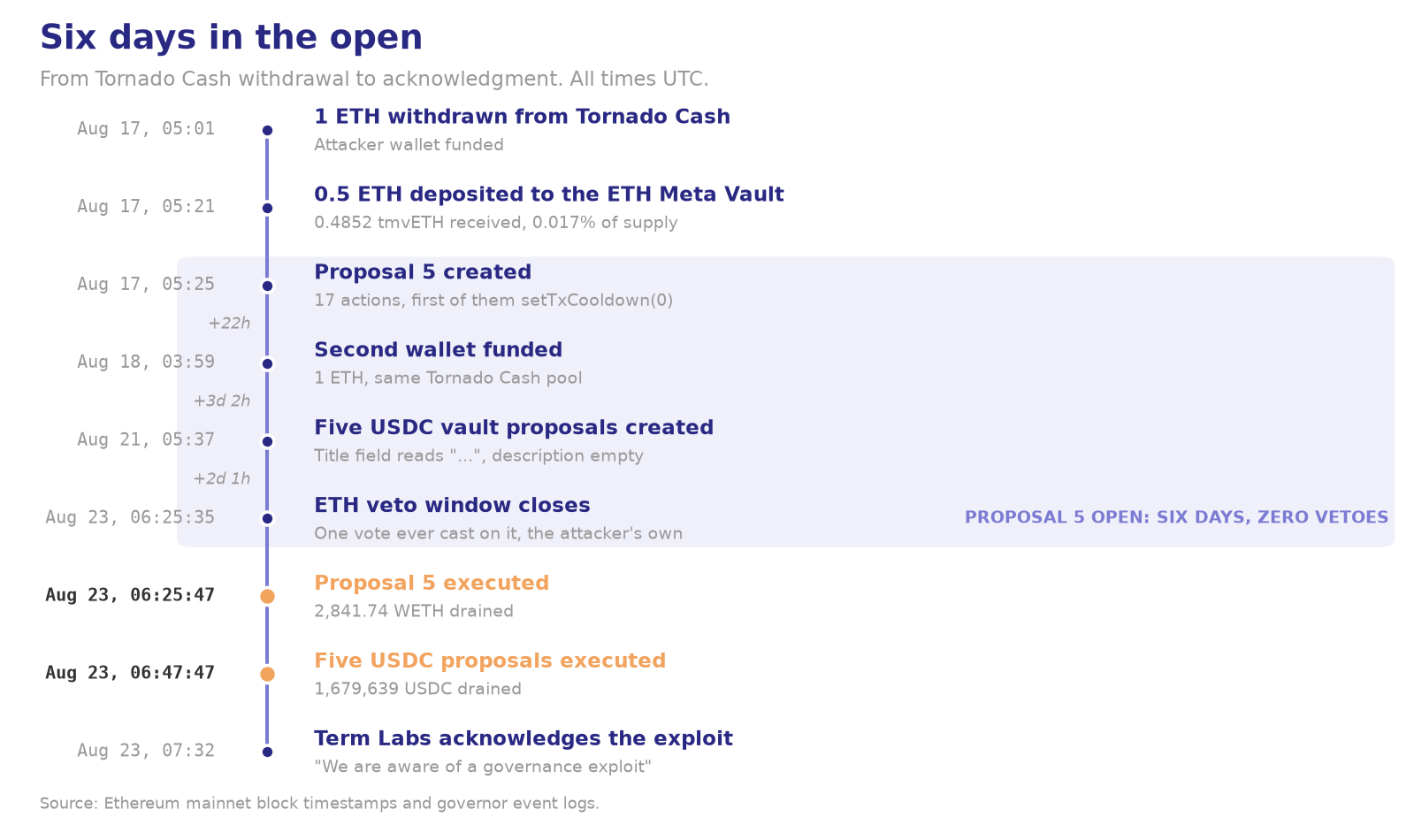
At 06:25:47 UTC on Sunday, August 23, 2026, a sophisticated governance exploit targeted Term Finance, a decentralized fixed-rate lending protocol, resulting in the unauthorized withdrawal of approximately $8.5 million in assets. The attack exploited a critical vulnerability in the protocol’s governance module, which allowed an unprivileged user to queue and execute a parameter change that bypassed established security timelocks. By manipulating the governance process, the attacker successfully drained 2,841.74 WETH from the protocol’s ETH Meta Vault and an additional 1,679,639 USDC from five associated USDC vaults, highlighting the inherent risks in automated "opt-out" governance models.

Chronology of the Exploitation

The methodical nature of the attack suggests a period of preparation and observation. The sequence of events, verified through Ethereum mainnet logs, began on August 17, 2026, when a wallet address—funded by 1 ETH transferred via the privacy protocol Tornado Cash—made a strategic deposit of 0.5 ETH into the Term Finance ETH Meta Vault. This initial investment provided the attacker with 0.4852 tmvETH, a negligible stake representing roughly 0.017% of the total vault supply, yet sufficient to interact with the governance module.

On August 17 at 05:25:35 UTC, the attacker deployed a custom contract to initiate "Proposal 5" on the meta vault’s governor. This proposal, while labeled as a standard parameter change, contained a malicious payload designed to disable the protocol’s seven-day security timelock. For six consecutive days, this proposal remained visible on-chain. During this period, the protocol’s governance mechanism functioned under an "opt-out" framework: silence from depositors was interpreted as consent. Because no vetoes were cast, the proposal automatically progressed toward execution.

On August 23, the voting window closed. Within 12 seconds, the attacker executed the transaction. The first instruction in the payload effectively set the protocol’s txCooldown to zero, nullifying the seven-day delay. Once the safety mechanism was disabled, the remaining actions in the payload triggered the transfer of 2,841.74 WETH to the attacker’s controlled wallet. Less than 20 minutes later, at 06:47:47 UTC, a second attacker wallet executed a similar maneuver across five USDC-denominated vaults, extracting nearly $1.7 million in stablecoins.

Term Finance: $8.5M Approved by Silence

Technical Anatomy of the Failure

The exploit did not rely on traditional vulnerabilities such as reentrancy attacks, oracle manipulation, or flash loans. Instead, it leveraged a design flaw in the protocol’s authorization hierarchy. Term Finance utilizes a curator model where third-party entities manage vault allocations. To ensure efficiency, the governance system requires depositors to actively "veto" unwanted changes.

The critical failure occurred in two parts: the permissioning of the proposal queue and the accessibility of the timelock. Firstly, the protocol’s governance contract lacked sufficient safeguards to prevent an unprivileged, low-stake address from queuing a high-impact parameter change. Typically, such sensitive operations are restricted to authorized curator addresses or require a significant token stake to prevent malicious proposals.

Secondly, the timelock, intended as a "fail-safe" to allow for the cancellation of malicious transactions, was itself under the control of the governance module. By including a setTxCooldown(0) instruction within the same proposal that initiated the withdrawal, the attacker was able to dismantle the security barrier immediately before triggering the theft. This circular dependency meant that the very mechanism designed to protect the treasury was susceptible to the same governance process it was meant to oversee.

Supporting Data and Asset Valuation

The financial impact of the event is significant, particularly given the total assets under management (AUM) within the affected vaults. Based on market data from August 23, 2026, the cumulative loss is estimated at approximately $8.5 million. The following breakdown illustrates the distribution of the theft:

  • WETH Drained: 2,841.7435 units.
  • USDC Drained: 1,679,639.29 units.
  • Total USD Value: ~$8.5 million, calculated based on the prevailing ETH/USD exchange rate at the time of the transaction.

Despite the loss, the internal accounting of the Term Finance vaults remained skewed in the immediate aftermath. Because the assets were technically "loaned" to a strategy contract—the malicious strategy created by the attacker—the protocol’s totalAssets() function continued to report inflated figures. This created a discrepancy between the reported share price and the actual collateral backing those shares, as the vault recorded the stolen funds as active debt rather than a total loss.

Term Finance: $8.5M Approved by Silence

Official Responses and Industry Reaction

Term Labs, the development team behind the protocol, acknowledged the breach via social media at 07:32 UTC on August 23, stating, "We are aware of a governance exploit impacting Term vaults. We will share more details once it has been further investigated." As of this writing, a comprehensive post-mortem report has yet to be released.

External observers and security firms, including PeckShield, corroborated the timeline and the use of Tornado Cash to obfuscate the origin of the attacker’s funds. Furthermore, downstream effects were noted in other DeFi protocols. For instance, the RockawayX Tori USDC vault, which had allocated funds to Term, suffered a direct loss. Reports suggest that the Tori Finance team is working to cover these losses for their depositors, underscoring the contagion risks inherent in the interconnected "vault-of-vaults" ecosystem where users may be exposed to risks from protocols they have not directly vetted.

Implications for Decentralized Governance

The Term Finance incident serves as a stark case study in the risks of automated governance. In the pursuit of efficiency, many DeFi protocols have shifted toward "opt-out" or low-friction governance models. While these models address the issue of voter apathy, they shift the burden of security entirely onto the depositors and community monitors.

The primary implications for the broader DeFi industry include:

  1. Authorization Limits: Protocols must enforce strict, non-governance-accessible limits on sensitive parameters. The ability to disable security timelocks should never be available to a standard proposal payload.
  2. Economic Thresholds: Implementing a "bond" system—where proposers must stake a significant amount of capital that is forfeited if a proposal is vetoed—could serve as a powerful economic deterrent against malicious actors.
  3. Governance Auditing: Security audits for decentralized protocols often focus on smart contract logic (e.g., math errors or reentrancy) but may overlook the governance "state machine." The logic that determines who can propose changes and what those changes can alter is as critical as the core protocol logic.
  4. Monitoring Responsibilities: The reliance on passive monitoring by curators or users is insufficient. There is a growing need for automated "governance guardians" that can automatically pause or veto proposals that meet specific high-risk criteria, such as those attempting to modify security settings.

As the DeFi sector continues to mature, the Term Finance exploit highlights a growing tension between the ideal of total decentralization and the practical necessity of robust security. When a governance system is designed to favor speed and ease of use, it risks becoming a weapon for those willing to exploit the latency between proposal submission and execution. The incident serves as a reminder that in the absence of vigilant oversight, silence is not merely consent—it is an invitation for catastrophic loss.

September 11, 2026 0 comment
0 FacebookTwitterPinterestEmail
Bitcoin & Altcoins

Better.codes Launches as an Open Autoresearch Challenge to Advance Formal Verification of Cryptographic Proof Systems

by admin September 11, 2026
written by admin

The Ethereum Foundation Formal Verification team, in partnership with research organizations Yukon and zkSecurity, has officially launched better.codes, a groundbreaking autoresearch challenge designed to crowdsource the formal verification of cryptographic soundness bounds. By utilizing the Lean theorem prover to host a public leaderboard, the initiative seeks to solve complex mathematical problems essential to the security of modern succinct non-interactive proof systems, or SNARKs.

At the core of the launch is the koalaIRS12 problem, a specific challenge related to Reed-Solomon proximity testing. This is not merely an academic exercise; it represents a significant effort to bridge the gap between theoretical security conjectures and machine-checked proofs that ensure the safety of infrastructure underpinning decentralized finance, zkRollups, and the broader Ethereum post-quantum roadmap.

The Cryptographic Foundation of Proximity Gaps

Modern cryptography relies heavily on the efficiency and security of hash-based SNARKs. These systems facilitate the verification of large-scale computations without requiring the verifier to re-execute the entire process. A critical component of these systems is the use of Reed-Solomon codes, which allow for efficient error correction and proximity testing—essentially ensuring that a given set of data is "close enough" to a valid codeword.

However, a fundamental tension exists between the practical performance of these systems and their theoretical security guarantees. Many deployed protocols operate under the assumption of 128-bit security, yet the underlying mathematical proofs for these bounds often rely on unproven conjectures. If these conjectures are found to be flawed, the security of the entire ecosystem could be compromised. The Proximity Prize initiative, launched by the Ethereum Foundation earlier this year, was specifically established to address these "proximity gaps."

The better.codes platform serves as the tactical implementation of this research strategy. By formalizing the koalaIRS12 problem within ArkLib—a specialized Lean 4 library—the organizers have provided a standardized, immutable environment where researchers and AI agents can compete to raise the proven security bound toward the 128-bit target.

A Chronology of Formal Verification Efforts

The movement toward formal verification in blockchain security has accelerated significantly over the past 24 months. The following timeline illustrates the evolution of these efforts:

  • Early 2023: Increased scrutiny of zero-knowledge proof circuits highlights the risks associated with manual, human-checked code.
  • Late 2023: The Ethereum Foundation identifies formal verification as a core pillar of its long-term security strategy, leading to the development of ArkLib.
  • Early 2024: The Proximity Prize initiative is established, inviting global researchers to tackle the theoretical underpinnings of Reed-Solomon codes. This includes the publication of "Open Problems in List Decoding and Correlated Agreement" by renowned cryptographers Gal Arnon, Dan Boneh, and Giacomo Fenzi.
  • Mid 2024: Integration of AI-driven research tools into the formal verification pipeline begins to show promise, demonstrating that agents can successfully automate portions of the proof-writing process.
  • Late 2024: The launch of better.codes formalizes the "autoresearch" model, providing a public, git-backed interface for solvers to collaborate on the koalaIRS12 benchmark.

The Mechanics of the Autoresearch Challenge

The platform operates on a model of incremental, verifiable progress. When a participant signs in via GitHub, they gain access to the repository containing the pinned theorem statement for koalaIRS12. The objective is to produce a proof that the Lean kernel can verify, which effectively raises the "floor" of the security bound.

The process is transparent and highly iterative. Once a proof is submitted and passes the kernel verification, it is promoted to the public leaderboard. Because the submissions are tracked via git, the history of every proof—including failed attempts, new lemmas, and novel proof techniques—is preserved. This allows subsequent participants to learn from past failures, effectively creating a collaborative intelligence network.

The platform is designed to accommodate a diverse array of solvers. Some participants may utilize manual, human-authored proofs, while others are encouraged to deploy custom-built AI agents. The organizers anticipate that this "always-on" nature will create a competitive, yet collaborative, environment where the speed of innovation outpaces what any single research laboratory could achieve in isolation.

Why Formal Verification Matters for Global Infrastructure

The implications of the better.codes initiative extend far beyond the immediate technical challenge of the koalaIRS12 problem. In the current cybersecurity landscape, the "correctness" of software is increasingly tied to the "correctness" of the underlying math. Traditional peer review, while essential, is often too slow and error-prone for the rapidly evolving world of decentralized protocols.

By moving toward a model of machine-checked proofs, the Ethereum Foundation and its partners are setting a new standard for open-source research. If a proof is verified by the Lean kernel, it is mathematically certain that the result follows from the axioms, removing the ambiguity associated with human interpretation. This is particularly vital for post-quantum cryptography, where the complexity of the math is so high that traditional verification methods are increasingly insufficient.

Similar projects, such as ecdsa.fail and zk.golf, have already demonstrated the power of incentivized, open-source challenges in solving specific technical bottlenecks. By applying this "gamified" rigor to formal verification, the community is building a repository of verified knowledge that will serve as the foundation for the next generation of cryptographic proofs.

Expert Perspectives and Theoretical Challenges

While the enthusiasm for this initiative is high, the mathematical hurdles remain formidable. The "Open Problems in List Decoding and Correlated Agreement" paper serves as the north star for the project. The authors argue that the current understanding of proximity gaps in Reed-Solomon codes is incomplete, and that achieving 128-bit security requires a rigorous, systematic approach to proving lower bounds.

Industry observers note that the collaboration between the Ethereum Foundation, Yukon, and zkSecurity is significant because it aligns the incentives of theoretical researchers with those of protocol engineers. In previous eras, these groups often worked in silos. Today, however, the direct link between an abstract proof in Lean and the security of a production-grade zkVM is clear to all stakeholders.

The challenge, however, lies in the scalability of proof-writing. While AI agents are becoming more capable of writing code, they still struggle with the creative, heuristic leaps required to construct complex mathematical proofs. The better.codes platform acknowledges this by encouraging hybrid workflows, where human intuition guides the agent toward fruitful paths, while the agent handles the tedious, repetitive verification tasks.

Future Implications for the Ecosystem

The launch of better.codes marks a shift in how research is conducted in the blockchain space. By treating "research as code," the organizers are ensuring that progress is never lost. Each successfully verified proof adds a new layer of security to the protocols that rely on these mathematical foundations.

As the leaderboard matures, the project plans to introduce additional challenges. These will likely focus on other aspects of the cryptographic stack, including advanced zero-knowledge techniques, secure multi-party computation, and formal models of network security.

For developers and cryptographers, the message is clear: the future of secure software development lies in the marriage of advanced mathematics and automated, machine-checked verification. As participants begin to push the boundaries of the koalaIRS12 problem, they are not only competing for recognition and potential rewards—they are building the bedrock of a more secure and verifiable digital future.

For those interested in contributing to this effort, the challenge is now live at better.codes, where participants can begin by cloning the repository and reviewing the existing proof techniques. The platform welcomes contributions from across the global research community, regardless of their background in formal verification, provided they have the computational resources and mathematical interest to engage with the problem set.

The success of better.codes will ultimately be measured by how quickly it can close the gap between theoretical conjecture and proven security. In doing so, it may provide a template for how other complex, high-stakes engineering problems can be tackled through open, collaborative, and machine-verified research.

September 11, 2026 0 comment
0 FacebookTwitterPinterestEmail
Bitcoin & Altcoins

Your Name on an F1 Car: Kraken and Williams Racing Launch High-Stakes Solana Front Wing Sweepstakes for the Mexico City Grand Prix

by admin September 11, 2026
written by admin

The intersection of high-speed motorsport and decentralized finance has reached a new milestone as cryptocurrency exchange Kraken and the Atlassian Williams Racing Formula 1 team announce an unprecedented promotional campaign. Offering fans and digital asset traders a once-in-a-lifetime opportunity, the newly unveiled "Solana Front Wing Takeover" sweepstakes will place one lucky trader’s name directly onto the FW48 Formula 1 race car during the upcoming Mexico City Grand Prix weekend.

Scheduled to run from September 8 through October 6, 2026, the global promotion bridges the high-octane world of Grand Prix racing with the high-performance blockchain ecosystem of Solana. Beyond the unmatched visibility of having a personal or chosen name emblazoned on the aerodynamic front wing of an elite Formula 1 machine racing at the Autódromo Hermanos Rodríguez, the grand prize winner will also receive a $10,000 cash equivalent prize in Solana (SOL) credited directly to their verified Kraken account.

This ambitious campaign represents a continuation of the deepening partnership between Kraken and Williams Racing, reflecting a broader industry trend where elite sports franchises increasingly leverage Web3 technologies to deepen fan engagement, drive community interaction, and pioneer novel digital marketing paradigms.

Main Facts and Campaign Mechanics

To participate in the sweepstakes, eligible Kraken users must complete a series of structured steps designed to integrate platform engagement with transactional activity. Unlike traditional sweepstakes that rely purely on chance, this campaign incorporates a transactional volume element tied to the Solana blockchain ecosystem.

The qualification process requires participants to adhere strictly to a chronological set of guidelines:

  1. Rewards Hub Enrollment: Users must first open the Kraken application and navigate to the Rewards Hub to formally opt into the Solana Front Wing Takeover sweepstakes. Crucially, platform metrics dictate that entries will not accrue retroactively; traders must enroll prior to executing qualifying transactions.
  2. Transactional Accumulation: Following successful enrollment, participants must trade $1 or more in Solana (SOL) via the Kraken Instant Buy (PTL) feature. Every single dollar traded translates into one sweepstakes entry.
  3. Uncapped Potential: Recognizing the competitive nature of digital asset trading, Kraken has structured the promotion without an upper limit on entries. Users can continually accumulate entries throughout the entire duration of the campaign window, which closes precisely at 13:59 UTC on October 6, 2026.

Following the conclusion of the promotional window, a random draw weighted by total accumulated entries will determine the winner. The designated individual will undergo a standard compliance and verification check before their name is finalized for placement on the Atlassian Williams Racing FW48 front wing ahead of the Mexico City Grand Prix weekend.

Comprehensive Chronology of the Promotion

Understanding the precise timeline of the Solana Front Wing Takeover is critical for participants aiming to maximize their entry accumulation. The structured rollout follows a carefully managed schedule leading up to the race weekend in late October 2026.

  • September 8, 2026: Official launch of the Solana Front Wing Takeover sweepstakes. The Rewards Hub opens for user opt-ins, and the entry accrual period officially commences alongside the opening of qualifying SOL Instant Buy (PTL) trades.
  • September through Early October 2026: Ongoing promotional window. Traders across eligible jurisdictions accumulate entries based on their trading volume, with continuous monitoring by Kraken compliance teams to ensure adherence to terms and conditions.
  • October 5 to October 6, 2026 (13:59 UTC): The final cutoff for entry accumulation. All trading activity contributing to the sweepstakes must be completed before the strict deadline.
  • Post-Closing Period (Mid-October 2026): Random weighted selection of the grand prize winner. Verification protocols are initiated to confirm eligibility and coordinate the aesthetic integration of the winner’s name onto the FW48 front wing.
  • Late October 2026: The Mexico City Grand Prix weekend takes place at the Autódromo Hermanos Rodríguez, where the Atlassian Williams Racing cars take to the track bearing the winning trader’s name, alongside the distribution of the $10,000 SOL prize to the winner’s account.

Supporting Data and Strategic Context

The partnership between Kraken and Williams Racing is built upon a shared ethos of technological innovation, speed, and reliability. Formula 1 operates in an environment where milliseconds dictate outcomes, mirroring the high-frequency nature of cryptocurrency markets where transaction speeds and network scalability are paramount.

Solana Front Wing Takeover: trade SOL to put your name on the Atlassian Williams F1 Team FW48

Solana, chosen as the focal blockchain asset for this promotion, has established itself as a leading high-performance network capable of handling thousands of transactions per second with minimal latency and negligible fees. By centering the sweepstakes around SOL trading via Kraken’s Instant Buy platform, both entities are strategically tapping into the robust, highly engaged retail trading community that gravitates toward the Solana ecosystem.

Historically, sponsorships in Formula 1 have evolved significantly from traditional corporate branding—such as tobacco, energy drinks, and financial institutions—to modern tech-forward partnerships. Cryptocurrency exchanges and blockchain foundations have injected hundreds of millions of dollars into the sport over recent years, utilizing F1’s massive global television audience and affluent demographic base to mainstream digital assets. Campaigns like the Solana Front Wing Takeover move beyond passive trackside billboard advertising, offering interactive, participatory experiences that convert casual viewers into active brand participants.

Official Responses and Industry Implications

While specific executive quotes regarding this exact promotional iteration reflect standard corporate communications regarding sweepstakes terms, the broader philosophy of the Kraken-Williams alliance underscores a mutual commitment to community empowerment.

Industry analysts observing the sports marketing landscape note that fan empowerment initiatives—such as placing user-generated names on competitive assets like an F1 front wing—represent the pinnacle of experiential marketing. In traditional sports, naming rights are typically reserved for multi-million-dollar corporate partners. By democratizing this prime real estate on an Atlassian Williams Racing car, Kraken effectively bridges the gap between elite professional motorsport and everyday retail traders.

Furthermore, the inclusion of a $10,000 SOL cash prize serves a dual purpose: it incentivizes initial platform engagement while providing a tangible financial upside that reinforces the utility of digital assets. From a regulatory and compliance standpoint, Kraken continues to structure these global sweepstakes within strict legal frameworks, ensuring that eligibility is clearly defined across permitted jurisdictions while adhering to consumer protection standards.

Broader Impact on Sports Marketing and Web3 Integration

The launch of the Solana Front Wing Takeover for the Mexico City Grand Prix highlights a maturing relationship between Web3 infrastructure providers and legacy sporting institutions. As regulatory landscapes stabilize globally, cryptocurrency platforms are increasingly sophisticated in how they deploy marketing capital.

Rather than relying purely on speculative market hype, campaigns anchored to major cultural and sporting events—such as a Formula 1 Grand Prix—ground digital assets in tangible, real-world excitement. The visual spectacle of an F1 car roaring down the straightaway of the Autódromo Hermanos Rodríguez with a community member’s name inscribed on its aerodynamic components offers unprecedented brand recall.

For Atlassian Williams Racing, aligning with a prominent digital asset exchange allows the historic team to capture the attention of younger, digitally native demographics who consume sports entertainment through non-traditional media channels. Simultaneously, Kraken reinforces its market positioning as an exchange that consistently delivers high-value, innovative campaigns for its global user base.

As the countdown to the October 6 entry deadline ticks down, traders across eligible regions are actively reviewing the terms and conditions, optimizing their trading strategies, and vying for a piece of motorsport history. Whether the ultimate winner is a seasoned cryptocurrency veteran or a casual enthusiast engaging through Instant Buy for the first time, the campaign solidifies a unique moment where the worlds of blockchain technology and elite motorsport converge on the global stage.

September 11, 2026 0 comment
0 FacebookTwitterPinterestEmail
Bitcoin & Altcoins

Solana dominates the emerging landscape of autonomous machine payments as x402 transaction volume surges in August

by admin September 11, 2026
written by admin

The digital economy is undergoing a fundamental shift as artificial intelligence agents transition from passive assistants to active economic participants. Throughout August, the Solana blockchain emerged as the primary settlement layer for this transformation, recording more x402 transactions than any other competing network. By overtaking Base and establishing a dominant share of the x402 ecosystem, Solana has positioned itself as the infrastructure of choice for developers building software capable of autonomous financial decision-making. This surge in activity represents a pivot toward a machine-to-machine economy where software agents autonomously pay for data, API access, and computing resources without human intervention.

The Mechanics of x402 and Autonomous Payments

At the core of this activity is the x402 protocol, a sophisticated framework built upon the HTTP 402 "Payment Required" status code—a long-standing but rarely utilized standard in web architecture. In traditional web interactions, an HTTP 402 code signals that a request cannot be fulfilled until payment is rendered. The x402 protocol revitalizes this concept for the AI era by allowing an autonomous agent to receive a payment request from a service provider, authorize the transaction, and retry the request instantly.

This model effectively eliminates the friction of traditional subscription-based commerce. Currently, for an AI to access a premium API, a human operator must manage individual API keys, maintain active credit card information, and oversee subscription billing cycles. The x402 model replaces this administrative burden with a pay-per-use, trustless architecture. An agent can discover a service, negotiate a micro-payment for a specific data query or compute task, and execute the transaction in milliseconds. By utilizing stablecoins like USDC, these agents can operate within a global, near-instantaneous payment environment that bypasses legacy banking delays.

A Surge in Network Activity: The August Data Roundup

The growth recorded in August highlights the rapid adoption of this technology among developers. According to recent data, x402 has facilitated over 200 million transactions across approximately 150,000 active endpoints. Of these, a significant portion involve micro-payments under $0.50, illustrating the feasibility of high-frequency, low-cost autonomous settlement.

Solana’s performance during this period was particularly notable. Ecosystem reports indicate that the network accounts for 70% of total monthly x402 volume, with over 37 million transactions processed on the Solana chain specifically. BlockRun, a key facilitator in this ecosystem, reported settling 5.4 million agentic payments via PayAI within a single seven-day window. Furthermore, Solana revealed that AI agents initiated 3.3 million USDC transfers within a single week, underscoring the shift toward stablecoin-denominated machine commerce. This data, while reflecting a high volume of activity, serves as a testament to the network’s capacity for high-throughput, low-latency transaction processing, which is essential for agents that require sub-second response times.

Integrating Corporate Governance into Agentic Spending

For businesses to safely delegate financial authority to AI agents, the infrastructure must extend beyond mere settlement. A critical challenge for enterprise adoption is the need for oversight, spending limits, and transparent accounting. Without proper controls, an AI agent could theoretically exhaust a company’s treasury through excessive or fraudulent API calls.

To address these concerns, corporate finance platforms are beginning to integrate agent-specific tools. Ramp, for instance, has introduced agent-focused financial management features that allow companies to provision dedicated x402 wallets. Through this interface, a business can fund an agent’s wallet from a central corporate account, set strict spending caps, and monitor every purchase in real-time. By tethering agentic spending to established financial controls, Ramp and similar platforms are mitigating the risks associated with autonomous financial agents, making the technology viable for institutional deployment.

Consumer-Facing Frontiers and Industry Partnerships

While enterprise adoption focuses on API access and compute, consumer-facing applications are also gaining momentum. MoonPay’s PayBox initiative represents a significant step in bringing this technology to a broader audience. PayBox serves as a bridge, allowing AI models like ChatGPT and Claude to interface with user-approved payment systems. This integration enables users to authorize complex financial actions—such as token swaps, DeFi interactions, or travel bookings—through a natural language interface, with the agent handling the execution and the user providing the final verification.

Simultaneously, the Solana Foundation has deepened its collaboration with major technology providers, most notably through the launch of Pay.sh. This initiative, developed in conjunction with Google Cloud, provides a dedicated payment layer for HTTP agents and command-line interfaces. By simplifying the way agents interact with cloud services, the initiative enables developers to build agents that can autonomously purchase cloud computing power and data feeds on a per-request basis, further embedding blockchain settlement into the standard software development lifecycle.

The Path Forward: Implications and Challenges

The rise of x402 and autonomous payments signals a shift in the internet’s economic architecture, yet the transition remains in its nascent stages. While the transaction volume is objectively impressive, experts caution that the metrics currently measure activity rather than sustained commercial demand. Much of the current volume is driven by developers testing the limits of the protocol, and it remains to be seen how much of this activity will convert into long-term, revenue-generating enterprise use cases.

Several hurdles must be cleared before machine-to-machine payments become a standard feature of the digital economy:

  1. Authorization and Fraud Prevention: As agents become more autonomous, creating robust security protocols to prevent malicious actors from hijacking an agent’s payment authority is paramount.
  2. Identity Verification: Establishing a verifiable identity for AI agents is necessary to ensure that services are interacting with authorized entities, particularly in high-value financial transactions.
  3. Accounting and Tax Compliance: Corporate entities require automated, audit-ready logs for every micro-transaction initiated by an agent to maintain compliance with jurisdictional tax laws.
  4. Economic Utility: The industry must move beyond proof-of-concept testing to identify specific high-value use cases—such as automated supply chain management or real-time data acquisition—that provide a clear return on investment.

Conclusion

The data from August establishes Solana as the leader in the burgeoning field of autonomous machine payments. By providing the high-speed, low-cost infrastructure required for x402, the network is facilitating a new paradigm where software agents function as independent economic units. The integration of corporate financial tools and the backing of major cloud providers suggest that the industry is rapidly maturing. While challenges regarding regulation, security, and long-term economic viability persist, the rapid growth in transaction volume indicates that the era of autonomous, agent-led commerce is no longer a theoretical projection—it is an active, evolving component of the modern digital landscape. As the technology continues to iterate, the focus will likely shift from the sheer volume of transactions to the quality and reliability of the underlying economic activity, ultimately determining how AI agents will reshape global business operations.

September 11, 2026 0 comment
0 FacebookTwitterPinterestEmail
Cryptography & Privacy

An Illustrated Primer on Anonymous Authentication and the Future of Digital Privacy

by admin September 11, 2026
written by admin

The escalating global push for internet safety and stringent regulatory compliance has placed user authentication at the center of modern cybersecurity discourse. Across legislative bodies worldwide, a concerted effort to implement mandatory age verification has transformed the architecture of the internet, shifting the baseline expectation of digital interactions from casual pseudonymity to rigorous, identity-linked tracking. This paradigm shift, driven by legislative actions such as the United Kingdom’s Online Safety Act and similar laws enacted in dozens of United States jurisdictions, has created an urgent challenge for computer scientists and cryptographers: how to balance the necessity of confirming user attributes—such as age and authorization—with the fundamental preservation of human privacy.

Background Context of the Digital Identity Shift

Anonymous credentials: an illustrated primer

The architecture of the early internet was built on a foundation of casual authentication. Provided a user took basic steps to prevent automated abuse, such as registering with a pseudonym or avoiding malicious posting behaviors, platforms welcomed anonymous or pseudonymous engagement. Over the past decade, however, this model eroded under the dual pressures of an advertising-driven economic ecosystem and a rising tide of automated artificial intelligence agents. Because microtargeted advertising commands higher financial yields, platforms developed an acute commercial appetite for precise human identities.

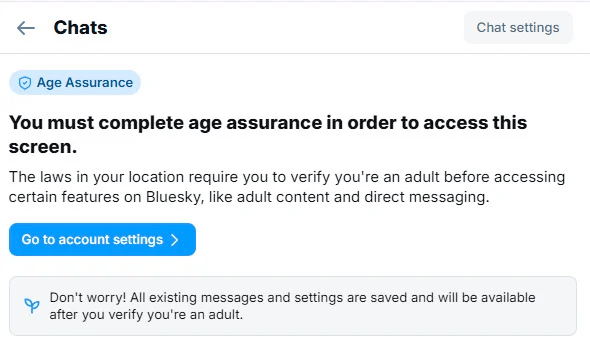
This commercial incentive merged with legislative initiatives aimed at safeguarding minors online. Laws requiring age verification before granting access to user-generated or age-restricted content have forced social media networks, messaging applications, and collaborative knowledge repositories to adopt verification measures. Platforms including Facebook, Bluesky, X, and Discord have increasingly integrated identity checks. Even Wikipedia has faced mounting pressure from regulatory frameworks like the U.K. Online Safety Act to alter its long-standing commitment to user anonymity.

When implemented poorly, routine identity checks relying on government-issued documentation risk establishing a centralized, state-or-corporate transcript of online activity. Although certain legislative frameworks incorporate data minimization principles—allowing operators to discard identification records immediately after processing—such provisions are neither mandatory nor uniformly applied. Consequently, privacy advocates warn of a future where browsing habits are permanently bound to legal names and physical addresses.

Anonymous credentials: an illustrated primer

The Evolution of Anonymous Credentials

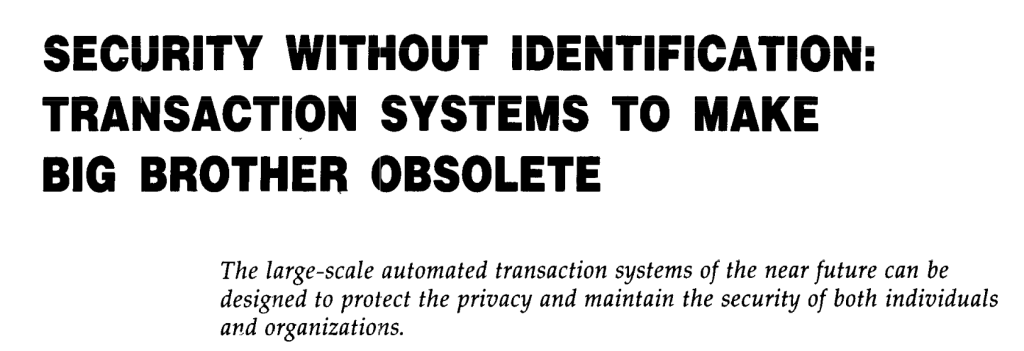
To navigate a landscape defined by mandatory age verification without sacrificing civil liberties, cryptographers have returned to foundational concepts first introduced in the 1980s. Long before the advent of modern web browsers or smartphones, cryptographer David Chaum recognized that electronic identification would eventually become routine, carrying severe implications for personal privacy. To address this, Chaum proposed the anonymous credential.

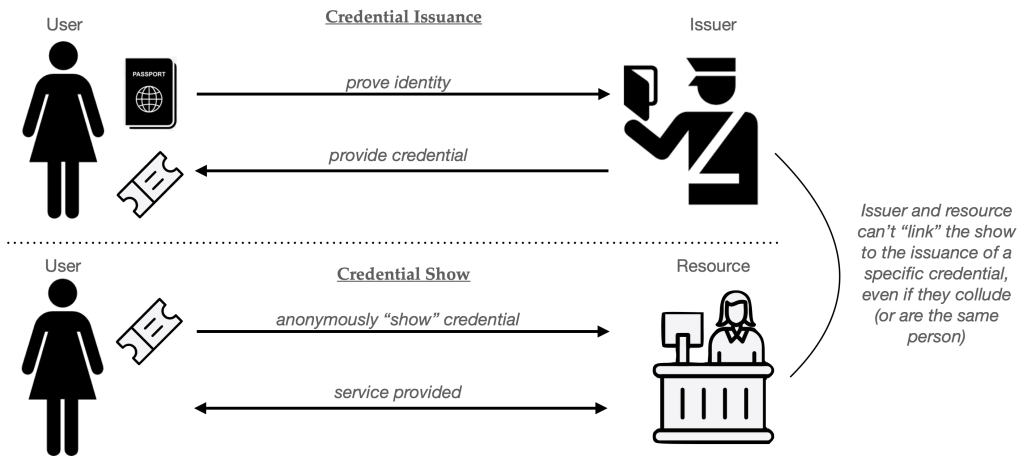
The fundamental objective of an anonymous credential is to decouple the issuance of a verification token from its subsequent usage. In a traditional non-anonymous authentication model, a user presents credentials directly tied to their real-world identity—such as a credit card or driver’s license—every time they access a restricted resource. This allows advertising networks and platform operators to track and link a user’s digital footprint across disparate sites.

Anonymous credentials: an illustrated primer

Under Chaum’s model, the issuance phase may require an authority, such as a government Department of Motor Vehicles, to verify a user’s legal identity. However, the subsequent presentation, or "show" protocol, is engineered so that the verifying resource learns only that a valid credential has been presented. The resource cannot determine the specific identity of the user, nor can it link multiple presentations of the credential together. This mechanism allows individuals to blend into an anonymity set comprising all legitimate holders of the credential.

The Challenge of Credential Duplication

A primary hurdle in deploying digital anonymous credentials is the inherent property of digital information: unlike physical objects, digital files can be copied effortlessly. If a user’s credential were static and identical across all instances, a malicious actor who compromised a single device could duplicate the credential infinitely. This vulnerability would enable the operation of massive botnets or the widespread distribution of credentials to unauthorized individuals, bypassing the verification checks entirely.

Anonymous credentials: an illustrated primer

In non-anonymous systems, platforms combat cloning through continuous authentication, monitoring login patterns for anomalies such as simultaneous geographic access. However, the strict privacy guarantees of anonymous credentials render such behavioral monitoring ineffective, as every presentation of a valid credential is mathematically indistinguishable from another. Consequently, robust anonymous credential frameworks must incorporate cryptographic safeguards to limit duplication without exposing user identities.

Single-Use Credentials and Blind Signatures

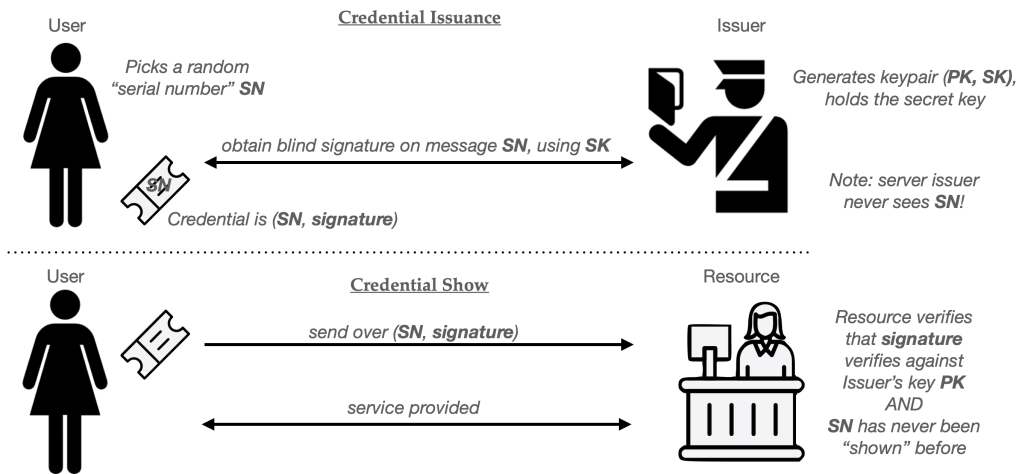
Early implementations of anonymous credentials relied on single-use models underpinned by blind signature schemes. Developed as a specialized form of digital signatures, blind signing allows a user to interact with an issuer in a manner where the issuer signs a message—such as a randomized serial number—without learning the content of that message.

Anonymous credentials: an illustrated primer

In this protocol, a user generates a unique serial number, blinds it, and transmits it to the issuer alongside proof of eligibility. The issuer signs the blinded token and returns it. The user unblinds the signature, resulting in a valid credential consisting of a serial number and a cryptographic signature from the issuer. When accessing a web resource, the user presents this pair. The resource verifies the signature against the issuer’s public key and checks its local database to ensure the serial number has not been previously redeemed.

While effective, single-use credentials present efficiency and scalability challenges. A user accessing a high-volume platform daily would need to acquire and expend thousands of credentials, imposing significant computational and network overhead. Furthermore, basic Chaumian credentials carry minimal information, often limited to a single binary assertion, such as confirming that a user is over a specific age.

Expressive Zero-Knowledge Credentials

Anonymous credentials: an illustrated primer

To overcome the limitations of single-use tokens, modern cryptography utilizes zero-knowledge proofs (ZKPs). Zero-knowledge proofs enable a prover to convince a verifier that a statement is true without conveying any information beyond the absolute validity of the statement itself.

In the context of digital credentials, ZKPs allow a user to present a structured, digitally signed document—such as a mobile driver’s license—and prove complex assertions about its contents. For example, a user can mathematically demonstrate that their birthdate establishes an age greater than 21, that their residential ZIP code falls within a permitted geographic region, and that their credential was legitimately issued by a recognized government authority, all without revealing their home address, legal name, or exact birthdate.

Crucially, zero-knowledge credentials eliminate the need for single-use tokens by allowing the same underlying credential to be reused across numerous verification events without linking those events to one another or to the user’s real-world identity.

Anonymous credentials: an illustrated primer

Mitigating Cloning in Reusable Systems

Because reusable credentials remain vulnerable to theft and cloning, modern architectures employ programmatic constraints to limit abuse. One established approach integrates pseudorandom functions (PRFs) into the zero-knowledge credential structure.

By embedding a secret key chosen by the user into the credential during the issuance phase, the system ensures that every time the credential is used, the user must compute a deterministic serial number based on an incremental counter or a temporal variable. If a credential is cloned and used beyond its permitted threshold—such as exceeding a maximum number of presentations per day—duplicate serial numbers inevitably appear in the verifier’s registry, triggering detection and revocation protocols without exposing the user’s identity during honest usage.

Anonymous credentials: an illustrated primer

Similarly, systems incorporate explicit expiration timestamps and cryptographic revocation accumulators. Revocation mechanisms allow a resource to maintain a banlist of compromised serial numbers. During authentication, the user generates a zero-knowledge proof affirming that their credential’s serial number does not intersect with any entry on the banlist, maintaining privacy while enforcing platform accountability.

Industry Adoption and Future Implications

As standards bodies, browser vendors, and technology conglomerates work to operationalize these cryptographic primitives, the deployment of anonymous credentials is transitioning from theoretical research to practical implementation. Initiatives such as the IETF PrivacyPass standard and proprietary frameworks developed by major technology companies underscore a growing industry recognition that compliance with age-verification mandates cannot rely entirely on traditional, surveillance-heavy identity paradigms.

Anonymous credentials: an illustrated primer

The broader implications of these developments remain profound. If deployed correctly, anonymous credentials offer a technical bulwark against pervasive digital tracking, ensuring that regulatory compliance does not necessitate the abolition of online privacy. However, the success of these systems depends heavily on hardware security integration, resistance to side-channel attacks, and widespread adoption by both legislative authorities and platform operators. As the digital landscape continues to evolve, the integration of zero-knowledge authentication will likely define the boundaries of civil liberties in the twenty-first century.

September 11, 2026 0 comment
0 FacebookTwitterPinterestEmail
FinTech Innovations

Félix Pago Secures $200 Million in Series C Funding to Revolutionize Conversational Finance for the Hispanic Diaspora

by admin September 11, 2026
written by admin

The landscape of cross-border remittances is undergoing a profound transformation as Miami-based startup Félix Pago announces a significant $200 million Series C funding round. This capital infusion, consisting of $87 million in equity and a $113 million credit facility, marks a pivotal moment for the fintech company, which has gained industry prominence for its innovative use of WhatsApp to facilitate seamless, conversational money transfers for the U.S.-based Hispanic and Latino communities. The equity round was spearheaded by Andreessen Horowitz (a16z), with significant participation from a robust cohort of investors including QED Investors, Castle Island Ventures, Switch Ventures, Contour Venture Partners, and Endeavor Catalyst. The credit facility was provided by the General Catalyst Customer Value Fund, underscoring institutional confidence in the startup’s operational model.

A Strategic Vision for Cognitive Financial Services

Félix Pago, which debuted at FinovateSpring in 2025, is moving beyond the traditional remittance model. While the company built its reputation by simplifying the complex, often cumbersome process of sending money home via a familiar interface, its leadership is now setting its sights on a broader objective. Manuel Godoy, CEO and co-founder of Félix Pago, characterizes this evolution as the transition toward becoming a "Cognitive Financial Companion."

The company’s strategic pivot involves shifting the financial experience away from rigid product silos, forms, and standalone banking applications. Instead, the firm aims to leverage its existing infrastructure to provide a unified environment where users can manage their financial lives—lending, savings, and payments—through the same intuitive conversational interface that powered their initial success in remittances. This "intent-based" approach, where the system understands what the user wants to accomplish rather than forcing them to navigate a bank’s internal product menu, is expected to be a major differentiator in the competitive fintech landscape.

Chronology of Growth and Operational Milestones

Founded in 2021, Félix Pago identified an immediate pain point: the high cost and friction associated with traditional cross-border payments. The company’s growth trajectory has been aggressive, marked by several key developmental milestones:

  • 2021: Félix Pago is established in Miami, Florida, with a mission to bridge the financial inclusion gap for immigrants in the U.S. sending funds to Latin America.
  • 2025 (Spring): The company makes its debut at the FinovateSpring conference, showcasing the "Félix Send" solution, an embedded finance tool that allows other financial institutions to integrate cross-border capabilities directly into their own applications.
  • 2026 (September): The announcement of a $200 million Series C funding round, signaling the company’s transition from a niche remittance player to a broader financial services provider.

Since its inception, the company has processed more than $8 billion in transaction volume, serving a user base that has grown to over six million individuals. This rapid scaling, supported by 2.5x year-over-year revenue growth, demonstrates the high demand for simplified, mobile-first financial solutions among underserved populations.

The Technological Architecture Behind the Growth

Félix Pago’s ability to operate without a physical branch network relies on a sophisticated "infrastructure layer" that integrates legacy financial systems with modern blockchain technology. The firm has cultivated a constellation of partners to ensure reliability, speed, and cost-efficiency. Key partners include:

  • Payment Infrastructure: Mastercard, Stripe, Checkout, and dLocal, which handle the heavy lifting of global payment processing.
  • Blockchain Integration: Circle (for USDC stablecoin issuance) and the Stellar blockchain, which form the backbone of the company’s settlement process.
  • Local Liquidity: Bitso, the Latin American cryptocurrency exchange, acts as the vital on/off ramp, converting digital assets into local fiat currency, which is essential for recipients who require cash or immediate access to funds in their local economies.

By utilizing WhatsApp as the primary user interface and stablecoins as the settlement mechanism, Félix Pago effectively bypasses the traditional, expensive correspondent banking network. This architecture allows the firm to offer near-instant transfers to 11 countries, including Mexico, Guatemala, Honduras, El Salvador, Nicaragua, Colombia, the Dominican Republic, Costa Rica, Brazil, Ecuador, and Peru.

Industry Implications and Market Impact

The decision by heavy-hitting investors like Andreessen Horowitz to back a conversational AI-driven finance firm reflects a broader trend in the fintech industry: the "unbundling" of the banking user experience. For decades, financial services were defined by the institutions that provided them. Today, the interface (in this case, WhatsApp) is becoming the primary destination for financial interaction.

The move into lending and savings is a logical extension of the trust Félix Pago has built through its remittance services. According to market analysts, remittance data provides a unique view of a household’s financial health, which can be leveraged to offer more personalized credit products. By expanding into these verticals, Félix Pago is positioning itself to capture a larger share of its customers’ financial activity, potentially lowering the customer acquisition cost (CAC) that typically plagues standalone banking apps.

Furthermore, the introduction of "Félix Send" provides a B2B revenue stream that complements its B2C services. By allowing third-party financial institutions to embed remittance capabilities into their apps, Félix Pago is essentially white-labeling its expertise, allowing larger, less agile banks to offer competitive international transfer services without the need to build the underlying infrastructure from scratch.

Addressing the Financial Needs of the Diaspora

The remittance market, particularly between the U.S. and Latin America, remains one of the most critical financial corridors in the world. Despite the rise of digital alternatives, many individuals still rely on physical money-transfer operators, which are often inefficient and expensive.

Félix Pago’s success is rooted in its understanding of "user intent." By meeting users on the platform they use for daily communication—WhatsApp—the company has removed the psychological barrier of "doing banking." In an interview regarding the company’s progress, Manuel Godoy emphasized that the community’s primary need is not just a wire transfer, but a reliable, secure, and human-centric way to support their families.

As the company moves forward with its new capital, the focus will be on aggressive hiring in the engineering and artificial intelligence sectors. This suggests that the next iteration of the Félix Pago experience will likely feature more advanced AI capabilities—perhaps predictive analytics that help users manage their budgets or automated suggestions for when to send money to maximize exchange rate value.

Future Challenges and Regulatory Oversight

Despite its strong momentum, Félix Pago operates in a complex regulatory environment. Cross-border payments are subject to stringent anti-money laundering (AML) and know-your-customer (KYC) requirements. As the company scales into lending and savings, the regulatory burden will increase significantly, requiring compliance frameworks that can handle more complex product offerings across multiple jurisdictions.

Additionally, the reliance on stablecoins and cryptocurrency exchanges for settlement, while highly efficient, invites ongoing scrutiny from global regulators. The company’s ability to navigate these potential hurdles while maintaining its user-friendly, conversational interface will be the ultimate test of its business model.

Conclusion

The $200 million funding round for Félix Pago is a clear signal that the financial services sector is entering a new era of "conversational finance." By combining the reach of established messaging platforms with the speed and efficiency of blockchain technology, Félix Pago has carved out a defensible niche that provides tangible value to millions. As it transitions into a broader financial companion, the company is not only changing how money moves across borders but is fundamentally altering the relationship between technology, finance, and the immigrant communities it serves. With a strong backing of venture capital and a clear vision for the future, the company appears poised to remain a dominant force in the evolution of modern banking.

September 11, 2026 0 comment
0 FacebookTwitterPinterestEmail
FinTech Innovations

Federal Regulators Unveil Coordinated Overhaul of Third-Party Risk Management Guidance to Ease Regulatory Burdens on Community Banks and Credit Unions

by admin September 11, 2026
written by admin

The landscape of American banking regulation is undergoing a significant strategic shift as four premier federal financial oversight bodies officially joined forces to address long-standing concerns regarding third-party risk management. In a coordinated announcement released on Friday, September 11, 2026, the Federal Deposit Insurance Corporation (FDIC), the Federal Reserve Board, the National Credit Union Administration (NCUA), and the Office of the Comptroller of the Currency (OCC) unveiled a comprehensive set of proposed guidelines designed to reshape how financial institutions oversee external vendors, technology partners, and service providers.

This sweeping initiative represents a deliberate move away from rigid, one-size-fits-all regulatory frameworks that have historically strained smaller institutions. By introducing proposals aimed at tailoring oversight to the distinct risk profiles of individual partnerships, federal authorities hope to strike a balance between rigorous systemic safety and the operational agility required for smaller banks and credit unions to remain competitive in a rapidly digitizing economy.

Core Provisions of the Proposed Regulatory Framework

At the center of the regulatory action is the proposed third-party risk management guidance, a non-binding framework that, once finalized, will supersede existing federal guidelines across the participating agencies. The overarching objective of the new framework is to provide banking organizations with clearer pathways to scale their oversight mechanisms in direct proportion to the actual risks presented by specific third-party vendors.

For decades, community banks and credit unions have argued that compliance expectations modeled after the risk profiles of mega-institutions create disproportionate operational and financial burdens. Under the newly proposed guidance, financial institutions are encouraged to adopt a risk-based approach that differentiates between routine administrative vendors and critical technology service providers. This granularity is expected to reduce the expenditure of scarce compliance resources on low-risk arrangements, allowing institutions to redirect focus toward high-impact areas such as cybersecurity, data privacy, and operational resilience.

Furthermore, the public has been granted a 60-day comment window following the formal publication of the proposal in the Federal Register. During this period, industry stakeholders, banking trade associations, consumer advocates, and technology vendors are invited to submit feedback to help refine the guidance before it reaches final adoption.

Strategic Objectives and the OCC’s Push for Community Bank Empowerment

The Office of the Comptroller of the Currency framed its participation in Friday’s announcement as a cornerstone of its broader strategic initiative to empower community banks and dismantle unnecessary regulatory hurdles. In a dedicated press release issued alongside the joint agency announcement, the OCC emphasized that the proposed standards are specifically calibrated to foster responsible innovation while eliminating overly broad supervisory approaches.

OCC Comptroller Jonathan V. Gould emphasized the vital role community institutions play in local economies and explained the philosophy driving the new regulatory posture.

"We are giving these vital institutions more freedom to do what they do best—serve their customers, support local businesses, strengthen their communities and drive economic growth across America," Gould stated.

By providing greater clarity regarding the supervision and enforcement mechanisms governing core service providers, the OCC seeks to remove ambiguity that has historically complicated vendor negotiations for smaller banks. Community banking advocates have frequently pointed out that small institutions often possess minimal leverage when negotiating contracts with dominant core processing vendors. The new guidance and accompanying supervisory statements aim to address these market power imbalances by offering transparent expectations regarding how regulatory agencies evaluate and oversee these indispensable third-party relationships.

Addressing the Core Service Provider Dilemma

Compounding the release of the general risk management framework, the Federal Reserve, the FDIC, and the OCC issued a critical joint statement focusing specifically on community banks and their engagement with core service providers. These specialized vendors supply the technological backbone required for core banking operations, including deposit tracking, ledger maintenance, loan processing, and transaction routing.

Despite their fundamental importance, the relationship between community banks and core service providers has long been a source of operational friction. The joint statement candidly acknowledges this structural challenge, noting that certain core provider business practices and broader market dynamics can create substantial barriers for community banking organizations.

"These relationships are essential to the safe and sound operations of community banking organizations, yet certain core provider business practices and market dynamics may pose obstacles to a CBO’s ability to efficiently and effectively identify, assess and address the attendant risks," the joint statement noted.

By explicitly addressing these dynamics, the federal agencies are signaling a more pragmatic supervisory approach. The joint statement outlines specific factors that examiners will consider during supervisory and enforcement evaluations, offering community institutions clearer insight into how regulators assess vendor performance and accountability. This transparency is intended to protect community banks from being penalized for systemic vendor limitations that are beyond their direct control.

Federal Reserve Companion Guide for Tailored Oversight

Adding another layer to the day’s announcements, the Federal Reserve Board introduced a dedicated companion guide tailored specifically to the needs of the community banks under its direct supervision. Published alongside the multi-agency proposal, this companion guide is designed to act as a practical implementation manual, helping Federal Reserve-supervised institutions interpret and apply the broader third-party risk management principles effectively.

The Federal Reserve’s move reflects an ongoing evolution in supervisory philosophy toward scaled regulation. By providing a specialized companion document, the central bank aims to bridge the gap between high-level regulatory expectations and the day-to-day operational realities faced by smaller state member banks and bank holding companies.

Background and Chronological Context

The events of September 11, 2026, are the culmination of years of escalating regulatory scrutiny regarding how financial institutions manage outsourcing risks. Over the past decade, the rapid acceleration of financial technology (FinTech) partnerships, cloud migration, and digital banking services has dramatically expanded the attack surface and operational dependencies of traditional banking institutions.

The historical timeline leading to the current regulatory shift highlights a gradual recognition of the need for scalable guidance:

  • Late 2010s to Early 2020s: As community banks increasingly partnered with third-party software vendors and digital-first financial services providers, existing regulatory frameworks struggled to keep pace, often resulting in inconsistent examination standards.
  • July 2023: The Federal Reserve, FDIC, and OCC issued updated, interagency guidance on third-party risk management for banking organizations, which provided a comprehensive framework primarily designed for larger institutions, leaving community banks seeking more tailored instructions.
  • 2024–2025: Industry advocacy groups, including the Independent Community Bankers of America (ICBA) and the American Bankers Association (ABA), continuously lobbied federal regulators for targeted relief, citing the disproportionate cost of complying with complex vendor management mandates.
  • September 11, 2026: The four major federal regulatory bodies concurrently release the updated, risk-tailored guidance, alongside specialized statements addressing core service providers and Federal Reserve-specific companion manuals.

Fact-Based Analysis of Implications for the Financial Sector

The rollout of these proposed guidelines carries profound implications for the banking sector, particularly for non-megabank institutions that operate under tight margin constraints.

First, the shift from broad, prescriptive mandates to risk-based tailoring is expected to reduce compliance overhead over the medium to long term. Institutions will be empowered to allocate compliance auditing hours based on tangible threat levels rather than checking uniform boxes for every minor vendor relationship. This efficiency can free up capital for community institutions to invest in customer-facing technologies and local lending initiatives.

Second, the explicit focus on core service providers may alter the dynamics of vendor contract negotiations. By formally acknowledging the market obstacles faced by community banking organizations, regulators are laying the groundwork for fairer accountability frameworks. While the guidance is non-binding in its current proposed form, its ultimate finalization will likely influence legal and contractual standards across the banking technology sector.

Finally, the 60-day public comment period opens a critical window for industry participants to shape the final iteration of the rules. Regulators will be closely monitoring feedback from community banks, credit unions, and technology vendors to ensure that the final guidance successfully achieves its dual mandate: maintaining rigorous safety and soundness standards across the financial system while unburdening the local institutions that form the backbone of American retail and commercial banking.

September 11, 2026 0 comment
0 FacebookTwitterPinterestEmail
FinTech Innovations

Final Call: Applications for Official TechCrunch Disrupt 2026 Side Events Close Tonight at 11:59 p.m. PT

by admin September 11, 2026
written by admin

The clock is ticking for organizations and industry leaders aiming to secure a formal presence within the ecosystem of TechCrunch Disrupt 2026. As of this morning, September 11, the window for submitting applications to host an official Side Event is rapidly narrowing, with the firm deadline set for 11:59 p.m. PT tonight. This cutoff represents the definitive end of the application period, with organizers confirming that no further extensions will be granted.

TechCrunch Disrupt, one of the most prominent fixtures in the global technology calendar, serves as a central hub for startups, venture capitalists, and industry innovators. By facilitating Side Events, the conference organizers allow organizations to extend their reach beyond the primary show floor, creating curated environments that foster deeper networking and sector-specific discourse.

Context and Historical Significance of Disrupt

TechCrunch Disrupt has long functioned as a barometer for the health and trajectory of the startup ecosystem. Since its inception, the conference has provided a stage for early-stage companies—many of which have gone on to become industry titans—to launch products and secure initial funding. The event is characterized by its "Startup Battlefield" competition, where promising ventures compete for equity-free funding and global recognition.

In recent years, the conference has evolved from a singular stage event into a comprehensive week-long summit. The inclusion of official Side Events recognizes that the most impactful business developments often occur in smaller, more intimate settings. These events allow companies to host workshops, networking mixers, investor breakfasts, and panel discussions that align with the core themes of the conference, such as artificial intelligence, climate technology, fintech, and biotech.

Final, final, final call for TechCrunch Disrupt 2026 Side Events

The Strategic Value of Side Events

Hosting an official Side Event is more than a logistical endeavor; it is a strategic maneuver designed to maximize the return on investment for companies attending the conference. In a high-density environment like Disrupt, where thousands of attendees compete for attention, a dedicated event acts as a beacon for targeted demographics.

For startups, this represents a unique opportunity to place their team directly in front of key decision-makers, including venture capitalists and potential corporate partners, without the noise and distractions of the main exhibition floor. By curating the guest list and the programming, hosts can ensure that their brand is the focal point of the conversation, thereby moving from passive participation to active thought leadership.

Data from previous years indicates that attendees who engage in curated networking events are significantly more likely to report successful business outcomes, such as securing funding rounds or forming long-term strategic partnerships. The ability to control the environment allows for deeper engagement, facilitating the kind of nuanced, long-form conversations that are often truncated in a trade show setting.

Operational Benefits and Promotional Reach

One of the primary advantages of securing "official" status for a Side Event is the promotional support provided by the TechCrunch infrastructure. Approved events receive visibility through the official Side Events directory, the conference agenda, and, in many cases, mentions within the platform’s newsletters, mobile application, and editorial coverage. This level of exposure allows hosts to reach a global audience of stakeholders who may not have been on their initial contact list.

Furthermore, the organizers have incentivized participation by offering a 25% discount on Disrupt tickets for communities associated with these events. This encourages a symbiotic relationship where the host provides value to their network, while simultaneously driving engagement with the broader conference ecosystem. By integrating these smaller gatherings into the wider Disrupt narrative, companies can effectively turn a standalone meetup into an extension of the primary conference experience.

Final, final, final call for TechCrunch Disrupt 2026 Side Events

Timeline and Compliance for Applicants

The application process for 2026 has been structured to ensure that all events align with the high standards of professional development and networking that the conference is known for. Applicants are required to provide comprehensive details regarding their event’s goals, the target audience, and the format of the session.

The timeline leading to this final deadline has been carefully managed to allow for vetting and coordination. With the window closing at 11:59 p.m. PT tonight, the selection committee will transition to the final approval phase. Potential hosts are advised that the lack of further extensions is a policy aimed at maintaining the integrity of the event schedule and ensuring that all official programs have sufficient time for marketing and logistics coordination.

Broader Implications for the Tech Industry

The emphasis on community-driven events reflects a broader shift in the tech conference landscape. As the industry becomes more specialized, the "one-size-fits-all" approach of traditional trade shows is being augmented by smaller, niche-focused gatherings. By enabling this decentralized yet coordinated approach, TechCrunch is effectively creating a "conference within a conference" model that maximizes the utility of the time spent in the city.

For those not hosting, the value proposition of attending the main event remains robust. With regular ticket pricing scheduled to conclude on September 25, there is a clear financial incentive for attendees to finalize their plans early. The conference, which is slated for October 13–15, will feature a packed agenda of speakers and panels, but the real value for many attendees will continue to be the spontaneous and scheduled interactions that occur outside the main halls.

The Outlook for Attendees

The importance of being "in the room" cannot be overstated. As the macroeconomic climate for technology shifts, the ability to source new customers, identify emerging talent, and secure capital has become increasingly competitive. TechCrunch Disrupt provides the infrastructure, but the responsibility to leverage that infrastructure rests with the participants.

Final, final, final call for TechCrunch Disrupt 2026 Side Events

Whether one is a first-time founder seeking a seed investment or an established firm looking to maintain brand presence, the events surrounding the main stage are designed to be the catalyst for the next wave of industry innovation. The final countdown for Side Event applications is a reminder that in the fast-paced world of technology, timing is a critical component of success.

Those who have been deliberating their participation are now in the final hours of the decision-making process. The closing of this application window serves as the final gate in the lead-up to the October conference, signaling that the planning phase is nearing completion and the execution phase—the actual gathering of minds and capital—is about to begin.

For those who miss the deadline to host, the focus must shift to maximizing the opportunities provided by the general attendee experience. With the deadline approaching, the priority for all stakeholders should be to ensure their logistics are in order, their goals for the week are clearly defined, and their presence at the event is positioned to yield the greatest possible impact.

September 11, 2026 0 comment
0 FacebookTwitterPinterestEmail
FinTech Innovations

Better Markets Sues Federal Reserve and Vice Chair Michelle Bowman Alleging Secret Collusion in Capital Rulemaking Process

by admin September 11, 2026
written by admin

The regulatory landscape for the nation’s largest financial institutions has been thrust into a state of legal uncertainty following a significant lawsuit filed this Thursday in the U.S. District Court for the District of Columbia. Better Markets, a non-profit advocacy group known for its focus on financial reform and public interest in the banking sector, has initiated litigation against the Federal Reserve Board of Governors and its Vice Chair for Supervision, Michelle Bowman. At the heart of the complaint is a series of alleged clandestine meetings between federal regulators and the chief executive officers of several global systemically important banks (G-SIBs). The lawsuit asserts that these private consultations, conducted during the public comment period for a major capital-requirements overhaul, effectively transformed a formal regulatory rulemaking process into a choreographed “charade.”

The Core Allegations of Procedural Rigging

The complaint brought forth by Better Markets alleges that Vice Chair Bowman held a series of private meetings with high-profile industry leaders, including JPMorgan Chase CEO Jamie Dimon and Goldman Sachs CEO David Solomon. These discussions, according to the lawsuit, were not merely consultative but were designed to influence the tone and content of public feedback submitted to the Federal Reserve.

Better Markets contends that Bowman explicitly directed these bank executives on how to frame their public comments—and, perhaps more significantly, what information to omit. The advocacy group claims that Bowman urged the banks to keep their criticisms “limited and specific,” ostensibly to minimize the appearance of a unified, aggressive pushback against the proposed rules. By allegedly coaching the industry on how to navigate the notice-and-comment process, the lawsuit argues that the Federal Reserve manipulated the public record, giving the false impression of a consensus or at least a tempered disagreement that did not reflect the reality of the banks’ opposition.

Dennis Kelleher, CEO of Better Markets, did not mince words in a public statement released shortly after the filing. “The Fed is supposed to be an honest broker when enacting rules,” Kelleher stated. “It’s not supposed to turn that process into a charade by secretly meeting, coaching, and coordinating with those banks to rig key financial protection rulemakings. That’s not regulation or supervision. That’s corruption.”

Context of the Proposed Capital Overhaul

To understand the gravity of these accusations, one must examine the regulatory proposal currently under fire. In March, the Federal Reserve, in conjunction with other federal banking regulators, proposed an overhaul of capital requirements for the nation’s largest financial institutions. The proposal is complex and mathematically layered: while it suggests that the largest banks would be required to hold 1.4% more in common equity tier 1 capital, it simultaneously introduces adjustments to stress-test frameworks and the surcharges applied to G-SIBs. When these factors are calculated in aggregate, the total capital requirement would effectively drop by approximately 4.8%.

This proposal has been the subject of immense scrutiny since its inception. For the largest banks, capital requirements represent the cost of doing business; every additional basis point of capital that must be set aside is a dollar that cannot be deployed toward lending, investment, or dividends. Consequently, the industry has maintained a posture of staunch resistance to any increase in requirements. In his April shareholder letter, Jamie Dimon described elements of the proposal as “frankly nonsensical,” a sentiment echoed a week later by JPMorgan CFO Jeremy Barnum, who characterized the G-SIB surcharge methodology as “miscalibrated.”

Chronology of the Conflict

The friction between regulators and the banking industry has been escalating for months. The following timeline outlines the key developments leading to the current legal challenge:

  • March: Federal regulators formally release the proposed capital-requirements overhaul, initiating a mandatory public comment period.
  • April: Public tensions mount as Jamie Dimon and other executives express vocal, public opposition to the technical aspects of the rule.
  • April 17: Press reports indicate that Vice Chair Bowman met with bank leadership and reportedly cautioned them against aggressive pushback, suggesting she expected a more cooperative approach.
  • April 23: Subsequent reporting suggests Bowman specifically advised bank CEOs to refrain from requesting broad “carve-outs” in the final rule, preferring a more streamlined comment approach.
  • June: During a hearing before the House Financial Services Committee, Bowman is questioned regarding her interactions with bank executives. She testifies that she did not direct any entity on their public comments, maintaining that her engagement with industry leaders is a standard and necessary part of her supervisory responsibilities.
  • September: Better Markets formally files its complaint in the U.S. District Court for the District of Columbia, seeking to have the rulemaking process declared “fatally compromised.”

The Legal Argument: Due Process and Administrative Integrity

The legal theory underpinning the Better Markets lawsuit relies heavily on the Administrative Procedure Act (APA). The group argues that the Federal Reserve and Vice Chair Bowman violated the fundamental principles of due process by engaging in a “pretextual” rulemaking proceeding.

According to the complaint, the rulemaking process is intended to function as an open forum where agencies can receive, analyze, and incorporate informed, uninhibited public input before adopting rules that carry the force of law. Better Markets contends that by coordinating with the regulated industry to shape the narrative of the public record, the Fed effectively denied the public and other stakeholders the opportunity to participate in a genuine, transparent deliberation. The suit posits that the resulting administrative record is biased, having been “rigged” to achieve a predetermined regulatory outcome.

The requested remedies are sweeping. Better Markets is asking the court to compel the Federal Reserve to withdraw the current capital-requirements proposal entirely and restart the process from its inception. Furthermore, the organization is seeking a court-mandated recusal for Vice Chair Bowman and any other Fed officials identified as having participated in the alleged coordination, arguing that their impartiality is fundamentally compromised.

Official Response and Institutional Defense

As of the filing date, the Federal Reserve Board and Vice Chair Bowman have not issued a formal legal response to the specific allegations. Per standard judicial procedure, the Fed and the named individual defendant have 60 days to submit their initial filings to the court.

In her June testimony to the House Financial Services Committee, Bowman defended the legitimacy of her meetings with bank executives. “These are not inappropriate meetings,” she stated. “Our comment process is open.” She maintained that her role necessitates a dialogue with the institutions she oversees, arguing that such engagement is a function of the Fed’s supervisory mandate rather than an attempt to bypass the democratic process of rulemaking.

Broader Implications for Financial Regulation

The outcome of this lawsuit could have profound implications for how federal agencies conduct business with the industries they regulate. Financial capital requirements have been among the most contentious policy areas of the last decade. During the current administration, the Fed has shifted its stance multiple times, first proposing a 19% increase in capital requirements, then scaling back to a 9% increase, and finally arriving at the current, more nuanced framework.

Each iteration has been met with intense lobbying from Wall Street and significant pressure from Republican lawmakers who argue that excessive capital requirements stifle economic growth and reduce credit availability. If the courts find that the Fed engaged in improper coordination with banks to shape public sentiment, it would set a major precedent for administrative law. Such a ruling would likely require agencies to implement stricter protocols regarding transparency, documentation, and the nature of private communications between regulators and industry stakeholders during open comment periods.

Beyond the procedural question, the lawsuit underscores the deepening divide in how capital rules are perceived. Proponents of higher capital buffers argue that the resilience of the global financial system depends on robust, strictly enforced requirements that ensure banks can absorb systemic shocks. Conversely, the banking industry argues that these requirements, if miscalibrated, place U.S. financial institutions at a competitive disadvantage globally and impede the efficient allocation of capital.

For now, the legal challenge casts a long shadow over the future of the proposed rule. Whether the court determines that the Federal Reserve’s actions constituted an illegal manipulation of the public record or merely an standard exercise of executive supervision remains to be seen. What is clear is that the integrity of the rulemaking process—the mechanism by which the American public holds its financial regulators accountable—is now firmly at the center of a high-stakes judicial battle. As the case proceeds, observers in Washington and on Wall Street will be watching closely to see if the Fed’s established methods for engaging with the private sector will be upheld or fundamentally overhauled by the judiciary.

September 11, 2026 0 comment
0 FacebookTwitterPinterestEmail
Newer Posts
Older Posts

Recent Posts

  • Web3 Venture Capital Surges to $7.2 Billion in September 2025 as Late-Stage Deals and Token Megarounds Dominate the Landscape
  • The Evolution of the Web3 Wallet: From Private-Key Vault to the Command Center of the Agentic Web
  • Ethereum Foundation Announces Annual Protocol AMA Session Scheduled for September 16
  • Kraken Expands Its Digital Asset Offerings with the Official Listing of Doppler Finance (Xdp)
  • CSD BR and Ripple Collaborate to Integrate XRP Ledger into Brazilian Financial Market Infrastructure

Recent Comments

No comments to show.
  • Facebook
  • Twitter

@2021 - All Right Reserved. Designed and Developed by PenciDesign


Back To Top
Dr Crypton
  • Home
  • About Us
  • Contact Us
  • Cookies Policy
  • Disclaimer
  • DMCA
  • Privacy Policy
  • Terms and Conditions

We are using cookies to give you the best experience on our website.

You can find out more about which cookies we are using or switch them off in .

Dr Crypton
Powered by  GDPR Cookie Compliance
Privacy Overview

This website uses cookies so that we can provide you with the best user experience possible. Cookie information is stored in your browser and performs functions such as recognising you when you return to our website and helping our team to understand which sections of the website you find most interesting and useful.

Strictly Necessary Cookies

Strictly Necessary Cookie should be enabled at all times so that we can save your preferences for cookie settings.