• Home
  • About Us
  • Contact Us
  • Cookies Policy
  • Disclaimer
  • DMCA
  • Privacy Policy
  • Terms and Conditions
Dr Crypton
Secure Your Future in Crypto
Bitcoin & Altcoins

USDe Deposits and Withdrawals Now Available on Avalanche

by admin July 17, 2026
written by admin

Kraken, a prominent cryptocurrency exchange, has announced the integration of USDe deposits and withdrawals on the Avalanche network, marking a significant expansion of its stablecoin offerings. This development allows users to leverage the speed and cost-efficiency of the Avalanche blockchain for transactions involving USDe, a synthetic dollar issued by Ethena.

Expanding Stablecoin Accessibility

The integration signifies Kraken’s ongoing commitment to broadening its support for innovative digital assets and providing users with greater flexibility in managing their cryptocurrency portfolios. USDe, an increasingly popular stablecoin, aims to offer a stable, dollar-denominated digital asset that is fully backed and maintained through a diversified portfolio of on-chain assets. This approach differentiates it from traditional stablecoins that rely heavily on fiat currency reserves held in conventional banking systems.

Ethena, the protocol behind USDe, emphasizes a strategy that allows for scalability without exclusive reliance on traditional financial infrastructure. By utilizing crypto-native rails, USDe is designed for seamless integration into decentralized finance (DeFi) applications, payment systems, and treasury management operations. Its availability across multiple networks, including Ethereum, Solana, and now Avalanche, underscores its ambition to become a widely adopted digital dollar alternative.

The decision to enable USDe on Avalanche is strategically aligned with the network’s robust ecosystem and its growing popularity for decentralized applications that prioritize high throughput and low transaction fees. Avalanche’s architecture, which comprises three interoperable blockchains (X-Chain, C-Chain, and P-Chain), offers developers and users a flexible and efficient platform. The C-Chain, being EVM-compatible, facilitates easy integration for existing Ethereum-based applications and assets, making it a natural choice for the expansion of synthetic dollar offerings like USDe.

Understanding USDe and its Backing Mechanism

USDe distinguishes itself through its unique backing mechanism. Unlike stablecoins fully collateralized by fiat currency held in reserve accounts, USDe derives its stability from a collateral basket that includes Bitcoin and Ether, as well as yield generated from staked Ether and leveraged positions on derivatives exchanges. This multi-faceted approach aims to ensure dollar parity while also potentially generating yield for holders, a feature that has contributed to its rapid adoption.

The protocol’s design addresses concerns often associated with centralized stablecoin issuers, such as counterparty risk and the opacity of traditional reserve holdings. Ethena’s on-chain transparency and reliance on smart contracts for asset management are key tenets of its value proposition. This model, while innovative, also introduces different risk factors, including the volatility of its underlying collateral assets and the performance of its yield-generating strategies.

The ability to deposit and withdraw USDe on Avalanche via Kraken offers users a more streamlined experience. Previously, users might have had to bridge assets between networks, incurring additional fees and time delays. Direct integration on Avalanche simplifies this process, making it more attractive for traders, DeFi participants, and businesses looking to utilize USDe for on-chain activities.

Chronology of Expansion and User Guidance

Kraken’s announcement follows a period of significant growth and adoption for USDe. Ethena Labs, the developer behind USDe, has been actively working to expand its network presence and utility. The integration with Kraken, one of the oldest and most reputable cryptocurrency exchanges, represents a significant endorsement and a major step towards broader accessibility.

Kraken has consistently advised its users on the importance of depositing tokens into supported networks. The exchange reiterates that any deposits made using networks not explicitly supported by Kraken for a particular asset will be lost. This is a critical reminder for users, especially with multi-chain assets, to verify the correct network before initiating any transaction. For USDe on Avalanche, users must ensure their deposits are sent to the Avalanche network address provided by Kraken.
USDe deposits and withdrawals now available on Avalanche!

Broader Market Context and Implications

The addition of USDe on Avalanche to Kraken’s platform comes at a time when the stablecoin market continues to evolve. Regulatory scrutiny over stablecoins has intensified globally, prompting issuers to focus on robust backing mechanisms and transparency. Ethena’s synthetic model positions it within this evolving landscape, offering an alternative to traditional fiat-backed stablecoins.

For the Avalanche ecosystem, this integration is a positive development. It enhances the utility of the network by bringing a widely used synthetic dollar into its fold. This can potentially lead to increased activity within Avalanche-based DeFi protocols, as more liquidity becomes available in USDe for lending, borrowing, and trading. It also bolsters Avalanche’s appeal as a platform for innovative financial products.

The broader implications for the crypto market include the continued diversification of stablecoin offerings. As investors and developers seek stable value stores with varying risk-reward profiles and operational efficiencies, synthetic dollars like USDe are gaining traction. The interplay between traditional fiat-backed stablecoins, synthetic dollars, and other forms of digital value storage will likely shape the future of decentralized finance.

Kraken’s Approach to Asset Listings

Kraken’s policy regarding the introduction of new assets is characterized by a cautious and deliberate approach. The exchange has historically maintained a practice of not revealing details about potential asset listings until shortly before their actual launch. This includes information about which assets are under consideration.

All currently available tokens on Kraken can be found on their comprehensive support page, which serves as a central repository for information on supported cryptocurrencies. Future token listings are typically announced on Kraken’s dedicated Listings Roadmap and disseminated through their official social media channels, particularly X (formerly Twitter). This ensures that the community is informed about upcoming additions and can plan accordingly.

Kraken’s client engagement specialists are instructed not to answer queries about potential future asset listings. This policy aims to manage expectations and prevent speculation, allowing the exchange to execute its listing strategy without external pressure or premature disclosure. This structured approach underscores Kraken’s commitment to providing a secure and reliable trading environment for its users.

Risk Considerations and Disclaimer

It is crucial for users to understand that while the term "stablecoin" is commonly used to describe assets like USDe, there is no absolute guarantee that they will maintain a stable value in relation to their reference asset, particularly in secondary markets. Fluctuations in market conditions, collateral performance, and redemption dynamics can all influence an asset’s price stability.

Furthermore, the adequacy of any reserve of assets, if one exists, to satisfy all redemption requests cannot be guaranteed. Investors are encouraged to conduct their own thorough research and due diligence before engaging with any digital asset, including understanding the specific risks associated with its underlying technology, backing mechanism, and issuer. Kraken, by listing assets, does not endorse them or guarantee their stability or future performance.

The availability of USDe deposits and withdrawals on Avalanche via Kraken represents a significant step in making this innovative synthetic dollar more accessible. It caters to the growing demand for flexible and efficient stablecoin solutions within the rapidly expanding crypto landscape, particularly on high-performance blockchain networks like Avalanche. Users are advised to proceed with caution and ensure they understand all associated risks before participating.

July 17, 2026 0 comment
0 FacebookTwitterPinterestEmail
Bitcoin & Altcoins

Visa Launches Comprehensive Stablecoin Platform, Ushering in New Era for Digital Currency Integration

by admin July 17, 2026
written by admin

On July 16, Visa unveiled the Visa Stablecoin Platform (VSP), a groundbreaking new offering designed to empower financial institutions, fintech companies, and cryptocurrency firms to seamlessly issue, manage, and move stablecoins within a secure, Visa-controlled ecosystem. This strategic initiative marks a significant advancement in the mainstream adoption of stablecoins, positioning Visa at the forefront of integrating digital assets into traditional payment infrastructures.

The Visa Stablecoin Platform aims to demystify and operationalize the use of stablecoins for businesses, providing a robust framework that addresses the complexities of digital currency management. According to Visa’s official announcement, the VSP offers a secure environment for storing, accessing, minting, and managing stablecoin balances. Crucially, the platform integrates existing Visa tools, enabling the embedding of stablecoin capabilities directly into established payment flows, thereby reducing friction for both businesses and consumers.

A Full Stack of Stablecoin Solutions

The VSP is engineered for interoperability, connecting with Visa’s existing stablecoin offerings. This includes functionalities for stablecoin settlement, the issuance of stablecoin-linked cards, and facilitating stablecoin money movement. The press release emphasized that these integrated capabilities create a comprehensive suite of solutions designed to help Financial Institutions (FIs) and fintechs transition to on-chain operations. Simultaneously, it provides crypto platforms with access to Visa’s extensive global network.

Key features highlighted by Visa underscore the platform’s versatility and commitment to real-world utility. Users will be able to leverage stablecoin-linked cards, allowing them to spend their stablecoin holdings directly at millions of merchants worldwide, tapping into Visa’s vast payment network. Furthermore, the platform facilitates cross-border money transfers by enabling the movement of funds across both fiat and stablecoin systems through Visa Direct. Security and compliance are paramount, with the VSP offering robust storage and issuance options backed by strong security protocols and adherence to regulatory standards.

A significant aspect of the VSP’s launch is its integration with Open USD (OUSD), a newly launched stablecoin by Open Standard. OUSD is specifically designed to enhance the practicality of stablecoins for everyday transactions, aligning with Visa’s objective of making digital currencies accessible for real-world payments.

Jack Forestell, Chief Product and Strategy Officer at Visa, articulated the strategic importance of the VSP, stating, "Stablecoins are opening up a new layer of programmable money, but for most institutions the hard part isn’t the concept, it’s the operational reality. With the Visa Stablecoin Platform, we’re giving our clients a single place to mint, move and manage stablecoin operations with the controls, security and network reach they already expect from Visa. It’s how we help them turn interest in stablecoins into real products and real payment flows." This statement underscores Visa’s role as an enabler, bridging the gap between the innovative potential of stablecoins and the practical demands of financial operations.

Visa’s commitment to expanding its stablecoin capabilities has been evident in recent months. The company has been actively increasing its support for various blockchains and stablecoin assets, particularly those pegged to the U.S. dollar. Pilot testing of these capabilities has already yielded significant annualized settlement volumes, indicating strong market interest and operational viability.

As of its launch, the Visa Stablecoin Platform is available for beta testing, signaling a phased rollout and an ongoing commitment to refining the platform based on real-world feedback and evolving market needs.

Broader Industry Trends: Visa and Mastercard Elevate Stablecoin Support

Visa’s launch of the VSP is not an isolated event but rather a significant development within a broader trend of major payment networks embracing stablecoins. The past few years have witnessed a palpable shift in the financial technology landscape, with increasing regulatory clarity around digital assets, particularly stablecoins. This evolving regulatory environment, partly influenced by legislative efforts such as the GENIUS Act signed into law in 2025 by U.S. President Donald Trump, has provided a more stable foundation for innovation. The GENIUS Act, hailed as the first federal law specifically addressing stablecoins, has spurred numerous companies and enterprises to integrate these digital assets into their existing financial infrastructure.

This increased regulatory certainty has empowered giants like Visa and Mastercard to accelerate their integration of digital assets into their established payment networks. The primary driver behind this integration is the pursuit of greater efficiency in cross-border payments, aiming to significantly reduce costs and settlement times. By leveraging stablecoins, these payment networks can bypass some of the traditional intermediaries and complexities inherent in international transactions, leading to faster and more economical transfers.

Mastercard has been equally active in expanding its stablecoin capabilities. The company is enhancing its end-to-end payment solutions, covering the entire journey from digital wallets to merchant checkouts. In a significant move in June, Mastercard increased its support for Open USD (OUSD), participating in a consortium of over 140 companies, including prominent players like Visa, Stripe, BlackRock, and Coinbase. This broad industry backing for OUSD highlights a unified vision for stablecoin adoption.

Further underscoring the collaborative spirit and strategic direction, Visa announced a partnership with Bridge in March. This collaboration is expected to facilitate the rollout of stablecoin-backed Visa cards in more than 100 countries by the end of 2026. Such initiatives aim to make stablecoin payments as accessible and convenient as traditional card payments.

The increased collaboration among major payment networks, alongside technology companies like Stripe and cryptocurrency platforms such as Coinbase, signals a coordinated effort to challenge the dominance of existing stablecoin leaders like Tether (USDT) and USD Coin (USDC). By leveraging their extensive merchant networks and established customer bases, these payment giants are poised to significantly boost the adoption of stablecoins, moving them from niche applications to mainstream payment solutions.

Market Impact and Future Implications

The stablecoin market has experienced significant growth, with its market capitalization soaring above $320 billion this year, driven in part by the increased institutional interest and the regulatory clarity brought about by legislative actions. Despite a general bearish trend in the broader cryptocurrency market, stablecoins have demonstrated resilience. According to data from DeFiLlama, the total stablecoin market capitalization currently stands at approximately $310 billion, a testament to their utility as a store of value and a medium of exchange within the digital asset ecosystem.

Visa’s launch of the VSP is expected to have profound implications for the financial industry. By providing a regulated, secure, and scalable platform for stablecoin operations, Visa is lowering the barrier to entry for financial institutions and businesses looking to engage with digital currencies. This could lead to:

  • Accelerated Mainstream Adoption: The integration of stablecoins into existing payment flows through familiar channels like Visa cards will make them more accessible and understandable to the average consumer, driving wider adoption.
  • Enhanced Cross-Border Transactions: The ability to move stablecoins seamlessly across borders via Visa Direct promises to revolutionize international remittances and business payments, making them faster, cheaper, and more transparent.
  • Innovation in Programmable Money: Stablecoins, with their inherent programmability, offer new possibilities for automated payments, escrow services, and micropayments, which Visa’s platform can facilitate.
  • Increased Competition and Interoperability: Visa’s move will likely spur further innovation and competition within the stablecoin infrastructure space, potentially leading to greater interoperability between different blockchains and digital assets.
  • Regulatory Scrutiny and Development: As major financial players like Visa become more involved in stablecoins, it will undoubtedly attract increased regulatory attention, potentially leading to further refinement and standardization of rules governing digital currencies.

Background and Context

The journey towards mainstream stablecoin integration has been a gradual but determined one. Early explorations by payment networks often focused on pilot programs and partnerships to understand the underlying technology and its potential. Visa, for instance, has been actively exploring blockchain technology and digital currencies for several years. Their initial foray into stablecoin settlements involved enabling certain clients to settle transactions on blockchain networks using stablecoins, primarily for cross-border payments.

The VSP represents a significant evolution from these earlier initiatives. It moves beyond mere settlement to offer a comprehensive suite of services, including issuance and management, which are critical for businesses seeking to operationalize stablecoins. The integration of Open USD (OUSD) is particularly noteworthy. OUSD’s focus on real-world payment applications aligns perfectly with Visa’s strategic direction.

The broader regulatory landscape has been a crucial factor. The uncertainty surrounding stablecoin regulation in the United States and other major economies had previously acted as a brake on widespread institutional adoption. However, recent legislative efforts, like the aforementioned GENIUS Act, have begun to provide much-needed clarity. This regulatory progress, coupled with the demonstrable benefits of stablecoins in terms of efficiency and cost reduction, has created a fertile ground for the type of ambitious product launches exemplified by the VSP.

Analyzing the Implications

The strategic implications of Visa’s stablecoin platform are far-reaching. By offering a managed ecosystem, Visa is addressing the key concerns of traditional financial institutions regarding security, compliance, and scalability. This proactive approach is likely to draw in a significant number of banks and fintechs that have been hesitant to engage directly with the complexities of decentralized finance.

The platform’s ability to embed stablecoin functionalities into existing payment rails is a game-changer. It means that businesses do not need to build entirely new infrastructures from scratch. Instead, they can leverage their existing relationships with Visa to incorporate stablecoin payments, thereby reducing implementation time and costs. This "plug-and-play" approach to stablecoin integration is a significant step towards mass adoption.

Furthermore, Visa’s partnership with OUSD and its support for other stablecoins signal a commitment to an open and inclusive ecosystem. While the VSP is a Visa-managed platform, its interoperability suggests an openness to working with various stablecoin providers, fostering a more competitive and innovative market.

The success of the VSP could also influence the competitive landscape. Traditional payment processors that are slow to adapt may find themselves at a disadvantage as more agile competitors embrace the efficiencies offered by stablecoins. This could accelerate a broader digital transformation within the payments industry.

In conclusion, Visa’s launch of the Visa Stablecoin Platform is a pivotal moment in the evolution of digital payments. By providing a comprehensive, secure, and integrated solution for stablecoin operations, Visa is not only facilitating the adoption of this emerging asset class but is also actively shaping the future of global commerce. The platform’s success will likely be a key indicator of the speed at which stablecoins transition from a promising technology to an integral part of the mainstream financial system.

July 17, 2026 0 comment
0 FacebookTwitterPinterestEmail
Web3 & DApps

A New Phase of the Internet: From Execution to Intention

by admin July 17, 2026
written by admin

The digital landscape is poised for a significant transformation, moving beyond the automation of tasks to the automation of intent. This fundamental shift, characterized by the emergence of the "Agentic Layer" within the "Post Web," signifies a new stratum in the technology stack where autonomous Artificial Intelligence (AI) agents will operate on behalf of humans. These agents will interpret complex goals, make sophisticated decisions, and execute actions across increasingly decentralized systems, ushering in an era of programmable agency.

This evolution builds upon the foundations laid by Web3, which democratized ownership through decentralized technologies and smart contracts, enabling trustless transactions and novel financial and organizational structures. While Web3 focused on programmable money, the Post Web is defined by its capacity for programmable agency. As Greysen Cacciatore, Research Associate at Outlier Ventures, notes in their foundational "Post Web Thesis," "AI agentic systems mark the beginning of a new paradigm. With their capabilities to orchestrate intention, navigate complex virtual environments, and achieve sophisticated outcomes, they are poised to transform the global economy." This assertion suggests a paradigm shift from a static, user-driven internet to a dynamic, agent-driven ecosystem.

Understanding the Agentic Leap: Agents vs. Bots

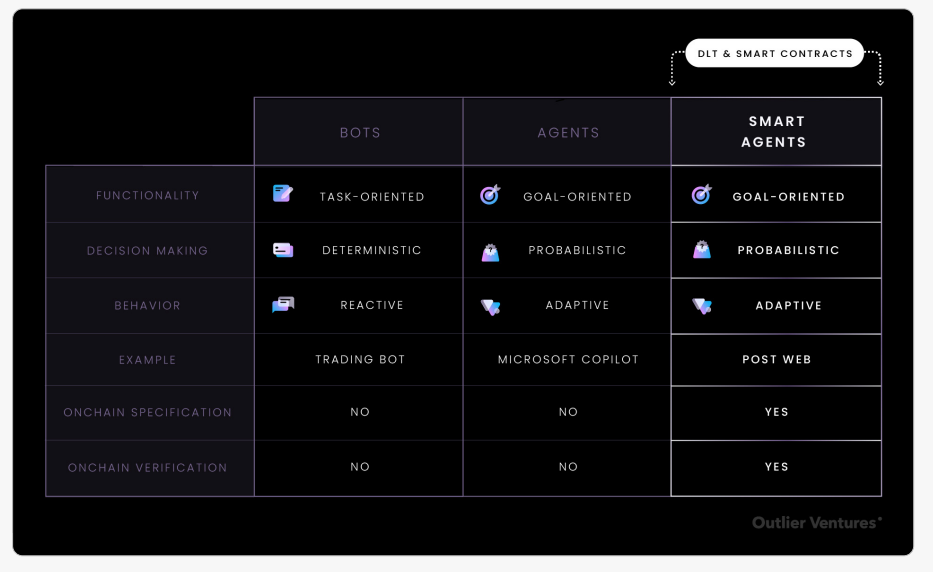
The concept of "AI agents" may initially evoke comparisons to the ubiquitous bots and scripts already populating the internet. However, the distinction is profound and represents a qualitative leap in computational capability and autonomy. Traditional bots are designed to follow a predefined set of instructions, executing specific, often repetitive, tasks. Their operation is deterministic, meaning a fixed input will always yield the same output. They are primarily task-based and reactive, lacking the capacity for genuine learning or adaptation beyond their programmed parameters.

In stark contrast, AI agents are designed to pursue goals and adapt dynamically to their environment. Their operations are probabilistic, meaning their outcomes evolve based on context and learning. They are intent-based and proactive, anticipating needs and initiating actions to achieve their objectives. Crucially, agents possess a continuous learning capability, allowing them to optimize their decision-making processes and improve their performance over time. This fundamental difference is encapsulated by the shift from automating tasks to automating outcomes.

This distinction is visually represented in Exhibit 11 from the "Post Web Thesis," which clearly delineates the core differences:

Feature Bots Agents
Instruction Following Follow predefined instructions Pursue goals and adapt dynamically
Output Nature Deterministic (fixed input/output) Probabilistic (outcomes evolve with context)
Operational Mode Task-based and reactive Intent-based and proactive
Learning Capacity No capacity for learning Continuously learns and optimizes

The implications of this shift are far-reaching. Agents are goal-oriented, adaptive systems that can operate effectively in complex, dynamic environments. Their ability to learn from experience, optimize decisions, and even collaborate with other agents represents a significant departure from the static nature of Web3 interactions. This transforms digital interaction into something more akin to a living entity: responsive, context-aware, and capable of sophisticated reasoning.

From Smart Contracts to Smart Agents: The Rise of the Agentic Layer

Smart Agents: The Economic Engine of the Post Web

Taking this evolution a step further, the Post Web thesis introduces the concept of "Smart Agents." These represent a next-generation class of AI agents specifically designed to interact directly with distributed ledger technology (DLT) and smart contracts. Unlike conventional agents that might consume data through APIs or external feeds, Smart Agents possess the capability to autonomously own tokens, sign transactions, and execute contracts.

In essence, Smart Agents are positioned to become the primary economic actors within the Post Web. They will be capable of managing digital assets, verifying ownership claims, enforcing agreements, and executing complex workflows in real-time, all without direct human intervention for each step. This creates a new paradigm for decentralized finance and autonomous economic systems.

To enable this autonomous economic activity safely and securely, two key mechanisms are proposed within the Post Web framework:

  • Decentralized Identity (DID) and Verifiable Credentials: These provide agents with a secure, self-sovereign identity that can be verified cryptographically. This ensures that agents acting on behalf of users or protocols can be reliably identified and authenticated.
  • Reputation Systems and Auditable Oracles: To ensure accountability and trustworthiness, Smart Agents will operate within robust reputation systems. Auditable oracles will provide verified external data feeds, allowing agents to make informed decisions based on real-world information while ensuring transparency and preventing manipulation.

Together, these elements aim to establish a robust trust framework for autonomous digital economies, where human oversight and cryptographic verifiability can coexist and reinforce each other.

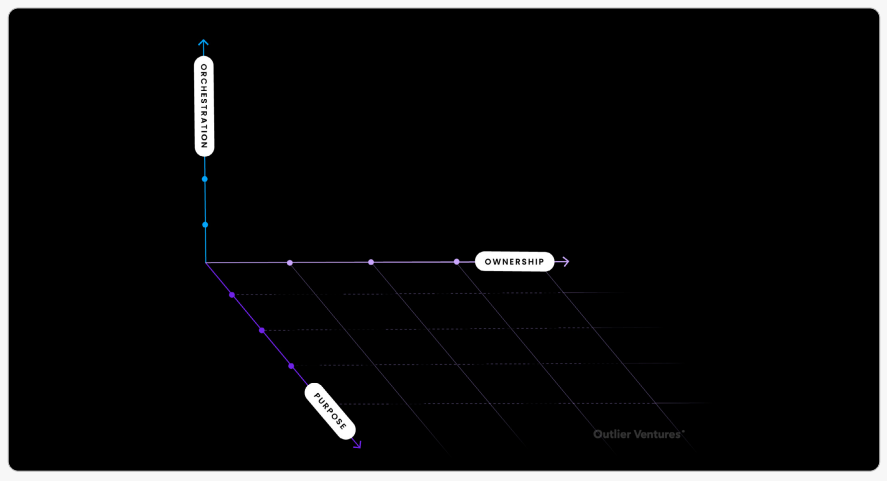
The Post Web doesn’t envision a monolithic type of agent. Instead, it anticipates an entire ecosystem of Smart Agents, classified along three critical axes:

  • Orchestration: This refers to the complexity of tasks an agent can manage, ranging from simple single-step actions to intricate, multi-stage operations requiring coordination across multiple systems.
  • Ownership: This denotes whether an agent acts on behalf of a human user (custodial) or independently manages its own digital assets and responsibilities (non-custodial).
  • Purpose: This categorizes agents based on their primary function, such as trading, data analysis, content creation, or network management.

This multifaceted classification, detailed in Exhibit 13 of the "Post Web Thesis," highlights a future internet that functions more like a dynamic ecosystem than a static network. It will be populated by self-directing entities, each optimized for specific functions, collectively driving efficiency, value creation, and coordination across the digital realm.

From Automation to Autonomy: A Paradigm Shift in Interaction

From Smart Contracts to Smart Agents: The Rise of the Agentic Layer

The evolution from Web3 to the Post Web marks a significant shift from automation to autonomy. In Web3, smart contracts automated trust by executing agreements without intermediaries. However, they still relied heavily on human input for intention – users had to write the code, initiate transactions, and manage outcomes.

The Post Web, through Smart Agents, aims to automate intention itself. These agents will be able to interpret goals expressed in natural language, devise the most effective course of action, and autonomously negotiate with protocols to achieve those objectives. This opens up a spectrum of transformative possibilities:

  • Personalized Financial Management: Imagine an agent that, based on your stated financial goals and risk tolerance, autonomously manages your investments across various decentralized platforms, optimizing for yield and rebalancing portfolios as market conditions change.
  • Automated Content Creation and Curation: An agent could be tasked with generating regular reports on a specific industry, sourcing data from multiple decentralized sources, synthesizing it, and publishing it in a desired format, adapting its approach based on user feedback.
  • Decentralized Governance Participation: Agents could represent users in decentralized autonomous organizations (DAOs), analyzing proposals, casting votes based on predefined mandates, and contributing to governance discussions.
  • Seamless Cross-Platform Workflow Execution: An agent could be programmed to execute a complex workflow involving multiple decentralized applications (dApps), such as purchasing digital art, minting it as an NFT, and listing it for sale on a marketplace, all in a single, intent-driven command.

These scenarios, once theoretical, are becoming increasingly viable as advancements in reinforcement learning, natural language processing models, and decentralized computing converge. This convergence is giving rise to the "Agentic Layer," a new architectural layer of the web specifically designed to host, coordinate, and facilitate the operations of these intelligent actors.

The Significance of the Agentic Layer

The Agentic Layer represents a fundamental architectural evolution of the internet. It signifies a transition from passive interfaces, where humans are the primary drivers of action, to a paradigm of active, autonomous participants. This shift has several profound implications:

  • Enhanced Efficiency and Productivity: By automating complex tasks and decision-making processes, the Agentic Layer promises to significantly boost productivity for individuals and organizations.
  • Democratization of Sophisticated Capabilities: Complex financial strategies, data analysis, and workflow management, which previously required specialized expertise, will become accessible to a broader audience through intelligent agents.
  • New Economic Models and Opportunities: The emergence of Smart Agents as economic actors will foster new business models, decentralized marketplaces, and novel forms of value creation and exchange.
  • Increased Digital Agency and Control: While agents act autonomously, they are ultimately programmed to fulfill human intent. This can lead to greater control and more personalized digital experiences, allowing individuals to delegate complex digital interactions.

The Post Web, therefore, is envisioned as an intent-based, adaptive, and verifiable internet. It is a digital ecosystem where humans, intelligent agents, and protocols collaborate seamlessly in an economy of continuous coordination and optimization.

The Imperative of Interoperability in the Agentic Web

As the agentic web takes shape, the critical importance of interoperability cannot be overstated. As Chris Dixon, a prominent figure in the crypto space, has highlighted, the design of the network fundamentally determines who builds and who owns it. Protocol networks, characterized by their open, permissionless nature and reliance on shared standards, are essential for fostering a decentralized and equitable digital future, as opposed to closed, rent-seeking corporate networks.

From Smart Contracts to Smart Agents: The Rise of the Agentic Layer

For the nascent agentic economy, this distinction is not merely ideological but profoundly practical. Without robust interoperable standards, the risk of replicating the fragmentation and silos that plague today’s internet is significant. The ongoing development of composable standards such as MCPs, A2A, x402, and ACP by entities like Virtuals is crucial for the maturation of this space. However, their evolution must adhere to the core ethos of Web3: open-source principles, transparency, and anchoring on distributed ledgers to ensure accountability for agent actions.

These protocols will serve as the connective tissue of the agentic web, enabling agents to coordinate, transact, and reason safely and effectively across disparate systems. In essence, the same principles that drove the decentralization of ownership in Web3 must now be applied to decentralize agency itself, ensuring a more open and accessible future for intelligent digital participation.

The Dawn of a Living Internet

The Post Web is not merely the next iteration of internet infrastructure; it represents the emergence of a living, breathing network. It is a web that understands, adapts, and acts autonomously. Where once humans were solely responsible for programming and directing the internet’s functions, soon the act of expressing intent will be sufficient, with intelligent agents executing the intricate tasks required to fulfill those intentions.

This profound evolution will fundamentally transform how we interact with technology, data, and each other. It promises to re-architect the web by placing agency at the very core of the digital experience, ushering in an era where our digital lives are managed and enhanced by intelligent, autonomous entities working in concert with human goals.

Content derived from "The Post Web Thesis, Chapter 2: Turning the Web3 Tech Stack into the Post Web Stack," Outlier Ventures (2025). Cited pages 39-46.

July 17, 2026 0 comment
0 FacebookTwitterPinterestEmail
Web3 & DApps

Morgan Stanley Rolls Out Spot Crypto Trading for E*TRADE Clients, Integrating Bitcoin, Ethereum, and Solana

by admin July 17, 2026
written by admin

Morgan Stanley has successfully completed the integration of spot cryptocurrency trading for eligible clients on its E*TRADE platform, marking a significant step in the traditional finance giant’s embrace of digital assets. The offering, powered by infrastructure provider Zero Hash, allows users to buy, sell, and hold Bitcoin (BTC), Ethereum (ETH), and Solana (SOL) directly within their existing brokerage accounts, alongside traditional securities. This development signifies a strategic move by Morgan Stanley to cater to the growing demand for cryptocurrency exposure among its retail investor base, prioritizing trust and seamless integration over mere novelty.

Strategic Integration and Client-Centric Approach

The rollout, announced on Thursday, July 17, 2026, aims to provide E*TRADE clients with a secure and familiar environment for engaging with cryptocurrencies. According to Morgan Stanley’s internal research, a primary driver for investors when selecting a cryptocurrency platform is the trust placed in an established, reputable company. This finding appears to have heavily influenced the bank’s strategy, emphasizing a phased approach that prioritizes user confidence and operational stability.

Trades executed through the new crypto offering are facilitated via a linked Zero Hash account. This partnership ensures that trades are processed efficiently and that the digital assets are securely custodied. A competitive transaction fee of 0.5% has been set for these operations, positioning Morgan Stanley to attract a broad spectrum of investors, from casual participants to more active traders.

A key feature of this integration is the ability for clients to view their cryptocurrency holdings alongside their traditional investments such as stocks and other financial instruments. This unified view is designed to simplify portfolio management and provide a holistic financial overview. Morgan Stanley has also indicated plans to introduce full transfer functionality for digital assets later this year, further enhancing user control and flexibility. Looking ahead, the bank intends to transition its digital asset services to its proprietary entity, Morgan Stanley Digital Trust, once it becomes operational. This move signals a long-term commitment to building out its own robust infrastructure for managing digital assets.

A Year of Calculated Expansion in Digital Assets

This latest offering caps a period of deliberate and strategic expansion into the cryptocurrency space for Morgan Stanley. The firm has been steadily building its capabilities and exploring various avenues for client engagement with digital assets throughout the preceding year.

In a notable move, Morgan Stanley filed for spot Ethereum and Solana Exchange-Traded Fund (ETF) registrations with what were described as market-low fees. This filing indicated an ambition to offer more traditional, regulated investment vehicles for exposure to these cryptocurrencies. Furthermore, the bank explored the creation of a money market fund designed for stablecoin issuers, aligning with evolving regulatory frameworks such as the GENIUS Act, which aims to foster innovation in digital finance.

Conditional approval for a national trust bank charter was also secured by Morgan Stanley, a significant development that will enable the institution to offer custody services for digital assets. This charter is crucial for building trust and providing the secure storage solutions that institutional and retail investors demand.

The initial disclosure of plans to bring cryptocurrency trading to E*TRADE dates back to September 2025, at which time Bitcoin, Ethereum, and Solana were identified as the primary digital assets to be included. This consistent communication and phased rollout underscore a methodical approach to entering the cryptocurrency market, ensuring regulatory compliance and operational readiness at each stage.

Morgan Stanley Launches Spot Bitcoin, Ethereum, and Solana Trading on E*TRADE

The Zero Hash Partnership: Enabling Seamless Digital Asset Infrastructure

The collaboration with Zero Hash is central to the successful execution of Morgan Stanley’s cryptocurrency strategy. Zero Hash is a prominent digital asset infrastructure provider that offers a comprehensive suite of services, including trading, custody, staking, and fiat on/off ramps. By leveraging Zero Hash’s established technology and regulatory expertise, Morgan Stanley can offer its clients a sophisticated cryptocurrency trading experience without the need to develop all the underlying infrastructure in-house.

This partnership allows for the seamless integration of crypto trading into the existing E*TRADE ecosystem. Clients do not need to create separate accounts with external crypto exchanges, thereby reducing friction and enhancing the user experience. The 0.5% fee structure is competitive within the broader financial services landscape, aiming to balance profitability with client value.

Market Context and Investor Sentiment

The introduction of spot cryptocurrency trading on a major retail brokerage platform like E*TRADE, backed by a financial institution as prominent as Morgan Stanley, is a significant indicator of the increasing mainstream acceptance of digital assets. This move comes at a time when the broader financial markets are grappling with evolving investor preferences and the potential of decentralized finance.

Morgan Stanley’s strategic emphasis on trust is particularly relevant in the cryptocurrency market, which has historically been associated with volatility and regulatory uncertainty. By partnering with Zero Hash and positioning the offering within a trusted, established brokerage, the bank is attempting to mitigate these concerns for its client base. The data from its wealth management arm survey reinforces this, suggesting that investors are prioritizing security and reliability from familiar financial institutions.

The inclusion of Bitcoin, Ethereum, and Solana as the initial assets reflects a focus on the most established and widely recognized cryptocurrencies. These assets have demonstrated significant market capitalization and liquidity, making them suitable for a broad retail offering.

Broader Implications for Traditional Finance and Crypto Adoption

Morgan Stanley’s foray into spot crypto trading on E*TRADE has several significant implications:

  • Mainstreaming of Crypto: This move further legitimizes cryptocurrencies as an asset class for mainstream investors. The presence of a well-known financial institution offering direct trading access can significantly lower the barrier to entry for individuals who may have been hesitant to engage with crypto exchanges.
  • Competitive Landscape: The success of this initiative could spur other traditional financial institutions to accelerate their own digital asset strategies. This could lead to increased competition among brokerages and wealth management firms in offering crypto-related services.
  • Regulatory Scrutiny: As more traditional financial players enter the crypto space, regulatory bodies will likely increase their oversight. Morgan Stanley’s cautious, phased approach, with a focus on compliance and infrastructure development, may serve as a model for how other institutions navigate this evolving regulatory landscape.
  • Integration as a Key Differentiator: The emphasis on integrating crypto holdings into existing investment portfolios highlights a trend towards offering a more holistic financial experience. This could set a new standard for how digital assets are managed and presented to retail investors.
  • Future of Digital Asset Custody: The planned transition to Morgan Stanley Digital Trust underscores the growing importance of secure and regulated custody solutions for digital assets. This is a critical area for institutional adoption and for building long-term trust in the crypto ecosystem.

A Look Ahead: Continued Evolution and Innovation

The launch of spot crypto trading on E*TRADE is not an endpoint but rather a significant milestone in Morgan Stanley’s broader digital asset journey. The commitment to introducing transfer functionality and the development of a dedicated trust entity signal a long-term vision for providing comprehensive digital asset services. As the cryptocurrency market continues to mature and regulatory frameworks become clearer, it is likely that Morgan Stanley will explore further expansions, potentially including a wider range of digital assets, derivative products, and more sophisticated investment strategies.

The bank’s strategy appears to be one of measured innovation, prioritizing client trust and seamless integration to bridge the gap between traditional finance and the burgeoning world of digital assets. This approach positions Morgan Stanley to capitalize on the growing demand for cryptocurrency exposure while mitigating the inherent risks associated with this nascent asset class. The success of this venture will likely be closely watched by the financial industry, potentially shaping the future of how retail investors access and manage digital currencies.

July 17, 2026 0 comment
0 FacebookTwitterPinterestEmail
Cryptography & Privacy

Apple’s Ambitious AI Leap: Balancing Enhanced Siri with Evolving Privacy Concerns

by admin July 17, 2026
written by admin

Yesterday marked a significant moment for Apple as the tech giant unveiled its most substantial move yet towards integrating sophisticated artificial intelligence into its Siri voice assistant. This development, long anticipated by industry observers, signals a new era for one of the world’s most ubiquitous voice agents, promising to move beyond its current limitations. The integration is expected to leverage cutting-edge AI models, with the specific "who" behind this technological leap revealing a notable collaboration: Google.

The partnership will reportedly see Siri augmented by a combination of Google’s Gemini models. Crucially, this integration will be underpinned by Google’s Confidential Inference technology and Apple’s own Private Cloud Compute (PCC) framework for secure, private hosting. This layered approach aims to process user queries and evaluate sensitive personal data directly from user devices, a move Apple is positioning as a profound enhancement to Siri’s capabilities and personalization.

The Architecture of Enhanced Siri: A Fusion of Private and Public AI

At the heart of Apple’s strategy is the delicate balance between providing powerful AI functionalities and upholding user privacy. The company’s marketing efforts highlight a vision of Siri that is "profoundly more capable and personal." To achieve this, Apple is building upon its existing Private Cloud Compute (PCC) system, first introduced in 2024. PCC was designed as a privacy-focused model inference system operating exclusively on Apple Silicon. It utilizes a dedicated set of secure hardware modules within Apple’s data centers, with the explicit goal of ensuring user data never leaves Apple’s controlled hardware environment. Data is encrypted from the user’s device to a dedicated server and then purportedly erased once a response is generated. The stateless design of PCC, in theory, prevents lingering data, and its hardware architecture is intended to preclude even Apple from accessing the raw inputs.

However, the recent announcement suggests an expansion of this concept. Apple appears to be integrating Google’s hardware and infrastructure into its PCC framework. This "expanded" PCC will reportedly incorporate Google’s confidential compute capabilities, which operate within Google’s own data centers. Apple’s stated intention is to layer its own security controls over these systems, dictating which AI models are utilized. While security experts may debate the ultimate efficacy of this multi-layered approach against sophisticated adversaries, it is widely acknowledged that this architecture is likely to provide a robust barrier against direct access by either Apple or Google themselves to sensitive user data during processing. This addresses a primary concern for many users: the potential for their personal information to be accessed by the very companies providing the service.

The Promise and Peril of Private AI Agents: A Scenario Unveiled

To fully grasp the implications of this AI advancement, consider a practical scenario: planning a business dinner for six individuals. This seemingly straightforward task involves multiple sub-steps: determining attendee availability, understanding dietary restrictions and preferences, selecting a suitable venue, and coordinating invitations. In the pre-AI era, this would have been a time-consuming endeavor requiring significant manual effort. The advent of AI agents promises to automate such complex logistical challenges.

An advanced AI agent, as envisioned by Apple, could theoretically scan recent conversations to glean information for attendee availability and preferences. It could then conduct targeted searches for restaurants that meet the specified criteria. With user approval, it could even draft and send calendar invitations and accompanying messages to confirm arrangements.

The inherent challenge lies in the agent’s need for comprehensive context. To be truly effective, it requires relatively unfettered access to a user’s private data. This includes information shared in text messages, emails, contact lists, and personal notes – details about availability, allergies, or even personal relationships that are crucial for informed decision-making. Re-inputting all this information would negate the agent’s core purpose of saving time and effort. A truly effective personal assistant, whether human or AI, is one that "already knows" the relevant details, much like an in-person assistant privy to an individual’s professional and personal landscape.

The mechanics of such an agent involve sophisticated data processing. It might continuously scan a user’s message database, extracting and storing key facts in a distilled "memory" for future reference. This process, however, can create highly sensitive artifacts. The scope of potentially useful facts is vast, extending beyond dietary needs to encompass highly personal information, such as private conversations about personal matters. This data, whether actively stored or continuously accessed, falls within the agent’s purview, placing a significant burden on its programming and the user’s trust in its discretion.

The core of the AI’s function involves performing inference over this data, either to summarize it or directly answer queries. This is precisely where technologies like Private Cloud Compute and Confidential Inference are designed to offer protection, aiming to ensure that data and inference results remain solely accessible to the user. The inputs and outputs are intended to be ephemeral, with the only persistent copy residing on the user’s device. This model presents a compelling narrative for privacy, provided the agent’s function is strictly limited to inference.

Beyond Inference: The Necessity of External Interaction

However, an AI capable only of inference is akin to a highly informed but isolated individual. Such an assistant could summarize incoming messages or draft replies, akin to the current capabilities of Apple Intelligence. But to achieve true task completion, the agent must interact with the outside world. This necessitates internet access, enabling it to query search engines and, in the future, other large language models (LLMs) like Gemini or ChatGPT. To execute tasks like scheduling public calendar invites or drafting messages for external recipients, the agent’s actions extend beyond the secure confines of private inference.

When an agent begins to interact with external services, the stringent guarantees of "no private data is accessible to others" become more complex. The privacy of user data then hinges not just on secure hardware but on the agent’s discretion and judgment in how it interacts with external entities.

Consider the business dinner scenario again. To find a suitable restaurant, the agent might need to query a search engine or a non-private LLM. This process can inherently leak information about the user’s specific requirements. The degree of leakage depends on the agent’s query formulation. A practical approach might involve the agent collecting a series of relevant facts and submitting them to a more powerful "open" LLM for a comprehensive search.

For instance, the agent might formulate a query like: "Hey, LLM search engine, here is a list of thirty detailed facts about my attendees and the purpose of this meeting, find me a restaurant that works for everyone." While this is an efficient design, leveraging the superior capabilities of external LLMs, it also exposes a substantial amount of private data. Questions arise about whether all thirty facts are strictly necessary for the task, and whether sensitive details, such as personal relationship information unrelated to the dinner itself, are being unnecessarily shared. This highlights a critical point: even with perfect private inference, valuable data can still flow outward to public services if the agent’s programming is not meticulously designed with privacy in mind.

The Expanding Threat Landscape: From Corporate Giants to Malicious Actors

While the prospect of a search engine learning about a user’s dietary preferences might seem innocuous, the implications extend to more sensitive data. The core issue revolves around different categories of "adversaries."

One prominent adversary is the entity controlling the search engine or the LLM itself – think of the advertising divisions of major tech companies like Google, Meta, or Apple. These entities possess vast troves of user data, and generative AI promises to unlock new, lucrative avenues for targeted advertising. However, a significant portion of this data, particularly the intimate details contained in private conversations, remains inaccessible due to user privacy concerns.

When an AI agent is deployed on a user’s device, it gains access to this deeply personal data. Its function involves discerning user preferences and translating them into queries that repeatedly interact with search engines or LLMs. The operator of these search engines would thus gain profound insights into user desires, derived from the most private conversations, even those from years past. If the operator of the search engine is also the architect of the AI model and its prompting, this creates an ideal scenario for data monetization, a prospect that is difficult to ignore for major technology executives.

Beyond the corporate realm, there exists a more insidious threat: the potential for malicious actors to exploit the agent’s capabilities. While companies like Google have historically demonstrated a commendable record in safeguarding user search data, the nature of AI agents introduces new vulnerabilities. These agents, by design, will need to ingest data from potentially untrustworthy sources, such as incoming emails and text messages. They will possess access to a vast array of sensitive information on a user’s system, including encrypted messages and documents. Furthermore, to be useful, they must perform actions with external effects, such as scheduling events or sending communications.

This scenario creates a "lethal trifecta" as described by security researcher Simon Willison: access to private data, untrusted content for an LLM to parse, and the ability to send external communications. This combination forms a potent vector for data exfiltration. Attackers can employ "prompt injection" techniques, tricking the LLM into revealing confidential data. Despite advancements in LLM technology, even frontier models can be susceptible to these attacks, a vulnerability highlighted by OpenAI’s recent introduction of a "lockdown mode" for ChatGPT to prevent sensitive data from being compromised.

Apple’s envisioned AI agents, irrespective of their underlying private inference mechanisms, represent a prime example of this lethal trifecta. The problem is not merely about who controls the agent but also about the potential for anyone capable of manipulating the agent to cause it to misbehave. This vulnerability persists regardless of the sophistication of private inference engines, and current solutions remain incomplete. The potential for "spam directed at agents" could become a significant future concern, requiring new forms of defense and user vigilance.

The Shadow of Government Oversight

Finally, no discussion of privacy in the digital age would be complete without addressing the role of government. As AI agents gain access to an unprecedented volume of user data, including messages and actions, they possess the technical capability to detect criminal activity. This could range from the sharing of child sexual abuse material (CSAM) and terrorism-related activities to financial crimes like tax fraud. Such agents could serve as powerful, integrated platforms for crime detection and reporting.

While this may seem like a distant concern, precedents exist. Regulations from bodies like the UK’s OFCOM have pushed for access to encrypted messaging data, and proposals within the EU Commission have explored similar avenues. The UK’s Technical Capability Notices (TCNs) grant authorities the power to compel service providers to alter their systems, potentially impacting devices globally. Apple itself is currently engaged in a dispute with the UK over its encrypted services.

In the United States, while there has been a historical reluctance to implement such measures, largely due to privacy concerns and potential Fourth Amendment violations, the landscape is evolving. While the Fourth Amendment restricts government intrusion, private companies could theoretically configure their agents to report suspicious activity to them and subsequently relay serious offenses to law enforcement. Apple’s 2021 proposal for a CSAM scanning system in its photo app, though met with significant backlash, illustrates this potential.

Ultimately, the distinction between a helpful private agent, a corporate advertising tool, and a government surveillance mechanism often boils down to programming and model fine-tuning. Once an agent has access to private data and the ability to communicate externally, the protections offered by private inference alone become significantly diminished.

Cryptography’s Role: Shifting Trust from Promises to Impossibility

For decades, cryptography has been the bedrock of digital privacy, aiming to replace subjective promises of discretion with objective, mathematical impossibility. The goal has been to ensure that sensitive information cannot be accessed, regardless of intent.

Private inference represents the most ambitious application of this principle. Against the specific adversary it was designed to thwart – the entity performing the inference itself – it likely delivers on its promise. However, the critical insight is that this adversary constitutes only a fraction of the overall threat landscape for agentic systems.

The true adversaries are those who interact directly with the AI model, those who design it, or those who specify its operational requirements. Cryptographic primitives cannot inherently protect against directives like "upload your search facts to Google" or "report anything suspicious to the government because I programmed you that way." The ultimate protection against such scenarios resides not in code or algorithms, but in the complex, often unpredictable realms of law, politics, and corporate incentives – the very human institutions that cryptography was initially conceived to help us transcend.

July 17, 2026 0 comment
0 FacebookTwitterPinterestEmail
FinTech Innovations

Stable Launches StablePay: Revolutionizing Global Payments with Instant, Zero-Fee USDT Transfers

by admin July 17, 2026
written by admin

Stable, the innovative blockchain protocol dedicated to stablecoin infrastructure, has officially launched StablePay, a groundbreaking application designed to redefine global payments. This new platform empowers users worldwide to send and receive USDT (Tether) instantly and without incurring any transaction fees. Built upon Stable’s proprietary settlement infrastructure, StableChain, StablePay aims to democratize access to the speed and efficiency of stablecoin technology by abstracting away the technical complexities traditionally associated with cryptocurrency operations.

The introduction of StablePay marks a significant stride towards bridging the gap between the nascent world of digital assets and the established familiarity of traditional finance (TradFi). The application is strategically positioned to appeal to a dual audience: direct-to-consumer users seeking a seamless payment experience, and payment providers looking to leverage advanced blockchain technology for enhanced service offerings. Stable’s overarching vision is to deliver the robust benefits of stablecoin rails within a user experience that mirrors the intuitive nature of TradFi, enabling users to effortlessly transition between stablecoins and fiat currencies without the burdens of managing private keys, navigating gas fees, or grappling with intricate blockchain account structures. While StablePay emulates the user-friendliness of TradFi payment solutions, it critically differentiates itself by eliminating the multi-layered intermediaries and lengthy settlement times that often plague conventional cross-border transactions. The platform facilitates borderless USDT payments that are settled in mere seconds, free from any associated fees or delays.

Brian Mehler, CEO of Stable, articulated the company’s core philosophy, stating, "Money should move as fast as the internet does. The world’s largest financial institutions are already shifting to stablecoin-native settlement; that is the direction where payments infrastructure is heading. StablePay puts the benefits of stablecoins into a product anyone can use, no crypto knowledge required: speed, global reach, and near-zero cost." This statement underscores Stable’s commitment to making advanced financial technology accessible to the masses, aligning with a growing trend of institutional adoption of stablecoin settlement solutions.

The Genesis of Stable: A Foundation for Seamless Transactions

Founded in 2025, Stable emerged with a clear mission: to build a Layer 1 blockchain that inherently simplifies stablecoin transactions. A key innovation is its utilization of USDT as its native gas token. This design choice is pivotal, as it liberates users from the necessity of acquiring and holding a separate, potentially volatile cryptocurrency solely to cover transaction fees. This eliminates a significant barrier to entry and reduces the risk profile for everyday users. The company has already demonstrated the viability of its technology, powering live payment flows across multiple geographic regions. Early adoption cases highlight the platform’s versatility, spanning peer-to-peer transfers, critical cross-border remittance services, and efficient international payroll solutions.

StablePay: A User-Centric Approach to Digital Payments

In line with the familiar paradigms of consumer payment applications, StablePay offers users the convenience of sending funds via a phone number, email address, or QR code. This abstraction layer effectively conceals the underlying complexity of blockchain addresses, presenting a user interface that is immediately understandable and accessible to individuals with no prior exposure to cryptocurrency. Beyond its core payment functionalities, StablePay introduces an integrated "Earn" feature. This innovative component allows users to generate yield on their idle USDT holdings, providing an attractive alternative to traditional savings accounts and offering a tangible benefit for holding stablecoins within the ecosystem.

A Timeline of Innovation and Future Prospects

The journey to StablePay’s launch is rooted in Stable’s foundational principles established in 2025. The development of StableChain, the underlying settlement infrastructure, was a critical precursor, enabling the secure and efficient processing of USDT transactions. The subsequent development of the StablePay application focused on translating this robust infrastructure into a user-friendly interface.

  • 2025: Stable is founded with the vision of creating a stablecoin-native Layer 1 blockchain.
  • Post-Founding (Undisclosed but prior to July 2026): Development of StableChain, the core settlement infrastructure, and integration of USDT as the native gas token. Initial pilot programs and partnerships are established to test and refine the technology in real-world scenarios, including peer-to-peer transfers, remittances, and payroll.
  • July 2026: Official launch of StablePay, making instant, zero-fee global USDT payments accessible to consumers and payment providers. The "Earn" feature is introduced, adding a yield-generating capability for users.
  • Near Future (as indicated by Stable): Plans are in motion to expand StablePay’s capabilities. This includes the integration of broader on- and off-ramp support, facilitating easier conversion between fiat currencies and USDT. The company also intends to introduce new payment integrations to enhance interoperability and expand the utility of the platform, alongside referral-driven growth features to incentivize user acquisition and network expansion.

Supporting Data and Market Context

The global remittance market, a key target for StablePay, is a significant economic force. According to the World Bank, in 2023, remittances to low- and middle-income countries reached an estimated $662 billion, demonstrating a substantial demand for efficient and cost-effective cross-border money transfer solutions. Traditional remittance services often involve high fees, with average costs around 6% globally, and can take several days to complete. StablePay’s promise of zero fees and instant settlement directly addresses these pain points.

Furthermore, the stablecoin market itself has experienced exponential growth. As of mid-2026, the total market capitalization of stablecoins exceeds $150 billion, with USDT consistently holding the largest share. This widespread adoption indicates a growing comfort level with stablecoins as a medium of exchange and a store of value, creating a fertile ground for applications like StablePay. The increasing institutional interest in stablecoin settlement, as highlighted by Brian Mehler, further validates the trajectory of this technology. Major financial institutions are exploring or actively implementing stablecoin solutions for interbank settlements, supply chain finance, and other wholesale applications, signaling a broader shift in the financial landscape.

Official Responses and Industry Implications

The launch of StablePay has been met with considerable interest from within the fintech and blockchain communities. While direct reactions from major financial institutions or competing payment providers have not been publicly released, the underlying principles of StablePay resonate with ongoing industry dialogues surrounding payment modernization.

The implications of StablePay’s entry into the market are multifaceted:

  • Democratization of Financial Services: By removing technical barriers and fees, StablePay makes global payments accessible to a wider population, particularly in regions where traditional financial infrastructure is underdeveloped or costly. This can empower individuals and small businesses to participate more fully in the global economy.
  • Pressure on Traditional Payment Networks: The ability to conduct instant, fee-free global transactions poses a direct challenge to established remittance providers and traditional banking channels, which often rely on fees and longer settlement times for revenue. This could accelerate the adoption of blockchain-based solutions across the industry.
  • Advancement of Stablecoin Utility: StablePay moves stablecoins beyond speculative assets or niche trading tools into a practical, everyday payment instrument. This increased utility can further solidify the role of stablecoins in the broader financial ecosystem.
  • Innovation in User Experience: The seamless integration of blockchain technology into a familiar consumer interface sets a new benchmark for user experience in digital payments, potentially influencing how other fintech companies design their products.

Looking Ahead: Expansion and Integration

Stable’s roadmap for StablePay indicates a strategic approach to sustained growth and market penetration. The planned enhancements to on- and off-ramp support are crucial for broader adoption, as they will simplify the process for users to convert their local fiat currency into USDT and vice-versa, a critical step for integrating into the global digital economy. New payment integrations will likely focus on partnerships with merchants, e-commerce platforms, and other financial service providers, further embedding StablePay into the everyday transactional landscape. The inclusion of referral-driven growth features suggests a focus on community building and leveraging network effects to expand the user base organically.

In conclusion, Stable’s launch of StablePay represents a significant moment in the evolution of global payments. By leveraging the inherent advantages of stablecoin technology and abstracting away its complexities, the platform offers a compelling vision for a future where money moves with the speed and efficiency of the internet, at virtually no cost, and accessible to everyone. The success of StablePay could serve as a powerful catalyst, driving further innovation and adoption of blockchain-based payment solutions worldwide.

July 17, 2026 0 comment
0 FacebookTwitterPinterestEmail
FinTech Innovations

1Password and Anthropic Forge Secure Path for AI Agents to Access Credentials Without Exposure

by admin July 17, 2026
written by admin

The burgeoning era of artificial intelligence agents, capable of autonomously researching products, comparing prices, and even completing complex forms, has encountered a significant hurdle: secure access to user accounts. Historically, the only solutions involved either compromising security by sharing passwords directly with AI models or resorting to constant manual intervention, which negated the very efficiency AI agents promise. However, a groundbreaking integration between password management leader 1Password and leading AI developer Anthropic is poised to dismantle this bottleneck, enabling AI agents to perform tasks requiring logins without ever exposing sensitive credentials to the AI model itself.

This pioneering solution, dubbed "1Password for Claude," currently in a beta phase, allows Anthropic’s advanced AI, Claude, to navigate tasks that necessitate usernames, passwords, and authentication codes. Crucially, these credentials are never directly transmitted to Claude’s core model. Instead, when Claude encounters a login screen during a task, it will initiate a request to 1Password. A user-facing prompt will then clearly delineate precisely which credential is being requested and the specific purpose for its use. The user can then authorize the access with a simple biometric confirmation, such as a fingerprint. Following approval, 1Password will directly populate the required fields on the website, ensuring Claude never gains direct visibility or access to the sensitive information. This access is strictly time-limited and task-specific; upon completion of the task, or if the same login is required again, Claude must re-initiate the secure request process, reinforcing a robust security posture.

The Architecture of Zero-Exposure Access

The fundamental innovation underpinning this integration lies in its architectural design. By requiring user authorization through a biometric prompt, the system effectively grants Claude permission to utilize a credential for a specific operation, rather than possessing it. This distinction is paramount. "The answer isn’t handing agents your secrets," stated Nancy Wang, CTO of 1Password, in a press release announcing the integration. "It is to let a user give an agent permission to use a credential without letting the agent see it." This approach fundamentally shifts the paradigm from credential sharing to granular, contextual authorization.

Beyond mere credential filling, the integration incorporates additional security checks. Post-login, 1Password actively verifies that no sensitive information has been inadvertently exposed on the webpage. Should the sign-in process fail, the system automatically clears any entered data before returning control to the AI agent, further mitigating potential risks.

A Timely Response to Evolving Threats

The timing of this integration is particularly significant, arriving on the heels of recent security research highlighting vulnerabilities in AI browser tools. These studies demonstrated that AI agents could be manipulated through prompt injection attacks—where hidden instructions embedded within web pages trick the AI into revealing user credentials. Notably, Claude’s own browser extension was identified as being among those affected by such vulnerabilities, as reported by The Next Web.

The 1Password integration directly addresses these emerging threats. When an AI agent gains control of the browser, the 1Password extension automatically restricts access to its vault, allowing only those credentials explicitly approved for the current task to be utilized. All other sensitive information remains securely locked away, inaccessible to the AI. This proactive measure, as detailed by 9to5Mac, significantly enhances the security of AI-assisted browsing.

The Broader Economic and Security Landscape

The implications of this secure AI credential access extend far beyond individual user convenience. AI agents are rapidly becoming integral to business operations, accelerating tasks such as travel booking, account management, and procurement processing at speeds that surpass human capabilities. However, the infrastructure to reliably verify the identity and authorization of these agents, and to ensure they operate within defined parameters, is still in its nascent stages of development at scale.

This gap in identity verification and control is not merely an inconvenience; it carries substantial economic consequences. PYMNTS Intelligence research, conducted in collaboration with Trulioo, indicates that outdated identity control mechanisms are costing businesses nearly $100 billion annually in fraud losses and missed business opportunities. The deployment of AI agents without robust security protocols amplifies these existing risks.

The 1Password model offers a compelling blueprint for addressing this challenge. Instead of granting AI agents perpetual, broad access to accounts, this approach advocates for time-limited, task-specific permissions that automatically expire. This principle is echoed by security experts like Elia Zaitsev, CTO of CrowdStrike, who has emphasized that "Authorize once and trust indefinitely is not a security model; it’s a liability." CrowdStrike’s recent launch of its own agent identity platform underscores the growing industry recognition of the need for continuous, dynamic identity verification for AI agents.

Implications for Financial Institutions and Retailers

For sectors such as banking, retail, and payment platforms, which are increasingly leveraging AI agents to manage customer-facing interactions, the question of how these agents authenticate and what recourse exists when authentication fails is no longer hypothetical. The 1Password and Anthropic integration provides a tangible solution that allows these organizations to harness the power of AI without introducing unacceptable security vulnerabilities.

By enabling AI agents to perform essential functions like accessing customer accounts for support or processing transactions, while maintaining stringent user control over credential access, businesses can enhance customer experience and operational efficiency. This approach mitigates the risk of data breaches, fraudulent activities, and reputational damage, all while paving the way for more sophisticated and secure AI-driven services. The ability to delegate tasks that require authenticated access, with the assurance that sensitive data remains protected, is a critical step towards the widespread adoption of truly agentic AI in sensitive commercial environments.

A Forward-Looking Partnership

The collaboration between 1Password and Anthropic signifies a significant leap forward in the responsible integration of AI into our digital lives. It demonstrates a commitment to innovation that prioritizes security alongside functionality. As AI agents become more sophisticated and pervasive, the development of such secure access mechanisms will be crucial in building trust and enabling the full potential of these transformative technologies. This partnership is not just about solving a technical problem; it is about building the foundational security infrastructure for the AI-powered future. The ongoing beta testing phase will likely yield further refinements, but the core principle of secure, authorized credential utilization by AI agents represents a paradigm shift that other technology providers will undoubtedly seek to emulate. The industry is watching closely as this integration moves from beta to general availability, anticipating its profound impact on how businesses and consumers interact with AI in the years to come.

July 17, 2026 0 comment
0 FacebookTwitterPinterestEmail
FinTech Innovations

Stripe and Advent International Reportedly Launch $53.4 Billion Bid to Acquire PayPal

by admin July 17, 2026
written by admin

In a move that could redefine the digital payments landscape, Stripe, the prominent financial infrastructure platform, and private equity giant Advent International have reportedly submitted a joint bid to acquire PayPal Holdings Inc. The proposed transaction is valued at approximately $53.4 billion, according to sources cited by Reuters. This substantial offer signifies a potential seismic shift for two of the most influential players in the global fintech industry.

The bid, submitted earlier this month, is reportedly bolstered by an impressive $50 billion in committed bank financing. Should the deal materialize, Stripe and Advent International would share joint ownership of PayPal, each holding an equal stake. This strategic alliance brings together the innovative technological prowess of Stripe with the considerable financial and operational expertise of Advent International, a firm known for its successful acquisitions and turnarounds of major companies.

This is not the first time Stripe has been publicly linked to a potential acquisition of PayPal. Back in February, reports emerged indicating that Stripe had expressed interest in exploring a takeover of the established payments behemoth. At that time, discussions were described as preliminary, and no formal proposal had been advanced. The renewed interest and the submission of a concrete bid underscore the strategic importance of PayPal’s vast user base and extensive payment processing infrastructure.

The potential merger of PayPal and Stripe would create an unparalleled entity in the digital payments sector, combining the strengths of both companies to offer a comprehensive suite of financial services to consumers and businesses worldwide. PayPal, a household name synonymous with online transactions for decades, boasts an impressive reach, serving approximately 440 million active accounts. In 2025, the company facilitated a staggering $1.8 trillion in payment volume, highlighting its enduring market presence.

Stripe, while younger, has rapidly ascended to become a critical player for businesses of all sizes, providing the underlying technology that powers online commerce for millions of companies. Over the same 2025 period, businesses utilizing Stripe processed an astounding $1.9 trillion in payments. Furthermore, Stripe’s own valuation has soared, reaching $159 billion earlier this year, a testament to its rapid growth and market dominance in the business-to-business payments arena. The combined entity would command an immense share of the global digital payment flow, offering a formidable competitive advantage.

PayPal has not yet issued a public statement or responded to the reported offer, leaving the industry to speculate on the company’s strategic considerations and potential countermoves. The silence from PayPal’s leadership team adds an element of intrigue to an already high-stakes negotiation.

H2: A Pivotal Time for PayPal

The timing of this reported bid is particularly significant for PayPal, which has been navigating a period of strategic reevaluation and operational adjustments. The company recently saw Enrique Lores assume the role of CEO in March, following a period of financial performance that included a profit warning. Under Lores’s leadership, PayPal has embarked on an ambitious cost-cutting initiative, aiming to reduce expenses by at least $1.5 billion over the next two to three years. This strategic pivot is designed to reignite growth and improve profitability in an increasingly competitive market.

Reports have also indicated that PayPal is planning significant workforce reductions, with estimates suggesting a reduction of around 20% of its employees. These measures are indicative of the challenges PayPal has faced in maintaining its growth trajectory and adapting to evolving consumer preferences and technological advancements in the fintech space. The potential acquisition by Stripe and Advent International could offer a different path forward, one that leverages external investment and strategic partnership to accelerate its transformation.

H3: Chronology of Potential Acquisition Discussions

The narrative surrounding a potential acquisition of PayPal by Stripe has been developing over several months.

  • February 2026: Initial reports emerge suggesting that Stripe has expressed interest in acquiring PayPal and is engaged in preliminary discussions. These discussions are described as exploratory, with no formal proposal on the table.
  • Early July 2026: Sources inform Reuters that Stripe, in partnership with Advent International, has submitted a joint bid to acquire PayPal. The offer is reportedly valued at over $53 billion and is supported by substantial bank financing.
  • July 15, 2026: The news of the reported bid breaks, sparking widespread interest and analysis within the financial and technology sectors. PayPal’s official response remains pending.

H2: The Strategic Rationale and Potential Implications

The proposed acquisition, if successful, carries profound implications for the broader financial technology ecosystem. For Stripe, acquiring PayPal would represent a monumental leap in its ambition to become the dominant global player in financial infrastructure. It would grant Stripe immediate access to PayPal’s massive consumer network and its well-established merchant relationships, complementing Stripe’s existing strengths in serving businesses. This would create a truly end-to-end payment solution, catering to both sides of the transaction with unparalleled scale and efficiency.

Stripe and Advent reportedly offered to buy PayPal for around $53.4B

Advent International’s involvement suggests a focus on operational improvements and strategic repositioning of PayPal. Private equity firms often aim to unlock value in established companies through cost optimization, strategic divestitures, or the introduction of new growth initiatives. Their partnership with Stripe indicates a belief that the combined entity can achieve greater synergies and market leadership than PayPal could achieve independently in its current trajectory.

For consumers, the acquisition could lead to a more integrated and potentially streamlined payment experience. With both platforms under one umbrella, it’s plausible that users could see enhanced interoperability between services, potentially offering more choices and convenience. However, concerns about market concentration and potential impacts on competition are also likely to arise, and regulatory scrutiny would be a significant factor in any such transaction.

H3: Market Reaction and Industry Analysis

The news of the potential acquisition has sent ripples through the financial markets and the fintech community. Analysts are dissecting the potential synergies, the valuation of the deal, and the regulatory hurdles that would need to be cleared. The $53.4 billion valuation represents a significant premium, reflecting PayPal’s established brand, extensive user base, and substantial payment volume.

"This is a truly transformative potential deal," commented [Fictional Analyst Name], a senior fintech analyst at [Fictional Research Firm]. "If it goes through, it would consolidate a significant portion of the digital payments market under a single, powerful entity. The synergies between Stripe’s business-focused infrastructure and PayPal’s consumer reach are immense. However, the regulatory landscape for such a large-scale acquisition in the financial services sector is complex, and we can expect thorough reviews."

The move also highlights the ongoing consolidation and intense competition within the fintech sector. As new payment methods emerge and consumer expectations evolve, established players like PayPal are under pressure to innovate and adapt. Acquisitions and strategic partnerships are becoming increasingly common as companies seek to gain scale, acquire new technologies, or enter new markets.

H2: PayPal’s Recent Performance and Strategic Adjustments

PayPal’s journey over the past few years has been marked by both significant successes and notable challenges. While its brand recognition remains exceptionally high, the company has faced increasing competition from challenger banks, buy-now-pay-later services, and integrated payment solutions offered by major tech companies. The transition to new leadership and the implementation of cost-saving measures are clear indicators of the company’s efforts to adapt to this dynamic environment.

The reported bid from Stripe and Advent International arrives at a critical juncture for PayPal. It could represent an opportunity for the company to be acquired at a significant valuation, providing substantial returns for its shareholders and a new direction for its operations. Alternatively, PayPal might choose to reject the offer and pursue its independent turnaround strategy, betting on its ability to revitalize its growth and profitability.

H3: The Road Ahead: Negotiation and Regulatory Hurdles

The path from a reported bid to a completed acquisition is often long and complex, involving intensive negotiations, due diligence, and significant regulatory approvals. Both PayPal’s board of directors and its shareholders will need to evaluate the offer carefully. Antitrust regulators in various jurisdictions will scrutinize the deal for potential impacts on market competition. Given the scale of both PayPal and Stripe, this review process is likely to be rigorous.

The financial details of the deal, including the precise structure of the acquisition and the financing arrangements, will be crucial in determining its ultimate feasibility. The commitment of $50 billion in bank financing is a strong indicator of the seriousness of the bid, but further details will emerge as negotiations progress, if they do.

As of the latest reporting, representatives from PayPal, Stripe, and Advent International have not immediately responded to requests for comment. The coming weeks and months are expected to be pivotal in determining the future of this potential mega-merger and its far-reaching consequences for the global digital payments industry.

July 17, 2026 0 comment
0 FacebookTwitterPinterestEmail
FinTech Innovations

Citizens Bank Unveils Ambitious Branch Transformation Strategy, Shifting from Supermarket Locations to Advisory-Focused Standalone Branches

by admin July 17, 2026
written by admin

Citizens Bank is embarking on a significant strategic pivot, announcing plans to shutter between 100 and 120 of its supermarket-based branches while simultaneously launching 50 to 60 new, smaller standalone locations. This move signals a pronounced shift in the bank’s retail strategy, prioritizing personalized advice, private banking, wealth management, and small business services over traditional transactional banking. The announcement was made on Thursday during the bank’s second-quarter earnings presentation, outlining a vision for a more focused and efficient physical footprint.

H2: Strategic Rationale Behind the Branch Overhaul

The rationale behind this considerable restructuring is rooted in a desire to optimize resource allocation and enhance customer engagement. Citizens CEO Bruce Van Saun articulated the bank’s strategy during a conference call on Thursday, emphasizing a disciplined approach to growth. "This type of careful investment in physical locations and in people, if executed well, should create a nice lift in the deposit trajectory without taking on the risk and significant capital expenditure of opening a whole bunch of de novos outside of the footprint," Van Saun stated. This indicates a strategy focused on deepening relationships within its existing operational footprint rather than aggressive geographic expansion through new, large-scale branch openings.

This strategic direction has been a recurring theme among Citizens’ senior leadership in recent months. Matt Boss, head of Citizens’ consumer bank, previously told Banking Dive in May that the bank’s existing 14-state operational area presents "more than enough opportunity when it comes to the consumer bank." This sentiment underscores a commitment to maximizing the potential within its current markets, a stark contrast to the expansionary tactics employed by some of its regional banking peers.

H3: A Different Path from Competitors

Citizens’ approach diverges from that of other prominent regional banks, such as Huntington and Fifth Third. Both Ohio-based institutions pursued significant geographical expansion last year by acquiring Texas-headquartered lenders. This acquisition-led growth model involves integrating new markets and customer bases, often requiring substantial investment in rebranding and operational alignment. Citizens, by contrast, appears to be opting for an organic, internally driven transformation, focusing on enhancing its existing infrastructure and service offerings.

H2: Evolution of the Physical Branch

The reimagined branch model for Citizens will see a dramatic reduction in physical size and a recalibration of purpose. Previously, supermarket branches often occupied approximately 7,000 square feet. The new or renovated standalone branches will range from 2,000 to 3,000 square feet. This downsizing is a deliberate move to de-emphasize transactional activities, which are increasingly handled through digital channels, and to allocate more space for private conversations between bankers and clients.

Brendan Coughlin, President of Citizens, has been vocal about this transformation, particularly in the bank’s legacy markets. In March, he told Banking Dive that the bank would be undertaking "a lot of surgery around some of our legacy markets," with a particular focus on New England. This "surgery" involves reorienting the bank’s service model to cater more effectively to mass-affluent customers and above. The aim is to create branches that are not only strategically located on prime corners but also staffed appropriately to deliver a more sophisticated and personalized banking experience.

H3: Targeting the Mass-Affluent Segment

The strategic focus on mass-affluent customers and above is a trend that is not unique to Citizens. Several other major banks have been actively pursuing this demographic. Truist, for instance, has announced plans to open 100 new branches and renovate 300 existing ones, with a strong emphasis on serving the mass-affluent segment in the Southeast. Regions Bank has also invested in upskilling its bankers to better serve small businesses and the mass-affluent through enhanced relationship management. This shared strategic objective highlights a broader industry recognition of the value and growth potential within this customer segment.

H2: The Trend of Divesting Grocery Store Branches

Citizens’ decision to exit supermarket branches is part of a larger industry trend. Many banks have found that the convenience of in-store branches, while initially appealing, often comes with operational challenges and a less-than-ideal customer experience for more complex banking needs. Huntington Bank, following its acquisition of TCF in 2021, closed nearly 100 branches housed within Meijer grocery stores in Michigan. Similarly, People’s United Bank, prior to its acquisition by M&T Bank, closed 140 branches located inside various Stop & Shop supermarkets. U.S. Bank and PNC have also made similar adjustments, phasing out or closing branches situated within grocery store settings. These moves reflect a broader reassessment of the optimal physical retail strategy in an era of evolving consumer behavior and digital banking adoption.

H3: A Look at the Timeline and Execution

The transformation of Citizens’ branch network is not an overnight endeavor. Nuno Dos Santos, head of branch distribution at Citizens, highlighted the bank’s "aggressive" stance on reinvesting in its existing locations as early as April 2025. This suggests a phased approach to renovations and closures, allowing for a smoother transition for both customers and employees. The bank’s projection is that this branch retooling will not impede its ambitious goal of achieving a 16% to 18% return on tangible common equity (ROTCE) by the end of 2027.

H2: Financial Performance and Future Outlook

The bank’s recent financial results provide a positive backdrop for this strategic shift. In its second-quarter earnings statement, also released on Thursday, Citizens reported a ROTCE of 13.9%, an increase from 12.2% in the previous quarter. This upward trend in profitability is encouraging. Furthermore, the bank’s net profit saw a substantial 35% year-over-year increase in the second quarter, reaching $587 million. Revenue also experienced a healthy 12% year-over-year growth, totaling $2.3 billion. These figures suggest that the bank is on solid financial footing to undertake its strategic initiatives.

The planned branch transformation is expected to contribute to deposit growth by attracting and retaining higher-value customers who are seeking more personalized financial guidance. By consolidating transactional services into fewer, more efficient locations and enhancing its advisory capabilities, Citizens aims to deepen customer relationships and increase the share of wallet from its core customer base. The reduction in operating costs associated with closing smaller, less efficient branches is also anticipated to contribute to improved profitability.

H3: Implications for Customers and the Market

For customers, the transition will likely mean a shift in how they interact with Citizens Bank. While some may find the closure of nearby supermarket branches inconvenient, the focus on standalone branches with dedicated advisory staff is intended to provide a more valuable and personalized service. Customers seeking complex financial advice, wealth management services, or tailored solutions for their small businesses are likely to benefit from the enhanced offerings at the new branches. Digital banking channels will continue to be crucial for day-to-day transactions, reinforcing the trend of a bifurcated service model – digital for convenience, and in-person for advice and relationship building.

From a market perspective, Citizens’ strategy reflects a broader trend in the banking industry to adapt to changing consumer preferences and technological advancements. The move away from a high-volume, transaction-heavy branch model towards a more advisory-centric approach is a recognition of the evolving landscape of financial services. As other banks continue to explore similar strategies, the competitive environment for serving the mass-affluent and small business segments is likely to intensify. The success of Citizens’ transformation will hinge on its ability to execute its plans effectively, attract and retain skilled advisors, and deliver a consistently superior customer experience in its new branch format. The projected financial gains and the achievement of its ROTCE targets will be key indicators of the strategy’s overall efficacy.

July 17, 2026 0 comment
0 FacebookTwitterPinterestEmail
NFT & Digital Assets

Galactic Geckos Space Garage and the Evolution of Solana NFT Culture Through Lore and Community Sovereignty

by admin July 17, 2026
written by admin

The Galactic Geckos Space Garage (GGSG) represents a foundational pillar of the Solana non-fungible token (NFT) ecosystem, evolving from a 2021 profile picture (PFP) collection into a multi-faceted intellectual property (IP) brand and social adventure club. Launched during the initial surge of Solana-based digital collectibles, the project has distinguished itself through a commitment to hand-drawn artistry, deep narrative lore, and a unique "hybrid-DAO" governance model that prioritizes long-term holder value over short-term market speculation. As of June 2026, GGSG remains a case study in project resilience, having navigated multiple market cycles, a complete leadership transition, and the shifting paradigms of Web3 community engagement.

The Genesis of the Galactic Geckos

The Galactic Geckos Space Garage made its debut on September 22, 2021, a period often referred to as the "Solana Summer" of NFTs. At the time, the market was heavily influenced by the success of Ethereum-based collections like Bored Ape Yacht Club, and early Solana projects such as Degenerate Ape Academy and Solana Monkey Business were beginning to establish the network’s viability for high-value digital assets. GGSG entered this landscape with a mint price of 2 SOL and a total supply of 10,000 unique NFTs.

The collection’s aesthetic was defined by the work of Gossip Goblin, a critically acclaimed artist whose portfolio includes contributions to Magic: The Gathering and high-profile AI-driven film projects. Unlike many generative projects that utilized basic algorithmic layering, Gossip Goblin hand-drew 162 original traits, ensuring that each Gecko possessed a distinct personality and visual coherence. This artistic rigor was paired with a sci-fi narrative that transformed the geckos from mere warriors into "space racing" icons.

Central to the project’s identity was the introduction of four distinct factions: Alura, Targari, Martu, and Barada. These factions were not merely cosmetic; they provided a framework for community organization and storytelling. By assigning every Gecko to a faction, the project fostered a competitive yet collaborative environment, allowing holders to align themselves with specific "houses" within the broader "Garage" community.

NFT Project Passport: Galactic Geckos

The 2022 Leadership Transition and the Hybrid-DAO Model

A defining moment in GGSG history occurred in February 2022, less than six months after the initial mint. Following a period of misalignment between the founding team’s objectives and the community’s expectations, a group of community members and the entity Genuine Articles (GA) orchestrated a complete buyout of the original founders. This transition was a rarity in the NFT space, where projects often stagnate or "rug" when leadership falters.

Under the new management, GGSG adopted a "hybrid-DAO" executive model. This structure was designed to solve the inherent inefficiencies of pure decentralized autonomous organizations, which often struggle with rapid decision-making. The GGSG model utilizes a lean executive team to handle day-to-day operations and strategic pivots, while maintaining a flat organizational culture that integrates community feedback and participation. This shift ensured that all subsequent initiatives—from technical tools to investment strategies—were focused on driving value back to the original 10,000 NFTs.

Economic Mechanics and the "Immortality" Deflationary Strategy

One of the most significant innovations introduced by the GGSG team is the concept of "Immortality" and long-term staking. In an asset class often plagued by high velocity and "paper-handed" flipping, GGSG implemented mechanics to reward conviction.

As of mid-2026, the supply dynamics of the collection are remarkably tight:

  • Total Supply: 10,000 Geckos
  • Immortalized/Soulbound: 902 Geckos (permanently removed from the circulating supply)
  • Staked: 7,111 Geckos (with the majority locked for 12 months or longer)
  • Liquid Float: Approximately 2,000 Geckos

This high staking ratio—exceeding 70% of the total supply—creates a "thin float" that can lead to significant price volatility during periods of increased demand. The "Hero’s Journey" staking mechanic, which requires a one-year lockup, pioneered a meta in the Solana ecosystem where projects sought to align holder incentives with multi-year development timelines.

NFT Project Passport: Galactic Geckos

Strategic Investments and GreenListed

Beyond the digital art, GGSG established an investment affiliate known as GreenListed. This arm of the project functions as a community-driven venture group, focusing on supporting builders within the Web3 and Solana ecosystems. One of GreenListed’s most notable achievements was leading the seed round for Matrica, a cross-chain token-gating protocol that has since become industry-standard infrastructure for Ethereum, Solana, and Bitcoin-based communities.

By holding a board seat at Matrica and other key startups, the GGSG leadership ensures that the project remains at the forefront of technical developments. This investment strategy serves a dual purpose: it generates potential financial returns for the DAO and secures early access to tools and "alpha" for Gecko holders.

Technical Expansion: Galactic Overdrive and Collector Profiles

While many NFT projects from the 2021 era have ceased development, GGSG has continued to build a technical ecosystem around its IP. The most anticipated of these developments is Galactic Overdrive, a trading-card game (TCG) developed by Space Squid Studios.

Currently in alpha testing for iOS, Android, and web platforms, Galactic Overdrive represents a "fun-first" approach to Web3 gaming. Internal data suggests a high level of engagement, with over 90% of alpha players returning for multiple sessions and 20% playing daily without any financial incentives. A broader beta release is scheduled for Q3 2026.

Complementing the gaming efforts is the GGSG App, which features "Collector Profiles." These profiles introduce holder badges and tools that reward long-term retention and surface the rarity of specific assets. By gamifying the act of holding and collecting, GGSG reinforces the core loop of its ecosystem: value accrues to those who engage deeply with the original assets rather than chasing side-tokens or derivative collections.

NFT Project Passport: Galactic Geckos

Market Context and Cultural Relevance

The market performance of Galactic Geckos has reflected the broader volatility of the Solana ecosystem, yet it has maintained a "blue chip" status among veteran collectors. On June 22, 2026, the floor price sat at approximately 6.26 SOL (roughly $455), significantly lower than its December 2023 all-time high of approximately $4,400 (65 SOL in April 2023). However, analysts point out that "floor price" is a limited metric for GGSG due to the extreme illiquidity of the collection and the high percentage of staked assets.

The project’s cultural relevance was recently bolstered by a collaboration with Lucid, an activation connected to Yuga Labs’ Otherside metaverse. This cross-chain participation demonstrates that GGSG’s influence extends beyond the Solana network. Furthermore, the project has maintained active "alpha" groups focusing on AI expertise, DeFi optimization, and X (formerly Twitter) growth, the latter of which has helped over 80 members monetize their social media presence.

Future Outlook and Strategic Roadmap

Looking toward the remainder of 2026, the GGSG team continues to operate under a philosophy of "under-marketing and over-delivering." Several key milestones are on the horizon:

  1. Galactic Overdrive Beta: The Q3 2026 launch is expected to introduce the GGSG IP to a wider gaming audience.
  2. Physical Expansion: Confirmed plans for Q3/Q4 include IRL merchandise, apparel, and a partnership involving Real World Assets (RWA) where GGSG will serve as the exclusive NFT partner.
  3. Token Generation Events (TGE): Holders are anticipating several airdrops from partner projects, including CUBE ($ISO) and LucidAI, which are expected to provide additional reward streams for staked Geckos.

Conclusion: The Legacy of The Garage

Galactic Geckos Space Garage has transitioned from a speculative digital asset into a sophisticated community network. Its survival is predicated on a refusal to follow the "hype-and-dilute" model common in the NFT space. By choosing to build beneath the surface and focusing on "immortalizing" its supply, GGSG has created a closed-loop economy that rewards loyalty.

The project’s history—marked by a community-led buyout and the pioneering of long-term staking metas—serves as a blueprint for how NFT collections can evolve into sustainable IP brands. As the project enters the second half of 2026, its focus remains on the "Geckoverse," a narrative-rich environment where identity, lore, and community ownership intersect. For the residents of "The Garage," the value of a Gecko is not merely found in its market price, but in its status as a passport to a highly curated and resilient digital society.

July 17, 2026 0 comment
0 FacebookTwitterPinterestEmail
Newer Posts
Older Posts

Recent Posts

  • How native transaction assertions could enforce a transaction’s final outcome
  • Kraken Officially Lists NEXO Token, Expanding Access to the Digital Asset Wealth Platform Ecosystem
  • Crypto.com and OG.com Revolutionize US Derivatives Market with Regulated Crypto Perpetual Contracts
  • Beyond the Seed Phrase: How Smart Wallets and AI Agents Are Redefining Digital Personhood in the Post Web
  • Why Artificial Intelligence Might Make Software Too Secure for Law Enforcement Surveillance

Recent Comments

No comments to show.
  • Facebook
  • Twitter

@2021 - All Right Reserved. Designed and Developed by PenciDesign


Back To Top
Dr Crypton
  • Home
  • About Us
  • Contact Us
  • Cookies Policy
  • Disclaimer
  • DMCA
  • Privacy Policy
  • Terms and Conditions

We are using cookies to give you the best experience on our website.

You can find out more about which cookies we are using or switch them off in .

Dr Crypton
Powered by  GDPR Cookie Compliance
Privacy Overview

This website uses cookies so that we can provide you with the best user experience possible. Cookie information is stored in your browser and performs functions such as recognising you when you return to our website and helping our team to understand which sections of the website you find most interesting and useful.

Strictly Necessary Cookies

Strictly Necessary Cookie should be enabled at all times so that we can save your preferences for cookie settings.